Monthly Archives: January 2023

The Master of Disaster – Invested

From plot inconsistencies to rule clarifications, there are a ton of pressure points that have popped up over the course of every campaign I’ve run, but for the most part any obstacle in a TTRPG can be addressed if given enough time. We can take a brief pause to look up a rule for more clarification or we can stop to discuss how a plot point is at odds with some previously established lore, but the one thing we can’t easily address is a player’s level of investment in what’s happening in the game, and that can be a problem.

For the uninitiated, I’ve been running my players through an Eberron campaign that started with their characters living normal lives in the big city, but has evolved into exploring the Mournlands, a zone of wild magic where incomprehensible horrors exist. I tried to make it a point to not just throw bigger and badder enemies at them in an attempt to emphasize how bad this place is, cause that’s not really interesting or apt to what the area is about. Instead, I’ve genuinely tried to put them in challenging positions where they have to really consider their actions and choices, attempting to make situations less binary than they’ve been in the past.

Despite my best efforts however, when I asked them how their characters were holding up in a mental capacity, I was a little disappointed when some of the answers I got boiled down to, “I’m good.” Really? You’re just fine? I’ve been hitting your characters harder than ever, both in terms of battles and narrative content, but you’re good? Sure that’s deflating to find that my story and world-building haven’t done the trick, but maybe your characters are genuinely taking this whole situation in stride. Fine.

But that investment isn’t just limited to a player engaging with the content of the story, it’s also a question of if their character has any additional motivations outside of just, “defeating the bad guy.” We rarely explore all of the little lifestyle stuff that TTRPGs have to offer, nor does anyone really engage in a vice or follow up on personal quests, but that may just be a result of us having limited time from session to session. I get the idea of not wanting to feel like you’re monopolizing the session with some stuff that isn’t intrinsic to the plot, but some of the most interesting and memorable stuff happens in those moments. My players are more or less tethered to one another and act as a hivemind rather than individuals, although to be fair to them, there isn’t a whole lot else to do aside from experience anguish and suffering inside of the Mournlands.

I don’t want to sound overly negative because I do love my group, they just happen play the game a little differently than I was expecting. I think that part of it is the aforementioned short amount of time we have to play, and the other factor is that I don’t like juggling clocks and timers. Because of that, it ultimately allows them to pocket a bunch of quests and tackle them later like in a video game without much consequence, but that’s something I’m working to fix.

I also think it’s an issue of playing too meta. They know that splitting the party is dangerous and tend not to do it, especially considering I’ve used it against them before. I try to pull them apart from time to time, not just to hurt them, but because I want them to have a chance to act like fully realized characters with their own motivations and goals. I also think it makes for a more satisfying experience when you have some sort of emotional attachment to your character, but maybe that’s just me.

But maybe they are attached to their characters and are experiencing all of these things in their own way. This could be a situation where I’m expecting one thing and getting frustrated because I’m not getting the response I want. Regardless of how they react in-game, they keep showing up and keep wanting to play and make progress, so something must be clicking for them.

This all comes form a place of being hyper-critical of myself and I 100% recognize that. I desperately want to make sure that everyone is having fun, and in my mind that equates to them being invested in the story, their characters, the world and everything else that I’m invested in as the GM. But that isn’t how it works and it’s unrealistic to expect them to care as much as I do about this game that I spend way more time thinking about than they do.

To circle all the way back around to the thesis of this article, how do we address player investment when running a campaign? Unfortunately, I don’t think there’s a clean answer to that. I think, like most elements of TTRPGs, it depends on the people you’re playing with. Simply asking upfront, “what kind of game are you looking to play” might garner some actionable information, but your players might not know what it is they actually want until you’re several sessions into a campaign.

A player might come into a campaign thinking they want tons of role-playing opportunities or that they want to play a character that excels outside of combat, but they might find out that they really just wanna roll some dice and do bigger ouchies to their enemies, which is fine if they communicate that to you.

Like most relationships, communication is so critical to making sure everyone’s needs in a campaign are met. But when they don’t make a distinction one way or another about what they prefer, you’re left in this nebulous zone where you’re just hurling spaghetti at the wall, not even hoping that something sticks, but hoping that they’ll be somewhat interested in one of the piles that’s formed on the ground. A flawless metaphor, for sure.

Ultimately what I’m saying is that I keep trying to decipher what it is my players like so I can do more of that, but I feel like I’m misinterpreting what it is that they want more of and just try any and everything I can think of. The truth probably is that they just like the whole of the experience and are just happy to be playing at all, which is a heartwarming sentiment if true. But if that’s the case, that means they enjoy the fact that I have a small crisis every single time we play, which results in me second guessing myself constantly.

So maybe they just enjoy my suffering.

blog: The Gift of Spending

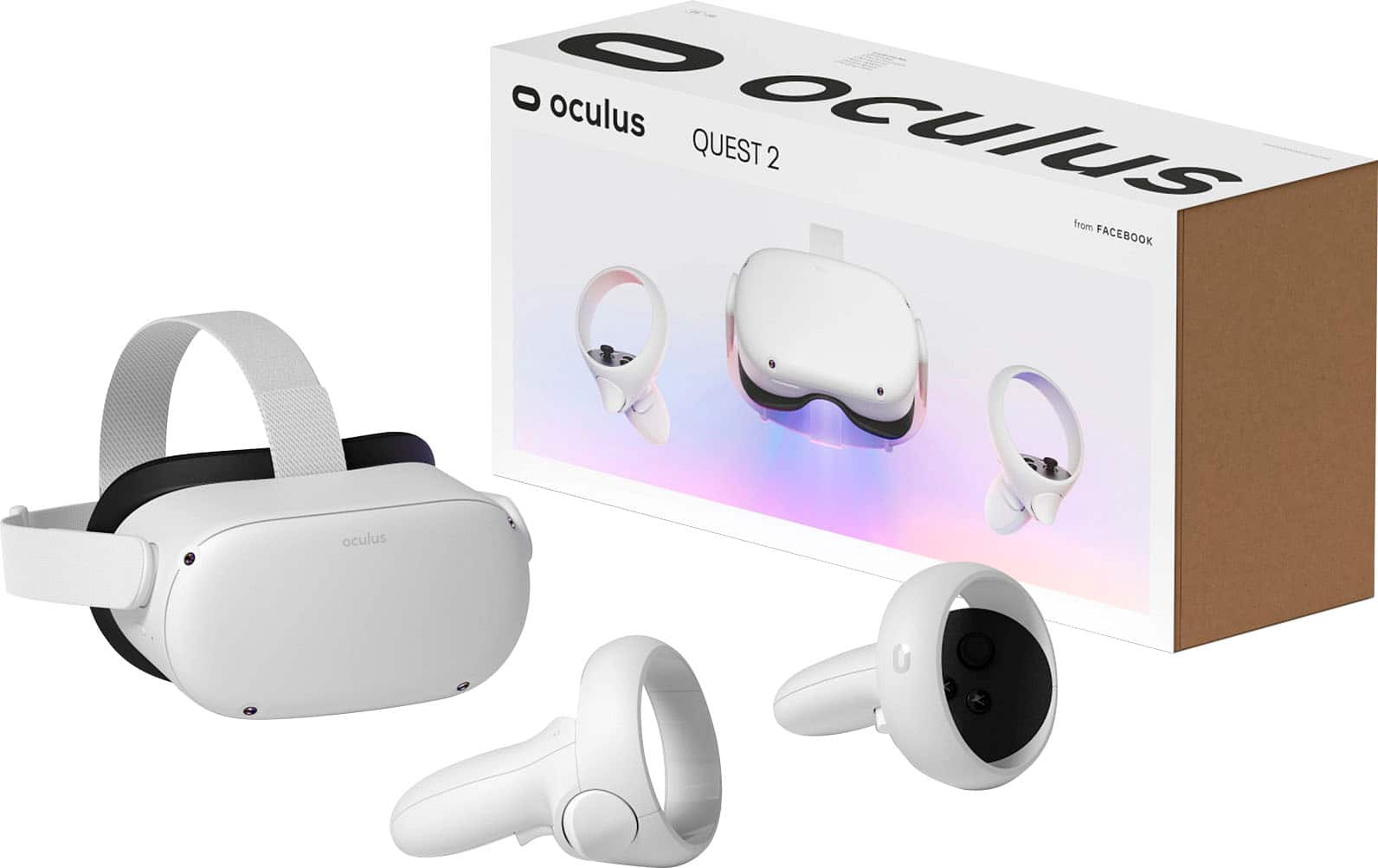
As a little gift for the holidays, I decided to splurge and treat myself to something that’s equal parts superfluous and unnecessary, snagging a shiny new virtual reality headset. While I’m not thrilled about having to buy a Meta product, the Quest 2 was the only affordable standalone headset I could find, so I bit the bullet and took the plunge and was immediately confronted by the need to spend more money.

While less powerful than some of its PC reliant contemporaries, the Quest 2 is still a really impressive piece of technology that more than just gets the job done. But if you’re like me and already have a pretty robust library of VR games on other platforms, you can plug in a long USB C cord and harness the power of whatever beefy rig you’ve got. That was the intent, but unfortunately my computer had other plans.

I thought that buying a prebuilt PC would solve a lot of the issues I had with the Frankensteinian mess I hobbled together years ago, but it turns out that computers can be incredibly fickle no matter what their origin is. The computer I originally scrumbled together was prone to crashing and just hated the idea of turning and staying on, which is an attitude I can kind of relate to. But this newer computer, I stupidly assumed, would be more reliable because it was ‘professionally’ built.

To its credit, my newer PC is great at being a normal computer that streams videos, plays music, and allows me to play D&D on virtual tabletops without much issue. What it doesn’t like doing is playing games, which was kind of the whole reason I bought the damn thing in the first place. Much like me, the second I ask for the littlest bit of exertion from it or anything that would mildly tax the graphics card for more than ten minutes, makes it get all crash happy in a way I’ve never seen before. Everything locks up, the displays go green, and the computer is unresponsive until I manually reset it. When it does come back online, it resets some of my display settings, specifically the monitor sleep settings, which I assume is a symptom of some cyber-amnesia that only computers suffer.

It drives me nuts because I’ve never really been able to play games on this computer as is, but for some reason I forgot that fact when I bought a 16 foot USB C cable with the intent of having this crashy piece of crap attempt to run VR games. While the green screen crash is disruptive and startling under normal circumstances, having it happen while inside of VR is truly akin to an Eldritch horror.

I was trying out a game called Wanderer, which is this very moody, post-apocalyptic adventure game that allegedly has you jumping around through events in history and solving puzzles in order to fix your shitty future. I played about an hour of it and thought it was pretty neat until the sound suddenly cut out and everything kind of froze. The game had hiccupped before like this, so I just thought I’d wait it out. But as I looked around I saw the walls start to melt, and the colors turn into beams of light that extended into oblivion. It was like the ending of 2001: A Space Odyssey, except unlike the movie, this crash made sense.

So what’s the play here, then? Cause from where I’m standing, my options are to either buy a new computer or laptop that can run some VR stuff, dropping well over a grand, or rebuy my entire VR library on the Meta store. Both options seem absolutely insane to do, but buying a new computer at least offers some utility and the ability to play the even more non-VR games I across the 15 launchers I have installed. It’s wild to think that the more sensible option is to buy a new computer, but that’s money I super don’t feel like dropping right now.

I can’t believe that my fun little present to myself has led to me having to genuinely consider spending an extra grand or more just to be able to fully utilize it. And now that I’m aware of my computer’s inability to handle the slightest of strains, I can’t not address it. I’m cursed with this knowledge and I’m genuinely afraid that I’m going to act on it. Send help.

blog: Guiltless Gaming

I remember being around 14 years old and begging my mom to drive me to our local GameStop so I could pick up the brand-spanking new Xbox 360 I had reserved. I walked into the store, picked up the prepaid console I had spent so much time saving up for, and headed back to the car. Excited as I was, there was a weird energy in the car that even my underdeveloped teenage brain could pick up on. Breaking the silence, my mom eventually asked the question that still nags at me till this day and said, “So when do you finally grow out of this stuff?”

Ten words was all it took to cast this dark cloud over my very good day, but it got me genuinely thinking about if and when I ever ‘finally grow out of this stuff.’ Clearly it never happened, hence the existence of this website, but at the time I didn’t have a good answer for it. I didn’t know how to properly express to my mother that this was my favorite hobby and there’s nothing wrong with playing games. To her and a lot of my family members, this was just another toy, some expensive brick of wires and plastic that was exclusively for juveniles.

It was from then on out that I did my best to avoid even acknowledging my love of games to anyone in my family. It turned into this self imposed taboo that I would hide away in my room and do in private, which sounds way more sinister and gross than I want it to. Even at 18 when I moved out I still kept my hobbies squirreled away from everyone in my family. I’m sure they all still knew that I was a big nerd, but I would always just do my best to never bring any of it up to anyone. When asked simple questions about what I got up to that day, telling them I watched TV all day was more palatable than being honest and saying I played games.

Hell, even to this day I still downplay my gaming hobby to most people I meet solely because in the back of my mind playing video games still feels a little childish. I know in actuality it isn’t, and I know that I shouldn’t care about what people think, but it’s hard to get past the antiquated stigmas that have carried over from my childhood.

It’s even weirder considering I have absolutely no problem boasting to anyone who will listen about enjoying Dungeons & Dragons, but I think that’s a case of me getting into as an adult and knowing how to defend myself from some jagoff who wants to try and tear me down for liking it, but video games are tougher because of how they were stigmatized when I was a kid. They were products for children and advertised as such, which makes it really hard to portray myself as a functioning adult who also enjoys playing video games, especially when it comes to my family. It makes me wonder if people who got into Magic: The Gathering or Pokemon as kids feel the same way as I do now that they’re adults.

Maybe I’m just in my own head too much and need to learn to better let go of the shitty and snide comments people have said to me in the past, but that’s easier said than done. It helps to have friends and a partner that are all supportive of and even partake in gaming cause I don’t have to defend or justify anything to them. It’s mostly just about how the general public and my family perceives the act of gaming that makes me feel intensely judged for liking what I like.

That insecurity that I feel about my gaming habits is mostly of my own creation and I recognize that. I fear a lot of ‘what if’ scenarios, where someone is going to make me explain myself and score me on how good of an adult I’ve been or something. It’s completely irrational, especially because I’m a grown-ass man who doesn’t have to explain shit to anybody if I don’t want to. So I’m gonna go ahead and keep on doing what makes me happy even if some of the most important people in my life think it’s too childish.