Category Archives: archived reviews

Review: My Friend Pedro

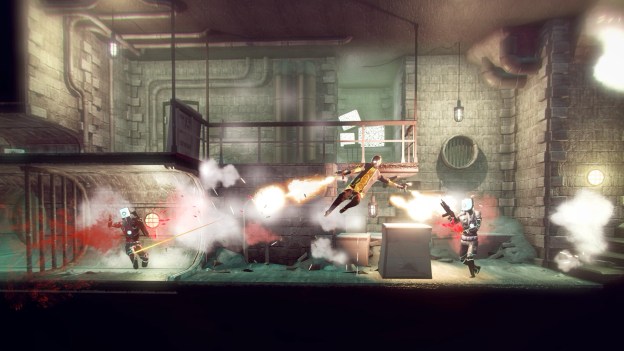
If you’ve ever wondered what it would be like if Spider-Man shot bullets instead of webs, then look no further than My Friend Pedro, a game about man, his guns, and his floating banana friend.

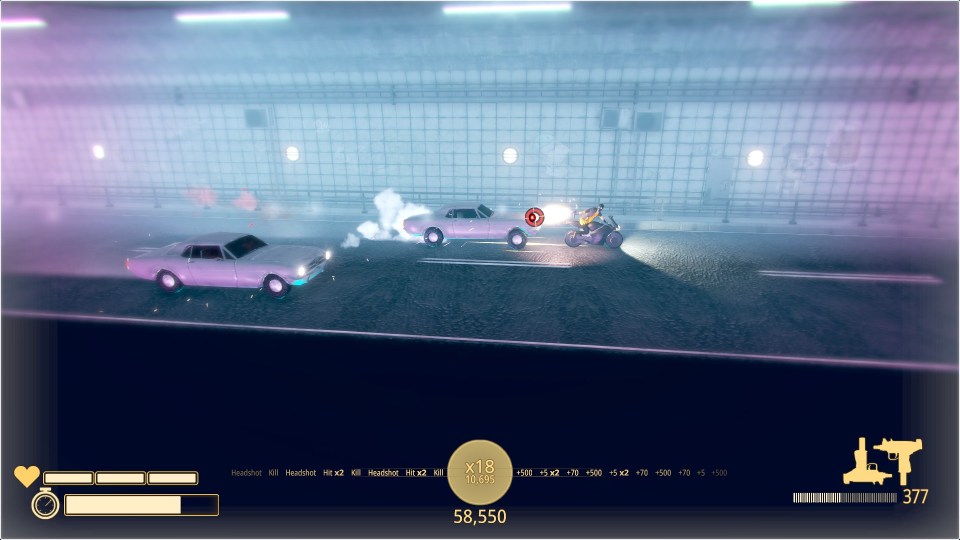
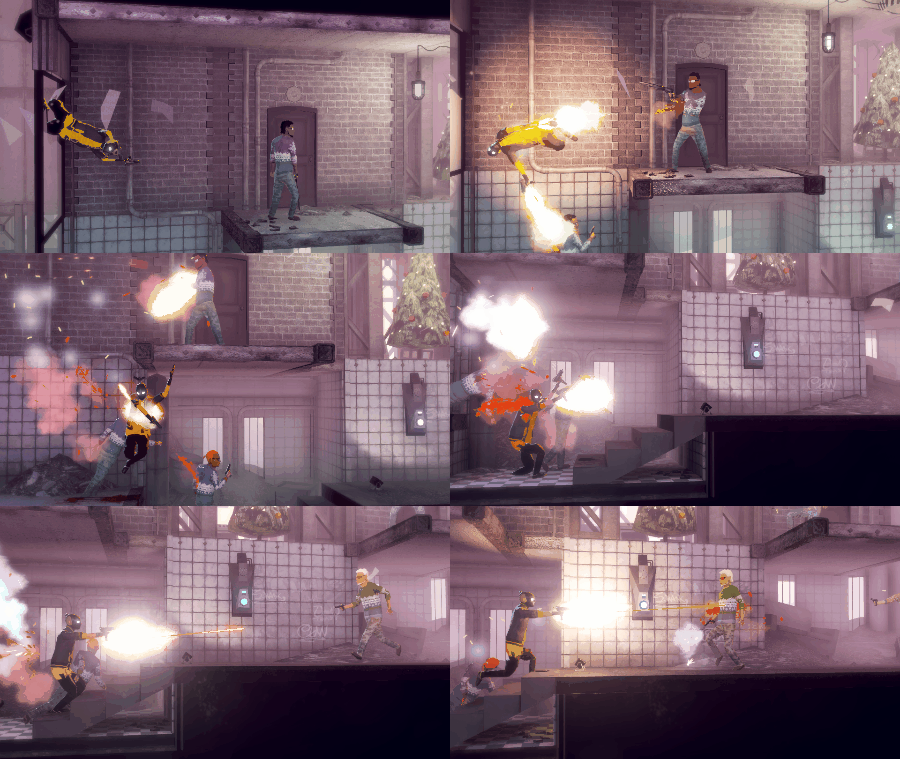
You take on the mantle of what has to be, the most potent killer of all time in My Friend Pedro, capable of slowing time, doing sick aerial stunts, riding motorcycles and using frying pans to overcome any and every threat.  If that sounds cool, it’s because it is.  My Friend Pedro arms you with not only the appropriate weaponry for dispatching your foes, but also puts you in situations where you’re encouraged to do more than just shoot everyone in sight.
20190620151829_1

Each level is broken up into rooms that more or less serve as tutorials for what’s to come.  Say you’re dropping into a room with an enemy on either side of you at the bottom of it, that’s My Friend Pedro‘s way of telling you that you should consider splitting your aim to simultaneously obliterate both of them.  Is that a frying pan in a room surrounded on all sides by bad guys?  Just pump some bullets into it, and watch the ricochet take care of the rest.  When things click in My Friend Pedro, it can lead to some of the most satisfying moments in video games.

But sometimes My Friend Pedro wants to fight with you and make things as convoluted as possible, requiring you to turn your hands into spiders capable of hitting all the right buttons at once.  The default control scheme isn’t great, and often leads to your character coming out of slow motion at the wrong time, falling into a pit, or just getting shot in the dome.  Every ounce of satisfaction you might feel, is prefaced by about nine moments of you sloppily fumbling through enemies and barely getting out alive.
My Friend Pedro - 20190622150735.gif

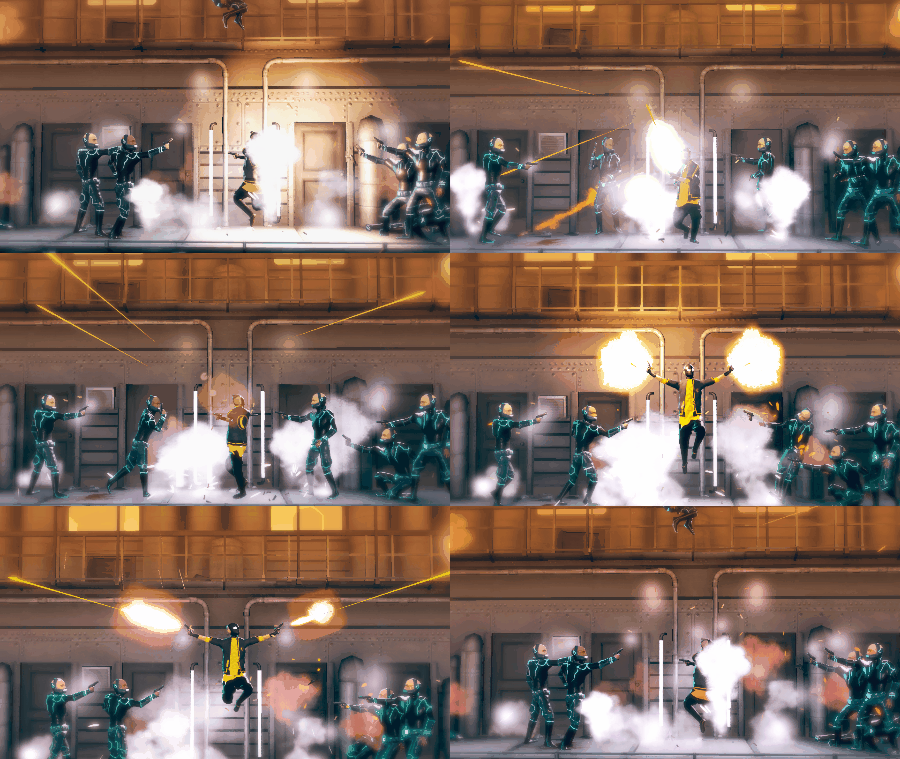
You can press the left bumper to basically become invincible and dodge bullets by spinning around like you’re John Woo, but because of the default button placement along with some weird animation priority when you’re coming out of the spin, made it one of the least used moves in my arsenal.  That is until the game would literally stop time as the final bullet that would kill me was rushing in my direction.  That’s when My Friend Pedro will literally tell you that it’s time to dodge.

Oddly enough, for a side scrolling game, the camera sometimes serves as another obstacle.  Often times the levels are just individual rooms of varying complexity, that are designed for you to conquer and move on to the next one.  But that isn’t always the case, and these little shooting gallery puzzle rooms stretch out farther than the camera cares to show.  The camera is zoomed in fairly close, which helps you navigate tight corridors more effectively and also see the dope shit you’re doing.  But when you can’t see the wall of dudes with shotguns just on the other side of the room, and their flurry of bullets just keeps peppering you before you even know they’re there, it can be supremely frustrating.
My Friend Pedro - 20190620152653.gif

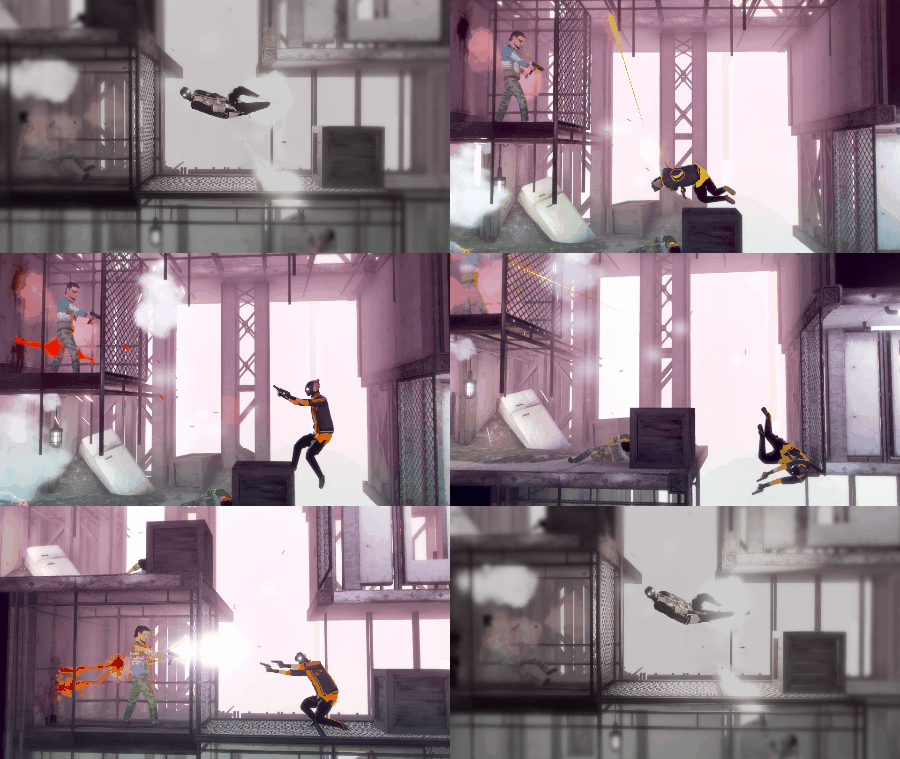
But all of those grievances go away when you flawlessly erase a room without even getting touched.  Every instance that I thought that maybe it was time to take a break, I’d do something outrageous, like skateboard through a window while doing a back flip, shooting two Uzis in separate directions.  Or kicking a frying pan into the air, unloading ammo into it and watching one bullet hit an explosive next to a cluster of enemies.  My Friend Pedro constantly puts you in situations where you could pull off awesome things, if you can manage to wrap your head around the controls long enough.

The biggest missteps My Friend Pedro takes are twofold though.  Firstly, there’s a score they give you at the end of each level, ranking you from C to S ranks.  Things like time and enemies killed are listed, but there’s literally no indication of what I could be doing better to obtain better rankings.  I’m assuming the answer is just, “do cooler shit,” but some direction on that front couldn’t hurt.
My Friend Pedro - 20190620221553.gif

Additionally, My Friend Pedro misses what might be my favorite feature of games like this, particularly Katana Zero, which is the ability to watch a full speed replay of the room or level you just went through.  For all the slow motion coolness I pull off, I’d love to have seen what that looked like.  It isn’t a deal breaker or anything, it just feels like a missed opportunity.  They do cherry pick a moment from the level you can just export into a GIF which is nice, but you have no say in what moment it is.

All things considered, I enjoyed my time with My Friend Pedro.  It was a short and sweet game that let me live out my wildest action movie dreams, albeit not as nimbly as I would have hoped for.  There’s a lot less of me falling into holes and getting shot in the face in my imagination.  But if you can deal with some often times floaty and loose controls, and really want to do some cool Matrix moves in a modern video game, My Friend Pedro is a pretty good compromise.


My Friend Pedro is currently available on Steam and the Nintendo Switch.  This review is based off of the Steam version.
Review: Red Dead Redemption 2

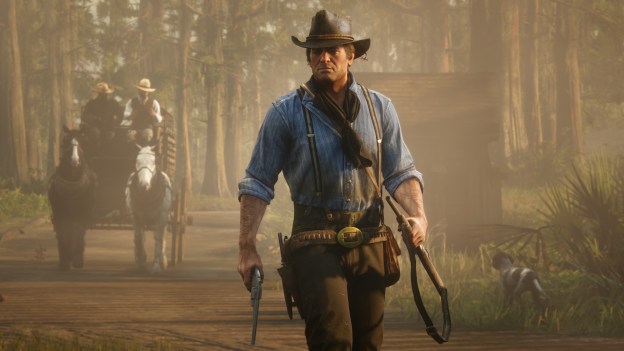
Over the course of my time with Red Dead Redemption 2, I found myself waffling between moments of awe and frustration fairly consistently.  It’s a game that feels as if it suffered an identity crisis midway through development, leaving it disjointed in many areas.  Yet despite this, Red Dead Redemption 2 still managed to be one of my favorite experiences of the year.

Seeing the events that set the stage for 2010’s Red Dead Redemption was and still is an enticing proposition.  That’s one of the most impressive things to me about Red Dead Redemption 2, how even though I had a pretty strong idea of how things were going to shake out, it still managed to surprise me and keep me engaged.

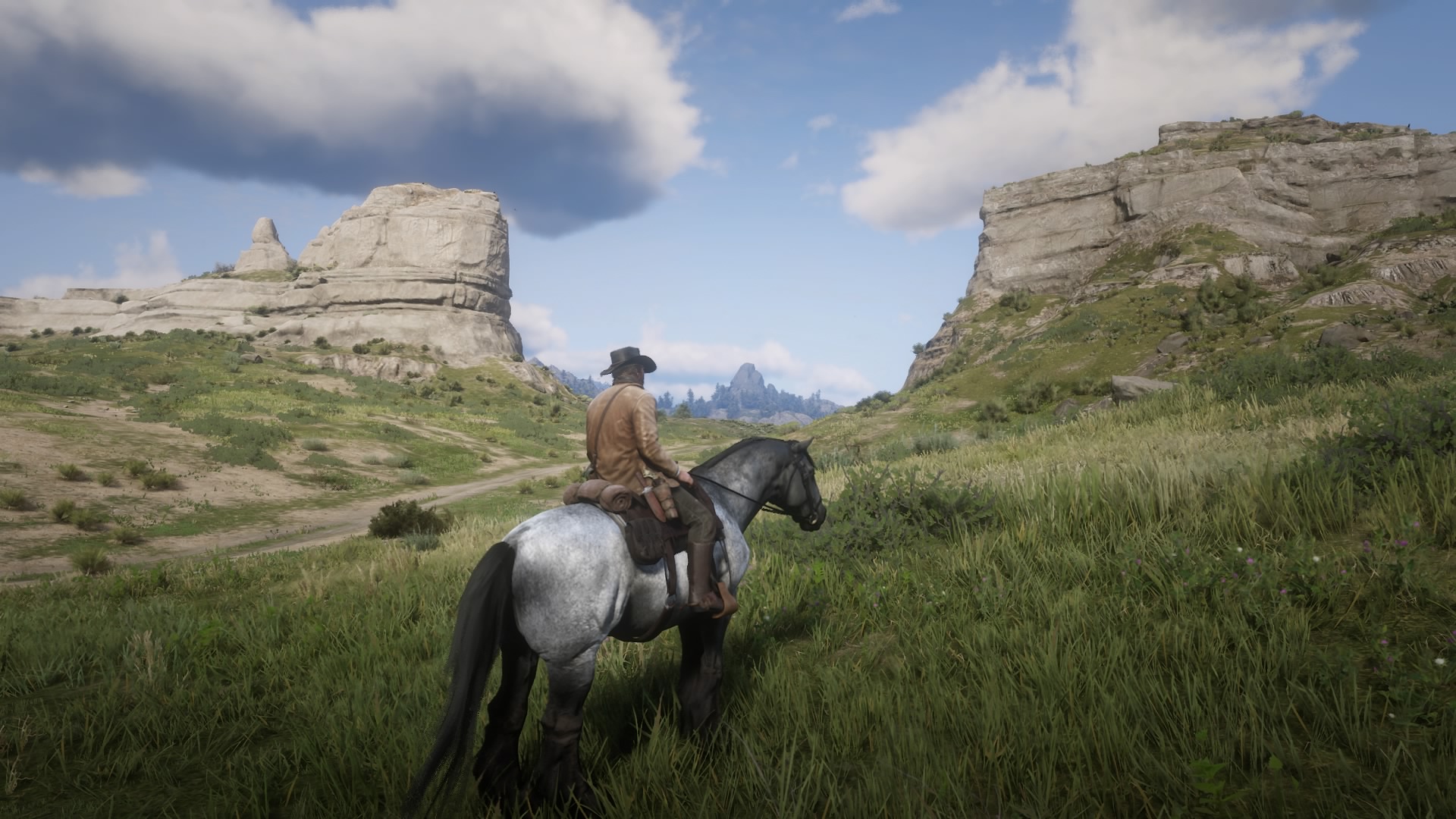
Red Dead Redemption 2_20181112195704

Which is good considering that the actual playing of Red Dead Redemption 2 can feel like a chore at times, leaving you to contend with some overly cumbersome systems.  For instance, instead of just having your weapons with you at all times, you only carry your pistols by default and anything else will have to selected as you’re getting off of your horse.  This led to me forgetting my good guns all the time, or even weirder, the game just arbitrarily deciding which guns my character decided to roll out with.

And that’s kind of the most frustrating thing about Red Dead Redemption 2, it doesn’t tell you a lot of things.  Simple stuff, like how selling versus donating items works, or why some of your actions get you in trouble with the law as opposed to others.  A lot of the game is nebulous and requires you to learn about and discover the inner workings of these systems on your own, but sometimes I just wanted some clarity.

Meanwhile, other systems just tend to be a hassle and seem overly complex in an effort to maintain whatever the Red Dead version of realism is.  For example, the “cores” system is a needless complication to the concept of health and stamina bars, making the player have to worry about recharge rates as well as the overall status of the meter.  The idea is that eating food recharges your cores which effects how fast your meters recharge, which inherently isn’t a bad system, but the cumbersome inventory management you have to engage with to eat the food makes it more of a chore than it needs to be.

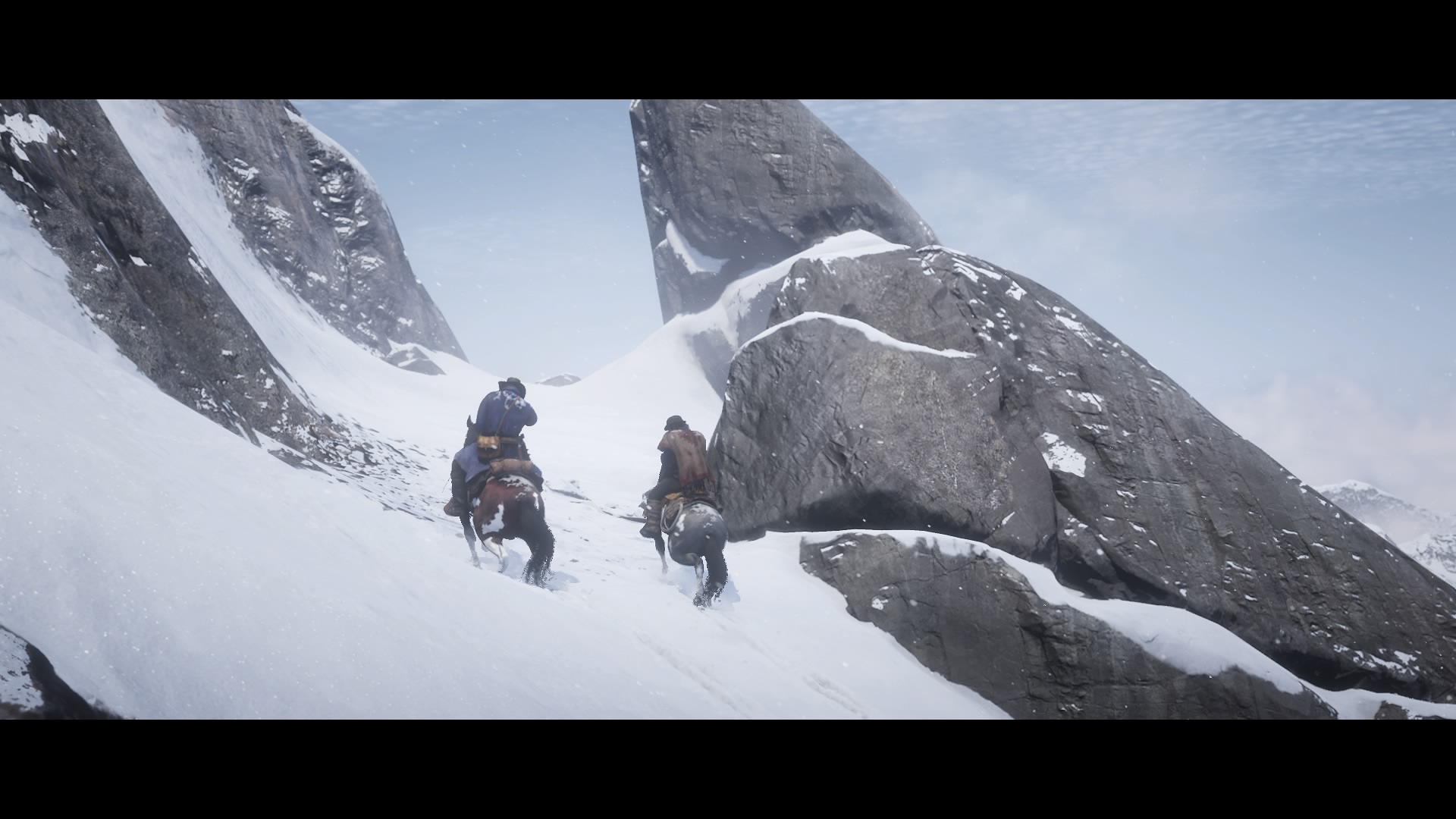
Red Dead Redemption 2_20181111164220

But all of that is overshadowed by the incredible world that Rockstar has built for you to explore.  Red Dead Redemption 2 presents a vast, detailed and diverse landscape for you to spend time in, whether it’s doing side missions, going hunting or finding one of the seemingly endless weird secrets that are tucked away.  On top of that it’s also incredible to look at.  The game is drop dead gorgeous, which explains why my launch PS4 sounds like an airplane in mid flight the entire time I’m playing.  The music is mostly subtle and understated, chiming in at just the right moments in a long ride or adding to the tension as you walk into an abandoned home.

Even more impressive might be the mission design.  While most of the main missions boil down to you riding your horse somewhere, shooting stuff, and then riding back, but it’s the side stuff and random encounters that really make things special.  Every side mission, random encounter, home invasion, and stagecoach robbery were unique and offered something different.  Even things that I expected to be more filler-type content like collecting debts and hunting animals, all had some unique angle and backstory to them.  Hell, even when one of your fellow gang members asks to go fishing with you, it still manages to be interesting and rewarding. 

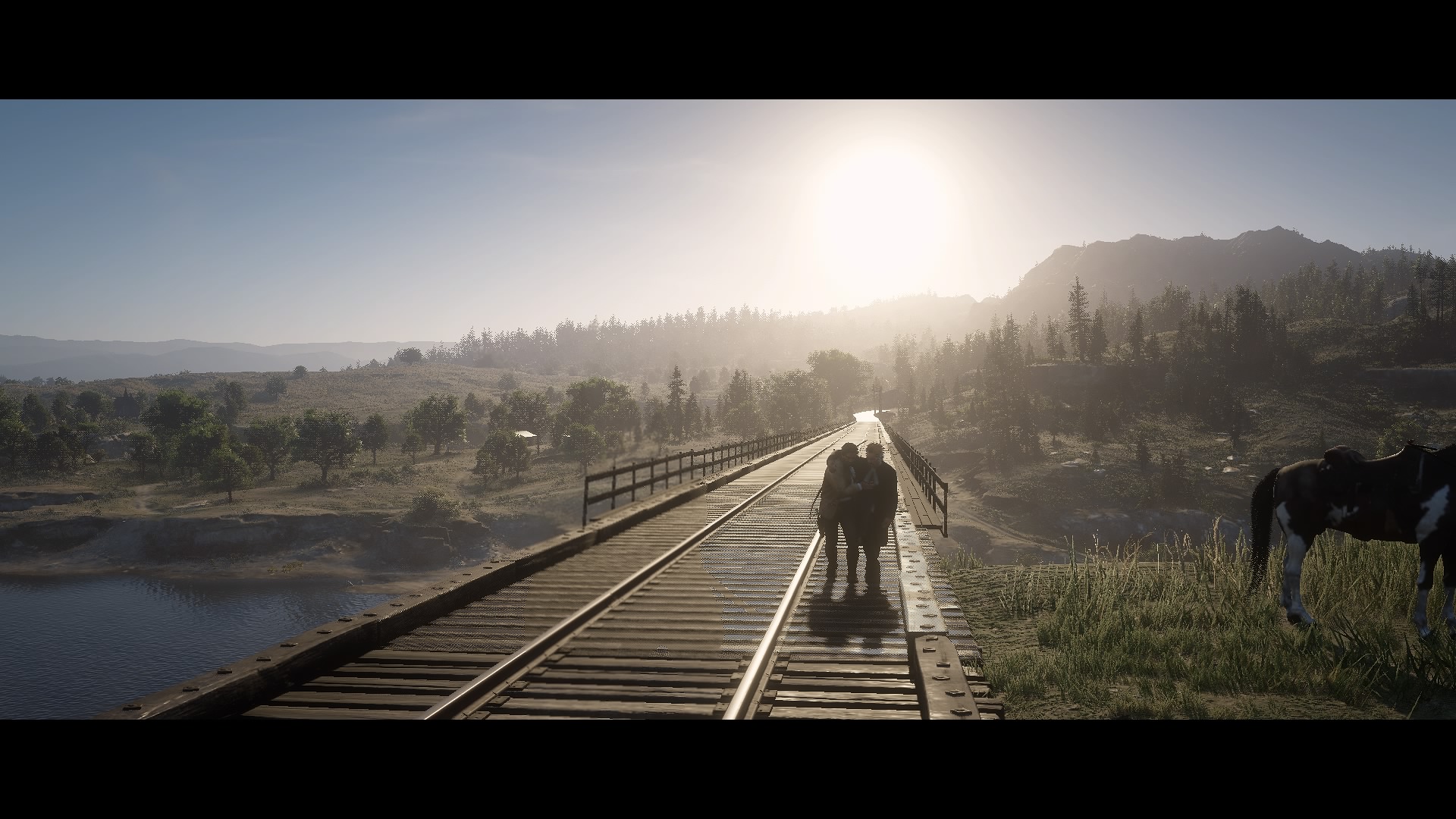
Red Dead Redemption 2_20181111211725

And that’s the big shadow that Red Dead Redemption 2 casts, and the thing that makes me look past every grievance I have with it.  The game is impressive and consistently left me in awe no matter what corner of its world I was poking in.  I know that feeling is fleeting and won’t be the same when I revisit it in the future, but for the entirety of all of my play sessions I was enthralled and impressed.

But there’s a big caveat to all of this, and that’s if you can handle the pace of the game.  You have to get used to the fact that you can’t hurry the game along and rush through it.  Everything is slower and more deliberate, and you better believe you’re gonna watch that drawer opening animation for the thousandth time. 

Red Dead Redemption 2 is a game that goes against the grain of modern video games in a way that might drive you insane.  I’ve struggled with control issues, bad tutorialization, and slow paced gameplay, and I understand the many impulses to put the game down and walk away.  Yet despite all of that, Red Dead Redemption 2 presented me with a great story with memorable characters in a living world that I am happy I got to experience and will happily do again whenever a PC version gets released.


Review: Marvel’s Spider-Man

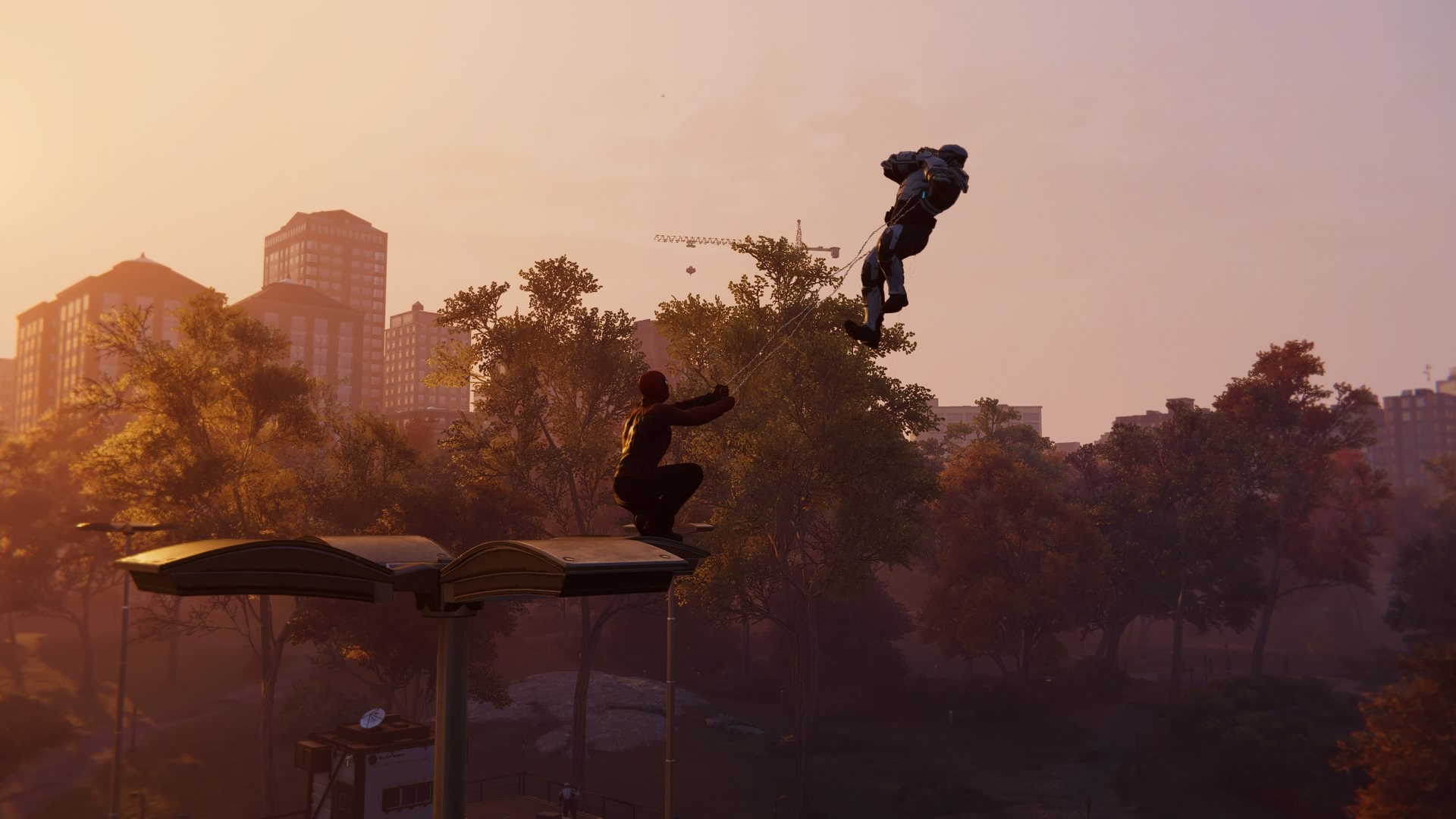
It’s been a while since I’ve played a game that’s compelled me to devour it the way Marvel’s Spider-Man has.  I frequently found myself racing from mission, to collectible, to crime scene and back again for hours on end, with the “just one more” mentality propelling me forward.  But it wasn’t because these objectives were particularly interesting or exciting, rather it was because just being Spider-Man was fun, and I was willing to use any excuse to continue playing as him.

Marvel’s Spider-Man is kind of like a really good pizza with pineapple on it.  You had this amazingly well-crafted pizza, but you went ahead and sprinkled some bullshit on top of it that made me enjoy it less.  It wasn’t bad, but the toppings could have definitely been better.  In this case, the presentation, mobility, combat and even the story are the pizza, and most of the side stuff is mediocre at best; just like pineapple on a pizza.

Marvel's Spider-Man_20180910204558

the stealth is simple, but satisfying

The mobility itself is phenomenal, striking a good balance between physics-based momentum, and fluid animations that blend together incredibly well.  There are certain upgrades that allow you to add additional layers of complexity to your web-swinging that may seem superfluous at first glance, but the expanded move-set allows you to traverse New York City faster, and more stylishly than ever before in a Spider-Man game.

While the swinging mechanics are phenomenal, the combat in Marvel’s Spider-Man is just as well done.  Combat is almost identical to that of the Rocksteady Batman games, even down to the button prompts for melee finishers.  This isn’t a bad thing though, considering the Arkham games have fantastic combat that translates incredibly well to Spider-Man.  The big differentiator here is the focus on airborne combat.  Swinging kicks, launching uppercuts, ground-pounds, air-juggles and more, are all vital moves when facing Spider-Man’s foes.  By the end of the game, I was chaining together massive combos that would rarely ever see me touch the ground, and it was easily one of the most satisfying aspects of my time with it.

Marvel's Spider-Man_20180910221911

“Spider-Man throws up gang signs.” – J. Jonah Jameson

All of these elements are crammed into a beautifully rendered, yet a little lifeless version of New York City.  The story does a decent enough job to justify why gangs are having gunfights in the middle of Times Square, but it’s still a pretty big stretch to justify those actions.  The story itself is a nice re-imagining of Spider-Man and his villains, remixing events and timelines to form something unique and interesting while also telling a fairly intimate story about Peter Parker and the people closest to him.

However, one of the biggest issues with Marvel’s Spider-Man stems directly from some of its missteps in translating the storytelling into compelling gameplay.  In this version of the Spider-Man universe, Peter Parker and Mary Jane are no longer in a relationship, but are working together as colleagues to try and uncover the bigger mysteries in the game.  What this results in is some very underwhelming stealth sequences as Mary Jane, where not only are you severely limited in your abilities, but you’re only course of action is to stay hidden.  These sequences are incredibly promising concepts that rarely feel fleshed out and ultimately end up being some of the worst parts of the entire experience.

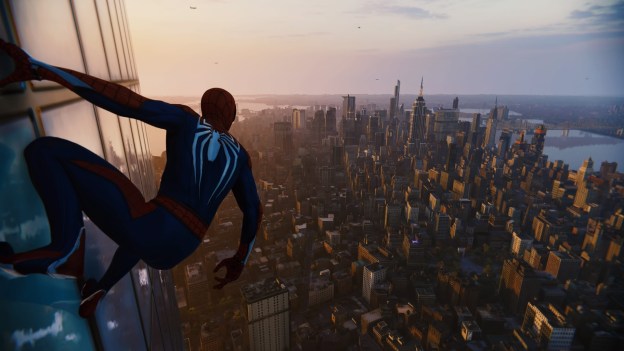
Marvel's Spider-Man_20180910203143

Divebomber-Man

But it isn’t just the stealth sequences that are less than stellar, a lot of the side activities you’ll do as Spider-Man aren’t exactly what I would call exciting either.  Things like photographing landmarks, collecting old backpacks with Easter-eggs in them and research stations that make you traverse the environment differently, were fun to seek out and complete.  But once you finish them, you’re left with drone hunts and bad “complete the circuit” mini-games which get really tedious, really quickly.  If it wasn’t for the fact that completing these side activities provided you with specific tokens that unlock certain upgrades, they wouldn’t be worth doing at all.

It was the sheer act of just moving around as Spider-Man that was enough to keep me playing through the endless repeating side missions and incredibly dull stealth sections.  That in itself is a testament to how well Insomniac Games nailed the feeling of being Spider-Man and combining that with a story that feels fresh, yet honors the legacy of the character.  Despite its shortcomings, Marvel’s Spider-Man is still a tremendously fun game that no Spider-Man fan should miss out on.

Review: Night In The Woods

I didn’t expect Night in the Woods to hit me as hard as it did.  What on the surface seemed like a simple, charming and beautiful adventure game, turned out to be an extremely emotional journey which resonated with me on an almost too personal level.

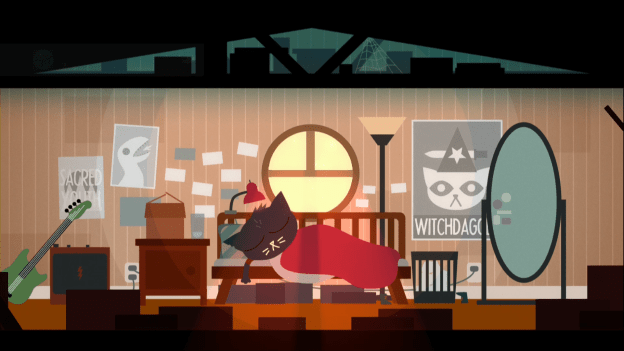
In Night in the Woods, you’ll play as Mae, an anthropomorphic 20 year-old cat who is returning to her small hometown of Possum Springs after dropping out of college.  Hoping to find solace in a familiar setting, she sets out to reconnect with her old life, seeking out the friends she grew up with.

For most of the game, the reason for her dropping out is a mystery to you and everyone she interacts with.  The real reason for her return is obscured by her laissez-faire attitude towards life.  Mae, along with all of her friends seem like incredibly shallow archetypes when you first meet them.  That coupled with the fact that the story is fairly vague for the first few hours, doesn’t help their cause.  But as you progress you’ll begin to find that everything in Night in the Woods has so much depth to it.

Unfortunately for Mae, a lot in Possum Springs has changed. Economic stress is readily apparent as she walks past the skeletons of former businesses on the main road, along with the general gloom and depression that lingers over the town that can be found not only in the locale, but in the people themselves. As you interact with them more, your friends and family will open up to you about their dreams, stresses and sacrifices. As someone from a small town, I can’t express enough how real of a scenario this all is.

But all of that gloom and mundanity doesn’t preclude Night in The Woods from having some really exciting and tense moments. As you scroll through your dialogue options, you’ll find that Mae doesn’t really know how to deal with the general exasperation that the people feel. A lot of her dialogue usually ends up having her accidentally cross some boundaries or touch on sore subjects and generally put her foot in her mouth. Because of this, not only does she grow as a character, but so do her friends. By the end of the game I found myself identifying with certain characters, and seeing my friends in others.

That’s what I loved about Night in the Woods so much.  Despite having some of the most beautiful art and sound design I’ve seen in a game (and anthropomorphic animals), it manages to tell a genuinely real story about small-town life which I’m sure many people can relate to. Without spoiling anything, I will say that some people may not be super excited with where the story goes.  There’s a whole “murder-mystery, other-worldly” thing that happens halfway through the game that may rub people the wrong the way, but it’s done pretty well for what it is.

Night in the Woods isn’t a game without faults however.  There are some story beats that never really payoff, and I’m not entirely convinced that a lot of my dialogue choices actually made a difference. But these are minor complaints in a game that sincerely could not stop thinking about until I finished it’s 10 hour campaign.

Maybe Night in the Woods works for me because I can relate to its version of small town suburbia so well.  Or maybe it has to do with the stellar characters and the real issues they face. Or maybe it’s just the fact that it’s pretty as hell and has a cool soundtrack and sweet Guitar Hero mini-game.  Whatever it is, I loved it, and I think it’s well worth your time.

Review: Mafia 3

Do you remember back in 2010 when Mafia 2 was released? It was met with a ton of praise in regards to its story, world building, and characterization. The biggest complaints volleyed against it however, were in it’s mechanics and empty world. Six years later, Mafia 3 treads the exact same path. At its best, Mafia 3 is a fantastic period piece that pulls no punches in depicting the racial and political tones of a late 1960’s America, and at its worst it’s a standard open-world game that is repetitive, bordering on mundane.

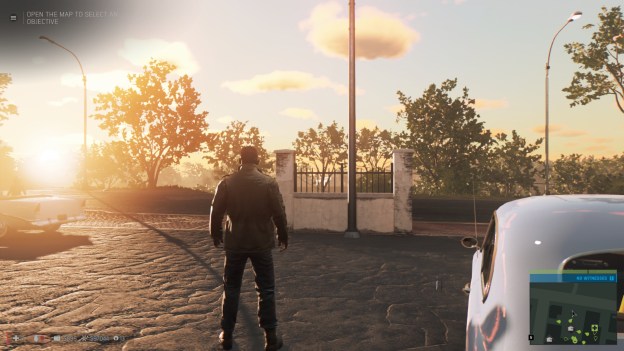
You take on the role of Lincoln Clay: A half black Vietnam War veteran returning to his home in the fictionalized version of New Orleans: New Bordeaux. Without diving too deep into the plot, the basic motivating force behind Lincoln is revenge. The people closest to him were killed in a mob hit orchestrated by a man named Sal Marcano.

With clear motivation in place, Mafia 3 establishes its core, repetitive, and almost mundane gameplay loop. You are presented with a district led by one of Sal Marcano’s captains. In order to get to this captain and their well crafted story mission, you’ll first have to eliminate two people important to them. To do this, you’ll have to go into a place, shoot some bad guys, and kill one bigger bad guy. Or you’ll have to interrogate him, then either kill, or recruit him to make more money for you in the long run. This pattern happens in each of the 9 districts in the city. The first 3 districts are automatically assigned to your lieutenants, of whom you’ll have to divvy up the remaining six districts to as you capture them.

Your lieutenants represent the Haitian, Italian, and Irish mobs in the city, and each of them wants a piece of the pie that is New Bordeaux. While I was able to balance their needs throughout the whole game, I missed out on the cool side missions that would come out of them quitting on you. Say you piss off the Irish mob too much and their leader leaves you, suddenly a mission will pop up tasking you with killing him and removing the Irish from your game. Focusing on balancing my lieutenants wants and needs however, limited the upgrades and perks I would get throughout the game. If I had focused on building up the Italian mob, I’d have more health and armor in the later game, which is something I desperately needed. There’s a good push and pull here and I found this to be some of the more engaging content in the game.

Also engaging is the story Mafia 3 tells. Thanks to some top notch acting and incredible presentation, the already solid story is brought to life. It’s all told through a fake documentary with Lincoln’s friend, Father James, and deposition with an old friend in the CIA reciting the things you’ve done. It’s all very well done and easily the high point of the entire game. The mechanics also serve to help immerse you in the culture of 1968. There are shops Lincoln can’t enter because of the color of his skin. The second you enter an establishment like this, the game will notify you that you’re trespassing. Stay there too long, and you’ll get the cops called or have a gun pulled on you. If you steal a car in an affluent neighborhood, the police will be on you in a heartbeat. Steal that car in a poor or black neighborhood, and the cops might not even show up. If only the story and mechanics were paired with a more interesting game.

Don’t get me wrong, the gameplay isn’t bad by any means. It just isn’t anything special. Gun play is adequate yet uninspiring. While there is a fair amount of weapons, I found myself using a silenced pistol and a sniper rifle for most of the game because they were the most effective for my play style. The stealth combat is super basic and easy to exploit. You can hide behind things and then stab dudes as they come around a corner all fine and well, but the enemy AI is extremely dumb and has no sense of self preservation. You can endlessly lure enemies to your position by whistling, and one by one they’ll keep coming at you. I’ve managed to clear out hideouts this way. If you aren’t being stealthy though, they’ll just run at you in the open, mid firefight.

The biggest thing working against Mafia 3 is it’s open-world. While beautiful and well designed, it’s empty and nearly lifeless. Sure there are some Playboy Magazines and album covers to collect, but aside from that there’s barely anything in New Bordeaux to do. Having this big open-world serves to do nothing more than make you drive more. And drive you will thanks to no fast travel options. Normally I wouldn’t care so much, but because the world is so empty, and because several missions just make you drive across the map, interact with something, and come back, fast travel suddenly becomes a sorely missed feature.

One of the bigger topics of discussion around Mafia 3 since it’s release has been it’s performance and bugs. I played through the game on my PC which has got a 970 in it and even after a day two patch to unlock the framerate from 30 and lowering all of my settings, I still wasn’t able to hit 60 frames per second, nor maintain anything aside from 30. There were also a fair amount of glitches from the lighting blowing out the scene making everything white, to textures not loading, and even the classic falling through the world glitch. Never did I come across anything game breaking, but I did have the game crash on me once during my 35 hours or so with it.

While Mafia 3 is a technically unimpressive and uninspired open-world action game, it does manage to build an incredibly believable world, establish some truly amazing characters and tell a phenomenal story that only stumbles a little bit at the very end. While I wish there was more to do in New Bordeaux and the missions were a little more varied, I’m glad I stuck with it just to see how Lincoln’s story played out.

Review: Inside

I never was a particularly huge fan of Playdead’s first game, Limbo.  I certainly appreciated all the things it was doing, but it never truly resonated with me.  It’s monochromatic color pallet, the simplistic platforming, and heavy reliance on trial and error made the 2009 indie darling seem like a slog at times.  Six years later, their second game Inside seems to be retreading familiar footsteps while fixing most of my issues with it’s predecessor.

When you start Inside, you’ll be dropped right into the fray with no context whatsoever.  You are a boy wearing a red shirt, who must run and jump his way to the right. While it all sounds pretty straightforward, Inside manages to improve a lot of the mechanics that Limbo established.  The basic movement and platforming is smoother and more responsive than ever, all the while moving at a more brisk and satisfying pace than Limbo did.   Even the way you interact with objects in the game has gotten an overhaul.  Objects that you’ll need to push or pull over into prime platforming position are no longer directly in your way, instead they exist on another plane slightly in the background.  It sounds like an insignificant change that only saves you mere seconds in time spent climbing over blocks and carts, but it’s exactly these kinds of adjustments that make Inside a much better  and more polished experience.

image

On top of the improved mechanics the overall design of Inside trumps that of Limbo.  While not completely gone from the experience, most of the trial-and-error based gameplay of Limbo is absent.  You won’t find yourself snared in a trap that you couldn’t see, rather you’ll find yourself poking at various objects that could lead you to your next goal.  Those things might kill you, but it will rarely ever feel like you don’t have any agency over the situation.  It’s in pursuit of solving these puzzles that you’ll start to appreciate the amount of care and creativity that went into crafting Inside.

image

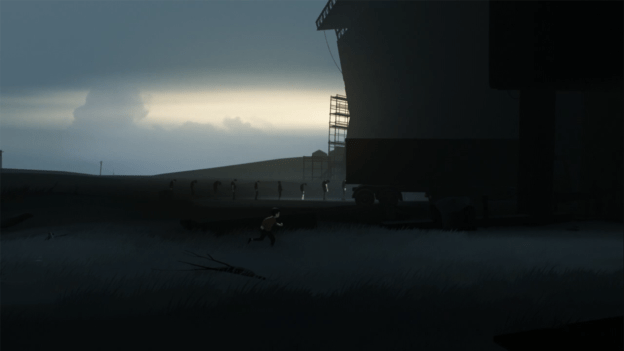
Even at face value it’s easy to see the macabre beauty that Inside is.  The art direction of the game is consistently impressive as you travel between multiple and varied locations.  From forests to farmlands, factories and laboratories, every location is beautifully realized and flow seamlessly into one-another.  It’s all so unsaturated and dim in the best way possible.  The game feels very oppressive in it’s tone and makes you feel almost powerless at times.  And while there aren’t really any enemies in the game, there are some truly terrifying things at play trying to end your little red-shirted life in gruesome fashion.

Inside has some truly powerful moments that are well worth experiencing and while the levels are all cohesive and meld together, the story feels so obtuse and vague that I found myself with more questions when it ended than when I started. There is a lot to interpret and theorize about what is really happening in Inside, but at face value the basic premise of the game was never really made apparent to me.

image

All things considered, Inside is a phenomenal game.  Clocking in at just under four hours it’s a super tight package that doesn’t overstay it’s welcome and manages to stay fresh right up until the end.  Without going too deep into some of the more interesting points of the game, rest assured that Inside fixes a lot of the problems of it’s predecessor, while still building off of what made Limbo such a monumental game in the first place.