Tag Archives: archived gut Check

Gut Check: Cloudpunk

UPDATE: Since writing this, Cloudpunk has received several updates that address some of the dialogue issues that were present at launch.


Cloudpunk is a blend of two of my favorite elements in games:  Cyberpunk aesthetics and a mundane profession which in this case is being a delivery driver.  Sprinkle in an engaging yet slowly unfolding story with interesting and sometimes genuinely funny characters and you’ve got yourself the recipe for a game that is one-hundred percent up my alley.

In Cloudpunk, you play as a young woman who just moved to the big cyberpunk city and has taken up a job with the titular delivery company, Cloudpunk, as a courier.  The majority of the game seems to take place in your hover-car, driving around the neon soaked, voxelly city of Nivalis.

20200423195644_1.jpg

Piloting my floating jalopy was easy to do, and had a nice sense of weight to it that made banking around corners at high speeds not only very satisfying, but extremely dangerous as your momentum will have you drifting around the skies and probably into traffic.  The weird thing about driving the car is that you have no camera control whatsoever.  Instead, the right analog stick is used to dictate your height, a mechanic that the characters in the game felt the need to justify by explaining it within the first few minutes of playing.  Ultimately, money and fuel seem to be the primary plates you’ll be spinning in Cloudpunk, neither of which have been a real obstacle in the early goings of the game.

Once you get your package to the vague area it needs to go, you’ll have to find a parking spot for your hover-car, then hop out and finish the delivery on foot.  It seems pretty superfluous at first, offering little more than other angles to admire the artwork from, until you realize there are NPCs you can talk to and shops you can interact with.  It’s shallow at first, but within the first hour of playing it starts to become an integral part of the story.

20200423200430_1.jpg

Unsurprisingly, the things that really stuck out to me in Cloudpunk are its visual style, and synth-heavy soundtrack.  If you had told me that this was a licensed Blade Runner game, based solely on its presentation, I’d believe you.  The ambient light that pours over the rain-soaked streets of Nivalis, make the floating city feel appropriately grimy and futuristic.  Cloudpunk nails the cyberpunk aesthetic from lighting, to mechanics, to the soundtrack and even down to its characters.

Speaking of characters, there is one very special character in this game that needs special attention.  In Cloudpunk, the story is told to you through radio chatter from your bosses, customers and your ship’s AI.  The ship AI however, is the implanted consciousness of your character’s dog.  This dog, Camus, is a great inclusion not just because dogs are great, but because he is so innocent and pure that he acts as your moral compass when you have to make decisions in the game, questioning you when you make strange choices.

20200423203425_1.jpg

An early example of that is when Rania picks up an unmarked package under suspicious circumstances from her boss, that once inside of the car begins ticking.  Her boss tells her to keep quiet and get the job done providing no further explanation or context.  Camus will question this saying something to the effect of, “I don’t feel good about the situation.”  It was then I was presented with the choice of delivering the package, or throwing it in a dump somewhere.  I went ahead and delivered the package to another location, where Camus also raised further questions about my actions.  Up to and after what you might expect to happen with a ticking package happening, Camus gently reminded me that we didn’t do a good thing, which hurt me more than any human’s word could.

While I love Camus and his voice acting, the rest of the game fluctuates in that department.  Rania herself feels a little flat in places, never feeling overwhelmingly offensive or bad, but just a little bland.  That could be a symptom of the voice acting itself, or the actual writing in the game, which also feels unnatural in spots.  It’s never too jarring which is a relief because there’s a lot of it.

20200423201239_1.jpg

What is infuriating is how unskippable the dialogue can be in most scenarios.  This is a story-focused game and I understand that, but the decision to make me hover in the air in my car without a way point or objective for a minute or two so a conversation can wrap up, is infuriating.  I want to absorb the story and hear what the players are talking about, but could we do that on the way to my objective?  I can’t just drive around aimlessly while I’m waiting for a way point to pop because I’ve got fuel limitations.  It’s a weird decision that just leads to a lot of idling in a game with a pretty intriguing story.

The list of things I like about Cloudpunk so far easily outnumbers my issues with it, but I’m still really early into the game and anything could change.  There’s a bunch of mechanics that are largely unexplained thus far as well, like the fact that I have an inventory.  It makes me think there might be some sort of adventure game aspect that hasn’t been revealed just yet, but I’m excited to see it pan out.

20200423202248_1.jpg

I really like Cloudpunk and it’s brand of mixing the cyberpunk aesthetic, with the seemingly mundane job of being a courier.  It makes you feel appropriately small in this sprawling metropolis, before slowly uncovering the main character’s role and importance as you progress.  It’s got some rough edges for sure, but as an adventure game, it’s certainly scratching an itch.
 

Gut Check: Good Job!

It’s been so long since I’ve had to be in my place of work that I’ve basically forgotten how working operates.  Luckily I’ve been playing the recently released Good Job! on the Nintendo Switch, and I’m slowly remembering what going to work was actually like.

2020041815345100-D696F166B39F21D053E294E03172915D.jpg

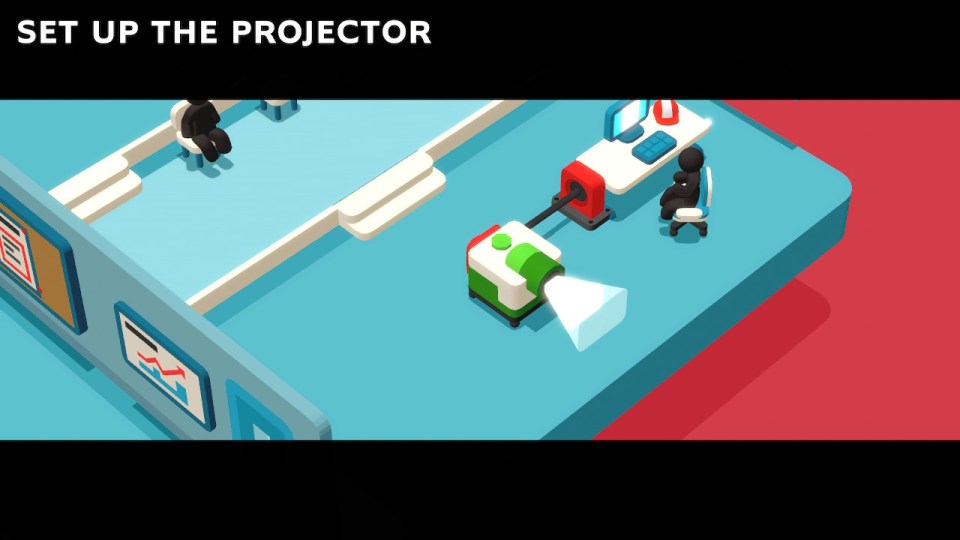
Good Job! is a fun little physics-based puzzler that has you trying to complete mundane tasks like setting up projectors, wrangling employees, and putting boxes on trucks for shipments, as efficiently as possible.  It takes these typically dull tasks and adds in a level of destruction and chaos that makes Good Job! as fun and engaging as it is.

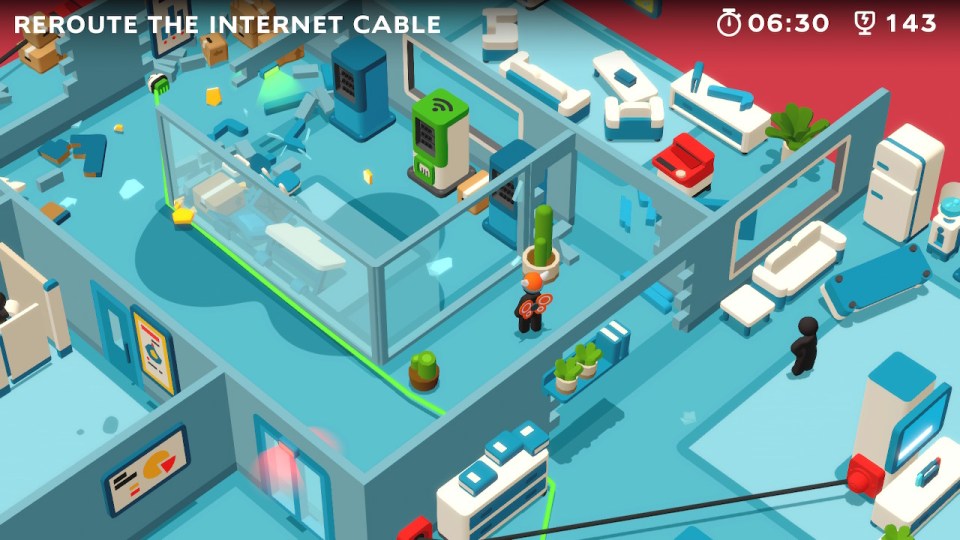
Through what can only be described as blatant nepotism, you somehow have a job at this company that your parent owns, despite you being a clumsy mess.  You’re kind of a jack of all trades, going from level to level, solving common office problems utilizing a mix of puzzle solving, and destruction.  For instance, one of the first levels tasks you with hooking up an Ethernet cable to a WiFi hot spot.  What the game expects you to do is to find a way to bring the wire from one end of the level to the other by getting through locked doors and moving loitering employees.  Based on your time and damage done, you’ll get a letter grade upon completing the level that you can go back and improve on should you desire.

2020041815360800-D696F166B39F21D053E294E03172915D.jpg

But Good Job! knows that efficiency is a metric that’s measured differently by different people.  For some, efficiency might mean causing the least amount of issues and doing the job to the best of your abilities without disrupting anyone in the office.  But then there’s the creative types like myself who know that the easiest and most efficient way to solve a puzzle is to break the puzzle, a tactic that Good Job! has planned for.

Instead of trying to work within the confines of the office, I usually opt for the “open office” concept which involves me pulling power cables real tight, and using that as a makeshift slingshot I can load with a printer to blast through all of the walls, doors, windows and other employees in my way.  It’s that kind of “outside the box” thinking that’s made me the perpetual employee of month.  Good Job! reminds me of how I approach most stealth games, where I’ll try my best to do things in the intended fashion, but embrace the chaos when shit inevitably hits the fan.

2020041815495000-D696F166B39F21D053E294E03172915D.jpg

Good Job! is a fantastically fun and lighthearted affair that’s easily become one of my favorite releases this year.  It has some minor control quirks that take some time to wrap your head around, and the frame rate can get a little chunky when debris is flying all over the place, but I still find myself coming back to it in spite of those minor drawbacks.  I’ve only played it single player, but it has couch co-op for those of you who can take advantage of it.  Despite going solo though, I haven’t felt like my experience has been lacking at all.  Just like its name implies, Good Job! does a very good job.

Gut Check: Foregone

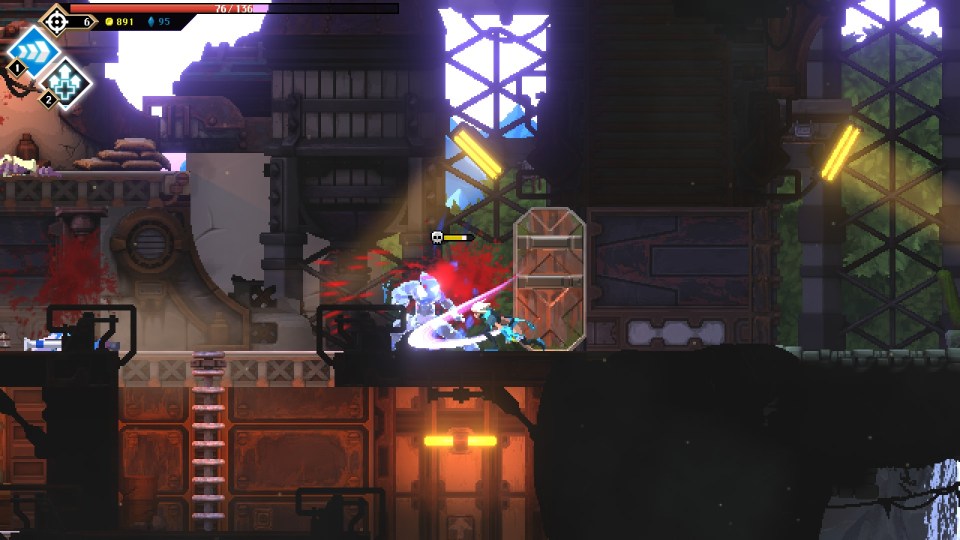
Stop me if you’ve heard this before, but Foregone is an early access, side-scrolling, pixelated action game, akin to something like a Metroid or Castlevainia.   In my short time playing it I can safely say that it never reaches the highs or lows of the genre, but just ends up feeling like yet another one of “those” kinds of games, that’s totally serviceable.

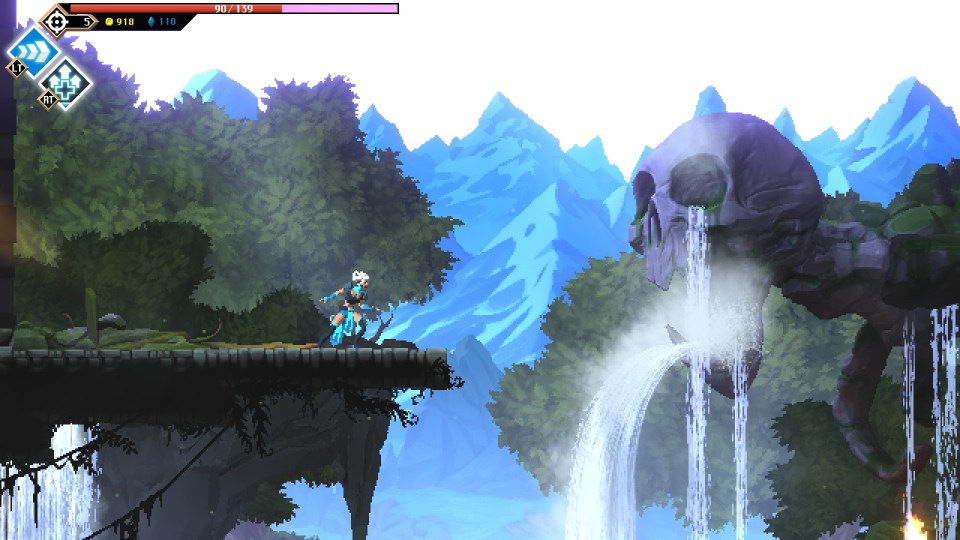
Foregone wastes no time before hurling you into the action, giving you mere sentences of story before letting you loose in the world.  The first thing that struck me was how good the game looks.  From character and world design, down to individual animations, Foregone is a good looking game.  It reminds me of Dead Cells a lot in its visual design, and might even look better in some spots in my opinion.

20200410154701_1.jpg

Not seconds after being impressed by its quick start and stunning visuals, I was confronted with what might be the biggest flaw that’s persistent throughout Foregone – playing it.  Foregone isn’t a bad game by any stretch, but everything feels mushier and less responsive than I’d like out of a game like this.  Everything in Foregone feels like it lacks any impact whatsoever.

Like I said, none of it feels outright bad, but the sheer act of attacking an enemy just feels hollow.  You can’t stagger enemies in the early stages, which leads to a lot of you just mashing the attack button until your enemy either dies or counterattacks you.  The core combat loop doesn’t just lack tactile feedback, but it’s kind of boring.  Every one on one encounter boils down to you just dodging behind an enemy that’s winding up an attack, and just mashing the attack button behind them until it’s over.

20200410154642_1.jpg

What does help break that monotony up though is your secondary attacks, constant weapon drops and special abilities.   Along with your basic melee attack, you have a ranged weapon that starts off as a pistol, but in my short time with Foregone I ended up with a bow, pistol, shotgun and assault rifle that I could choose from.  These all have ammo restrictions that are pretty interestingly implemented too.  Every melee hit you land, grants you one bullet for your ranged weapon that maxes out at whatever the weapon dictates as its max.  So I can bank 13 bullets and expend them all on one enemy, but that means I’ll have to get in close to get my ranged abilities recharged.  It’s a smart system that encourages diversifying your play style.

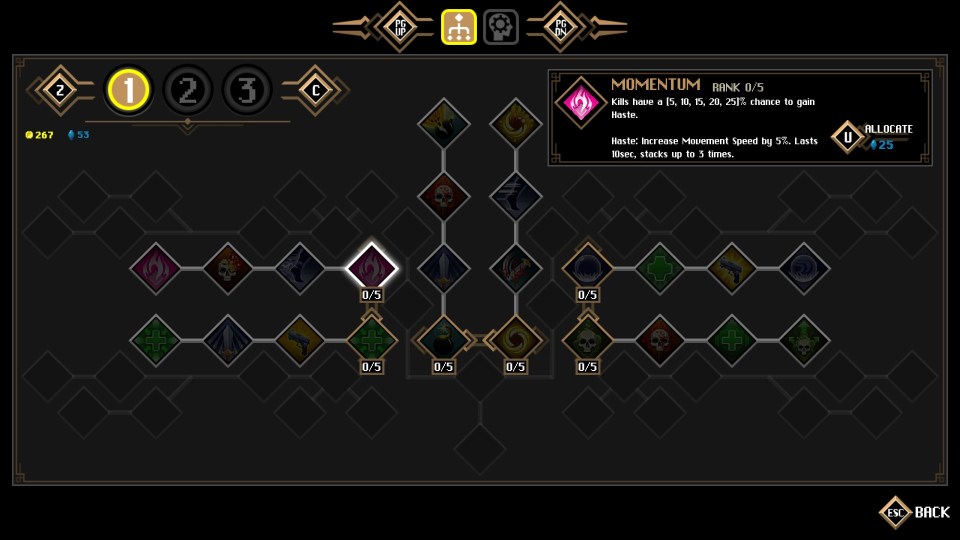
You also have some magic abilities that I assume get more wild as you play more of the game.  In the first few minutes, you get both a dash that hurts enemies, as well as a manual healing ability.  The dash seemed to recharge on its own, but I couldn’t tell if the healing one did as well or if they were tied to certain health pickups.  Either way, I failed a lot before implementing these moves into my repertoire.

20200410153414_1.jpg

What was also a pleasant surprise was the amount of loot drops I got within my first hour of play.  I got to snag a variety of melee weapons from daggers, claymores and shortswords, to various sets of armor, trinkets and the ranged weapons I mentioned earlier.  It allowed me to find a play style that suited me best, as early as possible in the game.

But all of these bits of praise don’t cover up the sudden difficulty spikes, lack of checkpoints, mushy controls and my biggest gripe with Foregone, the lack of feedback.  Now, when I say feedback, I don’t mean that I want the game to let me know how I’m doing or make me do a bunch of tutorials.  What I actually mean is that in Foregone, it’s incredibly easy to die to some bullshit.

20200410154509_1.jpg

There are certain ranged enemies who utilize their own guns, who under normal circumstances can be dodged fairly easily.  The problem is when you come across an enemy with a minigun or some sort of turret.  They can hit you multiple times very quickly, draining your health in an instant.  In other games you would be very aware of these events, but in Foregone, there are very little indicators that you’re being peppered to death by some off screen enemy until the screen goes red and it’s too late.  In addition to that, there aren’t any invincibility frames that you might get in other games, so each bullet is hitting you and giving you no opportunity to escape.

And that’s kind of the underlying theme of Foregone.  You will die to things you can’t even see sometimes, and your only path of recourse is to trial and error your way through levels, memorizing enemy placements.  A lot of people might find this loop rewarding in other games like Dark Souls, but at least in that series the combat feels good and responsive.

20200410160412_1.jpg

Take note of the enemy with a minigun, hidden behind a wall, actively killing me.

Most of my complaints with Foregone comes down to mechanical and control issues that could be ironed out over the course of early access.  But it’s still lacking some basic functions like being able to do an upward slash to attack enemies on the ceiling, or downward attacks for those below you.  Combat doesn’t feel great as is, and on top of that, your moves are limited.

There’s a lot to like about Foregone, but there’s a ton of room for improvement too.  I like that it’s a visually striking game that doesn’t waste your time, and is constantly feeding you new items and abilities.  I just think it’s mechanically flawed, making it pretty laborious to play, especially when there are so many other games that are doing what Foregone does, but better.  Hopefully these issues are ironed out before Foregone makes it’s full release in the future.

Gut Check: Mount & Blade II: Bannerlord

The Mount & Blade series has a long and storied history among the PC gaming community, with the first game releasing back in 2008.  Since then, there have been a few expansions but never a true sequel until recently in the form of the early access release of Mount & Blade II: Bannerlord.

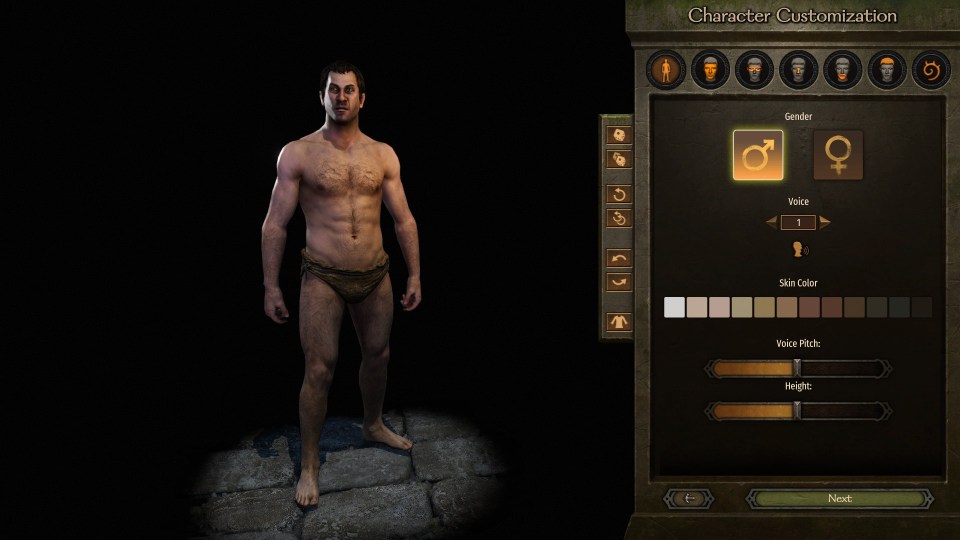
For those of you who might also be in the same situation as me, particularly not knowing anything about the series, let me do my best to explain what the game actually is.  In Mount & Blade II: Bannerlord, you start off by creating your own medieval warrior and filling out their history to determine different buffs and abilities you’ll inherently have.  From there you’re tossed into a combat tutorial that teaches you the basics of ranged, close-range, and mounted combat.

20200402142201_1

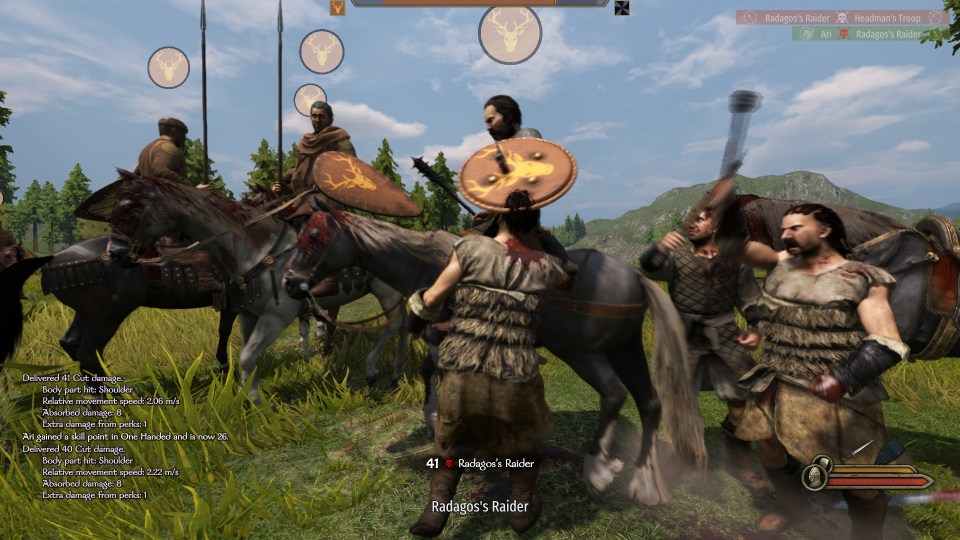
Combat so far has felt unwieldy and difficult to control.  If you’ve played games like Chivalry or Mordhau, combat generally feels the same albeit less impactful overall.  By aiming in a direction and clicking the left or right mouse button, you’ll attack or guard respectively, in that direction.   It’s a lot of wiggling the camera around in the hopes that you land a clean shot on an enemy.  In my opinion it’s serviceable, but never actually felt like I was in control of combat, but I’m sure with time you can get a good feel for that.

After the combat tutorial is completed, you’re launched into the tutorial for the other part of Mount & Blade II: Bannerlord, the RPG and strategy stuff.  I arrived at a small town in the hopes of tracking down the people who kidnapped my younger siblings (I think?).  There are a couple of layers here, so let’s start from the top.

20200402143025_1.jpg

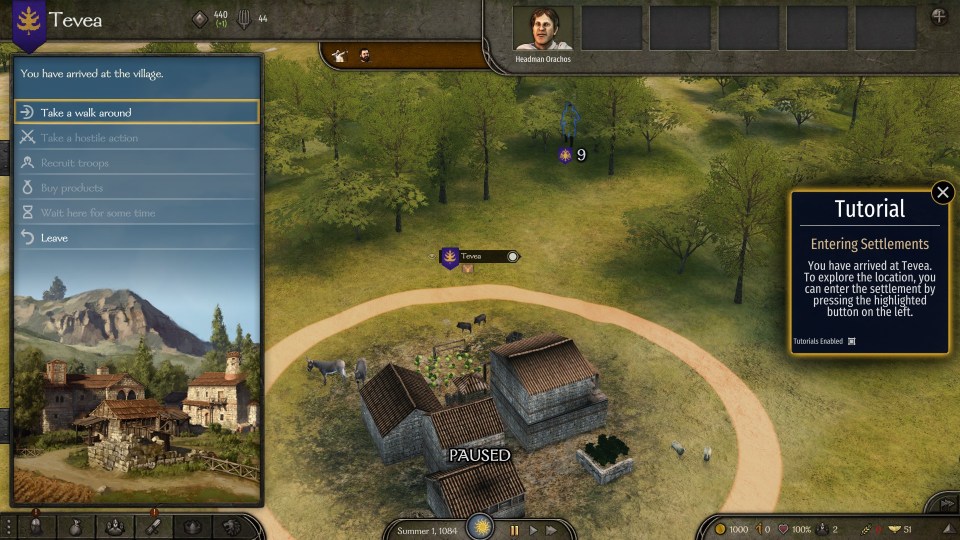
On the world map was the village my brother and I were heading to in an effort to find answers.  I clicked on the village and was presented with a menu that prompted me to either walk around, buy supplies, or recruit soldiers.  Being the tutorial, I chose walk around, which hit me with a quick loading screen and then I was into this pleasant little village where I had to find someone who could help me.  After finding the right NPC and talking to them, I was told to buy supplies and recruit mercenaries.  So I had to back out of the village, hit a loading screen, and buy buy the supplies and soldiers from the world map.  Then I had to go back and talk to the same NPC to further the quest.  You see where this is going, right?

It was truly wild to me that I couldn’t complete these tasks while still in the village.  Instead, I had to ping-pong between loading screens and menus to complete objectives that should have just taken moments.  But whatever, it’s early access and I’m sure these things will be addressed over the course of development.

20200402145807_1

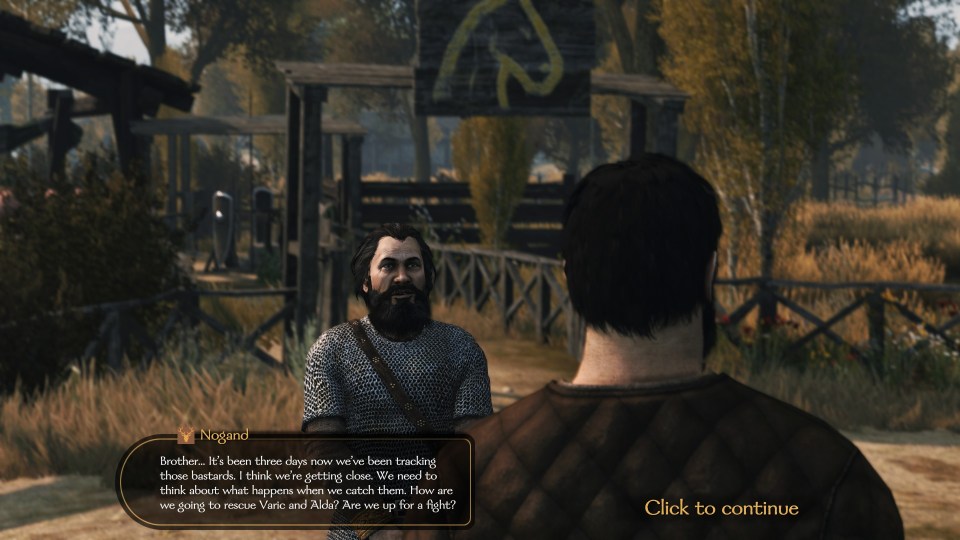
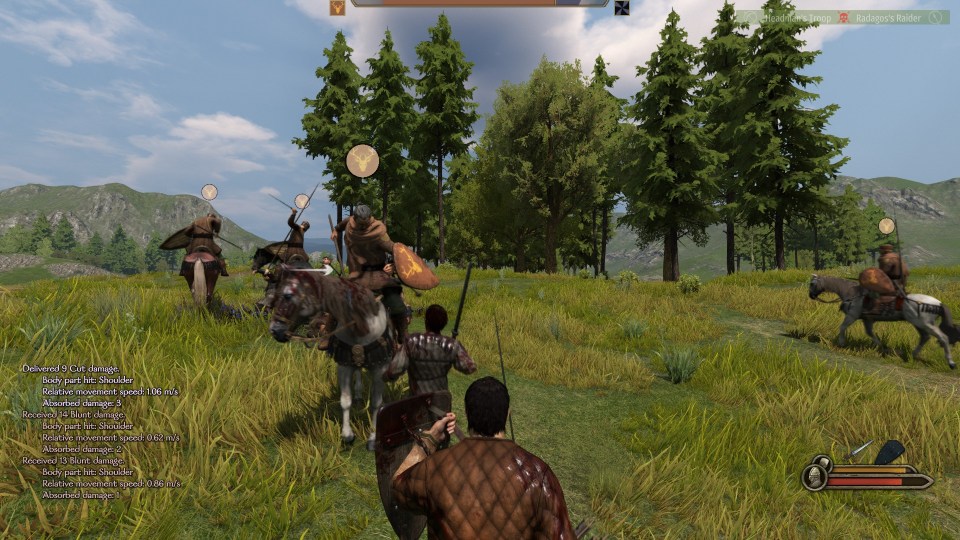
After fumbling through this portion of the game, it was finally time for me to get out there and do some hacking, slashing and looting.  I was tasked with tracking down three raiding parties that might have a lead on my missing siblings.  On the world map, I saw a raider running away from the village and I pounced upon them.  Once my character finally reached the enemy on the world map, we were bounced into a skirmish in an open field.  I had all of my mercenaries on horseback with me and charged the small group of soldiers on the ground.  It was only after I had charged in that I realized that my soldiers were not following me.

Thus, another layer of Mount & Blade II: Bannerlord was uncovered.  In the midst of combat, you can open a menu with several troop actions on it.  From basic commands like telling the party to stay, follow or go to a position, to more in-depth strategies like defensive formations were all available.  Unfortunately, time was less abundant and I just kited the enemies back to my troops where we utterly demolished them.  A victory screen showed up, and I was prompted to take prisoners.  I took all of them cause I literally don’t know why I wouldn’t.

20200402152154_1


Upon the third and final cycle of this, one of my prisoners approached and had a conversation with me.  He said he was a doctor and that raiding was not something he wanted to do, but was forced into.  He gave me the lead on a bigger bad guy who might know something about my siblings, and went on his way.  It was around here that I decided to stop playing for the time being.

Mount & Blade II: Bannerlord is an awfully ambitious game that tries to blend all of these mechanics into one cohesive package.  I think it’s still very rough around the edges, but that’s to be expected from an early access title.  I’m extremely curious to see how the story progresses, not because it’s a great narrative, but because I’m interested in seeing how player choice plays into the game.  I’m eager to see what situations I can put myself in, and what choices the game offers me in return.

20200402152145_1

But there’s a lot of things that I haven’t seen in Mount & Blade II: Bannerlord My understanding is that battles can get massive, with dozens and dozens of troops clashing as you grow your army.  There’s also the multiplayer component, which I have no clue about, but I think it allows players to build their armies with other players, putting them in specific roles and positions, pitting them against other player run armies.  All I know about Mount & Blade multiplayer is that it’s utterly wild, and primarily the reason that people have stuck with the series for so long.

I am super interested to see where the development of Mount & Blade II: Bannerlord goes, but in the state it’s currently in, I might step back from it until it gets a few more layers of polish on it, as well as some better tutorialization.  Full controller support wouldn’t hurt either.


Gut Check: Ori and the Will of the Wisps

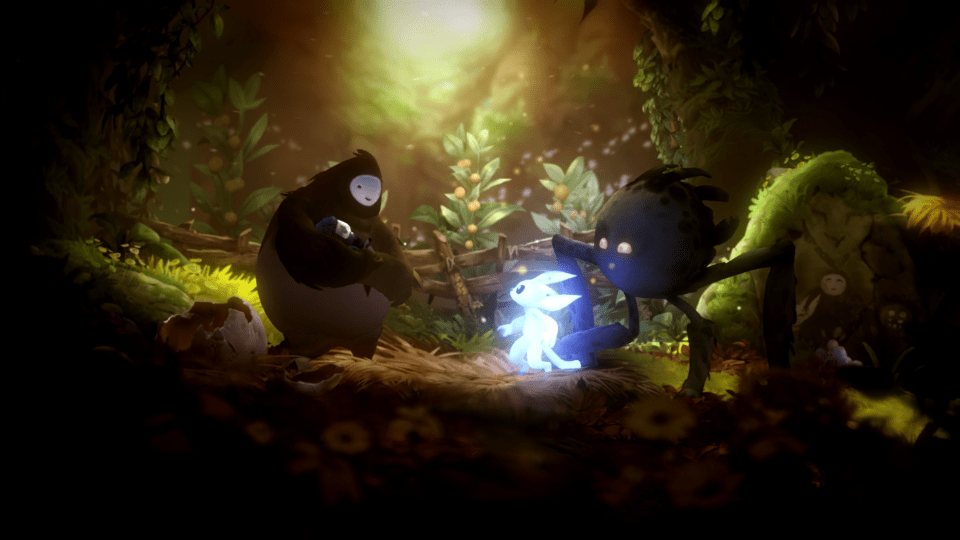
Ori and the Will of the Wisps is a phenomenal follow up to the 2015 metroidvainia, Ori and the Blind Forest that manages to build upon and refine every aspect of its predecessor.

In Ori and the Will of the Wisps, you play as titular glowing rabbit creature, Ori, who embarks on on journey to find their missing owl friend.  Through a mix of platforming, combat, puzzle solving and exploration, you’ll venture across the beautifully rendered landscape, aiding friends and defeating foes alike, all in service of finding your friend.

Ori and the Will of the Wisps is a phenomenally fun game to play.  Every aspect of the mechanics are finely tuned to make sure you’re in complete control of Ori and their suite of ever expanding moves.  Early in the adventure you’re limited in terms of what you can do, but within the first hour of play Ori will become competent at not only traversal, but combat too.

Desktop Screenshot 2020.03.12 - 15.56.52.69.png

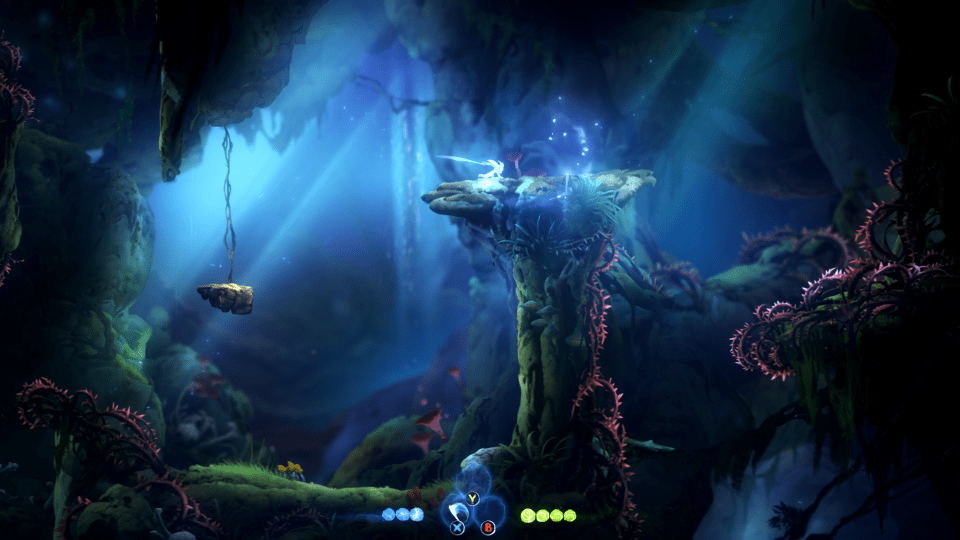
Your abilities in combat start out with a glowing sword of light that allows you to hack and slash your way through enemies.  Combat feels great, mixing in standard light and heavy attacks along with air juggles and downward strikes.  Slightly farther into the game, you’ll come across the extensive shard system that allows you to map new attacks and abilities to your controller as you please, as well as offering opportunities to level up shards to make them more viable and grant additional effects.

Along with unlocking and equipping shards, you’ll come across these trees that grant you new traversal abilities from double jumping to warping to climbable terrain.  The pace at which you’re confronted with new shards and abilities is staggeringly fast and constantly encourages you to shake things up.

Desktop Screenshot 2020.03.12 - 16.36.35.50.png

But even when you’re not in the midst of combat or platforming, you’re surrounded by the beautifully desolate world in Ori and the Will of the Wisps.  Everything is gorgeous and lovingly crafted, from level design to aesthetics and music.  Despite its beauty and soft glowing art, Ori and the Will of the Wisps is still a hard game that doesn’t punish you too hard for failure thanks to its generous check-pointing system.

The only negative thing I can say about Ori and the Will of the Wisps comes at the fault of the beautiful art.  I never thought something could be too pretty, but Ori and the Will of the Wisps has proven me wrong.  The problem is that Ori is this bright white glowing creature that is luminous in a way that can be difficult to track when there’s a lot on screen.  Every enemy pumps out a lot of particle effects and light bloom to make them pretty noticeable, and while the random enemies aren’t usually an issue, certain bosses can devolve into a mess of particle effects that make it hard to keep track of your positioning in a battle.

Desktop Screenshot 2020.03.12 - 16.02.57.58.png

It’s a small thing that might only apply to me, but it made me have to restart an early boss fight several times because Ori would keep getting lost amidst the waterfall of particle effects that the boss was producing.  But like I said, that could just me and my aging eyes.  One thing that is borderline necessary to do early on is to turn off motion blur.  Trust me on this one, the motion blur is incredibly intense.

All things considered, Ori and the Will of the Wisps is a phenomenal game that I can’t wait to put more time into.  It’s currently available on Steam, Xbox One, and it’s on Game Pass which is how I got a hold of it.  If you’re in the mood for a dense and satisfying action and adventure platformer, you should definitely check out Ori and the Will of the Wisps.

Gut Check – Goblin Sword

This installment of Gut Check is going to be fairly short because the game we’re talking about is fairly slight.  Despite its initial release on iOS devices back in 2014, Goblin Sword, like many games, has found a new home on the Nintendo Switch.  Aside from having one of the more generic titles for a game ever, it’s just an uninspired albeit competent experience.

You play as this blue haired knight who has to go through these small slices of levels, obliterating all the enemies you can and finding as many collectibles as you can.  A simple enough pitch that never seems to get shaken up in any meaningful way aside from the occasional boss fight.

There isn’t much to say about the moment to moment gameplay, because it’s all just average and serviceable.  None of it is particularly challenging or difficult, usually feeling more tedious than anything.  You jump, slash, and mush your face into every wall you can in hopes of finding a secret chest or something.

The only interesting part about Goblin Sword is how the swords themselves work.  Through either buying them with the in-game currency, or finding them in secret chests, the swords all have 3 stats indicating power, speed, and range, along with a magic spell.  Spells can be anything from fireballs, to floating murder orbs, to just screen clearing nonsense.  These are all activated through finding magic orbs in levels that allow you to cast these spells when you attack.  You can use the spells 3 or 4 times before you need to find another magic orb in a jar or after a vanquished enemy drops them.

But that’s basically the most exciting or interesting part of Goblin Sword.  Everything else is steeped in repetitious tedium that eventually will drive you to stop playing entirely.  Even the “secrets” in the levels are copy-pasted, requiring you to find 3 blue gems, and two treasure chests.  Chests can hide either money, swords, or useless souvenirs that go on display in your house, a place you have literally no reason to visit.

The only other thing worth mentioning is the in-game shop you can visit to spend your hard earned money.  You can either buy new swords with better stats, trinkets that give you an extra effect like more health or magic drops, or armor, which as far as I can tell have no actual protecting qualities, they’re purely cosmetic.  What sucks is the fact that you’re never told what the magic spell is imbued on a sword, leaving you in a position where your sword does great work as a sword, but has a lame and useless spell attached to it.

All things considered though, Goblin Sword isn’t a bad game, it’s just not that interesting or worth your time.  It’s completely average in every way which is fine because the price of entry is low, sitting at 5 bucks.  If you really have 5 dollars burning a hole in your pocket, and you’re looking for a generic platforming video game that isn’t going to challenge you that much, you could do worse than Goblin Sword.

Gut Check – The Coin Game

Describing The Coin Game is going to be fairly tricky to be honest, mostly because even after playing over an hour of it, I don’t know what to say.  In the simplest terms, The Coin Game is a virtual arcade experience where you get to play crane games, drive go-karts, play laser tag and more, in one of the strangest worlds I’ve ever seen.

The Coin Game is an early access title, which I mention because the experience itself, while supremely interesting, is a little thin.  You start off by picking either a male or female avatar, both of which are so horrible to look at, I’m thankful the game is entirely in first person.

20200219160330_1.jpg

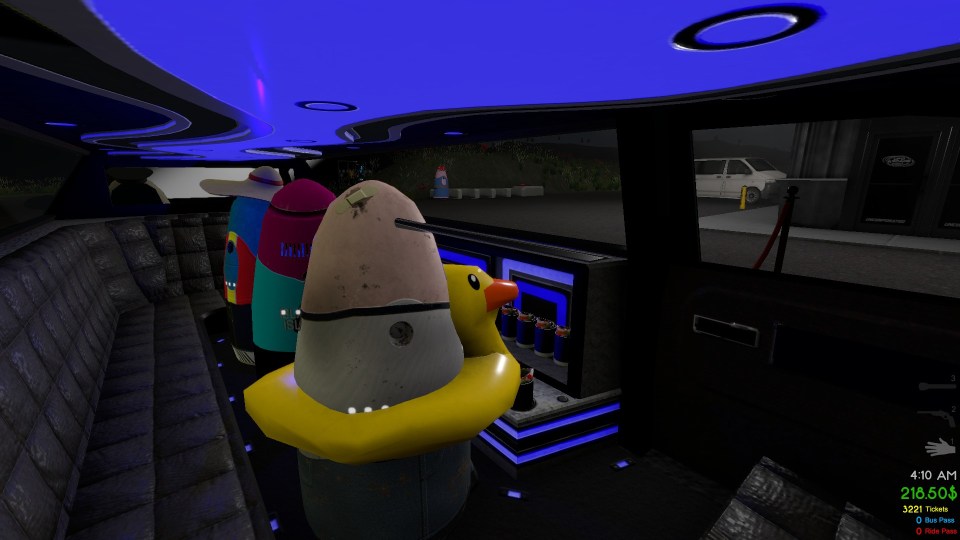
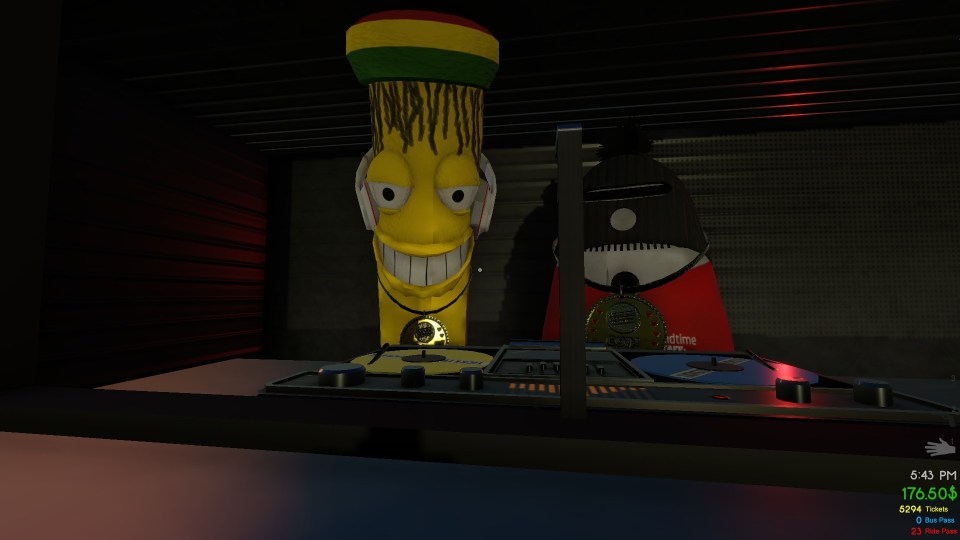
After making your grim decision, you find yourself in front a dingy arcade filled with games.  Games and robots.  From what I can tell, in The Coin Game, you’re the only human around and everyone else is some sort of egg-shaped robot on wheels that spouts random nonsense at you whenever you get close enough to them.

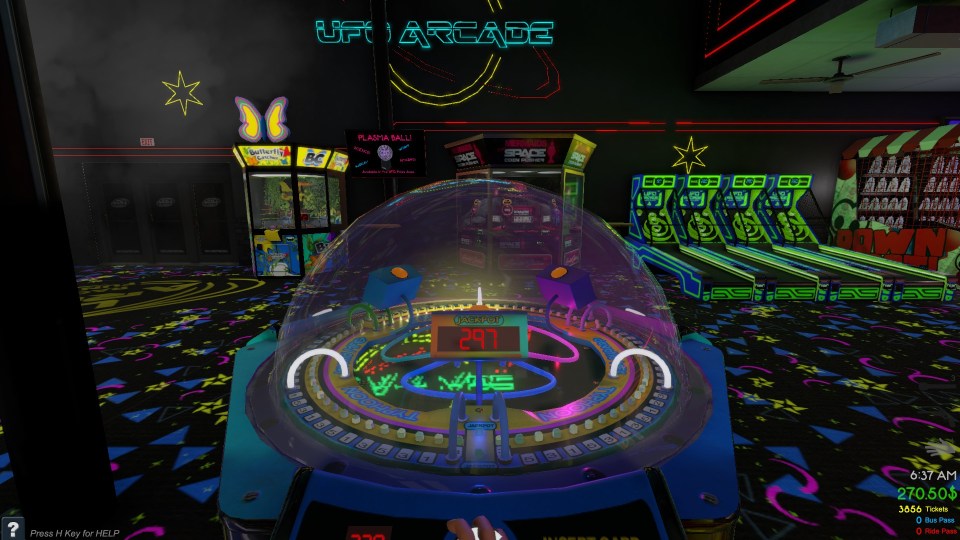
But once you get past these ovate androids, you walk around this arcade and just play some classic arcade games.  Things like claw machines, whack-a-mole, and more are pretty lovingly made, with the physics usually holding up their end of the bargain and providing an, oddly enough, realistic representation of these attractions.  Just like you’d expect, doing well at these games grants you tickets that you trade in for prizes, that you’ll use for some unknown purpose.

20200219161309_1.jpg

Now stick with me here, because if you didn’t think it was before, it’s definitely about to get weird.

The Coin Game is confoundingly an open world game with multiple arcades in it.  You go between them by taking the bus, a limo, or my favorite, your own personal golf cart.  Should you choose the golf cart, you have to stop at gas stations from time to time and refuel.  There’s also an option for a survival mode, which is perhaps the most terrifying prospect.  I did not attempt this mode.

20200219161054_1.jpg

Most of the locations are incomplete, brandishing various forms of “coming soon” signs or “under construction.”  There’s a pawn shop that isn’t currently available, which makes me think that selling your prizes for cash will let you buy food and supplies necessary for human survival, but I’m just speculating.

What’s currently in there however is still pretty weird.  From buying energy drinks, to having a dart gun and flashlight on you at all times, down to being able to just buy scratch off tickets are all weird things, that are for some reason in The Coin Game.

20200219162127_1.jpg

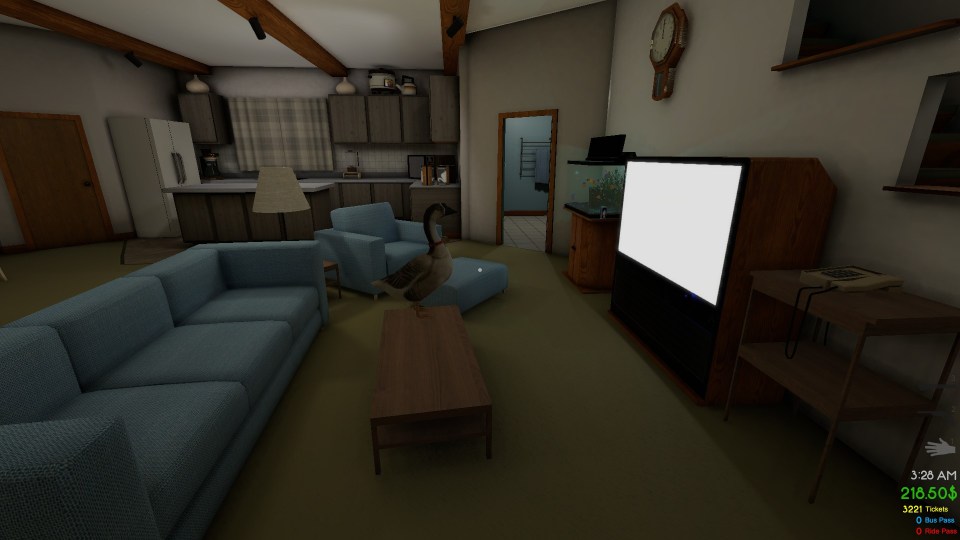
You can also visit your home, which might just be the strangest place of all.  It looks like a normal house, and is decorated like one too, with one major exception.  You have a pet goose.  I don’t know why, but you do.  You can feed the duck if you want, but mostly it spends its time watching TV.  There’s also a room in the house that’s dedicated to the goose.  I won’t go into specifics, but you should check it out.

The Coin Game is so delightfully weird and a little unsettling in a way that I’m totally a fan of.  It revels in its strangeness and wants you to embrace it as well.  The entire time I was playing, I kept thinking that it was going to have some sort of horror element to it because the atmosphere is just so off-putting in places, but luckily for me there was no terror to be found.

20200219165848_1.jpg

Like I said at the top, The Coin Game is a thin experience right now, boasting a few dozen arcade games, some bigger interactive experiences like go-karts and bumper cars, along with some truly lame rides that don’t really do anything but strap you in place and let you look around.  It only took me about an hour or two to touch every attraction in the game to give you an idea of its longevity.

All things considered, I really like what The Coin Game is laying out.  It’s very incomplete at the moment, with missing locations and attractions, any sort of story or motivation, full control support and more, the game earns its early access classification.  I’m extremely curious to see where it goes from here and what delightful weirdness they continue to inject into this thing, but for now, I’ve kind of spent as much time with it as I think I can get out of it in its current state.

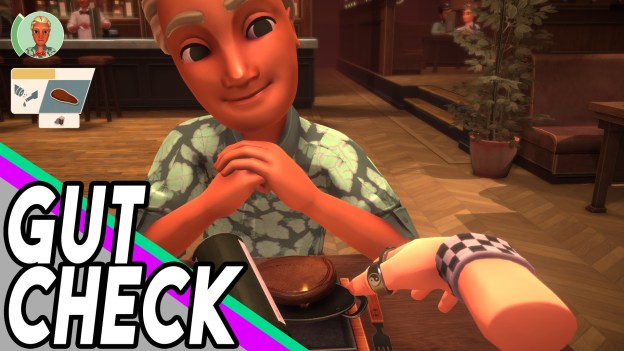
Gut Check – Table Manners

In the grand tradition of taking normal situations and injecting obtuse control schemes and wacky physics into them, Table Manners thrusts you into the miserable world of dating, somehow making it even more unpleasant than it already is.

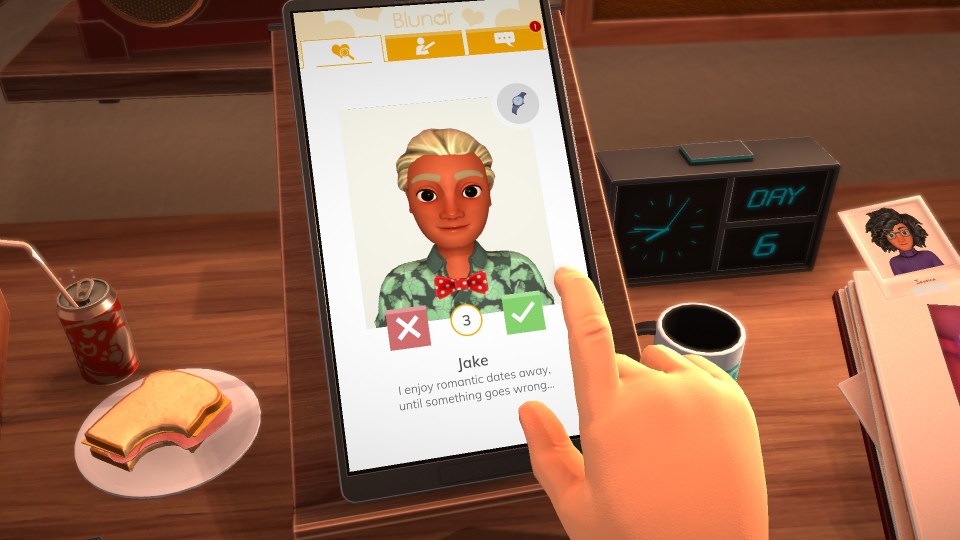
The pitch is simple, swipe through your dating app till you find someone you want to take on a date, then do it.  The only caveat is that you have one hand, and you’ve essentially forgotten how to use it.  Also, the people you’re dating are utterly useless and need you to do literally everything for them.  But let’s back up and start from the top.

20200219204605_1.jpgIf you’ve ever played Surgeon Simulator, the game largely responsible for creating this genre of “wacky hands, considerably less wacky scenario,” Table Manners is more of the same with less of the charm.
The controls are cumbersome, yet somehow oddly simplified for a game like this.  With your mouse, you control your general movements including going forward, backwards, side to side, rotating your hand and grabbing things.  The only thing that took me a bit to wrap my head around was using the W and S key to control the vertical position of your hand.  Not especially difficult, just cumbersome in the way these games usually are.

20200219205036_1.jpgTable Manners starts you in a steakhouse with your desired date, tasking you with several mundane date tasks, and then a bunch of really wild stuff for anyone to ask on a first date with a stranger.  Every level in the “steakhouse chapter” involves you doing the same tasks, while adding one or two into the mix in subsequent levels.  Light the candles, pour the wine, let them try your french fries, it all happens every single time in every level in the “steakhouse chapter.”  There are only four levels in a chapter, and somehow I was bored by the third instance because I was just doing the same stuff over and over.

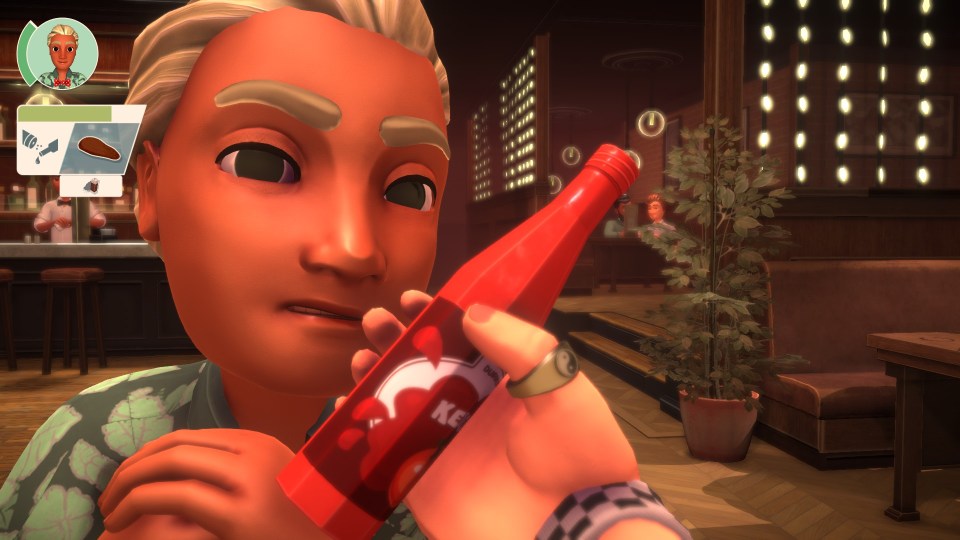
It also doesn’t help that your dates are absolutely nuts, asking you to do things like salt their food, feed them out of your hand, and perhaps the most heinous crime, asking you to put ketchup on their steak!  It’s like they know they’re committing a food crime and want you to be complicit.
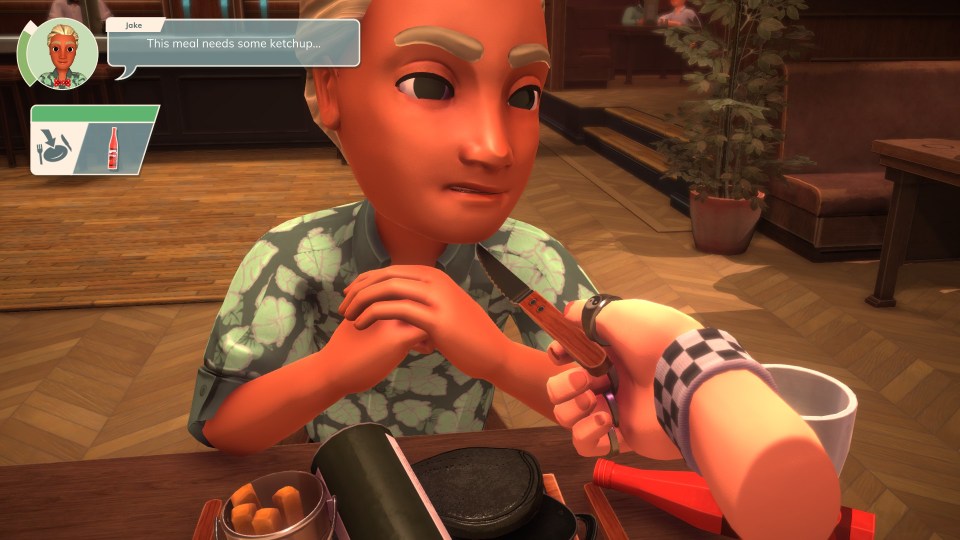
After dates, you can choose to “text” your date or any random person on your dating app, but to what end, I don’t know.  All of the dialogue options are these bad non-sequiturs, that are replied to with another non-sequitur, and followed up by one more.  It’s complete gibberish that isn’t really every funny and seems to have minimal impact on anything considering anyone will go on a date with you before you have a conversation with them.

20200219205206_1From top to bottom, Table Manners feels like a game made for people to stream and never think about again.  While it isn’t aggressively bad or anything, it’s just aggressively bland and lifeless, at least in the early goings.
The trailers show off interesting locations including a cruise ship and an airplane, but the game itself makes you trudge through a bland steakhouse and lame objectives before you see anything remotely cool.  It’s a shame too because it’s a neat concept that ends up feeling too rigid in its objectives and controls, ultimately robbing it of a lot of creative freedom you might have in similar titles.

Every moment of what I played felt less like I was doing something fun or being creative with my solutions, and more like I was just battling bad controls to accomplish a specific goal, the specific way they want me to.  Games like this can be such a blast when they allow you to tackle objectives in any zany way you choose, but in the admittedly small slice of what I played of Table Manners, I found it a little too rigid and particular for my tastes.

It doesn’t help that each objective your date gives you is timed and is the only metric by which they judge you.  You could literally hold a knife up to the neck of your date, and all they care about is if you put some salt on their fries in time.  It doesn’t feel dynamic, comedic or fun, it just feels unnecessarily stressful.  So by that metric, it totally nails the dating experience, as a game though, it’s really not worth your time.

Maybe Table Manners takes a turn later on and lets you really do some goofy nonsense and have a little bit of creative freedom, but the first act of this game really lowers the bar from the jump.  Goofy physics based games are usually up my alley, but this one goes to show that there’s always going to be outliers that miss the point of why these kinds of games are fun.


Gut Check – Journey to the Savage Planet

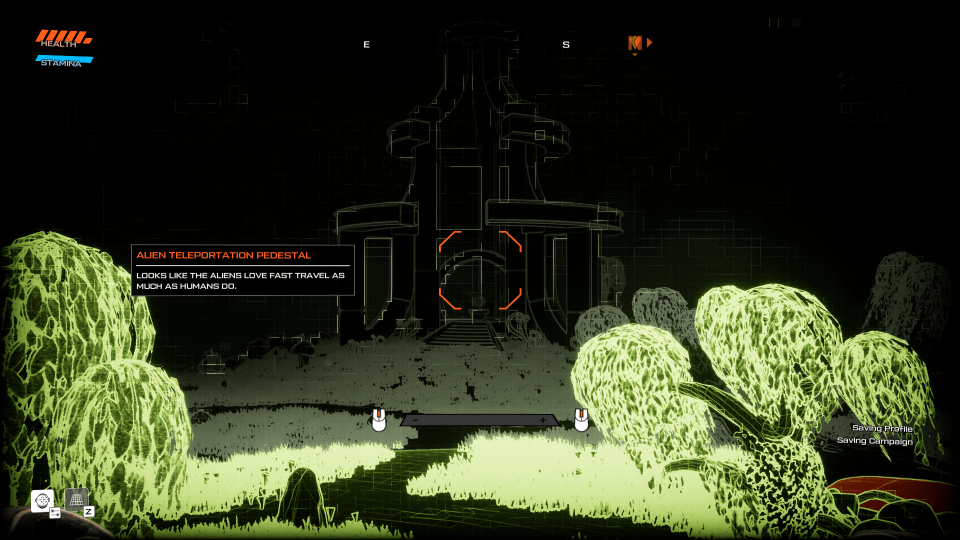
On its surface, Journey to the Savage Planet looks like another survival game, albeit in a beautifully rendered world, but that would be selling the whole game short.  In Journey to the Savage Planet you play as an unnamed and mostly silent protagonist who works for a space exploration and colonization company and is tasked with exploring and cataloguing new worlds.

You do this through a combination of traversal, crafting and using your various tools to scan and document everything you can see.  It can feel a little overwhelming in the opening minutes because everything around you is foreign and new to you, but that quickly subsides and gives way to the joy of exploring this intricately designed world.

Towers Screenshot 2020.01.28 - 15.42.20.25.png

As the title of the game surely implies, a lot of the stuff on this planet is eager to kill you, but not all of it is inherently hostile.  The first beings you come across are these adorable, round little bird cyclops things that are harmless.  Unfortunately for them, they become a puzzle solving mechanic pretty early on.  I came across several blocked passages that would only open if I launched one of these innocent birds into the gaping, toothed maw of the creature blocking the way.  But you can’t stop progress can you?

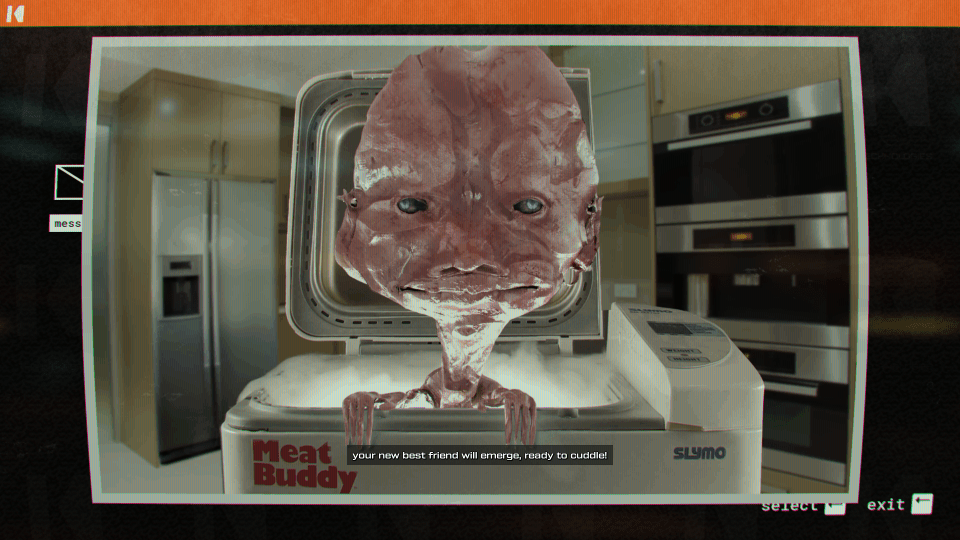
That leads into one of my favorite parts of Journey to the Savage Planet, which is the sense of humor on display.  The first thing you see is a shoddily produced, full motion video orientation video starring the CEO of the company, touting how they are now the 4th best space exploration company around.  You also get sent various ads produced in a similar fashion that are pretty good as well.

Towers Screenshot 2020.01.28 - 15.33.31.07.png

Even the things I don’t normally engage with, like emails in games, are genuinely funny and worth reading.  One of them described how I was in almost $500,000 of debt that would take approximately 50 years to pay off, will now only take 47 years to pay off, thanks to my new job as a spaceman.

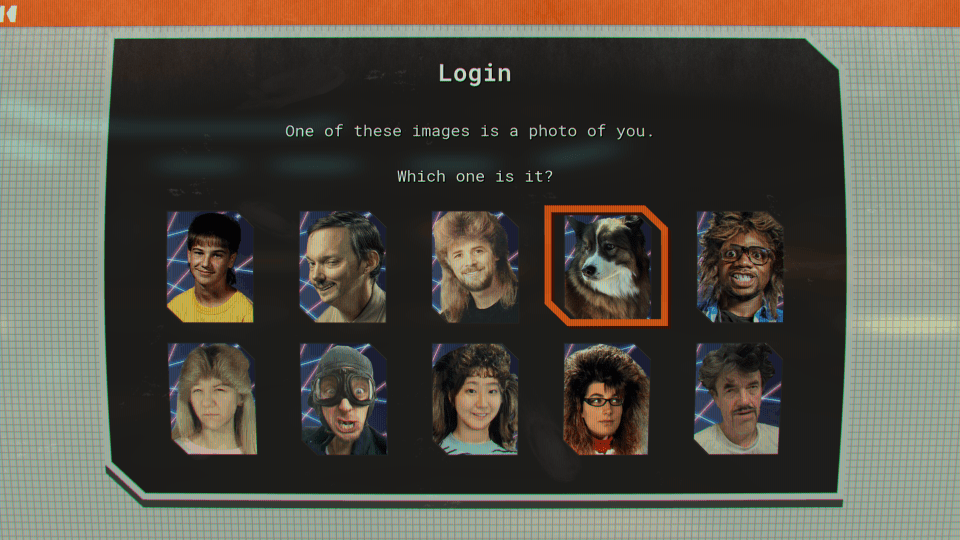
The best, but maybe even the worst thing Journey to the Savage Planet allowed me to do was select my character portrait from a veritable rogues gallery.  I of course chose the dog, which on its surface was hilarious, but the follow through might be a little more than I can take.  You see, picking this dog-stronaut, while hilarious, now means that every time my character makes a grunt from jumping, climbing or getting hit, it’s replaced with the dog version of that sound.  This has become extra incentive for me to not get hit so I don’t have to hear pained dog noises.

Towers Screenshot 2020.01.28 - 14.27.29.69.png

“But what about the actual game,” I hear you ask.  The long and short of it is that while it’s too early for me to definitively say one way or another, I can say that it’s a lot of fun to play and has yet to be overly difficult or punishing in any real way.

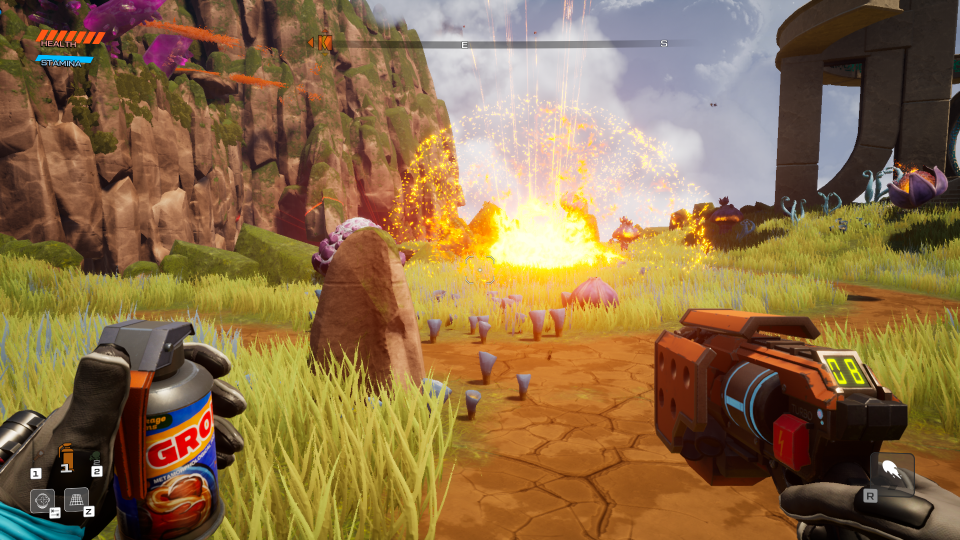
Considering that Journey to the Savage Planet isn’t actually a survival game, but just uses some of those mechanics, a lot of it ends up feeling more like an action or adventure game.  Instead of managing hunger, ammo or the usual myriad of resources, the game simplifies it all into a health bar, stamina bar, and a handful of resources.  It’s less focused juggling a bunch of meters, and more about just uncovering the mysteries of the world.

Mechanically, everything works the way you’d hope it would, making traversal pretty easy while the shooting feels tight and responsive.  There has yet to be a moment where I’ve felt outgunned or unequipped to handle a threat.  There was a “boss” fight that involved 3 armored dog creatures that would hurl rocks and charge at you that got a little hairy, but there’s always plenty of health around, and they had massive glowing weak spots on their tails.  Though I don’t think the combat is the main draw for me anyway.

Towers Screenshot 2020.01.28 - 15.36.30.05.png

Instead, I think it’s the story that’s really got me hooked.  When you arrive, you’re led to believe that all the planets the space company sends its employees to are devoid of higher beings.  Your planet however, has a massive man made tower in the middle of it, that no one was aware of.  This leads to the CEO urging you to go explore it and unravel the mystery, but that dude is shady as hell, so I think that there’s something else going on.

After my hour or so with Journey to the Savage Planet, I’m left wanting to uncover more of it and see where the story goes.  You can play cooperatively through the whole story with a friend, but I believe you have to start a coop game to do so.  I really like what Journey to the Savage Planet put forward in its opening hour, and I will certainly be playing more of it when I get the opportunity.

Gut Check – Super Crush KO

Super Crush KO is the kind of game that’s best played on the couch while something else is playing on the television.  It’s not a bad game by any stretch, but it is a pretty mindless and repetitive one to be sure.  But what it lacks in variety, it makes up for in tight controls, satisfying combat, and a whole lot of style.

The story of Super Crush KO is pretty slight, involving your character having their cat kidnapped by some alien-lady who has a robot army at her disposal.  Naturally, your character decides to take on every last robot that stands between her and her kitty.  The writing is charming and the cut-scenes are done in a comic book style that really works for the whole aesthetic of the game, but the story isn’t why I’m sticking with Super Crush KO.

The main attraction of this 2D brawler is unsurprisingly in the combat.  You’ve got your standard attack that chains into a combo, then you have directional power moves like uppercuts and ground pounds, but you also have this gun that locks on to nearby enemies that’s really good for dispatching flying baddies or keeping your combo going.

I’ve reached the third world of Super Crush KO, almost solely because of how good the combat feels, but it isn’t without its flaws.  As I said earlier, the game is woefully repetitive, from level design, to enemies, it is quite literally you running from combat arena to combat arena, to fight the same horde of robots.  It’s a real shame considering how strong everything else in the game is, because the repetition starts to feel like a real wet blanket on a game with such a strong first impression.

That isn’t to say it doesn’t introduce new mechanics or abilities, it just doesn’t do enough of that at least from what I’ve seen.  I think I’ve seen about 5 or 6 different enemy types which is fine, but the bosses at the end of the first and second level are basically the same, only changing their attack patterns.  In the first set of levels, you get four or five new abilities in rapid succession, but since that there hasn’t really been anything new aside from jump pads in some of the combat arenas that do more harm than they’re worth.

The only other gripe I really have with the game is how it handles difficulty.  Super Crush KO is part 2D brawler and part bullet-hell that seems to just throw more enemies at you to make the whole game seem harder.  Mission accomplished on that front, but it feels really cheap when you clear a screen of enemies only to have more just respawn in their wake.  This might be a me specific issue, but I constantly found myself unsure of which attack would interrupt the attack of an enemy.  Sometimes you can uppercut them out of their wind up, but sometimes, despite hitting them, they still just follow through with their attack and hurt you.  Like I said, this could very well be a failing on my part, but its happened enough times for me to vocalize it here.

But at the end of the day, I’m going to keep playing Super Crush KO, almost solely because of how satisfying it is to play.  It’s repetitive and at times tedious in terms of level design and combat arenas, but the gameplay is strong enough to keep me playing for the time being.