Tag Archives: Monster of the Week

The Master of Disaster: Fatigue – 12

During my time running various campaigns for my friends, I’ve experienced a bevy of highs and lows that have both energized and exhausted me to different extents.  Today we’re going to be talking about the latter and how if left unchecked, can wear you out pretty easily.

A little under two years ago I took the plunge and started running a campaign for my friends in D&D that went off the rails a few times, which ultimately led to me rebooting the campaign and home-brewing a story of my own.  It was exciting, terrifying, and a ton of work that would be piled atop the rest of my responsibilities and projects.  It wasn’t a bad thing by any stretch though, because I was already working on other things like finishing out my degree and working on this website.  I was firing on all cylinders from a motivation aspect.

But recently I handed in my final assignment of my last class which was a massive weight off of my shoulders.  The unintended side-effect of that however, was that all the fatigue and exhaustion that I had managed during these busier times finally caught up with me.  Almost the second after I hit the ‘submit’ button on my final, I felt like a truck hit me, and all I wanted to do was just relax.

Shortly after that, we convened online to play the latest session I had prepared for our Monster of the Week campaign, and once it ended I was thoroughly spent both physically and mentally.  I wrestled with the idea of writing our next session and pushing this narrative forward for my players, something that had up until now, had been a labor of love.  But I crumbled and ultimately had to pull the plug on the campaign and take a step back from that level of creative output that I was used to.

It wasn’t so much an issue of just running a game that had gotten to me, but the amount of extra work I had to do in order to make it all work that eventually got me.  From creating the lore of this world, to fleshing out the characters, making a compelling plot, building on the players past decisions, making maps, making music and so on and so forth, the weight of all of that had just gotten to be too much to handle.

I explained the situation to my players who were all really supportive and understanding of my situation.  After all, I had been doing this level of work for them for nearly two years, and they got that.  I also made it clear to them that I still did want to play D&D with them, I just couldn’t be the one running the show for a while.

So there I was, with a clear head and a chance to finally unwind for the first time in a while.  That’s when a different friend of mine reached out to me suddenly and expressed that his friends and him wanted to play D&D for the first time.  Part of me instinctively rejected this idea outright, but then other, much stupider part of me chimed in and rationalized doing this whole song and dance again by suggesting just using the starter campaign on this group.  I looked into it and discovered that the module on Roll20, like all of their D&D modules, was incredibly straightforward and easy to use, eliminating most, if not all extra work I’d have to do to make it work.

I still haven’t made a decision about it one way or another, because like I said earlier, I’m an idiot.  But there’s something tempting about introducing these new players to D&D the way I was introduced to it, by using the campaign the creators themselves suggest using.  I feel bad for even considering doing it at all because I had just told my group that running a campaign wasn’t something I could do for a while.  I think the reality of the situation is that I needed to take a break from running these home-brewed games that required so much of me, at least for a while.

Ultimately, the treadmill of productivity that I was on up until now worked because I wasn’t thinking about how exhausting it all was, it was just part of my weekly routine.  But once that routine got disrupted by the quarantine, and once more by finishing up school, I was unable to keep up that mental pace.  A new DM has risen to take my place in our core group and I’m excited to just play D&D again for the first time in a while, but I’m also genuinely intrigued by the idea of introducing a new batch of people to role-playing games, as long as I don’t have to work too hard to do it.

If you’re looking for some sort of sage advice or piece of wisdom you can glean from all of this, I suppose I’d want to impart upon you the idea that it’s okay to step back and let those batteries recharge.  If you aren’t excited about the game you’re running your players through, they’ll feel that too, and I’d rather not disenfranchise them to the idea of playing a campaign of mine again, and instead just end it graciously.
The Master of Disaster: Maps – 11

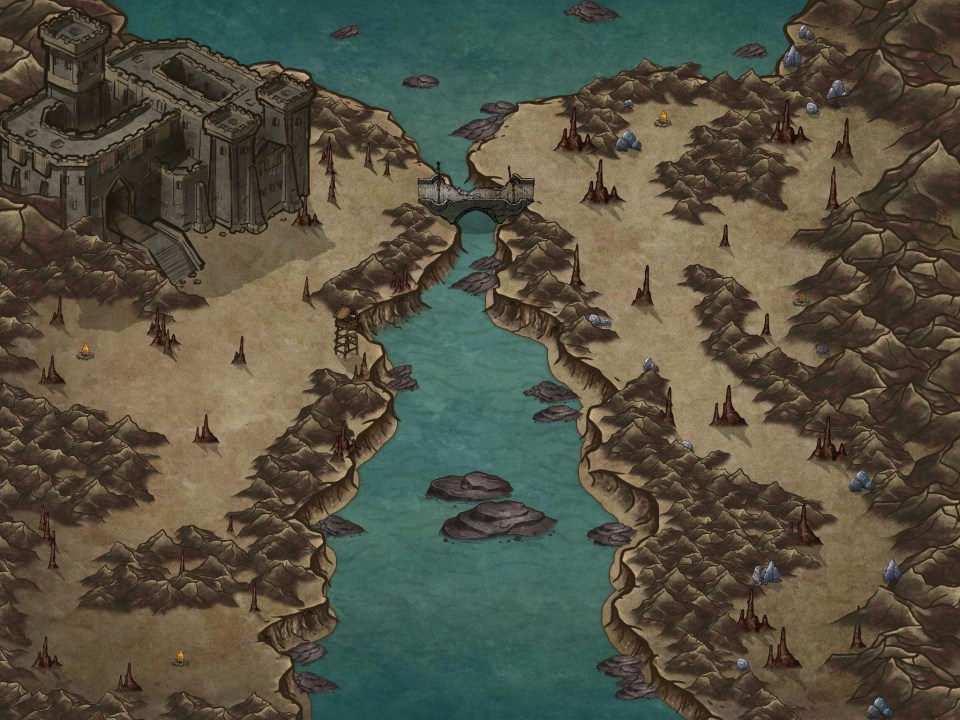
Welcome to another installment of The Master of Disaster, a feature where I outline some of my preferences, tactics and stories that have come out of both playing, but mostly from running various tabletop role-playing games.  This time around I’d like to talk about something fairly obvious, but easily one of the more labor intensive parts of being a GM.  Of course I’m talking about maps.

To preface, considering all of my GM/DM experiences revolve around playing a game online, this article is going to exclusively be about online resources and tools I use to make maps.


MAP PURPOSES

First thing I want to touch on before we get into any specific tools is the mentality I have when I decide it’s time to make a map.  It’s an alluring prospect to have a map ready for every location your players might visit, but that’s a fool’s errand as well as the quickest way to lose your mind.

In my previous campaign where we ran a custom story in a custom world using the D&D rule-set, I wanted to create an entire continent with interesting topography, plenty of hidden areas with quests attached to them, and unique cities that all had a different feel.  While that sounds like a lot (and it was), I went ahead and pushed on, creating roughly 30 different maps that my players might stumble upon, not including bespoke dungeons.

Cave 1.jpg

I essentially wanted them to approach my world like they would have if they were playing something like The Elder Scrolls V: Skyrim.  I had random encounters ready to go, caves and dungeons they could stumble upon and of course, cities for them to explore.  The problem was that I was approaching running a campaign along with map making, as if it were a video game.  Some video game concepts might translate better than others, but the way I went about crafting a world didn’t 100% work out.  Ultimately, I only ended up using a third of the maps I made before we ended the campaign.

Fast forward to the current campaign I run using the Monster of the Week rule-set, and instead of a massive world that’s been hand crafted, I went went with a city that had only a handful of notable landmarks.  Some of these landmarks do have maps associated with them, but for the most part I now rely on my players to tell me where it is they want to go, and flesh it out on the fly by painting a “word picture.”  This approach is easier on me, but far less visually appealing for the players.  So it’s good to brush up on your improvisation and narration skills before attempting this.

Sea of the Dead.jpg

The point I’m trying to make here is about over preparation.  I went insane and made 30+ maps, most of which that were never seen before, because I had these grand ideas about where my players would go, and what they’d do.  As we all know though, you can’t assume that your players will do anything you plan for.  My strategy now is to build each session, maps and all, based off of what happened in the previous one.  It lightens the workload a lot and let’s you get particularly detailed with descriptions if you know your players are going to be there for a while.


Being that all of my sessions are run through the Roll20 service, I rely exclusively on online tools and resources to aid me in my map making endeavors.  These tools range in quality and scope, but all of them are good for different facets of running a game.  So here are a few of my favorite tools and resources for you to use.

INKARNATE

Inkarnate.jpg

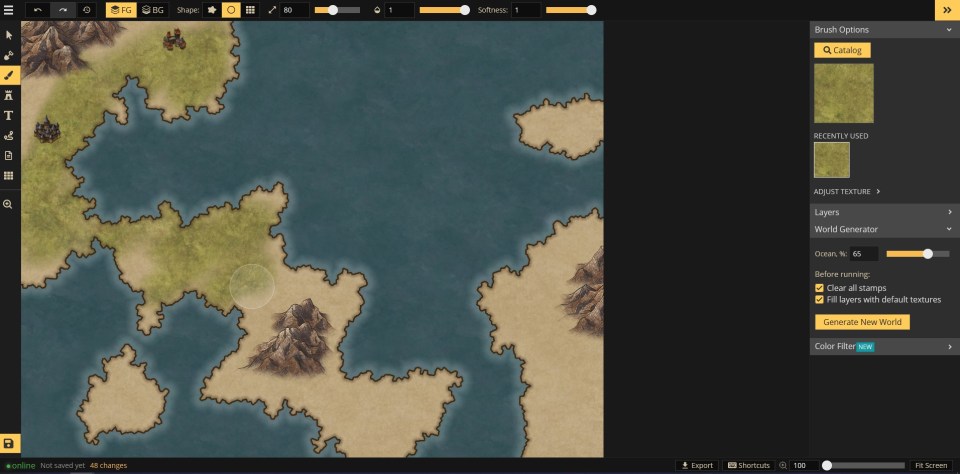
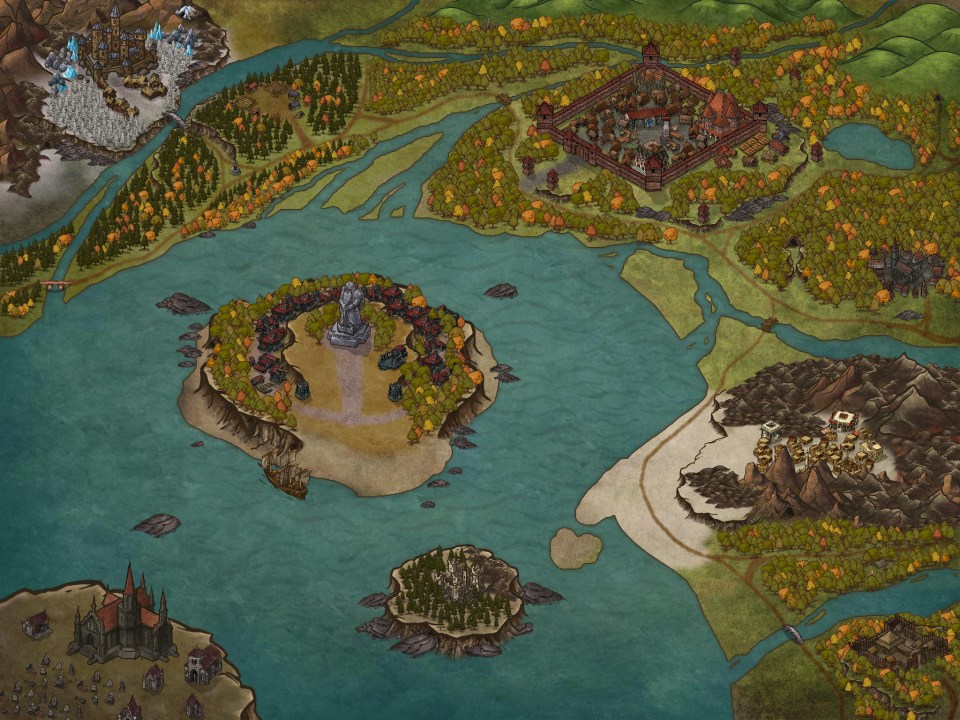
Inkarnate is a really accessible “free” tool that you can use to make all manner of visually striking maps.  It has a robust editing suite that has a lot of custom art for you to plop down and create with.  Within minutes you can generate a world, regional, or city map with various terrains, buildings and landscapes.  The tool is great whether you want to only spend 5 minutes in it, or an hour.

The only thing that could be a drawback is that the free version of Inkarnate, is severely limited in what you can actually use.  In the paid version, I have access to hundreds of different objects from different kinds of trees, mountains, buildings, walls, gates and so on and so forth.  The free version only had a fraction of that stuff to use, but still enough to pump out a couple of maps.

Alavor West.jpg

The free version also limits the export quality of your maps in some regards, although while I have the option to export my maps in 4K, I don’t know why I ever would.  The silver lining here is that if you did want to shell out cash for the full suite, it’s only 5 dollars a month or 25 for a year upfront.  I think it’s worth the price if you need good fantasy themed maps, but if you’re running anything other than fantasy, Inkarnate has basically nothing for you.

MEDIEVAL FANTASY CITY GENERATOR

Fantasy City Generator.jpg

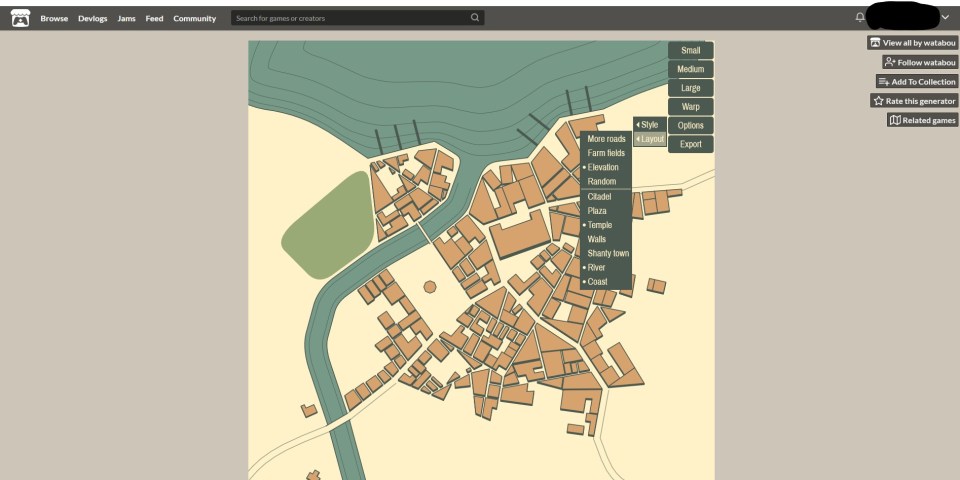
This one is kind of self explanatory, but it’s worth talking about briefly.  The Medieval Fantasy City Generator is super easy to use, but fairly limited as well.  With only a few clicks, you can generate a top-down view of a city and determine if there are farms, roads, coastlines, and other things like that.  It’s quick, it’s simple, and it’s free.

Arden.png

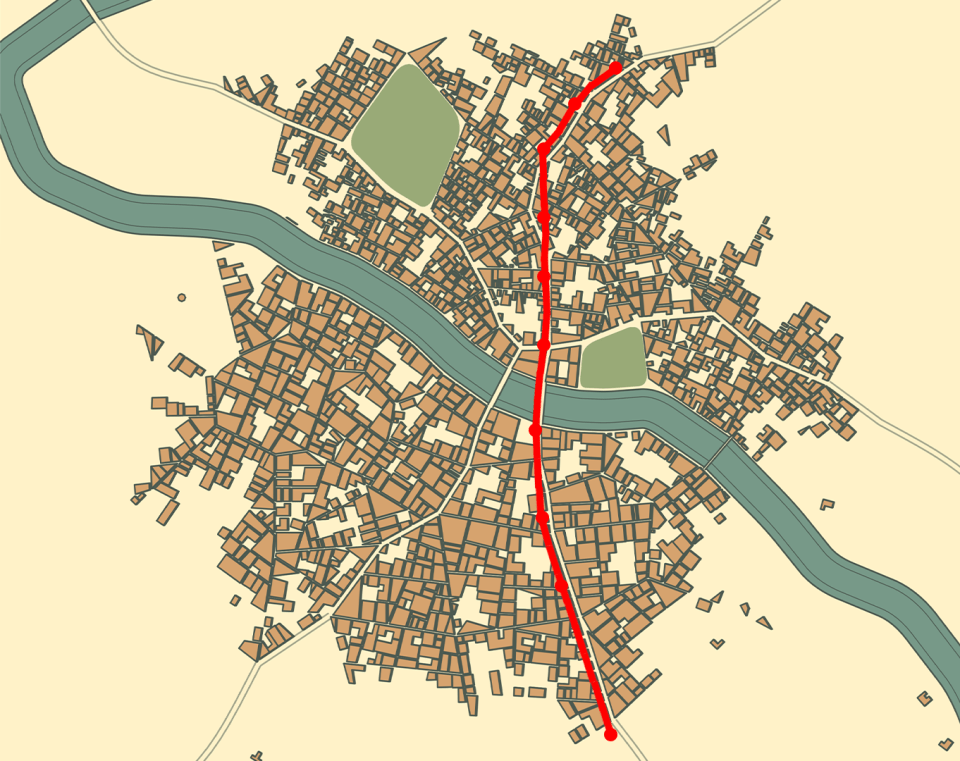
What this tool isn’t however, is super customizable.  You can choose different color and object options to toggle on and off, but you can’t really get granular with it.  You can edit the dimensions of certain objects in the city, but that’s about the extent of it.  I actually used this tool to make my modern day, Monster of the Week city, and it’s worked out pretty well.

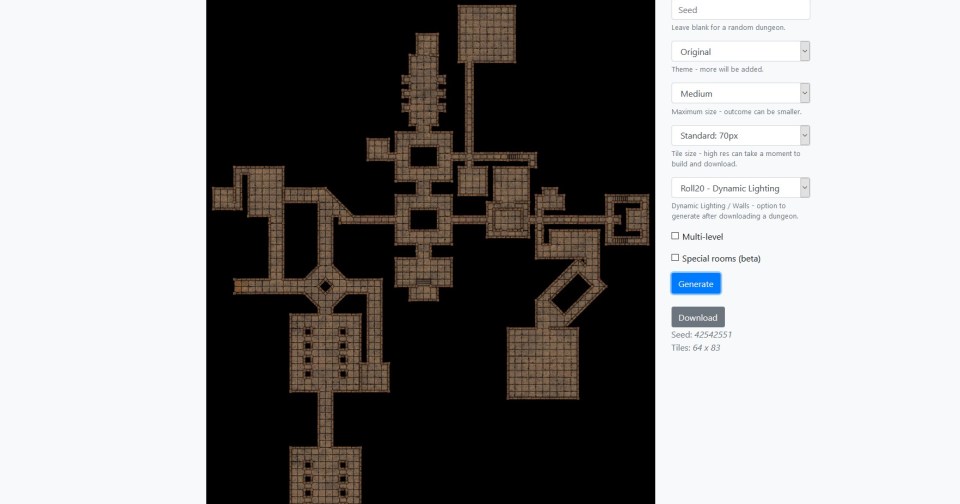
DUNGEN

dungen.jpg

Want to generate a dungeon really quickly?  Well DunGen has got you covered, although not completely unless you back the maker’s Patreon, which you should consider if you like this tool.

With DunGen, you select a few options, size, theme and levels, and in seconds you’ll get a pretty awesome looking dungeon.  As I’m writing this in early April of 2020, the creator has unlocked some Patreon exclusive features for everyone to use during the pandemic, such as higher resolution downloads, and automatic dynamic lighting integration for Roll20 users.

Since the tool is using pre-generated assets which it stitches together, the maps can feel a little “samey” in spots.  But despite that, it’s one hell of a tool that I’ve used several times in conjunction with the art assets I have on Roll20.  Just drag a couple of boxes and torches or whatever on to one of these dungeons, and you’ve got something people will think took you hours.

DONJON

donjon.jpg

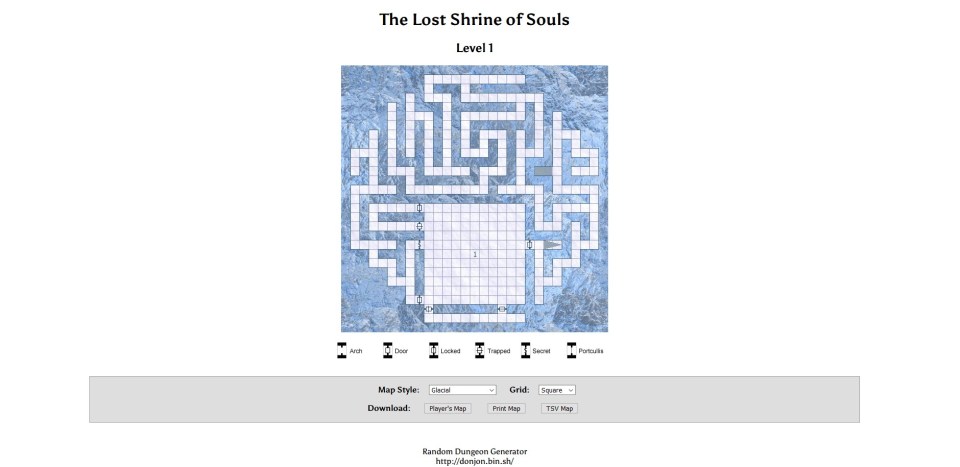
Finally, I’d like to highlight something that isn’t just a map making tool, but something all GMs should explore.  Donjon is a massive resource that includes, various map generators with annotations for doors, traps, and stairs, as well as a generator for just about anything you can think of.

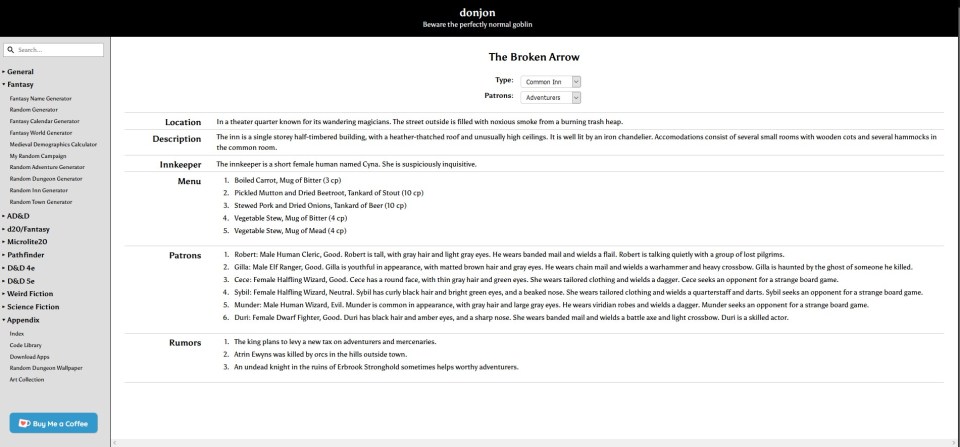
In a matter of clicks, not only can you make dungeons, but you can just generate full quests and locations.  For instance, the image below this paragraph was just the first thing that came up when I clicked on “inn generator.”  I now have this one page that not only gives me a quest to give my players, but menu items, NPCs, rumors and a description of the place itself.  In one click, I am able to describe a scene that might take me a while to write, and even longer to illustrate.

donjon 2.jpg

Donjon is an amazing set of tools that everyone should check out.  If you just need a dungeon, click here, but I strongly suggest you check out the entire suite of tools they have available.


This feature has already run pretty long, but I just have one or two more things to touch on really quickly.  Firstly, make sure your maps are clear and legible.  What is just a stack of useless boxes you plopped in the corner for flavor, might turn into a 20 minute conversation about looting the boxes because your players don’t know any better.  Not to say that those conversations aren’t useful or fun, but if you’re on a time crunch like we usually are, minimize the amount of confusing imagery on your maps.

Refuge.jpg

Finally, and this one is pretty obvious, but make sure each room has a purpose.  I know there’s only so many goblin sleeping quarters and dining halls you can stuff into one dungeon, but there is nothing more deflating to a player than the feeling that exploring is a futile effort.  These aren’t just maps, they’re supposed to be visual representations of “real” places.  Not many people just have an empty room in their homes that exists for no reason.


Anyway, thanks for sticking with this one for as long as you did.  I could go on and on about making maps and easily double the word count on this feature, but my fingers are starting to cramp.  So for all of you DMs out there who suddenly have to migrate to online sessions, I hope these tools helped a little.

The Master of Disaster: Campaigning on the Side – 06

Due to various scheduling conflicts in the past month, my group and I haven’t been able to play much Dungeons & Dragons.  I’m not unreasonable, I know that real life obligations come up and take priority in just about every situation.  Normally in our small group of 3 players and myself, I’m able to treat these sessions as opportunities for the characters who are presently there to embark on some of their own personal quests and flesh out their backstories.  But earlier this month when one of our players was out, I decided to try out a different role playing game with my group; A game I think they ultimately enjoyed more.

With a man down, I created a quick one-shot campaign in a game called Monster of the WeekMonster of the Week differs pretty drastically from D&D in some key ways, particularly in limiting the amount of things that the players and myself have to manage.

Really quickly, let’s breeze through the basics of Monster of the Week.  First, the GM never rolls any dice, and the players only roll 2 six sided dice to determine everything.  Secondly, everyone knows what success and failure look like because the numbers they roll have predetermined outcomes.  For example, rolling a 7 to 9 for anything is considered a mixed success.  A mixed success usually means that the players do what they want, but at a price.  Sometimes that price is unwanted attention, a glitch in a magic spell, or damage, but it’s never an unknown outcome because the players get to choose which one of these complications I hoist upon them.

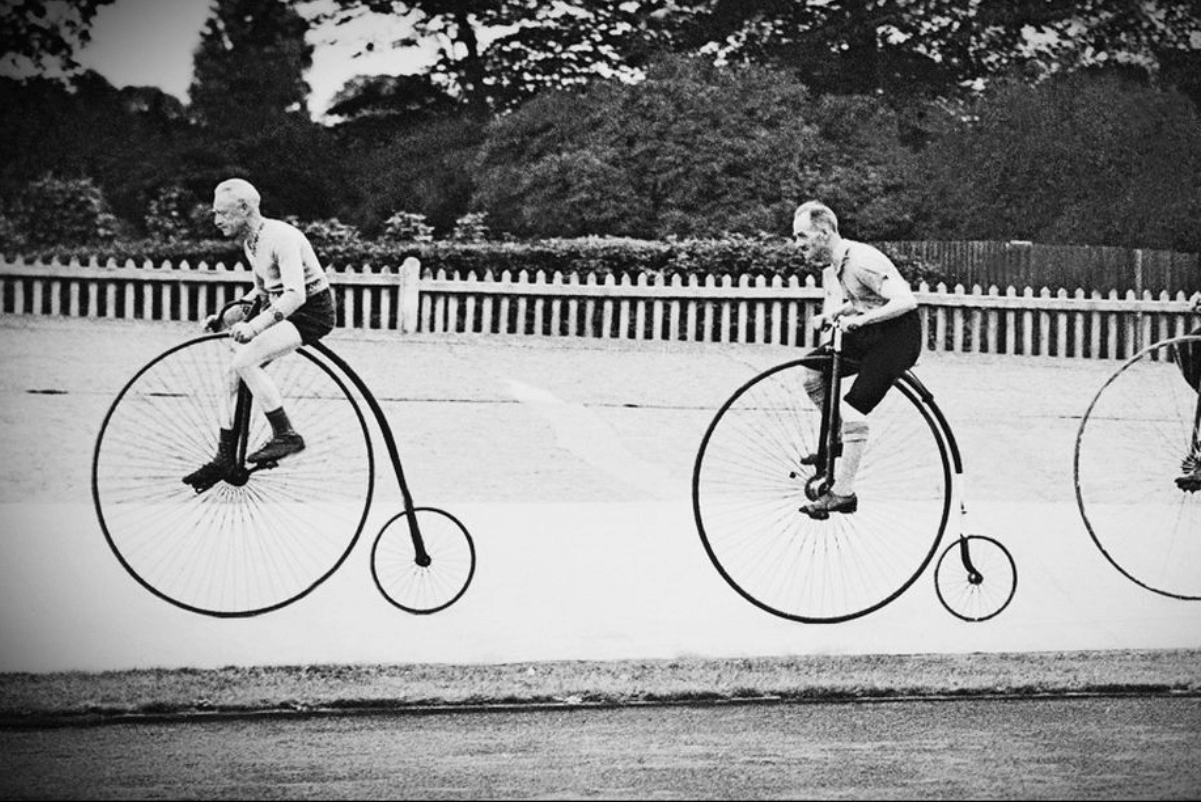
So with all of that in mind, I set my players off into a contemporary setting with the pretext that they were private investigators hired by the city to assist in finding a missing child.  One of our characters was a spell-slinging wizard, while the other was a man who had to quell the dark monster inside him by eating everything he could all the time.  They also decided they wanted to parade around town via unicycle and penny-farthing bicycle which was a nice touch.

What I really liked about Monster of the Week is how it’s a more role-playing focused game as opposed to a combat focused one.  It encourages players to talk to NPCs and garner good relationships with them instead of trying to intimidate and fight their way through every situation because everyone is pretty squishy.  And due to said squishy-ness along with the fact that this story took place in a modern town with laws and law enforcement, it made the players feel more grounded in the world and raised the stakes a little bit.

What I think my players enjoyed the most however, was the fact that everything is out in the open and easy to understand.  They know that when they roll a 6 or below, that’s a failure, but they get an experience point.  They know what questions they can ask me as the GM when they roll to investigate a mystery because they have a list to choose from.  None of the mechanics are obscured from the players, they know the moves they can make and the consequences of each of them.

All things considered, I really enjoyed playing Monster of the Week and it was well received by everyone involved.  I think we’re all looking forward to returning to it as soon as possible, or at least I know that I am.