
Tag Archives: The Master of Disaster

The Master of Disaster – Big Hits

A persistent source of frustration for me has always been how my combat encounters would routinely devolve into wars of attrition that were both, not fun to run and definitely not fun to play. I’ve tried a lot of different approaches to injecting life into my combat scenarios, most of which involved putting in interactive elements like turrets and cannons into to my maps and hoping that would be interesting enough for my players to engage with. None of it really worked out the way I wanted it to, but I had to keep trying for the sake of fun.

The list of issues started with me not doing enough preparation in advance of combat-heavy sessions. I cannot overemphasize how important it is to do your prep work for battles. I always thought I’d be able to adjust on the fly and make enemies coordinate attacks and spells in a meaningful way, and while maybe some GMs can do that, I cannot. There’s a fun juxtaposition to behold when comparing my love of D&D to my complete inability to think tactically. My ambushes rarely felt ambush-y enough, my boss battles lacked “oomph,” and no amount of narrative leading up to an encounter could make up for the boring slug-fests they eventually devolved into.

Aside from just knowing enemy abilities and modifiers, one of the biggest things I had to contend with was the concept of how aware of the world around them an enemy should be. Specifically, should my enemies be able to identify the party wizard as such, and then use that knowledge to avoid clumping together in optimal fireball range, or should this band of goblins be thoroughly unfamiliar with the concept of magic altogether? I’m sure that question gets answered differently from campaign to campaign, but it’s something worth thinking about when world building.

Regardless, I never consciously decided that my enemies shouldn’t be aware of spells or tactics adventurers might use, but actively deciding that they could know these things led to me playing them more thoughtfully. No longer would all of my enemies blindly charge the wizard in a single filed formation, ready to sacrifice themselves to an impending lightning bolt. No longer would my enemies be so bloodthirsty that they’d give up every ounce of advantageous positioning just to hit someone with their spiky club. No longer would my enemies be so stupid in combat unless I truly wanted them to be.

All of this is in addition to making more dynamic situations in general. Knock down, drag-out fights can be fun, but peppering having objectives or taking a wave-based approach to enemy distribution can be an absolute game changer. Combat for the sake of combat is fine, but I’ve found that encounters that are spurned on by, or have some consequences pertaining to the larger narrative, have elevated both the game play and storytelling aspects of my campaign.

Recently, my players were infiltrating the warehouse of a courier service, looking for some evidence of an alleged connection to a local drug trade that was ravaging the area. The goal was to find the evidence and get the hell out, no more, no less. The party split up to utilize the various entry points of the warehouse, which led to the rogue darting around in the shadows and scouring the place for clues, while the druid wildshaped into a spider and sneaked into the office where some incriminating files could be found. A few bad rolls later, and the majority of the party is in combat on the warehouse floor, while the druid secured all the evidence they needed on a natural 20 investigation check. While not the intent, the combat turned out to be an excellent distraction for the druid. This led to a moment where the druid had what they needed and ultimately escaped while the other members got utterly rocked by an overwhelmingly powerful enemy and their minions.

There was this pregnant pause before the druid scurried out of the window where they thought, “should I go and help them?” The druid wouldn’t have made much of a difference in combat, so the party agreed that getting the evidence and getting out was the most important thing. The druid left and ran into the night, far away from their friends whose fates were unknown.

Because of how things played out in this combat scenario, the majority of the party was separated from the druid for an extended period of time. Conveniently, the druid had some scheduling issues, so I was able to run a completely different session with the other players about what happened after they were defeated in combat. It was a whole side adventure that really added to the drama of the story and raised more questions about the characters involved, various NPCs, and their backstories. My point here is that dynamic combat has a bigger impact than just cool fights — they can also be the catalyst for interesting story beats.

But overall the biggest change I made was the easiest one to implement, and it’s something I struggled with for a long time: I had to become okay with beating the shit out of and possibly killing the player’s characters. While there is something to accommodating different play styles with varying difficulties, I would tend to bend over backwards to save my players from their bad decisions. I had a nasty habit of pulling punches out of fear that killing a player would make them want to stop playing D&D with me all together. I still have that fear, but now I trust the people around me to actually want to play the game and accept the consequences of their actions.

Just about everything I’ve written about in this article was actively implemented in our most recent session, which saw my players were taking a ride to a northern city aboard a dwarven ship. The ship was attacked by a rampaging group of Sahuagin, who were just as interested in scuttling said ship as they were killing its passengers. Instead of just making these Sahuagin horny for stabbing their enemies to death, I had some of them also attack the ship directly, which dovetailed into a whole mechanic for patching holes in the hull. I simply made some enemies change targets and it made a world of difference and especially heightened the drama behind something so benign as checks to patch the boat.

Just as they thought they had things under control however, a second wave of enemies emerged from the ocean, both boarding from atop the deck and through the already battered hull of the ship. I had hearty fish-lads, soaking up just as much damage as they were doling out. I had a spell caster keeping the rogue and druid from standing still and getting too comfortable. And I had a big, legendary action-filled boss wreaking havoc among NPC and PC alike. The battle was chaotic and I could see the desperation in my player’s eyes when they really needed to roll well. They were pushed to their limits and depleted of resources, but they managed to squeak out a victory. It was awesome.

The truth of the matter is that there is no “one-size-fits-all” approach to anything in D&D because every group is going to want something different. These things worked for me with my current group but that won’t always be the case going forward, and it’s important to acknowledge that. I think the simplest and most valuable tip I can offer is this: you need to know what’s written on the page. Knowing what behaviors and abilities a creature has is invaluable when running a game, because role-play doesn’t suddenly stop when you’re in combat, it’s just different. Knowing why an enemy is attacking and how it likes to attack is just as important as knowing what kind of damage dice it rolls.


Thanks for reading this article, and consider subscribing to The Bonus World so you can get an email updating you whenever we publish something new.
The Master of Disaster – The End of Everything

“I just want to feel the sun on my — well, I just want to see the sun for once.” Wrapping the arm of a legless warforged over her shoulders, she and the remainder of the party made their way to the outside of the facility to get a view of the desolate landscape. They placed the unnamed bot down and leaned it up against the base of a statue to a long forgotten god, letting them bask in the sunlight for the first time in their life. Four adventurers sat beside them in a somber silence, and marveled at the setting sun. Admiring the sprawling outdoor vista through the lens of someone who had never had the privilege to do so before. Content for the first time. The light flickered and faded from its eyes, and their body slumped slightly to the side — motionless.

“This sucks,” said one of my players, breaking the silence.

It did suck. That was the point. We had spent a massive portion of our campaign inside of a place that was supposed to be miserable and oppressive, but I was never able to truly make things feel as bleak as I wanted it to. But right there, right at the end of our campaign, I was able to gut-punch them real good.

But the truth of the matter is that I also gut-punched myself, because I realized that moment was the last non-combat thing they were going to do before they sailed off into the final encounter. I’m proud to know that the last role-playing moment they’d have was seeing their characters finally experience sadness, which is a huge accomplishment for me. Bittersweet as it is, this marks the end of our Eberron campaign.

As of writing this, we still haven’t actually done the final battle, but we have exhausted all of my prepared content, something I thought I’d never actually be able to confidently say. I’ve tinkered and fiddled with the final session plan over and over and finally have it at a place that I’m satisfied with, but I still wonder if it’s going to be good enough?

Did I make good on the story? Did I help the characters grow? Have I accounted for every plot point I put forward over the course of the past two years? Definitely not that last one, but even if I somehow did I still would be tense at the very notion that this thing is finally ending.

I think what I’m going to miss the most about our campaign is the world that we crafted together. Our version of Eberron was fairly by the book when we started, but the story and the player’s actions have so dramatically changed the world around them. It’s going to be really tough going back to a vanilla setting that my players haven’t thoroughly sullied. I’m positive that whatever we do next will get just as filthy, if not more so than our Eberron world, but it’s going to take time.

I don’t know about my players, but there’s a lot of emotion wrapped up in this final session for me and I don’t know how to process it. This is by far the longest creative project I’ve ever worked on, and to finally be able to complete it is a massive accomplishment for me. It makes me wish I had been documenting our journey better, something I’m considering doing for our next endeavor.

Ultimately, I’m not looking for my players to have an epiphany or anything from the conclusion of this campaign, but I am curious to see how they react. This is the ending their characters have earned, and I hope that what I’ve prepared for them meets at least some of their expectations. Although, all of this could be for nothing considering they still have to survive my devious gauntlet. So maybe the ending they earn could be a shitty one, and that’s on them — mostly.

The Master of Disaster – Invested

From plot inconsistencies to rule clarifications, there are a ton of pressure points that have popped up over the course of every campaign I’ve run, but for the most part any obstacle in a TTRPG can be addressed if given enough time. We can take a brief pause to look up a rule for more clarification or we can stop to discuss how a plot point is at odds with some previously established lore, but the one thing we can’t easily address is a player’s level of investment in what’s happening in the game, and that can be a problem.

For the uninitiated, I’ve been running my players through an Eberron campaign that started with their characters living normal lives in the big city, but has evolved into exploring the Mournlands, a zone of wild magic where incomprehensible horrors exist. I tried to make it a point to not just throw bigger and badder enemies at them in an attempt to emphasize how bad this place is, cause that’s not really interesting or apt to what the area is about. Instead, I’ve genuinely tried to put them in challenging positions where they have to really consider their actions and choices, attempting to make situations less binary than they’ve been in the past.

Despite my best efforts however, when I asked them how their characters were holding up in a mental capacity, I was a little disappointed when some of the answers I got boiled down to, “I’m good.” Really? You’re just fine? I’ve been hitting your characters harder than ever, both in terms of battles and narrative content, but you’re good? Sure that’s deflating to find that my story and world-building haven’t done the trick, but maybe your characters are genuinely taking this whole situation in stride. Fine.

But that investment isn’t just limited to a player engaging with the content of the story, it’s also a question of if their character has any additional motivations outside of just, “defeating the bad guy.” We rarely explore all of the little lifestyle stuff that TTRPGs have to offer, nor does anyone really engage in a vice or follow up on personal quests, but that may just be a result of us having limited time from session to session. I get the idea of not wanting to feel like you’re monopolizing the session with some stuff that isn’t intrinsic to the plot, but some of the most interesting and memorable stuff happens in those moments. My players are more or less tethered to one another and act as a hivemind rather than individuals, although to be fair to them, there isn’t a whole lot else to do aside from experience anguish and suffering inside of the Mournlands.

I don’t want to sound overly negative because I do love my group, they just happen play the game a little differently than I was expecting. I think that part of it is the aforementioned short amount of time we have to play, and the other factor is that I don’t like juggling clocks and timers. Because of that, it ultimately allows them to pocket a bunch of quests and tackle them later like in a video game without much consequence, but that’s something I’m working to fix.

I also think it’s an issue of playing too meta. They know that splitting the party is dangerous and tend not to do it, especially considering I’ve used it against them before. I try to pull them apart from time to time, not just to hurt them, but because I want them to have a chance to act like fully realized characters with their own motivations and goals. I also think it makes for a more satisfying experience when you have some sort of emotional attachment to your character, but maybe that’s just me.

But maybe they are attached to their characters and are experiencing all of these things in their own way. This could be a situation where I’m expecting one thing and getting frustrated because I’m not getting the response I want. Regardless of how they react in-game, they keep showing up and keep wanting to play and make progress, so something must be clicking for them.

This all comes form a place of being hyper-critical of myself and I 100% recognize that. I desperately want to make sure that everyone is having fun, and in my mind that equates to them being invested in the story, their characters, the world and everything else that I’m invested in as the GM. But that isn’t how it works and it’s unrealistic to expect them to care as much as I do about this game that I spend way more time thinking about than they do.

To circle all the way back around to the thesis of this article, how do we address player investment when running a campaign? Unfortunately, I don’t think there’s a clean answer to that. I think, like most elements of TTRPGs, it depends on the people you’re playing with. Simply asking upfront, “what kind of game are you looking to play” might garner some actionable information, but your players might not know what it is they actually want until you’re several sessions into a campaign.

A player might come into a campaign thinking they want tons of role-playing opportunities or that they want to play a character that excels outside of combat, but they might find out that they really just wanna roll some dice and do bigger ouchies to their enemies, which is fine if they communicate that to you.

Like most relationships, communication is so critical to making sure everyone’s needs in a campaign are met. But when they don’t make a distinction one way or another about what they prefer, you’re left in this nebulous zone where you’re just hurling spaghetti at the wall, not even hoping that something sticks, but hoping that they’ll be somewhat interested in one of the piles that’s formed on the ground. A flawless metaphor, for sure.

Ultimately what I’m saying is that I keep trying to decipher what it is my players like so I can do more of that, but I feel like I’m misinterpreting what it is that they want more of and just try any and everything I can think of. The truth probably is that they just like the whole of the experience and are just happy to be playing at all, which is a heartwarming sentiment if true. But if that’s the case, that means they enjoy the fact that I have a small crisis every single time we play, which results in me second guessing myself constantly.

So maybe they just enjoy my suffering.

The Master of Disaster – Derelict Worlds

I’m about two years into running my Eberron-themed D&D5e campaign which is finally nearing its conclusion, signifying not only the first long-term campaign I’ve ever run actually ending naturally as opposed to flaming out, but also represents the opportunity to start crafting our next adventure, or in my case the next several adventures.

I like crafting new worlds for every campaign that I run, preferably something that compliments and plays more of an active role in the storytelling rather than just operating as a backdrop. With Eberron, I was able to use the existing setting fairly well by having the players cross through into and explore the untamed arcane landscape known colloquially as The Mournlands. This area of the map is nebulous and not very well defined by design, allowing game masters to plug in whatever they like into that area, which I most definitely have.

I’d like to think I’ve been successful in cramming a somewhat compelling story to into the blanks that the book provides, but I’m still playing in someone else’s world and clashing with the rules therein. So I opt to build worlds of my own with histories and rules that I know because I’m making them up as I go along. If I don’t have an explicit answer for something that might come up while playing, I can confidently make something up without worrying too much if I’m contradicting some already established lore.

The problem is that I never seem to get too far in the construction of a world before getting distracted and moving onto something else. It’s resulted in at least a half-dozen derelict and malformed worlds that lack any real definition outside of one or two cities and some historical events. Sometimes there’s a map involved and sometimes there are even quests and characters, but that’s about as far as I’ve gotten before I try to develop something in a completely different setting.

Most of the time I’m leaping from design to design based on some theme I’d like to play around in or some new mechanics I’ve found. Like when I finally received my copies of Orbital Blues and Death in Space, I was eager to craft a universe filled with planet-hopping adventures and rampant capitalism based oppression but flamed out on that when I realized that making an explorable universe is hard.

There was also the time where I replayed Red Dead Redemption 2 and was deeply inspired to create a wild west themed game, but I couldn’t find a set of mechanics I liked to match it, so that concept died on the vine and gave way to something else that I never finished. I think I also just wanted a game that allowed me to do a bunch of cowboy accents, which was a bigger part of my motivation than you’d think.

Cyber punk, solar punk, Victorian, high and low fantasy, modern day and so on and so forth, I’ve made and abandoned so many worlds and settings in favor of starting fresh with something else, all thanks to my ever wandering eye. I fully intend to finish at least one of these concepts if for no other reason than that I’ll eventually have to when it comes time to start something new, but until then these worlds can stay stagnant in the many, many Google Docs they’re spread across.

The Master of Disaster Returns

It’s been quite a while since last we gathered here, so I suppose introductions are in order. For those of you who are new and don’t remember what this was, The Master of Disaster is kind of the tabletop roleplaying game zone of The Bonus World where one could find various stories, recommendations and tips mostly surrounding Dungeons & Dragons 5th Edition, which is probably going to continue to be the case going forward in what I affectionately call, The Master of Disaster.

Since we last spoke I’ve gone a little buck-wild in terms of buying new modules, supplements and games, all of which I have yet to read yet. When it comes to supplemental material, I started reading the new Spelljammer book in the hopes that it would provide for a more transformative D&D campaign, but the more I got into it the more I realized how little outside of a few new races and enemies was actually present. I was hoping for a more official version of SW5e, but Spelljammer turned out to be more flavor than substance, not actually adding any real mechanical differences to the world. It seemed like all the supplement did was add a new mode of transport that barely differentiates itself from sailing a boat.

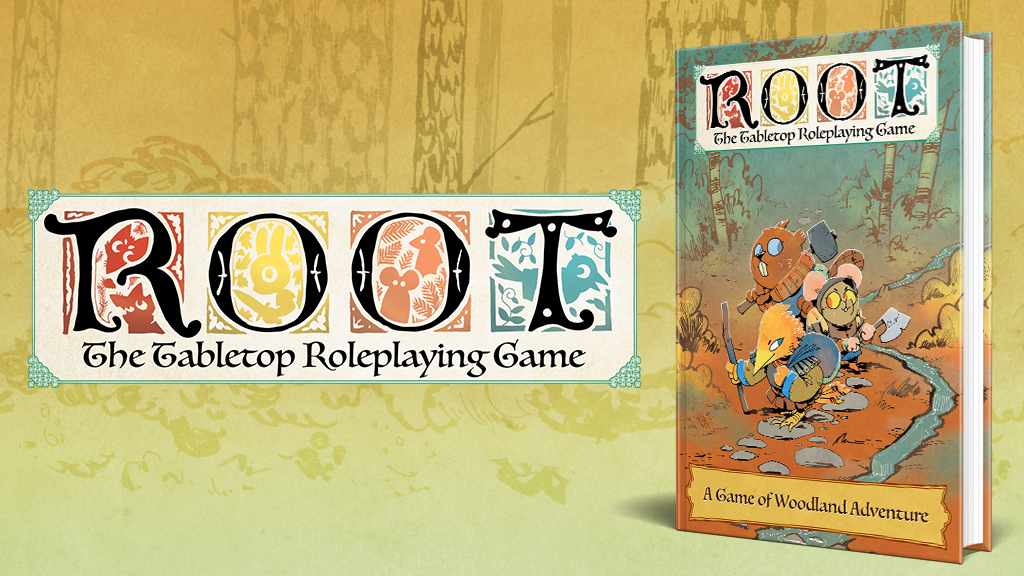
Additionally, I started reading through Root: The Roleplaying Game and found a world and story that seemed wonderfully fleshed out with some adorable and charming artwork, but didn’t excite me from a mechanics standpoint. Root: The Roleplaying Game places a big emphasis on managing faction reputation which seems like it could be fun for certain gameplay groups, but I don’t think mine would be onboard with that, nor would I want to really have to keep track of it. I wish that I could just get a Root: The Roleplaying Game supplement for 5e so I could enjoy that world using mechanics I was more comfortable with.

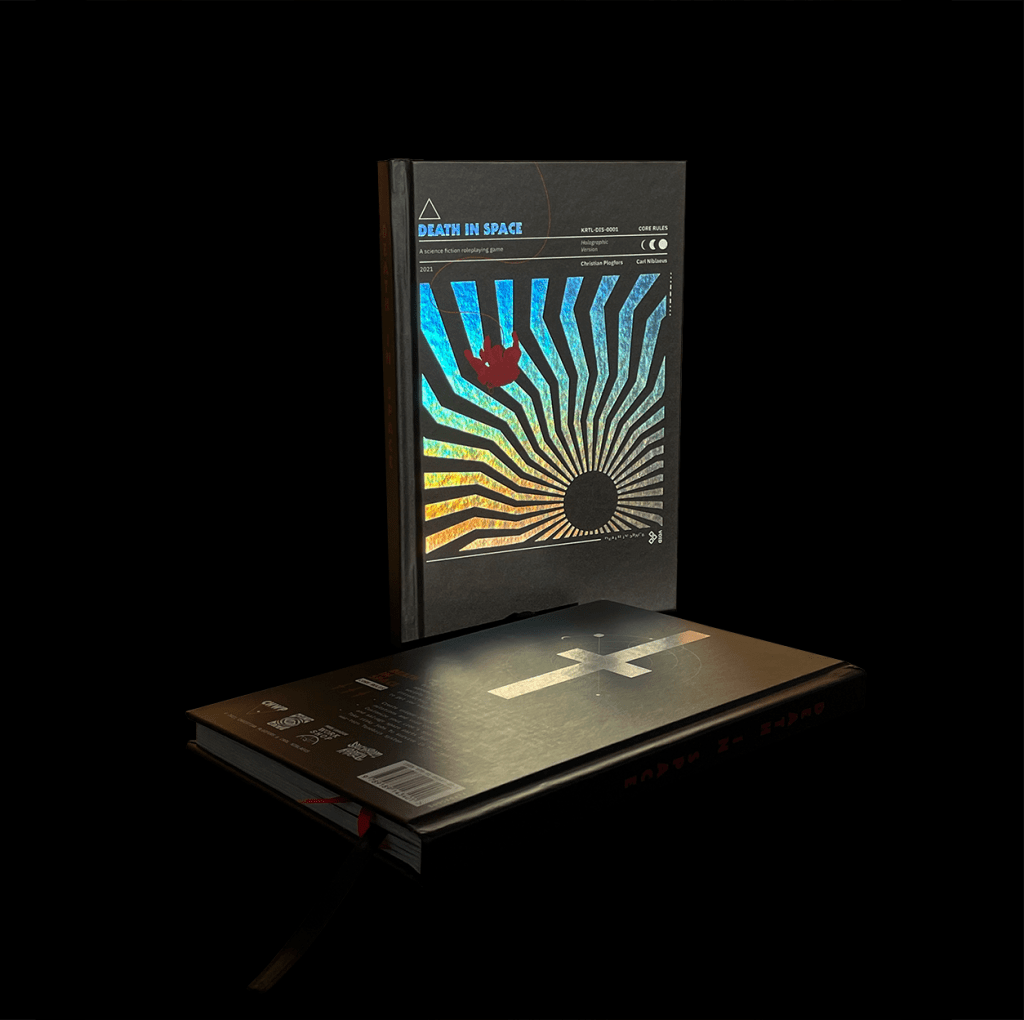
I also backed Orbital Blues, a game that describes itself as a ‘lo-fi space western RPG’ which sounds exciting, but is mechanically underwhelming. The book itself boasts gorgeous design and artwork, making it more likely to be a centerpiece on a coffee table than a game worth playing, which is a damn shame because there aren’t a lot of options for space western themed TTRPGS. I also backed Death in Space which also boasts awesome artwork, but I haven’t gotten around to reading it just yet so I don’t have much to say about it yet except it seems dope as hell.

I feel like good art has really motivated a lot of my purchasing decisions lately, but that hasn’t translated into me actually reading the book and running the game. A perfect example of that is MÖRK BORG, a game whose name is confusing, but has some of the sickest art I’ve ever seen. I’ve heard nothing but praise for the actual game itself, but once again it’s one of those things where I just haven’t had the time to dedicate to learning a new game system, let alone internalizing it well enough to teach other people how to play it.

The biggest slap in the face about this whole situation has been that the TTRPGs that I have taken the time to learn have all been one-page RPGs, mostly about animals doing non-animal things, such as Crash Pandas, a game about street racing racoons that are all operating a vehicle together simultaneously. Or like Honey Heist, a game about actual bears infiltrating ‘Honey-Con’ in an effort to steal a butt-load of honey while maintaining your cover as some people dressed as bears. These games are simple and easy to understand, but heavily rely on a good player dynamics and roleplaying, so they might not be for everyone.

There’s definitely stuff I’ve missed, but these are the bigger and more notable additions to my ever expanding library. Maybe one day I’ll actually use any of this stuff, but that would require me overcoming my intense and borderline crippling fear of actually having to run a game in-person instead of over the internet. So that’ll probably never happen.