Monthly Archives: July 2017

I’m a Soccer Master Thanks to Behold The Kickmen

Behold The Kickmen is an incredibly accurate representation of what soccer is, if it was described to you in a foreign language, from space. Now, I don’t claim to be a sports enthusiast. I used to play football and basketball when I was younger, but those days are long behind me. Occasionally I’ll dip my toes into an NBA 2K or an NHL 20XX, but I can’t say I’ve followed those sports in a long time. I suspect Dan Marshall, developer of Behold The Kickmen, is in a similar boat with soccer.
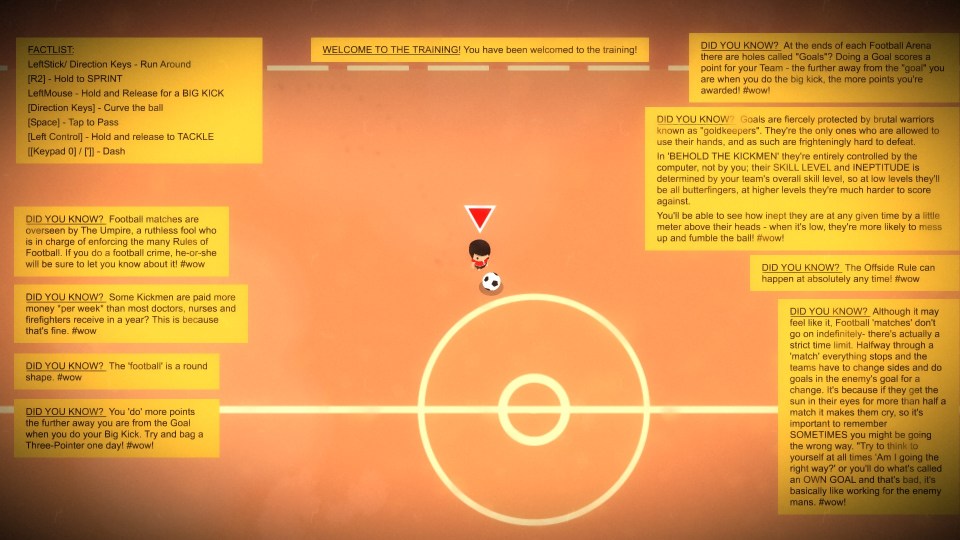
20170727150444_1When I arrived at the main menu, I was presented with three choices. I could start a career, jump into a quick play game, or try the tutorial. I opted to go for quick play, so I could figure the mechanics out as I went. That’s when the personality of Behold The Kickmen really started to expose itself. I received an incredibly smarmy, yet accurate pop up notification saying that I should probably try the career mode first, as it slowly would teach me mechanics over time. I complied and attempted to start a career, and was greeted by another message with an even thicker coat of smarmy-ness drizzled all over it.
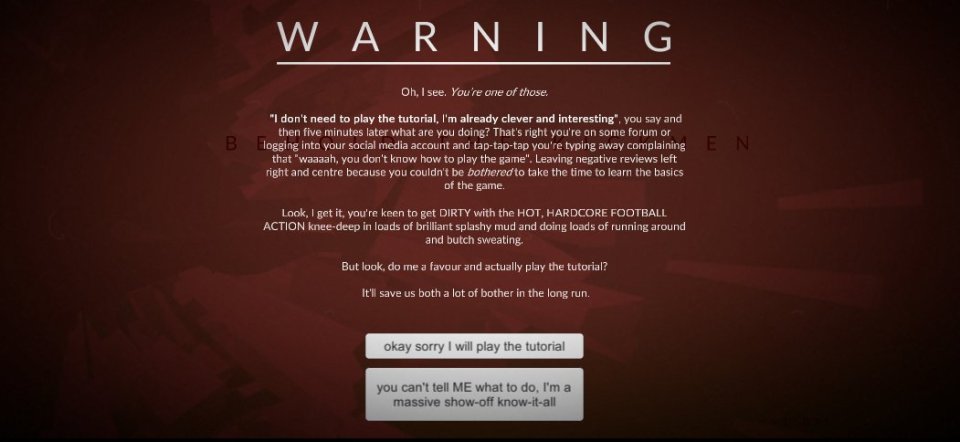
Smarmy ass message

Fine, I’ll play your damn tutorial.

Tutorial

Oh, I see what we’re doing here.

After my lovely experience with the tutorial, I was finally ready to jump into a career mode. I was given the opportunity to rename my team, and so Flankstank United was born. I was also given the chance to rename my star player, but I let him be.

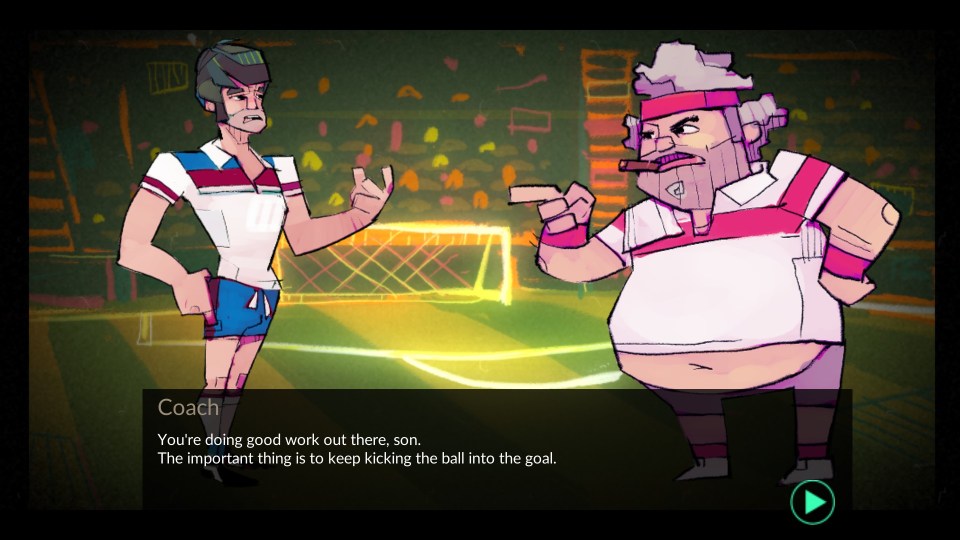
So there I was, ready to play some soccer, except wait, Behold The Kickmen suddenly became a visual novel. Star player, Joey Flash, had some demons that his bitter rival Pedro kept taunting him about. Meanwhile, the coach of Flanksteak United seems to know less than I do about soccer, which to my knowledge is a requirement of being a coach. My goofy soccer game turned into a soap opera in an instant, and I couldn’t have been happier.
20170727151121_1

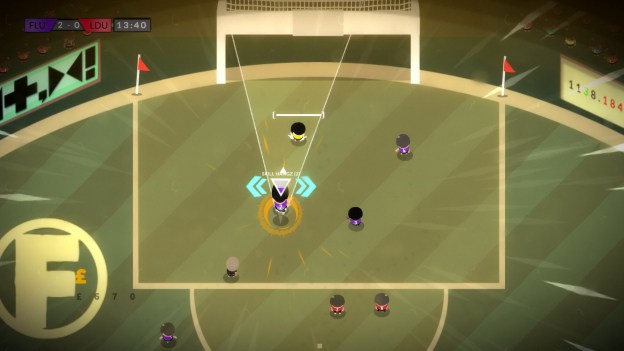
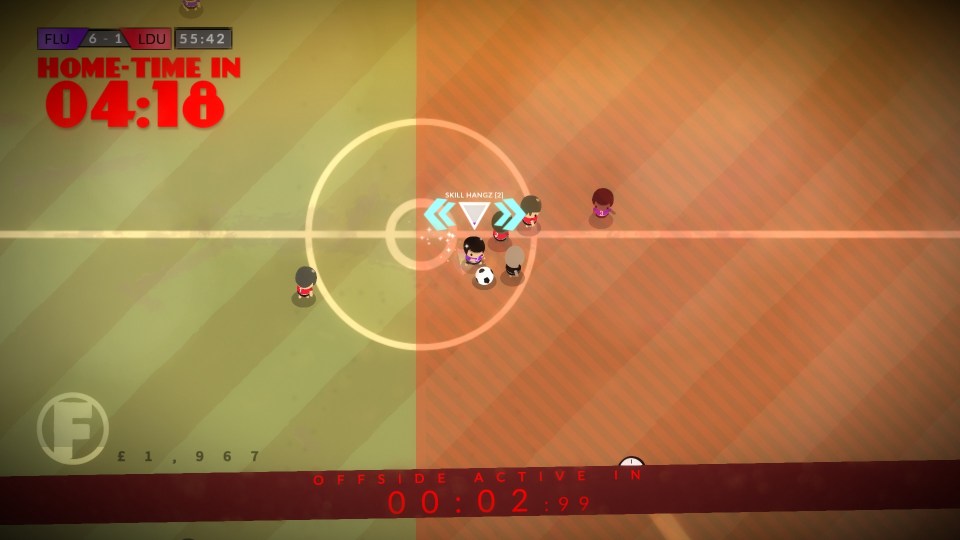
After the drama died down temporarily, I was able to play what seemed more and more like a mini-game in this entire package, soccer. Or some version of soccer I suppose. Remember when I said Behold The Kickmen was an accurate representation of soccer? I lied. Sure, there’s a ball and two goals, but I don’t think that actual soccer is played on a circular field. Nor do I think the “offside” rule just randomly occurs mid game punishing a played for being too far to the left. But hey, I’m not a soccer fan so I can’t say for sure.
20170727151010_1

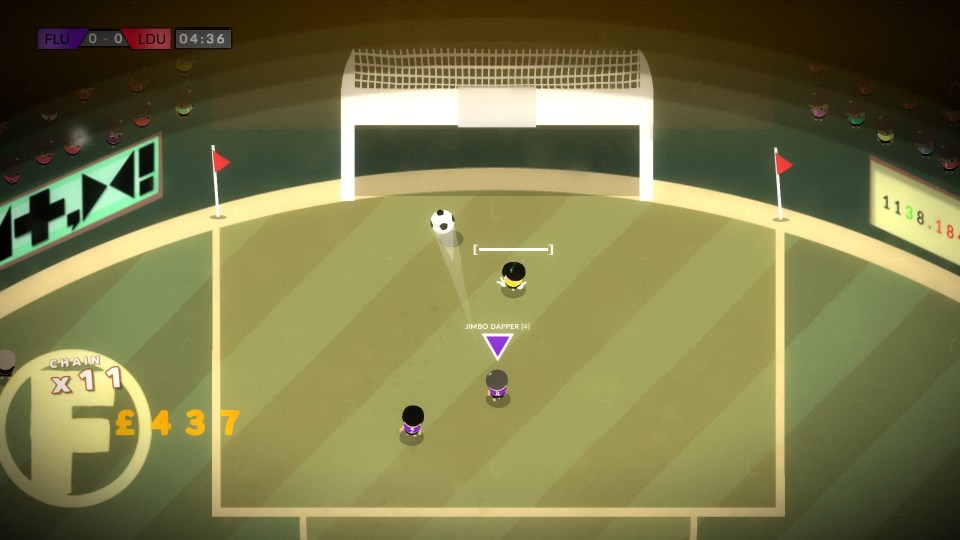
For all the jokes and guffaws, Behold The Kickmen actually has some interesting mechanics. For instance, there’s a combo meter on screen at all times that accounts for passes, shots and tackles. You keep the chain going and eventually finish the combo off by scoring, or as the game calls it, having “Done a goal.” Finishing the combo grants you cash, and cash is key to growing your team.

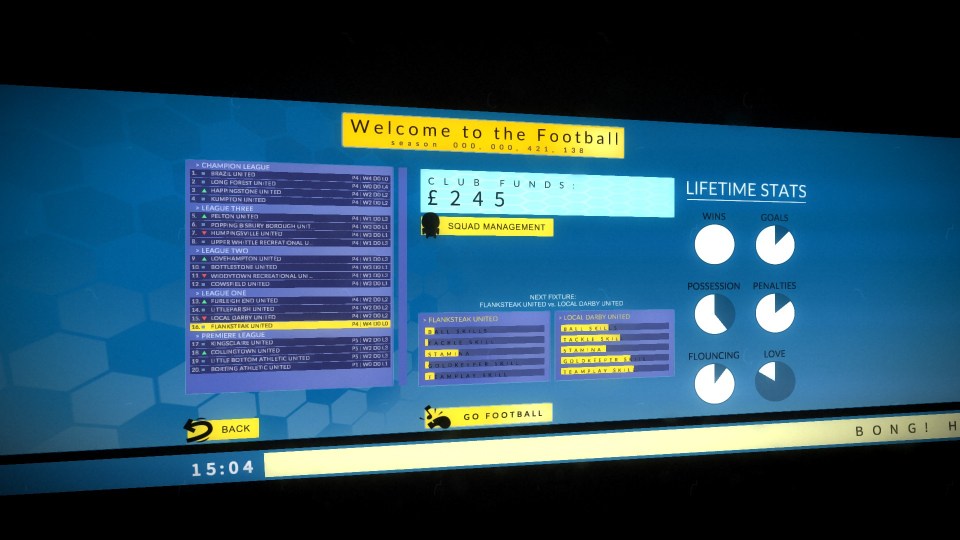
In between matches and soap opera segments, you can take your hard earned cash and spend it on upgrades for various aspects of your team. Whether or not those upgrades actually affect gameplay is a question I have to ask, because I don’t entirely trust this game. But I hope at least one of the upgrades works, because when you start out, your players run painfully too slow and I would very much like that to change.
20170727150400_1

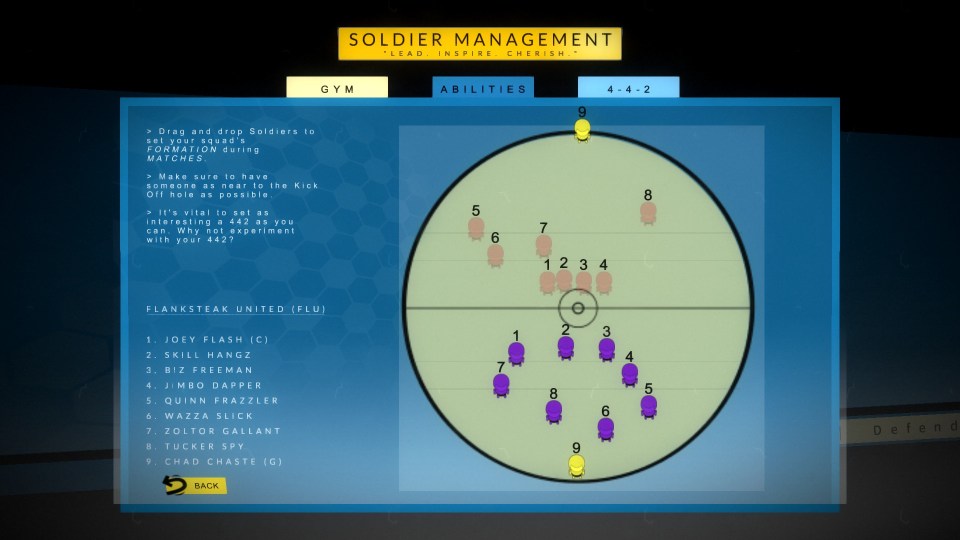
You can also unlock abilities like passing and sprinting (yes those are abilities) in career mode as well as things like advanced tackling techniques and being able to control the ball mid flight. You can also edit a 4-4-2. which I’m sure means something in real soccer, but once again, I don’t trust this game.
 

20170727150410_1

Behold the Kickmen may not be a hyper-realistic simulation of the world’s biggest sport, but rather a perfectly fine arcade style soccer game with a great sense of humor. It doesn’t have any multiplayer which is a little disappointing, but isn’t any worse of a game without it. The career and story mode seem to be the main draw thus far, and the writing is funny enough that I’m more than willing to stick it out till the end to see how it pans out.
Early Impressions: For The King

My first introduction to For The King was while looking for a cooperative RPG for my friends and I to play together.  Surprisingly enough, there weren’t as many options in our price range as I would have expected.  So when we saw it sporting an incredibly modest price tag of $14.99 as well as having online cooperative play, it was an easy sell for our little group.

Right from the jump, the game warns you that not only is it in early access, but you will not succeed on your adventure.  Foreboding, but as we would come to find out, painfully accurate.  Ignoring all warnings the game threw at me, especially the one that said not to jump right into cooperative play, I set up an online match in the barren server browser and invited two of my friends to play.  You only start with 4 of the available classes unlocked, so we weren’t exactly spoiled by choice, but we were eager to throw ourselves into the fray.

image

We selected our classes, changed our character names, and utilized the very basic customization options, which are just color swaps, and dove in.  We were greeted with a stylish world map made up of hexagonal tiles filled with towns, structures and enemies.  A dialog box popped up and told us that our quest was to go to another town, and get a quest from there.  It also indicated that there was a time limit to accomplish these tasks that would tick down after every turn the party took.

image

From movement, to combat, ambushes and opening doors, everything is determined by a dice roll.  These dice rolls are based on your character’s traits and skills, but can also be modified by finding various structures in the wild as well as items you collect.  You also have something called, focus, which is a resource you regain when you rest that can heighten the chances of a successful dice roll.  Or, they can make you feel like 97% is a really good chance for an attack, only to realize that you still failed it and missed your enemy anyway.  That was a fun experience.  What I’m saying is, in For The King you need to do everything possible to make your character stronger or else you will die.  A lot.

image

Dying, however, isn’t a simple “Game Over”, but rather a chance for the developers at Iron Oak Games to really rub your failure in your face.  You have five chances to fail, whether it be death or an objective or a really unlucky dice roll.  Every failure results in something called “Chaos” increasing.  Every time that Chaos rises, a new challenge gets thrown your way.  A first it’s things like certain tiles will poison you or just do damage to you as you pass through them.  Fail enough times and you’ll lose the ability to revive downed teammates or all of your rolls will most likely never be perfect again.  This is really handy when you face off against enemies who dodge everything that isn’t a perfect roll.

image

These are mild frustrations however, and I know that For The King is currently in active development, which is reassuring because there are some rough edges here.  The interface is a little clunky and isn’t streamlined in a cohesive way.  Exiting inventory and character menus operate differently than interacting with the menu at a town for instance.  I wasn’t able to find a good way to compare an equipped weapon to an unequipped one aside from just unequipping them both.  Status ailments are unclear in their effects and duration leaving you wondering if it’s worth using an item to cure it or not.  There are a ton of these little grievances I have with the state the game is currently in that I’m sure are being worked on at the moment.

And working on it they most definitely are.  In the latest update to For The King, Iron Oak Games addressed some of my biggest grievances with online functionality.  Specifically fixing issues with a lack of clarity on how to continue games in progress, as well as being able to manage your inventory when it wasn’t your turn.

Entering early access in the same week as blockbuster titles like Zelda and Horizon Zero Dawn may have not done For The King any favors, but if you’ve got some time and are in the market for something new, I absolutely recommend checking it out.

Review: Night In The Woods

I didn’t expect Night in the Woods to hit me as hard as it did.  What on the surface seemed like a simple, charming and beautiful adventure game, turned out to be an extremely emotional journey which resonated with me on an almost too personal level.

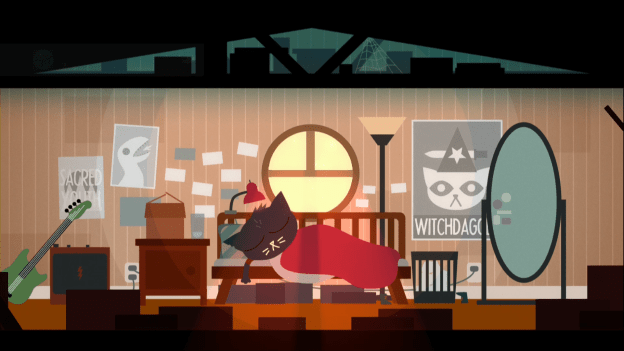
In Night in the Woods, you’ll play as Mae, an anthropomorphic 20 year-old cat who is returning to her small hometown of Possum Springs after dropping out of college.  Hoping to find solace in a familiar setting, she sets out to reconnect with her old life, seeking out the friends she grew up with.

For most of the game, the reason for her dropping out is a mystery to you and everyone she interacts with.  The real reason for her return is obscured by her laissez-faire attitude towards life.  Mae, along with all of her friends seem like incredibly shallow archetypes when you first meet them.  That coupled with the fact that the story is fairly vague for the first few hours, doesn’t help their cause.  But as you progress you’ll begin to find that everything in Night in the Woods has so much depth to it.

Unfortunately for Mae, a lot in Possum Springs has changed. Economic stress is readily apparent as she walks past the skeletons of former businesses on the main road, along with the general gloom and depression that lingers over the town that can be found not only in the locale, but in the people themselves. As you interact with them more, your friends and family will open up to you about their dreams, stresses and sacrifices. As someone from a small town, I can’t express enough how real of a scenario this all is.

But all of that gloom and mundanity doesn’t preclude Night in The Woods from having some really exciting and tense moments. As you scroll through your dialogue options, you’ll find that Mae doesn’t really know how to deal with the general exasperation that the people feel. A lot of her dialogue usually ends up having her accidentally cross some boundaries or touch on sore subjects and generally put her foot in her mouth. Because of this, not only does she grow as a character, but so do her friends. By the end of the game I found myself identifying with certain characters, and seeing my friends in others.

That’s what I loved about Night in the Woods so much.  Despite having some of the most beautiful art and sound design I’ve seen in a game (and anthropomorphic animals), it manages to tell a genuinely real story about small-town life which I’m sure many people can relate to. Without spoiling anything, I will say that some people may not be super excited with where the story goes.  There’s a whole “murder-mystery, other-worldly” thing that happens halfway through the game that may rub people the wrong the way, but it’s done pretty well for what it is.

Night in the Woods isn’t a game without faults however.  There are some story beats that never really payoff, and I’m not entirely convinced that a lot of my dialogue choices actually made a difference. But these are minor complaints in a game that sincerely could not stop thinking about until I finished it’s 10 hour campaign.

Maybe Night in the Woods works for me because I can relate to its version of small town suburbia so well.  Or maybe it has to do with the stellar characters and the real issues they face. Or maybe it’s just the fact that it’s pretty as hell and has a cool soundtrack and sweet Guitar Hero mini-game.  Whatever it is, I loved it, and I think it’s well worth your time.

The Problem With #ContentCreation

I’ve been staring at this copy of Nioh for about a week now, waiting for the right moment to start it up and really put some time into it.  There’s been no shortage of opportunities for me to begin, like right now for instance, but I haven’t yet and probably won’t for a while.  That goes for the other games I just bought like For Honor, The Last Guardian and Steep.  So what’s the problem here?

It probably all stems from the fact that I cover games in some capacity via a blog and a YouTube channel.  I’ve noticed this happen since I’ve started down this dark path of #contentcreation. I stopped viewing games as good times and interesting experiences, and started doing mental gymnastics to figure out a way to make a video out of it.

But that’s the world we live in now, isn’t it?  If you want to be relevant or even be heard, you have to maximize every opportunity to capitalize on everything that comes out, when it comes out.  Even now, I hope that my requests for review copies on upcoming games will get fulfilled, just so I can post a video of it that will be drowned by bigger outlets the second the embargo is up.  It’s happened to me before and I’m sure it won’t be the last time.  It’s this constant treadmill of video and article creation I’m on that’s robbing me of just enjoying a game I bought.
Towards the end of 2015 I noticed this happening more and more, and it worried me.  I was trying to monetize everything I did in service of getting some views on the internet.  I put off playing a lot of games until I could get my co-host to come in and record something so we could put it up and entertain what little fans we had.  It burned me out, ruined a friendship, and caused me to reevaluate what exactly I was actually pursuing.  But that was and still is the curse of being a #contentcreator on the internet.  Your work owns you, and if you don’t have that compulsion and love for creating and producing, it will eat you alive.

Honestly I still haven’t successfully scratched that article writing, video producing itch I’ve had for years.  Hell, it’s what I’m working towards doing professionally with my life, because I love doing it. But when a game comes out, I still think about how I could capitalize on it or how “I could make a video out of this”.  I’m always thinking about my stupid 2017 version of a portfolio and how I can beef it up.  Because I’m genuinely scared that if I don’t chase the next trending topic, I’ll never get noticed or hired anywhere in this industry.

It’s a tough pill to swallow, but it’s something that I need to learn. I won’t be breaking stories, or reviewing the biggest games on day one.  I won’t be able to produce as polished and time consuming content like bigger outlets can.  But realizing that isn’t the same as giving up, it’s more about tempering expectations but still working as hard as I can.  Partly because I so desperately want to succeed and be vindicated for the work I’ve done, and also because I’m just compelled to.

It’s all derived from being a creative person, and I don’t say that to sound pretentious in any way.  Everyone in this industry has at leastsome sort of creative flair.  Some people are musicians, or painters or writers on top of producing #content about video games.  And just like many of them, I can’t turn it off.  I always want to be doing or making something and flexing that part of my mind that decided it would be a fun idea to be a writer instead of an electrician or something and forego any semblance of fiscal responsibility.

It’s this weird brain damage that I think we all have where we just can’t sit still and exhale the day we’ve just had.  We don’t relax for too long because we’ll just feel guilty about it.  The toughest part for me is learning to not let that guilt own me.  I should be driven and strive to achieve my goals, and I am.  It’s why I’m writing this article instead of going to the gym or cleaning my apartment.  The thing that I and others like me need to understand is not to let those goals become obsessions.

So what I’m saying is I guess I’ll play Nioh already… or like live-stream it or something.

Early Impressions: Astroneer

If you had asked me to describe Astroneer, you’d probably be disappointed and generally uninterested in it. That’s because at it’s core it is an early access, space exploration, crafting and survival game. I’d completely understand if that sentence turned you off, but I promise you, Astroneer is different.

Well, it isn’t that different. You’ll still need to scavenge for resources to craft new items and build up your home base. You’ll have to travel a long way from where you started, and ultimately bring what you find back home. Astroneer does not revolutionize the entire genre in that way.

What Astroneer does do however, is be a little more forgiving on you. Resources aren’t particularly hard to come by, you don’t ever have to worry about hunger or stamina, and there aren’t any real enemies in the game. Unless you count storms and toxic plants as enemies, you’ll end up just killing yourself most of the time.

This emphasis on a more peaceful journey through space is a welcome deviation from most of the other survival games out there. Astroneer encourages you to take your time and go at your own pace, never really directing you on what to do or what to build. It’s aimless in a sense, but it never feels overwhelming.

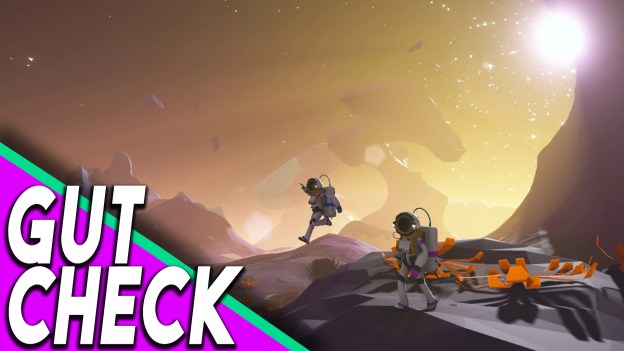
That’s partly due to the very visual and diegetic nature of the interface. There aren’t really any menus to fumble through in Astroneer. Everything you can interact with is done so through in world prompts with simple text and imagery to aid you. Your oxygen and power meters are built onto your character’s backpack, a backpack that visually displays what, and how much of something you have. It’s all very clean and wrapped up in a beautiful art style that uses tons of color and brightness to welcome you and encourage exploration. The cartoon-like quality of it all is very inviting and never felt daunting or intimidating. Simply put, everything about the aesthetic is warm and pleasant.

Considering it is an early access title, it has a fair amount of jank to it. The physics might freak out on occasion, things you’ve built might disappear on your next load, or it might even just crash on you. But that’s all to be expected from a game that isn’t finished yet.

With that being said, I’ve seen some people complain about Astroneer being a thin experience. To that point, I can’t really disagree too much. After a few hours I’ve seen a lot of what it currently has to offer. Personally I hope Astroneer focuses more on exploration and discovery instead of being a hardcore survival game. I’d rather see more variations in planets and environments than getting hunger and stamina meters implemented, but who knows what lay ahead in its development.


Playing It Wrong

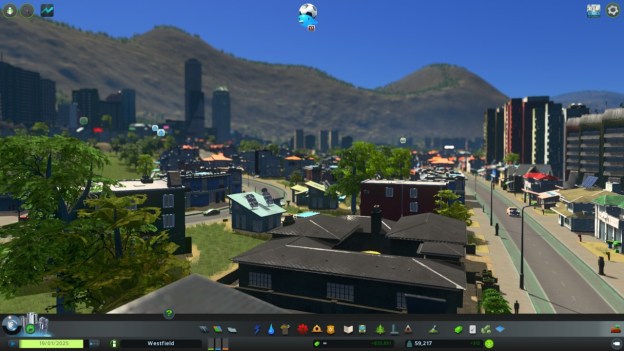
According to Steam, I’ve put about 55 hours into Cities: Skylines.  While that may not seem like that much in the grand scheme of things, it’s way more than I have any right to have clocked.  Because even after 55 hours of playing this fantastic city builder that Colossal Order has made, not one second of that time was played the right way.

See, when it comes to strategy and city building games like these, I’m absolutely fascinated by them but have no interest in playing by their rules whatsoever.  I’m always really grateful that developers include scenarios and campaigns for people to play, but I’m never one of them.

In the case of Cities: Skylines, every city I’ve created has been done so without any money restrictions.  I like to imagine that some rich benefactor like Peter Thiel opened up his seemingly bottomless pockets and let me build civilization with it.  When you have that kind of monetary backing, you just go crazy and do whatever you please.  The financial information panels were always in the red, but how else could I afford to cut taxes to 2 percent, build 46 fire stations, and over-fund every possible city service?

I’d do this for a while, and then ultimately get bored for two reasons.  First and foremost, my cities weren’t growing.  I lacked a fundamental understanding of how the game systems worked by never having to engage with them.  I never could make skyscrapers appear, or even have any office space get filled out.  It was perplexing to me.  I gave these people everything they could ever want, all they’d have to do is move in, but no one would show up.  I never allowed any demand for anything to build up, something I would’ve understood had I played one damned scenario.

The other reason for my boredom was lack of any real challenge.  Even though I wanted to and totally was playing God, I still wanted a little bit of a challenge.  I just didn’t want to fail.  Maybe that says a lot more about me as a person, but that’s a different story for a different time.  But I just wanted a little, tiny, almost minuscule bit of challenge, so I imposed some rules upon myself.

For starters, I wouldn’t overdevelop right out of the gate.  I’d start with smaller communities and try to link them from there.  Then I’d make sure I was balancing my checkbook, in a sense.  Even though I was rich, like, unlimited money rich, I could be richer if I just was a better economist.  So I’d now try to keep a steady profit rolling in.  I also wouldn’t just start off by building a nuclear power plant or other late game structures right out of the gate.  I made it so that I’d have to hit the required milestones to place certain buildings.

I was policing myself.  Except, no, wait, I wasn’t, I was literally just playing the game the correct way.  I was doing everything I was supposed to, and reaping the rewards because of it.  Suddenly, I’ve got skyscrapers popping up all over the place, I’m flush with tax revenue, people keep going to any of my many well-funded hospitals because they think this much happiness is bad for them.  It isn’t, welcome to my awesome city, this is how it is now.  These new, self imposed rules really were a game changer, and now I’m playing the game the way I was supposed to in the first place.

Except for the fact that I still have unlimited money.  At any point, the sewage could back up, and there could be a mass exodus from my town.  I could fall back into the red and have to tinker with some sliders to get people to come back, but I’ll never have to because Peter Thiel still has my back.  He’s always been there, whispering words of encouragement in my ear. “You’re a fantastic mayor” he says, “The best I’ve ever had the pleasure of knowing” he continues, “Please, take more of my money.”

I might be playing within the rules of the game, but I can never fail at it.  At any point I could become unhinged and build 65 airports, cause fuck you, tourism is gonna take off here like you’ve never seen before.  Or build 6 nuclear power plants immediately, so no one ever has to go without power, ever, even if that means they might end up with 11 fingers because of it. But I won’t, because that isn’t fun anymore.

Now I know you’re probably wondering how I could be having fun with the ultimate in safety-net technology right below me?  To that, I don’t really have an answer.  I guess in these kinds of games I like seeing the systems interact with each other, rather than interact with me.  I still want that agency and control, but I want the stakes to be as low as possible.  I’d rather make the city look cool than worry about if the 13th Applebee’s on this block is a smart business decision or not.  Cause the answer is no, we don’t need another one here, at all.

I guess the main crux of this all is that there are games I want to challenge me and make me want to conquer them.  Then there are games like Cities: Skylines, which allow me to tune out a little bit, and just relax a bit as I shave off some more hours of my life.  Even if I’m not playing the game the right way, I’m still having fun and will continue to have fun.  And when Planet Coaster goes on sale, I promise you I’ll be doing the same thing with that too.

Review: Mafia 3

Do you remember back in 2010 when Mafia 2 was released? It was met with a ton of praise in regards to its story, world building, and characterization. The biggest complaints volleyed against it however, were in it’s mechanics and empty world. Six years later, Mafia 3 treads the exact same path. At its best, Mafia 3 is a fantastic period piece that pulls no punches in depicting the racial and political tones of a late 1960’s America, and at its worst it’s a standard open-world game that is repetitive, bordering on mundane.

You take on the role of Lincoln Clay: A half black Vietnam War veteran returning to his home in the fictionalized version of New Orleans: New Bordeaux. Without diving too deep into the plot, the basic motivating force behind Lincoln is revenge. The people closest to him were killed in a mob hit orchestrated by a man named Sal Marcano.

With clear motivation in place, Mafia 3 establishes its core, repetitive, and almost mundane gameplay loop. You are presented with a district led by one of Sal Marcano’s captains. In order to get to this captain and their well crafted story mission, you’ll first have to eliminate two people important to them. To do this, you’ll have to go into a place, shoot some bad guys, and kill one bigger bad guy. Or you’ll have to interrogate him, then either kill, or recruit him to make more money for you in the long run. This pattern happens in each of the 9 districts in the city. The first 3 districts are automatically assigned to your lieutenants, of whom you’ll have to divvy up the remaining six districts to as you capture them.

Your lieutenants represent the Haitian, Italian, and Irish mobs in the city, and each of them wants a piece of the pie that is New Bordeaux. While I was able to balance their needs throughout the whole game, I missed out on the cool side missions that would come out of them quitting on you. Say you piss off the Irish mob too much and their leader leaves you, suddenly a mission will pop up tasking you with killing him and removing the Irish from your game. Focusing on balancing my lieutenants wants and needs however, limited the upgrades and perks I would get throughout the game. If I had focused on building up the Italian mob, I’d have more health and armor in the later game, which is something I desperately needed. There’s a good push and pull here and I found this to be some of the more engaging content in the game.

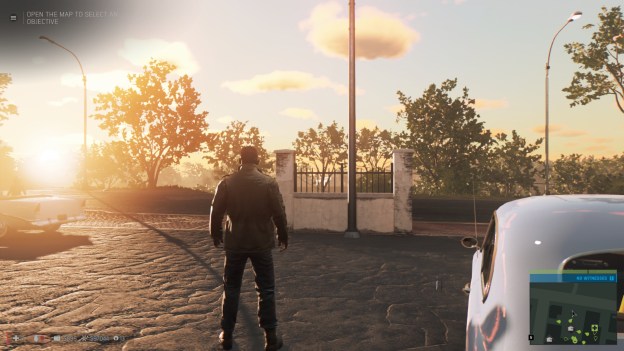
Also engaging is the story Mafia 3 tells. Thanks to some top notch acting and incredible presentation, the already solid story is brought to life. It’s all told through a fake documentary with Lincoln’s friend, Father James, and deposition with an old friend in the CIA reciting the things you’ve done. It’s all very well done and easily the high point of the entire game. The mechanics also serve to help immerse you in the culture of 1968. There are shops Lincoln can’t enter because of the color of his skin. The second you enter an establishment like this, the game will notify you that you’re trespassing. Stay there too long, and you’ll get the cops called or have a gun pulled on you. If you steal a car in an affluent neighborhood, the police will be on you in a heartbeat. Steal that car in a poor or black neighborhood, and the cops might not even show up. If only the story and mechanics were paired with a more interesting game.

Don’t get me wrong, the gameplay isn’t bad by any means. It just isn’t anything special. Gun play is adequate yet uninspiring. While there is a fair amount of weapons, I found myself using a silenced pistol and a sniper rifle for most of the game because they were the most effective for my play style. The stealth combat is super basic and easy to exploit. You can hide behind things and then stab dudes as they come around a corner all fine and well, but the enemy AI is extremely dumb and has no sense of self preservation. You can endlessly lure enemies to your position by whistling, and one by one they’ll keep coming at you. I’ve managed to clear out hideouts this way. If you aren’t being stealthy though, they’ll just run at you in the open, mid firefight.

The biggest thing working against Mafia 3 is it’s open-world. While beautiful and well designed, it’s empty and nearly lifeless. Sure there are some Playboy Magazines and album covers to collect, but aside from that there’s barely anything in New Bordeaux to do. Having this big open-world serves to do nothing more than make you drive more. And drive you will thanks to no fast travel options. Normally I wouldn’t care so much, but because the world is so empty, and because several missions just make you drive across the map, interact with something, and come back, fast travel suddenly becomes a sorely missed feature.

One of the bigger topics of discussion around Mafia 3 since it’s release has been it’s performance and bugs. I played through the game on my PC which has got a 970 in it and even after a day two patch to unlock the framerate from 30 and lowering all of my settings, I still wasn’t able to hit 60 frames per second, nor maintain anything aside from 30. There were also a fair amount of glitches from the lighting blowing out the scene making everything white, to textures not loading, and even the classic falling through the world glitch. Never did I come across anything game breaking, but I did have the game crash on me once during my 35 hours or so with it.

While Mafia 3 is a technically unimpressive and uninspired open-world action game, it does manage to build an incredibly believable world, establish some truly amazing characters and tell a phenomenal story that only stumbles a little bit at the very end. While I wish there was more to do in New Bordeaux and the missions were a little more varied, I’m glad I stuck with it just to see how Lincoln’s story played out.

The Wasted Potential and Disappointing Realities of No Man’s Sky

It’s hard not to have a greater discussion about managing expectations when talking about No Man’s Sky, and for good reason too.  No Man’s Sky is the fifth game from indie developer, Hello Games, but the first of theirs that doesn’t involve motorcycles and stunts.

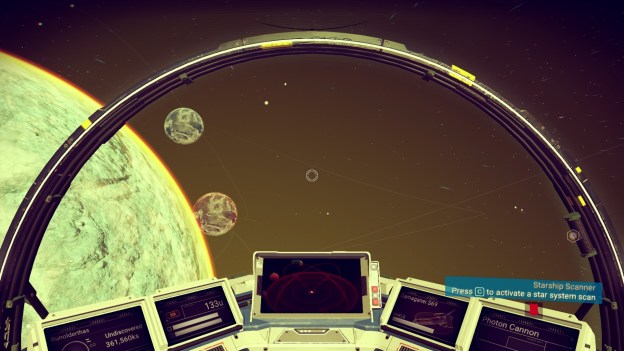
To boil it down, you’re traveling to procedurally generated planets in a procedurally generated galaxy with all kind of procedurally generated creatures and plants for you to analyze and collect.  At face value that sounds like a pretty compelling concept.  Who wouldn’t want to be the Lewis and Clark of space?  The problem is that No Man’s Sky feels more like a tech demo and less like a fleshed out game.

The “carrot on a stick” is the center of the universe, where some grand mystery allegedly lies.  To get there however is a true test of patience.  You collect the resources you need to power your hyper-drive which allows you to get to the next planet which has resources to power your hyper-drive, so on and so forth.  That core loop isn’t inherently bad though.  What is bad is how dreadfully dull each of these planets feel.  They all contain the same series of core resources, landmarks, and outposts. The most diverse part about these planets is the flora and fauna you’ll find scattered around.  Sure, it was cool to see a giant mushroom that hops around, but I’ve already seen a few variants of that already on other planets.

These things are mostly forgivable though.  Some people will absolutely enjoy roaming these vast landscapes, which in all fairness are impressive in scope.  My main umbrage with No Man’s Sky is that it doesn’t go far enough in it’s gameplay mechanics.  It tries to be a survival game and an exploration game, and fails to deliver on both accounts.  Sure, you’ll need to maintain your life support systems, gather fuel and manage your inventory, but these things quickly feel more like a nuisance and less like meaningful mechanics.

In a more hardcore survival version of No Man’s Sky, not only would you be hunting for resources for your ship and suit, but you’d also need to scavenge for food and assemble shelter.  With the nigh infinite kinds of animals and vegetation in the game, it could be interesting to have to establish what plants are edible and not toxic, or what animal you can make the best steaks out of.  Strand me on planets, challenge me with surviving in an unfamiliar and perhaps unforgiving place, cause as of now I have no incentive to not just buy every resource I need and fly to the center of the universe.

Alternatively, No Man’s Sky could have gone in the complete opposite direction and have been more exploration focused.  Drop the resource and inventory management and give me a procedurally generated version of Pokemon Snap.  In lieu of resources on the planet, give me more intricate and interesting plant and animal life for me to document and inspect.  I’d love to see which of these groups of animals is the predator and which is the prey, or how the raise their young, or even interact with the world itself.  As of now these animals just exist on a planet and move from one side of the landscape to the other.

But as it is, No Man’s Sky is a completely underwhelming experience that doesn’t scratch either itch for a survival or an exploration game.  It sits somewhere in the middle of these two experiences and doesn’t add anything aside from making you feel isolated and alone in a gigantic universe.  If you stop to think about your size and impact on the galaxy, you realize how very small and insignificant you really are.  You’re just one person exploring a gigantic universe on your own, charting your discoveries along the way.

Except no you fucking aren’t, because on every planet you’ll find some aliens willing to sell you stuff, ships flying through the sky and occasionally trying to murder you, space stations in every star system and space cops on every planet just waiting for you to fuck up and try to cut a tree down.  The whole wonder of exploring and naming things is all ripped from you when you realize there’s just some alien sitting in his office asking you for carbon or plutonium in exchange for a better mining gun or more inventory space.

Suddenly No Man’s Sky goes from being about exploring the unknown, to walking into someones house and renaming their kids to “Butt” and “Fart” because you can. You turn into this wandering vagrant who lands on already named planets, and renames them and it’s inhabitants to whatever insane things you feel like.

I never feel like I’m actually doing anything in No Man’s Sky.  I never feel like I’m making any meaningful progress or discovering anything interesting or even discovering anything at all.  I’m just Christopher Columbus, going around “discovering” things that were already found and pretending like I’m the most important being in the universe.  Maybe that’s the secret meaning of No Man’s Sky, or maybe I’m giving the game too much credit.  Either way, I’m not having fun with it anymore and it’s because worst of all, No Man’s Sky doesn’t value my time as a player.  It’s a grind to do anything and the grind isn’t ever fun.

It’s all such a shame because there are some truly interesting ideas in this game that are easy to overlook. The dialogue and language systems in particular are some of the coolest concepts in No Man’s Sky, but just like everything else they don’t go far enough.  As it stands, you go up to a terminal or find a strange monument in the wild, hold the “interact” button and learn a new word in an alien language.  When you start talking to an alien vendor, you might have some words translated for you, thus making it easier to understand what this alien needs.  Sometimes when you’re right, you get a new ship or a new gun.  But if you answer inappropriately, you risk taking some damage or losing some money, which may as well  be no punishment at all.

A system like that in the next Mass Effect or Elder Scrolls game could be fantastic and add a whole new layer to dialogue in games.  In No Man’s Sky however, the system just feels wasted.  “Oh no, I didn’t get a cool ship from you, I’ll just fly a minute east and try the next guy who lives in isolation on this planet”.

All things considered, despite my ranting and anger, it’s not impossible for someone to fall in love with this game.  It has a calming tone to it both in visuals and soundtrack, and is an easy way to lose a few hours of your night.  No Man’s Sky might be a fun experience for you, but for me it’s been a disappointing and repetitive game that I doubt I’ll touch again until it’s next major feature update.

Review: Inside

I never was a particularly huge fan of Playdead’s first game, Limbo.  I certainly appreciated all the things it was doing, but it never truly resonated with me.  It’s monochromatic color pallet, the simplistic platforming, and heavy reliance on trial and error made the 2009 indie darling seem like a slog at times.  Six years later, their second game Inside seems to be retreading familiar footsteps while fixing most of my issues with it’s predecessor.

When you start Inside, you’ll be dropped right into the fray with no context whatsoever.  You are a boy wearing a red shirt, who must run and jump his way to the right. While it all sounds pretty straightforward, Inside manages to improve a lot of the mechanics that Limbo established.  The basic movement and platforming is smoother and more responsive than ever, all the while moving at a more brisk and satisfying pace than Limbo did.   Even the way you interact with objects in the game has gotten an overhaul.  Objects that you’ll need to push or pull over into prime platforming position are no longer directly in your way, instead they exist on another plane slightly in the background.  It sounds like an insignificant change that only saves you mere seconds in time spent climbing over blocks and carts, but it’s exactly these kinds of adjustments that make Inside a much better  and more polished experience.

image

On top of the improved mechanics the overall design of Inside trumps that of Limbo.  While not completely gone from the experience, most of the trial-and-error based gameplay of Limbo is absent.  You won’t find yourself snared in a trap that you couldn’t see, rather you’ll find yourself poking at various objects that could lead you to your next goal.  Those things might kill you, but it will rarely ever feel like you don’t have any agency over the situation.  It’s in pursuit of solving these puzzles that you’ll start to appreciate the amount of care and creativity that went into crafting Inside.

image

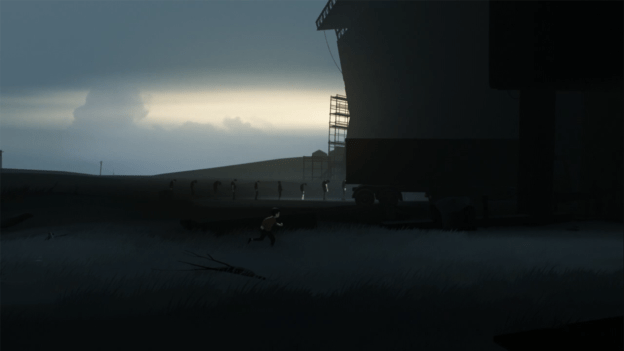
Even at face value it’s easy to see the macabre beauty that Inside is.  The art direction of the game is consistently impressive as you travel between multiple and varied locations.  From forests to farmlands, factories and laboratories, every location is beautifully realized and flow seamlessly into one-another.  It’s all so unsaturated and dim in the best way possible.  The game feels very oppressive in it’s tone and makes you feel almost powerless at times.  And while there aren’t really any enemies in the game, there are some truly terrifying things at play trying to end your little red-shirted life in gruesome fashion.

Inside has some truly powerful moments that are well worth experiencing and while the levels are all cohesive and meld together, the story feels so obtuse and vague that I found myself with more questions when it ended than when I started. There is a lot to interpret and theorize about what is really happening in Inside, but at face value the basic premise of the game was never really made apparent to me.

image

All things considered, Inside is a phenomenal game.  Clocking in at just under four hours it’s a super tight package that doesn’t overstay it’s welcome and manages to stay fresh right up until the end.  Without going too deep into some of the more interesting points of the game, rest assured that Inside fixes a lot of the problems of it’s predecessor, while still building off of what made Limbo such a monumental game in the first place.

Combo Broken

Sometimes my mind wanders and I think about what the high school version of myself would say about where my life has ended up.  If I could go back in time I’d hope the younger me would heed my warnings, pick a direction and stick with it.  Then I remember that I was a little shithead who never took anything seriously and just talk about how cool it would be if weed were legal and eat some Cheez-Its.

I was a tremendous asshole back then and while a lot has changed, a lot stayed the same.  I still am a jerk from time to time, I still have an unhealthy obsession with video games, and somehow, I kept a lot of my old friends.  At least for a while I did.

Four or five years ago I started following the world of online video production very closely.  The idea of content creation and being my own boss was incredibly appealing.  It was a very “pie in the sky” moment for me.  The market hadn’t become over saturated with gaming content and coverage, (at least in the YouTube space) and it was pretty clear to see the way people would consume information was changing.  I wanted to get in on the fun, but just like in high school, I was lazy.  I wasted a lot of time and didn’t actually start anything until mid-2013.

Around April of 2013, I reached out to one of my best friends I had known since high school.  After purchasing a capture device and a microphone of questionable quality, I asked if he wanted to try this whole ‘let’s play’ thing with me.  I explained to him the premise, showed him some examples of existing channels and he seemed to really be into it.  We brainstormed some names we should use, and somehow ended up going by “The Combo Breakers”.  This was a name I would ultimately come to hate.

Everything seemed great at first.  My best friend and I were hanging out more than ever, playing video games and just talking like we normally did.  The only difference was that from here on out, there was a microphone in front of us.  We would record once or twice a week and then I’d edit and upload the finished products.  I’d then blast them out on social media and various Reddit boards.  I was having fun, some of the most fun I’d had in a long time.

“No one ever starts off doing it right.”  That was a lesson I learned very quickly while pursuing this new hobby.  We had a ton of audio and editing issues considering this was my first time doing anything like this.  But after a few months I had a system going, I knew my shit and started to demand more of myself… and my friend.  I was able to discern very quickly what was working and what wasn’t.  I canned plenty of garbage we’d created because I refused to put my name to it.  My friend wasn’t blind to this either, it’s what made him a valuable partner.  As TCB (The Combo Breakers) started to gain traction and get some fans that weren’t people we knew, we started feeling pretty good about ourselves.  We were producing great content on a regular schedule. Then the realities of real life started to set in.

Our schedules didn’t line up all the time, and we were out of content.  This led to me inviting another friend to be apart of the channel..  The three of us would then become the core of the channel and continue to churn out great content.  I was especially proud cause I felt a sense of ownership. Maybe it was buying the components, or being the editor or plugging our stuff on the internet, but I held TCB very close to me.  So close that I started to treat my friends more like employees and less like people I’d made great memories with.

For months, I would push my friends to come over and make more videos.  We barely interacted outside the channel anymore.  I was possessed and my friends saw it.  We’d fight about it, they’d call me out for being a slave driver, I’d fire back at them for not helping me on the back end of the channel.  It was the nerdiest version of a bad marriage ever.

All the time this was happening, we were getting tons of praise from other small content creators which only served to justify my actions and behaviors.  I wanted this to be successful, I wanted us to be able to do this forever and be comfortable.  However, my ambitions overshadowed the reality of the situation.  I was ruining a friendship over a channel that had 100 subscribers.  It’s all so dumb when I think about it now.

This tension built up around us and listening back to some videos from that time, I can hear us getting more aggressive with each other.  Eventually though, it got the better of us, and I shut down the channel in anger.  I hated what it did to me, and what it did to us.  The worst part about it all was I damaged my friendships, all for basically nothing.

I went on and created a new channel with some other friends of mine.  It only lasted for a few months, but I greatly improved every aspect of what TCB was.  New microphones, new software, new artwork.  Everything was polished in a way that TCB wasn’t.  Ultimately I ended that channel because I reconciled with my old co-hosts, and we brought The Combo Breakers back in a massive way with some new members on board.

Every bit of polish was put into TCB, and the content was better for it.  Everything before then was now shit, and I hated it.  We were growing twice as fast as we had before, and things seemed okay between us personally.  Although, we still didn’t really interact outside of the channel.  Maybe that was us acknowledging that our friendship worked in high school, it worked in college, but couldn’t withstand this makeshift employment.

We kept it going for another year and got more popular than any of us ever thought we would.  We finally decided to call it quits again, and this time for good.  We got new jobs, one of us even  got engaged and moved in with his fiancé which made distance and travel a factor.  Scheduling started to not line up anymore, and content was drying up.  I knew what was coming, and I was okay with it this time.  I talked to them about it, and while they weren’t enthused about the situation, I think they understood.

I put a bullet in the channel and wrote a nice goodbye note and made a video about it. I thanked everyone who ever helped me make that channel great, but made a point to thank the first friend I brought aboard the most.  I felt like I sacrificed the most with him.  The Combo Breakers effectively ended my friendship with him and I wish I could say I regretted it more than I do.  I may have lost a friend or two, but because of The Combo Breakers I went back to school to get a degree in media production.  This tiny, insignificant channel changed my life in some huge ways.

I think we were on this trajectory well before the channel even started.  We got out of high school and desperately clung to something that worked then. We grew apart and that’s fine.  We don’t hate each other by any means, but I think we all knew it could never be like the old days. We still occasionally talk and catch up and I think that’s the way it’s supposed to be.

I’ll still look back at The Combo Breakers and think “I could get the band back together.”  Then I remember all of this.  I’ll always appreciate the hell out of what we accomplished but I can’t do it again.  It’s time to just move forward and leave some things in the past… Like a stupidly named channel.  God damn do I hate the name ‘The Combo Breakers’.  Good riddance.