The year is 2005 and I’m sitting in a darkened basement with my friends, huddled around the television with a PlayStation 2 hooked up to it. A bad cover of Black Sabbath’s Iron Man is playing in concert with the deafeningly loud clacking of plastic guitars with 5 differently colored buttons on them. We’re playing the newly released Guitar Hero, and for the moment things are good. That was a joy that so many people got to experience during the plastic instrument trend that loomed long over the entire gaming industry for so many years but would eventually fade, and those instruments would be tucked away, sold off, or thrown in the garbage. But for those of us who managed to find our old plastic guitars, there’s a reason to dust them off and rekindle that old flame, and that reason is Clone Hero.
Clone Hero is a free game that will rip that clacking sound right out of your memories and into 2021, allowing you to bring in charted songs from across all entries of Guitar Hero and Rock Band (although that’s almost certainly not legal), as well as a myriad of community created and mapped out songs for you to get carpal tunnel while playing. Clone Hero has been a wonderful way for me to rekindle my love of the rhythm game genre without a ton of work or effort. It’s basically dominated my week in terms of what I’m playing, doing or even thinking about.
I wrote about how desperately I wanted to revisit these games last year, but couldn’t because trying to buy a plastic instrument at the time (and currently as well) would involve a several hundred dollar investment which no one should be able to justify. But I recently did some spring cleaning and dug up my old Guitar Hero III wireless Les Paul guitar which still worked much to my surprise. After wiping away the decade old layer of dust on it and popping in some new batteries this thing was good to go, and my dream of playing a plastic guitar once again was closer to becoming a reality than ever before. If the actual guitars in my apartment could talk, I’m sure they’d be mighty pissed off about the fact that I’ve opted to play with a plastic facsimile of an instrument over the real thing, but they can’t so it’s all good.
For anyone who has the itch and a plastic guitar on hand, I can’t recommend Clone Hero enough. It’s still in some beta form, so there are some rough edges, but none of them were enough to dissuade me from spending every free moment I had on playing it. What’s really nice is how customizable everything in Clone Hero seems to be. From the backgrounds to the highways, from note effects to accessibility modifiers, you can tune Clone Hero to be whatever you want. For instance, by default the game is set to “No Fail” mode, which as you might imagine prevents you from ever failing a song. That’s good because like an idiot, I decided that because I used to be able to play a lot of songs on expert level over a decade ago, I could probably still do it now without any practice or warm up. Boy my wrist was not a fan of that decision, but I’m in charge of this flesh-vessel I call a body, not my wrist, so expert it is.
But that stance breaks real bad when you start to peruse community made content, because those people are pretty much only making songs that are playable on expert level, and also they hate you. The Clone Hero community doesn’t seem particularly tuned towards people who aren’t willing to permanently damage the ligaments in their wrists and maybe want to play on medium or even easy. No, instead almost all of the songs I saw were designed and charted in an effort to physically hurt you. Most of the custom content I played was filled with walls of notes that I’m going to deem impossible for any normal human, so that’s something to watch out for.
Community driven malice aside, I’m really enjoying my time with Clone Hero and can’t recommend it enough to anyone who wants to hear those clickity-clacks once more. It’s a low-effort way to experience the plastic instrument craze that dominated the gaming industry for nearly a decade, granted you have the hardware to actually make use of it. If you don’t, you could do the dumb thing and buy a plastic guitar for the price of a real one, or in reality you could probably just find one in the deepest darkest corners of your closet like I did. Either way, Clone Hero will do you up right.
After a few years of getting increasingly obsessed with Dungeons & Dragons along with the entire concept of TTRPGs in general, one thing I’ve always wanted was a comprehensive tool or piece of software that could house my campaign in its entirety. Ideally I wanted a video game styled, easy to use virtual tabletop that could do everything from making maps to just playing a session within it. Most of these programs manage to excel at one thing while fumbling other elements of playing a TTRPG, but that won’t deter me from checking out a new one when it comes along. Enter TaleSpire.
TaleSpire was Kickstarter success that claimed to be “a beautiful way to play pen and paper RPGs online,” according to their campaign page, and from what they showed off it seemed like they weren’t just a bunch of talk. Last week TaleSpire finally entered early access on Steam and I eagerly pounced on it, hoping that this would finally be our new TTRPG platform of choice. However, I was quickly reminded of the fact that TaleSpire is in fact an early access product that still needed a lot of time before it would dethrone the other services we use.
TaleSpire has a ton of potential and I do look forward to seeing it evolve over time, but in its current state, it just feels a little too cumbersome for me to reliably run a game for my friends in. There’s a lot of layers and shortcuts that you kind of need to commit to memory in order to use TaleSpire at anything beyond a snail’s pace, but there’s just so much stuff going on and not a lot of tutorialization to help you navigate it all.
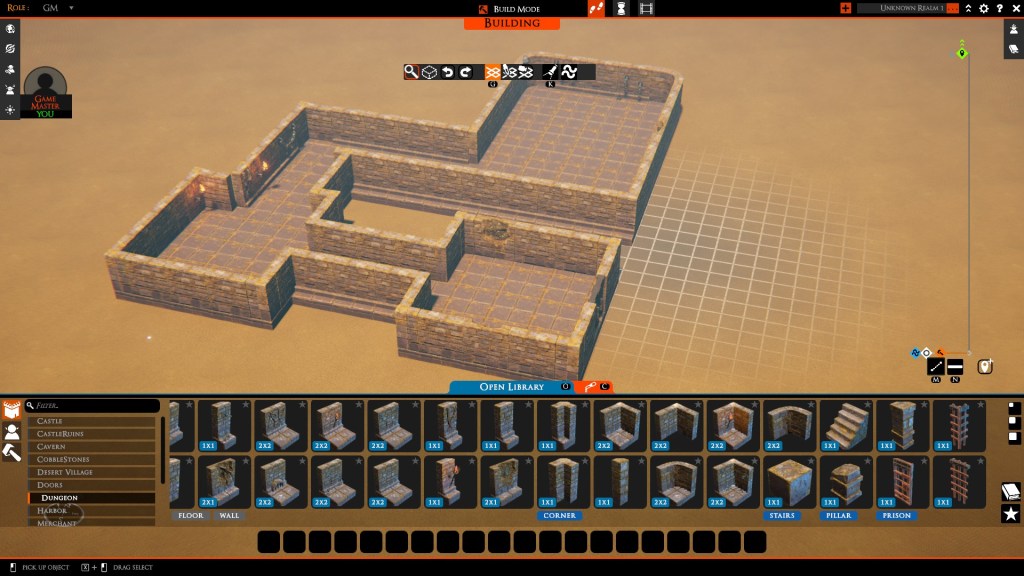
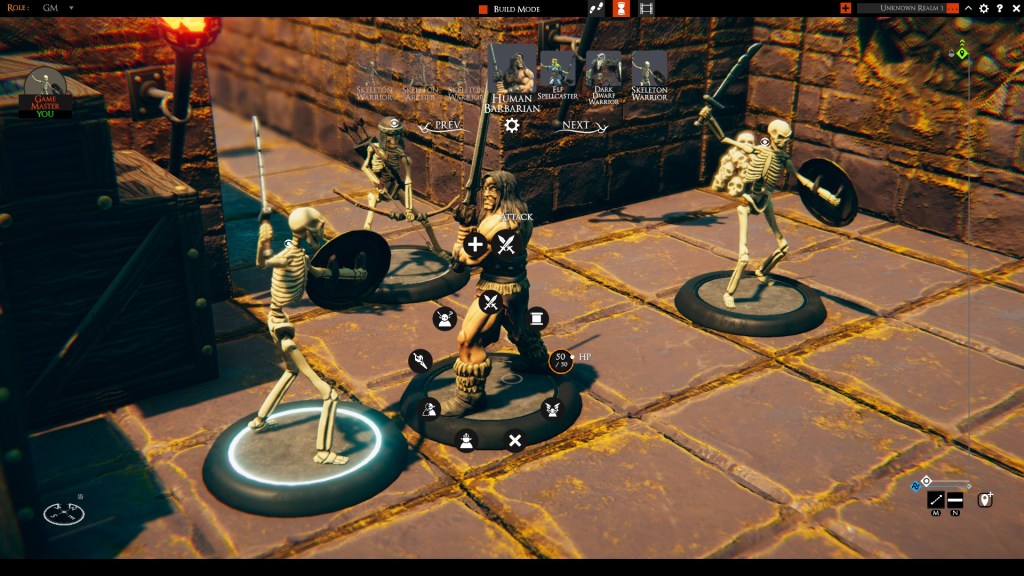
For instance, there are a few different modes you can swap between, from exploration mode, to build mode, cut-scene mode and initiative mode, all of which are pretty self-explanatory, but then there are different GM layers you can toggle on and off along with different triggers that can activate different events or hide certain elements of the map from your players. The tutorials give a broad, single paragraph overview of how these things can work, but they don’t do a great job at explaining how to actually make use of them. For instance, I have no clue how to trigger a cut-scene, but I know that it is possible considering there’s an entire mode literally called “cut-scene mode.”
I think that TaleSpire could really benefit from better tutorials that kind of launch you into scenarios so you can actually see how things work together, or at least give some premade maps for people to disassemble and see what gears are turning to accomplish what. As is, all I can really do is bash my head against it until I figure something out, but that could take a while.
I just feel as if I just don’t have enough information to properly understand how to operate TaleSpire as a whole. I suppose I could go out and look at the inevitable deluge of tutorial videos that people have surely made, but it just seems like a thing that should be explained in the software itself. I’m sure that stuff will be added in during development, so I’m not too worried about it at the moment. I really like what TaleSpire is doing and think it has a solid foundation to build off of, but the usability just isn’t there right now. If I as a DM can’t wrap my head around this software, then I can’t properly teach it to my players which would result in very slow and dragging sessions, which nobody wants.
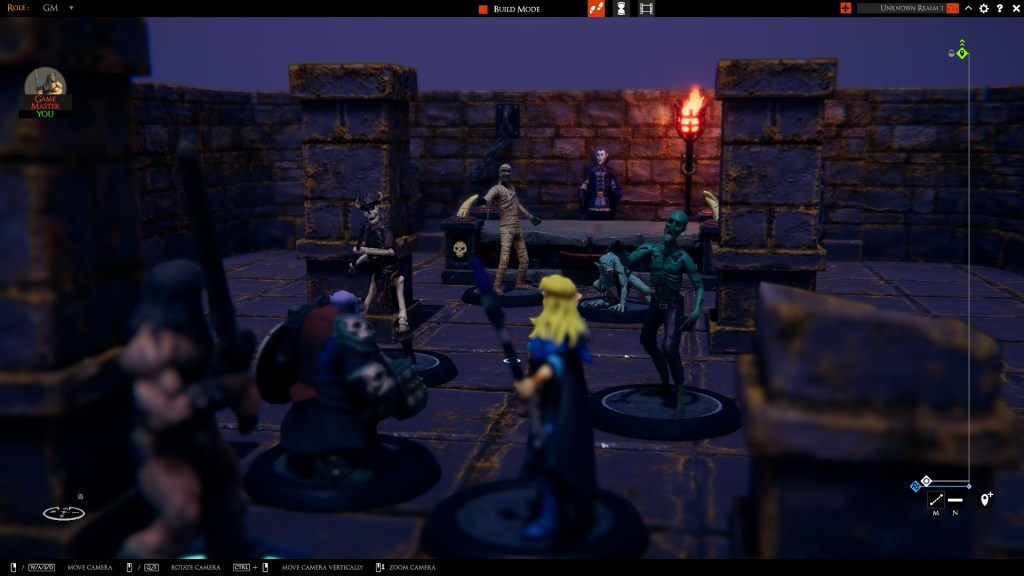
But from just a, “hey this is fucking cool” standpoint, TaleSpire sure is nifty. Building out scenes is rewarding, albeit a bit clunky in places, but even with the modest amount of items currently available, you can make some really striking tableaus. Everything has this tilt-shifted look to it that really delivers on the promise of a true virtual tabletop. One of the stretch goals that was reached during the Kickstarter campaign was the ability to create your own miniatures inside of TaleSpire, which is a feature I’m very much looking forward to getting to tinker with. It’ll also go a long way in getting me to convince my players to migrate over to this new platform that unlike our current solution, isn’t free.
I also have some lingering questions about housing stats and character sheets just in case TaleSpire ever does become our platform of choice. I don’t know if that stuff will be able to be housed within TaleSpire or not, but it really should be because the biggest issue I have with TaleSpire at the moment isn’t actually the lack of information it gives me, but it’s the viability of this as anything more than a map making tool. I have to ask myself what this $25 product is offering my players and I that our current virtual tabletop isn’t providing us at the low price of free? That’s a big hurdle to have to clear, but hopefully as more people touch TaleSpire and give their feedback these things will change.
TaleSpire does have a ton of other cool little bells and whistles in it right now however, like the ability to fully customize the atmosphere of a map by tweaking the position of the sun, pumping up the fog, or even adjusting the exposure on the entire in the entire scene. There’s also a couple of really cool features they’ve promised would be added, such as the previously mentioned miniature customization and cyberpunk themed objects, but first and foremost I think the priority should be getting users educated so they can utilize what’s actually playable now. If I knew what I was doing in TaleSpire, I’d probably more willing to try and pitch other people on it, but until then I don’t think TaleSpire is going to be our new virtual tabletop. But hey, I look forward to changing my tune as it evolves throughout its early access period.
No one is quite sure how video games are actually made, with many scientists believing them to be the result of some sort of dark magic or inter-planar phenomenon, but I’m here to present my latest findings on the matter. All of my evidence suggests that people make video games on their computers, utilizing software like Unity or the Unreal Engine to accomplish the laborious task of crafting a game from nothing but bits and bytes. Then there are the people who are using Core to make bad versions of much better and more popular games, except these versions are loaded with micro-transactions and terrible controls. Sounds fun, right?
If you’ve never heard of Core, rest assured you’re not alone. It popped up in the new releases section on the Epic storefront, billing itself as a game creation and playing platform akin to something like Dreams on the PlayStation 4. So I took the plunge and tried out this new content creation platform, and boy howdy is it rough. Now I will say that Core is technically in early access and is actively being worked on, but within ten seconds of playing it you pretty much get what’s going on here and what kind of games are being made.
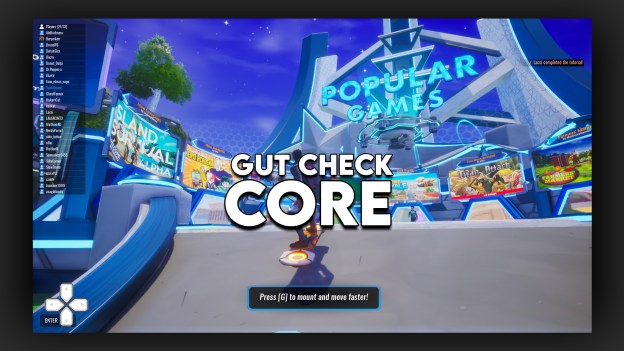
Core is less Dreams and more Roblox in the sense that, as far as I could tell, every game is made with the conceit of being online multiplayer enabled, although further research revealed that single player content can also be generated. You’re dropped into a lobby with other real people running around and riding on hoverboards, moving between platforms that highlight popular games, active games, and another one which seems to be where the developers will highlight the winners of creation contests and stuff. So I perused some of the community’s offerings and boy-howdy, all I can say is that it’s extremely dangerous to give people the ability to infused micro-transactions into their games, because they will go buck-wild.
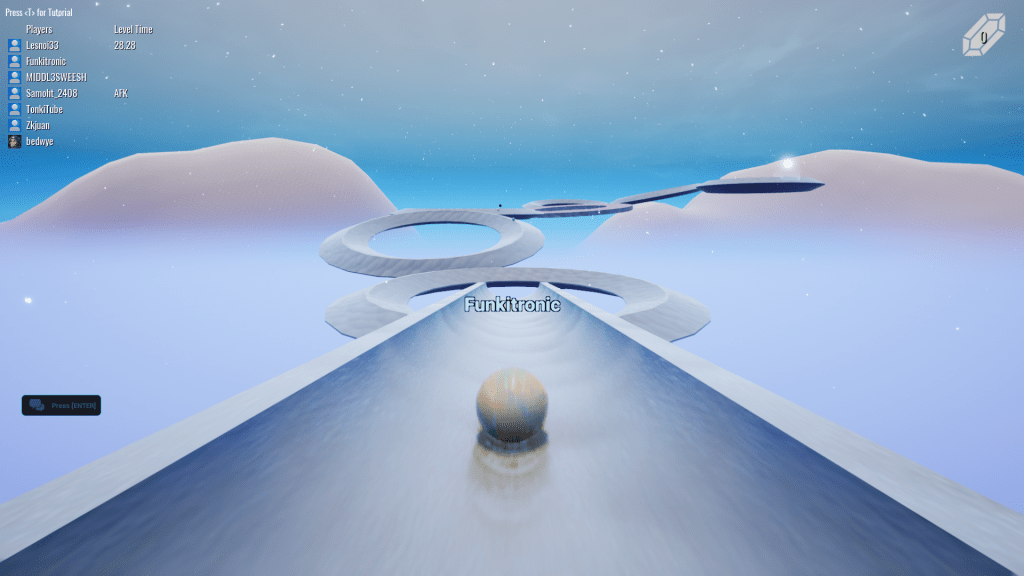
Out of the five games I played, almost all of them had some sort of mobile game, money sucking mechanics in it. The first game I played was a Marble Madness styled experience where you and the other people in the lobby race through an obstacle course towards the finish line. The game itself was fine, but the physics, and this is going to be a running theme, were pretty wonky. Jumps weren’t reliable and you’d hit a piece of geometry in the wrong way and send your marble flying into space. But hey, there was a daily check-in station in case I wanted to come back tomorrow and play this super cool game, earning some extra marble-bucks or whatever.
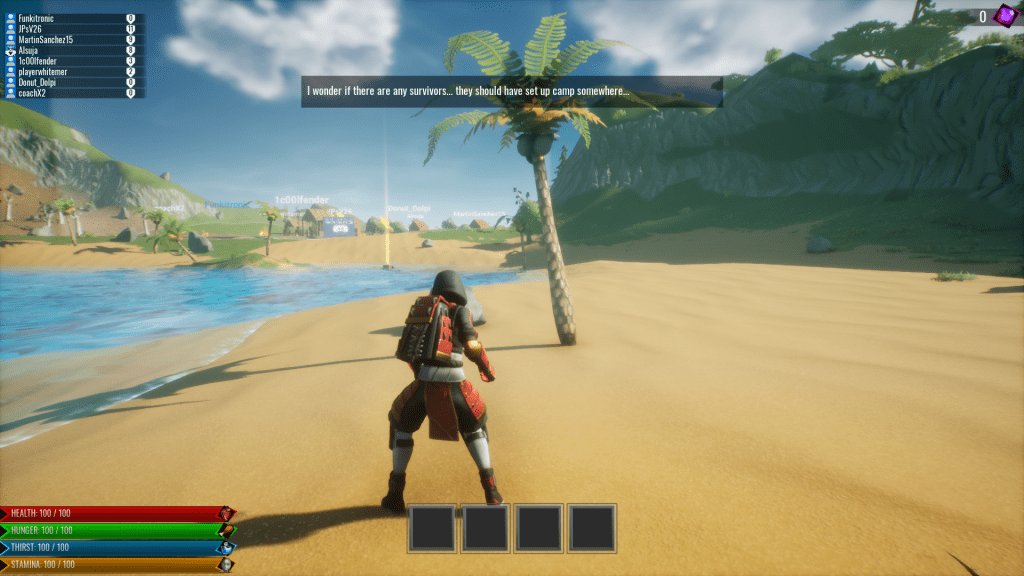
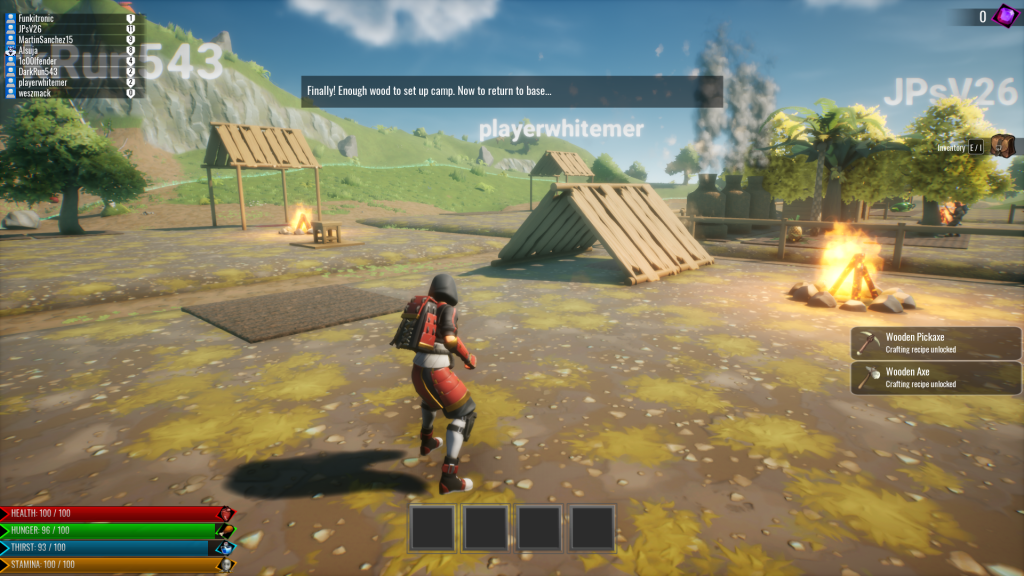
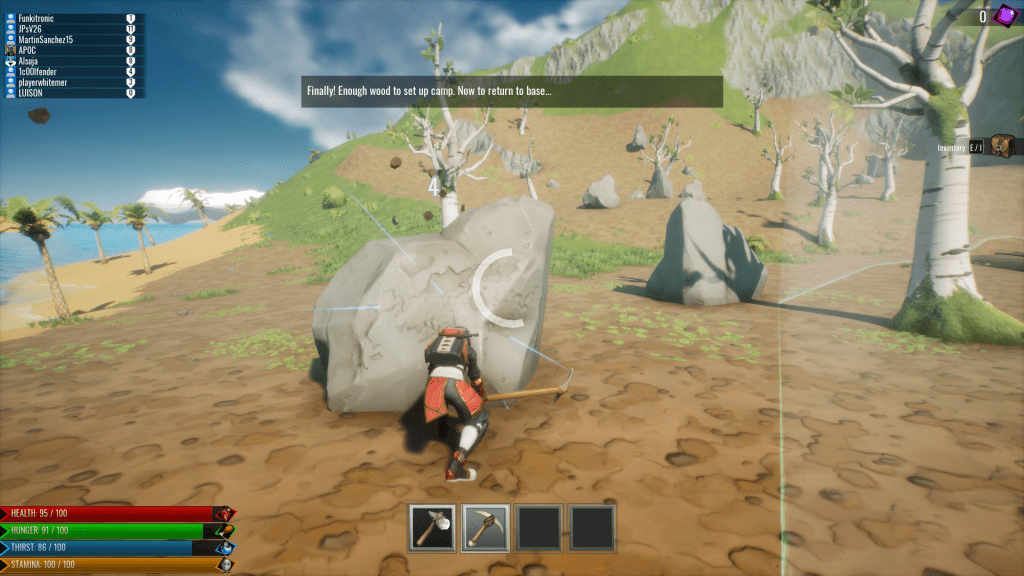
The next thing I tried was a survival game where you and a bunch of players are in a plane, crash on an island, and try to survive. Once again, controlling the game wasn’t my favorite part of the experience, and every game I played was deeply flawed on that level. Everything just felt a little too inaccurate, which is a problem when you’re trying to bash a rock with a pick ax for a full minute, only to realize that half of your hits have been missing. Also, the fact that it was a bunch of people playing on the same server didn’t make for the smoothest or most stable online experience, but that seems like a Core issue more than the game creator’s fault.
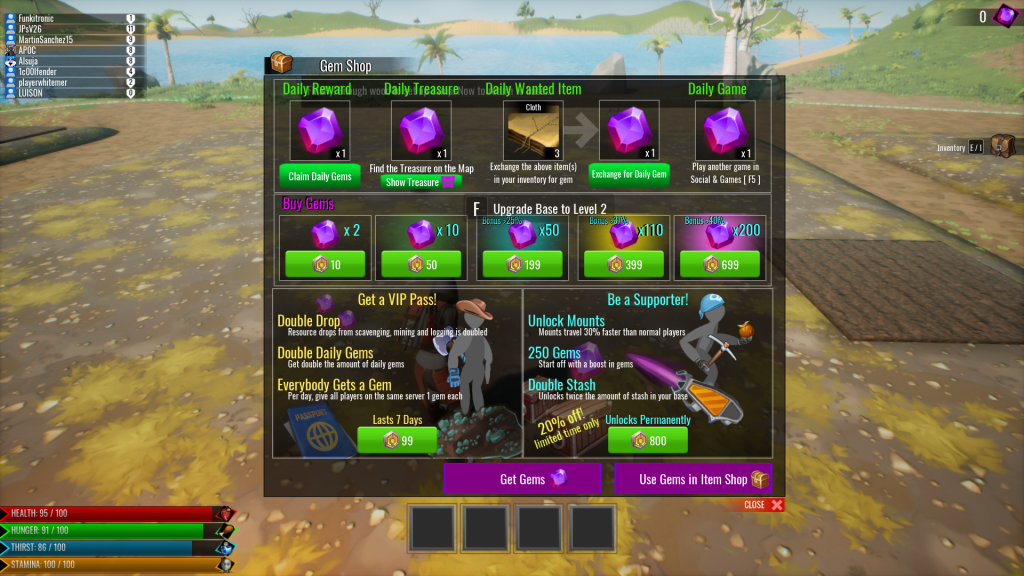
What is a game creator issue is the inclusion of mobile game styled timers. There was no shortage of opportunities for me to spend diamonds to speed up my timers on growing plants, crafting items and researching recipes. Now follow me on this, cause this might get a bit confusing, but the way you obtain diamonds in this game was by trading in the paid currency you can buy in Core for real actual earth dollars. It was pretty gross to see those mechanics implemented in a user generated game, but I guess everyone’s trying to make a buck somehow.
After way too much of that, I moved onto a bad mini-golf game. You wanna talk about whack physics in a game, look no further than whatever this golf game was called. It was basically a worse version of Golf With your Friends, which is a fun game you should play instead of this. It had all sorts of wacky courses to play through, all of which you were playing through with other people who were also having trouble dialing in the strength of shots, just like I did. Or maybe they were also fighting with the atrocious camera that would rather show you the scenery than where your ball was. But hey, if I come back tomorrow, I’ll get like 800 fun coins or whatever.
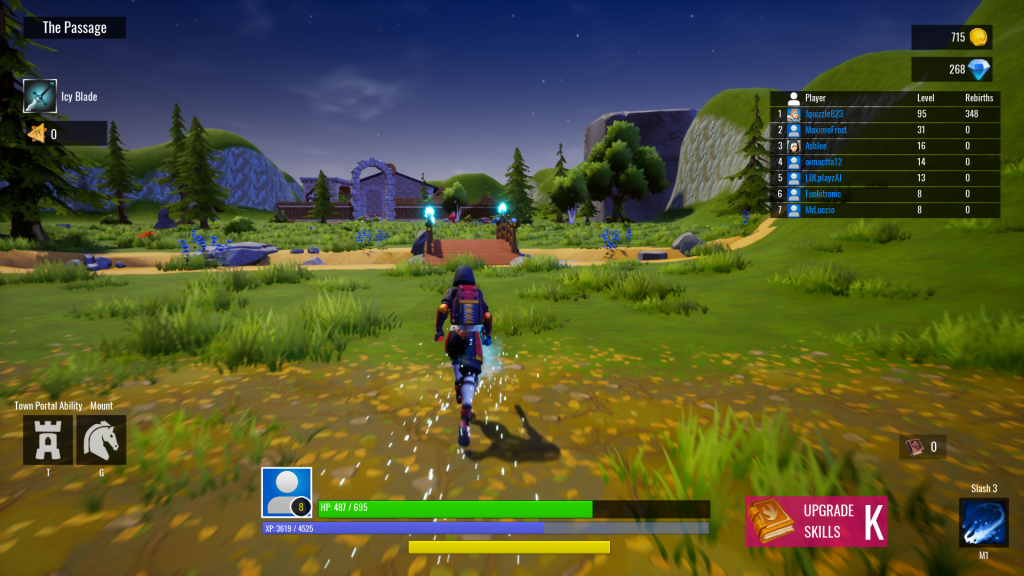
Next, I played a game that billed itself as a “true” action-RPG, a claim that was made by a big fat liar. You start in a town with a sword and can walk outside the gates to kill generic NPC dudes with swords, skeletons with swords, or a big rock monster. That basically involves mashing the left mouse button in the general vicinity of an enemy until they die. You do that a bunch of times until you level up, pick up some gold off of the enemies, and return to town to level up and maybe buy new weapons. You can buy a sword, a sword and shield, a crossbow, a hammer or some magic staff along with a bevy of skins. All of these things have price and level requirements, but it all just seemed in service of getting better weapons to run into a higher level field to run that loop all over again. It’s immediately boring and the maker must have realized that because they literally put in places for your character to idle AFK and gain gold or experience. Maybe that’s a thing in MMOs, I don’t know, but it was incredibly wild to see for myself. I suspect this was in an attempt to boost their active player count by inciting people to literally not play their game, while playing their game.
Finally there was this real fucker of a game that was all about messing with you through misdirection and straight up bullshit. It’s one of those trial and error type platforming games that streamers love to play, like Kaizo Mario or I Wanna Be the Guy. But imagine doing it with a bunch of other people and god awful physics, wouldn’t that be fun? Well actually, it kind of was. Not because of the game, no that was weapons grade bullshit right there, but interacting with the other people on the course was kind of nice. We all hated this stupid game and started helping each other by communicating in the text chat. We’d call out secret platforms or lead each other through invisible mazes. It had been so long since I’d engaged any online play because it usual sucks, but these people were genuinely good to each other. We all helped navigate the deluge of invisible platforming challenges and mazes that made the game such a chore, but through our collective stubbornness and spite for the game, we overcame. At the end of it all it just reset me back to the beginning, but it was a really positive interaction nonetheless.
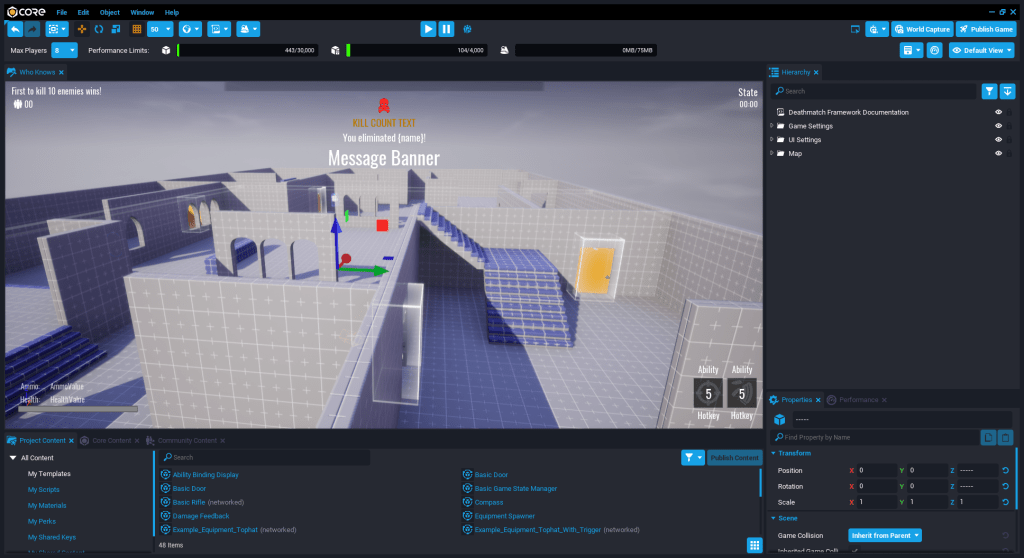
But it’s hard to poke fun at the people who spent time making these games, because they probably put a lot of work into making them and I don’t want to detract from that. Sure a lot of them put in some pretty nasty mobile game mechanics into their games, but they still took the time to make a thing. With that thought, I checked in on the creation stuff and it seemed pretty dense and involved, although Core does let you pick from a list of premade concepts like racing, fighting, king of the hill and more, to give you a better starting point than just a blank screen. So I loaded up a deathmatch prefab and immediately was overwhelmed by the tools available and closed it, which could be interpreted as the tools being fairly robust, or me just not having the patience for that shit.
Everything about Core just screams unfinished which makes sense for a game that’s been in some version of early access for the past few years, but even inside of user created games everything just feels messy. No UI in any game I played actually looked good or was an efficient use of screen real estate, with everything instead looking like a placeholder for a placeholder. Interacting with stuff, moving the characters, all of it just felt muddy and imprecise across every game inside of Core, which speaks to a larger issue with the platform that needs to be resolved. If the platform isn’t giving people the appropriate tools to make a fun game, then every game on that service, regardless of its ambition or craft will feel stunted in some way because the engine behind it is inherently flawed.
I don’t ever want to see a game fail, but I just don’t know if Core will ever catch on in a sustainable way. Maybe if they tighten up the physics and general interaction stuff, integrate some proper controller support and overall just allow people to create more refined and interesting content might make it something worth sticking with, but as it is I just don’t see it lasting. Although it is free, and that does seem like an attractive enough price point for people to engage with for the time being. Maybe it’ll be a quiet success like Roblox is or maybe it’ll fade into obscurity like Project Spark did, but ultimately I bet streamers will enjoy this thing if only to rag on it to their audience, which is basically what I’ve done here in written form, so mission accomplished Core!
Like most folks, I’ve played a lot of really hard games throughout my life that I might even call punishing or unfair, but none of them have challenged me anywhere near as much as Ring Fit Adventures does. While Ring Fit Adventures isn’t going to throw endless hordes of bloodthirsty enemies at me or require pixel perfect platforming and reaction times, it does do something more sinister than any other video game I’ve ever played before: it puts my in physical pain.
I’ve written about Ring Fit Adventures before and even went so far as to include it on my 2019 Game of the Year list for finding a fun way to keep me active. 2019 Ari was way more into what Ring Fit Adventures was dishing out because 2019 Ari was regularly going to the gym and, while not physically fit, was in way better shape than 2021 Ari. But here in the year of our lord, 2021, I decided to give the game a go once more and try to deal with my sedentary lifestyle by playing with this very expensive Pilates ring that came with a video game whose only goal is to hurt you.
My knees are shot. My back is sore. The other parts of my body aren’t doing great either, and it’s all thanks to this stupid fucking ring that I have squeeze and shake and lift around like I was leading the world’s worst parade. I was sweaty and stinky and miserable, which was very reminiscent of the days when I could safely utilize the gym, so that was kind of nice. The best part was that I didn’t have to deal with the guys in the locker room that would take nude selfies, so that’s a huge boon for Ring Fit Adventures.
I still enjoy Ring Fit Adventures in some capacity though, even if it has shed a stark light on how out of shape I currently am. While I hate what it’s done to me only after one session, I’m going to come back to it and try to maintain something of a routine. The past year has been super difficult for all of us, and I don’t blame anyone for falling out of shape and stress eating. I get it. But I need to get back into a groove and work on myself again in an attempt to pick up where 2019 Ari left off. It’s going to suck and I’m going to hate doing it, but that’s something I have to endure in order to fit back into some shirts that I really liked.
But let’s be real here: I’m doing this so I can eat those 3 boxes of Girl Scout Cookies that I so irresponsibly ordered without feeling a tremendous amount of guilt. They’ve got these s’more flavored ones that are pretty dang good, and I’m dying to crack into that box.
At the beginning of March I managed to get myself the first dosage of the two-shot Moderna COVID-19 vaccine, followed up by the second dose I received yesterday. Since the moment I made my first appointment right on through to today, I’ve felt a genuinely high amount of anxiety about the whole situation. I fully believe in the efficacy of vaccines and think everyone should be rushing to get their own COVID vaccination scheduled and administered, but there’s just a gravitas to this whole situation that was and continues to be intimidating to me.
First and foremost, I hate needles. I’ve always had terrible anxiety about getting shots or having my blood drawn, so much so that whenever I have given blood, it’s been immediately followed by dizziness, nauseousness, and there were like two times where I just passed out during or immediately after being punctured. But that was only a small fraction of what was causing the anxiety for me.
The real thing that’s messing with me is how big this moment feels. We just lived through one of the wildest moments in history, where the entire world was hit by the same affliction. I can’t think of too many situations where someone might have just missed the whole “world going into lock-down” thing that spanned most of 2020 and continues into 2021. It’s arguably the most historic event of my lifetime, something that has and will continue to impact the rest of my life in one way or another.
But here I am, with a fresh bandage on my boo-boo that the lovely volunteers did put on me, trying to comprehend the gravity of what I just did. I just got a vaccine for the virus that stopped the world in its tracks. That’s such a big moment in my eyes, and the entire time leading up to it I couldn’t help but feel a little in awe and nervous about it all. But it’s done, and now I just have to wait for that medical cocktail to course through my veins and deal with whatever minor side effects come with it. I don’t want to experience flu-like symptoms, or fatigue, or soreness, but I’ll gladly endure it just to get on the other side of this viral nightmare.
I know this wasn’t about video games or whatever, but this has easily been the biggest thing that I’ve done this week. My tension and anxiety are still lingering, but I already feel better just knowing that I’ve done what I needed to do in order to beat this miserable virus. Maybe tomorrow I’ll be cursing the vaccine for making me feel shitty, but in the end it’ll all be worth it. So please, if you can get the shot you should absolutely do so. There’s no reason to prolong this international nightmare we’ve been enduring for over a year, any longer than we need to. And if you already got the shot, good for you, just please continue to wear a mask and be considerate of others.










 The Bonus World