Category Archives: archived gut Check

Gut Check: Core

No one is quite sure how video games are actually made, with many scientists believing them to be the result of some sort of dark magic or inter-planar phenomenon, but I’m here to present my latest findings on the matter. All of my evidence suggests that people make video games on their computers, utilizing software like Unity or the Unreal Engine to accomplish the laborious task of crafting a game from nothing but bits and bytes. Then there are the people who are using Core to make bad versions of much better and more popular games, except these versions are loaded with micro-transactions and terrible controls. Sounds fun, right?

If you’ve never heard of Core, rest assured you’re not alone. It popped up in the new releases section on the Epic storefront, billing itself as a game creation and playing platform akin to something like Dreams on the PlayStation 4. So I took the plunge and tried out this new content creation platform, and boy howdy is it rough. Now I will say that Core is technically in early access and is actively being worked on, but within ten seconds of playing it you pretty much get what’s going on here and what kind of games are being made.

Core is less Dreams and more Roblox in the sense that, as far as I could tell, every game is made with the conceit of being online multiplayer enabled, although further research revealed that single player content can also be generated. You’re dropped into a lobby with other real people running around and riding on hoverboards, moving between platforms that highlight popular games, active games, and another one which seems to be where the developers will highlight the winners of creation contests and stuff. So I perused some of the community’s offerings and boy-howdy, all I can say is that it’s extremely dangerous to give people the ability to infused micro-transactions into their games, because they will go buck-wild.
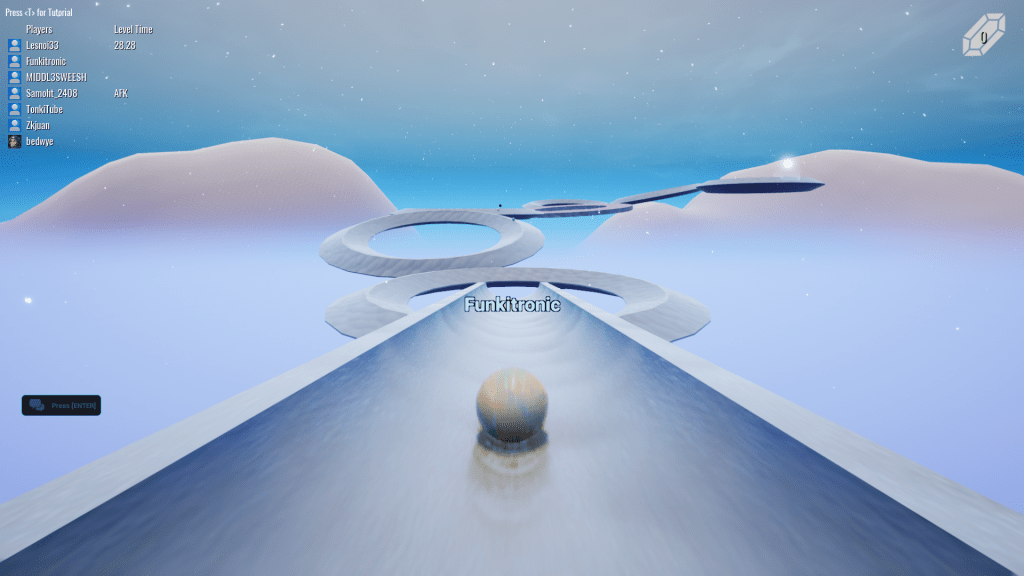
Out of the five games I played, almost all of them had some sort of mobile game, money sucking mechanics in it. The first game I played was a Marble Madness styled experience where you and the other people in the lobby race through an obstacle course towards the finish line. The game itself was fine, but the physics, and this is going to be a running theme, were pretty wonky. Jumps weren’t reliable and you’d hit a piece of geometry in the wrong way and send your marble flying into space. But hey, there was a daily check-in station in case I wanted to come back tomorrow and play this super cool game, earning some extra marble-bucks or whatever.

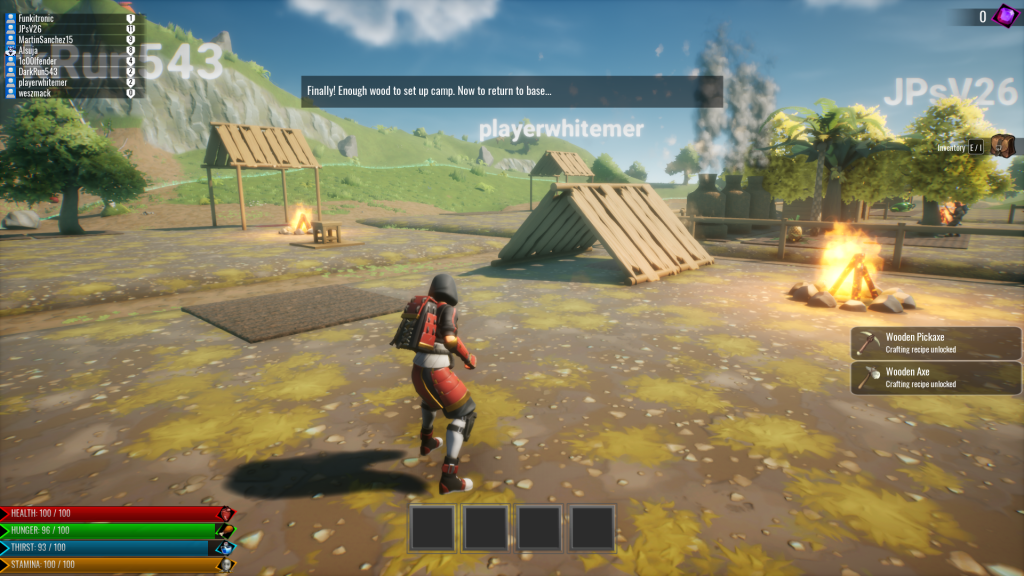
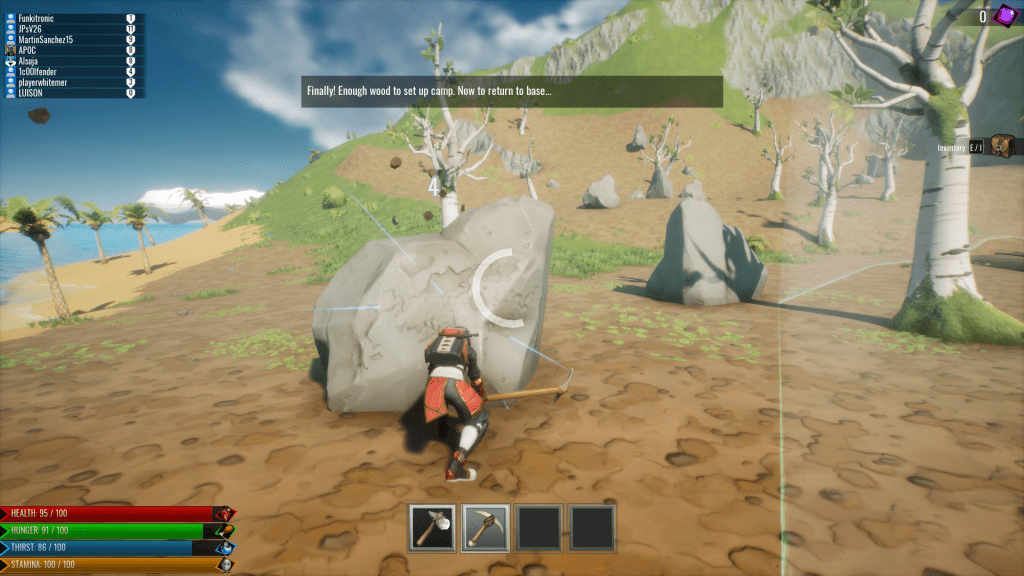
The next thing I tried was a survival game where you and a bunch of players are in a plane, crash on an island, and try to survive. Once again, controlling the game wasn’t my favorite part of the experience, and every game I played was deeply flawed on that level. Everything just felt a little too inaccurate, which is a problem when you’re trying to bash a rock with a pick ax for a full minute, only to realize that half of your hits have been missing. Also, the fact that it was a bunch of people playing on the same server didn’t make for the smoothest or most stable online experience, but that seems like a Core issue more than the game creator’s fault.
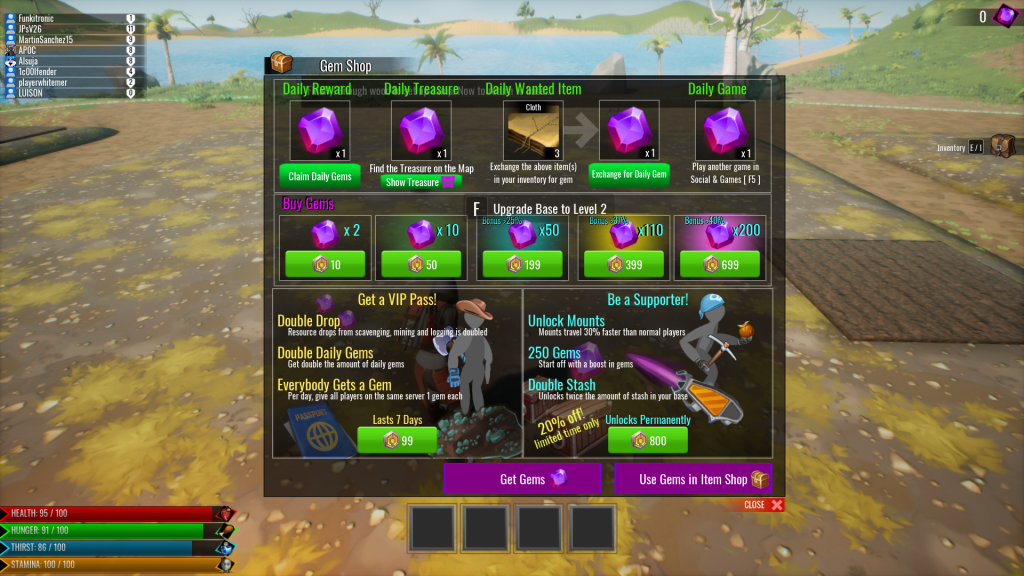
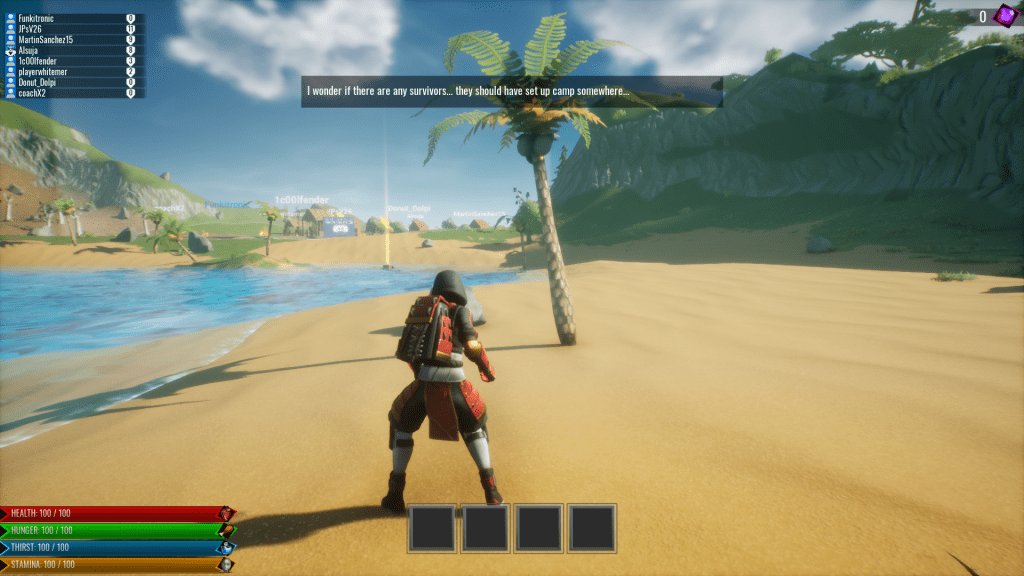
What is a game creator issue is the inclusion of mobile game styled timers. There was no shortage of opportunities for me to spend diamonds to speed up my timers on growing plants, crafting items and researching recipes. Now follow me on this, cause this might get a bit confusing, but the way you obtain diamonds in this game was by trading in the paid currency you can buy in Core for real actual earth dollars. It was pretty gross to see those mechanics implemented in a user generated game, but I guess everyone’s trying to make a buck somehow.

After way too much of that, I moved onto a bad mini-golf game. You wanna talk about whack physics in a game, look no further than whatever this golf game was called. It was basically a worse version of Golf With your Friends, which is a fun game you should play instead of this. It had all sorts of wacky courses to play through, all of which you were playing through with other people who were also having trouble dialing in the strength of shots, just like I did. Or maybe they were also fighting with the atrocious camera that would rather show you the scenery than where your ball was. But hey, if I come back tomorrow, I’ll get like 800 fun coins or whatever.
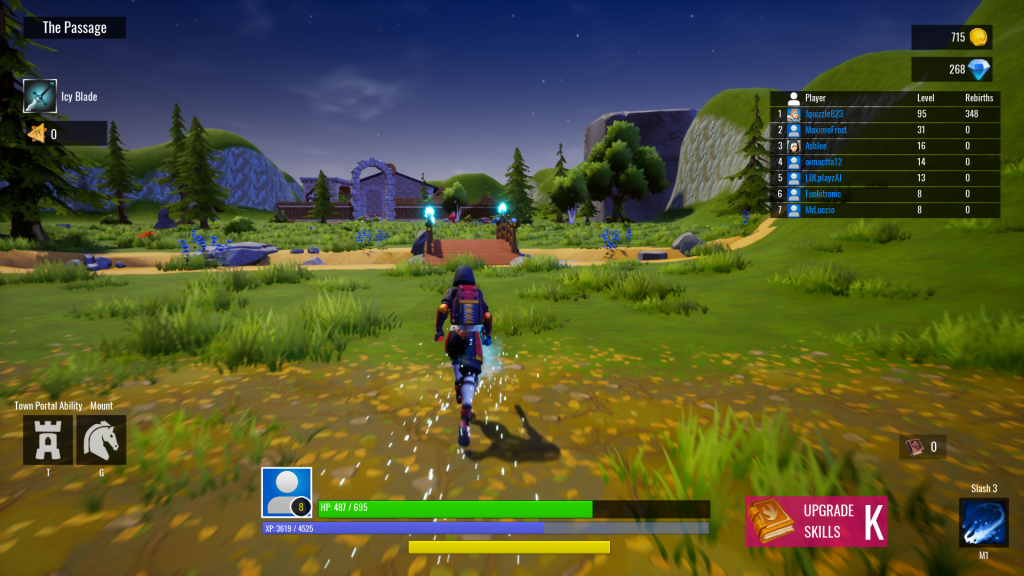
Next, I played a game that billed itself as a “true” action-RPG, a claim that was made by a big fat liar. You start in a town with a sword and can walk outside the gates to kill generic NPC dudes with swords, skeletons with swords, or a big rock monster. That basically involves mashing the left mouse button in the general vicinity of an enemy until they die. You do that a bunch of times until you level up, pick up some gold off of the enemies, and return to town to level up and maybe buy new weapons. You can buy a sword, a sword and shield, a crossbow, a hammer or some magic staff along with a bevy of skins. All of these things have price and level requirements, but it all just seemed in service of getting better weapons to run into a higher level field to run that loop all over again. It’s immediately boring and the maker must have realized that because they literally put in places for your character to idle AFK and gain gold or experience. Maybe that’s a thing in MMOs, I don’t know, but it was incredibly wild to see for myself. I suspect this was in an attempt to boost their active player count by inciting people to literally not play their game, while playing their game.

Finally there was this real fucker of a game that was all about messing with you through misdirection and straight up bullshit. It’s one of those trial and error type platforming games that streamers love to play, like Kaizo Mario or I Wanna Be the Guy. But imagine doing it with a bunch of other people and god awful physics, wouldn’t that be fun? Well actually, it kind of was. Not because of the game, no that was weapons grade bullshit right there, but interacting with the other people on the course was kind of nice. We all hated this stupid game and started helping each other by communicating in the text chat. We’d call out secret platforms or lead each other through invisible mazes. It had been so long since I’d engaged any online play because it usual sucks, but these people were genuinely good to each other. We all helped navigate the deluge of invisible platforming challenges and mazes that made the game such a chore, but through our collective stubbornness and spite for the game, we overcame. At the end of it all it just reset me back to the beginning, but it was a really positive interaction nonetheless.

But it’s hard to poke fun at the people who spent time making these games, because they probably put a lot of work into making them and I don’t want to detract from that. Sure a lot of them put in some pretty nasty mobile game mechanics into their games, but they still took the time to make a thing. With that thought, I checked in on the creation stuff and it seemed pretty dense and involved, although Core does let you pick from a list of premade concepts like racing, fighting, king of the hill and more, to give you a better starting point than just a blank screen. So I loaded up a deathmatch prefab and immediately was overwhelmed by the tools available and closed it, which could be interpreted as the tools being fairly robust, or me just not having the patience for that shit.
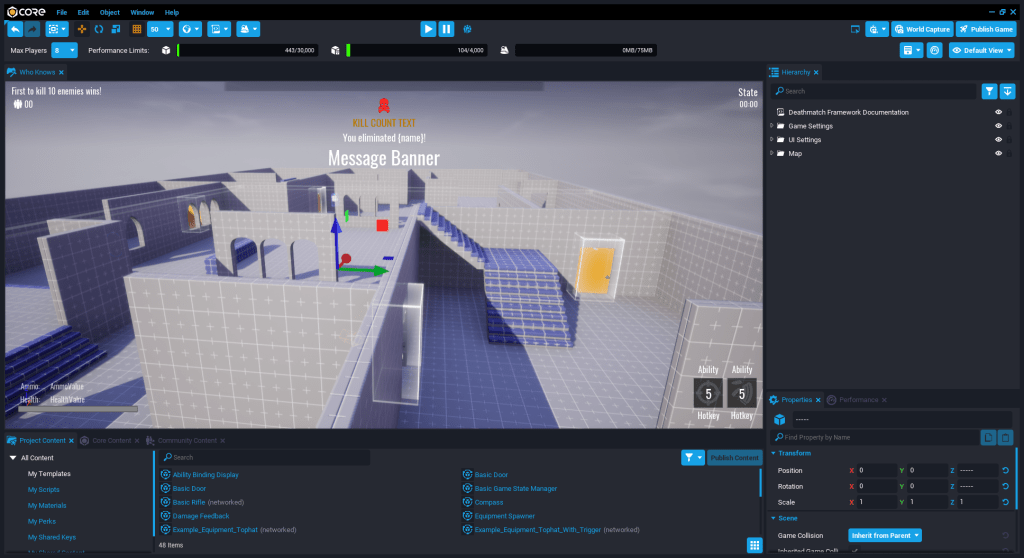
Everything about Core just screams unfinished which makes sense for a game that’s been in some version of early access for the past few years, but even inside of user created games everything just feels messy. No UI in any game I played actually looked good or was an efficient use of screen real estate, with everything instead looking like a placeholder for a placeholder. Interacting with stuff, moving the characters, all of it just felt muddy and imprecise across every game inside of Core, which speaks to a larger issue with the platform that needs to be resolved. If the platform isn’t giving people the appropriate tools to make a fun game, then every game on that service, regardless of its ambition or craft will feel stunted in some way because the engine behind it is inherently flawed.

I don’t ever want to see a game fail, but I just don’t know if Core will ever catch on in a sustainable way. Maybe if they tighten up the physics and general interaction stuff, integrate some proper controller support and overall just allow people to create more refined and interesting content might make it something worth sticking with, but as it is I just don’t see it lasting. Although it is free, and that does seem like an attractive enough price point for people to engage with for the time being. Maybe it’ll be a quiet success like Roblox is or maybe it’ll fade into obscurity like Project Spark did, but ultimately I bet streamers will enjoy this thing if only to rag on it to their audience, which is basically what I’ve done here in written form, so mission accomplished Core!
Gut Check: Outriders Demo

Recently a demo for the upcoming Square Enix game, Outriders, was released to the public in what I can only assume was to get people like myself to finally stop asking, “what the hell is Outriders?” Seriously, I had no idea what this game was or when it was announced or who was making it, but ads for started cropping up everywhere so I figured I’d just try the demo and seek out the answer for myself.

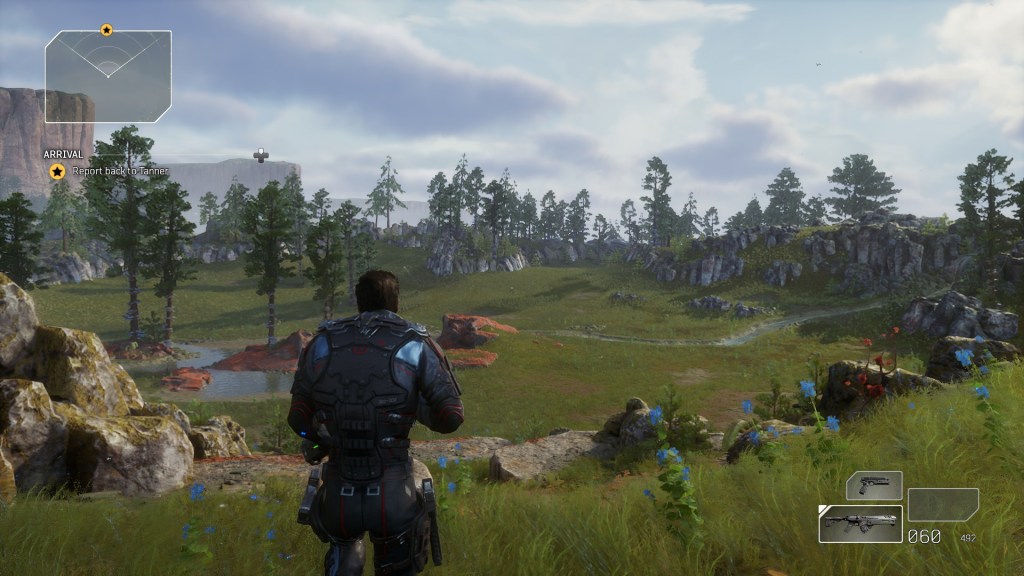
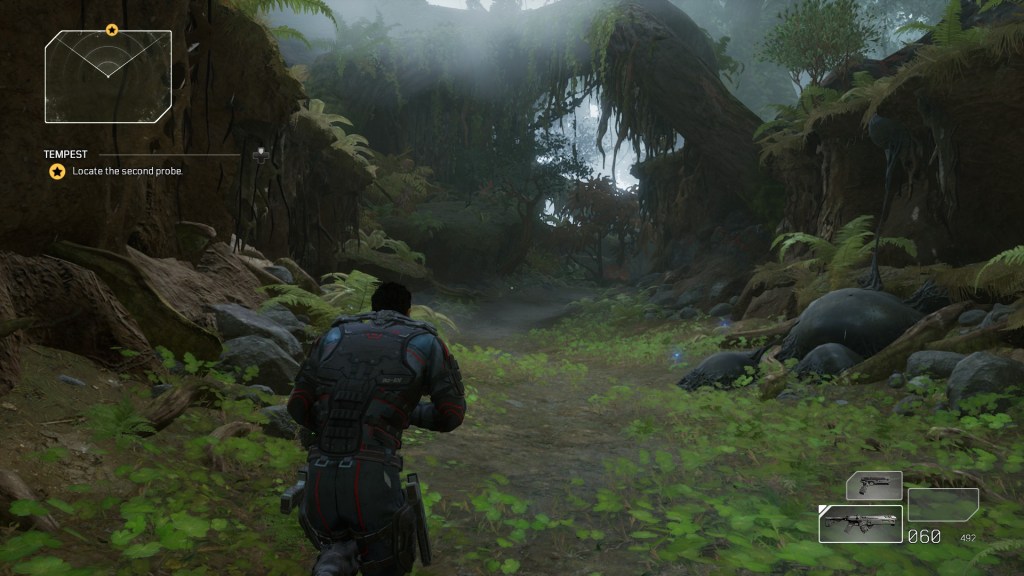
Outriders is a cooperative third person shooter with different classes, skill trees and a heavy focus on getting loot. The immediate comparison one could draw from that description would be to liken it to Destiny, but that would be unfair to Destiny. Sure they’re both loot focused shooters that have big skill trees within various classes, and yes, Outriders also uses that stupid cursor-based menu system that’s infuriating for anyone using a controller, but a lot of games share at least some of those elements these days. My understanding as someone who doesn’t play it is that people enjoy Destiny for a multitude of reasons, chief among them being that it feels really good to shoot stuff in that game. Outriders however, isn’t particularly fun to play. It isn’t bad, but mechanically it’s completely unremarkable.

The biggest issue with the Outriders demo is that its intro and tutorial sequence are so abysmal that it’s quite honestly amazing that I managed to get through it at all. The demo starts off with an incredibly generic and tired story that’s repelling in almost every way. Earth is dead so they launched a bunch of military types and scientists into space in order to colonize what they initially believe to be a vacant planet, but in a shocking twist, it isn’t.

You get down there and are forced to interact with the blandest and most uninteresting characters in existence, like no nonsense space cowboy guy who is a father figure to your character, or the science lady who is so smart she doesn’t get obvious (yet bad) jokes, and you’ve even got an evil British (I think?) guy who is at odds with the mission for some reason. And you have to talk to each of them for way too long in order to progress to the next bad story beat, with the game even having the guts to offer you additional dialogue options so you can get to know more about them, something I wholeheartedly suggest you do not engage with.

In my eyes, Outriders commits the cardinal sin of making you watch an extended cut-scene, then dumping you into a “gameplay” section where you walk to another point where another cut-scene will start, over and over again. It’s like 30 straight minutes of you walking from cut-scene to cut-scene and it’s absolutely miserable.

But then the game tries to be interesting by changing everything up on you.

Within that first 30 minutes of tutorial hell, the game basically plays out an entire bad video game story from start to finish. Spoliers for a demo, I guess? Basically the British guy is in charge of making sure colonists can land on the planet safely, something your character and their team are there to confirm. Some wild magic murder storm comes through and starts icing everyone on your team, something which space cowboy uses as a justifiable reason for these colonists to not land here. British guy says no and that it’s too late to halt the landing procedure, the two of them get into a shouting match which ends with space cowboy dad getting shot by the British guy. A firefight ensues in which you end up getting mortally wounded, something which science lady responds to by putting you back into the cryogenic sleep pod you initially emerged from to buy time for the medics to come and help you. That never happens, but you’re apparently cured anyway when you emerge from the pod 31 years later.

That’s right, Outriders does a big fucking time skip that honestly turned me around on the game a little bit. You’re then introduced to the world as it is now where the colonists landed and had to carve out a meager existence similar to what they had on Earth. Now it’s all this dystopian, post-apocalyptic looking world with different factions all vying for control of the little resources that are available. You get immediately captured by a bad group of nasty boys and are sentenced to death in “No Man’s Land.” Oh by the way, all this time, I’ve maybe played the game for about 5 of the 30 minutes of intro that led up to this point. This all ends with your character dying out in “No Man’s Land.” The lights start to fade and your character drops to their knees, desperately trying to grasp at another life-sustaining breath that will never come.

And then a menu pops up and asks you which class you want to choose.

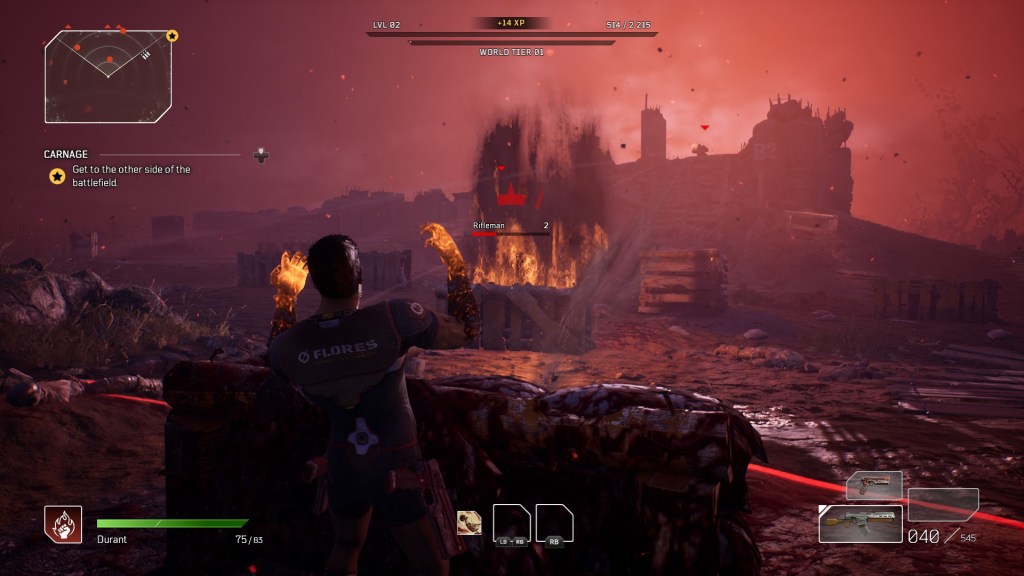
That’s right, nearly 40 minutes since starting this demo I finally got the option to pick a class. Classes seem fairly basic with you basically choosing between a sniper class, a balanced class, a shotgun class, and I guess some sort of glass cannon styled close up class that’s all about getting in and out quickly, all of which have magic powers associated with them. I went with the balanced class and the fire magic that came with it. That particular magic power allowed me to cast a wall of fire emanating from me in a line igniting enemies, with the added bonus of regaining some health for killing any enemy that was actively impacted by my magic.

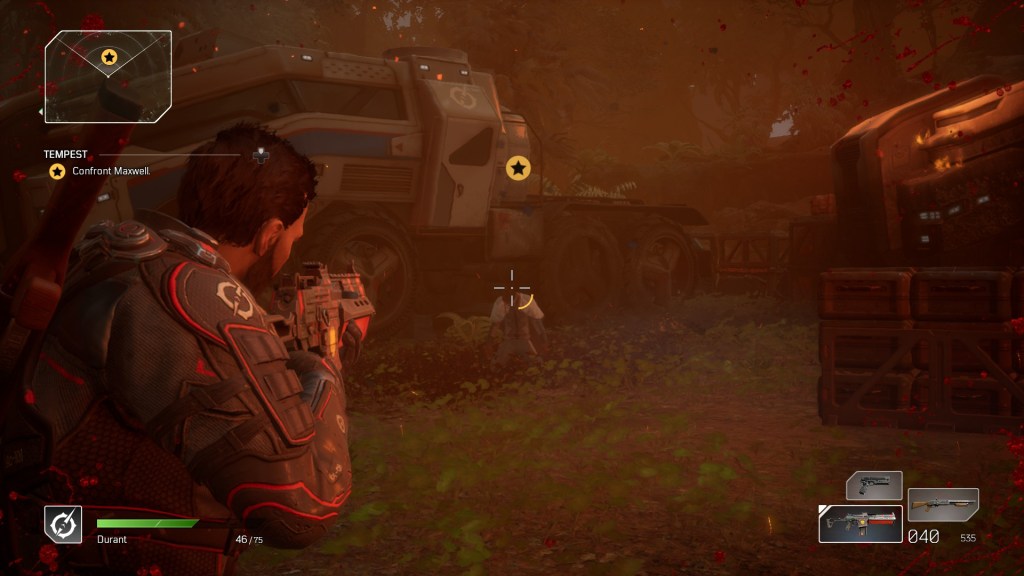
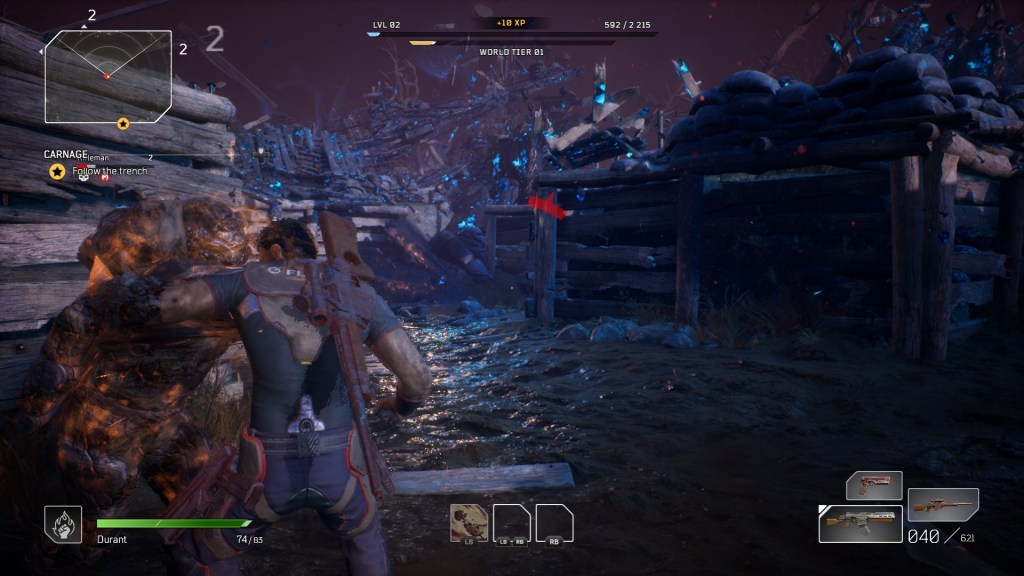
I played through a lengthy shooter sequence where I learned that the cover mechanics both aren’t necessary for success, nor do they work reliably at all. Sometimes I would be mashing the “get into cover” button only for me to just stand in front of a stack of boxes while getting lit up by gunfire like an idiot. That sequence ended with me arriving at what I’m assuming is the first hub area where I’m sure vendors and stuff will all be hanging out eventually, and that’s where I called it.

It took so damn long for anything remotely interesting to happen in Outriders that I’m certain this demo is ultimately going to do a disservice to what might be a decent game. Something I learned later on through reading and watching some coverage about Outriders, was that it isn’t a live service game like Destiny or The Division. Apparently Outriders has a full story that eventually ends, which considering I don’t really want a live service game in my life right now, actually sounds appealing. It’s also a cooperative game that ostensibly, if I enjoyed Outriders a little more, I might trick my friends into buying and suffering through it with me.

Just from the little bit of this demo that I’ve played, I really don’t think I enjoy what Outriders is doing. I might put some more time into the demo just to see what the game is like after the bloated tutorial nightmare, but I don’t know if that’ll actually happen. All I can say for certain is that if you are going to play the demo, you can skip cut-scenes and dialogue pretty easily which will save you a lot of grief.

Gut Check: Tastemaker

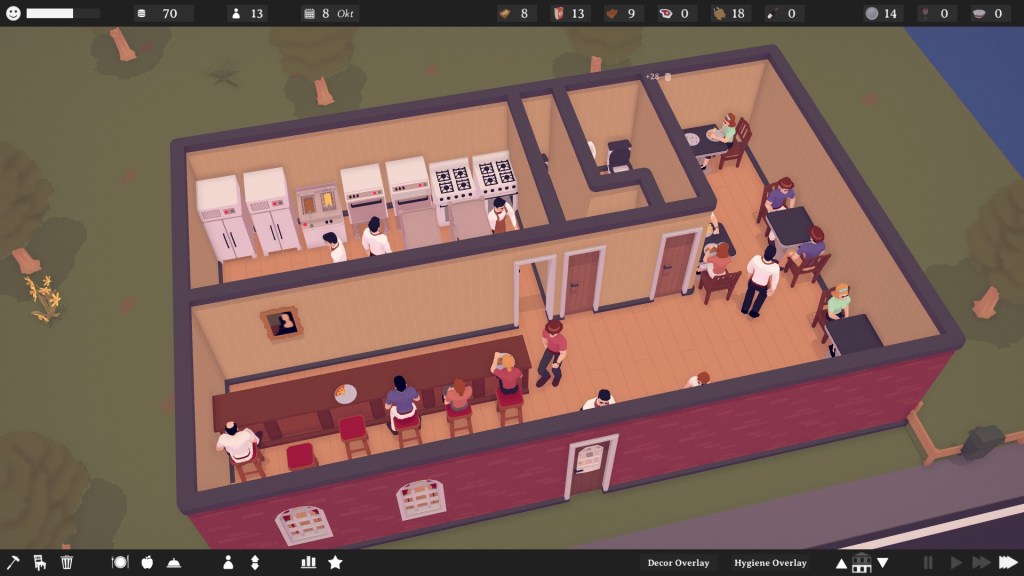
I recently spent some time playing a little restaurant management game that I found thanks to a post on Reddit by the creator themselves. Normally I don’t take game recommendations from the infinite void that is Reddit, but it was interesting and cheap enough for me to take the chance on this early access title. It’s called Tastemaker and it needs a lot of work, but there’s definitely something there that’s got me hopeful enough to keep an eye on its progress.

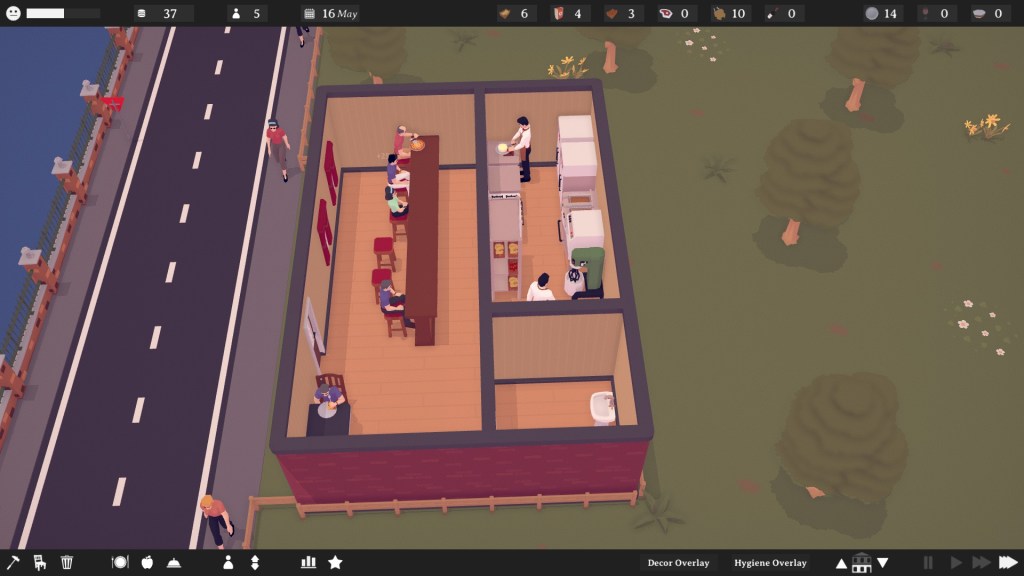
Tastemaker is this low-poly, very simplistic looking management simulation game that has you trying to build out your restaurant. The basic loop involves ordering ingredients and buying equipment that allows your employees to prepare different meals for customers. You have a couple of options for menu items that all have ingredient or equipment prerequisites that need to be fulfilled before you can actually serve more interesting meals. People come in, your employees serve them autonomously, and with your profits you continue to expand your restaurant, both in terms of menu offerings and actual geography. There is a clicker-like quality to Tastemaker that I really enjoy, specifically when you strike the perfect balance of customers, ingredients, prices and employees, ultimately letting you just kick back and relax while some cash rolls in. Unsurprisingly, you’ll need a lot of cash in order to address the concerns of your customers and staff while growing your little restaurant.

A big part of Tastemaker revolves around outgrowing your current capacity. Employees might complain about their heavy workload or customers might complain about slow service, both of which are issues that hiring another employee can easily fix. There might not be enough plates, ingredients or seats in the restaurant, all of which are easily fixed by spending more money just like in real life. At the moment, Tastemaker is very much a game about making the biggest and most efficient restaurant you can rather than being able to make niche restaurants that have certain specialties, meaning that every restaurant you make will eventually serve the same things because there’s no reason not to fill out your menu with all of the options available.

There were a ton of minor grievances that kept popping up throughout my play time with Tastemaker, but none of them were able to completely dissuade me from wanting to play more. Little things like not having a camera option that removes the walls or not being able to designate employees to certain jobs, to even the monotonous sound of cars passing by outside of your restaurant are just a couple of examples of these minor issues, but Tastemaker has some serious issues that need to be resolved before a complete release that I’m sure are going to be worked on as more people play during this early access period.

One thing that really bugged me was the inability to actually close my restaurant, which really became an issue whenever I wanted to redesign the whole store. You might think that isn’t that big of a deal, but every so often you’ll decide to expand your building to offer more seating or build some bathrooms or even just to expand the kitchen, but you have to do it one piece at a time because you have to wait until a chair is uninhabited before you can move it. Closing the store would make it so much easier for me to redesign my restaurant, instead of having to do it one piece at a time between customers.

There also isn’t an easy way to expand your store even when you do get the opportunity to do so. You have to destroy walls and move furniture piece by piece, which becomes extremely tedious considering how often you’ll be doing it. But even when you do build out your restaurant, there really isn’t too much you can do with the place. Now, I want to preface once again that this is an early access title, but there isn’t a ton of decorative flair for you to play with to customize your restaurant. I’m sure that will be expanded on as development progresses though.

Yet for as much bellyaching as I’ve done, there’s still something about Tastemaker that I’m still very much onboard with. It’s simplistic, maybe to a fault, but it has a lot of potential. I really do enjoy how it isn’t overly complex, opting for something way more approachable, but I’m sure that more systems will be layered on in due time. I really would like to see some more variance from Tastemaker, specifically I’d like to be able to make a burger joint where customers don’t complain about how we don’t serve pizza, or make a steakhouse where people don’t whine about the lack of chicken nuggets, but time will tell if I’ll ever have that ability. Tastemaker is a neat little experience that isn’t doing anything special at the moment, but I feel like it has the potential to be something great, and I look forward to tracking its progress.

Gut Check: Immortals: Fenyx Rising

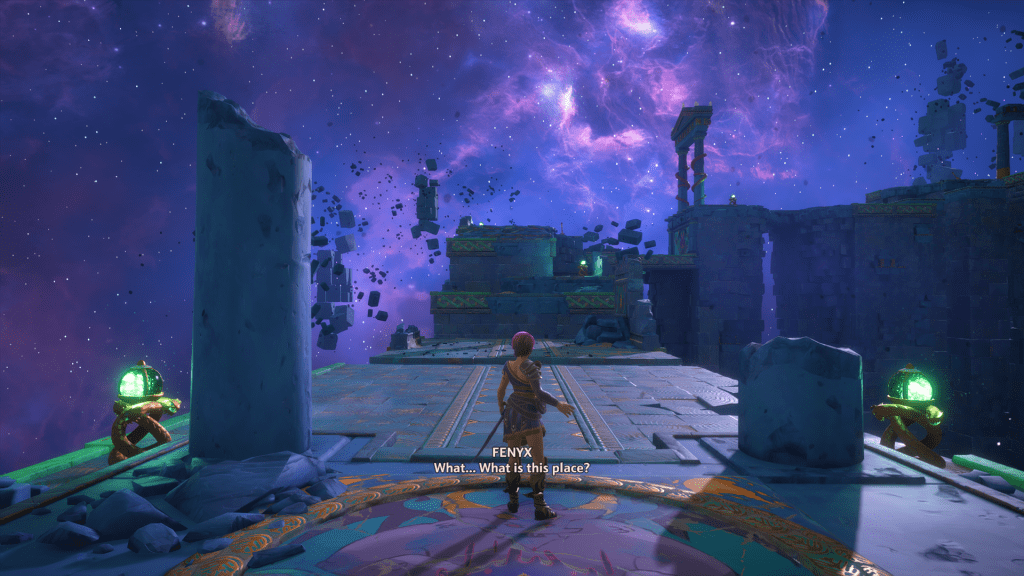
When talking about Immortals: Fenyx Rising, it’s impossible not to bring up 2017’s The Legend of Zelda: Breath of the Wild, an excellent game that was bound to inspire other developers to build upon its success. Enter Immortals: Fenyx Rising, a game that’s so clearly inspired by Breath of the Wild that at times it feels like plagiarism. However, for better and worse, Ubisoft did not make a carbon copy of Breath of the Wild, because that would be an insult to one of the best Zelda games out there. What we have on our hands is a louder, less subtle, yet still solid facsimile of a modern classic.

Immortals: Fenyx Rising is an action-adventure game that is exactly what you would expect Breath of the Wild to look like if Ubisoft had made it. What I mean is that Immortals: Fenyx Rising tries to copy the sense of exploration and expansiveness that Breath of the Wild had, while pumping the game full of checklists and side activities. The outcome is a fundamentally solid game that seems so conflicted in what it’s trying to do that it ultimately feels exceptionally average in almost every way. It lacks the elegance and charm of its inspirator, which makes sense because Ubisoft made it.

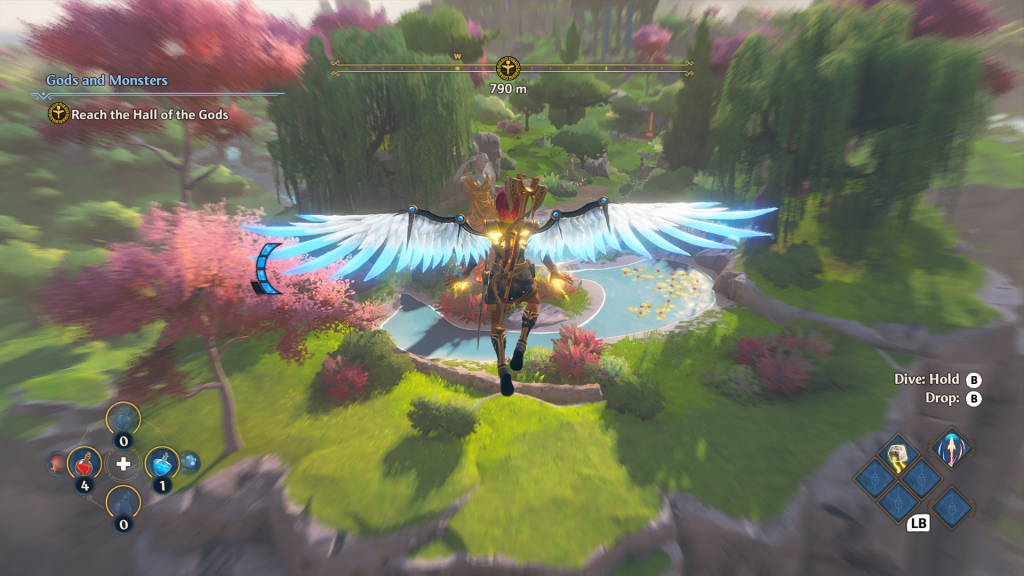
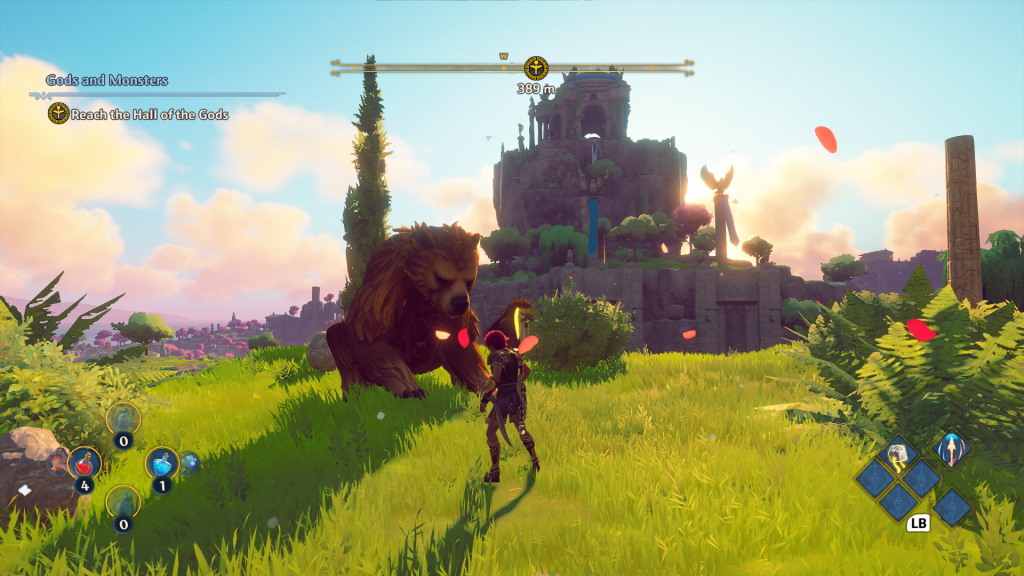
One of the things that Immortals: Fenyx Rising gets right and also happens to be one of my favorite aspects of the game is the breadth and scope of the world. It’s this sizeable landmass that’s beautifully rendered in a lower detailed, watercolor graphical style that’s extremely reminiscent of Breath of the Wild. That classic, “If you see it, you can go to it,” design philosophy is well realized in Immortals: Fenyx Rising, and its art style, world design and the power it leverages from being on consoles other than the Nintendo Switch really make this world worth exploring. The world doesn’t appear to be overwhelmingly large, instead opting for a smaller and more handcrafted experience. While I’m still early on, the world seems to be taking a quality over quantity approach, something I’d take any day over a large, procedurally generated bland landmass… a blandmass if you will.

As you explore you’ll be collecting various resources for crafting potions, upgrading your armor and weapons, and so on and so forth. It sounds more daunting than it is though because resource management isn’t really a thing you have to worry about outside of carrying capacity for certain items. You’ll also come across all sorts of hidden puzzles, friendly animals and corrupted beasts, the latter of which makes Immortals: Fenyx Rising really feel like its own game.

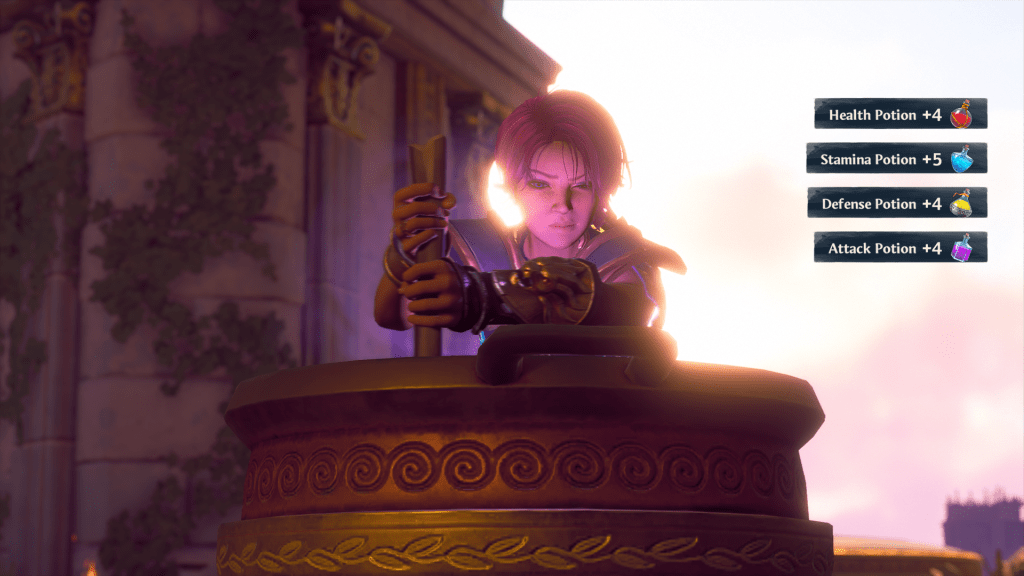
I really enjoy the overall combat experience in Immortals: Fenyx Rising, but the best thing that it does, or specifically doesn’t do, is make you endure weapon degradation. That’s right, Immortals: Fenyx Rising fixed the worst part about Breath of the Wild and needs to be celebrated for that. Within the first hour of the game you’ll become familiar with light and heavy attacks, your bow, one magic ability that allows you to pick up rocks and stuff, a dodge, and a parry that I always forget about. Combat is fast is rewarding, and every last enemy you vanquish is hurled into space as they dissolve into ash which is a really satisfying touch. Immortals: Fenyx Rising also does the Breath of the Wild thing where if you parry or dodge at the right moment, everything slows down for you to get this flurry of blows in that deals extra damage. You’ll unlock additional abilities as you explore more of the world, collect more resources, and progress through the story, which might be the only nice thing I can say about the story.

The story in Immortals: Fenyx Rising is bad. Well, that’s not entirely fair, maybe the story is fine, but the way it’s presented is miserable. Evil dragon/god/demon-thing Typhon, who is basically the Ganondorf of this game, has corrupted the land and has turned 4 of the remaining heroes of the gods into his agents of chaos. If this sounds familiar to you, it’s probably because this is almost the exact story in Breath of the Wild. That’s where you, Fenyx, come into play. A terrible shipwreck has you washed up on shore and you come to find that you’re basically the chosen one or whatever and only you can save the world. Sounds fine so far, right?

Immortals: Fenyx Rising is told through an active narration, wherein Prometheus is telling the story of the game to Zeus. This narration tries so desperately to be funny with both narrators cracking wise at each other, usually ending with a joke about how shitty Zeus was. It’s all so brutally unfunny and actively detracts from the good moments in Immortals: Fenyx Rising. And it isn’t just those two dopes that bring the experience down. Every single NPC I’ve met thus far is terrible and actively unfunny. From Hermes being this snark-filled kleptomaniac who is written to be this lovable scamp despite the fact that he isn’t, to an oracle who doesn’t know he’s an oracle because he’s sooooo highhhh, it’s all just so poorly executed.

It’s sad to say, but lately Ubisoft has been churning out nothing but bland and badly written games, and this is no exception. It’s like they saw Breath of the Wild and felt compelled to pump it full of classic open world bullshit. When I think back to Breath of the Wild, I remember a quiet game about exploration and discovery that didn’t hold your hand and was designed with a simple ethos of “the journey should be just as interesting as the destination.” And Immortals: Fenyx Rising is perfectly capable of providing those moments of quiet discovery, but it’s constantly undermined by the chattering old men who crow at you at random times, and the unnecessary amount of cut-scenes that you have to endure. There’s a point where you’re introduced to your hub area where you come to level up and craft and so on, and there are about 6 specific stations to learn about. Each one of them comes with a cut-scene where Hermes comes and snarkily explains these stations to you. Instead of just some text that didn’t have bad jokes in it, I had to listen to that dingus to learn how to upgrade my stuff.

Much like Watch Dogs: Legion and to a lesser extent, Assassin’s Creed Valhalla, Immortals: Fenyx Rising has it’s fair share of performance issues. I swear, each one of these titles has fucked up in a different way, that it’s starting to feel intentional at this point. Watch Dogs: Legion couldn’t maintain a framerate to save its life, Assassin’s Creed Valhalla loved to hang at loading screens, and Immortals: Fenyx Rising just will decide arbitrarily that you can no longer play the game. Every 15 to 30 minutes or so, Immortals: Fenyx Rising will just freeze up and hang there. I haven’t found any rhyme or reason to any of it, and it’s been the sole reason why my play sessions are cut short. Maybe it’s my PC, but the fact that all three of these Ubisoft titles have broken in three distinct and separate ways is wild.

The worst part about all of this is that if the game would let me, I’d sink a lot of time into Immortals: Fenyx Rising. It’s not a perfect game by any means, but there’s a lot to like about it. The combat, world design, and sense of exploration all seem great, but the story and performance issues really undercut the entire experience. I like Immortals: Fenyx Rising, but it just isn’t as refined or as cohesive of a package as Breath of the Wild was. I know it’s unfair to compare a flagship Nintendo title to a Ubisoft title that’s been pushed out in December as an afterthought, but when you wear your inspiration so blatantly on your sleeve like Immortals: Fenyx Rising does, you can’t help but point out its shortcomings.

Gut Check: Fuser

Somewhere between my first and fiftieth Smash Mouth and Carly Rae Jepsen mashup, the comedic flair that initially attracted me to Fuser faded into the background and was replaced with a genuine desire to make a song that actually sounded good. While Fuser isn’t much of a “game,” it is a pretty powerful and accessible piece of software that’s capable of generating some genuine ear-worms of songs in an easy and accessible way.

Just like previous Harmonix titles such as the Rock Band series or the early Guitar Hero games, the fun doesn’t necessarily stem from making your way through the career modes, but rather in the simple act of playing the game is the real draw. Just like those games, Fuser has a story mode that grants you different unlocks as you progress, but in reality it’s more of a tutorial than anything else. During the course of a set you’ll get some requests for certain instruments and genres as well as some objectives that usually revolve around you utilizing a technique you just learned.

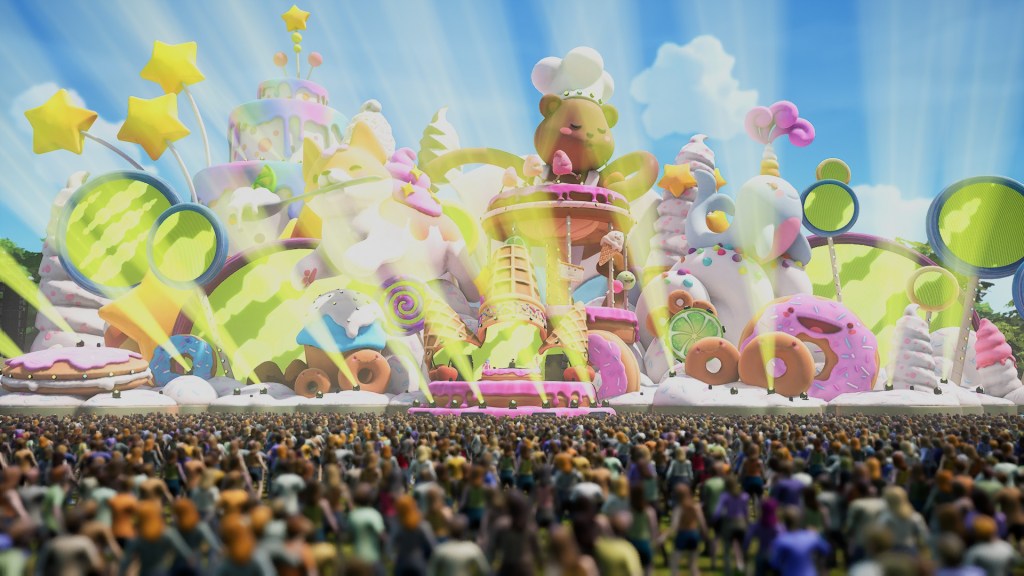
The idea is that you’re an amateur DJ who like anyone at this event, is just allowed to hop on stage and mix it up at what must be the weirdest music festival in the universe. There’s no logic to it, but there doesn’t really need to be considering that no one is actually coming to a music game for its story. The career is split into several sets of levels spread across a few different uniquely themed stages where you’ll be taught something new. The first stage is about the basics of timing, whereas later on you’re taught about soloing certain tracks, queuing up new sets, and adjusting tempos.

It’s incredibly helpful and provides you with a decent amount of cosmetic and song unlocks depending how well you score in a level, but Fuser isn’t really good about giving you feedback which isn’t great if you’re trying to improve. I rarely understood why I got three stars on a level versus four or five, because the game only seems to show you what you did right without offering anything in the way of criticism. It wouldn’t be such a bummer if it wasn’t for the fact that songs and song currency are usually unlocked when you reach a five star score.

But once you complete a few stages and learn some of the advanced techniques for mixing, I’d suggest you just leap into the freeplay mode and never look back. That’s what I’ve done, and I’m truly having a great time just mixing up songs for half hour sets at a time. Without the pressure of having to keep the crowd happy or worrying about the various objectives that might pop up during a set, freeplay is the actual mode you’ll be spending the majority of your time with .

You start any session by picking your crate of 30 songs to bring on stage with you. There are a lot of songs from different genres and eras, all of which have been broken into up to four tracks: vocals, bass, drums and guitar. Sometimes the guitar and bass will be synths, pianos or horns, but the idea is that you have four pieces of a song to play with. That means you can use Smash Mouth’s “All Star” vocals, with A-ha’s “Take on me” drums, and some other stuff that shouldn’t ever be in the same song, and make them be in the same song.

Fuser will force these songs to work together under any circumstance, even if that means ruining the very concept of music for you. This will manifest in the form of incredibly sad sounding pop songs that are in a minor key and played really slowly, or the exact opposite where “Linger” by The Cranberries suddenly becomes a high octane pop song. It’s wild and shouldn’t be capable of producing anything other than ear poison, but it all manages to hold together while producing decent sounding music

It probably took me a total of ten minutes in freeplay to create something I actually would listen to in my car. That realization was both comforting and horrifying because none of this should be working, but yet I still find myself nodding my head along to the music I create. I truly have loved my time with Fuser but I do fear that it might not have the legs that Rock Band did. It seems like a fun thing to show your friends that might ultimately not have the longest lasting appeal, but for a time it can be a genuinely good time.

Gut Check: Watch Dogs Legion

When I think about my time with 2016’s Watch Dogs 2, I’m reminded of its many ups and downs both in terms of gameplay and story, but at the end of the day it’s a game that had a lot of heart and charm that managed to make it a memorable and satisfying experience. Watch Dogs Legion however, lacks any of the joy and fun that its predecessor had, contains repetitive and frustrating missions, and also runs like hot garbage.

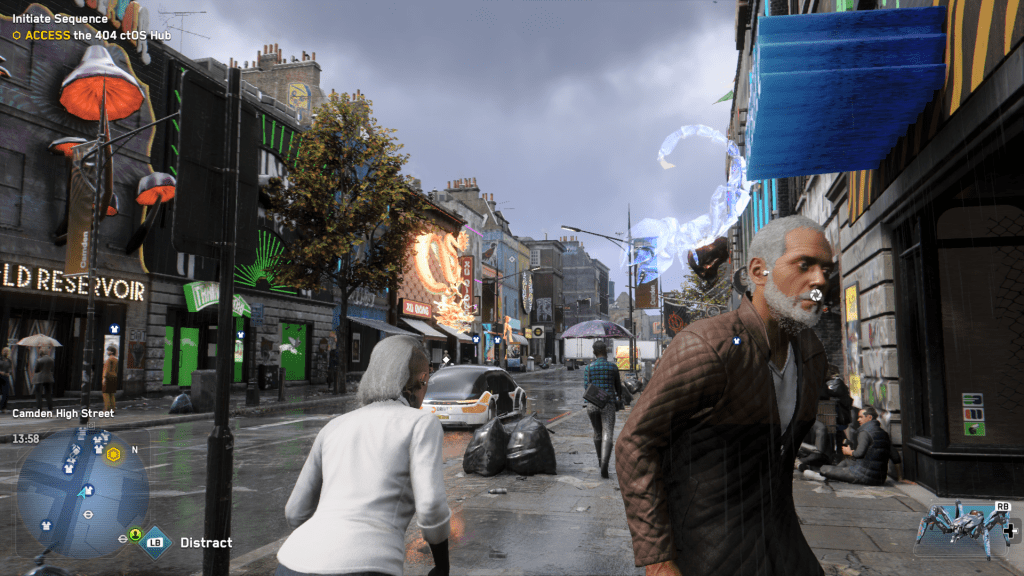
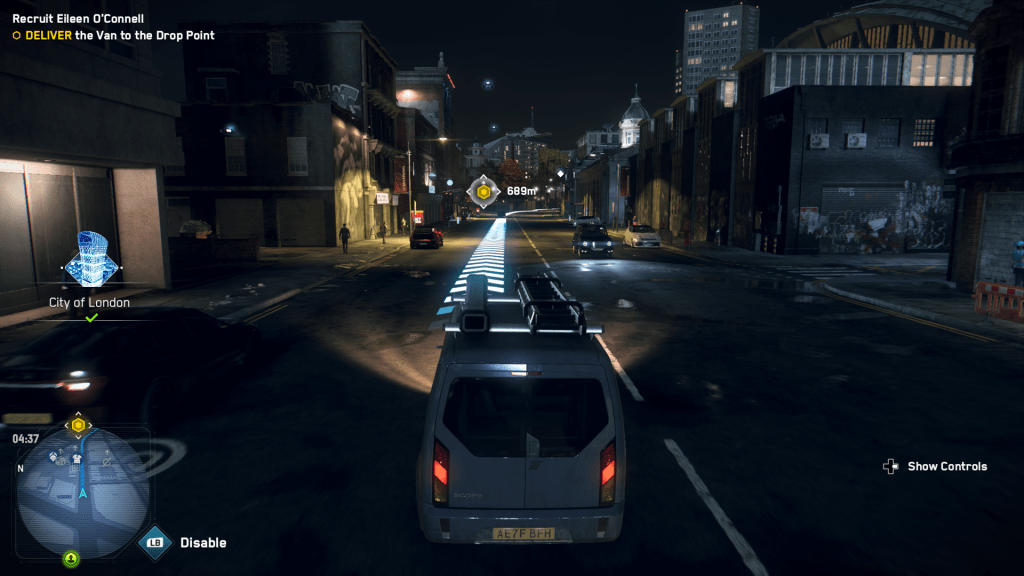
Watch Dogs Legion is a game that focuses more on the hacker organization DedSec instead of any single character by allowing you to effectively recruit and control any person you find on the street. The goal is to rebuild the organization with these recruits, each of which have randomly assigned traits to them that make them more or less viable candidates to add to your ranks. You might find a guy with a cool car, or a drone expert who knows how to hack more effectively, or even a lawyer who can bail your team out of jail faster if they happen to get arrested. It’s an interesting concept that rarely feels worth engaging in and unfortunately presents its own suite of complications to providing a cohesive gameplay experience.

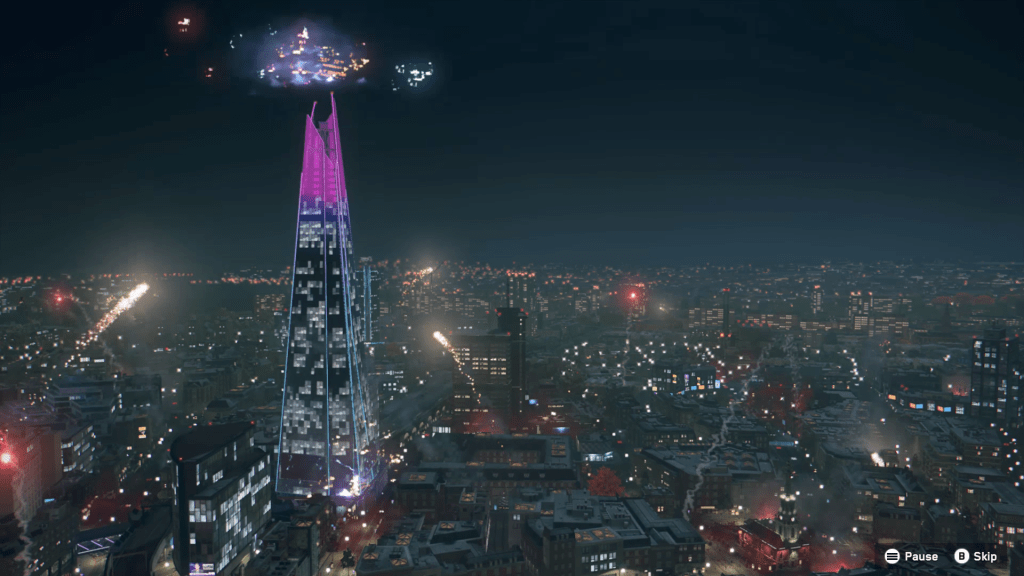
The lack of any primary character to really focus on in the game wouldn’t be such an issue if Watch Dogs Legion wasn’t also trying to make you care about the narrative. The quick version of the story is that DedSec was framed for a terrorist attack on London that prompted a private military company (PMC) called Albion to turn London into an oppressive police state. While the story itself doesn’t do a great job of handling or presenting any of these topics with the care they require, the whole narrative falls flat because every character you play as just spouts the same bland responses to everything no matter what the context is.

For instance, there’s an early mission where you find what effectively is a prison camp set up by Albion that just exists in the middle of the city. You literally just stroll on in there to see the many, justifiably distraught people just kinda hanging out. Interestingly enough, they all have their cellphones on them which is a weird thing to let political prisoners have, but whatever. Yet after completing the mission in the camp and casually waltzing out the front door, the voice of your boss chimes in and remarks about how terrible the situation is. My character, a bland and procedurally generated ding-dong, proceeded to simply respond with, “I could get used to this DedSec thing,” or something to that effect. That kind of thing happens almost every single time you complete a mission, and it really robs Watch Dogs Legion of any real chance at telling a compelling story by having your blank slate of a character just spit out random one-liners in the hope that it makes any sense contextually.

On the topic of procedural generation and characters, Watch Dogs Legion tries to inflate the “uniqueness” of the citizens of London by pitch-shifting their voices to artificially expand the diversity of people you might encounter. As you might imagine, this leads to a lot of people with the same voice, just one happens to be unnaturally deeper, talking at each other as if you were listening to two robocalls try to scam each other.

Even the missions are bland and uninspired, regardless of whether they were procedurally generated for a recruitment mission or if they’re part of the main story line. These procedurally generated missions will often make you return to places you’ve already infiltrated for either story or region unlocking purposes, and the region specific missions are wildly dull and carry the stupidest implications with them. The main conceit of these region unlocking missions is that you do enough to inspire the people of a certain part of the city to enter a state of “defiance” and rise up against Albion. Even wilder is how Watch Dogs Legion considers putting up a cool DedSec banner over an Albion one to be just as important as uncovering an organ-harvesting operation. The level of cognitive dissonance that’s on display at any moment in Watch Dogs Legion, combined with the lack of any charm or character, really overshadow the few existing high points in the game.

Cognitive dissonance aside, the core gameplay loop of Watch Dogs Legion is still extremely solid despite the overall game feeling like a shell of its predecessor. Being able to take down outposts without ever stepping foot inside of them by utilizing cameras, drones, and traps littered throughout any given locale is still really satisfying. I’ve been able to play most of Watch Dogs Legion without ever firing a gun, with the exceptions being the missions where you’re thrust into combat scenarios against your will. There’s just something infinitely enjoyable about terrorizing a bunch of PMC dipshits without ever laying a finger on them.

But the same could have been said about Watch Dogs 2, hell, even the original Watch Dogs was good at making you feel like a hacking god. Whereas Watch Dogs 2 made its digital version of San Fransisco feel alive and packed with things to do, Watch Dogs Legion feels oddly empty. You can go buy a bunch of clothes, do package delivery missions, get drunk and play kick-up with a soccer ball, but that’s kind of it. For as big and dense Watch Dogs Legion‘s version of London is, it still feels surprisingly empty. It’s even more upsetting when you remember that Watch Dogs 2 gave you reasons to explore the city and hunt down famous landmarks in San Fransisco. Watch Dogs Legion could have really benefited from having something like this present, encouraging people to get to know London and its iconic locations.

But I could get past all of those issues if it weren’t for the miserable state of the PC version of this game. My computer isn’t new and I recognize that, but there is no reason that I should have to play Watch Dogs Legion on its lowest settings, and still be unable to have it run at a steady 30 frames per second. The game is so heinously optimized that moving around the world, getting into combat, or even turning your camera too fast turns the game into a slideshow. It’s all the more upsetting when you look at the console versions that look much better and run more stably despite being on hardware that was released in 2013.

Despite all of this however I kept playing Watch Dogs Legion because that core gameplay loop is still satisfying. The problem is, Watch Dogs Legion has a few missions that strip you of your ability to get creative, opting for a more linear experience. These crop up from time to time, but they were rarely anything that I couldn’t overcome with enough bashing my head against a wall.

However, after ~13 hours of playing I finally ran up against a quest that was so bad and so infuriating that I finally decided that my time with the game was over. Without spoiling anything specific, the mission in question is a forced stealth section where you are basically stripped of any tools you have and have to just kinda of worm your way around the threats. During this time, you’re forced to listen to a plot dump about the leader of Albion via what essentially boils down to an audio log, and then you can progress further. However, if you are spotted, the mission restarts and you have to do it all over again. I must have heard this stupid info-dump about 6 times before I decided that Watch Dogs Legion isn’t worth anymore of my precious time on this earth.

Watch Dogs Legion is a pale reflection of its predecessor, lacking any aspect of charm while failing to actually do anything interesting or insightful with its setting. Bad characters, bad missions, and terrible performance, all combined with Ubisoft’s pathetic attempts to tell an apolitical story about a post-Brexit, police state version of London results in a game that fails to deliver on any of the good will that Watch Dogs 2 built up. In short, Watch Dogs Legion is a colossal disappointment and I don’t think it’s worth your time.

Gut Check: Solasta Crown of the Magister

Not so long ago I wrote a lengthy piece about my issues with the state of the early access release of Baldur’s Gate III. Without rehashing that entire article here, the main crux of it focused on the mechanical liberties Baldur’s Gate III took with the rules of Dungeons & Dragons 5th Edition. My initial thought was that translating the rules of D&D into a video game would naturally require a ton of concessions, however another CPRG named Solasta Crown of the Magister recently entered early access and proved that theory wrong.

Solasta Crown of the Magister is a turn-based, isometrically viewed, party-focused RPG that might not have the best presentation, but impressively implements the rules of D&D in an easy to understand fashion. It’s actually been quite refreshing to be able to jump into a CRPG and know exactly what I’m doing for once, because usually it feels like I’m trying to learn a new language with these types of games. Solasta Crown of the Magister uses the SRD 5.1 rule set to great success, managing to appeal to veteran players of D&D without compromising accessibility to new players, and that’s something that deserves to be praised.

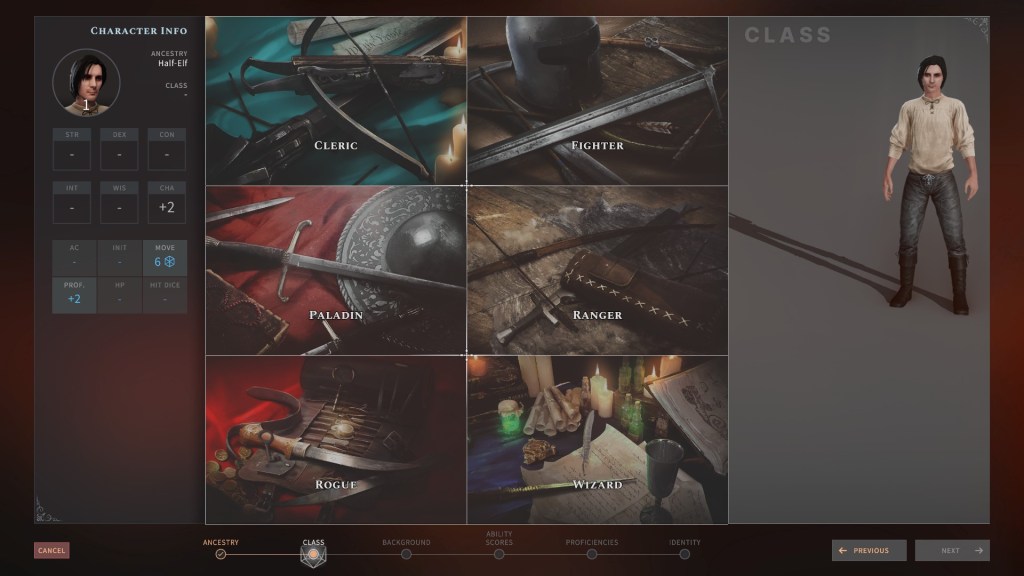
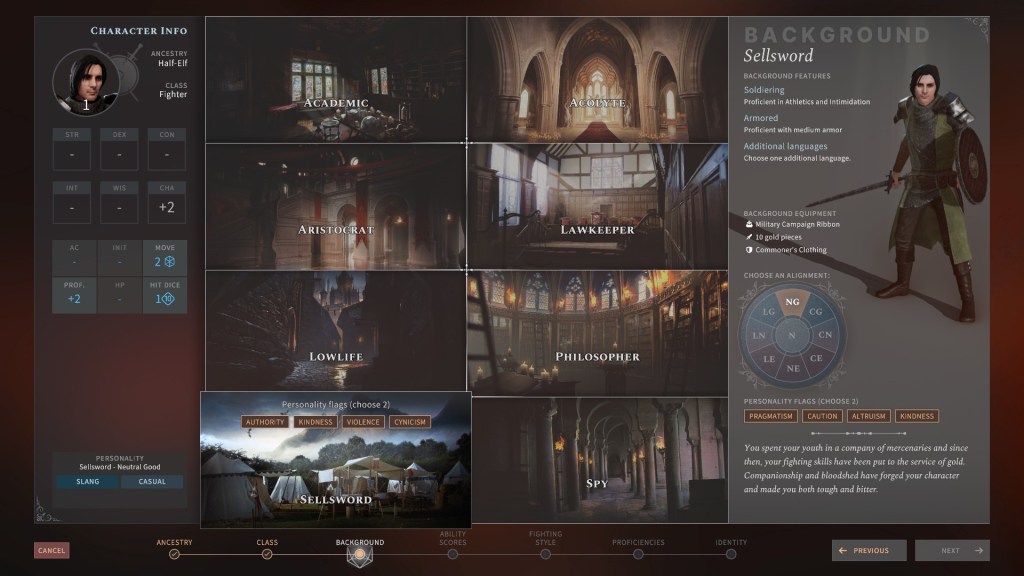
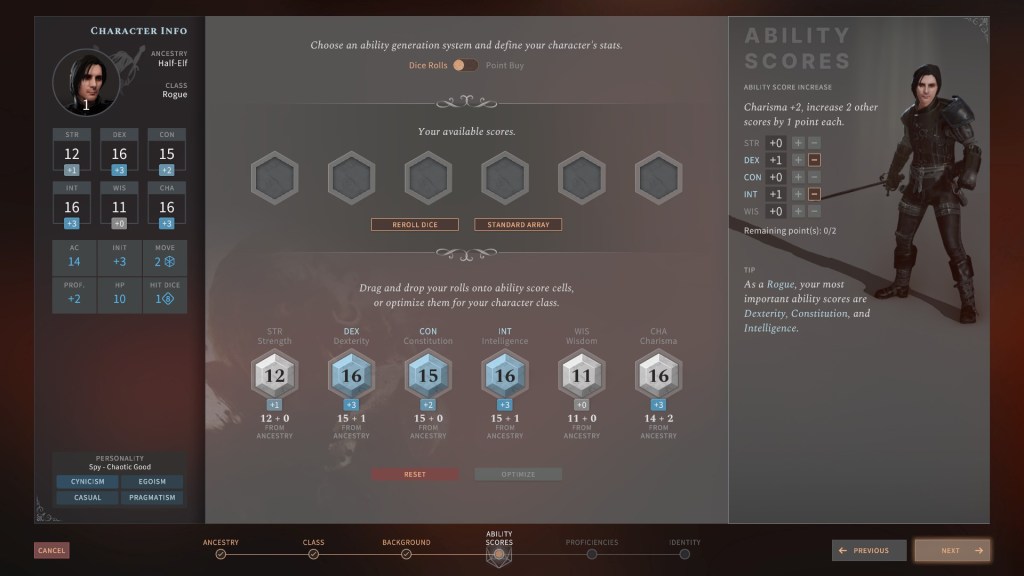
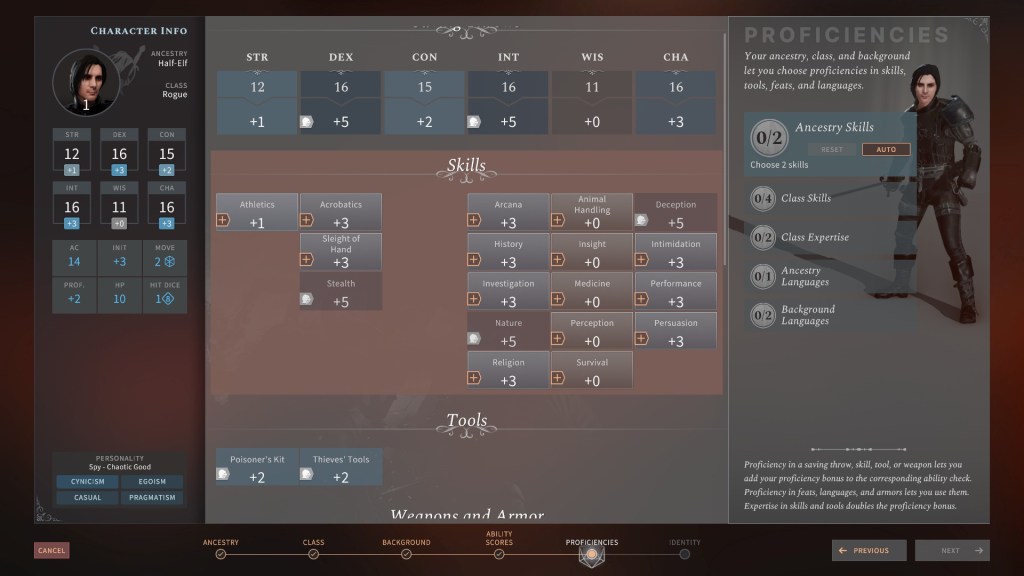
When you start Solasta Crown of the Magister, you can build an entire party from scratch or use some of the pre-generated offerings if you like. When building a character, you can choose from 8 playable races which include specific race variants (i.e. High Elf & Sylvan Elf), 8 backgrounds and 6 character classes. You are walked through character creation step by step, letting you know everything from what a particular god is all about, what benefits a certain background might grant and much more. I genuinely love the process of creating a character and think it’s fantastically well done, with the exception of how the character actually looks.

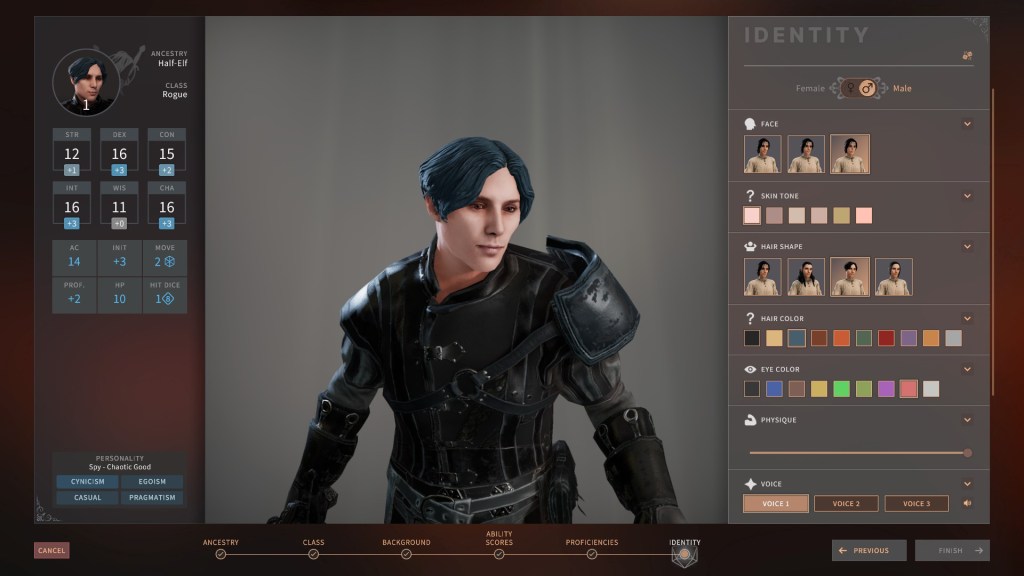
Therein lies my main hangup with Solasta Crown of the Magister. The actual appearance of your character is pretty rough. There’s only a handful of face and hair options to choose from which is particularly underwhelming for any role-playing game, but it highlights this hilarious imbalance between how mechanically sound the game actually is, versus the customization stuff. That point is only exacerbated by the facts that not only do the character models look very rough, but all of the NPC’s in the game are made from those same options. It led to a lot of moments where I’d see the same “dude with a beard” as both a quest giver, and a random bandit attacking me in the night. There isn’t any real variety for physical appearances, which desperately needs to be addressed.

But hey, it’s early access, and I honestly prefer having a mechanically sound game versus a pretty one. If I could mash up both Solasta Crown of the Magister and Baldur’s Gate III, we’d have ourselves one hell of a CRPG to contend with.

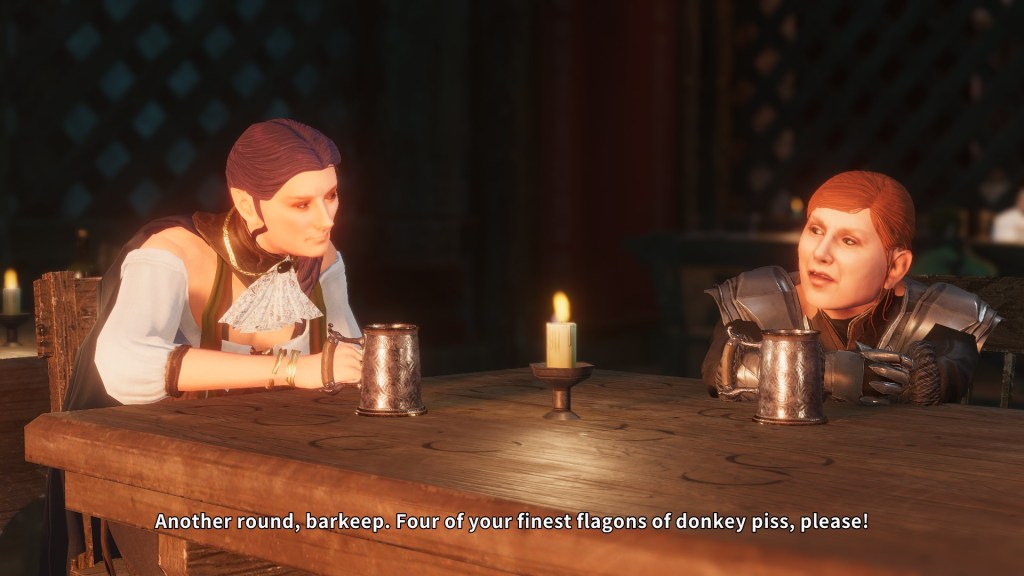
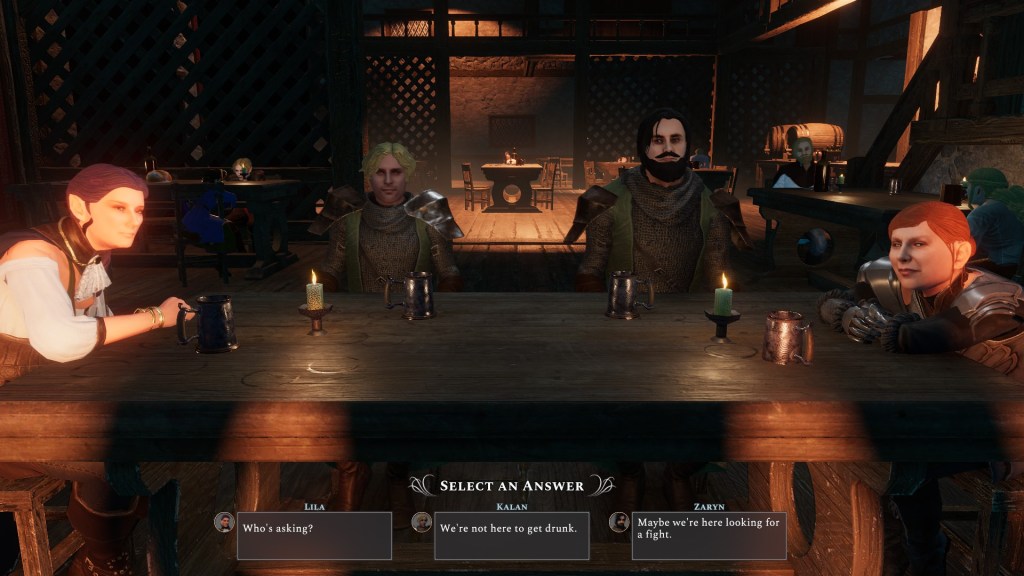
I also really appreciate that this game starts with your adventurers meeting in a tavern and sharing their stories (tutorial missions) about their journey here to each other. It’s a very funny jab at the fact that all good D&D campaigns start in a tavern, although it really tries to force some of your characters into specific tutorial boxes. For instance, my party is comprised of a paladin, a fighter, a cleric and wizard, all of whom shared their “tale of triumph” with one another.

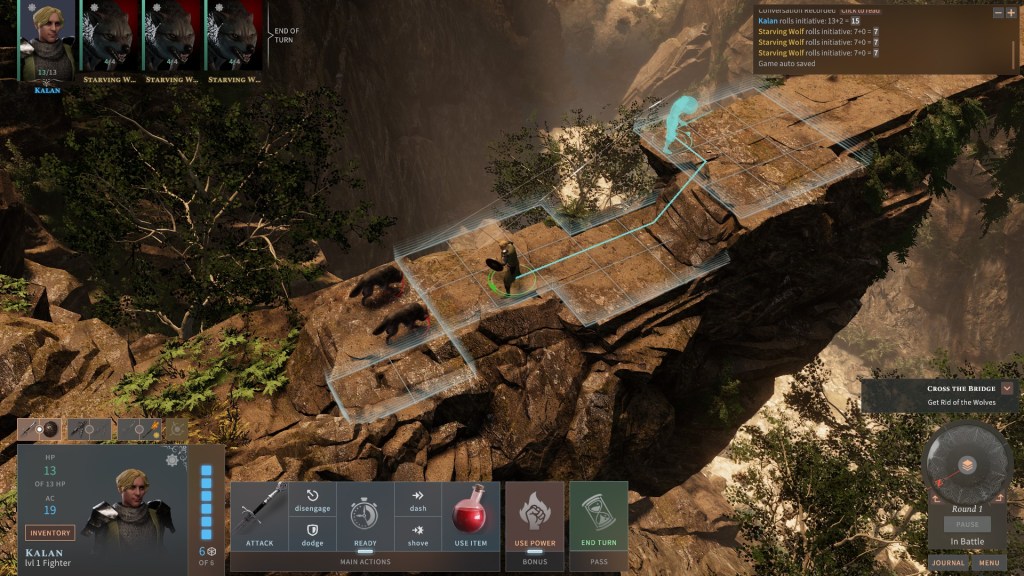
The first tutorial taught me how to just move around the world via escaping a prison, the second taught me how to kill wolves and push them off cliffs, the third taught me how to utilize light, resting, and healing potions, and the final one was a stealth mission. Now, you may have noticed it too, but I don’t have a rogue in the party. However, Solasta Crown of the Magister made a decision and decided that my cleric was the perfect fit for the job. She handled it well enough, but I’m certain the rolls were weighted in my favor for the tutorial. It’s nothing game breaking by any means, but it certainly is immersion shattering when the game just decides on a character trait for the sake of a tutorial.

Once through the tutorial, you get your first chance at navigating dialogue situations. Each player was given a set of tags to choose from during character creation based on their alignment and background, which I believe (although I’m not certain) impacted who had a certain dialogue option to use. I didn’t see any dialogue choices in the traditional sense, but a tutorial tooltip made it sound like the game would automatically select the character with the highest stats to perform a particular dialogue skill check. But from what I saw in the first hour or so of playing was that each character just has one dialogue option to interject into the conversation. Hopefully this expands as I play more of Solasta Crown of the Magister, but as is, I do appreciate how every character is at least involved in the conversation.

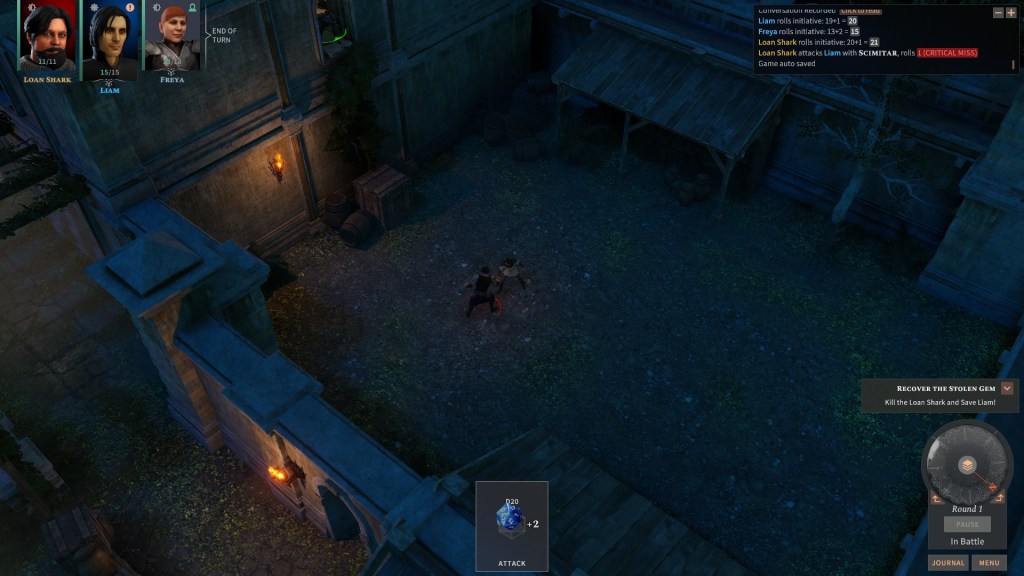
Solasta Crown of the Magister really shines in a lot of different areas despite being pretty rough in the presentation department. The voice acting is hit or miss and the characters all look pretty bad, but it’s mechanically competent for a D&D video game. One of my favorite touches is how you’re placed into a visible grid when you enter combat, leaving no ambiguity about where you are or who you’re vulnerable too. Honestly, the user interface in general is much easier to follow than it is in Baldur’s Gate III.

Another really intriguing aspect about Solasta Crown of the Magister is how it’s structuring campaigns. From the looks of things, there isn’t going to be one overarching campaign that will occupy you for hours upon hours. Instead it looks like they’re going for a more anthology approach, with Crown of the Magister being the first playable campaign. It’s a really interesting approach that comes with its own set of pros and cons. For instance, I can see a really easy post launch support structure that just injects new campaigns into the game, but it also makes you wonder if you’ll get any of the inter-party drama that you would get from other games like romance options and new recruits.

Solasta Crown of the Magister is in early access, so my gripes with the game as it is are bound to change, but without a development roadmap to refer to, all I can do is speculate at this point. Most importantly, it should be noted that this comes from a very small studio that hasn’t shipped a game before and found their funding via Kickstarter, so their resources are a bit more limited. To expect Solasta Crown of the Magister to offer the same amount of features and intricacies that something like Baldur’s Gate III is implementing would be unfair, but in my opinion they’ve already tackled the hardest part by successfully translating the D&D rules into a video game. That alone might be a good enough reason to check it out.

Gut Check: Hades

When I finally gave in to all of the peer pressure I felt from the deluge of praise people were hurling at Hades and begrudgingly bought it, I felt this immediate wave of buyer’s remorse wash over me. After playing a little of it however, I can honestly say that it’s one of the most fun action games I’ve played this year. I can also confidently say that I won’t be seeing it through to the end because I’m bad at it.

Hades is a rogue-like action game and the latest release from Supergiant Games, makers of such classic indie titles like Bastion and Transistor. With previous titles like those, Hades had some big expectations around it and a lot of hype that seemed to dull between its release into early access at the end of 2018 and now. That’s at least how I perceived it considering I never really heard much about the game until its official release a few days ago, so I might be entirely incorrect on that front. I know people have a lot of strong feelings about Supergiant’s past games, but I truly think Hades might be the best game the company has released up to this point.

That might come as a surprise to anyone who frequents the site and knows my disdain towards the rogue-like genre as a whole, but that’s how good this damn game is. I won’t lie and say that my feelings toward the genre have changed in any meaningful way, but I am enjoying Hades in spite of the fact that it’s a rogue-like. Hades does some interesting things in weaving the story around the concept of you dying and returning only for you to perish once more. Characters acknowledge these cycles and play off of it in some pretty neat ways that I won’t spoil for anyone who hasn’t played it.

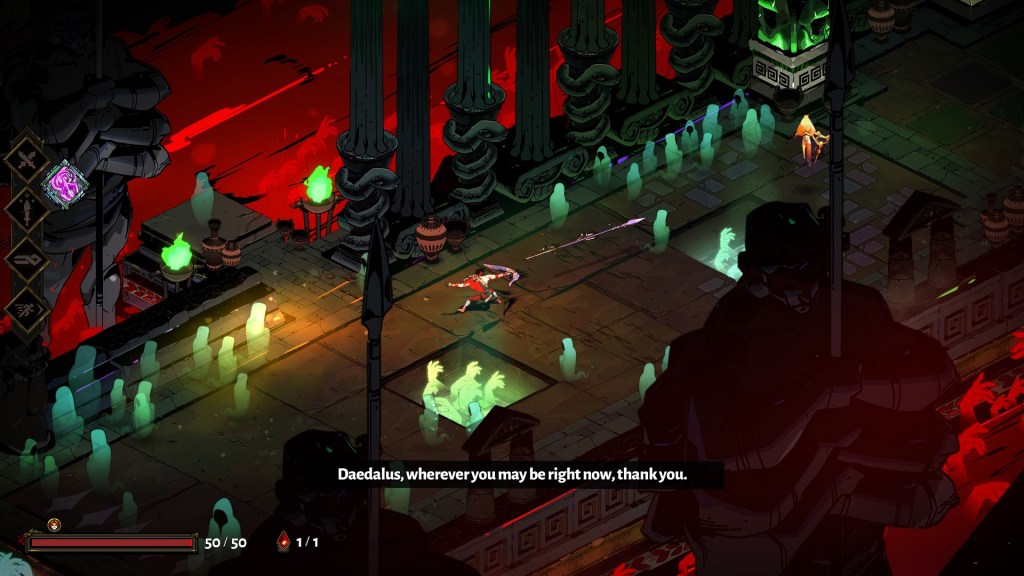
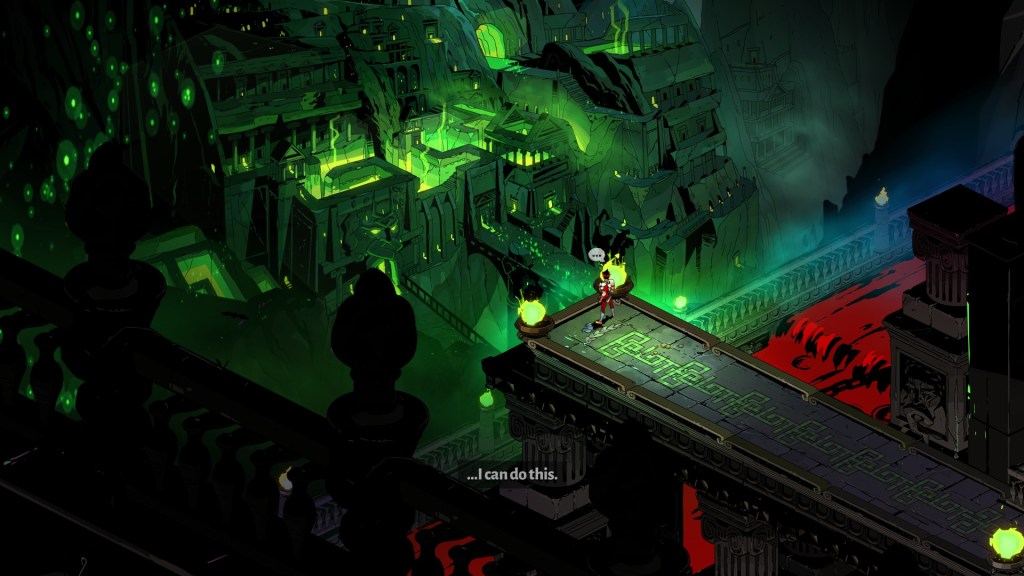
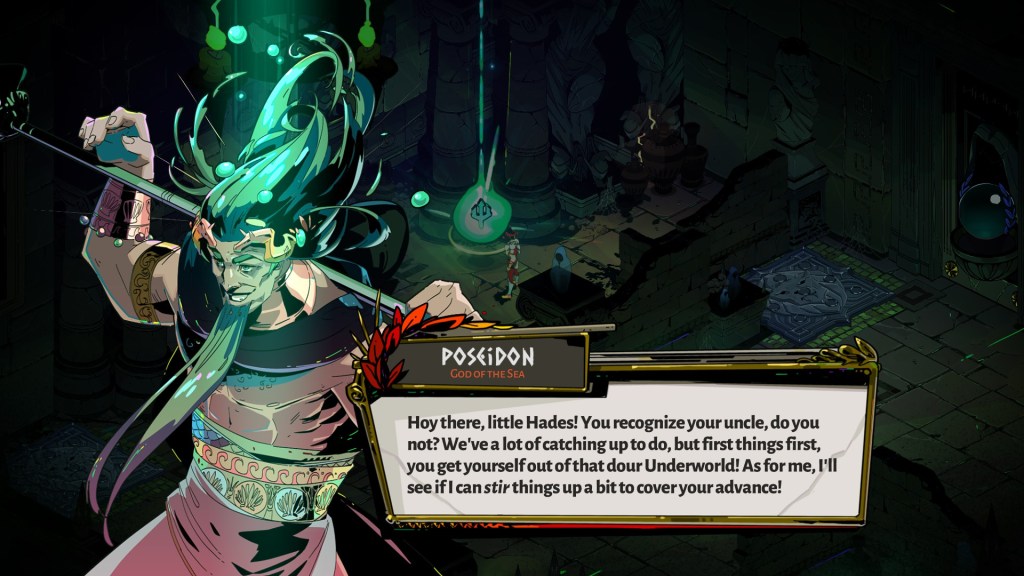
It also helps that the game looks incredible and is just oozing with style on all fronts. The character design is incredible, with NPC’s and enemies alike all rendered in a gorgeous art style that’s even better to watch in motion, Hades has its visual presentation locked in. Even the way menus and title cards explode into frame are exquisitely done, letting it be known that every part of the visuals of Hades were crafted with the highest level of care and attention. Also the soundtrack is rad as hell and you should listen to some of those tracks.

Despite the quality of the writing and the brilliance in presentation, Hades biggest strength is in the quality of its gameplay. It’s honestly been the main factor that’s kept me wanting to keep coming back to Hades. I’ve only gained access to the second weapon thus far, a bow and arrow, but that alone made the game feel completely new and fresh thanks to how it works and the power-ups you can get for it.

Every weapon has a standard and heavy attack that can be augmented by various upgrades you can find throughout the levels, adding higher critical chances, replenishing health, making certain attacks better against armor and a lot of other standard upgrade stuff. But when Hades hits you with an upgrade that allows you to shoot lighting bolts that chain between enemies as you use your dash, that’s when the true fun begins.

From run to run you’re collecting all sorts of different flotsam and jetsam that you can use to trade in for upgrades, items, weapons and some other things that I still don’t fully understand just yet because of early into Hades I am. But unlike a lot of other rogue-like games, Hades doesn’t seem like it’s obscuring information from you. Every power-up and ability increase that I’ve been presented with has very clearly explained what it’s going to do, which I appreciate very much. I’ve always hated when games try to be overly secretive and obfuscate simple item descriptions to seem more mysterious or enigmatic. I don’t have the time or patience to learn about the origins of this health potion, I just need it to keep all of my blood inside of me.

I haven’t seen too much of the game considering I’m still very early on in it, but I’ve heard it only continues to get more and more buck-wild as you progress. I look forward to potentially seeing some of this stuff, but I can’t shake the feeling that no matter how strong every other aspect of the game is, I still won’t be able to shake the fact that it’s still a rogue-like. It sucks because I like just about everything else about Hades except the genre it’s in. Actually, I don’t love when enemies off-screen manage to hurl themselves at you with a speed that’s borderline impossible to dodge, but I’m sure I’ll “crack that nut” soon enough.

I’m genuinely glad that I decided to give in to the heaping helping of praise that people have been dumping on Hades, but I do wish it was more of a standard action game that I could progress through normally. I suppose the way the story is handled in its current form wouldn’t work as well in a genre where constantly dying isn’t a thing, but there is a “god mode” setting I want to try out that allegedly let’s you play it without having to worry as much about dying that seems right up my alley.

I don’t think Hades is going to change your mind about rogue-likes as a genre if you’re like me and just don’t click with them, but it might make you a believer for a little while. But if rogue-likes actually are your thing, then Hades seems like one of the best ones that’s been released in a while.

Gut Check: Tony Hawk’s Pro Skater 1+2

It’s rare when something that’s so clearly playing off of your nostalgia actually delivers and makes good on all of those memories you have of a game instead of just reminding you how flawed your brain is. It turns out that the original Tony Hawk’s Pro Skater series was phenomenal and Tony Hawk’s Pro Skater 1+2 brings everything you loved about the series into the modern era extremely successfully.

From the start you’re immediately struck with the first wave of nostalgia in the form of a compilation of skate footage starring the characters of Tony Hawk’s Pro Skater 1+2, set to Guerrilla Radio by Rage Against the Machine. I also enjoy that none of the footage was reused from old games, and instead it’s just modern footage of new and aged skaters doing sick tricks. It’s one of the first examples of this game knowing exactly what it is and who it’s for.

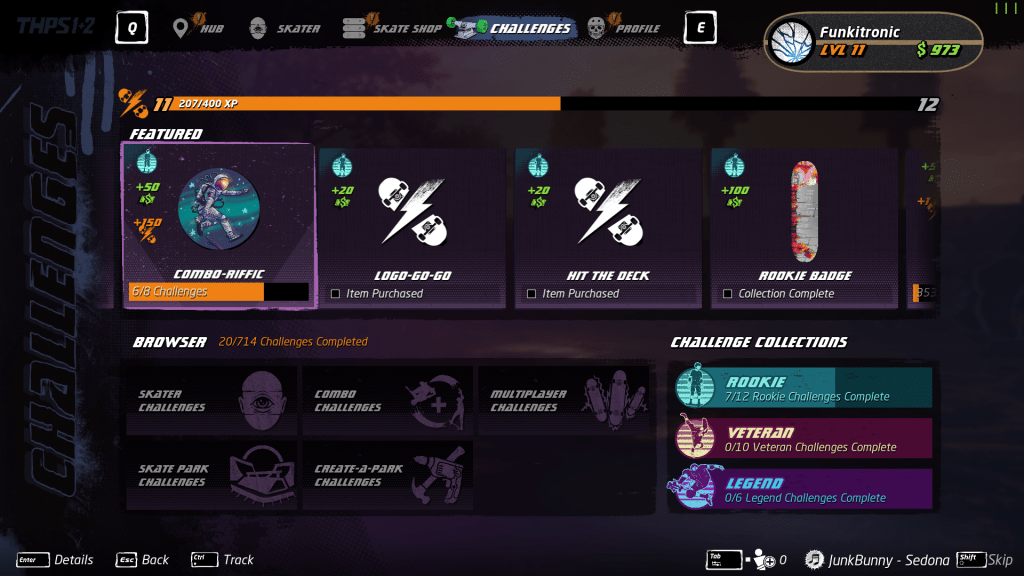
When you get to the main menu you can choose between playing the first or second Tony Hawk’s Pro Skater, along with a third option for online and free skate which I admittedly have not engaged with yet. There’s a pretty decent character and board creator that you unlock more options for by completing in-game challenges across both games, as well as a park creator that I also have not touched yet. The challenges can get pretty wild too, asking you to make specific combos over certain gaps and such, but luckily Tony Hawk’s Pro Skater 1+2 allows you to track specific challenges if you like.

But that’s all ancillary stuff we’re talking about, the real magic is in the gameplay. As far as I can tell, Tony Hawk’s Pro Skater 1+2 feels just like I remember those originals feeling. It’s fast and snappy and borderline infuriating when you over rotate and fall on your ass, just like I remember. Even better is Tony Hawk’s Pro Skater 1+2‘s decision to include various accessibility options that allow you to toggle certain game features on and off along with certain cheats like unlimited special meter an perfect grind balance.

For example, I don’t believe the revert was in the first Tony Hawk’s Pro Skater, but it is when you use the default gameplay options. If you really want that first Tony Hawk’s Pro Skater experience though, you can change the feature set to what was available in that first release. I don’t know why anyone would do that but the option exists if you want to have less fun.

The weird thing about talking about the mechanics of Tony Hawk’s Pro Skater 1+2 is that if you’ve played those original games, you know how this one plays too. It’s the game you remember except prettier. It retains all the good and bad about those first two games, including the one or two bad levels you had to slog through to get back to the fun ones, but I genuinely forgot how much I hated some of these levels until I was confronted with them once more.

Aside from the game itself, I think the most pleasant surprise for me was just revisiting the soundtrack once more. It’s weird to return to the place where a lot of your music tastes were cultivated nearly over two decades ago, but in a good way. I can’t remember what song played in the main menu in the original, but Tony Hawk’s Pro Skater 1+2 immediately starts playing Superman by Goldfinger because they know exactly who their audience is and what song jumps to mind when they think of that first game.

There’s always the worry that you’re remembering a game being way more fun and memorable than it actually was, but Tony Hawk’s Pro Skater 1+2 validates all of that nostalgia by delivering a truly fantastic remake of a those classic games. It’s also hilarious to me that they aged up all of the skaters from the original game allowing us to finally see a man in his mid fifties do a 900 off a rooftop only to get hit by a car that’s whipping around corners at breakneck speeds, and I think we could all use a little more of that in 2020.

Gut Check: Spiritfarer

You’d think that a game about aiding the souls of the recently deceased in completing their various unfinished businesses would be a downer, but Spiritfarer just might be one of the most pleasant gaming experiences I’ve had this year.

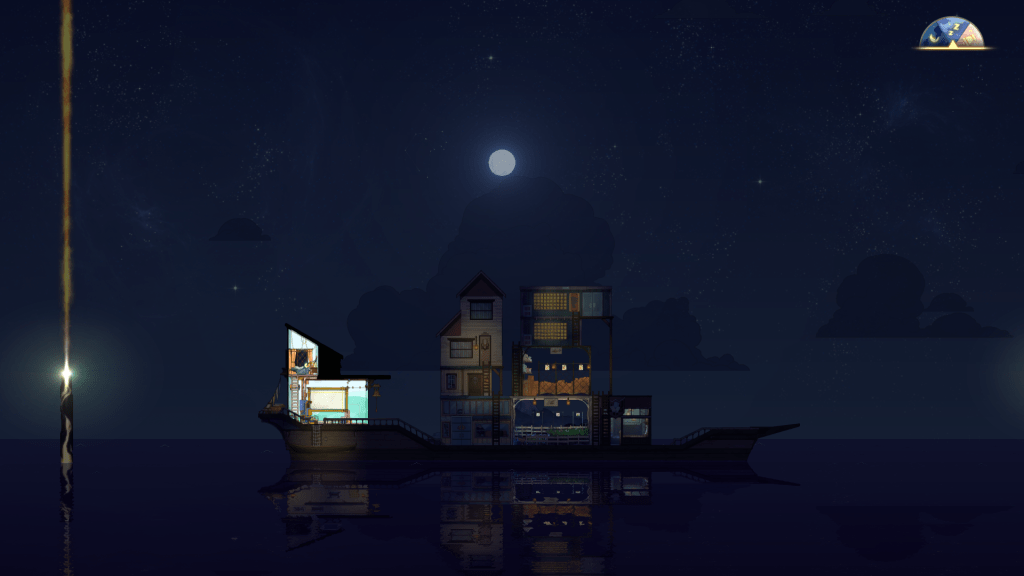
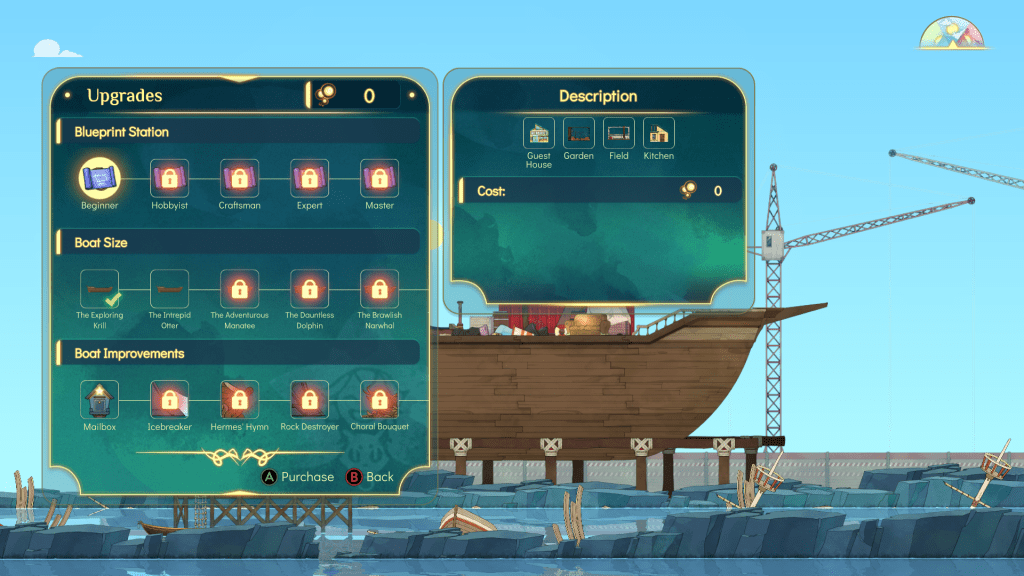
I Spiritfarer, you play as a young child who has been tasked with taking up the morose mantle of being the new Charon, or as you might better know them, the ferryman of the river Styx. You and your adorable magic cat, commandeer a massive boat in the hopes of collecting the souls of the departed and helping them find peace in the afterlife. The boat serves as your primary play space, where you’ll have to fish, cook food, grow vegetables, smelt metals, spin yarn and more in an effort to keep the recently departed happy.

All of the souls onboard your vessel have their own specific tastes and desires, from dietary restrictions to more personalized dwelling spaces. As time goes on you’ll start balancing several objectives at once, like taking food out of the oven or watering plants, all of which give the impression of urgency without actually being stressful. It’s extremely low stakes with the notable exception being whenever your passengers exhibit a change in moods, which is when I as a player will hurl food and affection at them until they smile again.

I mean that fairly literally as well. In Spiritfarer, the main ways you raise the mood of a disgruntled passenger is to either give them food they like, build them a room they want, or to just hug them. There’s a hug option for each of the passengers which is great, but it’s also the most crushing feeling in the world when they say that they’re good on hugs for the day. It’s so brutal.

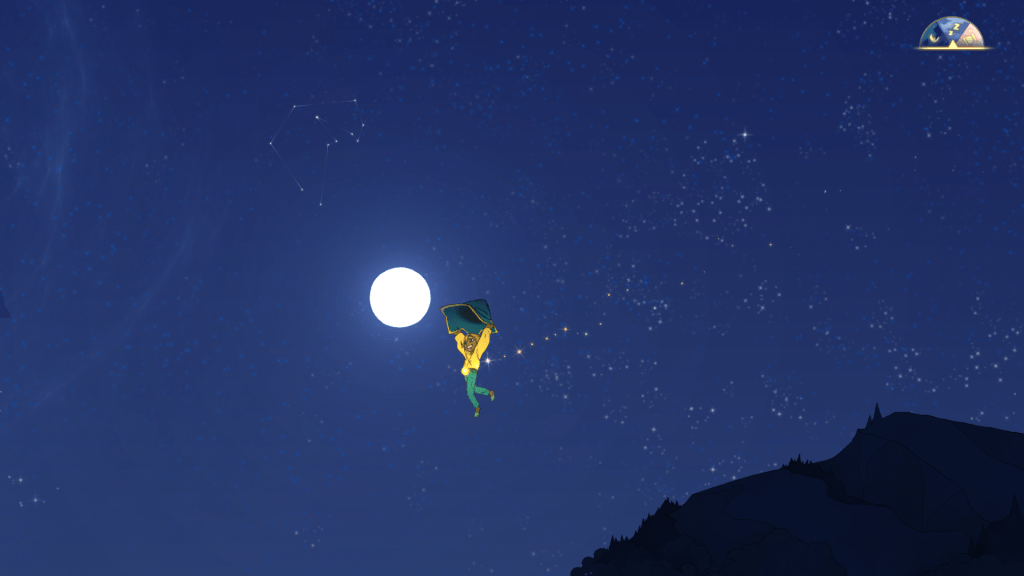
But that brutality is lessened by the gorgeous artwork and animation in the game. The way the plumes of light cut through the gaps of buildings on your boat at sunset is truly something to behold. Even when you disembark from your boat and head onto an island, Spiritfarer displays some truly jaw dropping vistas.

But Spiritfarer isn’t just a pretty looking management sim, it’s also got some light platforming and adventure elements that hold up as well. The platforming isn’t going to blow anyone away by any stretch, but it feels fairly snappy and responsive enough. It only really became an issue when I would try to be faster than the game could really contend with. For instance, there are these lightning storms you can fly through, and during that voyage you can race from point to point in an attempt to collect some lighting in a bottle, which I’m pretty sure is either money or a crafting resource. When you’re trying to be fast and precise, the platforming in Spiritfarer doesn’t really hold up.

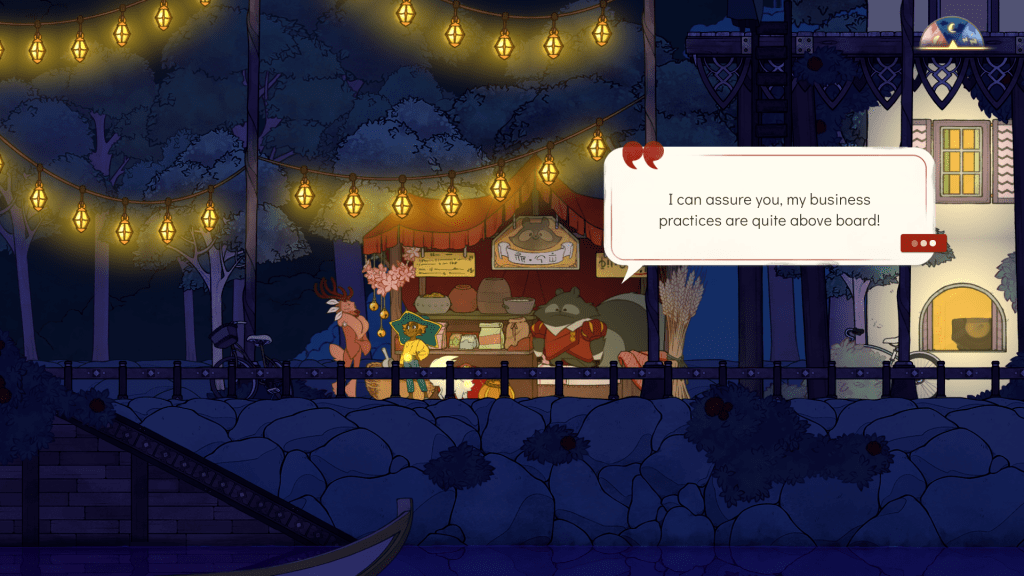
That’s fair though. Spiritfarer isn’t an action game as much as it’s an adventure game. In between managing your relationships with passengers, growing crops, and crafting things, you also have to find more lost souls and complete objectives for the ones already onboard. Sometimes it’s about revisiting a childhood home and confronting the memories that linger in there, and sometimes it’s about being a union representative for spirits that are being taken advantage of by their boss.

One of the only issues I have with Spiritfarer has a lot to do with completing these quests. You have a mission log where you can refresh yourself on what someone wants, or where you should go, but the souls that require you to travel around and collect or build something for them before they join you lack any indication of where that person is.

For example, I found a spirit that wanted me to bring back their lost sheep. One of these overly rambunctious sheep happened to be on another island which I managed to find fairly easily, but the mission log didn’t tell me where the spirit who wanted the sheep actually was. This was a problem because it had been two days between finding the sheep and wanting to bring it back to the spirit. After some searching, I caved in and just consulted the internet which revealed that I was nowhere even close to finding the spirit.

Outside of that however, Spiritfarer has been an utter delight to play. It has that insidious “just one more thing,” quality about it that routinely has turned hour long game sessions into 3 hour affairs. I cannot sing its praises enough and wholeheartedly recommend you give it a shot if you’re looking for that pleasant oasis in this desert of misery we currently live in.