Category Archives: archived articles

Gut Check: Maneater

Maneater is a genuinely fun game with an extremely unique concept that ultimately gets bogged down in repetition and monotony far sooner than you’d expect or want. One would think that a game about being a shark that’s hell-bent on consuming and destroying any and everything in its path would be more exciting to play, and while the moment to moment gameplay achieves that desired level of excitement, the objectives and grinding required of you become very tedious, very quickly.

When you begin Maneater, you’re thrust into the far more capable fins of an adult shark that’s fairly hearty and ferocious. You learn the basic controls of locomotion and eating, and shortly afterwards find yourself devouring placid beach-goers just trying to soak up the sun. After a few snacks of the human variety, a shark hunting party is deployed to your location where you summarily dispatch them through a combination of ramming their boats, hurling divers at their boats, leaping atop their boats, or just chomping away at them until there’s nothing left.
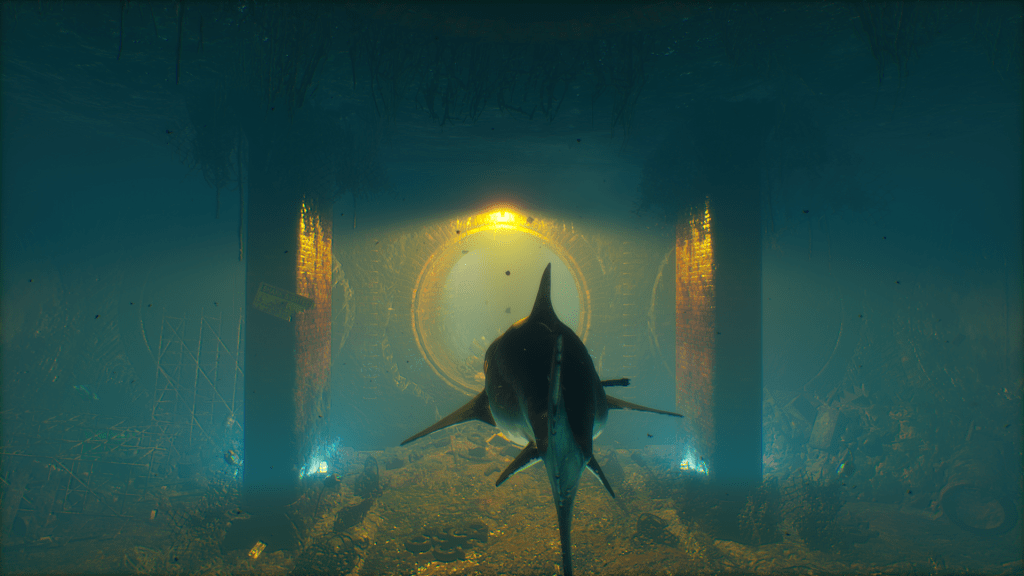
In classic “abilitease” fashion, your shark is captured by some big time shark hunter that’s being filmed for the reality TV show, unsurprisingly titled “Maneater.” This jerk kills the shark you were playing as, cuts a baby out of your stomach, and throws it back into the water, but only after this baby shark chomps off this dude’s arm. Thus you start your murder-shark career in earnest as this orphaned shark-child that’s definitely not out for revenge.

It’s during this first level of Maneater where I cultivated my “Gut Check” opinions, so I’m well aware that things can change as I progress further. The first level is your standard bayou that’s chock full of catfish, cattails, murky brown water and of course, gators. You spend most of this time trying to navigate towards your objective marker while chowing down on turtles and other tiny fish on your way. In this way Maneater feels a lot like a Feeding Frenzy type of game, where you eat enough smaller fish to level up and grow into a bigger shark that’s capable of taking on bigger foes. Except, even at higher levels and larger sizes I was still getting attacked by level one fish who no longer posed any sort of threat to me.
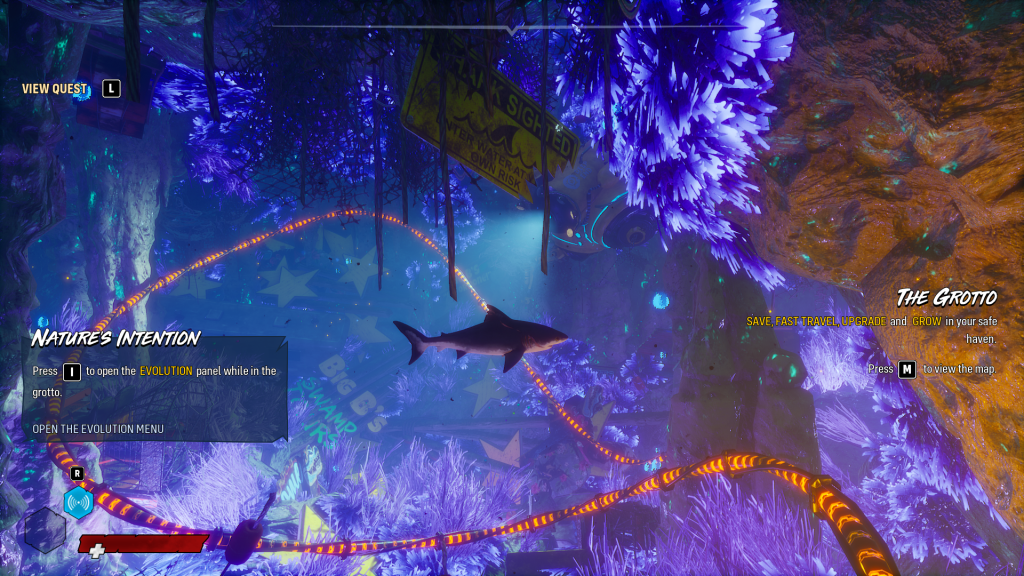
See, in Maneater you don’t just swim over a fish and eat it, you literally have to mash on the right trigger to chew your food. You’ll also need to wiggle the right analog stick if something caught in your maw tries to escape your grasp. If you’re feeling especially froggy, you can even grab some prey in your massive chompers, and then hurl them off into the distance at another target. Maneater clearly is taking its subject matter about as seriously as Sharknado did, and I love it for that. It’s one of the few games in recent memory that have made me laugh, not through a joke or a cut-scene, but through the sheer absurdity of what I was controlling.

Unfortunately, Maneater gets a little repetitive, even so early in the game. I progressed through a few objectives pretty quickly, but ultimately was greeted by a progress gate that required me to be level 4 before I could take on any additional missions. That meant I was just going to swim around and eat more turtles and groupers until I became a bit heartier. This took a while. Now this could just be an isolated incident, but the word on the street is that this repetitive structure only gets worse as you progress.
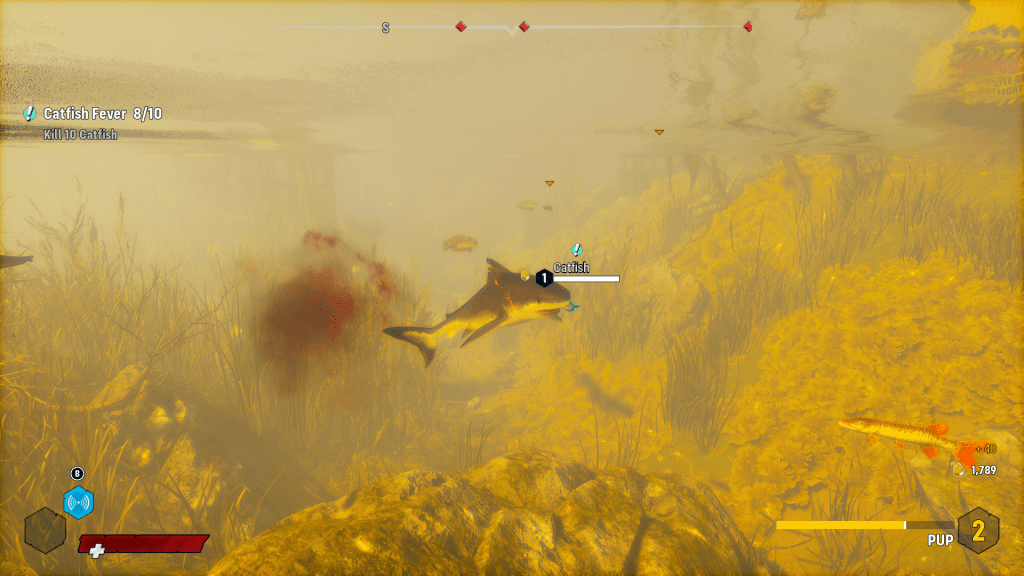
That’s a damn shame too because I genuinely think that Maneater is such a strong concept for a game. Unfortunately it shows its cards a little too early in the game, revealing that while the core gameplay loop is fun, it isn’t fun enough to outweigh Maneater‘s repetitious nature. That isn’t to say that repetition is the only issue that Maneater has, but it is the most predominant one, with a close second place going to the unwieldy camera.

Maneater does its best in trying to make a game about swimming actually feel good to play, and for the most part it succeeds. But the way the camera works, particularly when you’re in combat with something is infuriating. Combat usually devolves into you and your opponent circling one another, waiting for and then dodging their attack, and then retaliating with your own powerful chomps until they finally die. This would all be fine if the camera actually played along and locked-on to your enemy. Instead, you can click the right stick in to whip the camera around to face your enemy, but it doesn’t lock-on to them. It’s bewildering at best, and I sure hope that there’s either a setting in the menus I missed, or even some woefully misguided later upgrade I can unlock, because as it is fighting anything is a messy endeavor.

Maneater does have its highs though, primarily in how it presents the story to you. The show, “Maneater,” is portrayed to you in the style of a Discovery Channel show about wildlife, interspersed with reality TV show moments that follow the folks trying to hunt you. It’s all narrated by Chris Parnell as well, which is honestly a great choice because he does a fantastic job with the script he’s given, even if all of the jokes don’t land.

I’ve only played a small piece of Maneater, but I’m already starting to feel a little worn down by it. I’m not ready to throw in the towel just yet, but I kind of already know that there’s a very little chance I end up seeing this thing through to the end. I’m just not a big fan of having to grind or complete repeated objectives in games, and it sounds like there’s a lot of that in Maneater.
I Wanted to Play Assassin’s Creed Odyssey, But Apparently That Was Too Much to Ask For

Recently the Epic Games Store ran their “Epic Mega Sale,” in which not only were games on sale, but they issued ten dollar coupons to everyone to entice people to buy more. Needless to say, this offer worked and I picked up Assassin’s Creed Odyssey for only a couple of bucks, thus starting a several day journey of actually getting to play the damn thing.

Assassin’s Creed Odyssey clocked in around 81 gigabytes for its initial install time. I wasn’t surprised by how massive it was considering I knew how big of a game it was. Sure having to wait a few hours for something to install sucks, but it’s an unavoidable part of playing just about any game these days. This was something I anticipated and was prepared for.

What I wasn’t ready for was the disconnect between the Epic Games Store and Uplay, a factor that took me alarmingly long to realize and fix. See, when you launch a Ubisoft title outside of Uplay itself, Uplay still has to launch and authorize that you actually own the game. What I hadn’t accounted for was the fact that I hadn’t actually launched Uplay for a long time, so it needed to update itself as well, but since I was running a shell of UPlay the actual program itself was unable to update.

I was met with a blue dialogue box in Ubisoft colors that said something to the effect of “looking for updates.” This box never went away. It was looking for updates but couldn’t find any. After some time of waiting, I decided to just launch Uplay by itself to see if an update would automatically initialize. Luckily, that did the trick.

So now I was ready to go, right? Of course not. Assassin’s Creed Odyssey had a 30 gigabyte update ready and waiting for me. You would think that in buying the game I would have received the most updated version of the dang thing, but no. For some reason, far beyond my comprehension, I still had an update that was nearly half the size of the game to install before I could have my fun stabbing adventures.

Finally, the update was applied and I was ready to go, right? Nope! Because suddenly Uplay was asking me for a CD key for the game I just bought, and I couldn’t find that information in my cursory searching through the Epic Games Store. So I restarted the Epic store to see if that might refresh some entitlements or something, and it kind of worked out. I had to link my Epic account to Uplay, something I could’ve sworn I already did when I bought The Division 2 when it initially released. So I did that and finally I could play the game, right?

If that was the end of the saga, I might not have written this article at all, but unfortunately for me a new problem appeared just in time to properly piss me off. The game launches, I do the intro mission and start to progress. Not five minutes into actually playing the game as the protagonist, it crashes.

The first mission in the game has you face off against two hooligans who come and harass you on behalf of some gang leader named “The Cyclops.” After roughing them up, you get to make your first choice in the game of whether to kill them or let them live. I chose the latter. A cut-scene happens and you have to make your way a short distance to the next objective. On that journey, I was ambushed by the hooligans I had spared and had to properly dispatch them this time. Upon killing the final enemy in the group, the game crashed.

It did this every single time. I have played this 3 minute portion of the mission a total of 5 times already in the hopes that something different would happen, and I could finally enjoy the fucking game I paid for. I don’t even want to play the game that badly anymore thanks to the multi-day calamity that I’ve been through with Assassin’s Creed Odyssey, but part of me doesn’t want to let the game get away with this bullshit.

This whole article has been pretty directly pointed at Assassin’s Creed Odyssey, but this is the kind of shit that can happen in the world of PC gaming and digital distribution. Now, I love playing games on my computer and consider it my go-to place for gaming, but this kind of nonsense is the exact kind of thing that makes me think I’d be better off just playing it on my PS4. But this isn’t unique to Assassin’s Creed Odyssey considering that just last year I went through this exact same thing with Red Dead Redemption II, also through an Epic Games Store purchase.

I know that all of this sounds like I’d end this article bashing Epic or Ubisoft, but I kind of get why it’s such a mess. Publishers want to make as much money as they possibly can, which is why almost all of them have their own PC launcher and storefront. But they also want to put their games where people will actually see them like Steam, Epic or GOG, and still be able to verify purchases and track their players habits in game. That’s why whenever you buy a Ubisoft game on Steam, it launches an extra layer of DRM in the form of Uplay. It’s cumbersome and annoying, but I get it. The problem is that while these problems don’t always crop up, when they do it’s usually because the solutions aren’t as seamless or elegant as you’d hope. I don’t know what the solution to all of this is, but I do know that I’m going to fucking play Assassin’s Creed Odyssey even if I have to reinstall the god damned thing.

UPDATE #1: I have verified the files of the game and unfortunately was greeted with the same crash in the same place, every time.

UPDATE #2: I’ve resigned myself to the fact that I’m going to have to reinstall this game, and have already begun that process. It’s been two hours and I’m around two-thirds of the way through the download.

UPDATE #3: The installation process is complete and I have officially completed that mission without any additional hiccups. The frame rate is a little wonky though.

UPDATE #4: I haven’t played the game in days. This was a really good use of my time.

Gut Check: Wildfire

Disclaimer: It should be noted that the author backed this game on Kickstarter during its initial crowdfunding period back in April of 2015.

There will never be a time that I don’t find complete and utter joy in a game that allows me to mercilessly mess with my enemies by scaring the living hell out of them. Wildfire is a game that allows me to do just that, layering in some awesome elemental powers and great stealth mechanics, while bizarrely asking me to be a pacifist and not burn dudes alive.

In Wildfire you play as a young villager who through some cosmic coincidence develops the ability to harness the power of the flame, just not necessarily in the way you’d think. Hurling an orb of fire at an enemy doesn’t result in their instantaneous combustion, instead it just scares them into running in the opposite direction regardless of if there’s any ground ahead of them or not. Instead of directly attacking your foes, you’ll be burning a lot of vegetation, bridges, vines, barrels and of course, yourself, in the early goings of the game.

Wildfire wants you to control the battlefield more than it wants you to engage in battle, encouraging you to use your powers to help you slip by or terrify your enemies rather than just transforming them into a pile of ash. I know this because every level has several bonus objectives to strive for, including clear times, platforming challenges, detection and of course, body count. Every level encourages you to not kill or be noticed by anyone, and should you comply you’ll be rewarded with an upgrade currency that allows you to power up your character in a few different ways.

I don’t love how the game heavily encourages that you don’t use your magic fire powers for murdering, and while it never outright stops you, Wildfire does make killing someone incredibly difficult. You’re not just going to launch a fireball at someone and watch them go up in flames, Wildfire instead opts for more of a sustained effect kind of damage. For instance, every character has a temperature gauge that once filled up, will start the burning process that will eventually kill them unless they throw themselves in a body of water. Just like your character has a chance to survive a magic incident, so do your enemies.

Despite that little wrinkle though, Wildfire is a blast to play because it’s constantly encouraging you to think outside of the box in almost every scenario it places you in. While Wildfire gives you control over fire, it doesn’t let you manifest flames out of thin air, requiring you to pull it from an existing source like a bonfire. From there you can launch a blast at some brush and watch it ignite, thus allowing you to pull more fire from there. It seems frustrating at first, but it makes sense when you recognize the puzzle-like nature of the level design and the objectives you’re given.

Like I mentioned in the intro, I really enjoy being able to mess with the enemies who are on patrol in the area and mentally torment them until they run screaming off of the nearest cliff. So far I’ve only been able to accomplish this by starting a fire at just the right place and time, but I assume there will be more ways to dispatch your enemies as you progress further in the game and upgrade your abilities. UPDATE: There totally are!

There are altars in every level depicting someone holding a bowl in their hands, and if you launch a fireball or any other element in there, you receive an upgrade point which you can spend to unlock new abilities for whichever element you donated. There is another currency that is tied to level objectives, rewarding you for completing the level in a certain amount of time, not reloading a checkpoint or not killing anyone. This currency allows you to upgrade how you interact with the checkpoints in the world, with the first upgrades being ones that refill your health when you touch it, and another that allows you to pull a flame from the checkpoint itself.

Wildfire is a really cool stealth game that let’s you play around with fire and how it interacts with the environment around you, which is what drew me to it in the first place. In my brief time with it I’ve enjoyed so much of the game, from its art style to its fire-bending mechanics. While I’m not too thrilled about how it really wants you to be a pacifist and not burn your enemies alive, I don’t hold that against the game. If anything, these restrictions have made me plan out my next few moves in order to send one of the guards screaming off a platform and into a pit of spikes.

Cyberpunk 2077 and its Already Massive Fandom

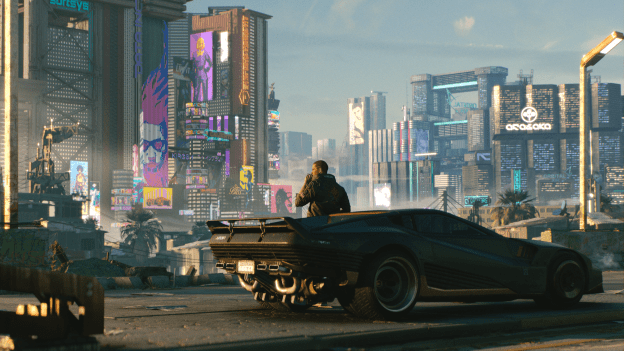
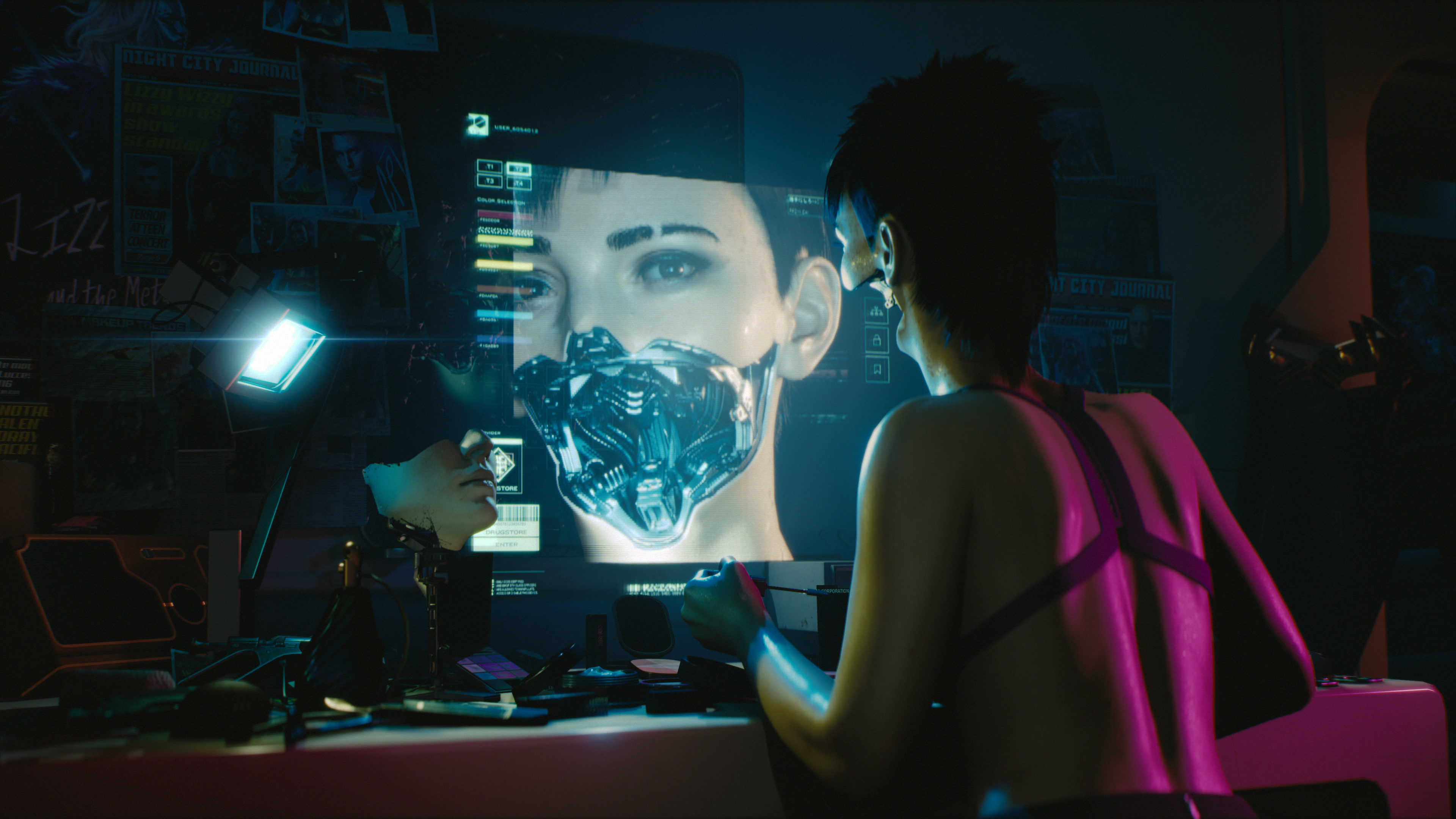
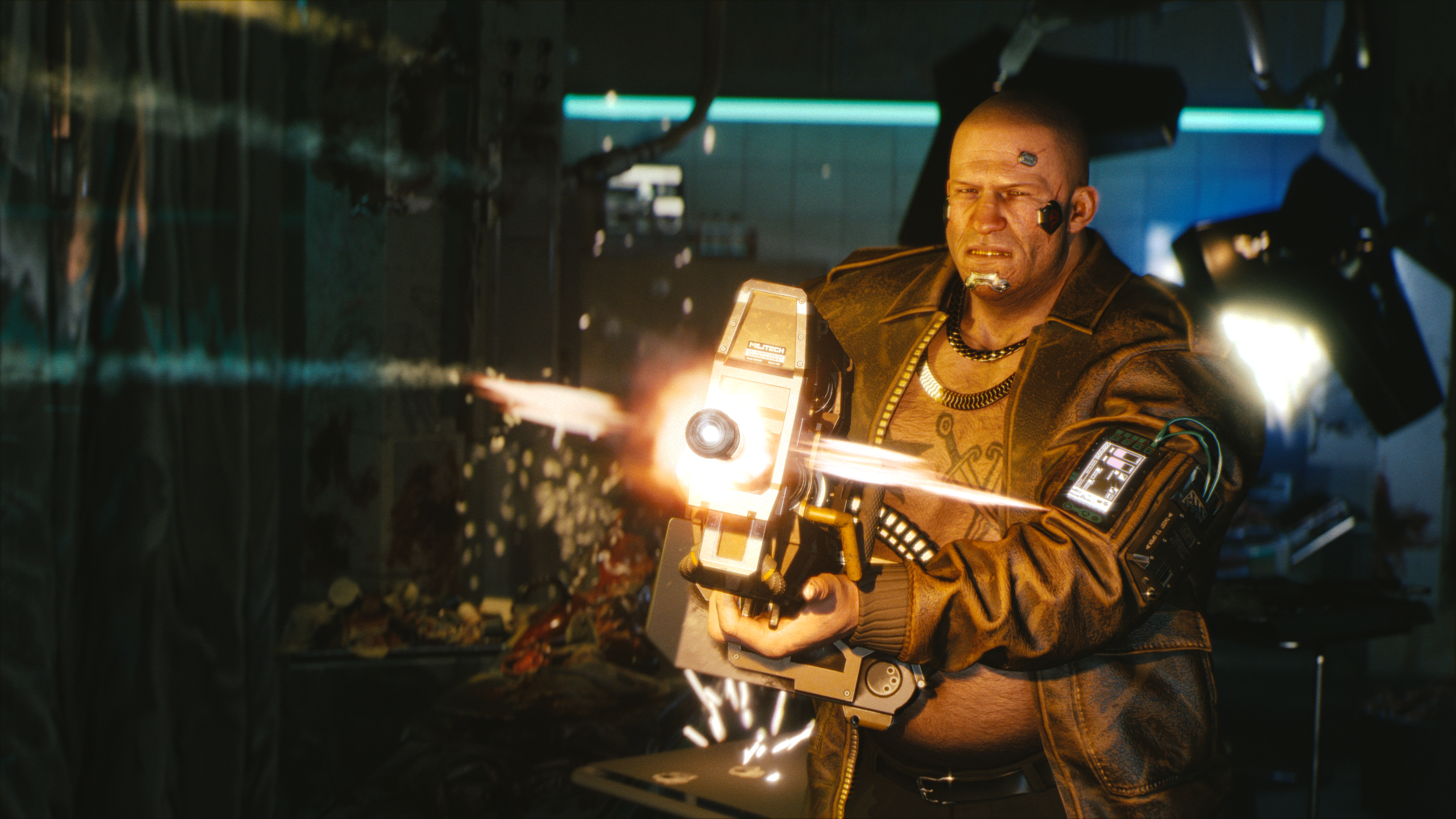
Since its announcement and various gameplay reveals, I’ve noticed this low yet consistent stream of cosplay, projects and fan art surrounding the upcoming Cyberpunk 2077.  It’s not that it upsets me or anything like that, I just find it really strange that there’s this fandom that exists already around a game that won’t be released for some time.

I’m well aware that fandoms exist for literally everything as people are eager to celebrate their interests, but I’m finding it hard to make the connection with Cyberpunk 2077, especially because we know very little about it outside of its structure and aesthetic. It’s an open-world action RPG set in a cyberpunk dystopia, and aside from a few gameplay videos that are out there we have no other real indication of how this game will come together.

People seem to be confident in Cyberpunk 2077 and what it will shape up to be based on the legacy established by its developer, CD Projekt Red, makers of The Witcher series.  I can understand that logic considering how impressive The Witcher 3 was on its own, but it’s still strange to me how big this fandom has become for a game that’s just a date on a calendar so far.

I get that people are excited for the game and want to express that in whichever artistic avenue they see fit, and that’s genuinely great.  Honestly, the aesthetic that Cyberpunk 2077 is boasting is gorgeous and very much worthy of admiration and celebration, but for my money I’d want to actually get my hands on the game before I declare my fandom for it.  Clearly that’s just me, and I’m essentially acting like an old man who can’t understand why the kids these days are crazy about some genre of music.

I guess my ultimate fear with all the celebrations around Cyberpunk 2077 is my worry with every upcoming and very hyped game — what if it sucks?  I don’t want Cyberpunk 2077 to be bad, in fact I’d very much like it to be good, but that possibility is always looming above every piece of media that exists.  What if it’s bland and boring or even worse, what if it’s got some real problematic content in it?  All signs point to no on that last one, but you never know.

There’s also the distinct possibility that because this game was revealed back in 2012 and has delivered a slow drip of information over the past 8 years that I’m just hyper aware of it. I imagine this kind of thing is going to happen with games like The Elder Scrolls VI and Starfield, considering they’ve been officially announced for some time now and people are probably hungry for any information on it.

This whole thing sounds a lot more skeptical and cynical than I actually want it to, because I’m not trying to be out there telling people not to be excited about the game, but it just feels weird to me that so many people are all in on this thing they haven’t played yet. Be excited, do your artwork and cosplay till your heart’s content, but also be cautious. I’m hopeful that Cyberpunk 2077 will be a tremendous game that’s worthy of celebration, but maybe we see how it turns out first? Or do your thing, I’m not here to ‘yuck anybody’s yum,’ especially these days where happiness is in short supply.

Cancel the whole article!  I’ve decided to just mind my own business instead.  Have fun and be safe, that’s all that matters.

The Master of Disaster: Fatigue – 12

During my time running various campaigns for my friends, I’ve experienced a bevy of highs and lows that have both energized and exhausted me to different extents.  Today we’re going to be talking about the latter and how if left unchecked, can wear you out pretty easily.

A little under two years ago I took the plunge and started running a campaign for my friends in D&D that went off the rails a few times, which ultimately led to me rebooting the campaign and home-brewing a story of my own.  It was exciting, terrifying, and a ton of work that would be piled atop the rest of my responsibilities and projects.  It wasn’t a bad thing by any stretch though, because I was already working on other things like finishing out my degree and working on this website.  I was firing on all cylinders from a motivation aspect.

But recently I handed in my final assignment of my last class which was a massive weight off of my shoulders.  The unintended side-effect of that however, was that all the fatigue and exhaustion that I had managed during these busier times finally caught up with me.  Almost the second after I hit the ‘submit’ button on my final, I felt like a truck hit me, and all I wanted to do was just relax.

Shortly after that, we convened online to play the latest session I had prepared for our Monster of the Week campaign, and once it ended I was thoroughly spent both physically and mentally.  I wrestled with the idea of writing our next session and pushing this narrative forward for my players, something that had up until now, had been a labor of love.  But I crumbled and ultimately had to pull the plug on the campaign and take a step back from that level of creative output that I was used to.

It wasn’t so much an issue of just running a game that had gotten to me, but the amount of extra work I had to do in order to make it all work that eventually got me.  From creating the lore of this world, to fleshing out the characters, making a compelling plot, building on the players past decisions, making maps, making music and so on and so forth, the weight of all of that had just gotten to be too much to handle.

I explained the situation to my players who were all really supportive and understanding of my situation.  After all, I had been doing this level of work for them for nearly two years, and they got that.  I also made it clear to them that I still did want to play D&D with them, I just couldn’t be the one running the show for a while.

So there I was, with a clear head and a chance to finally unwind for the first time in a while.  That’s when a different friend of mine reached out to me suddenly and expressed that his friends and him wanted to play D&D for the first time.  Part of me instinctively rejected this idea outright, but then other, much stupider part of me chimed in and rationalized doing this whole song and dance again by suggesting just using the starter campaign on this group.  I looked into it and discovered that the module on Roll20, like all of their D&D modules, was incredibly straightforward and easy to use, eliminating most, if not all extra work I’d have to do to make it work.

I still haven’t made a decision about it one way or another, because like I said earlier, I’m an idiot.  But there’s something tempting about introducing these new players to D&D the way I was introduced to it, by using the campaign the creators themselves suggest using.  I feel bad for even considering doing it at all because I had just told my group that running a campaign wasn’t something I could do for a while.  I think the reality of the situation is that I needed to take a break from running these home-brewed games that required so much of me, at least for a while.

Ultimately, the treadmill of productivity that I was on up until now worked because I wasn’t thinking about how exhausting it all was, it was just part of my weekly routine.  But once that routine got disrupted by the quarantine, and once more by finishing up school, I was unable to keep up that mental pace.  A new DM has risen to take my place in our core group and I’m excited to just play D&D again for the first time in a while, but I’m also genuinely intrigued by the idea of introducing a new batch of people to role-playing games, as long as I don’t have to work too hard to do it.

If you’re looking for some sort of sage advice or piece of wisdom you can glean from all of this, I suppose I’d want to impart upon you the idea that it’s okay to step back and let those batteries recharge.  If you aren’t excited about the game you’re running your players through, they’ll feel that too, and I’d rather not disenfranchise them to the idea of playing a campaign of mine again, and instead just end it graciously.

Skatebored

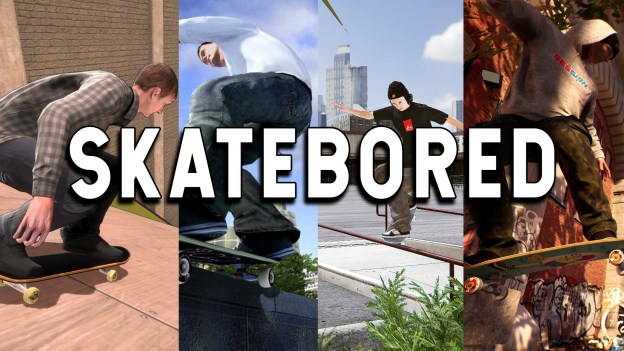
Maybe it’s just me, but I feel like it’s been way too long since we’ve have a good skateboarding game, with 2010’s Skate 3 being the last game worth playing.  Since then, there’s only been one notable release in the form of Tony Hawk’s Pro Skater 5, a game that even if it wasn’t absolutely dreadful, was no longer the kind of skateboarding game I’m looking for.

When the Tony Hawk series of games was good, those games were all about racking up points, completing absurd objectives, and defying the laws of physics every time you ramped off of anything.  No one really managed to be a real competitor until 2007, when the first Skate game was released.  As the Skate series gained more traction with it’s more realistic gameplay, the Tony Hawk series started to decline both in popularity and quality.

Session.

But it wasn’t until very recently, when two early access skateboarding games hit the market, positioned to be the next big thing in the apparently defunct skateboarding genre.  These games are Session and Skater XL, two games that are striving to take the elements people loved about the Skate series, and build upon it.  The problem is, I’m finding that both of these options are way more than I was looking for from a skateboarding game.

Both Session and Skater XL unquestionably are striving to give players more control over their actions in an attempt to provide the most realistic skateboarding games ever.  That’s definitely a good strategy, considering over the past 20 years or so, we’ve seen that change happen, so this just seems like the logical next step.  Plenty of people are looking for this level of realism and simulation, but I find it’s just too much to deal with.

Skater XL

The simplicity of Skate was brilliant.  With your right analog stick you did everything from ollies, to flip tricks, manuals and grinds, while your left stick was general navigation.  There were other modifiers as well to allow for other tricks and abilities, but the core conceit was that with your two analog sticks, you could basically do everything.  It wasn’t too simple, but wasn’t too complex.  To me, it was the perfect balance I was looking for in a skateboarding game.

Session and Skater XL however, take things way too far for my simple mind.  Each analog stick controls a foot, your triggers are how you lean while skating, and perform reverts and spins.  It doesn’t sound like too much on paper, but in practice I find myself trying to turn and instead popping up into the air like an idiot.  Turning with the triggers doesn’t ever feel good, and the simple act of performing an ollie never felt natural, instead feeling more like dumb luck that I was able to do it on command.  The idea that you pull one stick down and push the other up to mimic the actual motion of the feet sounds good, but I’ve never found it more than cumbersome.

Skate 3

To me, the Skate series nailed the balance between an arcade skateboarding game, and a simulation of the sport itself.  It’s also why I’m incapable of mustering up any excitement for either Session or Skater XL, because I know I’ll end up getting frustrated while playing it.

Clearly this is just me complaining though, because both Session and Skater XL are currently rated “Very Positive” on Steam, with people mostly complaining about bugs on their respective forums.  This kind of intense simulation is clearly what people were looking for out of a new skateboarding game, but I can’t seem to get onboard with them… pun intended.


Gut Check: Streets of Rage 4

Streets of Rage 4 nails everything you would hope for out of a sequel to one of the greatest brawler franchises in history.  It retains all of the chaotic action of it’s predecessors, while paying tribute and modernizing the unique aesthetics the series was known for.  That dedication to honoring the roots of the franchise is a double-edged sword however, highlighting both the good and bad the genre has to offer.

It’s been 26 years since the last release in the Streets of Rage series, which is long enough that it would’ve been a fair assumption to assume the series dead.  Yet here we are in 2020, face to face with a sequel that was met with heavy skepticism when it was revealed.  Despite all of the side-eyeing and cynicism that I did when I heard about Streets of Rage 4, I’m very happy to report I was wrong.

20200430132725_1.jpg

Streets of Rage 4 follows the grand tradition of “light touch” storytelling, by dropping you into a crime ridden city, with only seconds worth of story to propel you forward.  But if you’re coming to Streets of Rage 4 for the rich lore, maybe it’s time to refocus your efforts on something else.

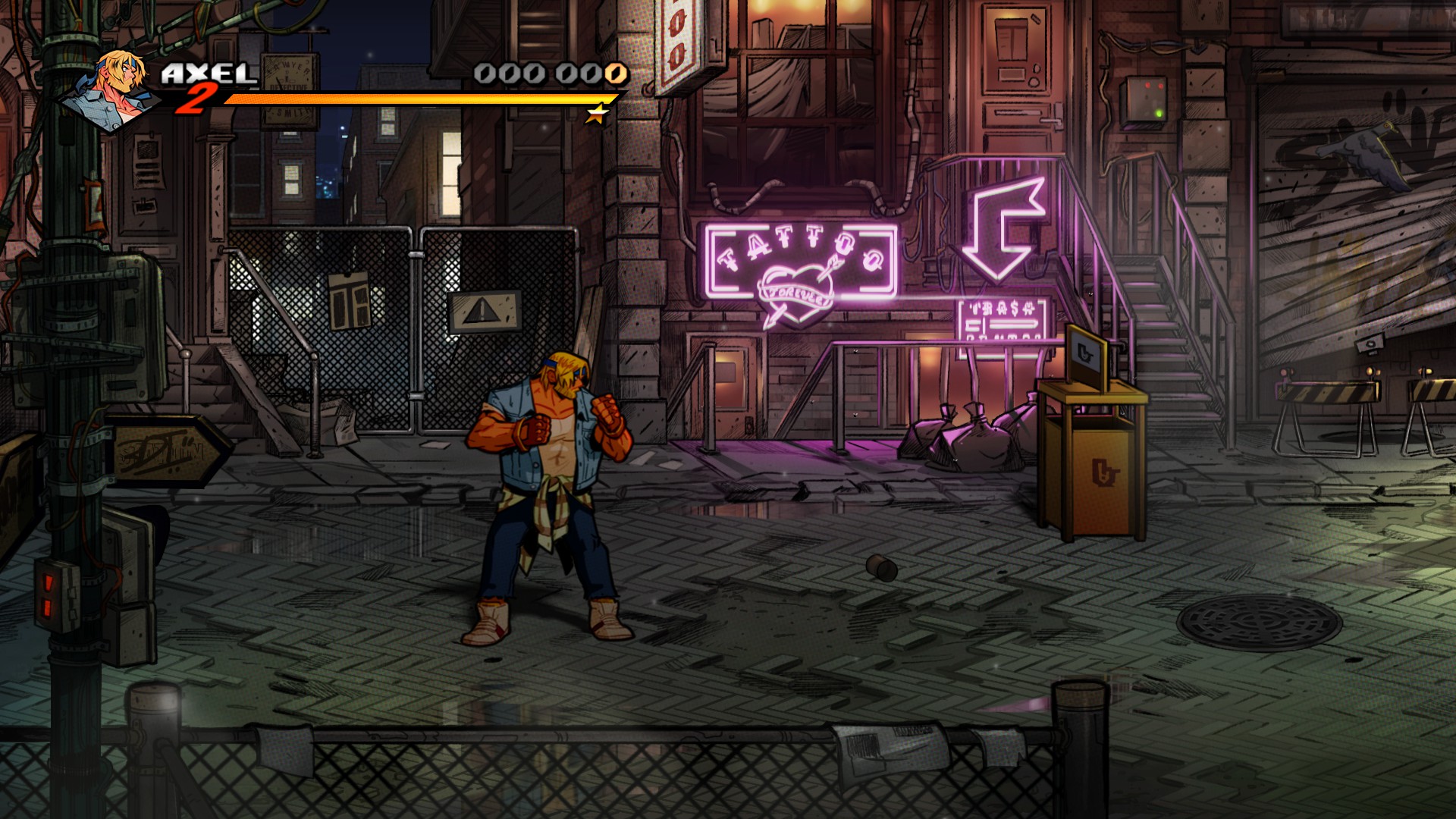
The first thing that jumps out to you is how wonderfully crafted Streets of Rage 4 is.  As you might expect for a series that lived on the Sega Genesis, the original series boasted beautiful pixel art that stood out among it’s competition.  Streets of Rage 4 retains the visual chops the series was known for, by modernizing it in a pseudo-comic book style that really works.  Characters all have thick outlines surrounding them, while the backgrounds are meticulously rendered to give you a sense of place in the world.  What I’m trying to say is that the art is really good.

20200430133553_2.jpg

The other half of that presentation that I really enjoy is the new soundtrack.  By taking old tracks and remixing them, along with creating new music from scratch, Streets of Rage 4 boasts a synth-heavy, aggressive and driving score that keeps the intensity up in the most face-punchingly conducive way possible.

But while aesthetics are an important aspect of any game, the real question has to be about the gameplay itself.  It’s here that I’ve got great news for the people who love brawlers, and less good news for those of you who maybe weren’t wild about their brutal difficulty spikes.  Streets of Rage 4 is a game that were it made in the 90’s, would fit in just fine.

20200430134418_1.jpg

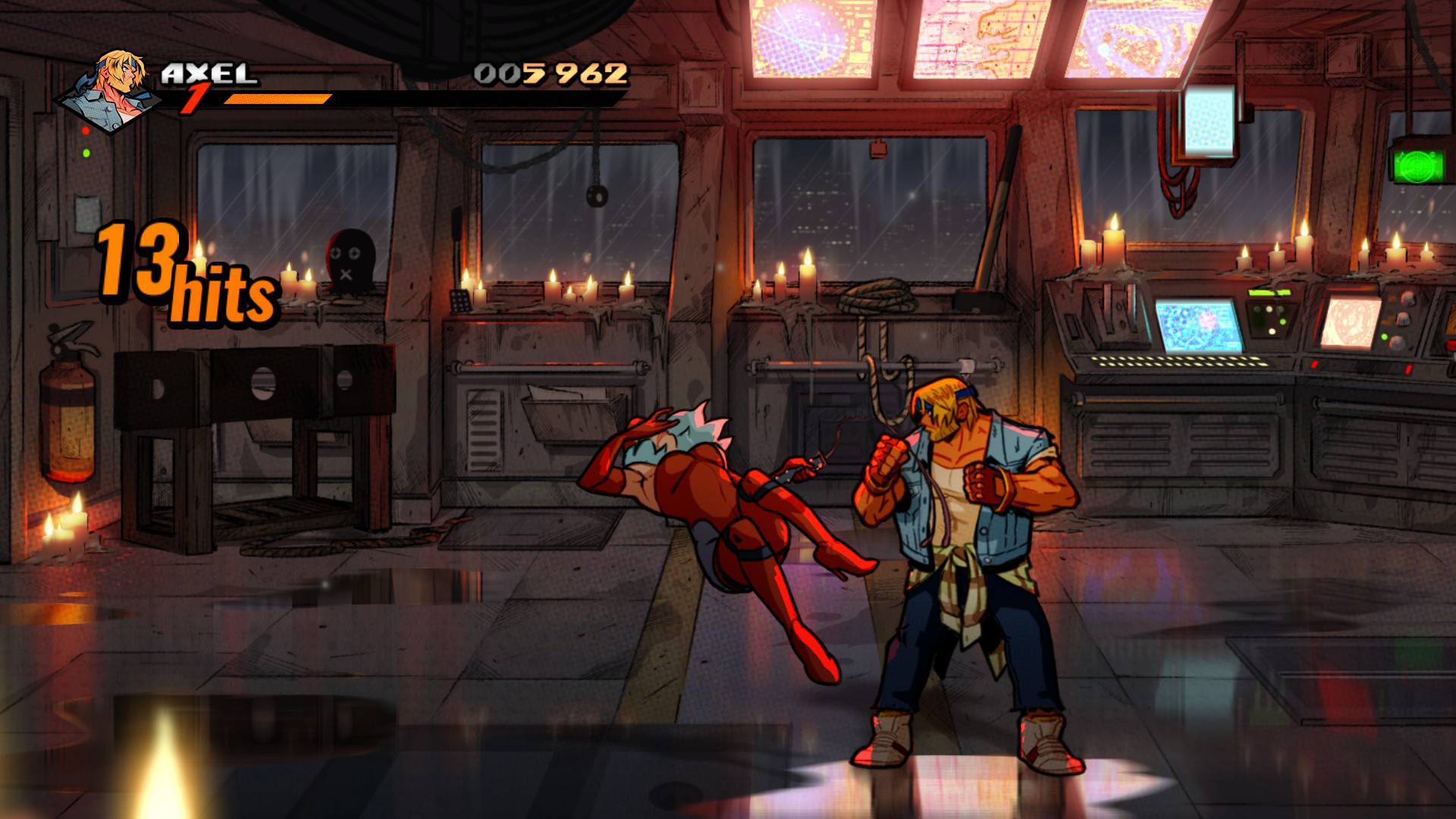
In Streets of Rage 4 you’ve got a standard attack that strings into a combo, you’ve got the ability to grab enemies if you walk into them, and you’ve got your bevy of weapons that you can pick up and use before they break.  There’s also the inclusion of special moves that are fairly rare to come by in any given level, but when used, can release something of a super move that behaves differently based on what character you are.  There is more in terms of combat as well, like back attacks, health draining attacks, and more that you can weave into your arsenal.

The thing that frustrated me when I was a kid and still frustrates me to this day is still present in Streets of Rage 4, and that’s any sort of defensive option.  It’s frustrating to me to have to lumber out of the way on the z-axis to dodge certain attacks when some sort of block, dodge or parry would be so much more satisfying.  I know that this is inherently counter to the DNA of the series, but every time I get hit by an attack I try to maneuver out of the way of, I’m reminded how nice a defensive option would be.

20200430135921_1.jpg

While I truly believe Streets of Rage 4 would have been better for including some sort of defense, my other criticism is a little flimsier in nature.  I think it would’ve been nice if there was some sort of progression or lite RPG mechanics sprinkled over the game.  It isn’t a deal breaker by any stretch, but I wouldn’t have minded being able to learn new moves or upgrade some stats.  Like I said, I can live without this stuff, but I think it could have been a neat inclusion.

Streets of Rage 4 boasts a few other modes and gameplay options like level modifiers that make your experience a little easier if you need it, online cooperative play, and a few others that I’ve yet to dig into.  There’s also a gallery of Streets of Rage art and other extras you can unlock, such as the ability to take the pixelated versions of characters from previous entries, and play as them.

The brawler genre itself may have faded from the forefront of gaming, but Streets of Rage 4 is a fantastic return to form.  While some of the rougher edges of the genre have been sanded down and smoothed out, the core of these games is retained and ever present.  If the brawler genre is something you love, Streets of Rage 4 is the game for you.  If the genre wasn’t your cup of tea, Streets of Rage 4 is a really good game that probably won’t change how you feel about brawlers.


Hoop Dreams

Like a good chair, video games can provide a sense of comfort and security despite their subject matter.  Maybe you play League of Legends every night, or World of Warcraft religiously, or something else entirely, but odds are that there’s a game you keep coming back to when there’s nothing else to play.  For me, I sink dozens and dozens of hours into the NBA 2K series of games because I’m a massive fan of the sport along with the games themselves.  That’s not a qualitative statement however, because I think there’s tons of room for improvement in the series, from bug fixes to features, and even new modes entirely.

Before I jump into what I’d like to see out of a new entry in the series, let’s talk about what’s in it already.  If you recall, last year there was a massive hubbub around the gross monetization practices around NBA 2K20, thanks to a trailer showcasing literal slot and Pachinko machines inside of a basketball game.  NBA 2K as a series has a long and gross history of shitty monetization in the form of a virtual currency called “VC,” which is literally short for virtual currency.  From upgrading stats, to unlocking apparel, moves, and basically everything else in the game, VC is integral to certain competitive modes in the series.

Despite wanting to engage with some of these modes, particularly the career mode which has you making a character and bringing them through their career as a player, the reliance on VC keeps me away.  Instead I focus on the franchise mode, where I can take control of any team or teams I want, and play through something like 80 seasons before it ends.  I’ve never made it to the end of the mode, so I genuinely don’t know what happens.

So with that context in mind, let’s talk about the future of the NBA 2K series.  As a child of the 80’s and primarily a fan of 90’s and early 2000’s basketball, I tend to gravitate towards that style of play in the game.  Focusing on traditional player roles that don’t really jive with the realities of today’s game.  Modern basketball has kind of made the traditional big men positions obsolete, opting for shorter, faster and more dynamic players who can space the floor better than their massive predecessors.  It’s not a bad thing, it’s just how the game is these days.  But when I craft my teams I usually end up filling the gaps on my roster with players that reflect an older style of basketball.  Since it’s a video game, it works out just fine for me, but it does feel like I’m playing wrong from time to time.

Let’s put aside workload, licensing issues, and literally every aspect of reality that would impede my pitch for a new mode in the NBA 2K series, and let’s just pretend it could happen.  I would like to be able to combine my love of the franchise mode, with the eras of basketball I remember.

I want the vintage teams, jerseys, and stadiums to reflect this era of basketball.  From different announcers, fans, and even retro styled graphics packages in the game, I want to relive this heyday of basketball in a video game, the way I dreamed of when I was kid.  As of right now, I can play with the 98′ Bulls if I wanted to, but it’s literally just taking that roster and putting them on a modern court.  That’s fine, I appreciate that functionality, but I want to relive vintage seasons and rewrite history.  I want play styles, game tempo and rule changes to be represented, and not just feel like a retro skin for a modern game.

It’s a lofty request that is far too specific for it to ever become a reality, especially when you consider what I’m asking for is to travel back in time with modern computers and design sensibilities, and make NBA 2K1996… or NBA 1K96?  I have no idea what it would be called, but you get the point.

Maybe I’m being overly nostalgic, maybe I have too much time to think about new modes for games and a need to write things for my gaming website, lest I go insane.  Or maybe I just watched the first few episodes of the excellent ESPN and Netflix documentary series, The Last Dance, that chronicles the final season Jordan played with the Bulls, and want to interact with it.  Who could say?

Gut Check: Cloudpunk

UPDATE: Since writing this, Cloudpunk has received several updates that address some of the dialogue issues that were present at launch.


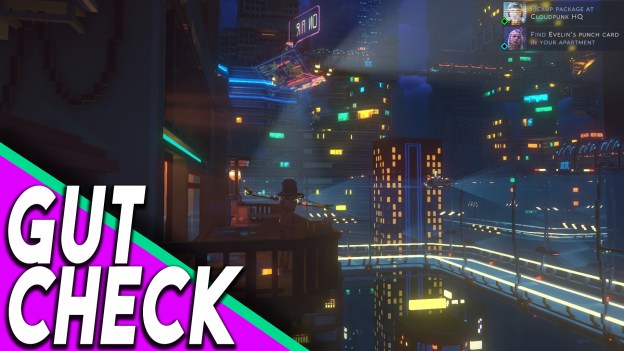
Cloudpunk is a blend of two of my favorite elements in games:  Cyberpunk aesthetics and a mundane profession which in this case is being a delivery driver.  Sprinkle in an engaging yet slowly unfolding story with interesting and sometimes genuinely funny characters and you’ve got yourself the recipe for a game that is one-hundred percent up my alley.

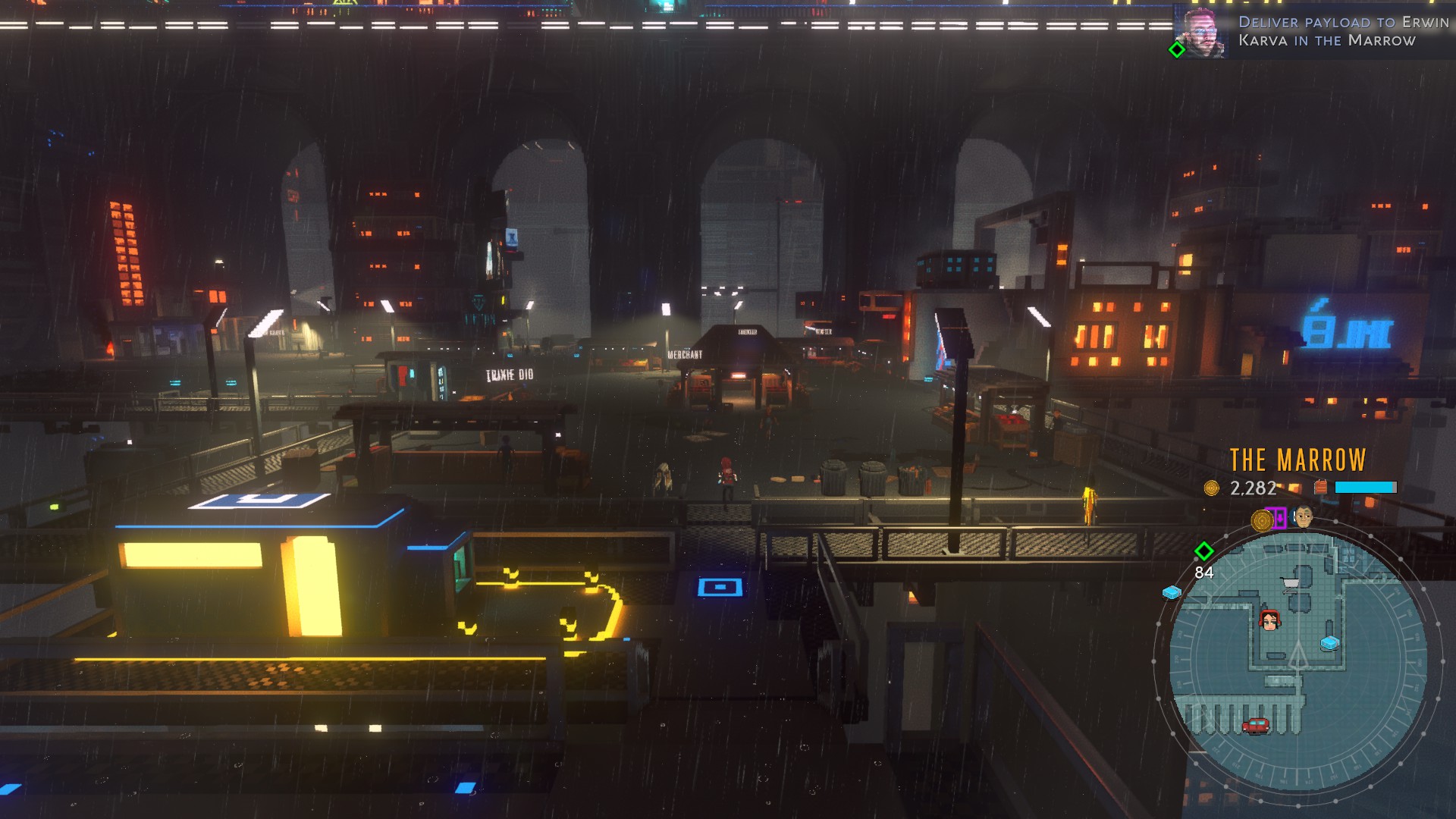
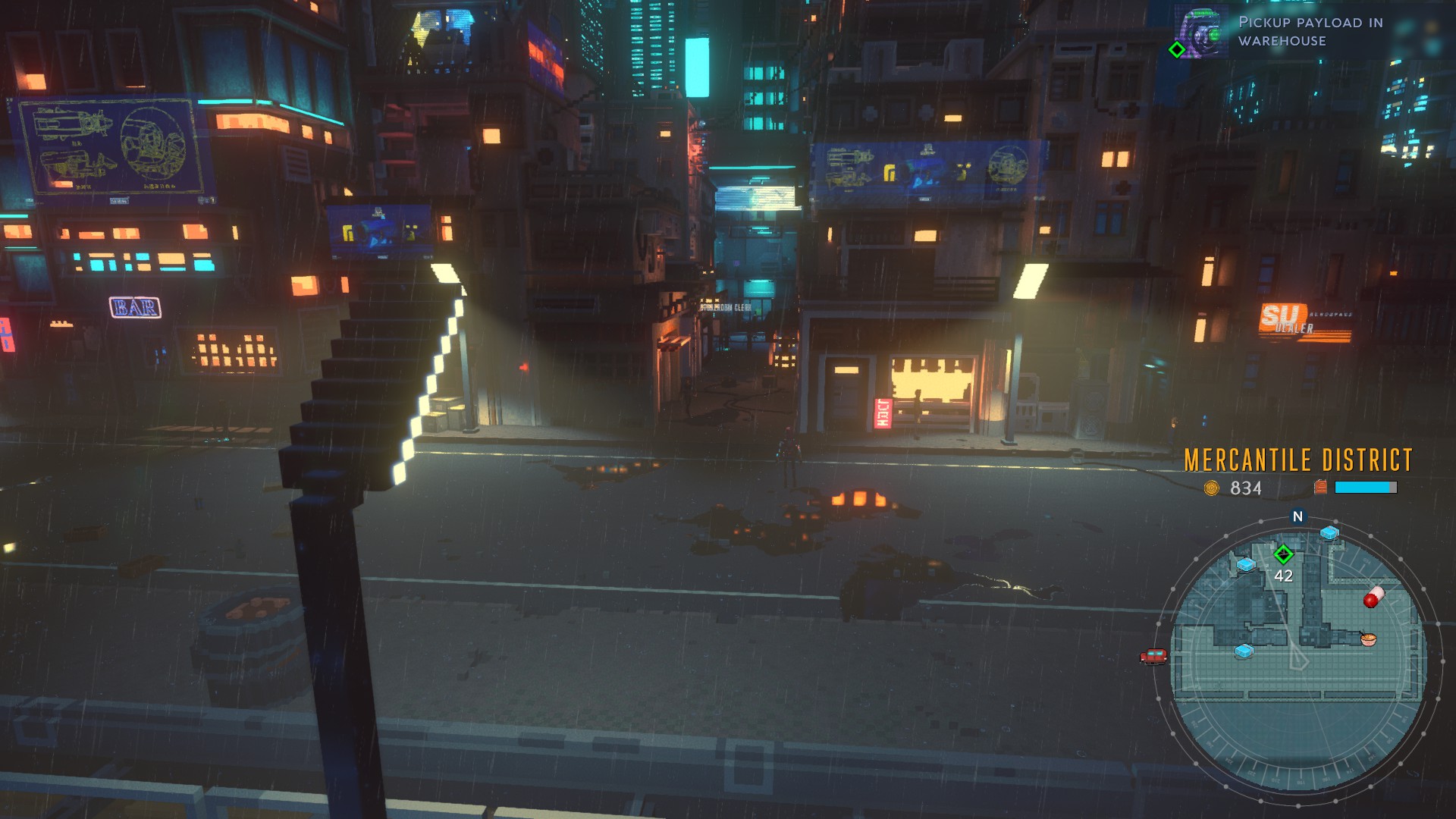
In Cloudpunk, you play as a young woman who just moved to the big cyberpunk city and has taken up a job with the titular delivery company, Cloudpunk, as a courier.  The majority of the game seems to take place in your hover-car, driving around the neon soaked, voxelly city of Nivalis.

20200423195644_1.jpg

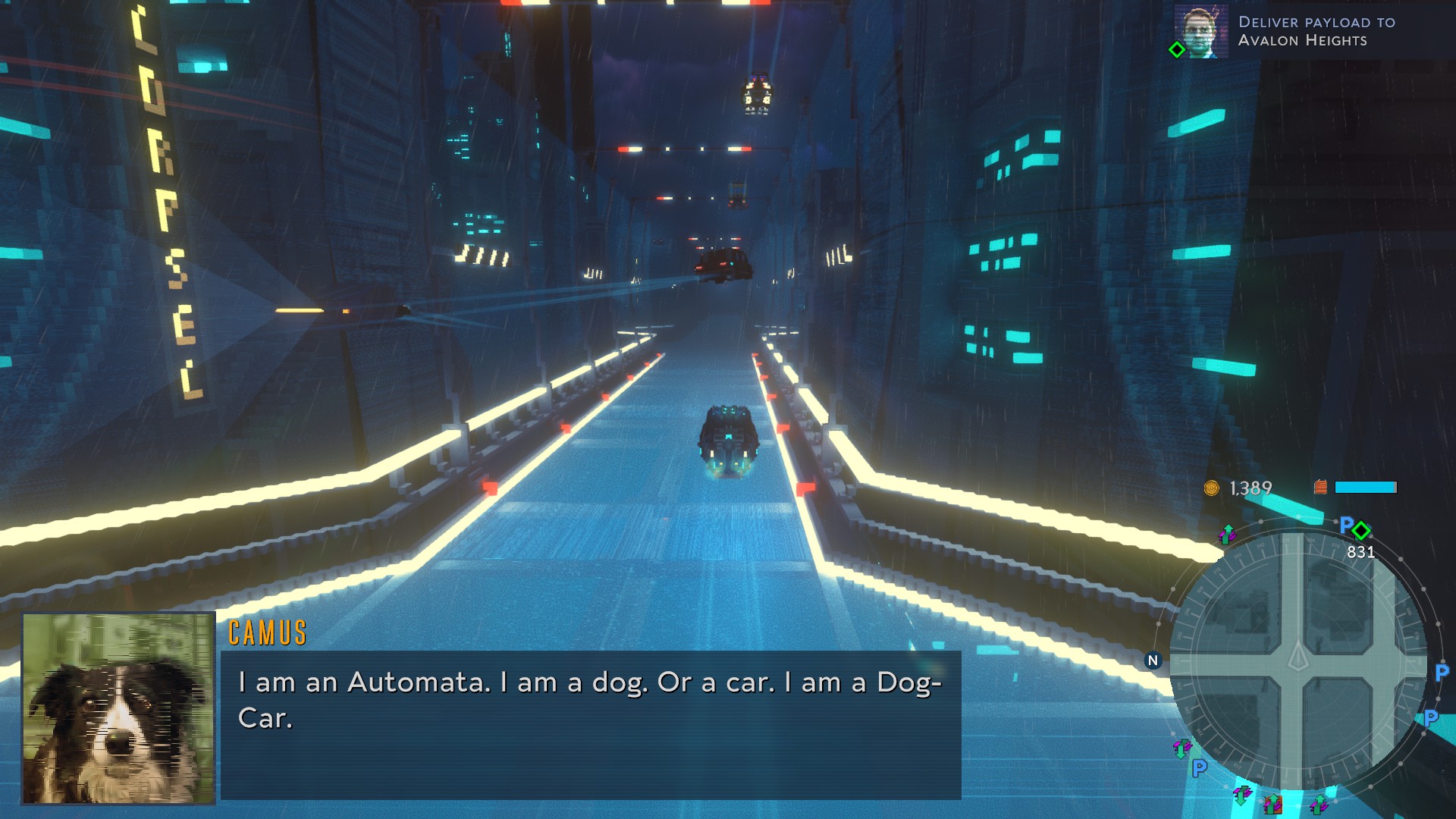
Piloting my floating jalopy was easy to do, and had a nice sense of weight to it that made banking around corners at high speeds not only very satisfying, but extremely dangerous as your momentum will have you drifting around the skies and probably into traffic.  The weird thing about driving the car is that you have no camera control whatsoever.  Instead, the right analog stick is used to dictate your height, a mechanic that the characters in the game felt the need to justify by explaining it within the first few minutes of playing.  Ultimately, money and fuel seem to be the primary plates you’ll be spinning in Cloudpunk, neither of which have been a real obstacle in the early goings of the game.

Once you get your package to the vague area it needs to go, you’ll have to find a parking spot for your hover-car, then hop out and finish the delivery on foot.  It seems pretty superfluous at first, offering little more than other angles to admire the artwork from, until you realize there are NPCs you can talk to and shops you can interact with.  It’s shallow at first, but within the first hour of playing it starts to become an integral part of the story.

20200423200430_1.jpg

Unsurprisingly, the things that really stuck out to me in Cloudpunk are its visual style, and synth-heavy soundtrack.  If you had told me that this was a licensed Blade Runner game, based solely on its presentation, I’d believe you.  The ambient light that pours over the rain-soaked streets of Nivalis, make the floating city feel appropriately grimy and futuristic.  Cloudpunk nails the cyberpunk aesthetic from lighting, to mechanics, to the soundtrack and even down to its characters.

Speaking of characters, there is one very special character in this game that needs special attention.  In Cloudpunk, the story is told to you through radio chatter from your bosses, customers and your ship’s AI.  The ship AI however, is the implanted consciousness of your character’s dog.  This dog, Camus, is a great inclusion not just because dogs are great, but because he is so innocent and pure that he acts as your moral compass when you have to make decisions in the game, questioning you when you make strange choices.

20200423203425_1.jpg

An early example of that is when Rania picks up an unmarked package under suspicious circumstances from her boss, that once inside of the car begins ticking.  Her boss tells her to keep quiet and get the job done providing no further explanation or context.  Camus will question this saying something to the effect of, “I don’t feel good about the situation.”  It was then I was presented with the choice of delivering the package, or throwing it in a dump somewhere.  I went ahead and delivered the package to another location, where Camus also raised further questions about my actions.  Up to and after what you might expect to happen with a ticking package happening, Camus gently reminded me that we didn’t do a good thing, which hurt me more than any human’s word could.

While I love Camus and his voice acting, the rest of the game fluctuates in that department.  Rania herself feels a little flat in places, never feeling overwhelmingly offensive or bad, but just a little bland.  That could be a symptom of the voice acting itself, or the actual writing in the game, which also feels unnatural in spots.  It’s never too jarring which is a relief because there’s a lot of it.

20200423201239_1.jpg

What is infuriating is how unskippable the dialogue can be in most scenarios.  This is a story-focused game and I understand that, but the decision to make me hover in the air in my car without a way point or objective for a minute or two so a conversation can wrap up, is infuriating.  I want to absorb the story and hear what the players are talking about, but could we do that on the way to my objective?  I can’t just drive around aimlessly while I’m waiting for a way point to pop because I’ve got fuel limitations.  It’s a weird decision that just leads to a lot of idling in a game with a pretty intriguing story.

The list of things I like about Cloudpunk so far easily outnumbers my issues with it, but I’m still really early into the game and anything could change.  There’s a bunch of mechanics that are largely unexplained thus far as well, like the fact that I have an inventory.  It makes me think there might be some sort of adventure game aspect that hasn’t been revealed just yet, but I’m excited to see it pan out.

20200423202248_1.jpg

I really like Cloudpunk and it’s brand of mixing the cyberpunk aesthetic, with the seemingly mundane job of being a courier.  It makes you feel appropriately small in this sprawling metropolis, before slowly uncovering the main character’s role and importance as you progress.  It’s got some rough edges for sure, but as an adventure game, it’s certainly scratching an itch.


Gut Check: Good Job!

It’s been so long since I’ve had to be in my place of work that I’ve basically forgotten how working operates.  Luckily I’ve been playing the recently released Good Job! on the Nintendo Switch, and I’m slowly remembering what going to work was actually like.

2020041815345100-D696F166B39F21D053E294E03172915D.jpg

Good Job! is a fun little physics-based puzzler that has you trying to complete mundane tasks like setting up projectors, wrangling employees, and putting boxes on trucks for shipments, as efficiently as possible.  It takes these typically dull tasks and adds in a level of destruction and chaos that makes Good Job! as fun and engaging as it is.

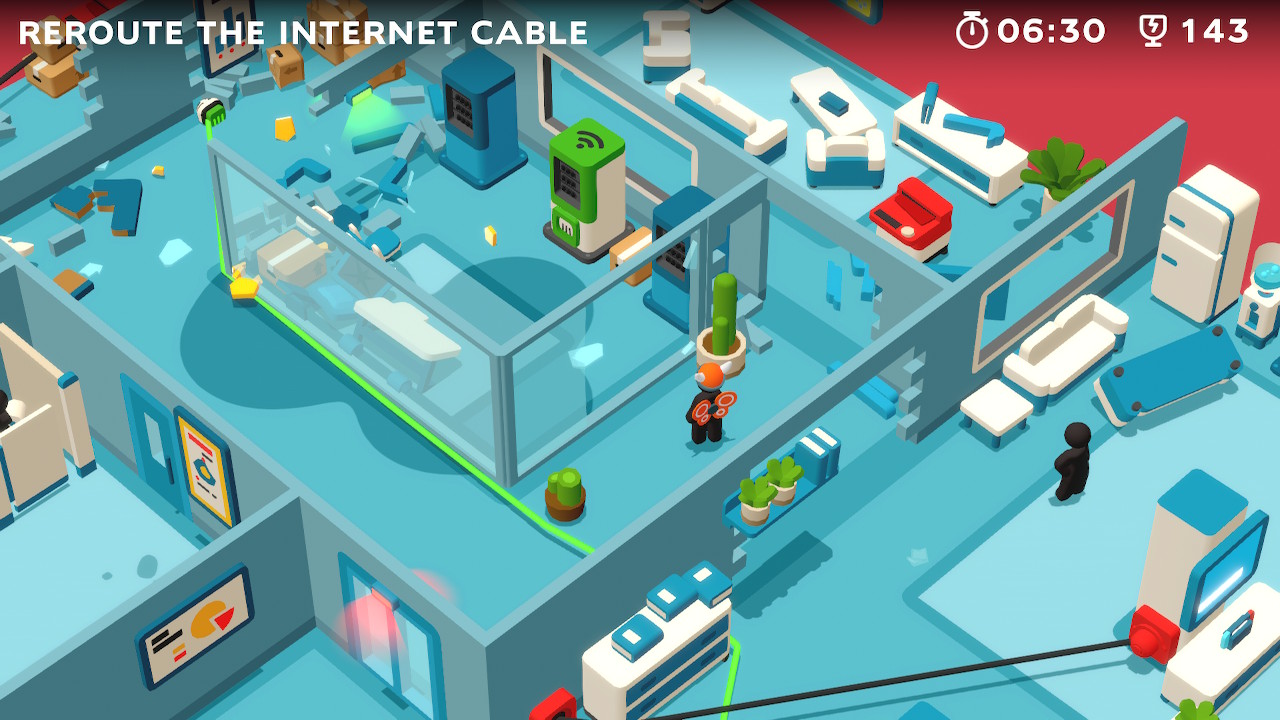
Through what can only be described as blatant nepotism, you somehow have a job at this company that your parent owns, despite you being a clumsy mess.  You’re kind of a jack of all trades, going from level to level, solving common office problems utilizing a mix of puzzle solving, and destruction.  For instance, one of the first levels tasks you with hooking up an Ethernet cable to a WiFi hot spot.  What the game expects you to do is to find a way to bring the wire from one end of the level to the other by getting through locked doors and moving loitering employees.  Based on your time and damage done, you’ll get a letter grade upon completing the level that you can go back and improve on should you desire.

2020041815360800-D696F166B39F21D053E294E03172915D.jpg

But Good Job! knows that efficiency is a metric that’s measured differently by different people.  For some, efficiency might mean causing the least amount of issues and doing the job to the best of your abilities without disrupting anyone in the office.  But then there’s the creative types like myself who know that the easiest and most efficient way to solve a puzzle is to break the puzzle, a tactic that Good Job! has planned for.

Instead of trying to work within the confines of the office, I usually opt for the “open office” concept which involves me pulling power cables real tight, and using that as a makeshift slingshot I can load with a printer to blast through all of the walls, doors, windows and other employees in my way.  It’s that kind of “outside the box” thinking that’s made me the perpetual employee of month.  Good Job! reminds me of how I approach most stealth games, where I’ll try my best to do things in the intended fashion, but embrace the chaos when shit inevitably hits the fan.

2020041815495000-D696F166B39F21D053E294E03172915D.jpg

Good Job! is a fantastically fun and lighthearted affair that’s easily become one of my favorite releases this year.  It has some minor control quirks that take some time to wrap your head around, and the frame rate can get a little chunky when debris is flying all over the place, but I still find myself coming back to it in spite of those minor drawbacks.  I’ve only played it single player, but it has couch co-op for those of you who can take advantage of it.  Despite going solo though, I haven’t felt like my experience has been lacking at all.  Just like its name implies, Good Job! does a very good job.