Tag Archives: archived features

Valentine’s Play

Even though our 2020 Game of the Year coverage is dead and buried with the rest of 2020, there’s still one list that I felt needed to be published in regards to the games I played last year. See, my partner and I started dating towards the end of 2019 and like most people, were put into a really challenging position when it came to maintaining our relationship while we were both quarantined. Luckily we both had Nintendo Switches and were able to have “date nights” where we’d just play games and talk for hours, something we still do only now in person thanks to them moving closer to my place. So in celebration of Valentine’s Day, here are some of the games we played and continue to play together that they have specifically called out as their most memorable games that we’ve played together in no particular order.

Trine 1&2
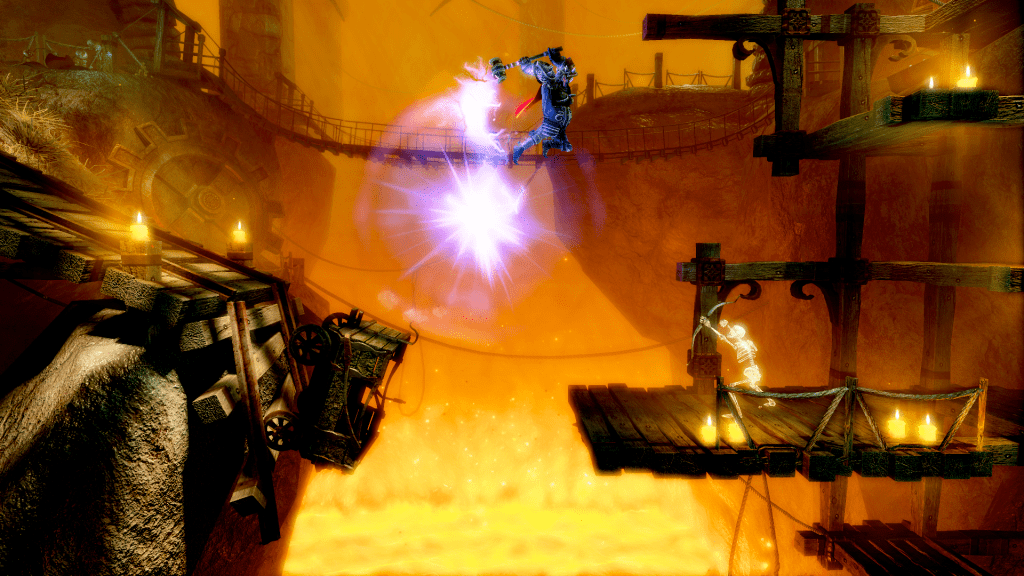
I don’t recall exactly when it happened, but at some point there was a really good deal on all 4 of the Trine games that were bundled into one package that we took advantage of. Both Trine 1 and 2 were big hits around these parts as we’d both been craving some sort of cooperative game with some light progression elements (my words, not theirs). I’d dabbled in the Trine games before, but never really dove into one like we did last year.

The amount of laughter and joy that would come out of our Trine gaming sessions is something that I’ll always treasure. Despite the game being overtly cooperative, my partner found a way to make it competitive by having to be the first one across any gaps or even just the first one to collect the various pickups and collectibles scattered around the levels. It was a really fun pair of games that we were quite simply hooked on for a few months last year.

While we both had a chaotically good time with the wacky physics-based mayhem and puzzle solving of the first two games, we only made it a few levels into the third entry of the series before we hit a wall. Trine 3 ditches the solely side-scrolling nature of the first two games in the series in favor of this 2.5D kind of approach where characters have to travel along the Z-axis to progress through the levels. While I was used to games that either dabbled in or lived completely in the third dimension, they weren’t as comfortable with it and bounced off of the game pretty quickly. It also didn’t help that Trine 3 is buggy as hell and that third dimension makes a lot of the mechanics they had come to know and understand be a lot more fiddly and unresponsive. But none of that can take away from the fact that the first two titles were great fun for the both of us.

Overcooked!

I have this terrible habit of accidentally introducing my partner to games that I kind of like, only to have them turn around and demand they be the only games we end up playing. Overcooked might just be the epitome of this unwelcome trend, but it’s something my partner truly enjoys to the point where it’s the only thing they want to play lately. I wasn’t exactly sure what specific things they enjoy about the game itself, so I just went ahead and asked them.

“I like that we have to work as a team for a common goal. And it is fast paced so we really have to focus on communicating (well) and figuring out a strategy to complete the objective.” While they enjoy the fast-paced, communication heavy gameplay loop that Overcooked is all about, I just find myself unable to work that fast while focusing on several different objectives at once. Luckily, their brain seems to be significantly more capable of keeping track of multiple concurrent objectives without entering a fugue state, which is basically what happens to me whenever we play.

But the point is that Overcooked is a game that’s been wildly popular among the two of us, and while it might not be my favorite game, they sure do enjoy the hell out of it. One thing we can both agree on however, is that the game itself is overwhelmingly charming, from the character designs to the music, Overcooked is a delightful game to experience with another person.

Dr. Mario
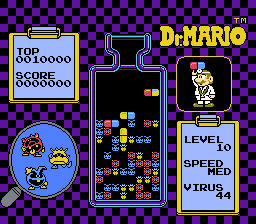
I did not anticipate launching the NES or SNES virtual console thing that’s on the Switch as often as I had last year, but we both did because that’s where Dr. Mario lives. The classic puzzle game not only boasts two of the best music tracks in video games ever, but it was fun enough to become a long time favorite for my partner and I. Now, I really liked Dr. Mario as a kid, but I don’t know that I’d consider it one of my absolute favorite games of all time. But my partner, well they were and still are pretty obsessed with the good doctor’s particular brand of hurling pills at their patients until a cure happens.

It was seriously the only game that we’d play for a while, offering a good distraction as we made conversation. However, there’s only so much Dr. Mario I can personally endure before the siren song of the “Fever” track becomes an unwelcome ear-worm that won’t leave no matter what I do. Like I said, I enjoy Dr. Mario, but my partner fucking loves it.

Heave Ho
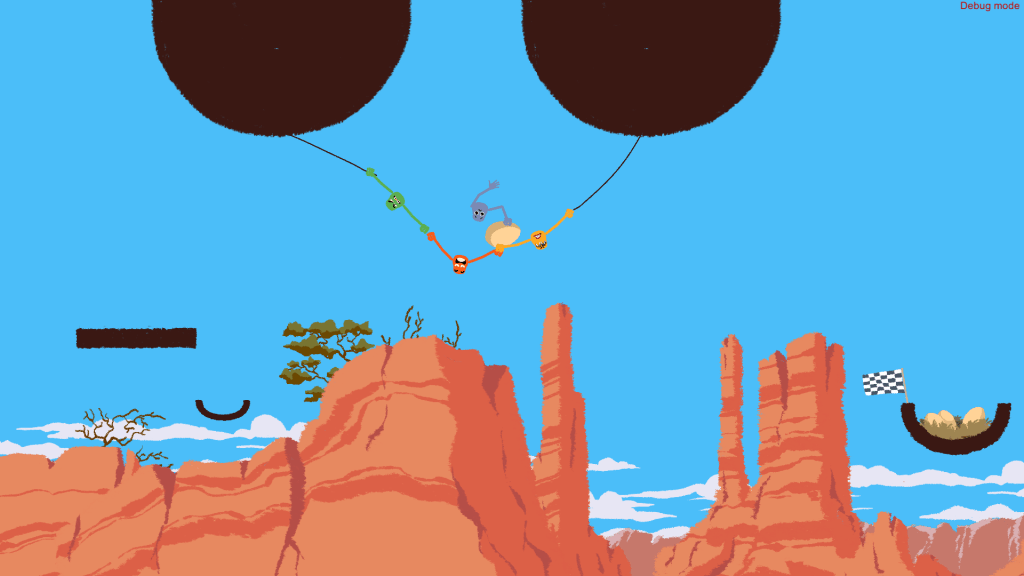
Heave Ho is the kind of game that is so absolutely hilarious to play that a person might have to sprint to the bathroom mid-game in order to avoid pissing their pants. That to me is the surest sign of a game being great fun. Both my partner and I absolutely loved Heave Ho so much that even now we still boot it up and bash our heads against some of the super challenging levels that you unlock after beating the game. There’s just something so delightfully stupid about what you’re doing at any given moment in the game, whether it’s locking arms with one another and trying to swing across the level or just plummeting to our death and watching the blood splatter fly up and coat the other person.

If you haven’t played Heave Ho with at least one other person, you’re truly missing out. It’s easily been one of our favorite games to play together and is probably my favorite game on this entire list.

Nidhogg II
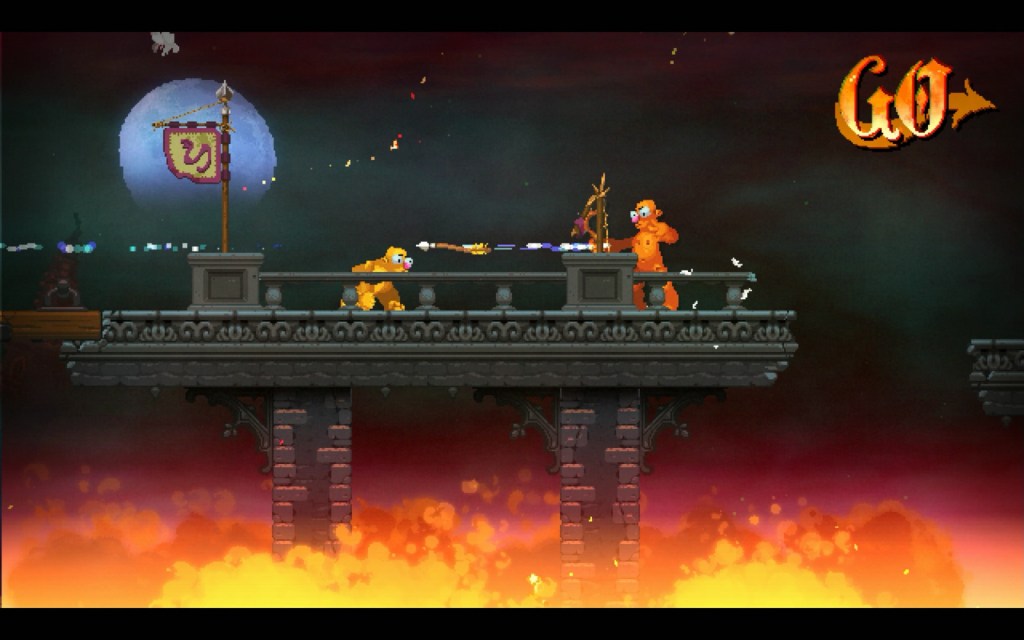
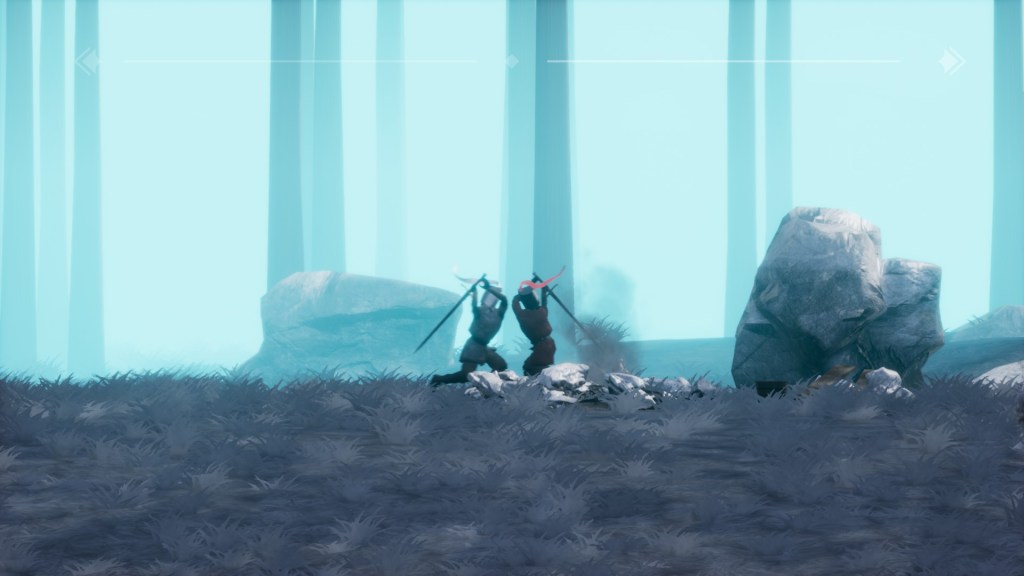
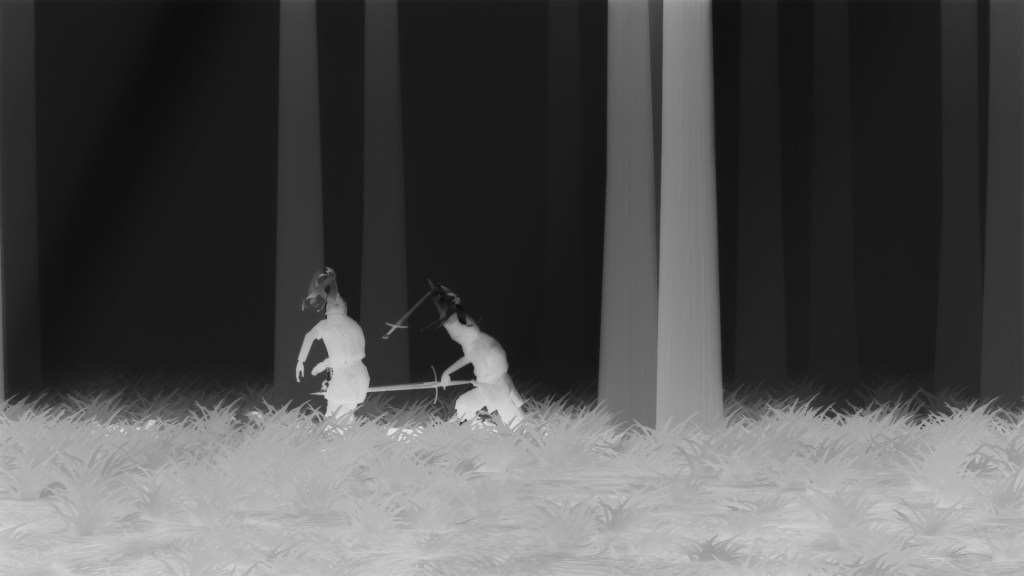
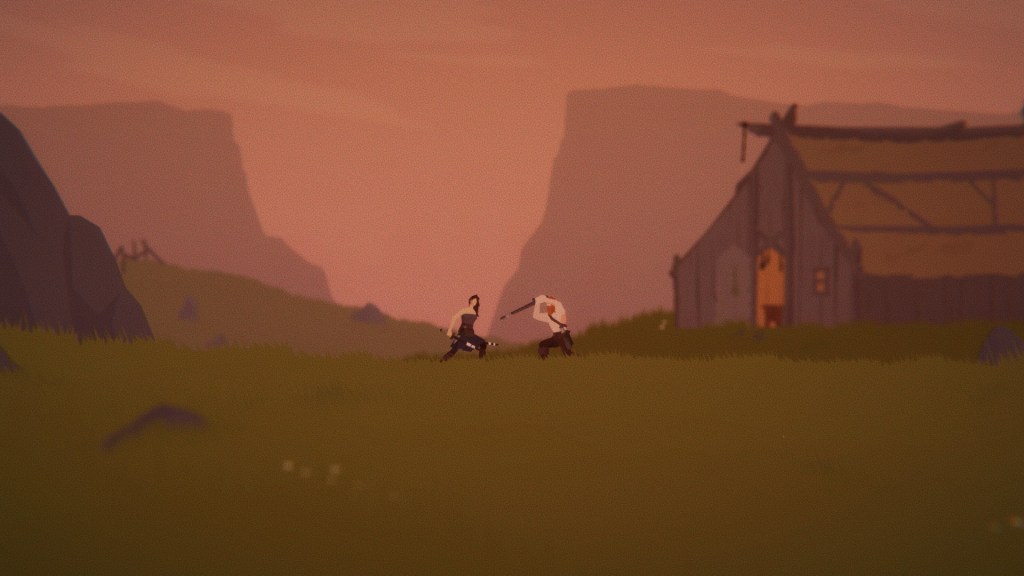
Nidhogg II is a lot like Overcooked for me in the sense that I like it well enough, but not nearly in the same way that my partner does. I don’t know what it is about Nidhogg II that they enjoy so much, but whatever it is has led to me playing way more Nidhogg II than I ever intended to. They’re crazy about this game in a way that I personally didn’t expect, although it’s pretty hilarious to both of us whenever I unsuccessfully try to outrun a sword that’s spiraling through the air in my direction. Or maybe it’s when I accidentally roll off the side of the stage like a goober. Or maybe it’s when I slam my head into a doorway. Or maybe it’s when I hit the jump button too many times and just bounce around waiting for something pointy to pierce my flesh.

When asked, my partner said, “I like how competitive it gets, and that it is just us against each other. One slip up an you can gain a lot of ground, so you have to be focused and make sure you keep pushing in your direction.” While I agree with that sentiment, I think my ever growing ambivalence towards competitive games keeps me from enjoying it as much as they do. But hey, it’s still a good time when we do end up playing Nidhogg II.

NES Pro Wrestling
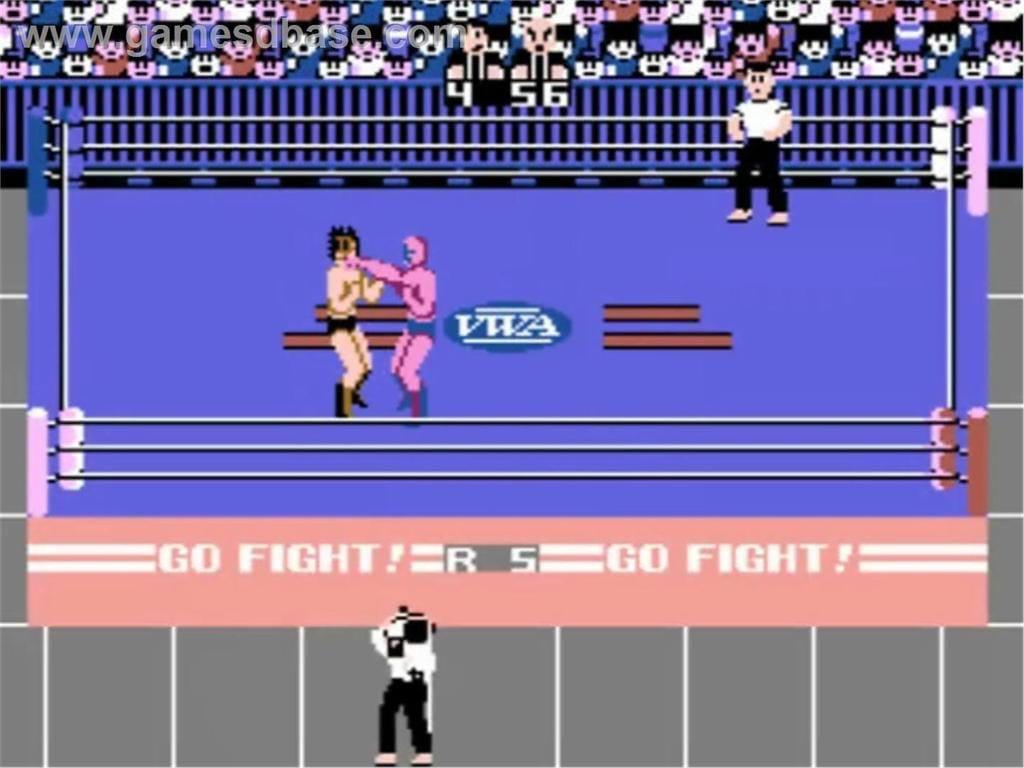
Image credit: u/mastablasta26 on reddit

Let me be clear when I say that neither of us have any sort of affinity for wrestling at all, but something about this game makes us lose our minds and breakdown into fits of laughter. I personally love the ridiculous characters like Star Man and King Corn Karn, but I’m pretty sure my partner is more into how their button-mashing ability out performs my haphazard attempts at learning the controls. I think I’ve only managed to land one spinning back kick on my partner, whereas they’ll transform their character into a whirling dervish of limbs that has a natural ability to connect with my face.

Whatever it might be, all I know is that against all odds we found great joy in a game that neither of us would have gone out of our way to try had we not been bored during our distanced quarantine. There’s also one on the SNES virtual console analog that’s also very good, but nothing beats the classics I suppose.


There were plenty of other games that we played together that I really enjoyed that I wanted to call out specifically. Things like Animal Crossing: New Horizons and Castle Crashers jump out to me as games that defined our time in quarantine. But this is just a slice of the games that we’ve tried together. I’m still trying to get them to try out Scott Pilgrim vs. The World: The Game with me, as it’s easily one of my favorite beat-em-ups of all time with a crazy good soundtrack to boot, but we’ll see how that goes.

But just today, February 12th, the Nintendo Switch port of one of the greatest Mario games of all time is being released. Of course I’m talking about the incredible and easily overlooked Super Mario 3D World + Bowser’s Fury, a title that just rolls off the tongue. That ranks incredibly high up on my list of Mario games and I can’t wait to share with my partner how delightfully chaotic that game can be in multiplayer. I predict many instances of getting hurled off of the side of a level that will be immediately followed by a barely stifled giggle on their end and a sigh of resignation on mine, a constant theme that exists throughout most of the games we play together.

And that’s kind of it really. Video games are a big part of our relationship, and I’m always on the lookout for new and interesting experiences for us to try out. I’m still trying to figure out what games will be a hit and which ones won’t, but I’ll get there. One day I’m going to get them into something more dense and complex, but I have no idea when or what that will be. Anyway, enjoy your Valentine’s Day if you’re celebrating it, and for the love of God, don’t go out to eat at a restaurant. Just stay home, hang out with your partner, and play some dang video games.
Demos of the Steam Game Festival 2021

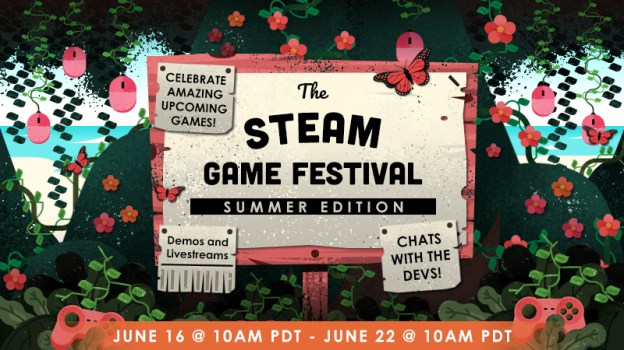
It’s times like these that I’m really grateful that my internet provider hasn’t saddled me with data caps, because I’ve downloaded a ton of demos from the ongoing Steam Game Festival that would certainly have resulted in some sort of additional charge on my bill. But the point is that as of February 3rd, 2021, you can open up Steam and download a bunch of demos for upcoming games. While I could never play all of them, nor would I ever want to be in a position where I had to, I did play some of the titles and have a few thoughts about what you should try and what you should avoid.


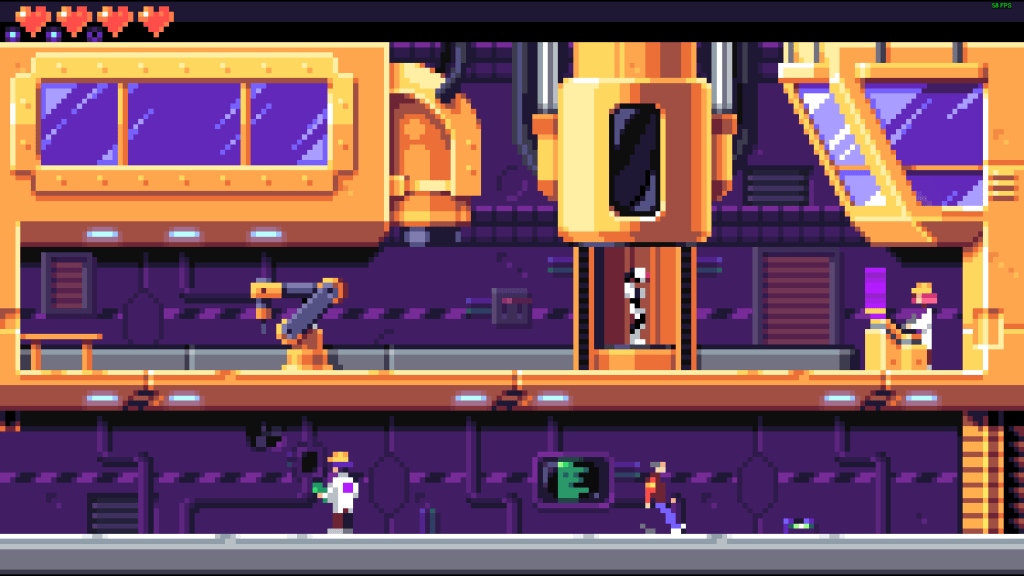
LUNARK

Lunark was the first demo I jumped into once all of my downloads from the festival completed, and while that might sound like some appraisal of its value, it was just the first one I clicked on. Looking back on it, I’m kind of glad I got it out of the way first because I really didn’t enjoy my time with this particular demo.

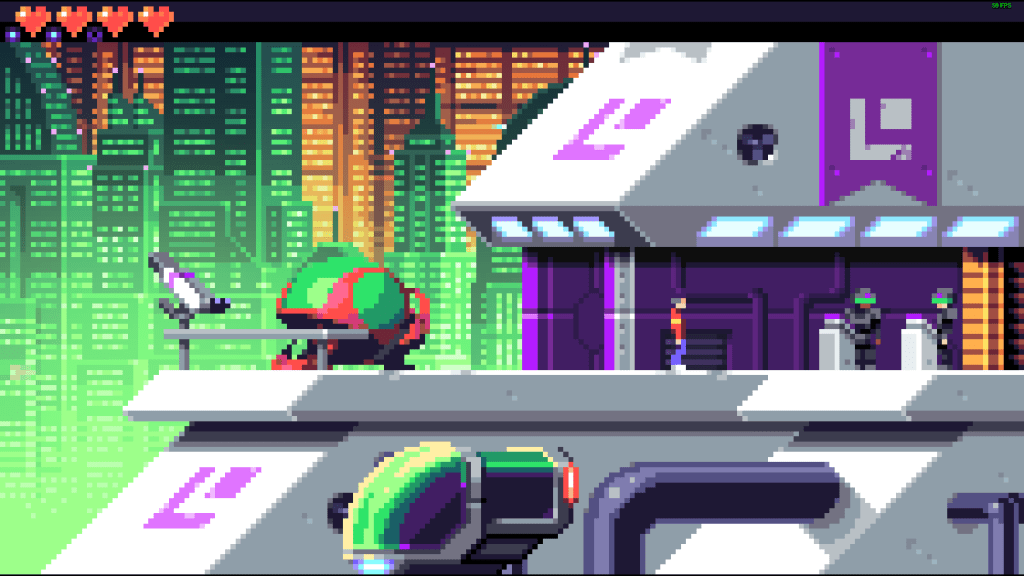
Lunark is a 2D side scrolling action and puzzle game that boasts a chunky-pixel aesthetic and plays kind of like the original Prince of Persia or Out of this World. If those references go over your head, it’s a very deliberate game that prioritizes the animation of what you’re doing over responsive controls and easy to use controls. Everything from running to climbing feels like there’s a giant lag between your button press and what happens on screen. It’s clear that Lunark is trying to illicit the same feelings of those other games, but it ends up feeling more convoluted and tedious than anything else.

Aside from mechanical issues, the game looks pretty cool with those big and beefy pixels even if it isn’t necessarily my aesthetic. The soundtrack also seemed pretty decent as well, but neither of those things seemed good enough to make me want to play the full version of this game. I don’t know about Lunark, but maybe it just isn’t for me.

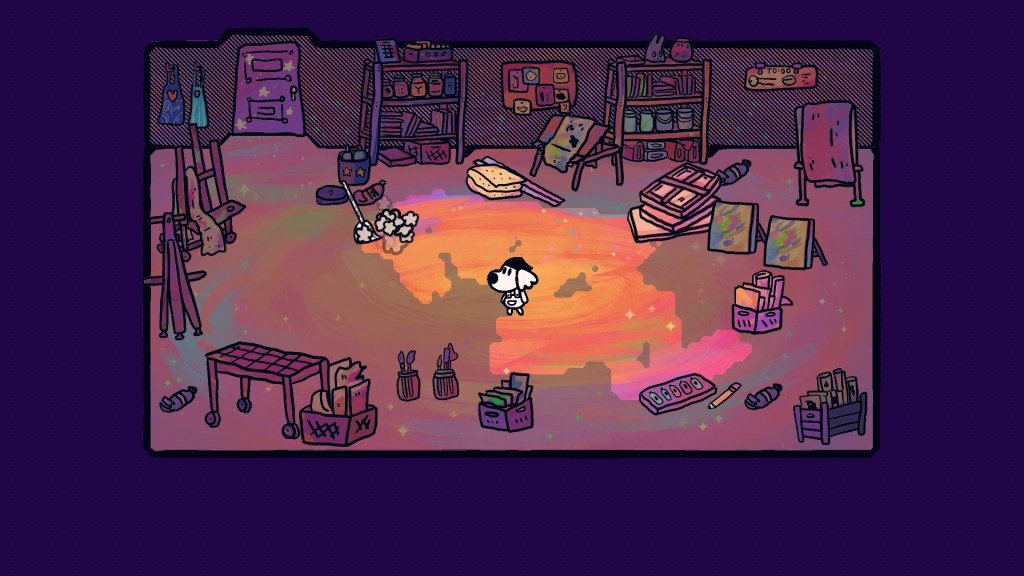
CHICORY

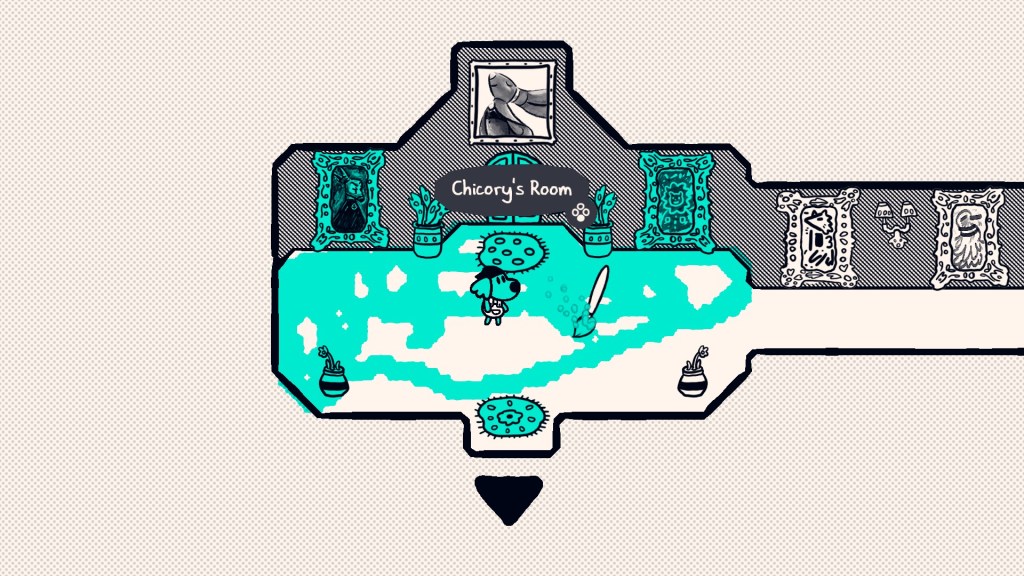
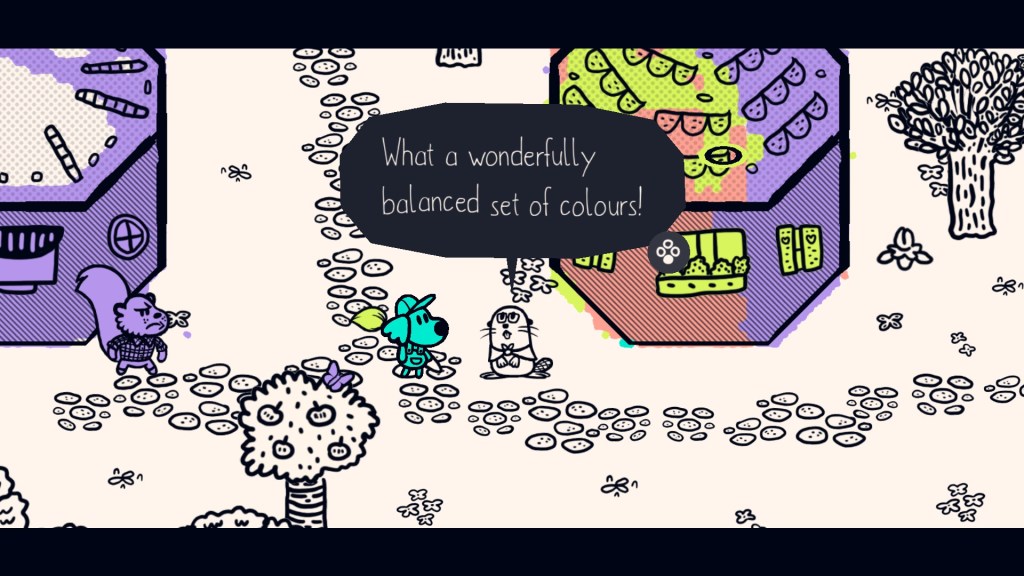
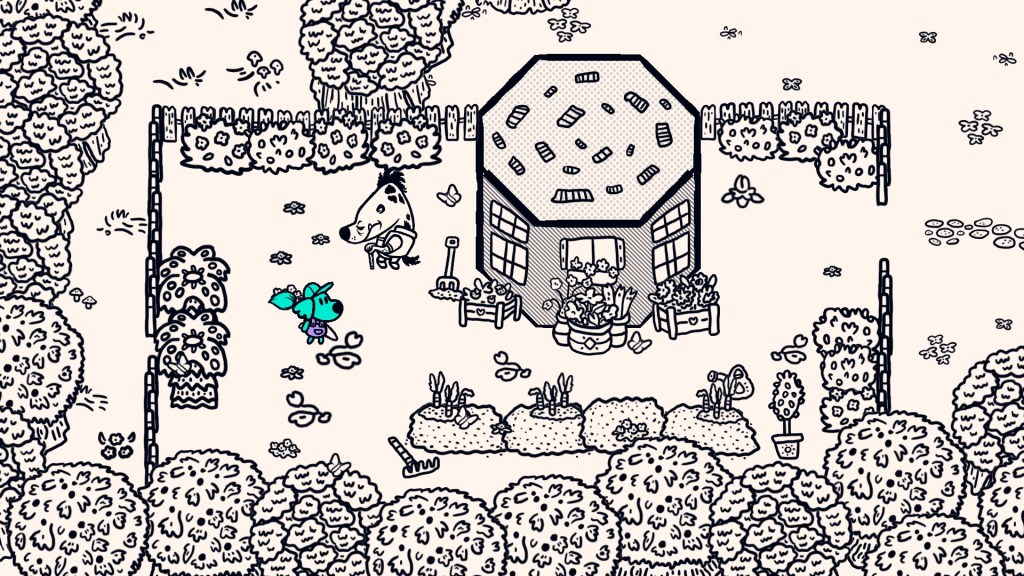
Now here’s a game that I could really see myself spending a lot of time with. Chicory is a delightful little game about being a cute little dog person who has the ability to paint in the world around them. There’s context as to why they’re able to perform these artistic feats of magic that tie into the central plot of the game that (obviously) wasn’t fully explored in the demo, but it left me eager to see where the story goes.

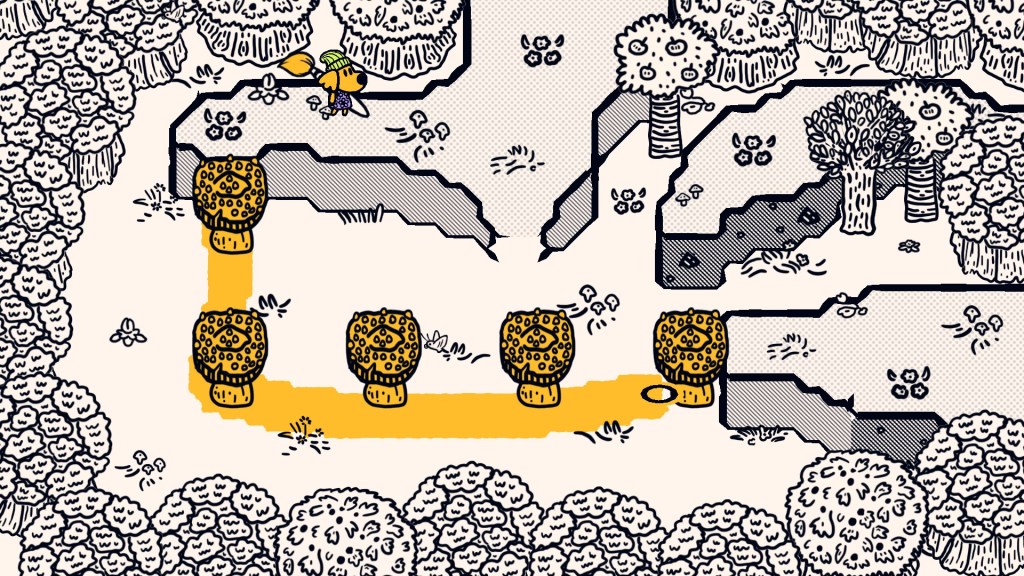
Your quest to find out what happened to all the color in the world isn’t just a fun story hook, but it has mechanical repercussions as well. Your magic painting powers will allow you to navigate the environment, solve puzzles, help random citizens and oddly enough, fight enemies. I’m really curious to see how the mechanics evolve over time as you progress through the story.

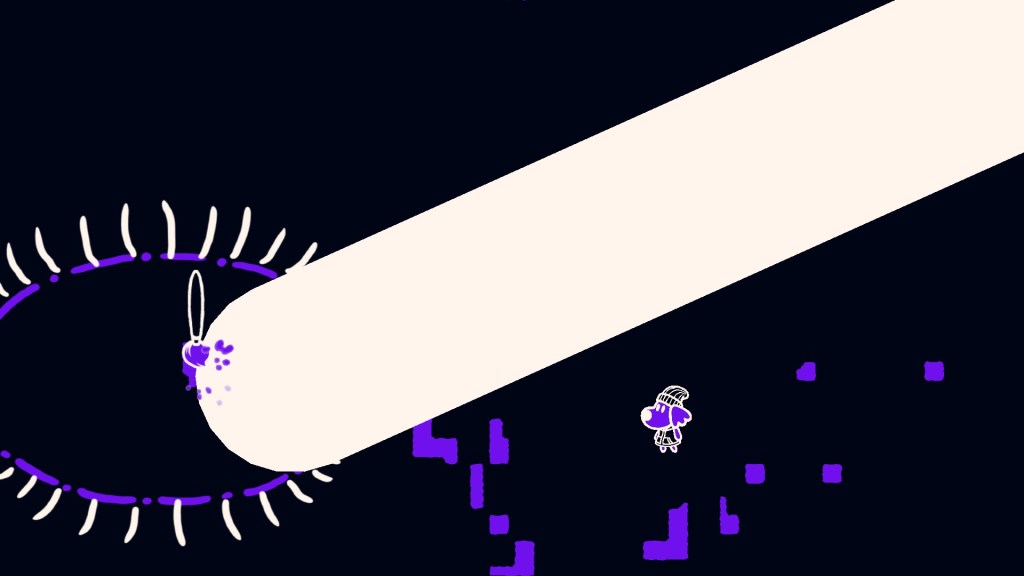
For as delightful and joyous as Chicory appears on the surface, the end of the demo really takes a turn that I didn’t expect and basically transforms it into something of a bullet-hell. The controls work without issue for most of the demo, requiring you to use the right stick to move your brush around and the right trigger to actually paint, but it gets a bit dicier when you have to manage your paintbrush and move around at the same time. I’m sure it’s one of those things you get better at as time goes on, but even with that slight hesitance, I really think Chicory could be something special.

RETRO MACHINA

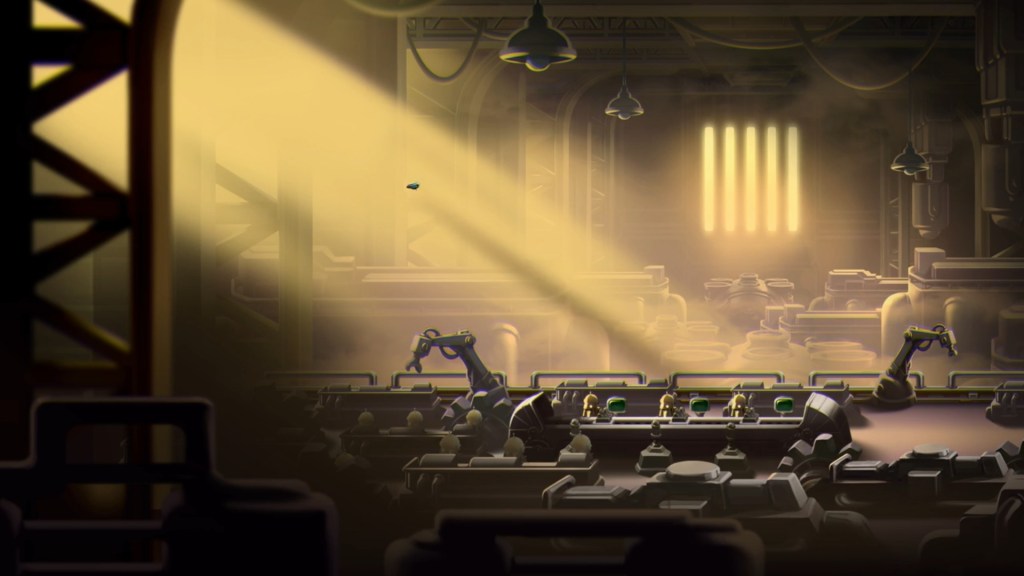
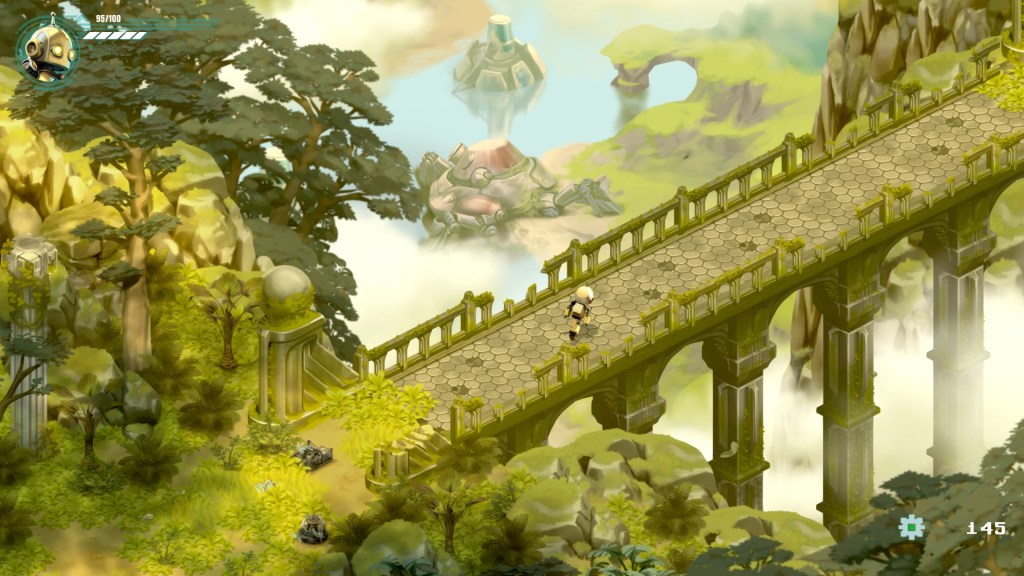
It feels mean to say that Retro Machina is squarely in the camp of “style over substance,” but I really felt that it was a game I’d rather look at than play myself. In Retro Machina, you play as a robot who was working at a nondescript factory alongside of their other identical robot buddies, who suddenly decides to not follow their orders because they saw a butterfly. I’m sure there’s more of a story there, but that’s all I gathered from the demo.

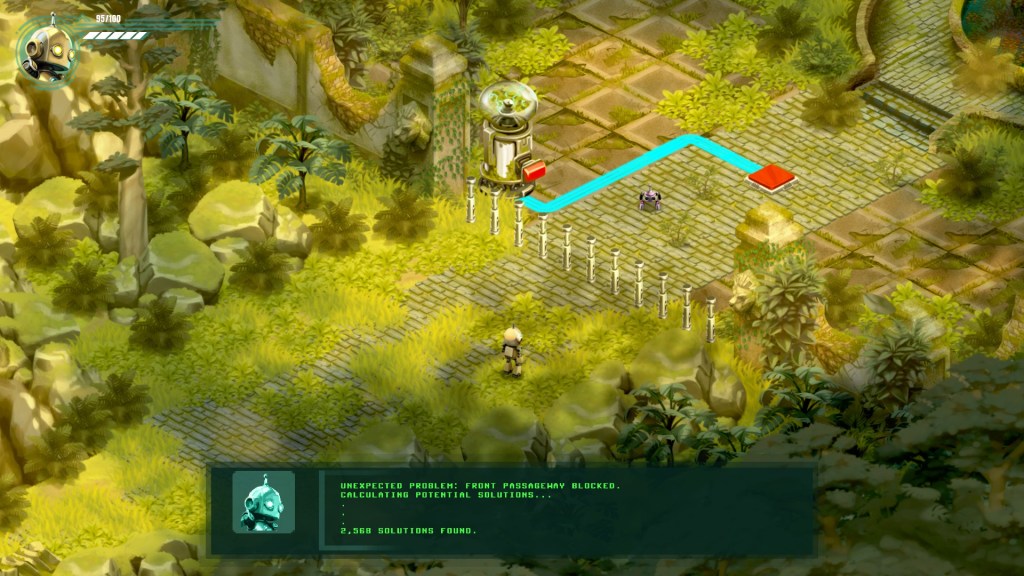
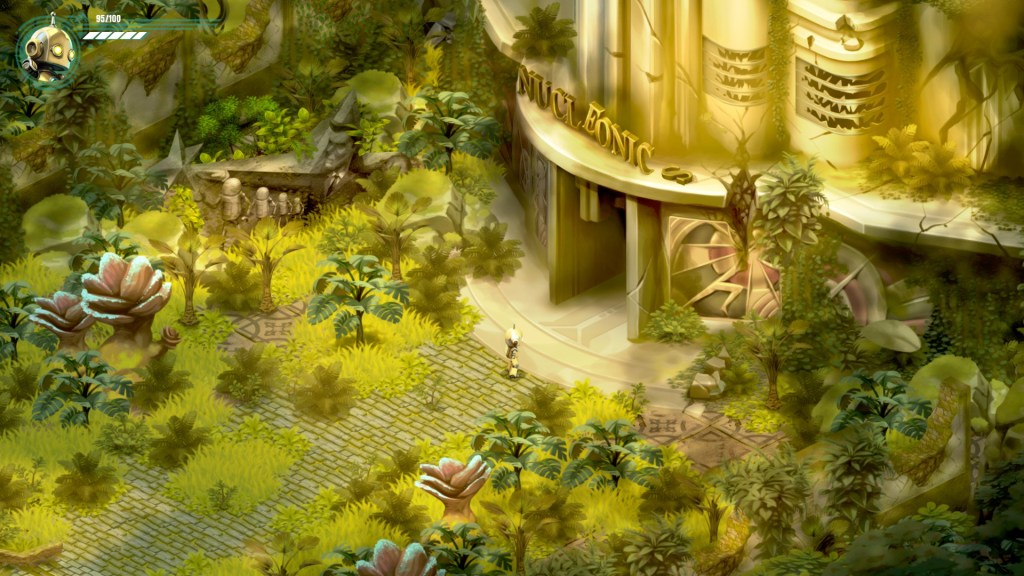
You escape the robot police and somehow get launched into the wilderness where you begin your search for a robot mechanic or upgrade station or something? Whatever the motivation, you end up in this different factory/office building where you have to solve puzzles and fight other robots to continue on. From a perspective that’s purely based on presentation, Retro Machina is great, but when you find yourself engaging in combat is where the experience kind of fell apart for me.

It isn’t that the combat is aggressively bad or anything, it just lacks any feeling of momentum or impact. The biggest thing that bugged me about the combat was the way that enemies can destroy you incredibly quickly, but not because they’re super powerful or anything, but because the game isn’t great about letting you know you’re taking damage. That led to a lot of moments where I’d exit a combat encounter with a fraction of the starting HP despite only having to fight like one robot. What I’m saying is that there isn’t great feedback for when you’re taking damage.

Aside from the combat issues however, the puzzle-solving aspect of Retro Machina seems promising. Despite needing or wanting an upgrade, your robot is extremely capable, boasting the ability to possess other robots to make them flip switches or navigate through otherwise inaccessible areas for you. There wasn’t a ton of innovative stuff I saw in the demo in regards to the puzzle mechanics, but it seems like that’s all primed to get insanely complex later in the full game. Overall the game seems neat, but I don’t think it’s something that I’d end up putting much of any time into.

SHERWOOD EXTREME

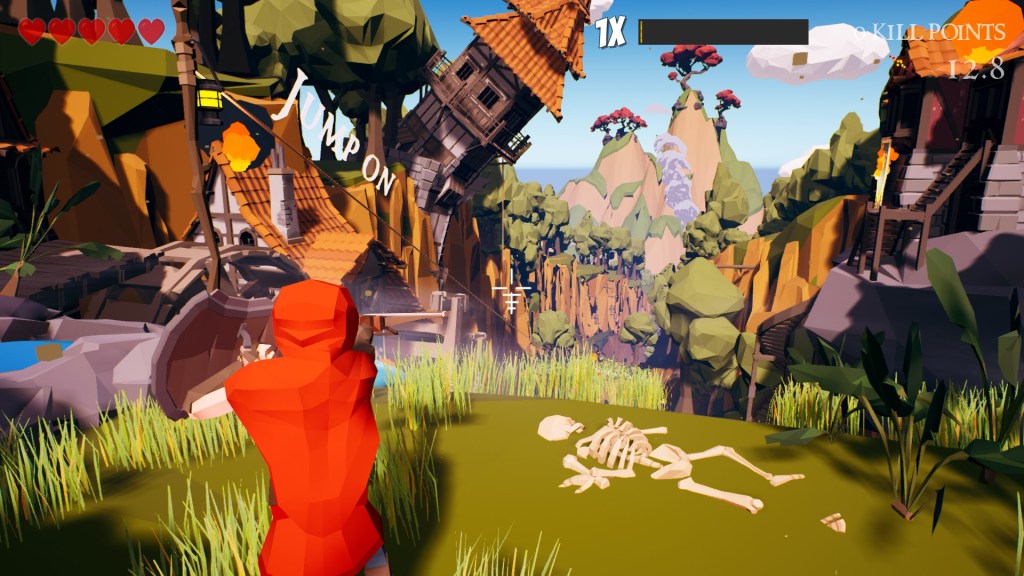
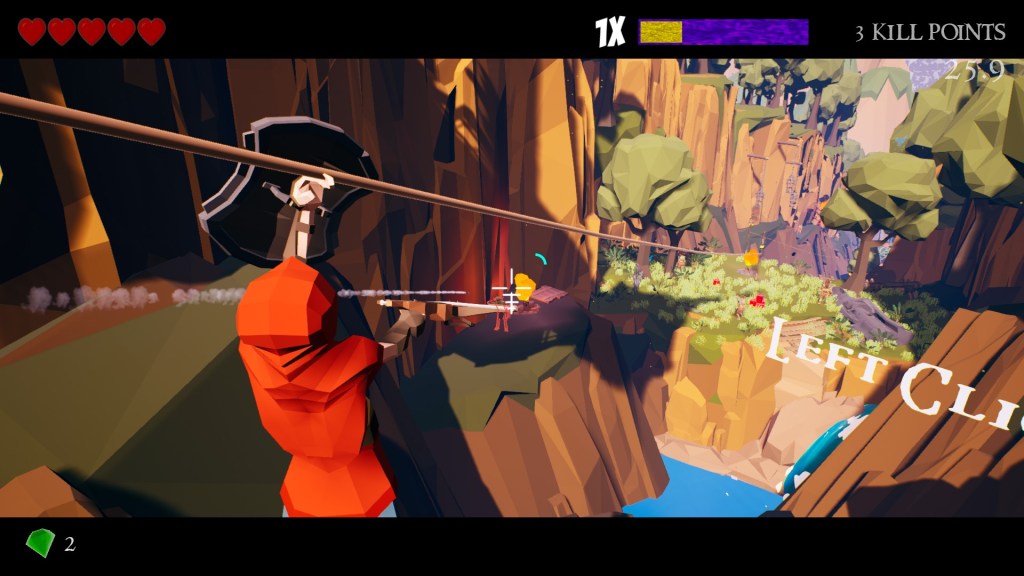
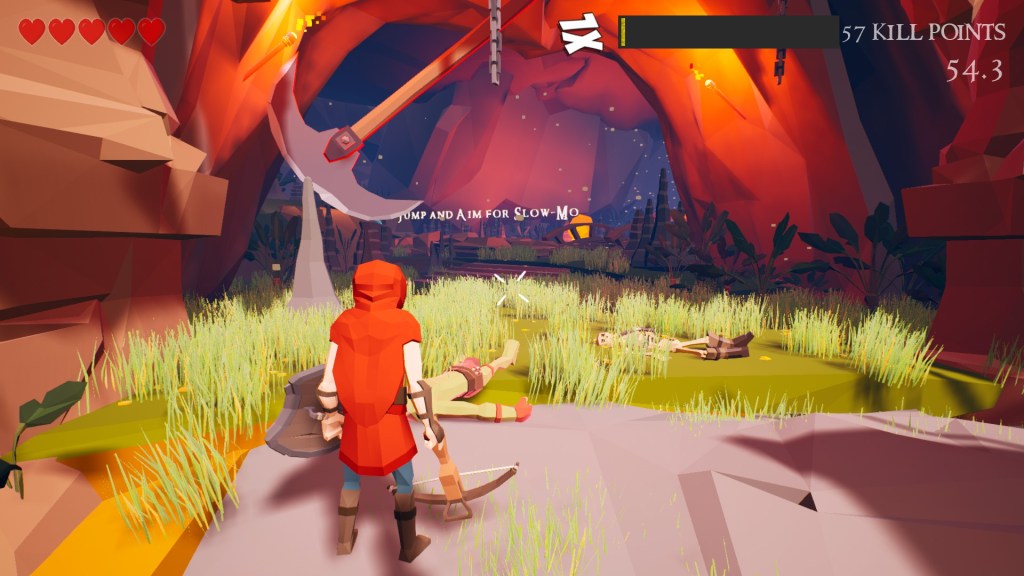
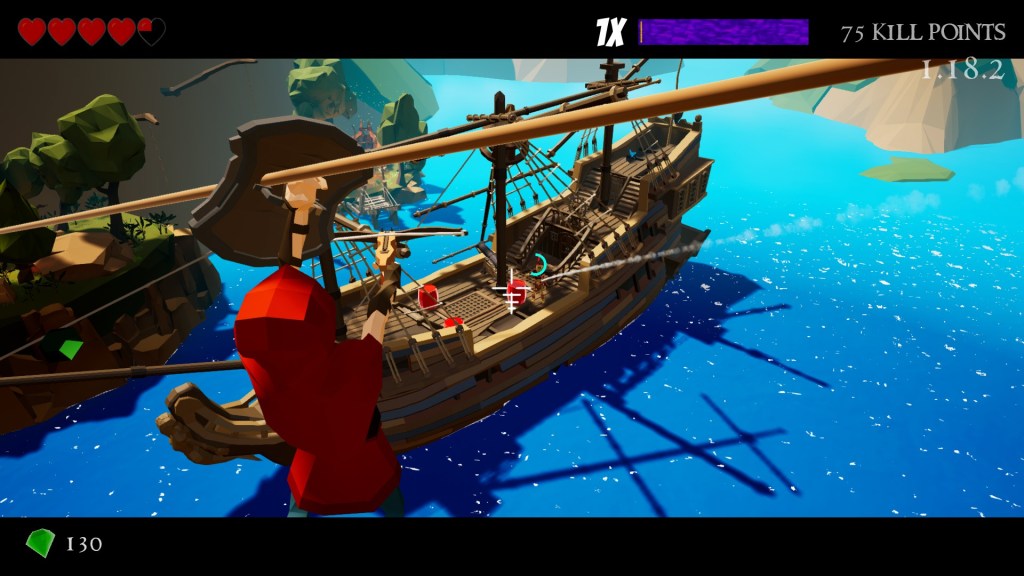
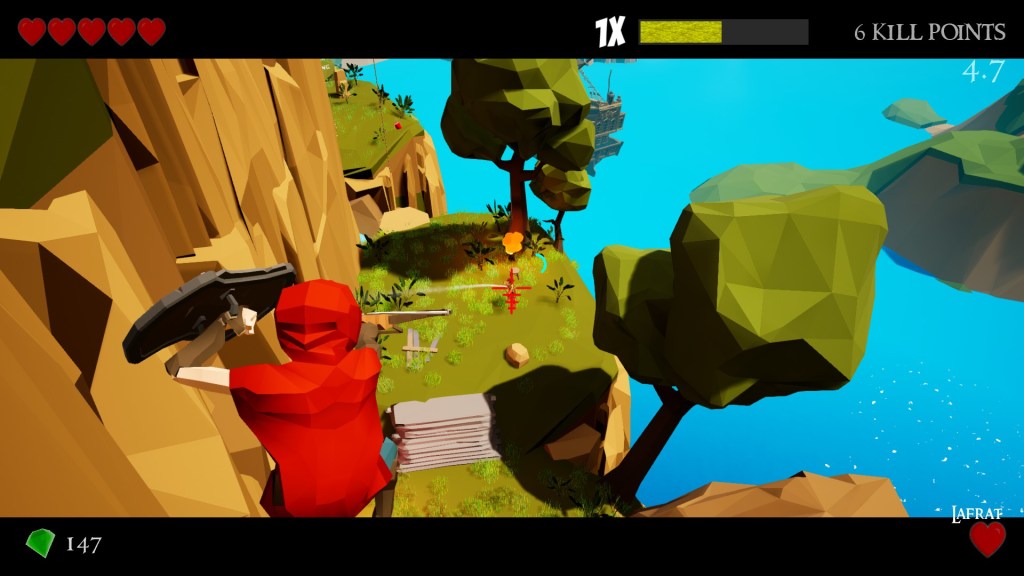
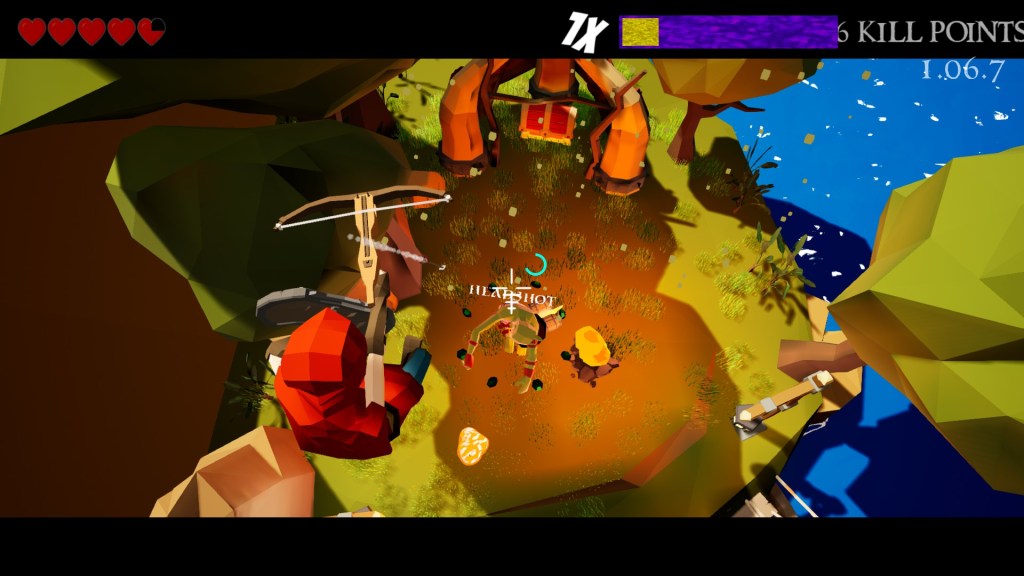
While it isn’t necessarily a bad thing, Sherwood Extreme sure seems like it’s trying to do the whole Bulletstorm thing in a low-polygon art style, replacing space marines with a Robin Hood-looking character who’s killing orcs. Sherwood Extreme is a level-based arcade-styled action game, where you’re trying to rack up the highest score you can by chaining together kills and acrobatics throughout a level in order to keep your combo meter up.

You run around with a crossbow and shield and shoot orcs while flipping in the air in slow motion like you’re in some medieval version of The Matrix. The shooting and score chasing aspect of Sherwood Extreme seem pretty solid, I just hope you unlock some more abilities or something because after only two or three levels, I was looking for some more variation. However, the game moves a lot slower than I initially thought it would because there isn’t a good feeling of momentum to running around or flipping, and it all just feels a bit janky. But hey, it’s a demo of an unreleased project.

Obviously I can’t speak to how Sherwood Extreme is as you get further into it, but there’s something there that’s worth paying attention to, I just wish it controlled and flowed a little bit better than it currently does. Hopefully that gets ironed out as the game develops, but even if it does, it’s one of those weird circumstances where I don’t dislike the game, but something just isn’t clicking with me. I wanted to enjoy Sherwood Extreme more than I actually did, but I don’t know if that’ll happen.

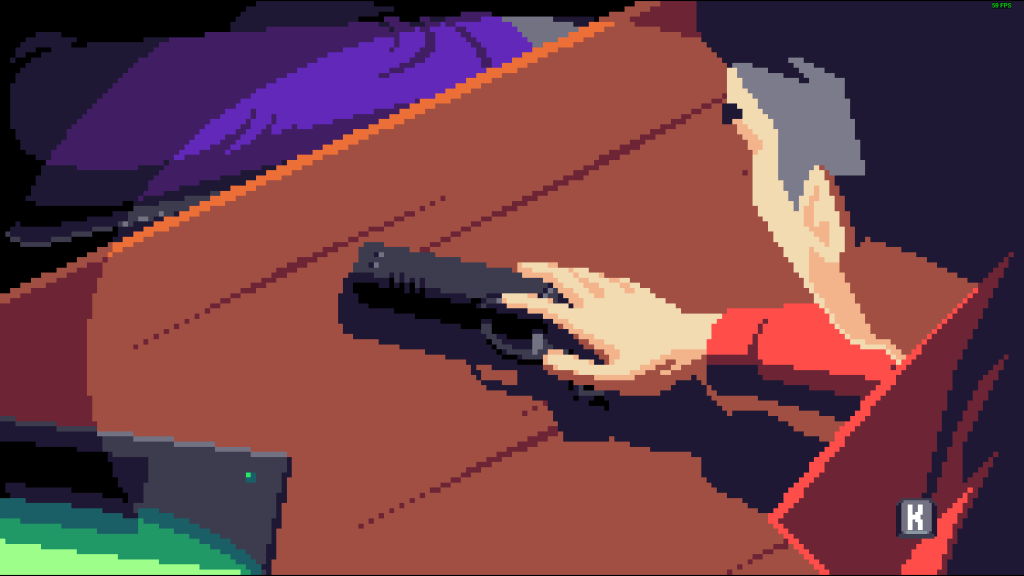
NARITA BOY

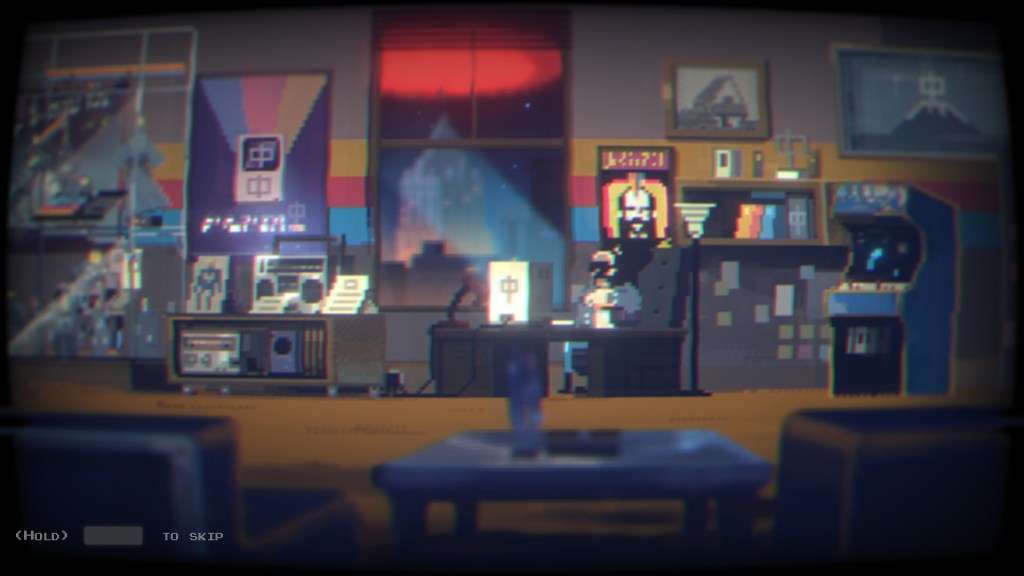
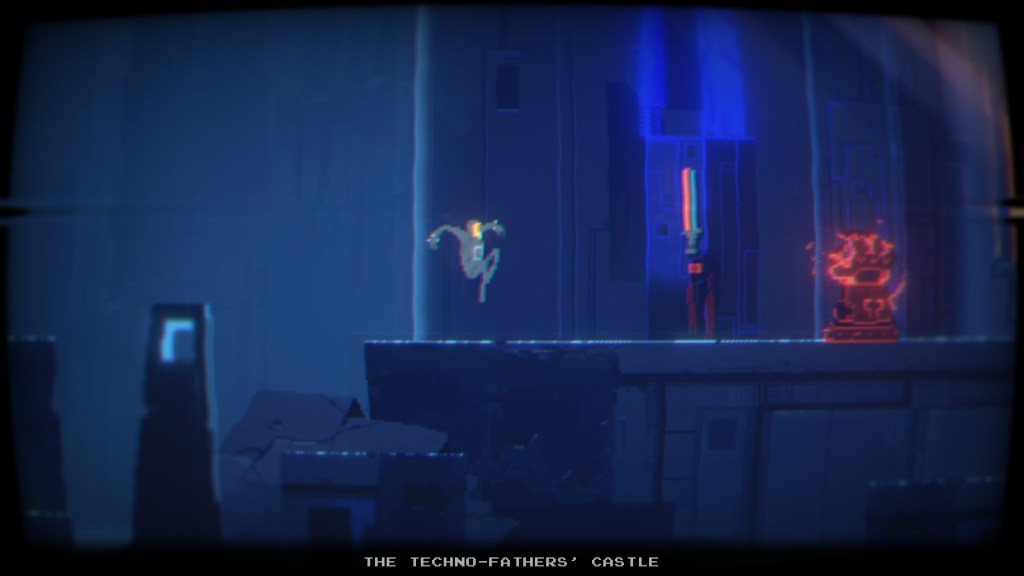
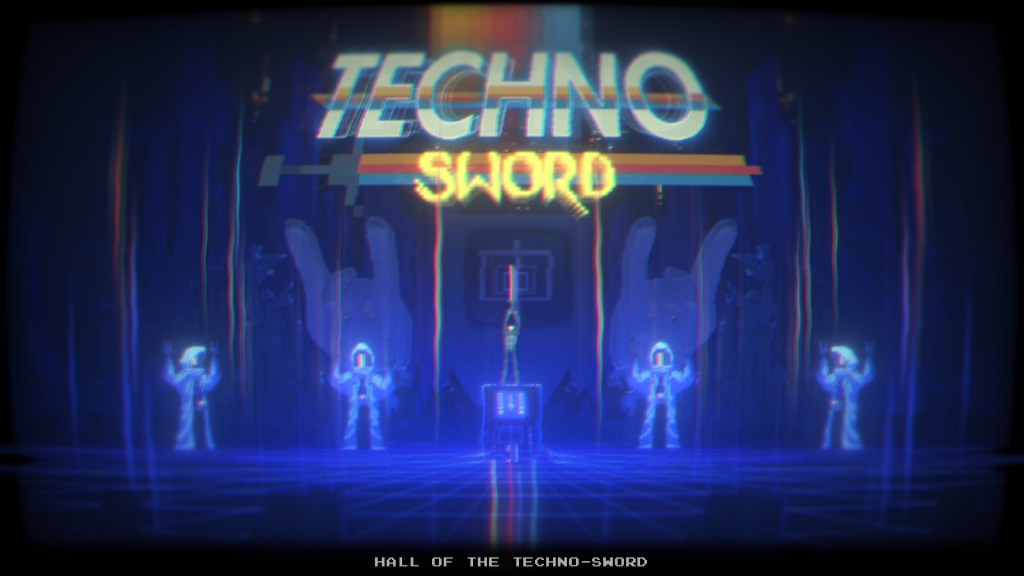
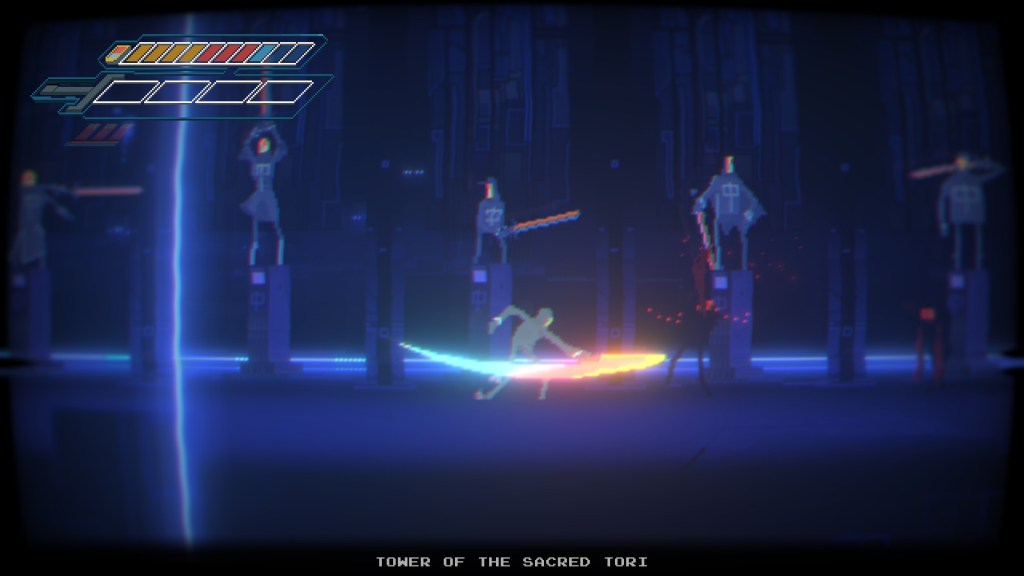
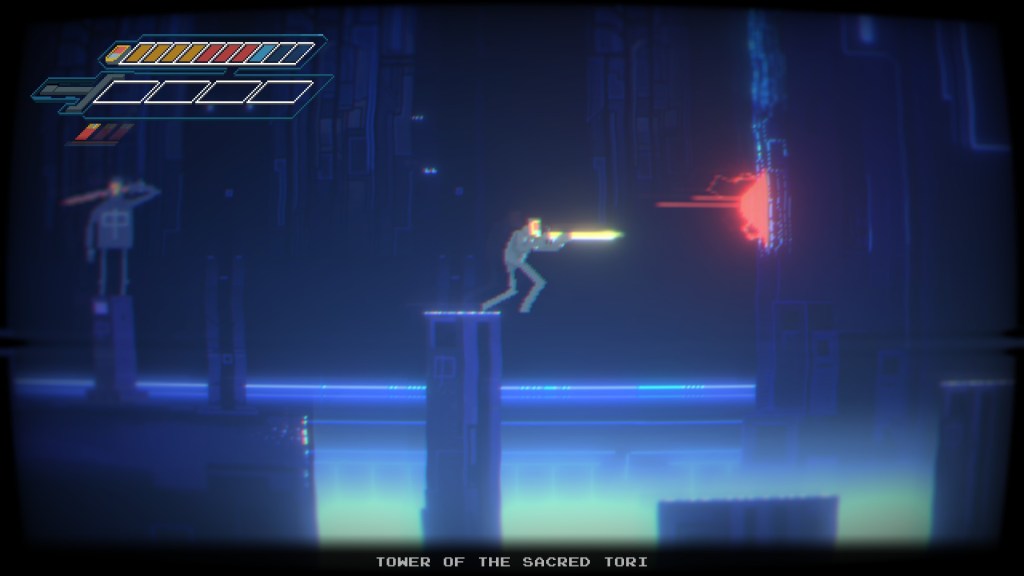
Speaking of games I wanted to like more than I actually did, let’s talk about Narita Boy. Stop me if you’ve heard this one before, but Narita Boy is a 2D pixelated action-platformer with Metroidvania elements. Right off the bat I will say that Narita Boy presents itself very well, both in terms of the art style and the soundtrack. And when you eventually do get to fight things, that feels pretty dang good too. You get this very cool sword that feels great to swing around and slash up monsters with, but you can also turn it around and use it as a shotgun which is objectively rad as hell.

While I think Narita Boy looks cool and has some neat combat mechanics, I don’t think this demo does the full product any justice. Like a lot of these demos, it starts with a world-setting cut-scene, but then it dumps you into a portion of the game that would probably be way more tolerable if it wasn’t the first and longest thing you do in the demo. You have to suffer through endless dialogues about the world and your place in it before you actually get to do anything cool. Even when your task is to go find the cool sword you have to trudge through more dialogue and an obscene amount of screens where you literally walk in a direction until you can press a button to open a door, just to do that again in a different room.

I’m sure the story is interesting, but they front load so much of it in the form of people just talking at you in dialogue boxes that I began to lose interest almost immediately. And it isn’t like a few sentences, these are full on paragraphs that talk about how cool it’s gonna be when you get that sword but first they have to describe the sword’s power in excruciating detail. Needless to say, I buttoned through a lot of dialogue because I just wanted to play the damn game. I think Narita Boy is really cool, but if that demo is indicative of what playing the full product is like, I don’t know that I can handle the pace of it.

STEEL ASSAULT

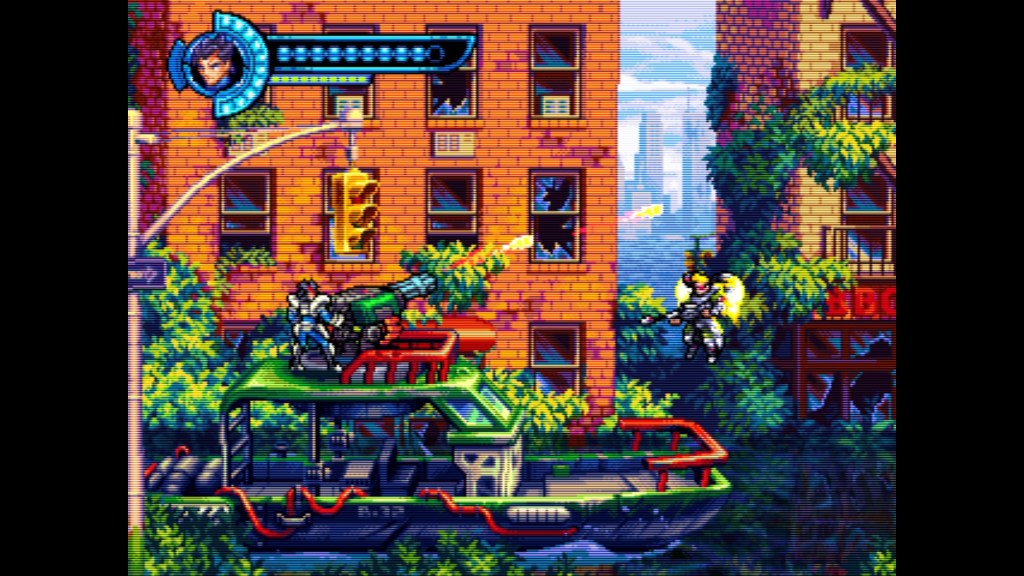
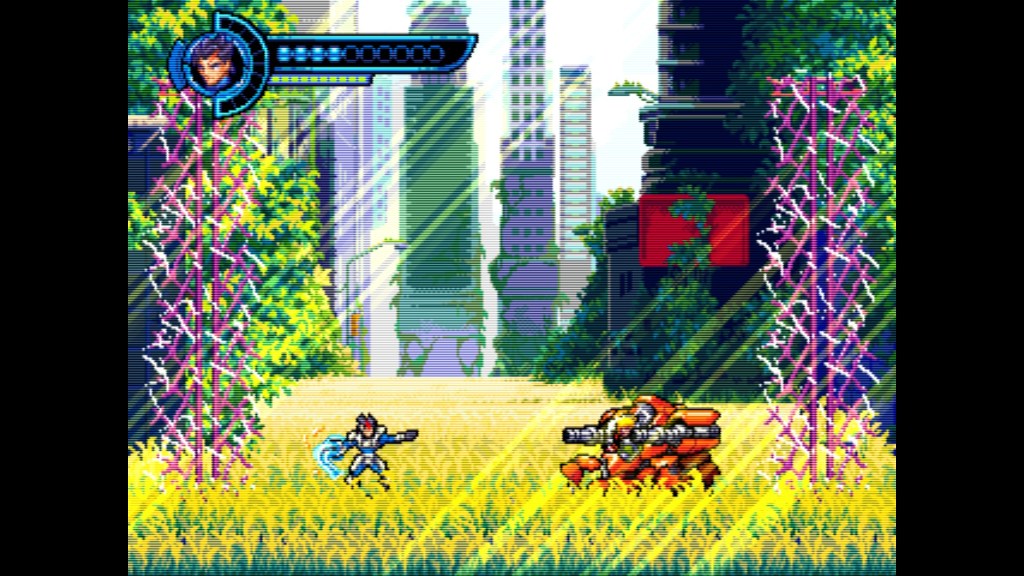
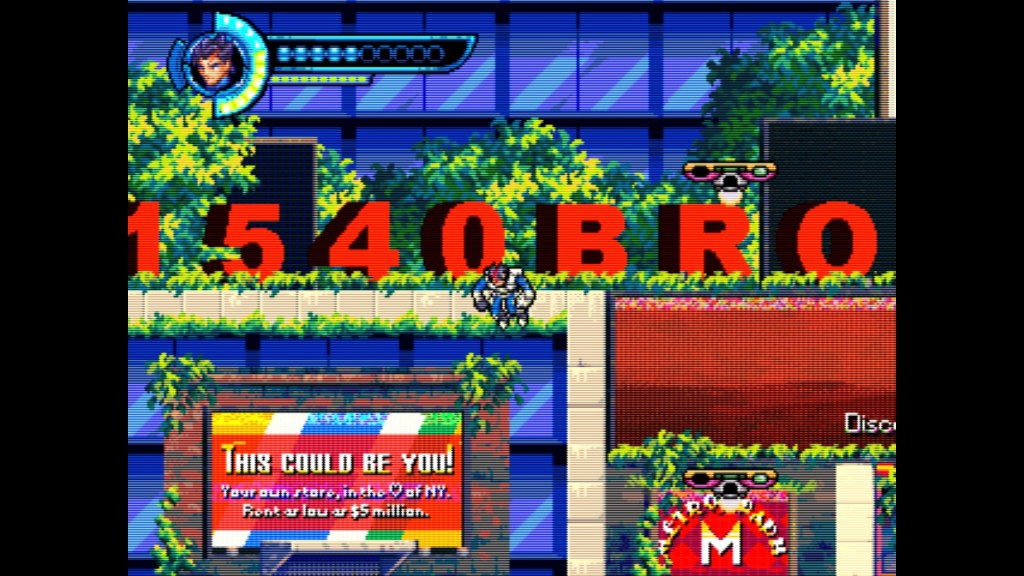
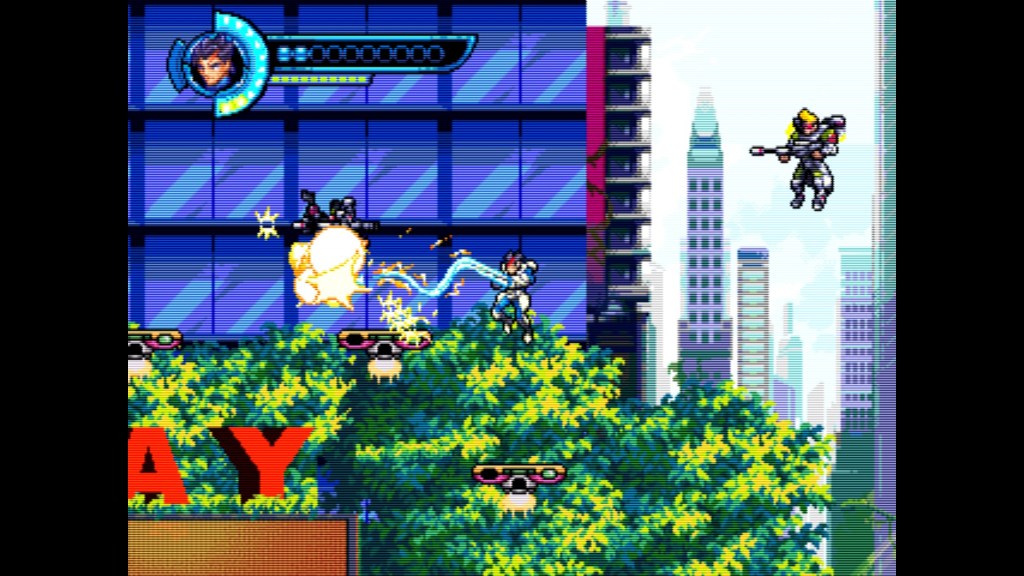
Yes, okay, Steel Assault is a pixelated 2D action game. I feel like I’ve written that so much today, but that’s not the point. Steel Assault reminds me of Bionic Commando, Contra and even the Metal Slug games a bit. It’s very much a “shoot everything” kind of game, but it has this interesting tether mechanic that I unfortunately was never able to wrap my head around, but was still very cool when I did manage to use it correctly.

The basic rundown is that you have a cool laser whip that you can kill bad guys with as well as the ability to fire a tether in two directions at once to make a zip-line or tight rope that you can use to traverse distant platforms. For instance, if I’m on a platform and fire the tether up, one end connects to my current platform and the other tethers to the one above me. From there I can climb up the rope and also whip guys while hanging from the rope which looks very cool.

Yet despite how cool it looks, I found Steel Assault to be difficult in kind of bullshit ways. First and foremost, the enemies constantly spawn, leaving you no respite whatsoever. Now I’m sure that’s not an issue a lot of folks out there, but when I was trying to get a handle on what was going on it became incredibly frustrating. But that alone wouldn’t sour me on a nostalgia-driven action game, however what did get me was the readability of everything that was going on. I rarely have this issue in games, but I had a really hard time clocking enemy projectiles. The first sequence of the demo is you fighting a flying robot while you’re on a boat that’s speeding through the canals of a city. That robot fires bullets at you that basically vanish into the colors of the boat as well as the background, which might be more of an issue with the heavy retro-styled filter they put over the screen. I died a lot because of that.

Steel Assault was the only demo that I wasn’t able to get through just because of how difficult of a time I had with it. I don’t think it’s a bad game, I just couldn’t get into a groove with it. You’re mileage may vary, but if you think you’re a bad enough dude to play Steel Assault, you should go for it.


And that’s really it for now. I have a couple of other demos I want to try out before the Steam Game Festival wraps up on the 9th, so maybe I’ll gin up a “part 2” before that happens. I haven’t even scratched the surface of what demos are currently available, so I recommend you check out the offerings for yourself because there’s definitely stuff that’s exceptional that I didn’t or probably won’t end up covering here.

Some Notes About Baldur’s Gate III

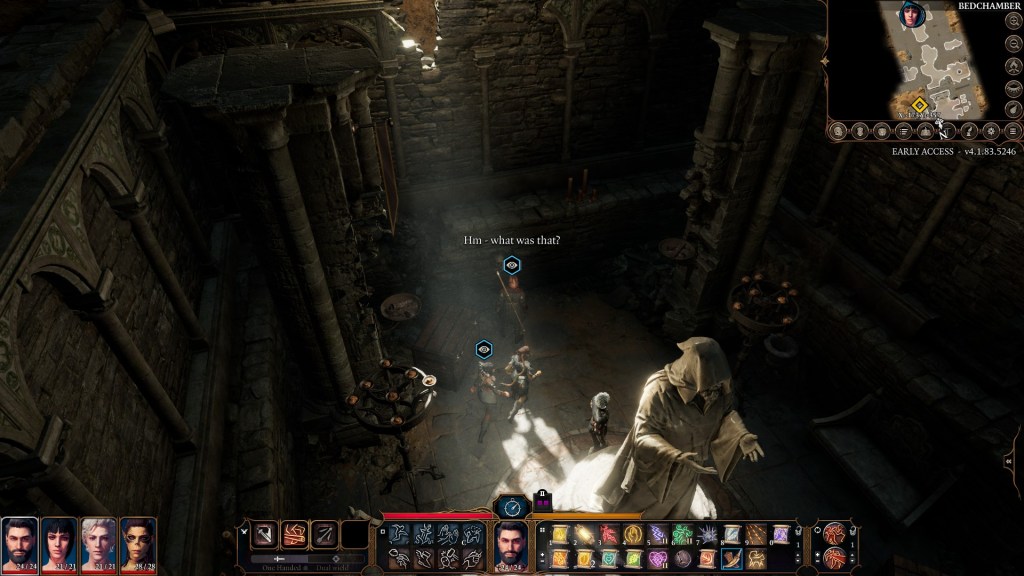
Before I dive into the bulk of this article, it should be mentioned that no video game could ever truly capture the Dungeons & Dragons experience solely because there are static limitations to any video game. You can account for a lot of things as a game designer and try to cater to dozens of styles of play, but no game could adapt to the wild and imaginative things that players regularly ask of their DM’s quite like a living, breathing person present. Yet in spite of all of that Baldur’s Gate III already shows incredible promise when it comes to representing D&D and is a game I’m genuinely enjoying.

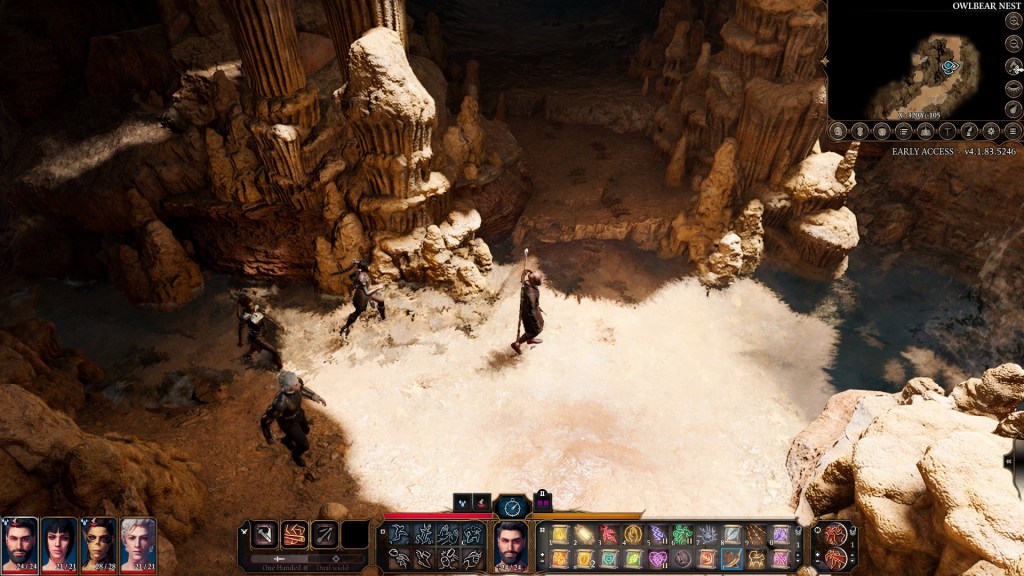
Don’t get me wrong, Baldur’s Gate III is a technical mess at the moment but I know what I signed up for when I decided to buy a game that’s in early access. I’m not going to harp on the performance of the game too much, but if you’re curious about what I mean by a “technical mess,” I can summarize that really quickly.

In its current, fresh into early access condition, Baldur’s Gate III runs inconsistently, usually fluctuating anywhere between running at 20 fps to 144 fps on my machine. Lip syncing for the new “cinematic” conversations is basically non-existent, and graphical glitches from T-posing, duplicating NPC’s you’re actively talking to, and ragdolls going wild are common occurrences. That kind of stuff is all bound to be smoothed over during the course of their early access period, so I’m not worried about that.

With that said, there are some things I would very much like to see fixed, changed and improved that pertain more to how the Dungeons & Dragons rules are translated into a video game. While this article isn’t a comprehensive list by any means, it does represent the things that I have personally noticed. I really love D&D, but I wouldn’t consider myself an expert in its mechanics or lore, so this is truly just representative of how I enjoy playing Dungeons & Dragons.


SHOW ME THE NUMBERS

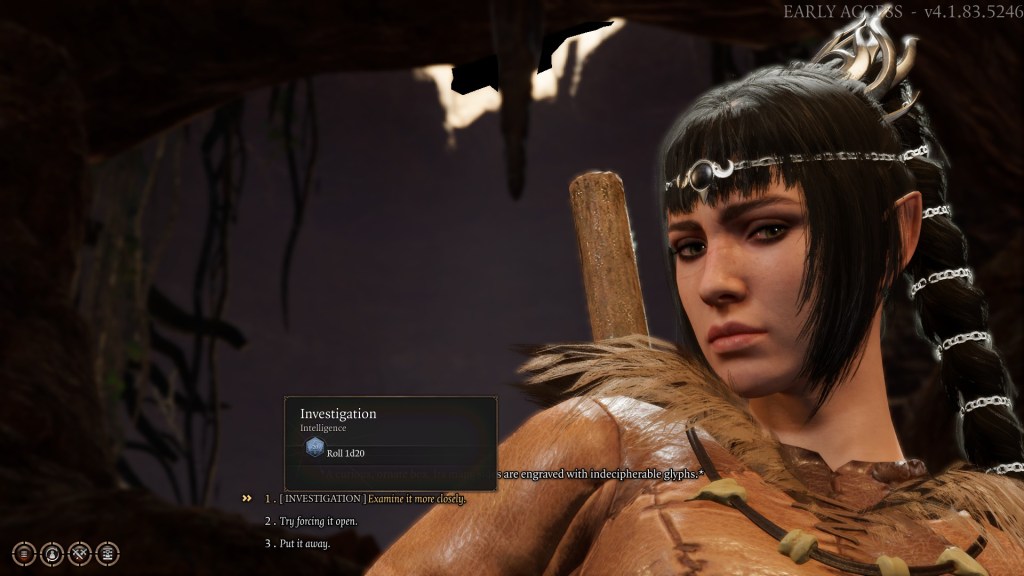
In D&D you have a core set of skills like strength or wisdom, that as you pour stat points into them you’re granted a higher modifier. A modifier is the number you add to your roll or in some cases subtract from it, representing…well your skill at a particular ability. For instance, a rogue is going to be pretty good at sneaking around, picking pockets and doing cool flips, so their dexterity score and thus, modifier are going to be higher. Without just explaining the rules of D&D anymore than I already have, the rogue would have a couple of numbers they can add to a D20 roll in order to clear the difficulty class (DC) that represents how hard what they’re attempting is.

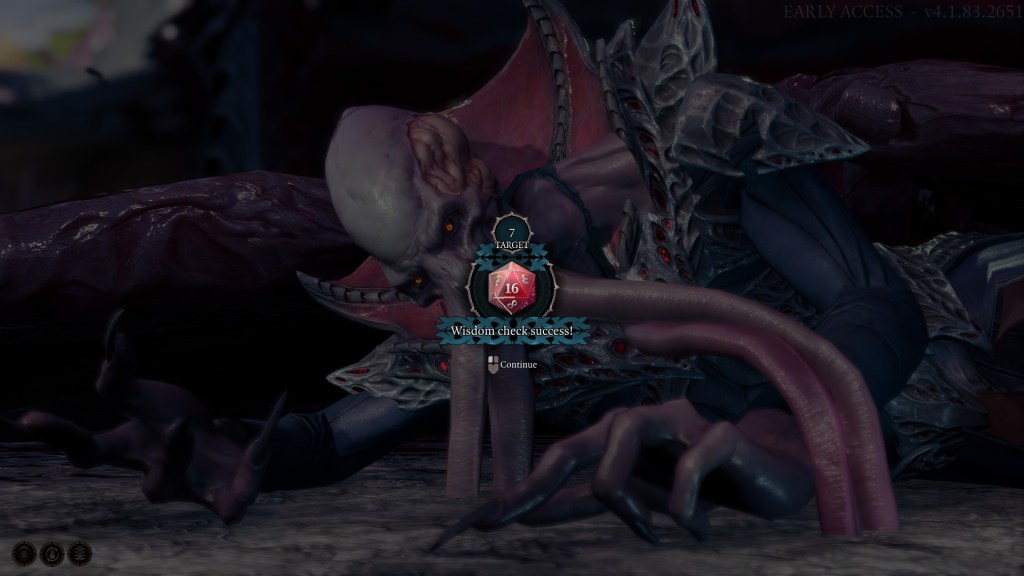
A DC of 7?

Baldur’s Gate III does this as well, but oddly enough reverses it. Instead of you adding numbers to a roll to clear a DC, all of your stats and bonuses subtract from the DC. It may not sound like a big deal, but after years of playing D&D it’s an incredibly jarring change. I suspect that the reason for this change is to make it simpler for new players with little to no experience with D&D to comprehend what’s going on. It’s obfuscating the math as not to confuse people and just have them focus on the dice roll itself, but that should definitely be something I can toggle on and off. As a player and a DM, I want to see those numbers.

Also, it just feels better to roll higher numbers than it is to roll low ones.

CHECKS, PLEASE

Considering that there isn’t really a DM in Baldur’s Gate III outside of a narrator who pops in regularly to make you feel like everything you’re doing is wrong, there isn’t much of a way to just perform random skill checks as far as I can tell. In D&D, if I find myself in an ancient library as a barbarian, I’m going to just sit back and contemplate how flammable these “books” as you call them, actually are. Yet if I’m a big brainy wizard, I’m going to be rolling arcana and history checks like they’re going out of style.

Half of the fun of playing D&D is being able to uncover clues or lore about the world through performing well timed checks. Being able to do a perception check when I enter a room or run a nature check on a potentially poisonous berry are just a sliver of ways that players get to feel powerful and useful as their characters.

There isn’t really any of that going on in Baldur’s Gate III however. The way that certain skill checks are handled is kind of bizarre and a little too passive for my liking. The only active checks I can perform are in dialogue situations, where I pick the line of dialogue that allows me to roll an insight or deception check. I understand this limitation in conversations because the alternative would be an colossal feat of programming. Allowing me to just roll whatever check I want in any and all conversations seems akin to asking Larian Studios to work on Baldur’s Gate III till the end of time.

But outside of conversations and combat, it’s just weird to me how pushed into the background a lot of these checks are. Almost every skill check that occurs while exploring is transformed into a passive check. I assume the game is rolling a dice in the background, but it’s still incredibly weird that I have no say over what check I’m rolling and when. I wouldn’t mind if there was some sort of “active DM” situation that would prompt me to roll a stealth check when I wander into a bad situation unwittingly. And if I do succeed on a passive perception check it would be nice to know what it is I noticed, because virtual Ari might see it, but flesh Ari does not.

While I’m bellyaching about the checks in Baldur’s Gate III, I wouldn’t mind if the game slowed itself down entirely to act like a DM. If there’s a trap I’ve wandered into, stop the game and bring up a menu that says, “hey, you fucked up and didn’t check for traps cause we don’t let you just do that, and now you’ve gotta roll dexterity saving throws for these party members. Good luck!” That’s the kind of D&D stuff I’m looking for from Baldur’s Gate III.

I think I just want Baldur’s Gate III to capture the feeling of sitting down to play D&D more than I want it to capture the world and lore. Sure those things are important to me, but when I ask for more transparency in dice rolls and checks, it’s because I’m trying to get that rush of playing D&D out of Baldur’s Gate III first and foremost.

PARTY PLAY

This one is genuinely confusing to me, because it’s such an important part of the communal experience of D&D that its absence from the game is beyond odd. In D&D, your character cannot and should not be a skeleton key that can just do everything. Your characters are supposed to be flawed and fallible, which is why adventures travel in parties. The wizard may be a really smart magic-man, but he needs the fighter and her strength to defend him cause he’ll just get squished like a bug.

In its very early access state, Baldur’s Gate III seems to miss that mark by a wide margin. At the moment, my party has a cleric, fighter, rogue and a warlock, all with different skills and proficiencies that should work fairly well together. In combat, different skills and abilities work wonderfully together. Having the rogue shoot an oil barrel causing its contents to create a puddle under my enemies, followed by my warlock igniting said oil was a satisfying example of synergy, but outside of combat that isn’t really the case.

What isn’t in Baldur’s Gate III is an easy way to compare the skills and proficiencies of your characters without having to dig through a menu. So when I’m trying to break down a door or disarm a trap, I have to make an assumption on the fly of who to send to tackle said obstacle. Giving me a prompt or tool tip that just says like, “lock picking check” and then an ordered list of who in my party has the highest relevant skill for it would be nice.

But the most infuriating example of this is in situations where you have to talk to people. Baldur’s Gate III doesn’t do a great job of incorporating the rest of your party into your conversations. Sure, their lifeless husks will loom in the background unblinking while a man tells you the sad story about his brother or whatever, but they won’t help you in any way. For instance, if my character had a super low charisma score, I’d have to live with that every single time I entered into a conversation with someone. I wouldn’t be able to let the smooth talking bard (who isn’t in the game yet) do their thing and schmooze people over, no, instead Gronk the dwarf with a brain injury is going to ruminate on the income disparities that run rampant throughout the city of Waterdeep. That’ll fucking go well.

All I’m saying is, the adventuring party relies on one another for their talents and abilities, and I feel like Baldur’s Gate III doesn’t deliver on that in certain aspects of their game to varying degrees.

WAIT, I WANT TO GO BACK

There are times in D&D where a player might have a plan in their mind that they try to enact, only to find out that mechanically it wouldn’t be possible. That’s the good thing about having a cool DM, they’ll let you know that your harebrained scheme isn’t going to work or they might even work with you to make that nonsense happen. What’s even cooler is when a DM let’s you rewrite your turn upon finding out that said nonsense isn’t going to work.

Baldur’s Gate III is not a cool DM and is a bit of an asshole when it comes to you being able to fix your mistakes. Now I’m not asking for Baldur’s Gate III to allow me to just try out spells on enemies till I get the result I like or anything, but I don’t think it would be a big deal if it let me undo my movement if I haven’t taken an action yet. With the camera and path-finding in Baldur’s Gate III being what it is, which is to say it’s bad, being able to undo your movement in your turn would be extremely helpful.

Too often I’ll find that I’ve wasted my movement, taken an opportunity attack, and ended up in prime position to be blasted by 3 wizards and an archer. All of this could be fixed with a simple “undo” button. To be entirely fair though, that button may exist somewhere, but lord knows I haven’t found it yet.

STOP, NO, WAIT, GO THERE

I never thought an isometrically oriented game could have so many camera and movement control issues, but here we are. It’s borderline maddening how many times I’ll try clicking on something that I can clearly see, only for my character to interpret “go there” as, “climb that mountain behind you.”

Part of this frustration has to do with the camera, which might function exactly like it did in Larian’s previous titles, but I couldn’t say for sure. But in Baldur’s Gate III, the camera does this cut away trick to reveal the area in front of and around you while dissolving any trees or natural coverings that would normally obscure you to account for whatever angle you’re viewing the action from. Think of how The Sims does it, where those things are still there, but you need to rotate the camera to see them again.

What Baldur’s Gate III does which has resulted in my great frustration, is allowing me to click on things that I can’t see. There was an instance where there was a natural stone archway that formed out of the side of mountain that had a road running underneath it. I made the mistake of stopping too close to the archway I suppose, which resulted in me trying to click further up the road to progress forward, but the cursor actually clicked the top of the archway that was dissolved away by the camera. I couldn’t see the thing I just clicked on, but my party tried to climb that archway with gusto.

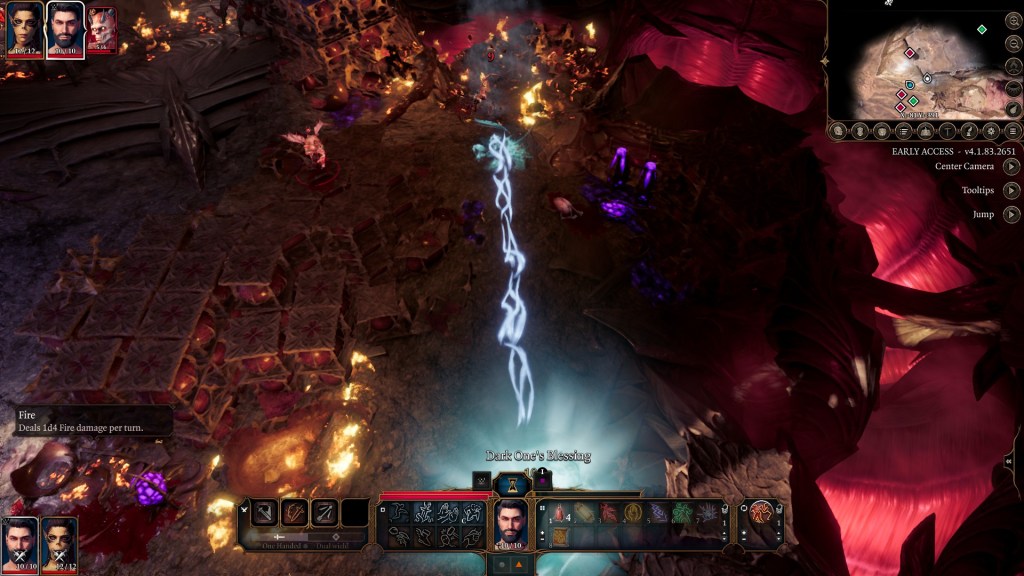
Luckily for me though, there wasn’t an actively burning fire on the way up the mountain or else my party would have just charged right in there without any sort of self-preservation in mind. For instance, during the tutorial you find yourself in an area where fire is happening all around you and you need to kind of just walk past it. There’s a pretty large path to follow, but your characters only know of the most efficient route to get to where you clicked, which is barreling straight through regardless of what’s in their way.

The amount of accidental fire damage I’ve take in Baldur’s Gate III already is alarming, and I really hope the path-finding gets better cause I’ve already wiped my entire party because instead of running around the combat encounter, they walked right into and stopped in a puddle of grease putting them in prime roasting position. It was a nice present for my enemies I suppose.

WHERE IS IT?

Look, I don’t have a ton of experience with games like Baldur’s Gate III so I’m sure that a cluttered inventory and unorganized hotbar are just expected at this point, but the way in which Baldur’s Gate III “organizes” your spells is truly abysmal. For those who don’t know, casting spells in D&D is a bit of a process that involves making sure you have the spell slots available, picking a level, and then casting the spell and rolling its damage. If that didn’t make any sense to you, that’s fine, just know that Baldur’s Gate III makes finding your spells a chore.

Instead of giving me a list of spells I could cast and then asking me what level spell slot I want to burn on it, they just give you an icon for each spell at each level. Wanna cast magic missile at level 2? Well you gotta scroll through the hotbar to find the magic missile icon with a little roman numeral 2 on it. It’s painfully unintuitive at the moment, but I suspect it’s a remnant of trying to shove the D&D mechanics into Divinity: Original Sin II‘s engine.

Your spells are also just kind shoved into the hotbar all willy-nilly, something I think you can reorganize, but it crams everything your character can do into it with no organization. For instance, I have a fighter in my party who can perform strikes that can cause the fear condition in an enemy. I recently leveled her up in a way where she’s received some spells she can use as well. Instead of separating those skills into folders that are marked as “fighter abilities” or “cantrips,” it’s just all kind tossed in there for you to click through along with the myriad of spell scrolls you pick up, making combat kind of a slog when it’s the turn of a magic user.

In the same vein, the initiative tracker is absolute garbage and needs to be changed entirely. There are times where it’s supposed to be my turn, but then someone else just gets to cut in front of me for some reason. I’ve even had instances where a character I’m controlling will get two turns in one round. It’s bizarre.

AM I THE ONLY ONE PLAYING BY THE RULES?

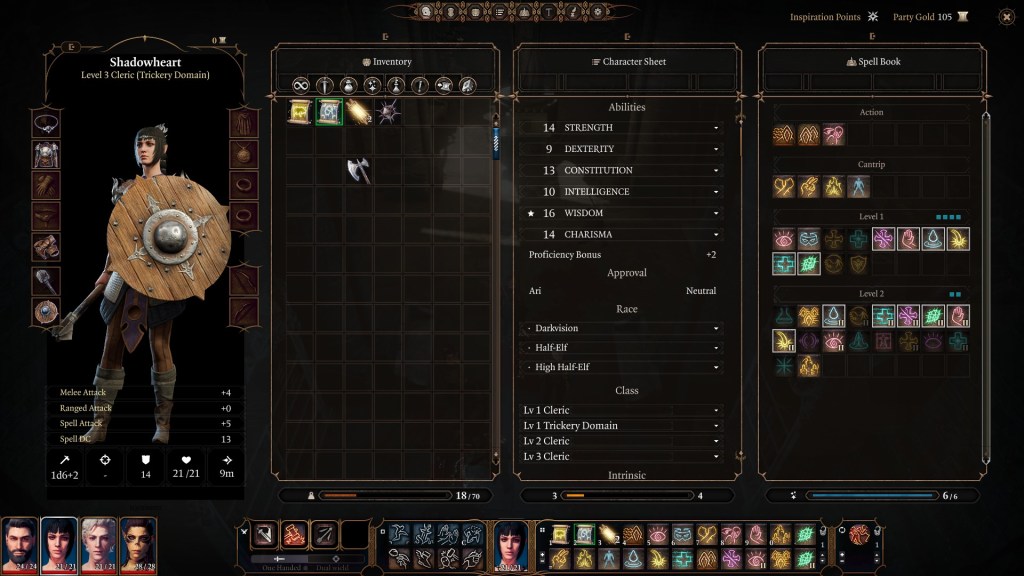
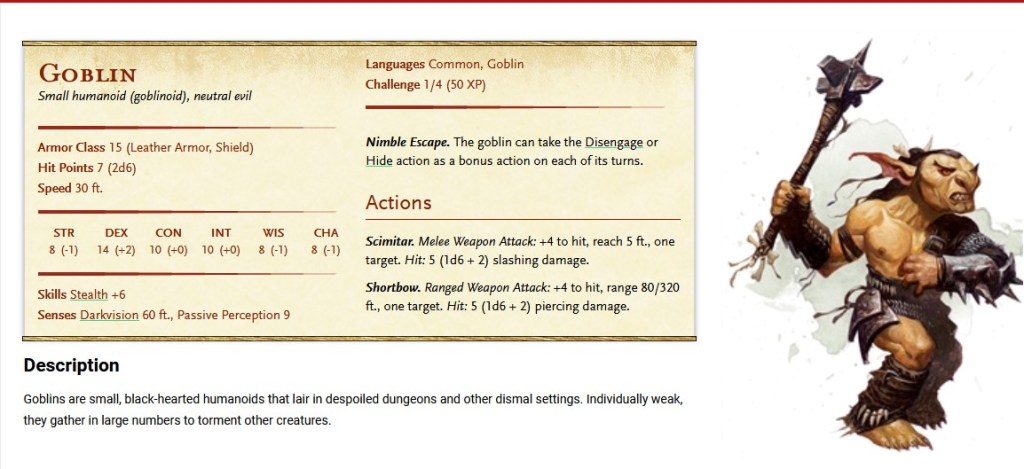
I don’t want to be that guy or anything, but it sure does feel a bit like the enemies in Baldur’s Gate III are just kind of freestyling it when it comes to their abilities. I noticed this very early on when there’s a goblin attack you find yourself in the middle of. I’ve played enough Dungeons & Dragons to know the goblin stats pretty damn well, so I took notice when the goblin took more than 7 HP worth of damage and still lived.

Goblin – D&D Beyond

It’s a really weird an unwelcome choice to tinker around with the stats of enemies when you’ve got literal books worth of reference material to pull from. I understand the need to alter things to make them work in a video game, but this one seemed completely unnecessary. Now I can’t use the Monster Manual as my own personal strategy guide.

I’VE PLAYED THIS GAME BEFORE

If there is one thing to me that is more damming about Baldur’s Gate III than anything else I’ve already mentioned, it’s that this game feels awfully similar to another Larian Studios game, Divinity: Original Sin II. I didn’t play very much Divinity: Original Sin II, but I sure as hell played enough to recognize it when juxtaposed with what’s supposed to be a game recreating the D&D mechanics. Aside from both games having a ton of visual similarity, there are two mechanics that I’ve personally seen that made me feel like I was playing a version of Divinity that was cosplaying as D&D.

First and foremost has to be the movement and map structure. I know it’s way more dynamic and interesting if you can have free access to just about anywhere on the map during a combat encounter, but for a game trying to present the rules of D&D accurately, there should be some sort of grid-based movement. In D&D, each grid block is supposed to represent 5 feet, which is important to know and be aware of considering how many things are tied to your precise position.

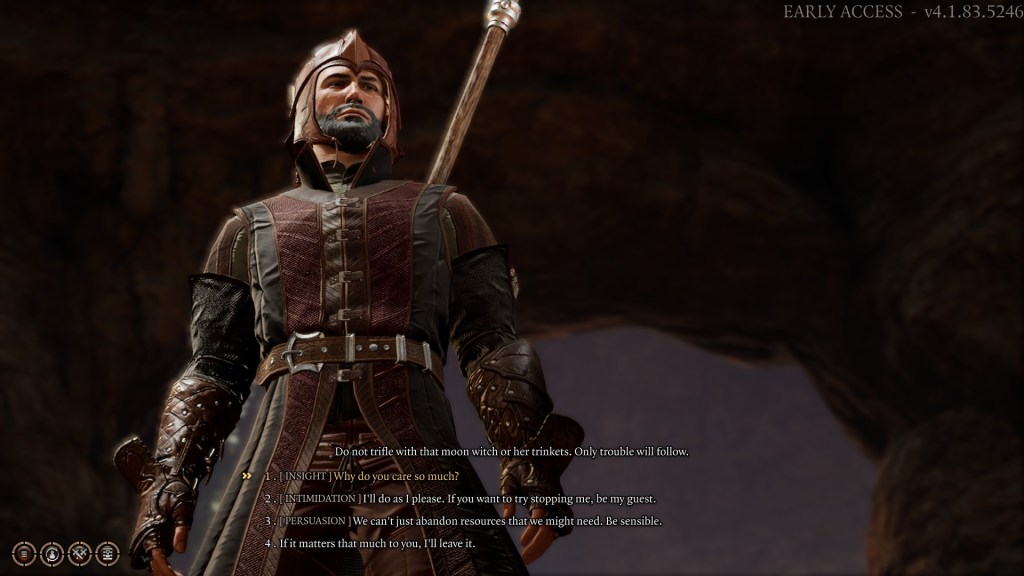
I hate this stupid hat, but it gives me +1 to dex saves

For example, I tried to set up this choke-point in a hallway that would effectively be a gauntlet of blades for the enemies trying to escape and alert their buddies. I managed to get 3 of my party members in what I assumed was stabbing range, but these enemies just found this sliver of daylight and plowed throw untouched like they were Barry Sanders or something. It’s things like this that make me yearn for some grid that confined movement or even an arrow I can point that’ll alert me about what I’m getting myself into if I move somewhere.

The other Divinity-esque thing I’ve seen is how much Baldur’s Gate III incorporates environmental effects and hazards into its gameplay. At first, the ability to knock over a bucket of water onto an enemy and light them up with a lighting bolt for extra damage seems awesome, but then you might find a pathway obscured by some fire and have to make the choice of burning a spell slot on it or not. These choices certainly come up in standard D&D play, but the frequency at which these hazards present themselves are a little too much for my tastes.

Like I said, I haven’t played a lot of Divinity: Original Sin II, but from my understanding you have less resource intensive ways of dealing with things like that than you do in D&D.

ROLL THEM BONES

Okay this one is really just me being ridiculous, but I stand by the fact that it should be more fun to roll the dice than it actually is. Clicking a big die and watching the numbers change is fine and all, but what if there was like a physics driven dice I could roll? That would be a lot of fun for me, a simpleton who is easily amused by physics in video games. It would also make it feel more like I was playing D&D proper.

Despite all of my bellyaching about some of the mechanics in Baldur’s Gate III, I’m really enjoying it for what it is. It’s very early and I’m sure I’m not saying anything the developers haven’t already heard, but as someone who plays Dungeons & Dragons regularly these were just some of the things that stood out to me. I haven’t dipped into the multiplayer just yet due to reports of it being busted, but I look forward to giving that a shot once a few patches hit.

I know worrying about certain mechanics that are present in this current version of Baldur’s Gate III is premature at best, and I’m sure Larian Studios will make great strides over the course of their period of early access. It’s going to be a long time before Baldur’s Gate III fully releases, and by then I’m sure I’ll barely be able to recognize it as the same thing I’m playing now.

Ultimately, I might be looking for something that Baldur’s Gate III cannot or isn’t attempting to deliver on. I want that feeling of playing Dungeons & Dragons more than anything else. It’s a big ask for sure, but I feel like this is the closest I’ve come to getting to play a single player D&D game in the rule set that I know. I might take a break from Baldur’s Gate III until some more patches and fixes get implemented, but I can assure I’ll be reading the patch notes that come with every update just to see if it’s the right time to dive back in.

About That Avengers Beta

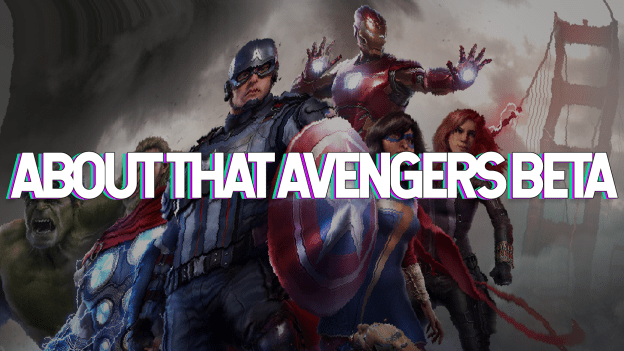
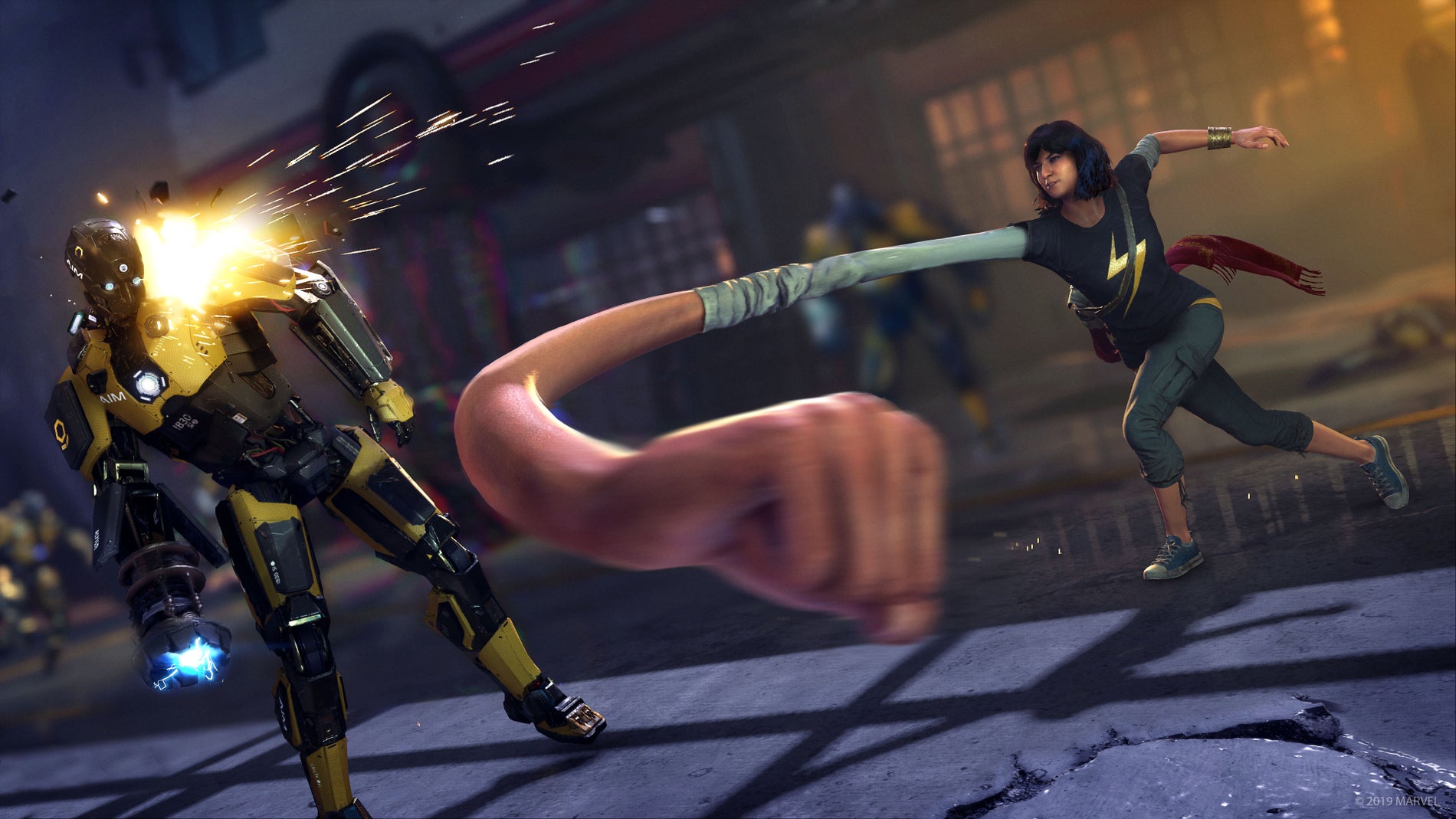
Since their surge in mass popularity during the 2010’s, I’ve been yearning for an Avengers game that would appropriately blend the varied powers of the Earth’s mightiest heroes with actual fun gameplay. Things were looking very promising when Marvel’s Spider-Man released two years ago on the PlayStation 4, but all of those positive feelings slowly drained away as I spent some time with Square Enix’s Marvel’s Avengers beta.

The beta opens with the San Fransisco demo that’s been shown off before, swapping you between Captain America, Iron Man, Thor, The Hulk and Black Widow throughout various points in the level. In another, better game, swapping between the heroes every few minutes would be a lot of fun, granted it managed to nail that blend of power fantasy with the cohesion of team dynamics that the Avengers are known for. But based on this beta, Marvel’s Avengers doesn’t succeed at either.

From the start, you have to confront the awkward and unresponsive controls. Everything feels delayed, undermining the brawler feel that other superhero games have done well like the Batman Arkham series or even Marvel’s Spider-Man did. Some of the special abilities and heavy attacks pack a good punch, but by and large most of what I played in the beta felt pretty bland in the combat department.

Marvel’s Avengers combat failings stem from its desire to be a live-service game. Enemies have bloated health bars and can take multiple massive green fists to the face because my gear score or whatever wasn’t high enough. I understand that’s just an aspect of how a lot of these games are, but this decision honestly robs Marvel’s Avengers of letting the player feel like a superhero. The Hulk should not be getting taken to task by some generic robots holding shields.

There’s also the issue of the game not explaining a lot of stuff to you, but I acknowledge that this might just be a beta issue and hopefully will be addressed, but there’s a lot in Marvel’s Avengers that I just never understood. For instance, you’ve got a health bar at the top of the screen with a mysterious superhero specific bar underneath it. What this bar is, I don’t know. What I do know is that while I was getting my ass kicked by a swarm of robots, the bar went down. Was that the health bar? If that’s the case, then what’s the other one for? Are all of my special abilities on a cool-down that might get faster with better gear or skill upgrades, or can I do something in game to impact them?

Maybe all of this is explained in the mess of a pause menu they’ve got, where the landfill of gear, crafting materials and currencies live. It’s one of those screens where your eyes just glaze over because of the sheer amount of garbage that’s on it. Luckily, there’s a button you can hit that will just equip the best gear for you, letting you avoid the nightmare of that entire menu.

What’s upsetting though is how none of your gear has any visual representation whatsoever. There’s plenty of articles of clothing to equip among the Avengers themselves, but none of it actually shows up at all. I actually understand why that isn’t a thing though. Marvel probably isn’t onboard with people making new Iron man armor from welded together scraps you found in a factory or a jungle. They want to “preserve the identity” of the characters or something, and letting you to adjust their appearances to something that isn’t “on brand” is probably a no. Also, I’m positive that buying alternate costumes is the monetization strategy for Marvel’s Avengers.

Ultimately Marvel’s Avengers just feels like a big miss on every front. It’s not a good action game, it doesn’t make you feel powerful, and it seems rife with ways to nickel and dime its player base. I can’t say definitively that it’s a disappointment yet, considering it isn’t actually out. This is a “beta,” and technically everything is subject to change. Sure the full game releases in just a few weeks, but maybe this is an older build of the game. Whether that’s true or this beta is indicative of what you can expect at release however, this was a miserable first impression.

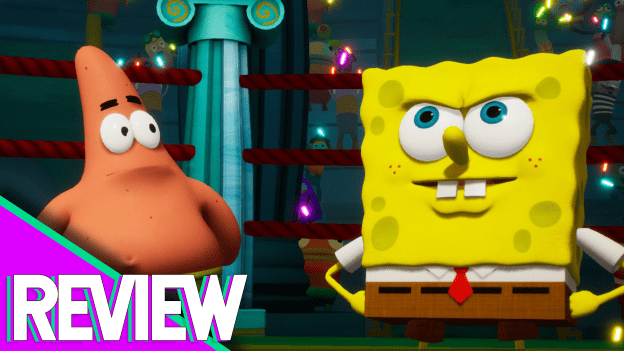
Review: SpongeBob Squarepants: Battle for Bikini Bottom – Rehydrated

Towards the end of my time with SpongeBob Squarepants: Battle for Bikini Bottom – Rehydrated, my opinion of it had soured so drastically from how I felt when I began it. Being a 3D platformer from 2003, it shouldn’t be a surprise to anyone that you’re hopping from level to level, completing challenges and solving puzzles in order to obtain some sort of shiny object, which in this case are golden spatulas. Collecting enough golden spatulas grants you access to more levels, where you’ll do more challenges and so on and so forth. It’s a 3D platformer through and through.

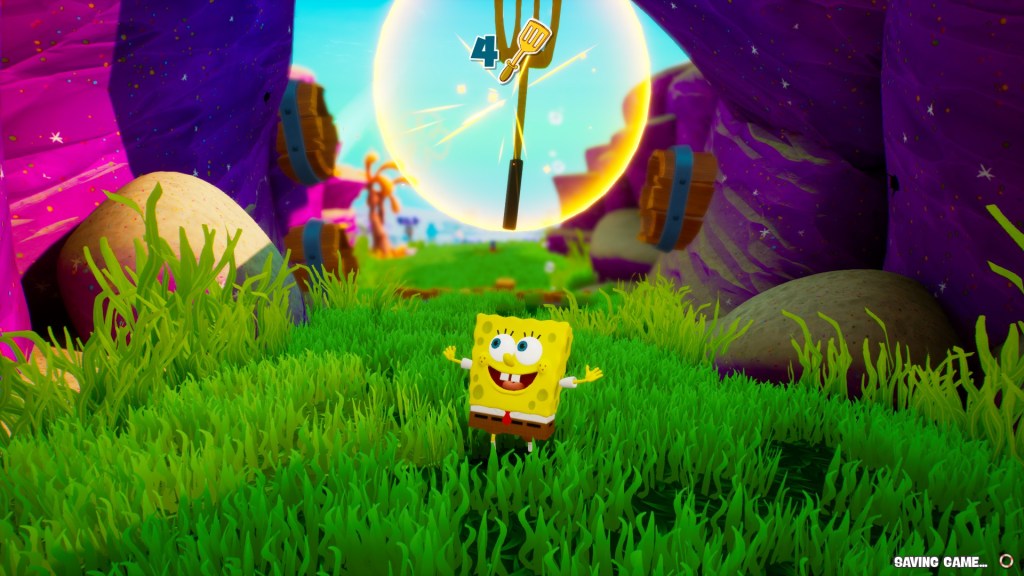
Seeing as the original game released a few years into the show being around, I was able to catch most of the references and jokes and not feel like an outsider to the source material. It was actually kind of nice to revisit this world I hadn’t thought about in nearly twenty years, only to see it realized in this 3D space that I could run around in and explore. I’ve never played the original release so I don’t know how the it looked when it came out, but SpongeBob Squarepants: Battle for Bikini Bottom – Rehydrated looks really crisp and colorful. It’s fully voiced as well which makes the whole thing feel like a really long, yet enjoyable episode of the show.

For how well this remaster has done in terms of presentation, I feel like some attention could’ve been paid to the actual gameplay itself. SpongeBob Squarepants: Battle for Bikini Bottom – Rehydrated is a decent platformer at best, and a frustrating test of patience at worse. The game is marred by a disastrous camera that will play along with you the most part, but will damn you at the worst possible times.

There is a point later in the game where you learn how to wall jump between two walls. After the first few times of just leaping at the wall and then rhythmically hitting the jump button until you crest the obstacle you’re climbing up, a new version of this challenge appears. This time, instead of going up, the walls you’re jumping between move forward and backward, offering you a way to get to a distant platform. This “simple” task turned into ten minutes of me leaping to my death because the camera felt the need to lock into what can only be described as a “cinematic” angle the moment I took my first jump. That’s what the camera does in SpongeBob Squarepants: Battle for Bikini Bottom – Rehydrated, it’s fine most of the time until it decides you’ve been in too much control.

The camera’s ability to screw you over doesn’t just stop with platforming either, because I can’t begin to count how many times I’ve tried to attack something only to find that it’s just out of my reach. This of course leads to me getting counterattacked, stun locked, thrown off of a level, or all three at once. And if you do happen to fall off of a level, know that everything resets because of that. Were you halfway through a particularly tedious puzzle? Great news, now you’re back at square one. Got through all of those enemy encounters? Then you can totally do it again. While you retain all collectables along with the puzzles you’ve already solved, falling off of a level or dying often feels like the game is adding insult to injury by making your climb back to where you were even much more tedious.

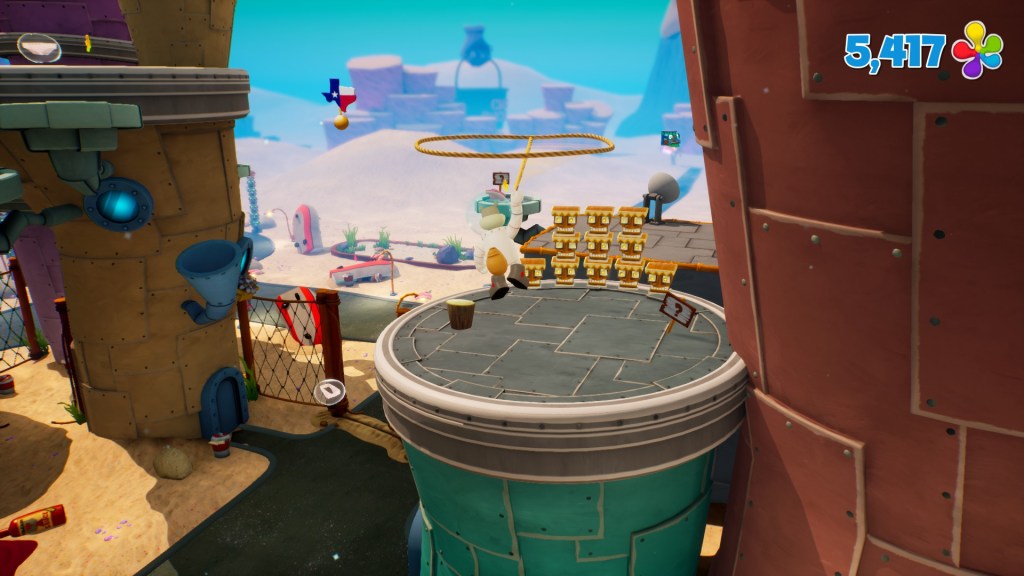
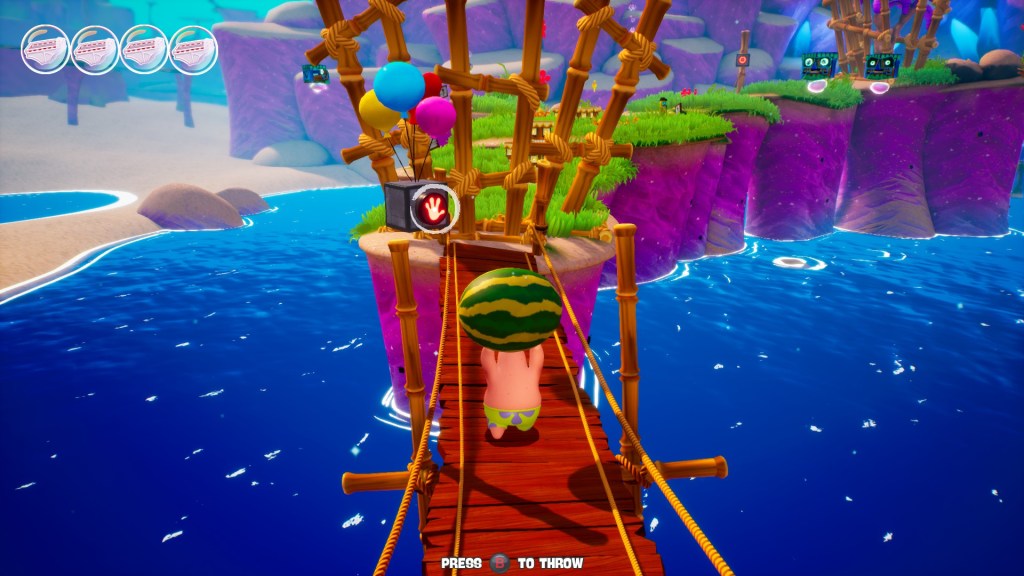
While SpongeBob Squarepants: Battle for Bikini Bottom – Rehydrated has its share of highs and lows, I found that playing as any character other than SpongeBob isn’t very fun. There are certain points in levels that allow you to swap between either Sandy or Patrick depending on what the level calls for. Patrick can lift heavy things and throw them, while Sandy can glide through the air and swing from certain objects. Playing as either of them isn’t fun, especially when the game calls for precise platforming from Sandy. Her specific challenges usually rely on using a combination of gliding and swinging, both of which are hilariously unresponsive.

There’s a level later on where Sandy is put to the test and must cross a massive chasm of nothingness in order to get to a floating plot of land. There are swing points scattered about which require you getting close enough to them for an indicator to pop up letting you know that you’re locked on and able to initiate a swing. But that window is incredibly small when you’re worrying about plummeting to your death while trying to fumble with the unresponsive controls.

If there was a word to describe SpongeBob Squarepants: Battle for Bikini Bottom – Rehydrated as a product, I guess ‘inconsistent’ would be it. It has all the charm and joy that I remember from the show itself but isn’t particularly fun to play. That being said, I still finished it because it scratched that 3D platformer itch I had, but I have no intentions of going and sweeping up the collectibles I missed or anything. I bought and played through the game because I have fond memories of those early seasons of SpongeBob, and that was enough to push me through. But if you have no connection to the source material, then this is just a decent platformer at best.

Review: BarnFinders

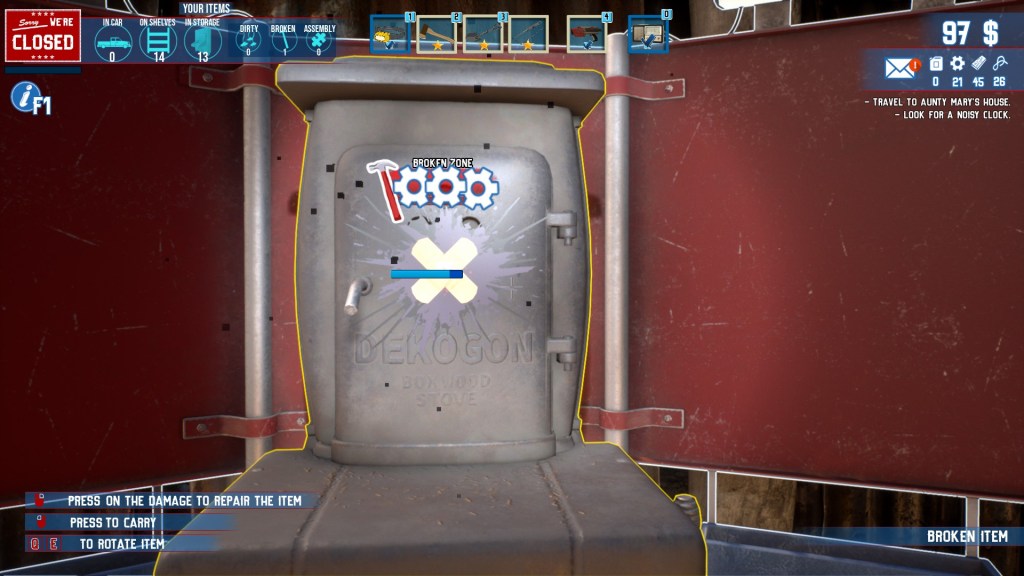
BarnFinders is a game that I am deeply conflicted about. It’s the exact sort of mindless, meditative gaming experience that I love so much, most of which involves you finding, repairing and selling various flotsam and jetsam at your own junk shop. It also is a game that is tremendously unfunny and at incredibly problematic in the way it represents various ethnicities and cultures.

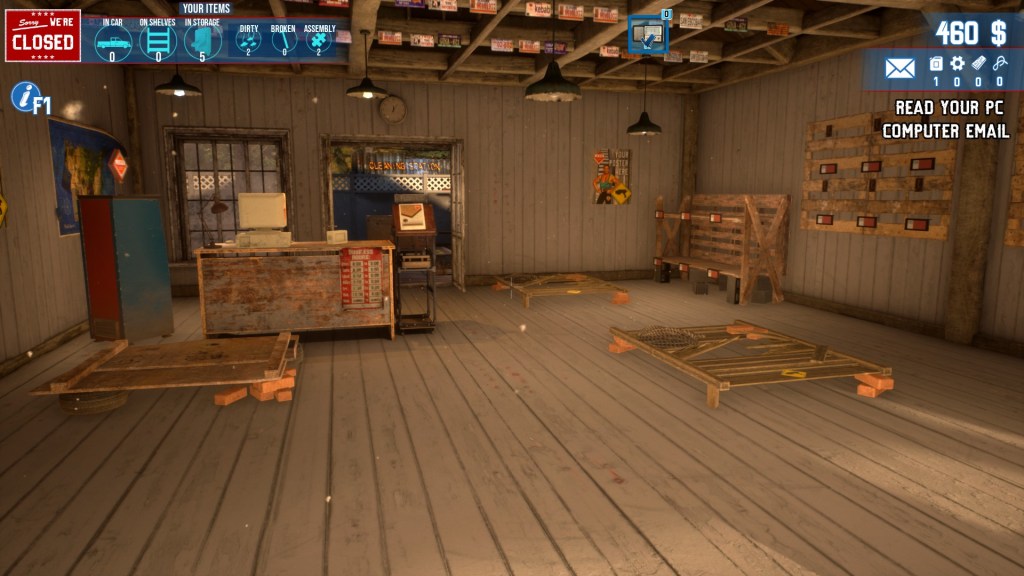
Clearly aping the likes of reality television shows like Storage Wars and American Pickers, BarnFinders puts you in charge of your very own, rundown junk shop somewhere in the southeast portion of a fictionalized America. Your establishment is pretty miserable at first, boasting nothing more than a dingy storefront and a beat-up truck. Eventually you can upgrade just about everything, but it still retains that unkempt feel.

Just like real life, your computer in BarnFinders is the heart of the operation allowing you to accept various jobs and travel to different locales. Jobs boil down to a borderline incomprehensible email asking you to retrieve a specific item from a location and mail it back to the sender. After accepting the job, you need to front the cash to drive your truck to any new location you wish to go to, but that’s only necessary when you first go to a destination.

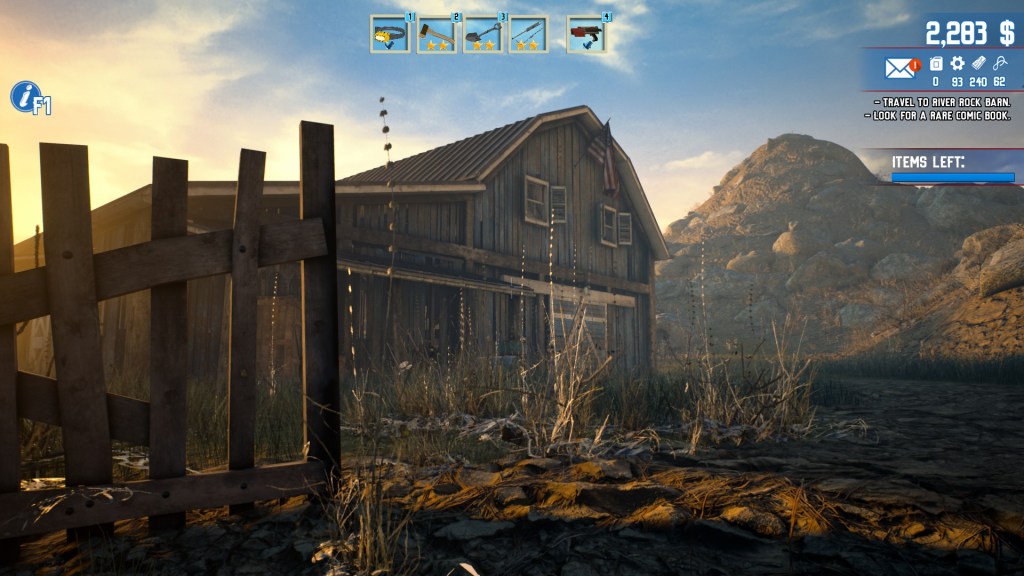
You arrive at the location which can range wildly from barns, houses, bunkers and more, and are reminded of what item you’re there for, as well as a progress bar that ticks down as you collect other items you can resell currently in the dwelling. It’s just enough information to let you know there’s something you missed without explicitly telling you what it was, ultimately making it a fun little puzzle that can get pretty tedious after enough meandering through the level.

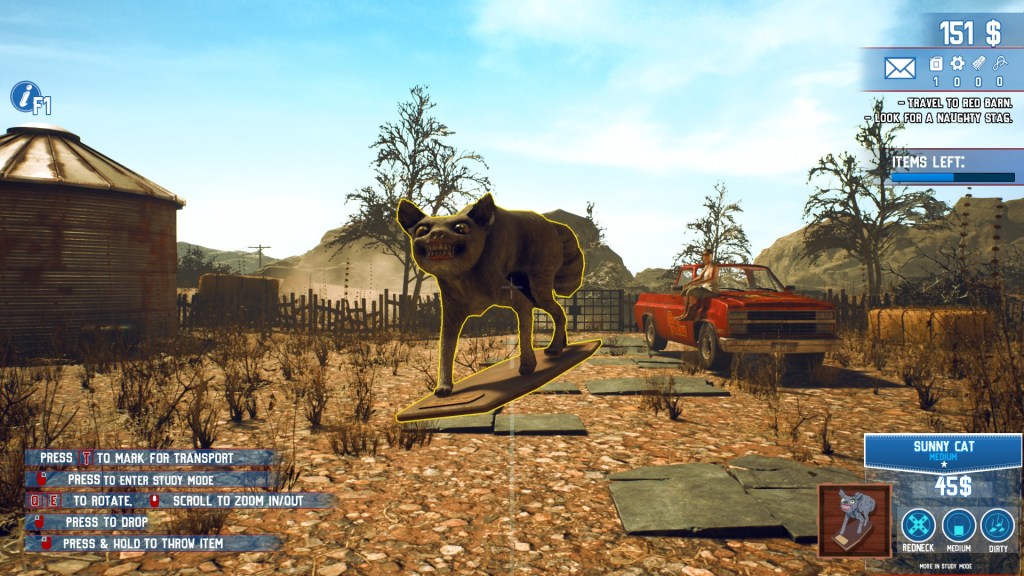
Chairs, hard hats, traffic cones, laptops and other notable items are usually prime for resale, while the deluge of cardboard boxes and hay bales that litter the area can be broken down into repairing components that you can use to fix certain broken big ticket items like televisions and microwaves. Aside from fixing things, you’ll also find items that can’t be sold, but can be combined with other items to make more rare and expensive products to sell like motorcycles and what definitely is an Atari 2600. Finally there’s just dirty items that need to be hosed off before they can sold which can be anything, but the first one you’ll come across is a blow-up sex doll.

Once you load all of that stuff into your truck, you head back home and prepare your merchandise to put on sale the next day. This includes the aforementioned cleaning, fixing and building of components that you’ll find throughout levels. But you won’t be able to just do those things because you need to buy the various stations that allow you to perform those actions. You also need to buy tools like an ax, a shovel and some lock picks, as well as a price gun that allows you to upgrade the interior of your store.

The store has a few spots for wall shelves, display cases and free standing displays, all of which hold different sized items. A washing machine needs a free standing display, while a guitar is hung on the wall. Where you put things doesn’t matter, because this whole section of the game is incredibly underwhelming but extremely necessary to progressing. You also can change the flooring and wall coverings, but despite how much they cost they’re all varying degrees of filthy.

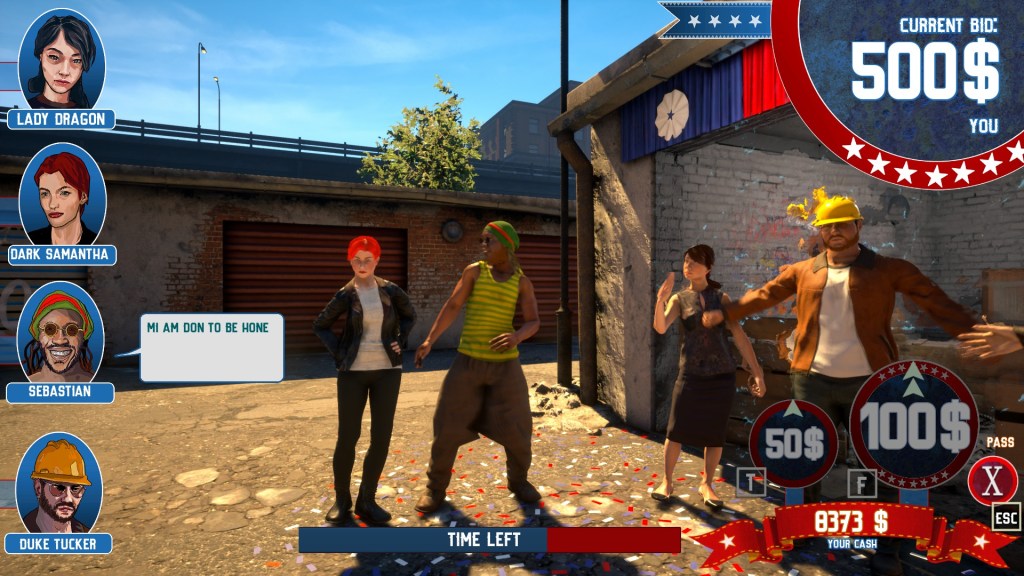
Once you have your shelves packed with the garbage you rescued from various dumps, you get to open up shop and meet the very small cast of characters in BarnFinders. This is where things go from uninteresting, to aggressively bad. The characters in this game are all different stereotypes, including the co-owner of your store, your uncle. Being set in the southeast, BarnFinders leans into a lot of the stereotypes about the people from those areas, portraying your uncle as an uneducated, scraggly-haired redneck. Also in this cast of characters is an Asian woman named Lady Dragon and an African-American man dressed in Rastafarian garb, constantly smoking a blunt.

It’s all part of that aggressively unfunny “sense of humor” I mentioned up top. In addition to that, the characters all speak in noises and grunts while text bubbles appear near them, some of which are problematic as well. You’ll hear and see a lot of these things during the tremendously mundane retail portion of the game, where customers appear in your shop in front of objects they want to buy. You being the employee of the month, go up to them and can either elect to sell at the default price or haggle with them. Haggling in this case means to play a bad timing based mini-game that sometimes just doesn’t work.

Speaking of bad mini-games and terrible “humor,” the parts of BarnFinders where you have to bid on properties is hilariously thin as well. Some barns or houses will require you to own them before you can actually pick through them, which means you’ll have to enter an auction for it. The only people who ever show up to these auctions are the same characters as I mentioned earlier, but this time their text bubbles will shout various insults at you whenever you outbid them. These too are written in an insanely problematic way that I won’t go into, but you can imagine what they are like.

Outside of having terrible writing being hurled at you, in an auction you’re allowed to raise the price by a modest amount or a large amount, both of which change depending on the item itself. I’m fairly certain that none of this matters however, and the auction ends once you’ve hit a certain price threshold. It feels like the game decided that a certain house was worth ten-thousand dollars, started the bidding at five thousand, and would keep the auction going till you made it past the ten grand price tag. This is evidenced by the fact that no matter how long you wait to put in a bid, the auction timer won’t start to count down nor even reveal itself until you’ve made it to a certain point. It’s this smokescreen that very quickly dissipated and revealed nothing more than another time wasting mini-game in its place.

What I do like about some of the properties you acquire however, is how expansive they can be. Some levels are multi-layered and require some light puzzle-solving and platforming to find mission critical items. There’s also the fact that some of these levels are spookier than others, but BarnFinders is courteous enough to ask you upon starting said level if you’d like to be scared or not. I wish that kind of courtesy extended to other aspects of the game, but this was a pleasant surprise that accounted for my low threshold for fear, or as others might call it, “cowardice.”

There’s also this gigantic alien sub-plot that I can’t even get into because of how absurd it was, but just know that aliens play a large part in BarnFinders. It’s bizarre and ends up becoming a weird focal point of the game, but I don’t think it’s any worse for including these story beats.

It’s hard to feel good about playing BarnFinders when there’s just some really unnecessary bullshit that are just hurtful and tone deaf. Even from a purely gameplay focused standpoint BarnFinders makes it seem like there’s a lot to do and consider, but there really isn’t much new to do as you play for a few hours. Outside of level design and maybe one level specific item, there’s really nothing mechanically engaging to do after the first 3 hours of play and that’s probably for the best.

A Look Back at The Steam Game Festival

As we watch the corpse of E3 gently float down the stream with golden coins placed over its eyes for The Riverman to grant it safe passage, we find ourselves in the midst of constant press events that look to fill vacuum E3 left in its wake. One of these events came in the form of the now concluded Steam Game Festival, where developers could directly market their upcoming games via Steam and allow us to download demos of upcoming games. I played a couple of these demos and wanted to provide a little bit of insight into each of the games I got my hands on.
I want to preface with the fact that most of, if not all of the demos I tried, were of games that were not done and clearly needed more work. I am not judging these demos as full products, nor would I want to imply that was the case. These games are in development and are subject to change, so consider this article as a time capsule that describes what these demos were like.


GRIEFHELM

Griefhelm is a side-scrolling action game that sees you, a knight, sword fighting their way through waves of increasingly deadlier enemies. While it sounds fun on paper, the execution leaves a lot to be desired. The controls feel floaty and unresponsive at times, often resulting in the mistiming of blocks and strikes. Griefhelm uses a similar combat system to Nidhogg in terms of having to correctly angle your sword stance between low, medium and high, in an attempt to parry and hit your opponents. While technically that system works in Griefhelm, it doesn’t feel anywhere as responsive or satisfying as Nidhogg.

There’s also another layer to the game that lives in-between skirmishes, where you select which mission you want to go on. Each mission offers a different kind of objective, although they all boil down to just killing dudes and not dying with the promise of some sort of reward that you can use in other levels being bestowed upon you, as well as new pieces of armor for your knight.

While I don’t think Griefhelm is there just yet, I think with some refinement to the controls and mission variety that it could be a really fun game.


UNTO THE END

Remember everything I said about Griefhelm? Then get ready for Unto the End, a game that is cut from the same cloth as Griefhelm, but does just about everything better. Well, except for showing me anything outside of the combat mechanics of the game, because the demo is literally just the combat tutorial and nothing else as far as I could tell.

Unto the End is a much more visually appealing version of Griefhelm, that’s easier to control and more satisfying to play. It uses a similar combat system that seems to be a little more fine-tuned and responsive than Greifhelm. Outside of those examples however, there isn’t really much else to glean from this demo. I look forward to seeing more of Unto the End despite knowing next to nothing about it though.


WINDJAMMERS 2

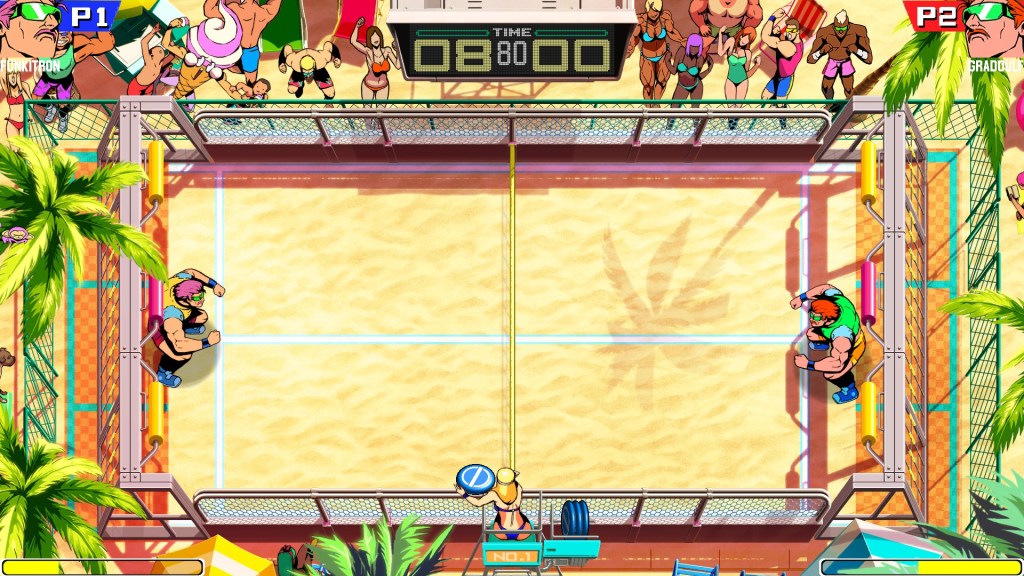
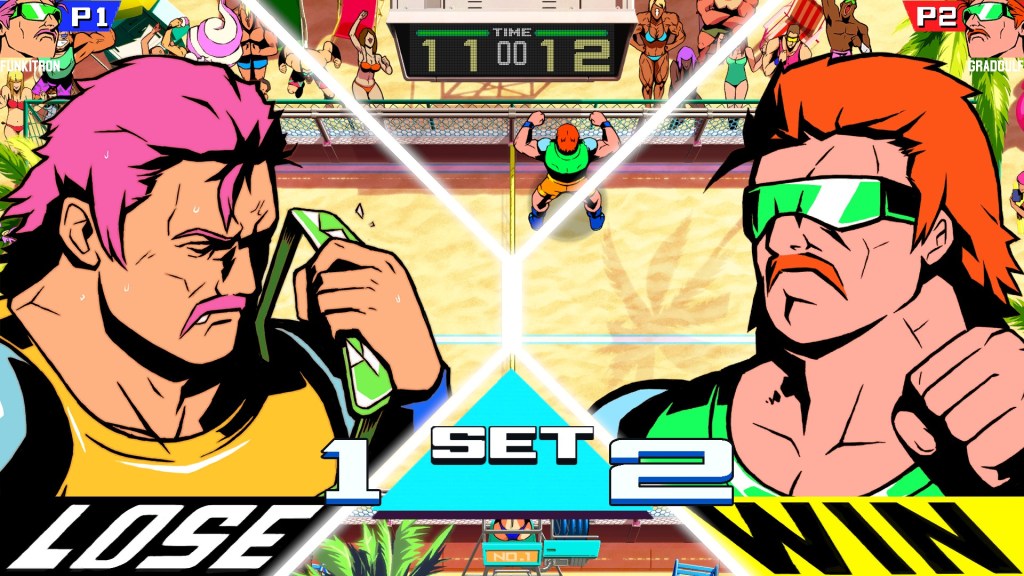
Windjammers 2 is a game that I forgot existed at all despite it being the sequel to one of my favorite Neo-Geo games, Windjammers. If you have no idea what Windjammers or its sequel actually is, you could call it a mix between pong, air hockey, and that aggressively 80’s attitude that we all love so much.

Windjammers 2 boasts a new hand drawn art style that I’m actually really into, along with a couple of new offensive and defensive capabilities that allow people who know what they’re doing to completely devastate others. Completely unrelated, the demo only allows for online play at the moment, and I definitely didn’t get obliterated by every opponent I faced.

I will always champion Windjammers as a game everyone should try at least once in their lives, although I don’t know that I am foaming at the mouth in anticipation of a sequel. I’ll see how I feel about it when the full game is released, but for now I’m okay with the first installment that currently lives on my Switch.


RUSTLER

Long before the days of Shark Cards and orbital strikes, the Grand Theft Auto series started as a top-down action game where driving a car in a straight line was borderline impossible. The early GTA games also showed off some of that trademark humor that Rockstar is infamous for, but nowhere near as loudly as they do it now.

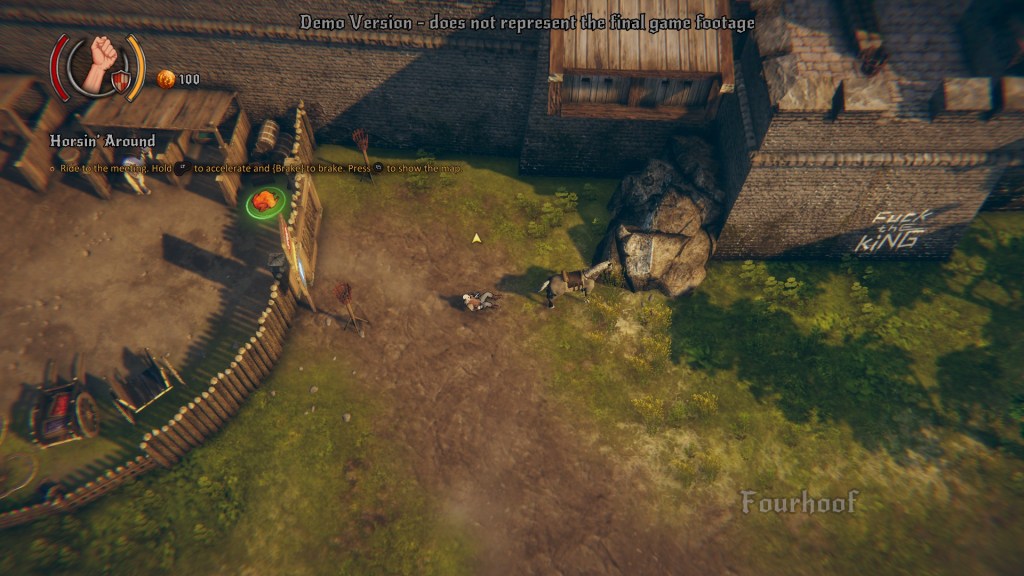
With that history lesson out of the way, Rustlers is the fantasy version of those old GTA games, emulating everything from the top-down camera angle to the inability to ride a horse in a straight line along with some really hit and miss attempts at humor.

The combat is sluggish and unresponsive, often times defaulting to you just mashing the attack button in the hopes you land a hit on an enemy that’s also flailing wildly, but somehow better at it than you are. Riding a horse is a laborious process that will almost always end in you crashing into something and falling of said horse, which ultimately became the way I dismounted my horse every single time.

The only somewhat redeeming factor is the sense of humor Rustlers has. There were some moments where I might have softly chuckled to myself, like when I saw a cow on a roof that had the word, “horse” spray painted across its body, or when the medieval cops were after me and had one of those rotating red and blue police lights on their helmets. There were also a lot of not so great jokes that I endured, most of which involved being drunk, excessively cursing or soiling yourself.

I don’t think I like Rustlers at all, but maybe you’ll enjoy it. If that’s the case, more power to you.


THE BLOODLINE

A while ago I wrote about the newest Mount & Blade game, specifically mentioning how I thought it was way too much for me to contend with. I know that it’s a very beloved series, but it just wasn’t for me. I only bring that up because I share a lot of the same feelings with the Mount & Blade series as I do The Bloodline.

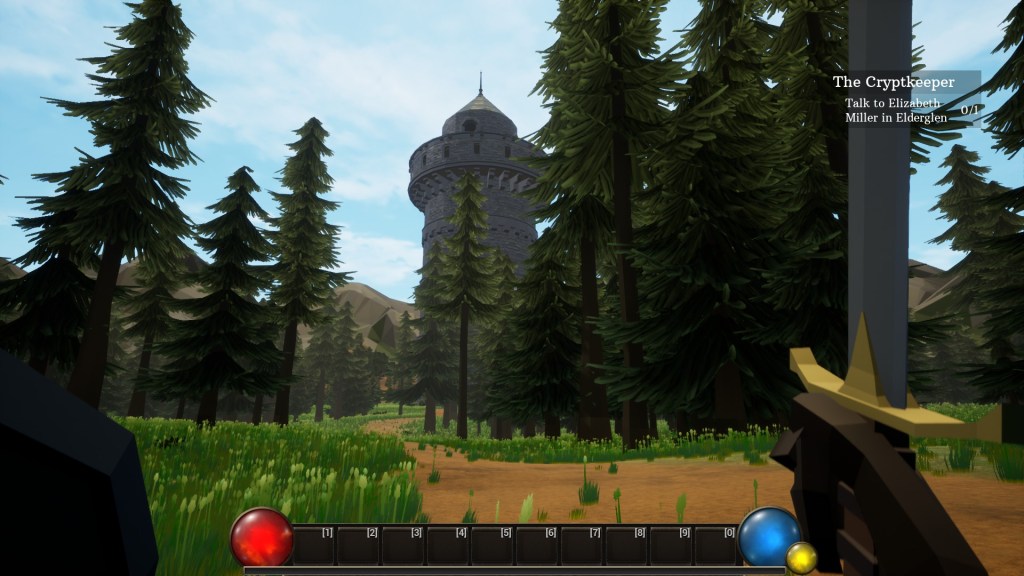
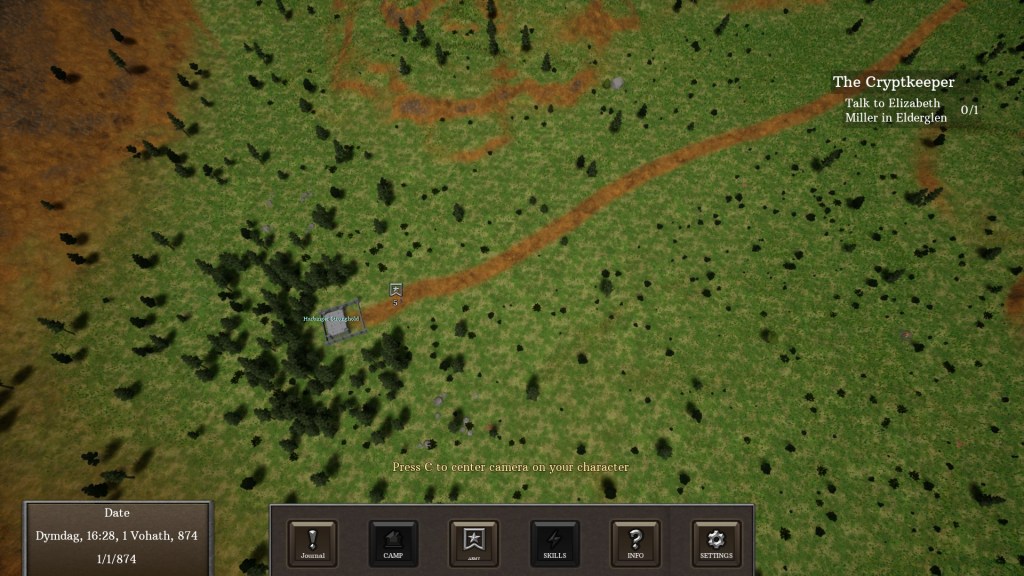
The Bloodline does itself a massive disservice by starting you out in a mostly abandoned castle with barely anyone around. You create your low-poly character and head out on an adventure that is mechanically similar to something like Mount & Blade. Just like those games, you’ll split your time between first or third person combat, traveling and exploring the over-world, and recruiting allies to join you in what I’ve heard are fairly massive battles.

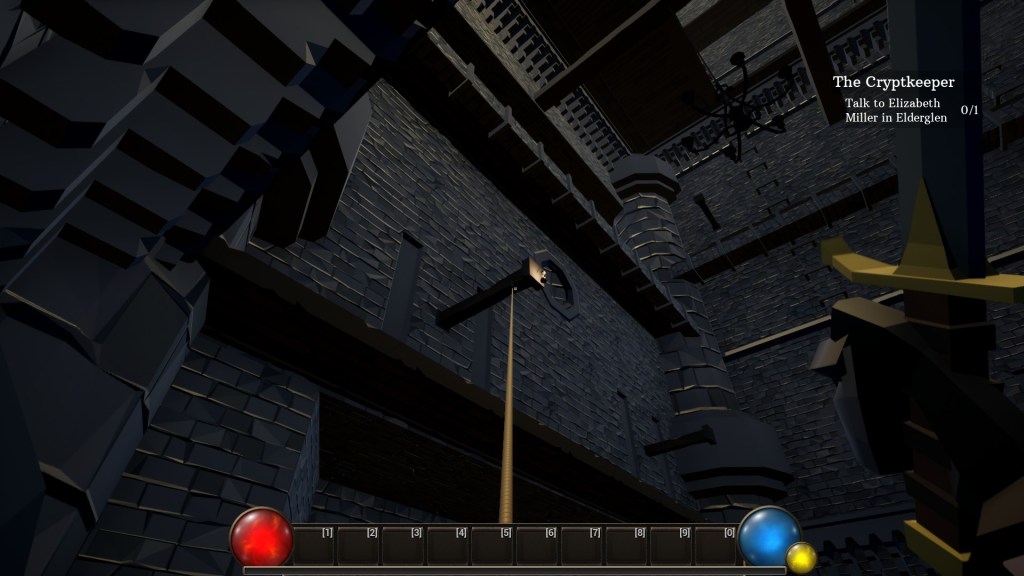
One of the first things I encountered on my travels was a massive tower that was devoid of any enemies, but had a big bell hanging at the top of it. The game and I agreed that I was to make it to the top of the tower and ring that bell. Luckily The Bloodline gives you a grappling hook that works about 70% of the time which is all I needed to make it to the tippy-top. That and I don’t think there’s any fall damage, so that helped too. I got to the apex, rang the bell, and got 1500XP for my trouble, and was teleported back to the world map. Then I traveled to a town, looked around for people to recruit, and the game crashed.

I haven’t loaded it up again since, but the demo is so rough and janky that I think I’ll wait for a more polished release to continue on my The Bloodline adventure.


NIGATE TALE

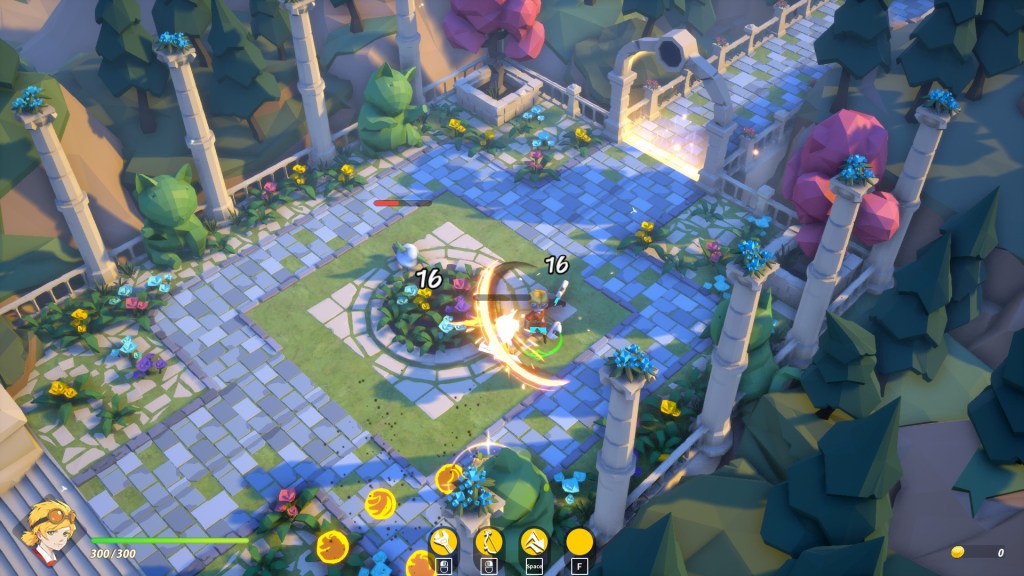
Do you like rogue-like games? Do you also like unnecessarily horny representations of anime characters? Well friend, you might just love Nigate Tale, a game that apparently is both of those things and I had no idea. Not like there’s anything wrong with liking these things, it was just a lot to absorb all at once.

See, I don’t enjoy rogue-likes at all. It all just feels a little too grindy for my tastes, but I get the appeal of them, and for what it’s worth Nigate Tale seems like a pretty competent one of those kinds of games. The controls are responsive, the enemies provide a real challenge, and the game has a pretty good look to it as well. From the perspective of someone who doesn’t know what makes a good rogue-like, this seems like it’s all right.
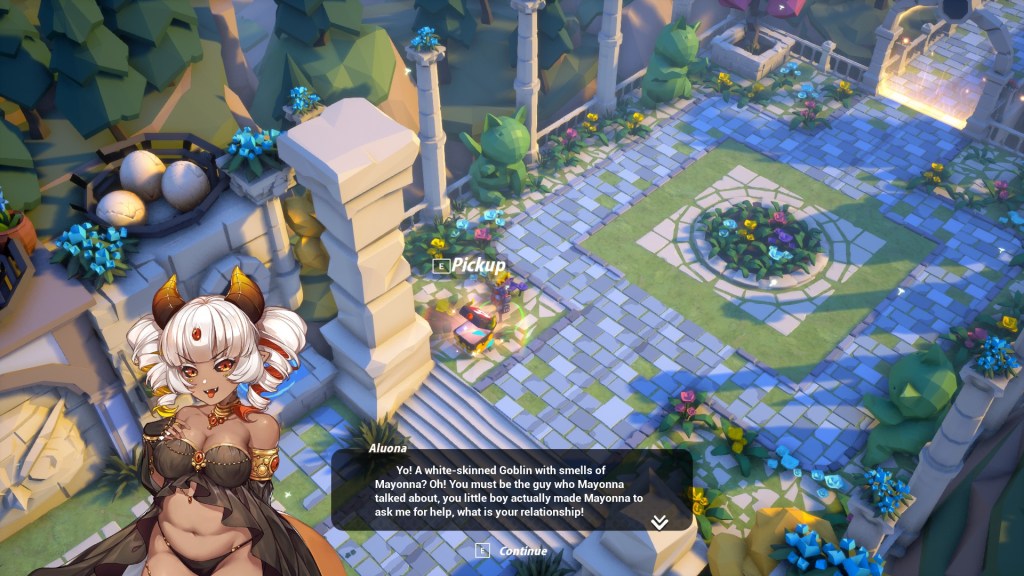
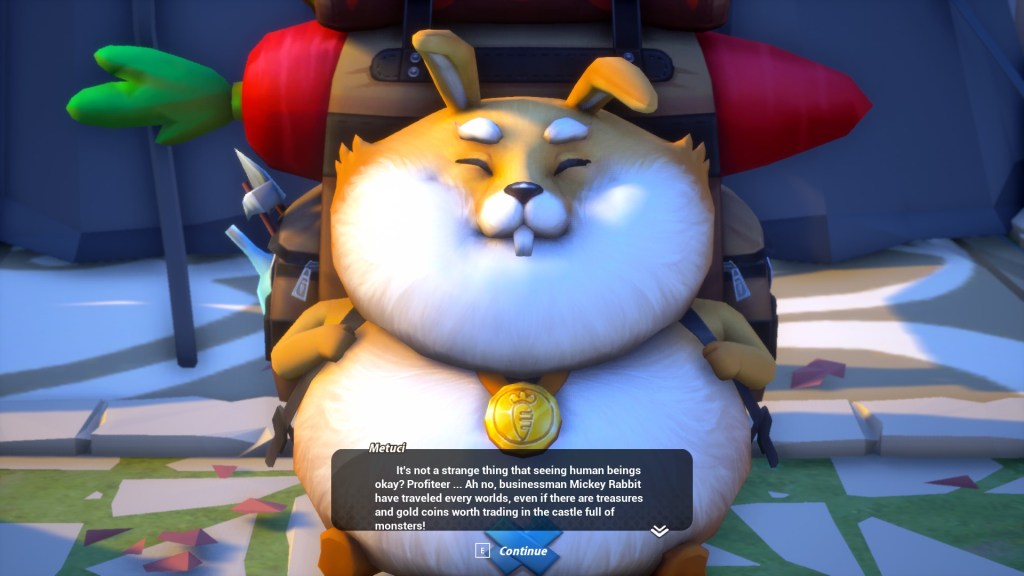
I don’t want to give the impression that I’m trying to “yuck anybodies yum” or anything, I just was not prepared for the 3 scantily clad anime ladies I would encounter within the first 5 minutes of playing. All of that confusion immediately faded away when I met a large hamster-like creature who gave me some special powers, cause their presence alone was easily the high point of Nigate Tale.

I played a little bit of Nigate Tale, and I genuinely have no idea if it’s good or not. It felt good to play, but I was constantly at a loss because the in-game translation isn’t fully there yet which made it genuinely hard to understand what powers I was picking up or even what the story was. I hope this thing gets properly localized and people can get their hands on it, cause it seems all right for what it is.


SKELLBOY

Skellboy is the kind of game that I can get behind. It’s this action game where you play as a skeleton that acquires new body parts and weapons from their fallen foes, and wears it on themselves. A new head might give you more health or the ability to spit projectiles, while new feet could make you run faster. It seems ripe for a puzzle solving game where you’re swapping parts of yourself out to progress through certain obstacles, but you don’t have an inventory so you just pick up and discard things as you go.
The game also boasts this almost Paper Mario-esque art style, except instead of everything being made of paper they’re just chunky pixels. But the way the perspective shifts as you move through a level gave me some really strong Paper Mario vibes that I very much appreciated.
The only criticisms I really have with Skellboy is that the combat not only feels slow, but there isn’t much impact to anything you’re doing. I found myself losing a lot of health because I just didn’t realize I was getting hit, and the same thing can be said about attacking. Outside of that however, I really dug what I played.


There it is, my not-so-comprehensive coverage of The Steam Game Festival. Overall, I like how Steam has run this event and gave people access to a lot of neat upcoming games that I would have otherwise not known about. Considering E3 would be over by now, it’s been nice to get a constant trickle of announcements and events like this one, and I wouldn’t be surprised if other publishers tried similar things. Everyone has their own launcher these days, so it wouldn’t be outrageous to see someone like Ubisoft announcing a game one day and simultaneously allow people to try a demo or beta of said game on their own platform. We’ll see what happens over the course of this summer I suppose.

I Wanted to Play Assassin’s Creed Odyssey, But Apparently That Was Too Much to Ask For

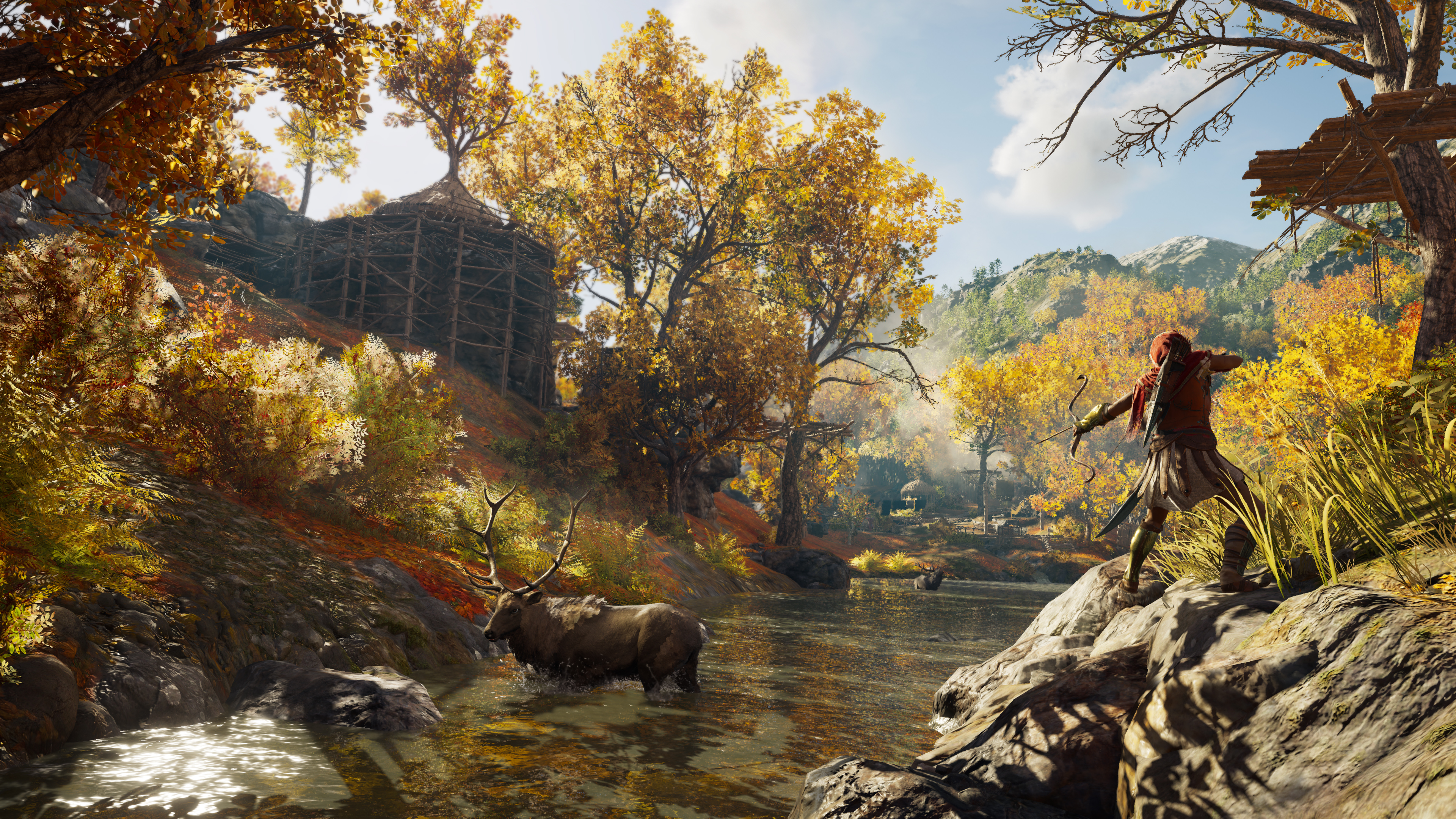
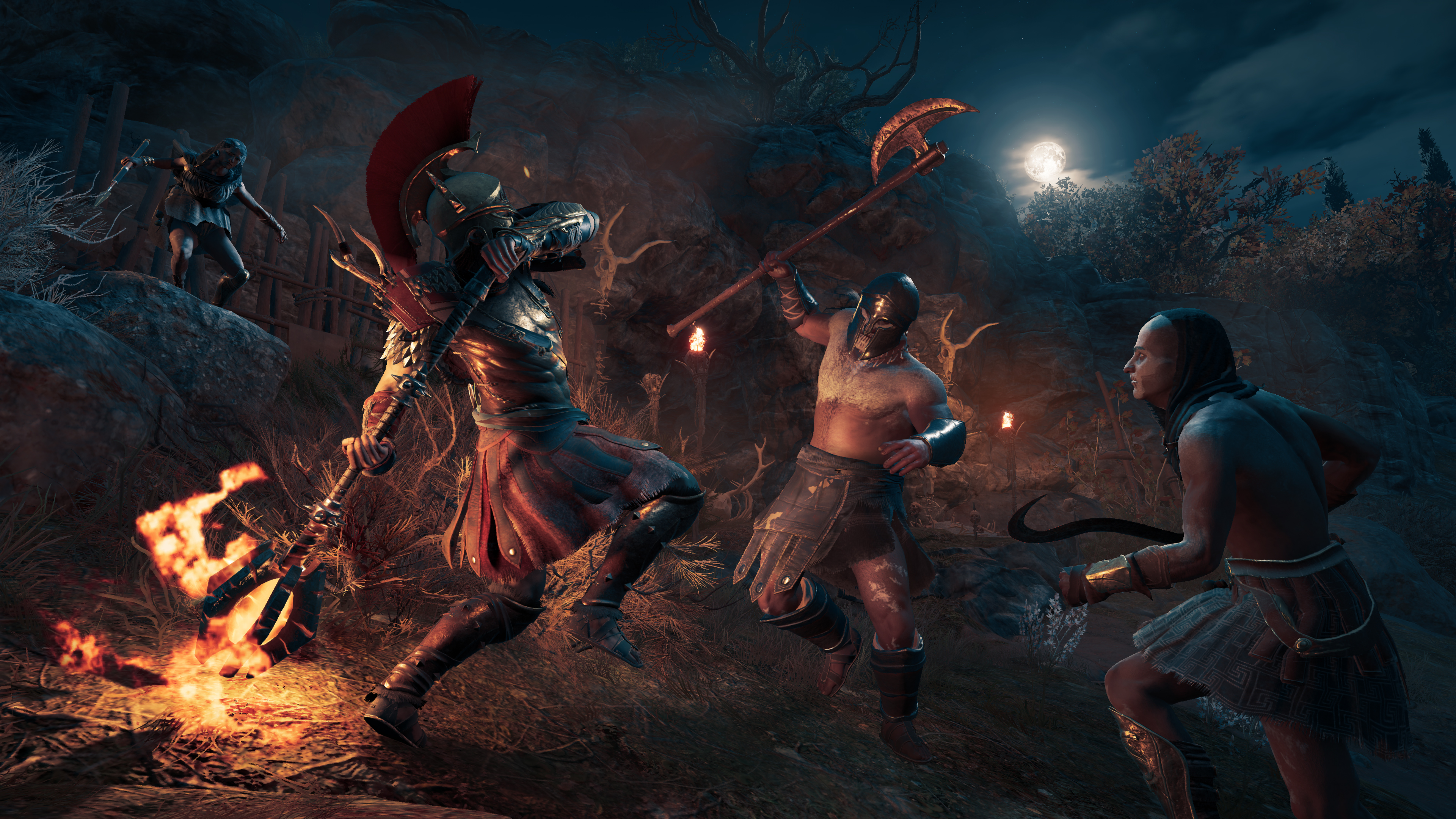
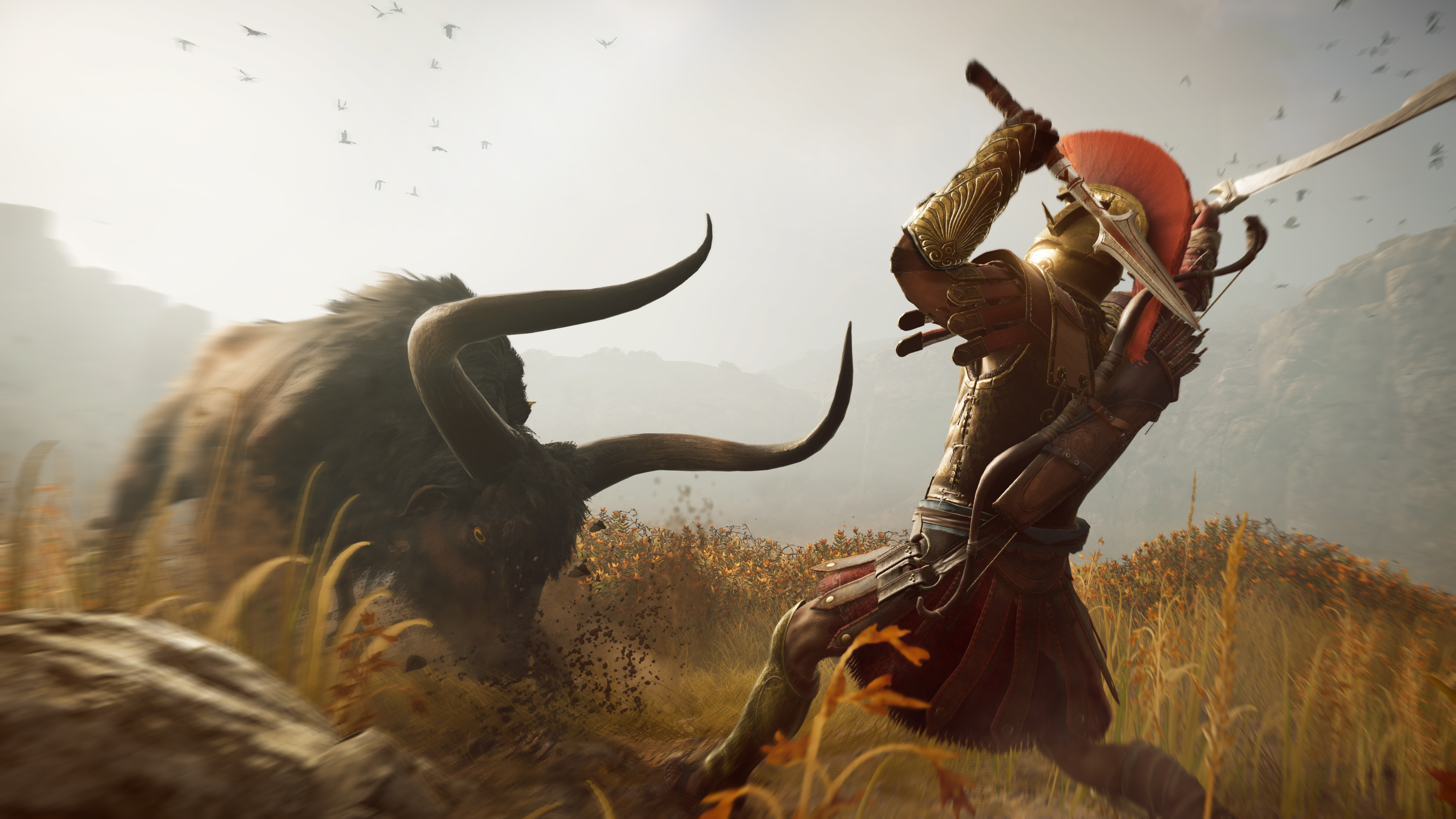
Recently the Epic Games Store ran their “Epic Mega Sale,” in which not only were games on sale, but they issued ten dollar coupons to everyone to entice people to buy more. Needless to say, this offer worked and I picked up Assassin’s Creed Odyssey for only a couple of bucks, thus starting a several day journey of actually getting to play the damn thing.

Assassin’s Creed Odyssey clocked in around 81 gigabytes for its initial install time. I wasn’t surprised by how massive it was considering I knew how big of a game it was. Sure having to wait a few hours for something to install sucks, but it’s an unavoidable part of playing just about any game these days. This was something I anticipated and was prepared for.

What I wasn’t ready for was the disconnect between the Epic Games Store and Uplay, a factor that took me alarmingly long to realize and fix. See, when you launch a Ubisoft title outside of Uplay itself, Uplay still has to launch and authorize that you actually own the game. What I hadn’t accounted for was the fact that I hadn’t actually launched Uplay for a long time, so it needed to update itself as well, but since I was running a shell of UPlay the actual program itself was unable to update.

I was met with a blue dialogue box in Ubisoft colors that said something to the effect of “looking for updates.” This box never went away. It was looking for updates but couldn’t find any. After some time of waiting, I decided to just launch Uplay by itself to see if an update would automatically initialize. Luckily, that did the trick.

So now I was ready to go, right? Of course not. Assassin’s Creed Odyssey had a 30 gigabyte update ready and waiting for me. You would think that in buying the game I would have received the most updated version of the dang thing, but no. For some reason, far beyond my comprehension, I still had an update that was nearly half the size of the game to install before I could have my fun stabbing adventures.

Finally, the update was applied and I was ready to go, right? Nope! Because suddenly Uplay was asking me for a CD key for the game I just bought, and I couldn’t find that information in my cursory searching through the Epic Games Store. So I restarted the Epic store to see if that might refresh some entitlements or something, and it kind of worked out. I had to link my Epic account to Uplay, something I could’ve sworn I already did when I bought The Division 2 when it initially released. So I did that and finally I could play the game, right?

If that was the end of the saga, I might not have written this article at all, but unfortunately for me a new problem appeared just in time to properly piss me off. The game launches, I do the intro mission and start to progress. Not five minutes into actually playing the game as the protagonist, it crashes.

The first mission in the game has you face off against two hooligans who come and harass you on behalf of some gang leader named “The Cyclops.” After roughing them up, you get to make your first choice in the game of whether to kill them or let them live. I chose the latter. A cut-scene happens and you have to make your way a short distance to the next objective. On that journey, I was ambushed by the hooligans I had spared and had to properly dispatch them this time. Upon killing the final enemy in the group, the game crashed.

It did this every single time. I have played this 3 minute portion of the mission a total of 5 times already in the hopes that something different would happen, and I could finally enjoy the fucking game I paid for. I don’t even want to play the game that badly anymore thanks to the multi-day calamity that I’ve been through with Assassin’s Creed Odyssey, but part of me doesn’t want to let the game get away with this bullshit.

This whole article has been pretty directly pointed at Assassin’s Creed Odyssey, but this is the kind of shit that can happen in the world of PC gaming and digital distribution. Now, I love playing games on my computer and consider it my go-to place for gaming, but this kind of nonsense is the exact kind of thing that makes me think I’d be better off just playing it on my PS4. But this isn’t unique to Assassin’s Creed Odyssey considering that just last year I went through this exact same thing with Red Dead Redemption II, also through an Epic Games Store purchase.

I know that all of this sounds like I’d end this article bashing Epic or Ubisoft, but I kind of get why it’s such a mess. Publishers want to make as much money as they possibly can, which is why almost all of them have their own PC launcher and storefront. But they also want to put their games where people will actually see them like Steam, Epic or GOG, and still be able to verify purchases and track their players habits in game. That’s why whenever you buy a Ubisoft game on Steam, it launches an extra layer of DRM in the form of Uplay. It’s cumbersome and annoying, but I get it. The problem is that while these problems don’t always crop up, when they do it’s usually because the solutions aren’t as seamless or elegant as you’d hope. I don’t know what the solution to all of this is, but I do know that I’m going to fucking play Assassin’s Creed Odyssey even if I have to reinstall the god damned thing.

UPDATE #1: I have verified the files of the game and unfortunately was greeted with the same crash in the same place, every time.

UPDATE #2: I’ve resigned myself to the fact that I’m going to have to reinstall this game, and have already begun that process. It’s been two hours and I’m around two-thirds of the way through the download.

UPDATE #3: The installation process is complete and I have officially completed that mission without any additional hiccups. The frame rate is a little wonky though.

UPDATE #4: I haven’t played the game in days. This was a really good use of my time.

Cyberpunk 2077 and its Already Massive Fandom

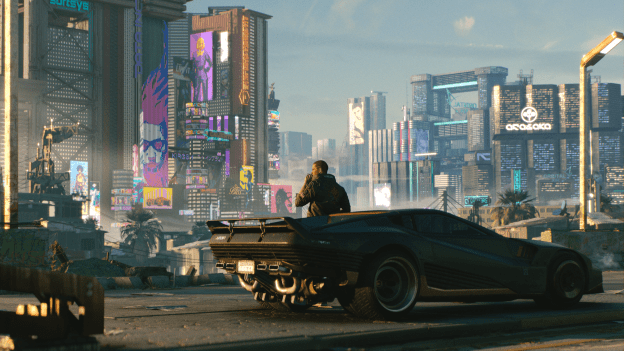
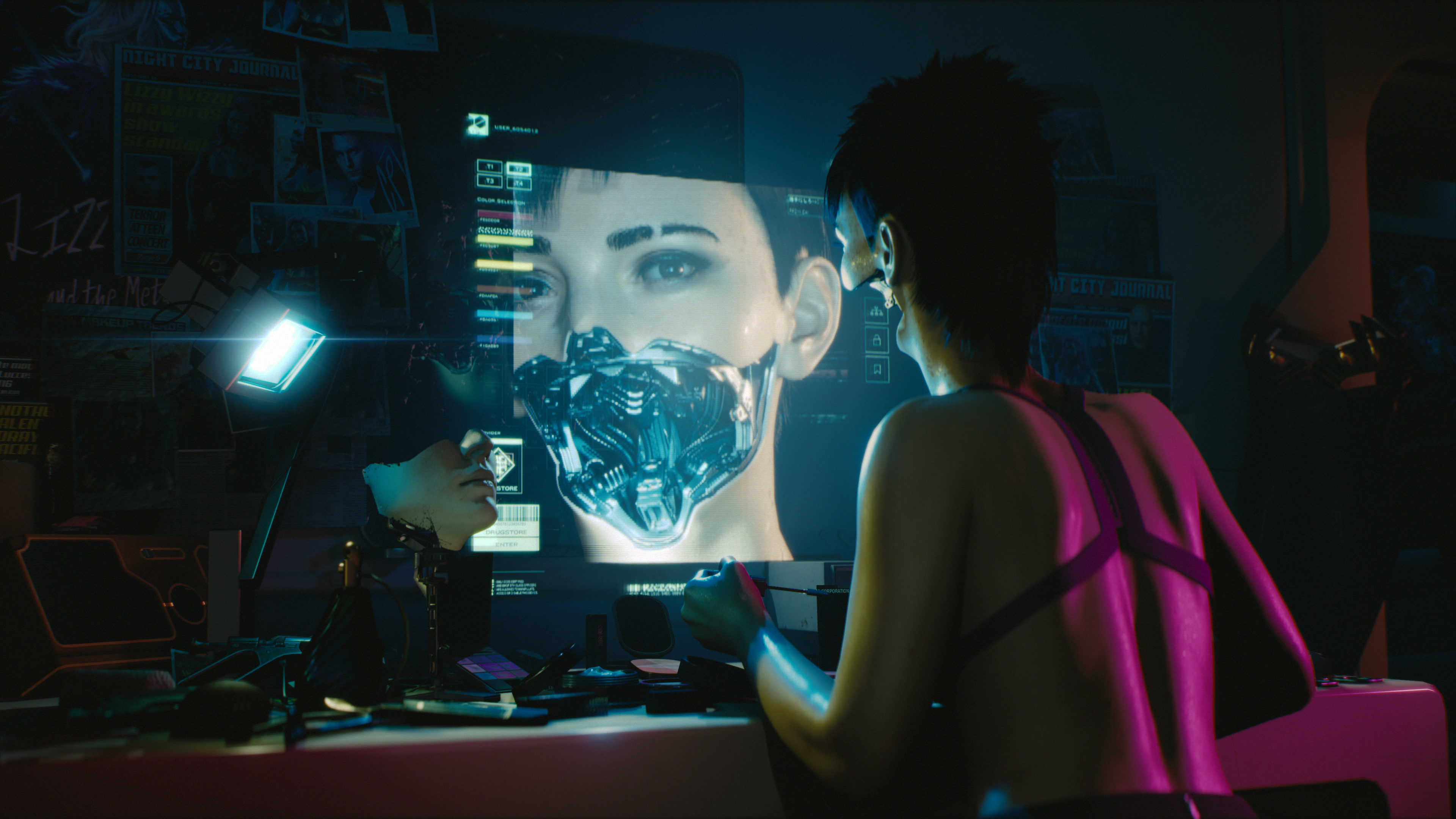
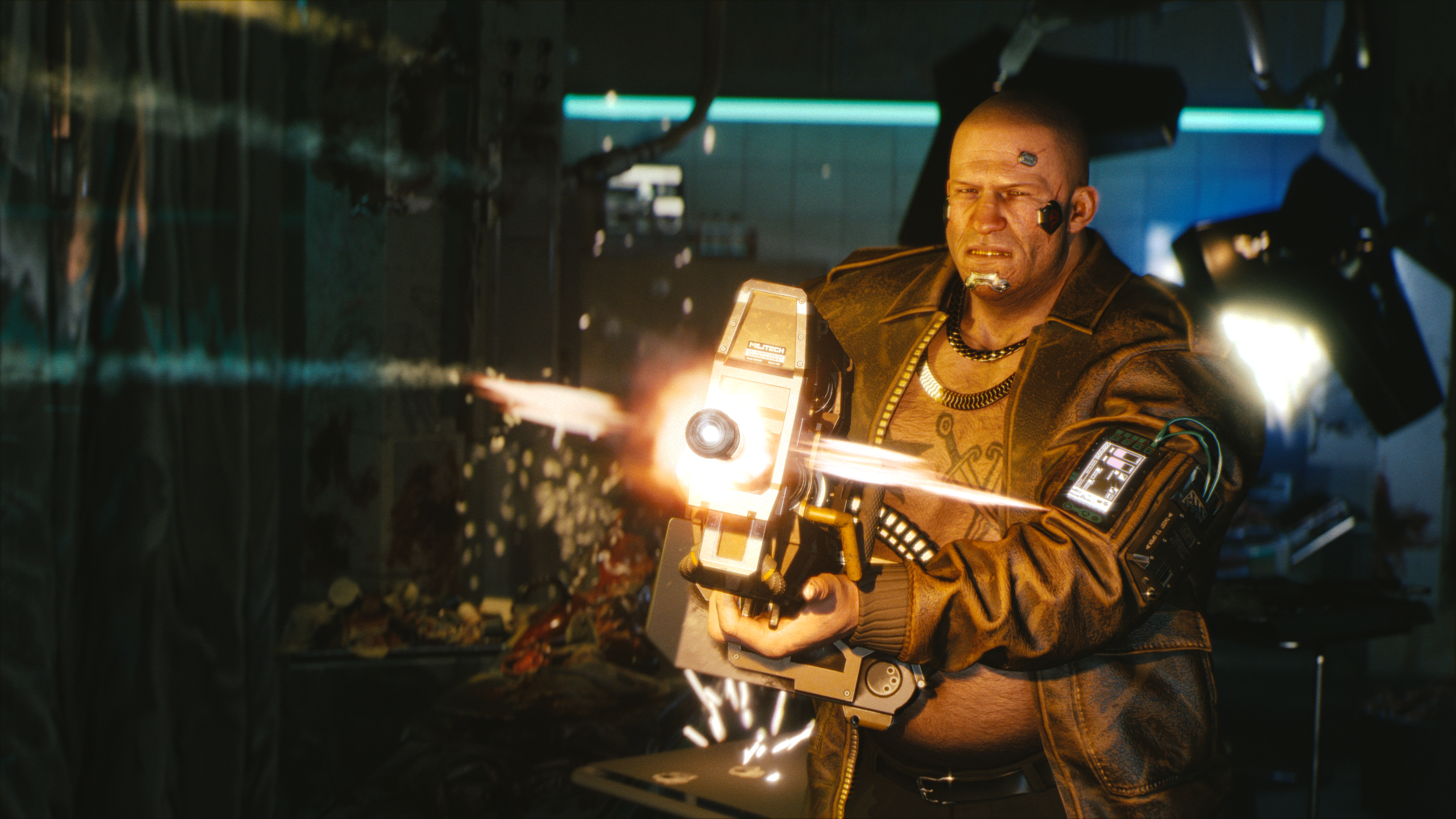
Since its announcement and various gameplay reveals, I’ve noticed this low yet consistent stream of cosplay, projects and fan art surrounding the upcoming Cyberpunk 2077.  It’s not that it upsets me or anything like that, I just find it really strange that there’s this fandom that exists already around a game that won’t be released for some time.

I’m well aware that fandoms exist for literally everything as people are eager to celebrate their interests, but I’m finding it hard to make the connection with Cyberpunk 2077, especially because we know very little about it outside of its structure and aesthetic. It’s an open-world action RPG set in a cyberpunk dystopia, and aside from a few gameplay videos that are out there we have no other real indication of how this game will come together.

People seem to be confident in Cyberpunk 2077 and what it will shape up to be based on the legacy established by its developer, CD Projekt Red, makers of The Witcher series.  I can understand that logic considering how impressive The Witcher 3 was on its own, but it’s still strange to me how big this fandom has become for a game that’s just a date on a calendar so far.

I get that people are excited for the game and want to express that in whichever artistic avenue they see fit, and that’s genuinely great.  Honestly, the aesthetic that Cyberpunk 2077 is boasting is gorgeous and very much worthy of admiration and celebration, but for my money I’d want to actually get my hands on the game before I declare my fandom for it.  Clearly that’s just me, and I’m essentially acting like an old man who can’t understand why the kids these days are crazy about some genre of music.

I guess my ultimate fear with all the celebrations around Cyberpunk 2077 is my worry with every upcoming and very hyped game — what if it sucks?  I don’t want Cyberpunk 2077 to be bad, in fact I’d very much like it to be good, but that possibility is always looming above every piece of media that exists.  What if it’s bland and boring or even worse, what if it’s got some real problematic content in it?  All signs point to no on that last one, but you never know.

There’s also the distinct possibility that because this game was revealed back in 2012 and has delivered a slow drip of information over the past 8 years that I’m just hyper aware of it. I imagine this kind of thing is going to happen with games like The Elder Scrolls VI and Starfield, considering they’ve been officially announced for some time now and people are probably hungry for any information on it.

This whole thing sounds a lot more skeptical and cynical than I actually want it to, because I’m not trying to be out there telling people not to be excited about the game, but it just feels weird to me that so many people are all in on this thing they haven’t played yet. Be excited, do your artwork and cosplay till your heart’s content, but also be cautious. I’m hopeful that Cyberpunk 2077 will be a tremendous game that’s worthy of celebration, but maybe we see how it turns out first? Or do your thing, I’m not here to ‘yuck anybody’s yum,’ especially these days where happiness is in short supply.

Cancel the whole article!  I’ve decided to just mind my own business instead.  Have fun and be safe, that’s all that matters.

Gut Check: Streets of Rage 4

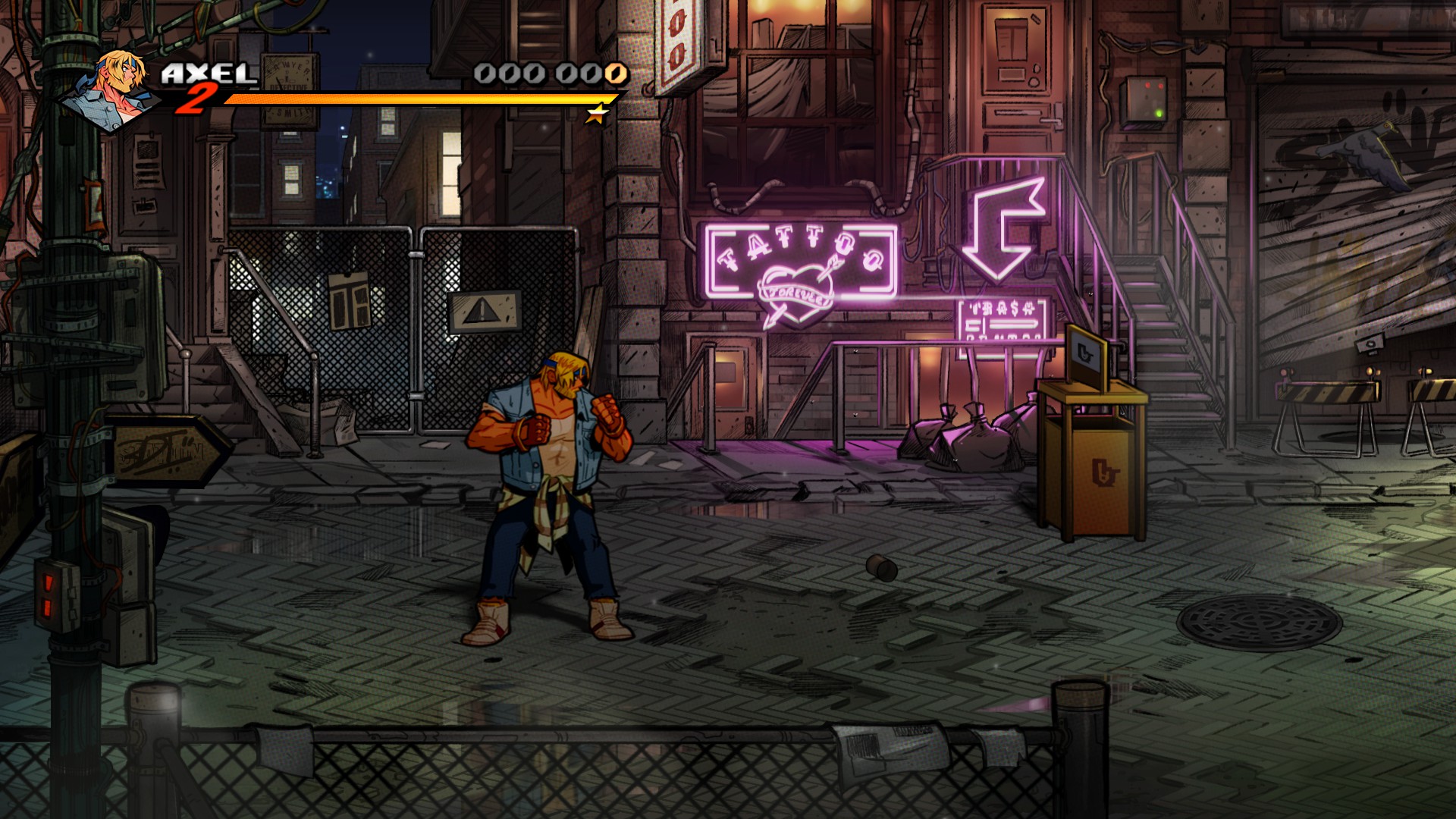
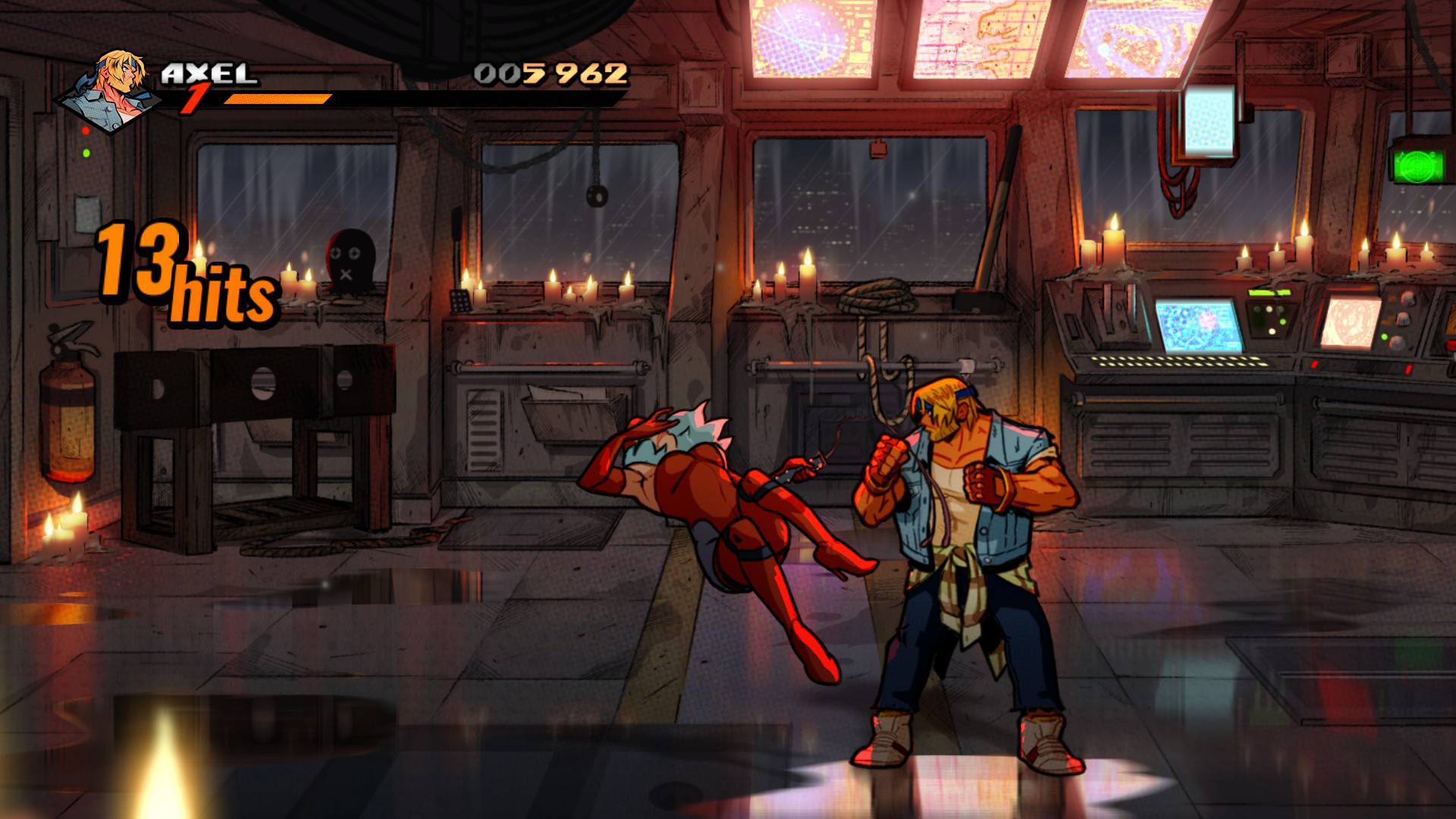
Streets of Rage 4 nails everything you would hope for out of a sequel to one of the greatest brawler franchises in history.  It retains all of the chaotic action of it’s predecessors, while paying tribute and modernizing the unique aesthetics the series was known for.  That dedication to honoring the roots of the franchise is a double-edged sword however, highlighting both the good and bad the genre has to offer.

It’s been 26 years since the last release in the Streets of Rage series, which is long enough that it would’ve been a fair assumption to assume the series dead.  Yet here we are in 2020, face to face with a sequel that was met with heavy skepticism when it was revealed.  Despite all of the side-eyeing and cynicism that I did when I heard about Streets of Rage 4, I’m very happy to report I was wrong.

20200430132725_1.jpg

Streets of Rage 4 follows the grand tradition of “light touch” storytelling, by dropping you into a crime ridden city, with only seconds worth of story to propel you forward.  But if you’re coming to Streets of Rage 4 for the rich lore, maybe it’s time to refocus your efforts on something else.

The first thing that jumps out to you is how wonderfully crafted Streets of Rage 4 is.  As you might expect for a series that lived on the Sega Genesis, the original series boasted beautiful pixel art that stood out among it’s competition.  Streets of Rage 4 retains the visual chops the series was known for, by modernizing it in a pseudo-comic book style that really works.  Characters all have thick outlines surrounding them, while the backgrounds are meticulously rendered to give you a sense of place in the world.  What I’m trying to say is that the art is really good.

20200430133553_2.jpg

The other half of that presentation that I really enjoy is the new soundtrack.  By taking old tracks and remixing them, along with creating new music from scratch, Streets of Rage 4 boasts a synth-heavy, aggressive and driving score that keeps the intensity up in the most face-punchingly conducive way possible.

But while aesthetics are an important aspect of any game, the real question has to be about the gameplay itself.  It’s here that I’ve got great news for the people who love brawlers, and less good news for those of you who maybe weren’t wild about their brutal difficulty spikes.  Streets of Rage 4 is a game that were it made in the 90’s, would fit in just fine.

20200430134418_1.jpg

In Streets of Rage 4 you’ve got a standard attack that strings into a combo, you’ve got the ability to grab enemies if you walk into them, and you’ve got your bevy of weapons that you can pick up and use before they break.  There’s also the inclusion of special moves that are fairly rare to come by in any given level, but when used, can release something of a super move that behaves differently based on what character you are.  There is more in terms of combat as well, like back attacks, health draining attacks, and more that you can weave into your arsenal.

The thing that frustrated me when I was a kid and still frustrates me to this day is still present in Streets of Rage 4, and that’s any sort of defensive option.  It’s frustrating to me to have to lumber out of the way on the z-axis to dodge certain attacks when some sort of block, dodge or parry would be so much more satisfying.  I know that this is inherently counter to the DNA of the series, but every time I get hit by an attack I try to maneuver out of the way of, I’m reminded how nice a defensive option would be.

20200430135921_1.jpg

While I truly believe Streets of Rage 4 would have been better for including some sort of defense, my other criticism is a little flimsier in nature.  I think it would’ve been nice if there was some sort of progression or lite RPG mechanics sprinkled over the game.  It isn’t a deal breaker by any stretch, but I wouldn’t have minded being able to learn new moves or upgrade some stats.  Like I said, I can live without this stuff, but I think it could have been a neat inclusion.

Streets of Rage 4 boasts a few other modes and gameplay options like level modifiers that make your experience a little easier if you need it, online cooperative play, and a few others that I’ve yet to dig into.  There’s also a gallery of Streets of Rage art and other extras you can unlock, such as the ability to take the pixelated versions of characters from previous entries, and play as them.

The brawler genre itself may have faded from the forefront of gaming, but Streets of Rage 4 is a fantastic return to form.  While some of the rougher edges of the genre have been sanded down and smoothed out, the core of these games is retained and ever present.  If the brawler genre is something you love, Streets of Rage 4 is the game for you.  If the genre wasn’t your cup of tea, Streets of Rage 4 is a really good game that probably won’t change how you feel about brawlers.