Tag Archives: archived gut Check

Gut Check: Fall Guys

Approximately 17 years ago at the last E3, the folks over at Devolver Digital had their annual conference(?) in which they revealed among other things, Fall Guys. Looking at that initial trailer, I had no idea what to expect and immediately shrugged it off as some sort of Mario Party clone. Fast forward to just last week when it finally released on Steam and as a “free” PlayStation Plus offering, and it’s completely blown up to the point where the servers couldn’t handle the amount of people trying to play it. It turns out Fall Guys isn’t a clone of a bad game from a bad franchise.

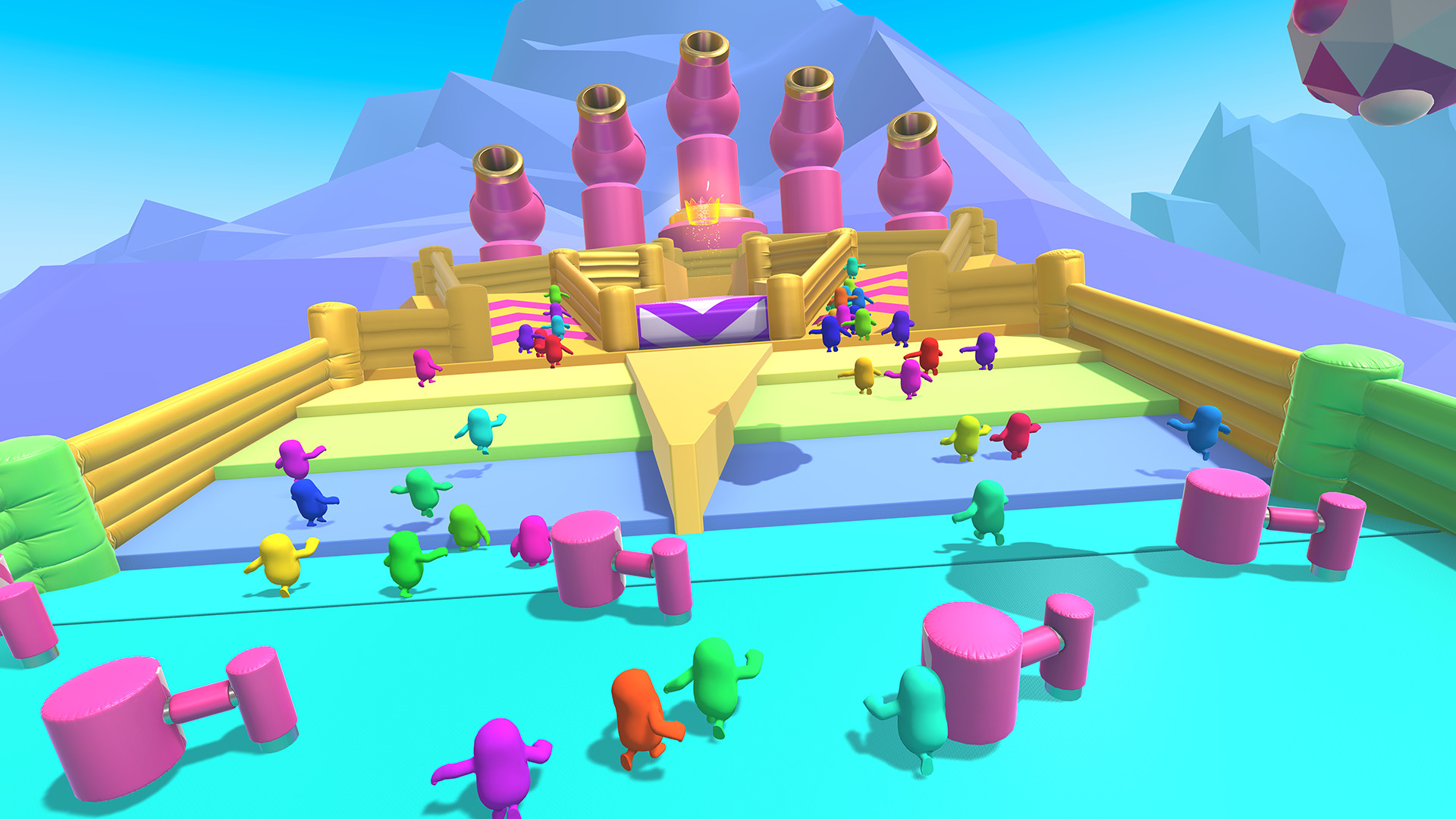
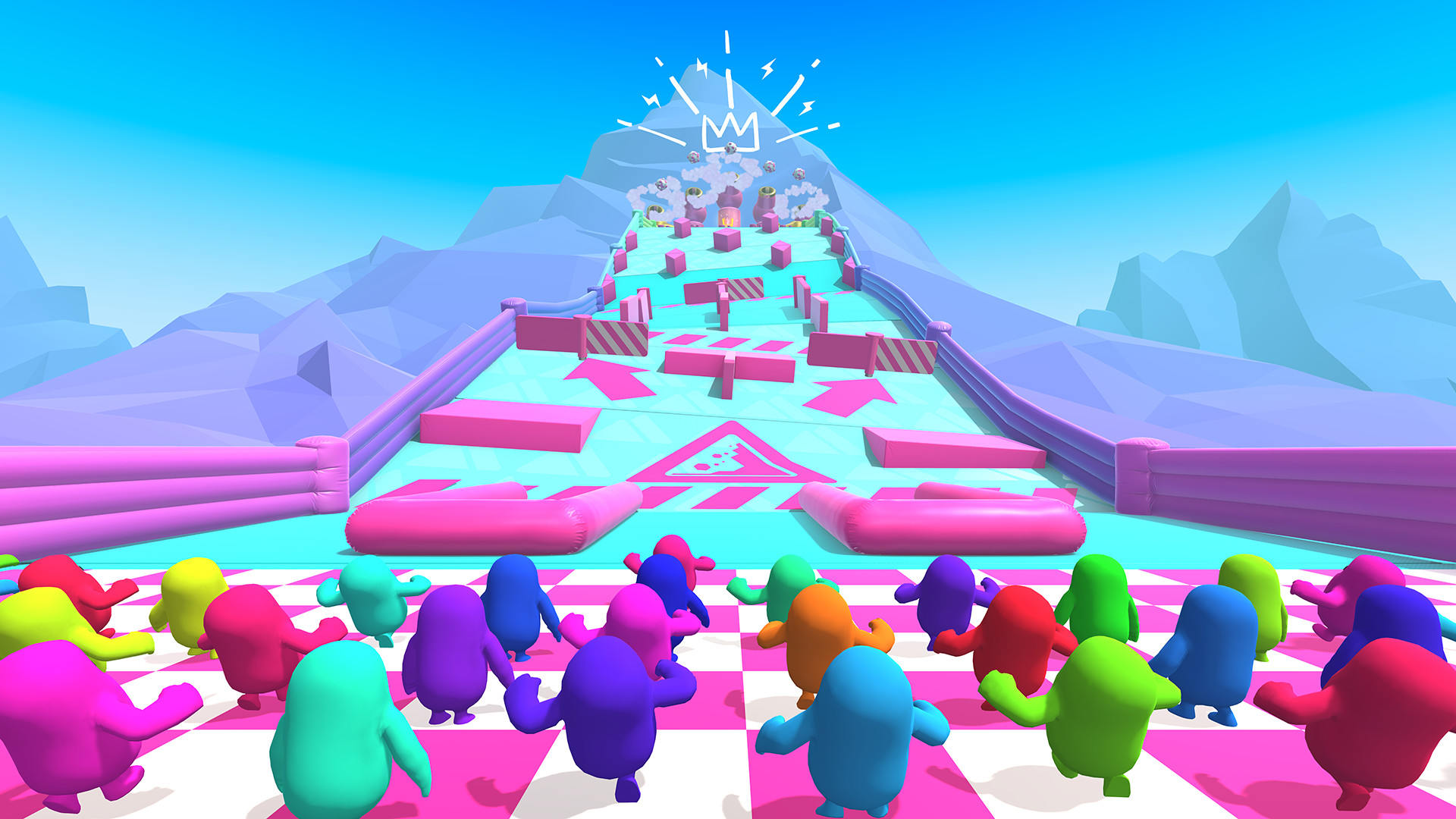
In Fall Guys, you take control of a little marshmallow looking creature who can only run, dive and grab onto things. Using the few moves at your disposal, you wade through several rounds of platforming challenges and obstacles with up to 59 other people in order to qualify for the next round. It can be a chaotic mess at times, but I mean that in the best way possible.
Fall Guys – Devolver Digital

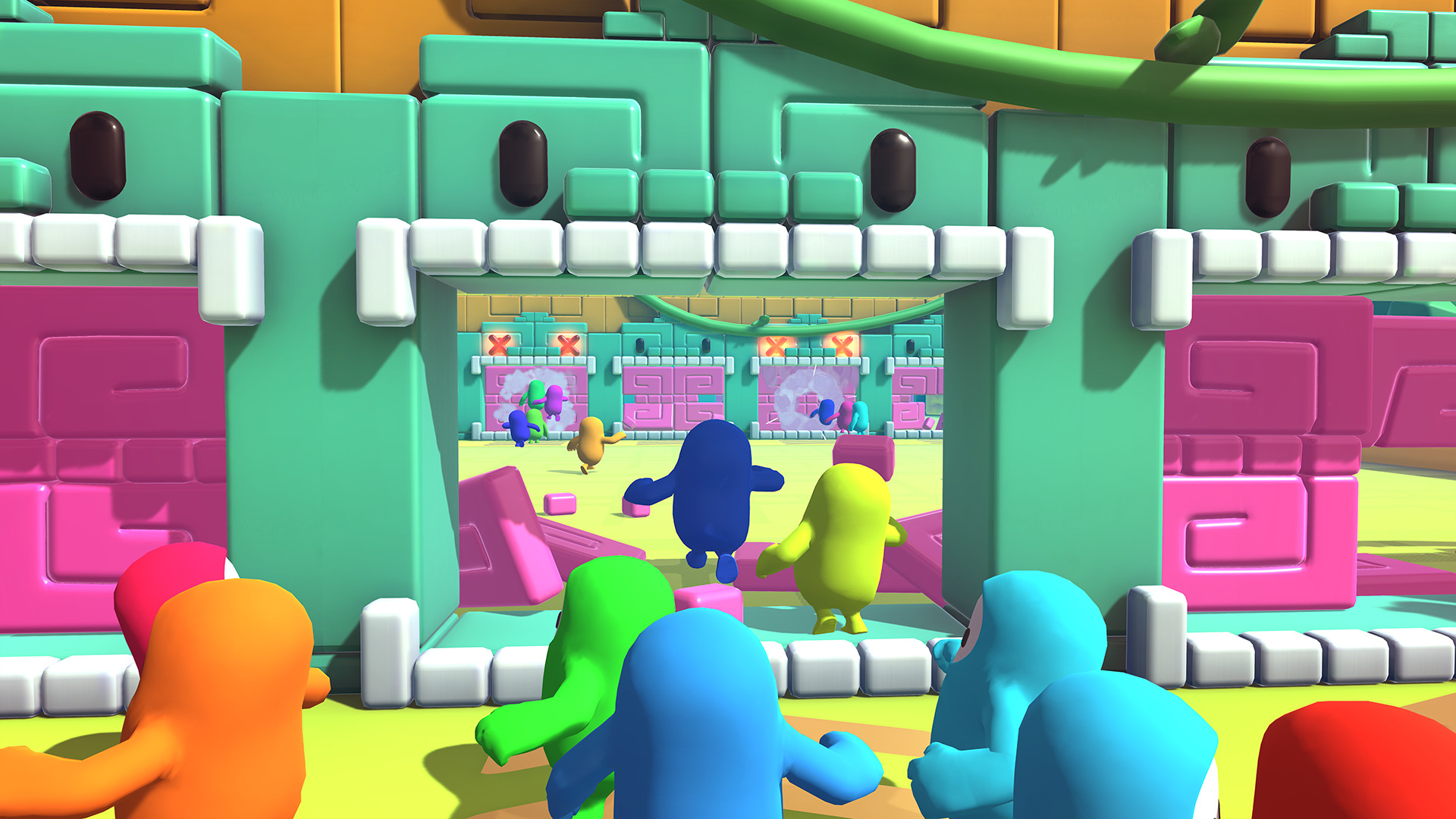
All of the levels I saw were very clearly inspired from shows like Wipeout, Ninja Warrior and Most Extreme Elimination Challenge, all of which are filled with plenty of hazards and obstacles that you need to overcome. I feel it’s important to remind you once more that you are doing this alongside 59 other people, which intentionally leads to some comical physics-based shenanigans. Succeed at enough of these challenges before your opponents and you’ll end up at an equally obstacle-filled level that has a crown at the end of it. Latch onto that crown and congratulations, you’re the big winner.

I’ll be completely honest here and say that I broke my own rule with Gut Check and played less than an hour of Fall Guys, but not because I disliked it. I actually really dig what Fall Guys is doing, catering to both my love of wacky physics and marshmallows. Yet despite being extremely in my wheelhouse, it just feels like a game without legs. Some games blow up in popularity and get to enjoy a long lifespan because of it like Rocket League or even Overwatch, but Fall Guys doesn’t seem like it has the depth or variation to keep things fresh and interesting for very long. It’s simply a game that was fun to play through until I won… which I did… the first time I played it.
Fall Guys – Devolver Digital

I don’t say that in an attempt to brag or anything because I was genuinely shocked it happened as well. I never really excelled at any level to the point where I felt like I was deserving of the coveted crown, but I just kind of lucked my way into it regardless. Two key things happened to me during my one-shot championship run that made all the difference.

The first thing felt a lot like I was cheating. Not every level in Fall Guys is based around individual success, with some levels grouping folks into teams and squaring off against one another. During one of these team levels we were tasked with essentially playing keep-away where we had to grab a tail off the back of an opponent and don it ourselves. With that tuft of fur firmly above my ass, I had to avoid my other competitors till the end of the round to score a point. That’s when the wacky physics of Fall Guys broke, and a spinning baton caught me in just the right position to clip me through the boundary of the map with no way back inside. So there I was in a white void, donning a beautiful tail and a slight amount of guilt attributed to the fact that I had inadvertently cheated in a competitive multiplayer game. Time eventually ran out, my team won under dubious conditions and we all progressed onward.
Fall Guys – Devolver Digital

The next thing that happened came at the very end of the final level. After navigating through falling rocks, spinning batons, swinging hammers and more, I followed the path and several other marshmallow people up towards the golden crown. The crown hovered between two platforms that you’d have to jump from in order to snag it in mid air. It also bobbed up and down to make it a little dicier for everyone involved. I watched about a dozen people in front of me mistime that jump and fall into the chasm below. So instead of leaping frantically like dope I just kind of stood there for a bit, unhampered until the crown was in my reach and I was able to snag it.

I won my first match of Fall Guys and I felt like I really shouldn’t have. It felt like a fluke from top to bottom, but I won the whole damn thing and in return I was granted some cosmetic items and the feeling that I had beaten the entirety of Fall Guys. With a little bit of patience and a ton of luck however I got to feel the “thrill” of winning, which was less of a feeling of accomplishment and more a feeling of suspicion, like I was going to get in trouble for winning it all by accident.

I can’t see a lot of people sticking with Fall Guys because it just doesn’t seem like the kind of game you can really get better at. No matter how good at platforming you are, you’re still vulnerable to the obstacles in the level as well as the other players themselves. I’m not trying to diminish the fun I had with Fall Guys because it left me with a sense of fondness towards it, but failed to hook me in a way that would make me want to break my undefeated streak. I bet they’ll hang my jersey in the rafters for this victory someday.
Gut Check: Ghost of Tsushima

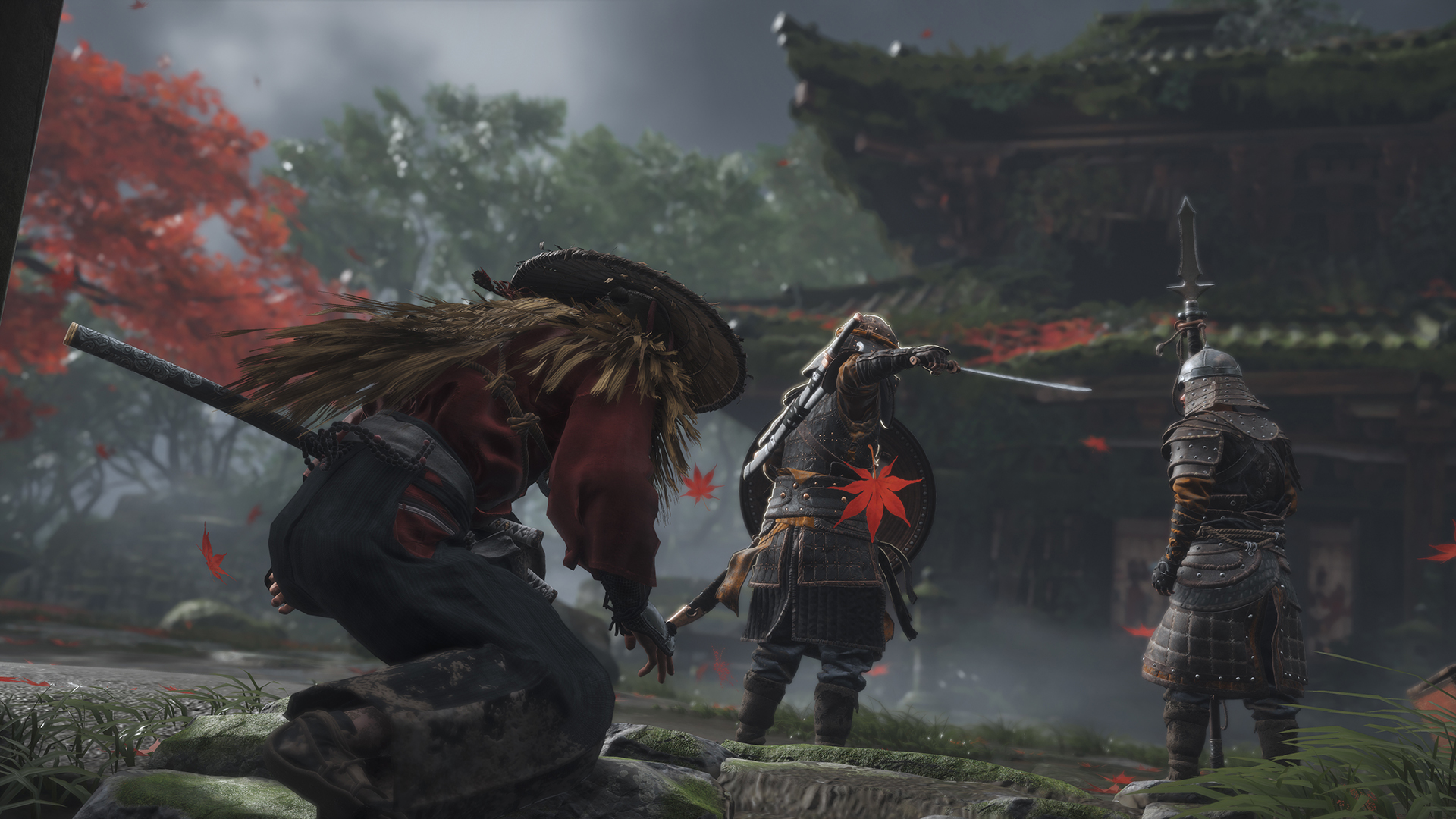
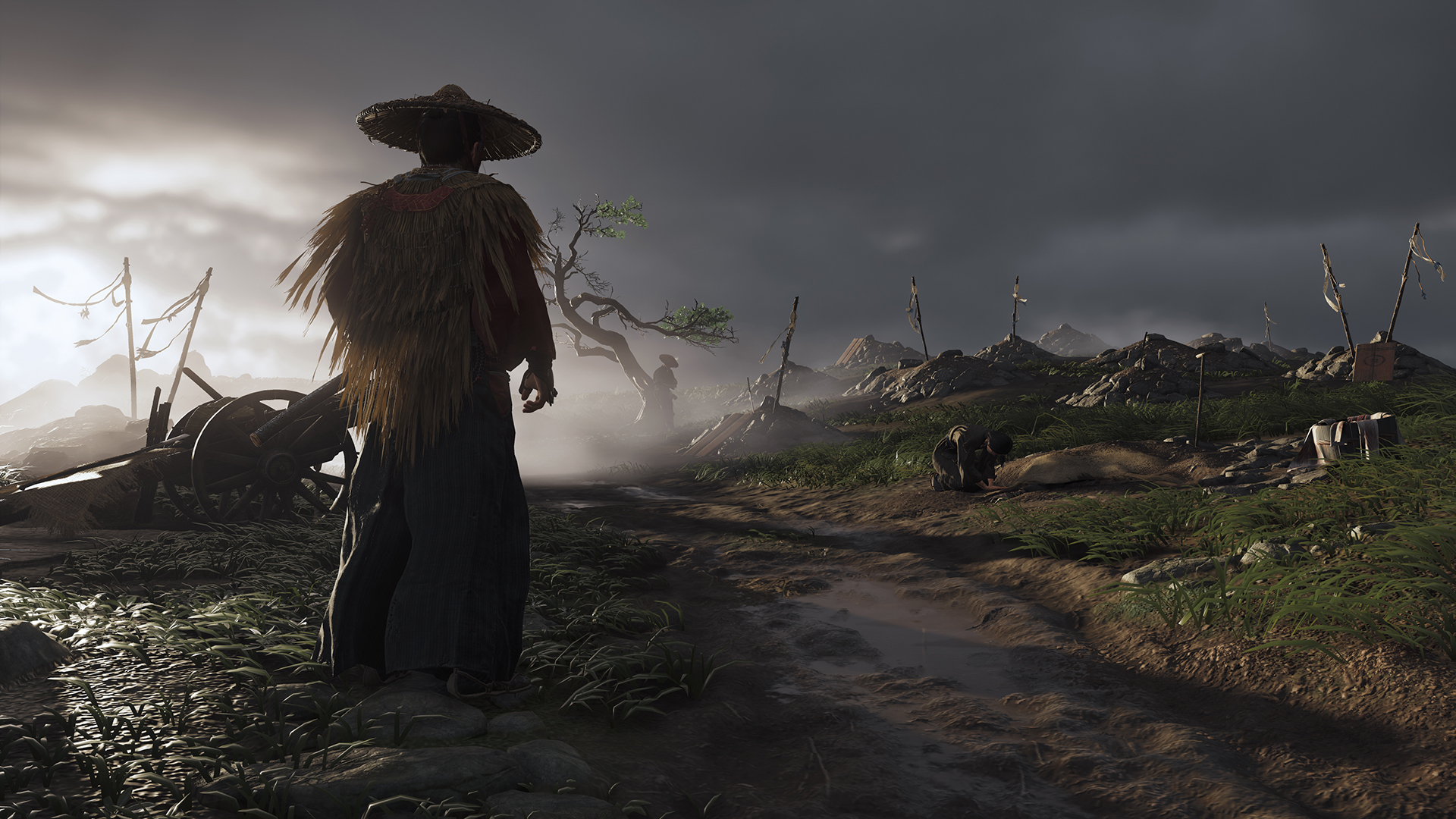
I went into Ghost of Tsushima knowing very little about what the game was outside of it being an open world action-adventure game set during a Mongol invasion of Japan during the 1270’s. A cool premise to be sure, but a cool premise alone wasn’t able to change the fact that I wasn’t having much fun with the game itself.

I really wanted to like Ghost of Tsushima. From its initial pitch to the various trailers and snippets of news that led up to its release, I was under the impression that this would be something I could sink a lot of time into. By all accounts, there was a lot of the game to experience, but the general consensus was that very little of it was worth the time investment. But I wanted to experience it for myself because I was very much in the mood for a big and bombastic action game. Instead I got Ghost of Tsushima, a sigh in video game form.

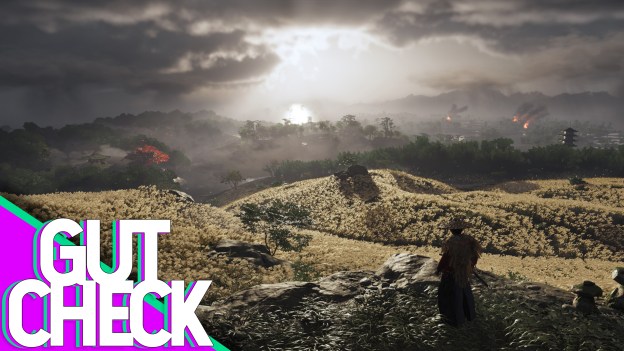
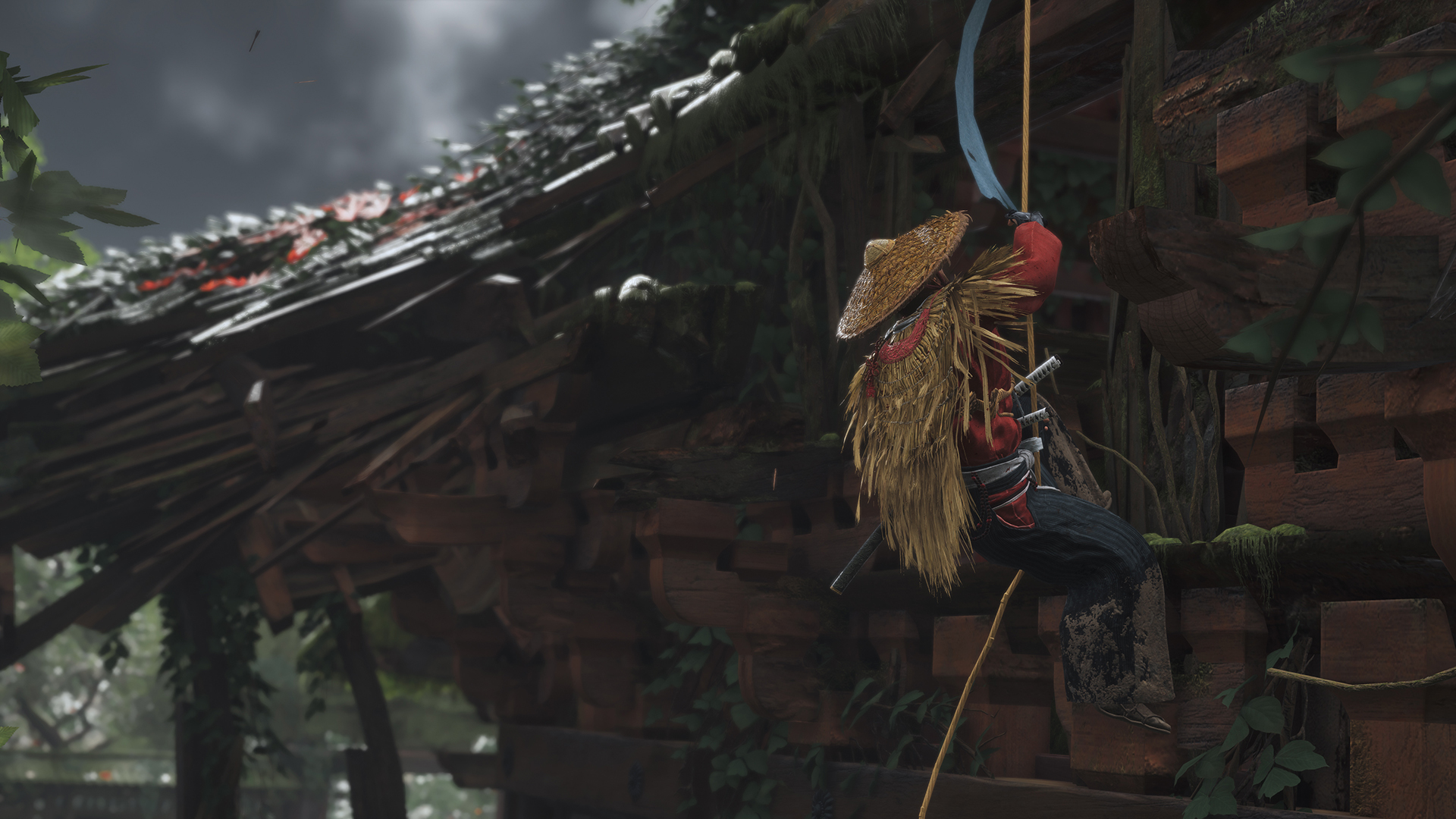
You might look at screenshots or trailers for the game and think, “wow, that’s a beautiful game,” and you wouldn’t be wrong. Riding through a field of flowers and over the rolling hills of cherry blossom trees is objectively beautiful in Ghost of Tsushima. The art direction is fantastic and deserves to be applauded without a doubt. But once you start moving around and interacting with the world, that’s when you see the cracks start to show.

Standing in stark contrast to the beauty of the world were the rough and jagged animations in Ghost of Tsushima. Nothing seems to flow together in a natural way, ultimately making navigating the world look and feel clunkier than you’d like. Multiple times I found myself getting caught up on walls, being slid across the ground by roving NPCs, and unnaturally snapping into static animations while trying to climb or duck under obstacles.

But janky animation isn’t the end of the world. The real issues crop up in the playing of the game itself, particularly when using the camera. Now there are bad cameras that fail to adjust to a player’s position, or a broken one that just doesn’t follow the action when you need it to, but I’ve never had a camera in an open world game vehemently disregard my inputs in the brazen way that the one in Ghost of Tsushima does. The camera often tries to force a cinematic angle that isn’t particularly helpful when you’re barreling down the road on your horse and just want to see what’s ahead of you. While annoying, it isn’t the end of the world.

However, the camera exhibits borderline game-breaking behavior during combat encounters, when you’re desperately trying to create space between you and the ever charging hordes of enemies. The camera will often rotate into awkward angles if you happen to back into an object, making the concept of keeping your enemies on screen more of a chore than it needs to be. This could all be alleviated to some extend with a competent lock-on mechanic, but Ghost of Tsushima lacks a functional targeting system.

You are regularly surrounded by groups of enemies, something that other games might use as an opportunity to let you hit a button or click a stick so you can individually lock-on to an opponent. Ghost of Tsushima opts for something slightly different and objectively worse. You have a sort of soft lock-on where you gently nudge the camera to focus on an enemy, and that will “lock-on” to them. Except it doesn’t work and you’ll just end up swinging wildly at nothing until some dick with a spear stabs you through your sternum. I hate this camera with a passion, and it’s one of the main reasons I don’t like Ghost of Tsushima.

I can’t really talk about too much of what to expect from the later hours of Ghost of Tsushima considering I’ve only played maybe two hours of it, but I feel like I’ve already hit my limit with it. A lot of people have said the the opening hour or so is by far the weakest portion of the game, but that fact is usually followed up with the revelation that very little of the game’s content is interesting or unique. While I don’t have first hand experience to speak on it definitively, based on what I’ve played thus far, neither the gameplay, missions, nor story have been particularly engaging or worth returning to.

Early in the game almost every action you take is interrupted by a cut-scene that goes on way too long, or a flashback training sequence that also overstays its welcome. The story seems fine so far, but it has had no emotional weight or impact on me at all, which ultimately seems to be the overarching theme with Ghost of Tsushima. It doesn’t really excel at anything, and more often than not it just feels deflating and disappointing.

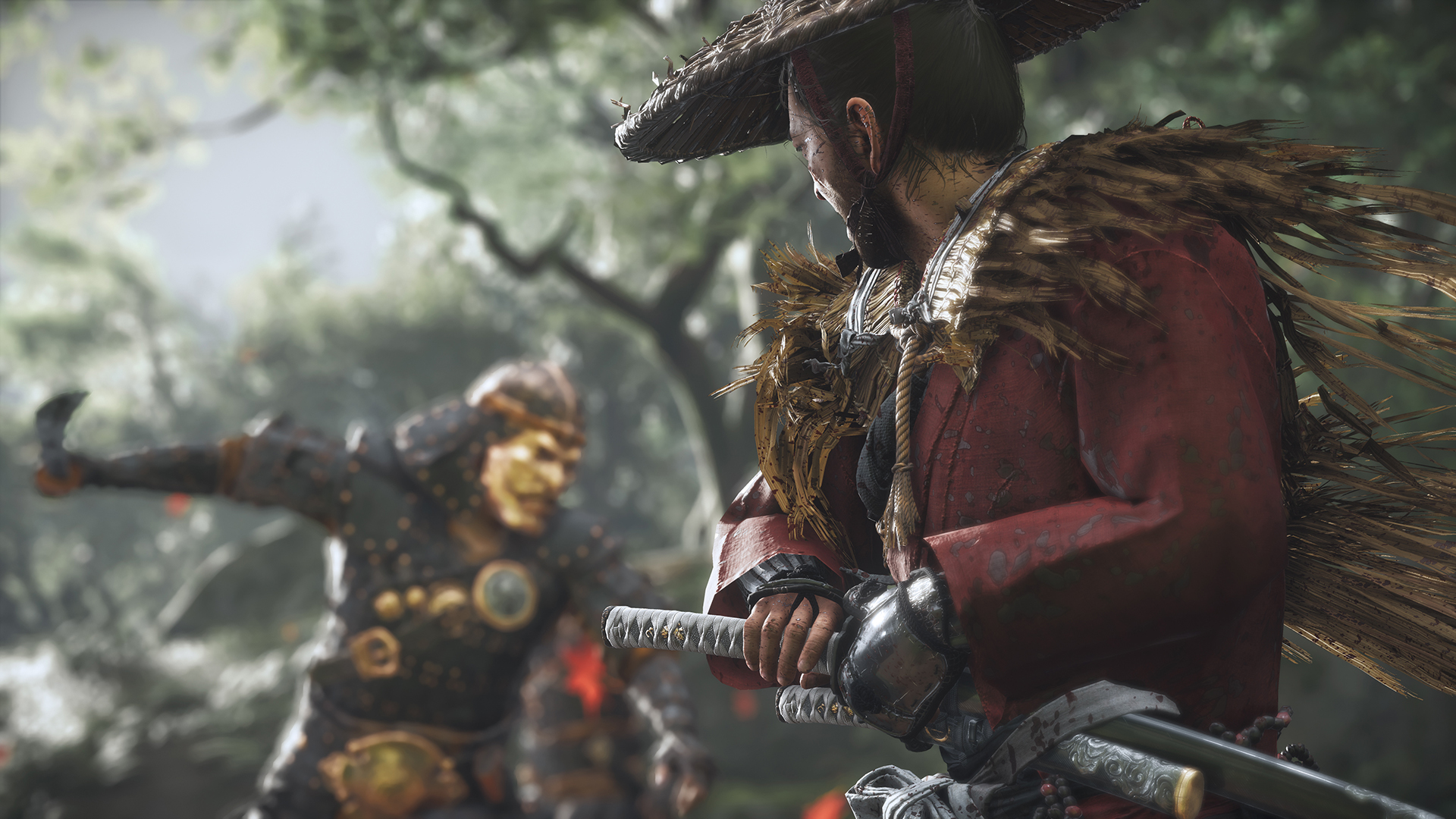
That being said, it’s a lot of fun to get into sword fights with people in Ghost of Tsushima. The combat is deliberate in a way that can feel incredibly rewarding when executed correctly, and utterly deflating when you mistime something. It would be a lot better if it had a traditional lock-on mechanic, but as it stands it’s rewarding when you aren’t overcome with frustration from the incompetent camera. There’s also a “standoff” mechanic which, while not revolutionary, is certainly interesting. It’s basically the “anti-stealth” mechanic, where you march right up to a group of bad guys and challenge them to a duel. What happens next is you basically have to time a button release to one-hit kill your opponent, but I still thought it was pretty cool the few times I did it.

I can’t really speak to the stealth aspects of the game though, because you’re severely limited in the early hours of the game with what you can actually do. It seemed okay I suppose, but it wasn’t anything worth gushing over. Coincidentally that’s exactly how I feel about the everything in Ghost of Tsushima.

But that’s Ghost of Tsushima in a nutshell. It’s an okay game that has some pretty rough edges. It’s one of those games that I couldn’t recommend anyone rush out and buy at full price, but on a big enough discount I might. Maybe Ghost of Tsushima just makes a really miserable first impression and needs more time to really be appreciated. But I just don’t think I have that kind of patience in me for a game that just feels sloppy.

Gut Check: Among Trees

There is no denying that Among Trees is cut from the same cloth as the countless other survival games that have existed over the years, but leaving it at that would not only be dismissive and reductive, but fairly inaccurate as well. While Among Trees is one of “those” kinds of games, it sands down some of the rough edges of other titles of its ilk that usually lead me to avoid the genre entirely. But there’s something about this particular early access survival game that has me so fascinated and eager to continue playing it.

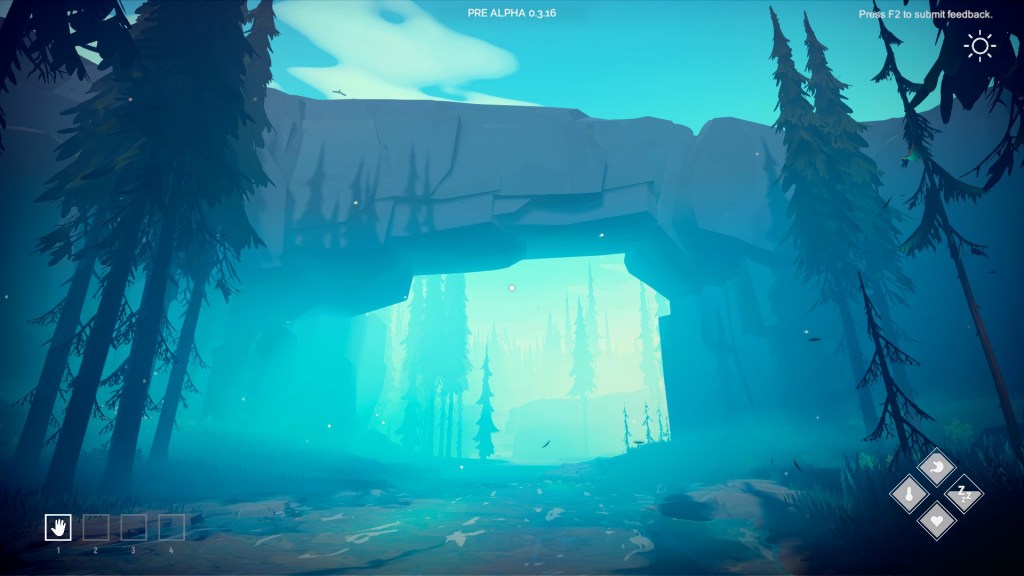
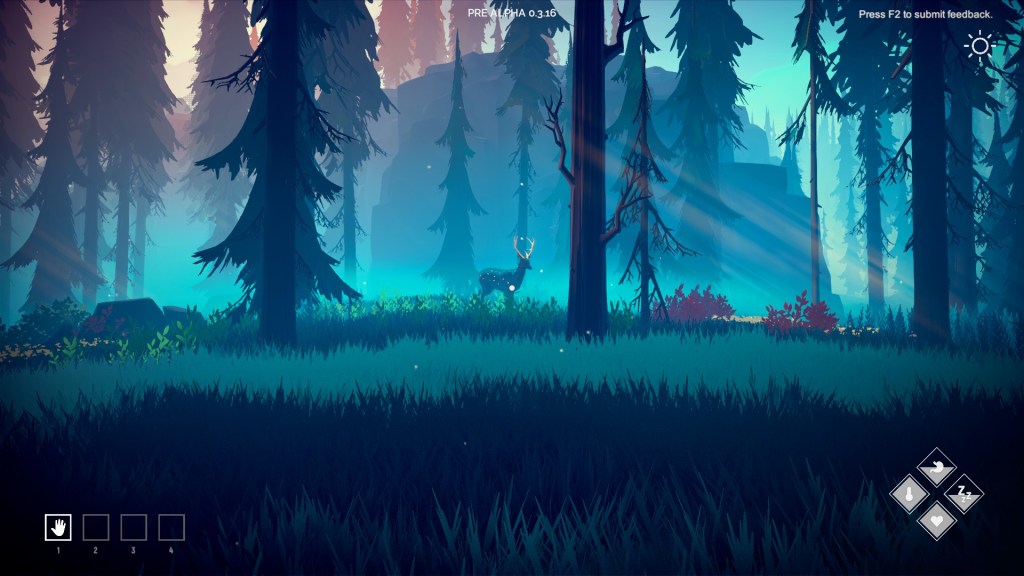
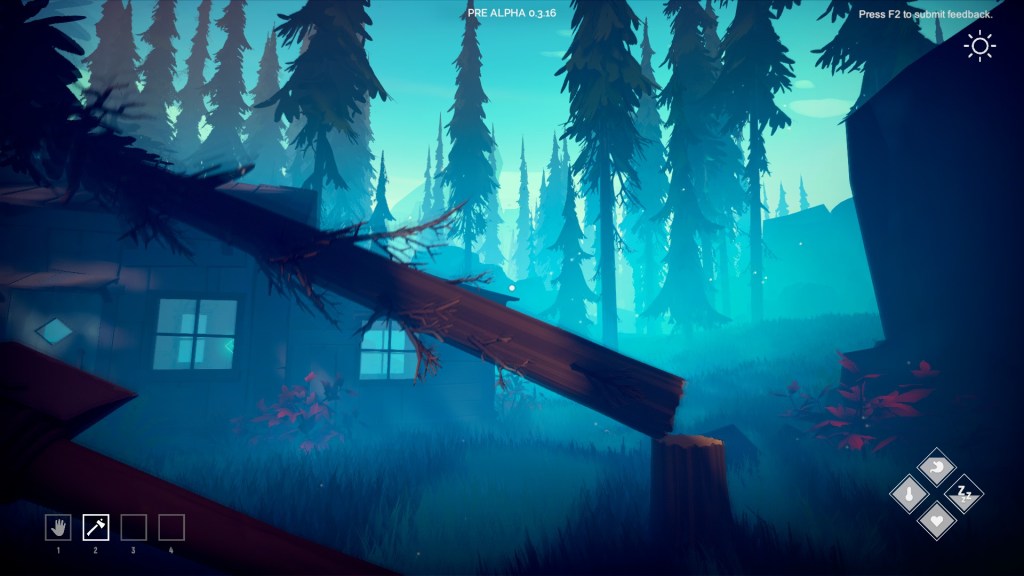
The first and most striking thing about Among Trees that you’ll notice is just how gorgeous it is. It has this painterly, low-poly graphical style that really adds to this feeling of being in a mysterious place. Everything is drenched in this blue haze that makes seeing into the distance more of a chore than you’d like, but its presence makes everything feel more ethereal and ripe for exploration.

Unfortunately, in my time with Among Trees, I found exploration to be a little laborious at times, from the sparse amount of interactive elements in the world to the dreadfully slow walking speed of your character, it can feel like a real chore at times. While just seeing the world around you is incredibly pleasant, when you first start Among Trees, you have very little in the way of interaction and abilities.

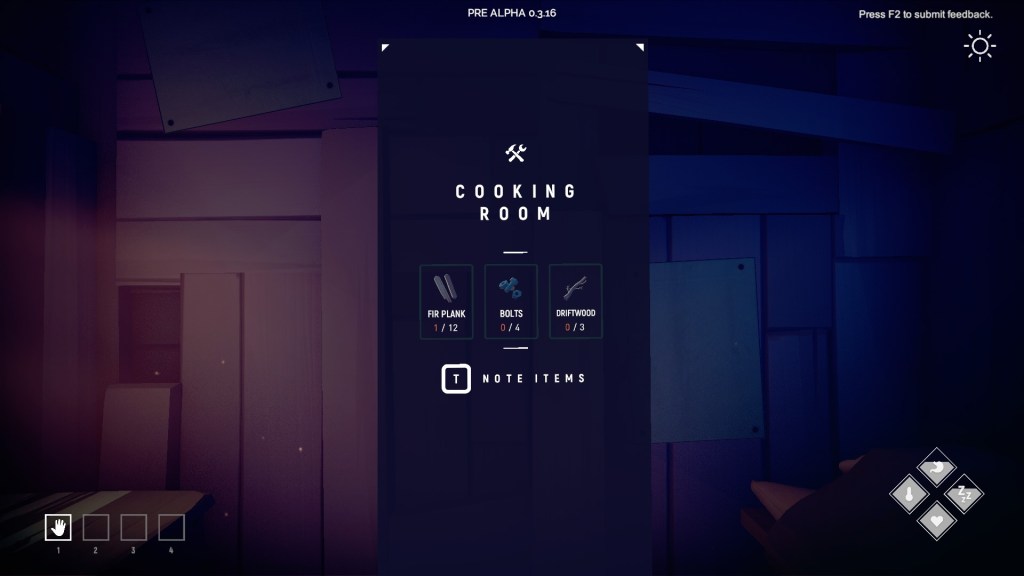
Maybe I came into Among Trees with some preconceived notions about what a survival game should allow me to do from the start, but I posit that having to construct a bespoke crafting room on your house before you can make an axe is wild. I wouldn’t be complaining if crafting the room was easier, but the requirements for it were 12 wood planks, some moss from tree stumps, and some driftwood (I think), all of which were preposterously hard to find, especially when you have no tools.

You can’t punch trees until wood comes out, instead you have to find each thing on the ground as you explore. It took me about 3 in-game days before I finally was able to craft an axe, and that was only because I got very lucky and found this large plot of land with a bunch of boxes, rope, nails and wood planks. If it wasn’t for that boon, I’d probably still be out there eating every mushroom I could find and praying none of them were poisonous.

Poison, in my experience, has been the second most dangerous thing in Among Trees, only falling short of the first spot to the big angry bear that chased me around. In Among Trees, most of the time you’re alone with only the trees and the bees to keep you company. But there are plenty of animals skittering about like rabbits, deer and birds. Also there are bears roaming about. You know they’re a big deal too because it’s the only time I’ve seen Among Trees give me a stealth indicator. From what a helpful loading screen has told me, bears tend to hang around areas where good loot is, so that’s something.

But if you can manage to outrun the bear and make it back to your prefab cottage in the woods with all those materials, you might just be able to expand your home and get yourself a kitchen or something. Base management in Among Trees is odd, but not in an inherently bad way. You start in front of a dilapidated cottage in need of repairs. Getting close to it will reveal its material requirements for becoming a lovely little home in the woods that people will pay crazy amounts of money to Airbnb at.

Once you’ve collected the materials the house is reborn anew, granting you a bed to sleep on and a book to save your progress in. There doesn’t seem to be any customizing how the house is constructed or how it physically looks, trading that for prefabricated rooms that you can unlock as you go that make the home bigger. You can decorate it by crafting little trinkets and such, but as early as I was in the game, I couldn’t imagine wasting the resources on something as frivolous as decorations… not yet at least.

Among Trees is a fascinating survival game that lured me in with its gorgeous visual style, but kept me there because of its mellow and relaxing core loop. There are plenty of weird quirks in the game like not being able to craft multiple things at once as well as the pitiful walk speed, but outside of those gripes, Among Trees is a truly serene and calming experience. It’s currently available in early access exclusively on the Epic Games Store, but if you’re looking for something low key, you could do a lot worse than Among Trees.

Gut Check: Hardspace: Shipbreaker

Hardspace: Shipbreaker is a game that might have been made with me and my proclivities in mind. In Hardspace: Shipbreaker, you play as an unnamed “cutter” for a company that dismantles and salvages derelict space crafts for various clients, while making sure to pick through everything in an effort to get a little extra bonus cash. It’s currently in early access which is reassuring considering its various and completely understandable technical issues, that hopefully will be fixed as time goes on.

Booting up Hardspace: Shipbreaker, I was immediately greeted with the telltale signs of a game that didn’t play well with my dual monitor setup, constantly dropping the image in favor of a black screen. This happens sometimes and simply requires me to change some resolution settings and toggle between windowed full-screen and regular full-screen. I only mention this because Hardspace: Shipbreaker has a surprisingly long and potentially interesting introduction sequence in it, but it was lost on me because I could only see it in quick flashes. Which is why you should all sign my petition to make sure that games let you edit your settings instead of throwing you straight into various cut-scenes and gameplay.
Once that was all sorted out however, I made the smartest decision of my life and played through the entire tutorial. Do yourself a favor if you end up picking up Hardspace: Shipbreaker and play the tutorial. It doesn’t explain everything to you, but it gets you on your feet faster than just winging it ever could.
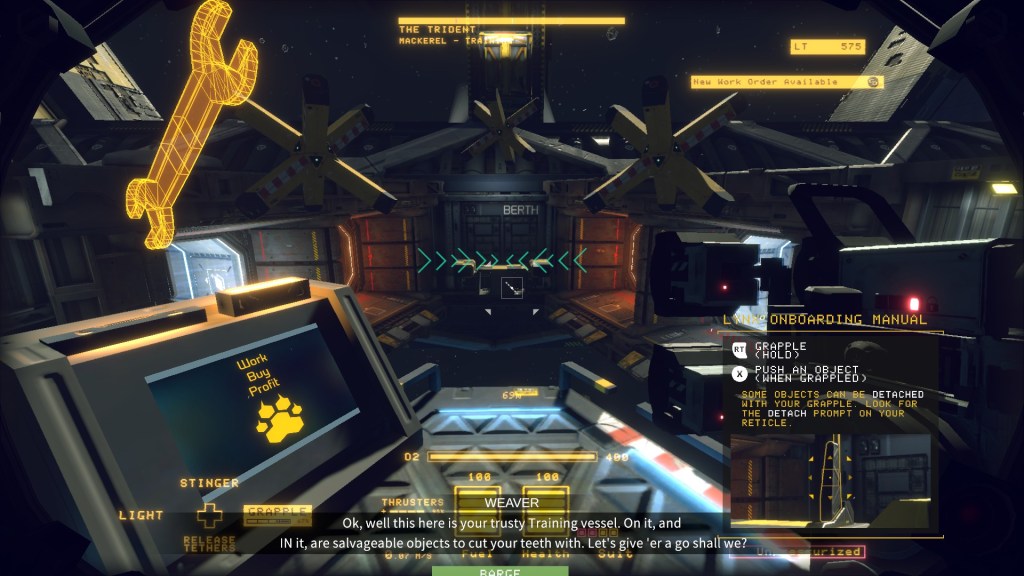
In the tutorial you’re walked through the basics of movement, which even after completing it, I found myself gently floating into space more times than I’d like to admit. In Hardspace: Shipbreaker you need to account for all dimensions of movement including vertically, horizontally, and going forward and backward. You have jet thrusters on your space suit that allow you to roll, accelerate and decelerate, which can help counteract the momentum you’ve built up while you hurdle into the sun.

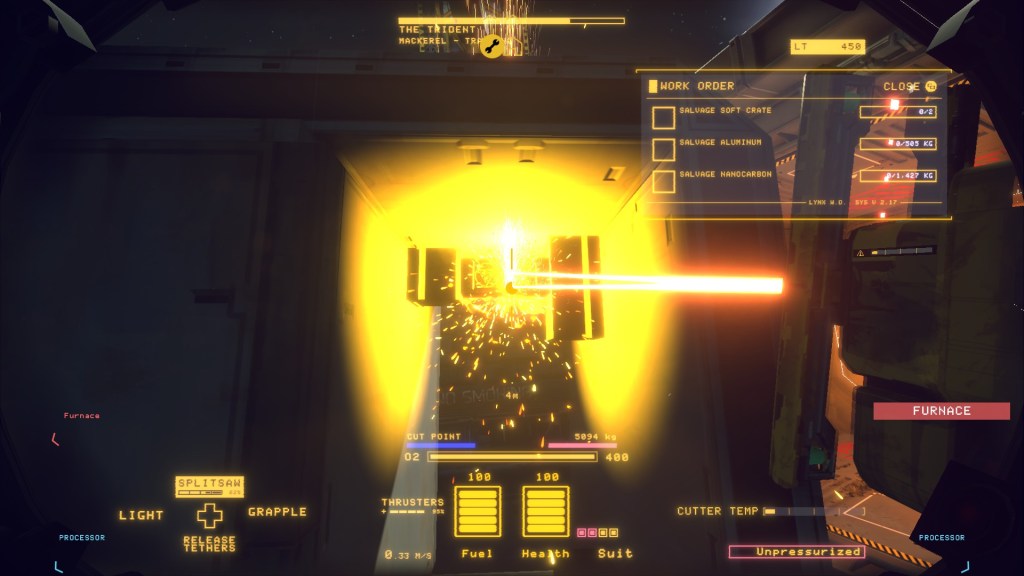
Once you “master” your movement abilities, it’s time to do some destruction. You get access to a few tools during the course of the tutorial including a grappling laser, two kinds of laser cutters, and tethers. The grappling laser allows you to shoot a beam of energy at something and whip it around if it’s light enough. The two laser cutters allow you to either focus a laser on a fixed point or cut long horizontal or vertical lines into a surface, like if you wanted to make a new window in a ship. The tethers are basically the same thing as the grappling laser, except they’re capable of moving heavier objects and you have a limited amount of them.

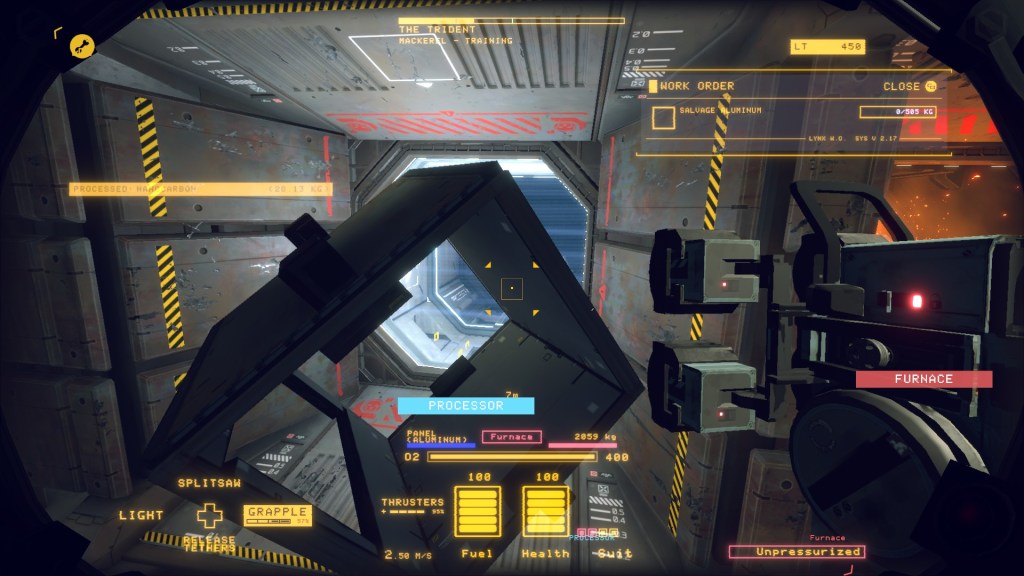
Using all of these tools, you have to deconstruct a few ships, take their various components and deposit them into one of three locations. I’m not entirely sure what the delineation between the three areas are, but one of them is burning with fire which I understand to be where sheets of metal and miscellaneous materials go to be refined. The second one is this glowing blue area that accepts other, usually bigger pieces of the ship to be refined, and the third is a barge that sits below you that’s where you deposit the mission critical stuff like the ship’s reactor.

While inside of the tutorial or freeplay mode, you’ve got unlimited time and resources at your disposal, but once you start your career in earnest you have to worry about oxygen, thruster fuel, tether amounts and the condition of your tools. You also have a time limit to complete each job, which means completing the task list. If you’re using a controller like I was, you will not be able to open the task list without using the keyboard. The controller support is mostly there, but that seems like a pretty important function to not have working.

Within the career mode, you have to make sure you’re being mindful of your tools and resources, all of which can be repaired and refilled back at your floating hub platform that’s right by the ship you’re scrapping. You need to make sure you complete the objectives of the job first, whether they be removing the reactor, or collecting a certain amount of a particular metal or material. Secondly you’ll want to scrap and salvage anything you can after the objective is completed, because you’ll earn both money and an upgrade currency that can be used to unlock more features and abilities for your tools.

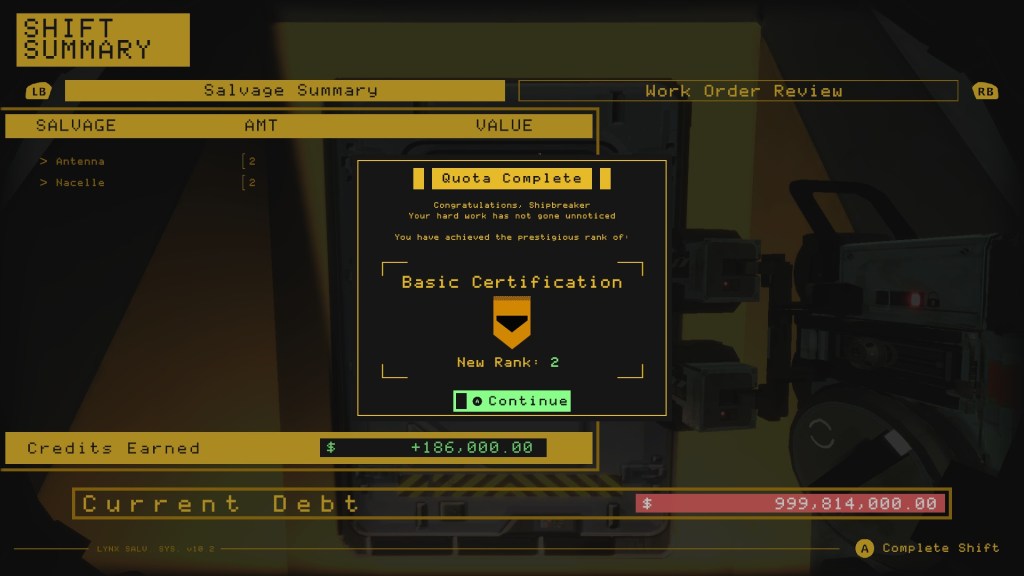
You can work on a particular ship for more than one shift however, allowing you to truly complete a job if you’re so inclined. Just make sure it’s worth the time investment, because your character is in massive debt to the company they work for, and need to make payments regularly to stay afloat. Hardspace: Shipbreaker captures that capitalistic dystopian nightmare that we’re heading for so well, genuinely making me worry if I’ve worked enough to pay off the company I work for.

Lastly, Hardspace: Shipbreaker is an early access game, which means it’s pretty rough around the edges at the moment. Cut up too many particles or accidentally trigger an explosion in the ship and the frame rate vanishes before your eyes. I don’t begrudge the game for that considering there’s a lot of physics occurring at once and slowdown is to be expected. I also experienced a crash in the brief time I spent with Hardspace: Shipbreaker, but I’m going to chalk that up to it being in early access.

Hardspace: Shipbreaker can feel overwhelming at first, what with the amount of mechanics you need to learn before you can actually feel comfortable doing anything on your own, but once you get the hang of it I found it to be a genuinely enjoyable time. I think the tutorial needs to do a better job at explaining how to properly, safely and efficiently dissect a spaceship instead of leaving it to trial and error, but that’s just my personal preference. Hardspace: Shipbreaker is a truly good time and I recommend checking it out if the idea of being a space scrapper is as enticing to you as it is to me.

Gut Check: Neversong

Neversong is a spooky little side-scrolling game that tries to blend so many elements together, but ultimately doesn’t succeed at most of them.  The spooky action, adventure and puzzle game has an interesting enough stylistic and plot hook to grab your attention, but many of the gameplay decisions are just dull.

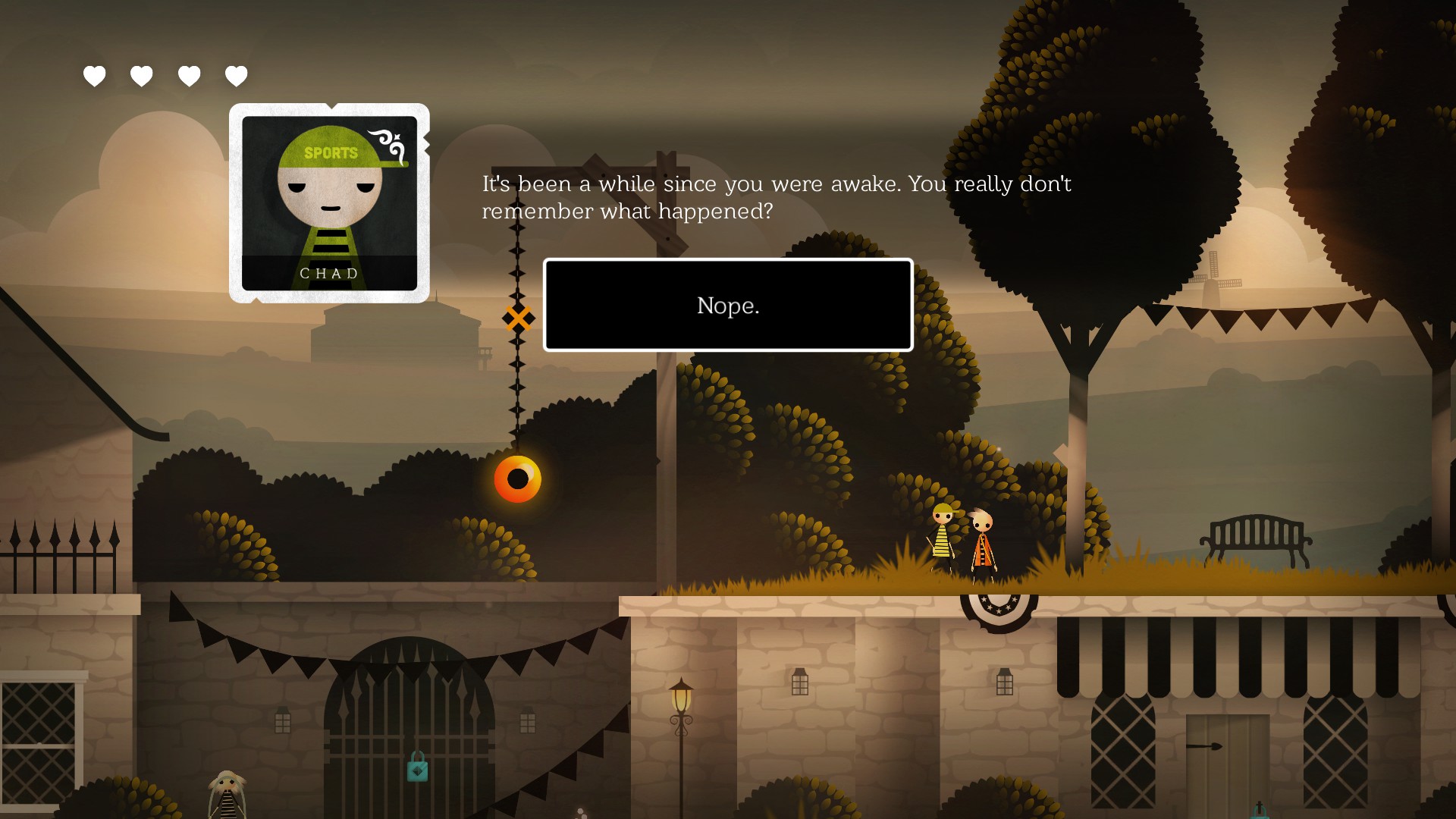
In Neversong, you play as Peet, a young boy who you might traditionally call something of a coward.  Peet is juxtaposed by his best friend Wren, a young girl with no fear.  The two were inseparable best buds who one day found themselves in an abandoned asylum, where Wren was kidnapped by a horrifying monster, and Peet was put into a coma from what I can only assume is fear.  That part wasn’t super clear, but the main thrust of the story seems to be rescuing Wren.

20200522145513_1

You wake up in your hometown, a place that is suspiciously devoid of any adults and only inhabited by what can only be described as the shittiest children on the planet.  Seriously, these kids are horrible, often times reveling in the fact that your best friend is missing and probably dead, or just calling you weak and a coward.  I genuinely hated every character in the game that wasn’t Wren.  If that was the desired effect, then mission accomplished.

Neversong excels in its tone and presentation, from its usage of music to its art style, everything is cohesive and vaguely terrifying.  Then you actually start playing the game, and you’re immediately confronted with the shallowness of the mechanics.  Now, to preface, I don’t think that Neversong is a bad game, I’m actually having a pretty alright time with it so far.  I just think that of everything I’ve seen so far, the parts where you need to either fight things or be accurate in your platforming are severely under-cooked.

20200522152917_1

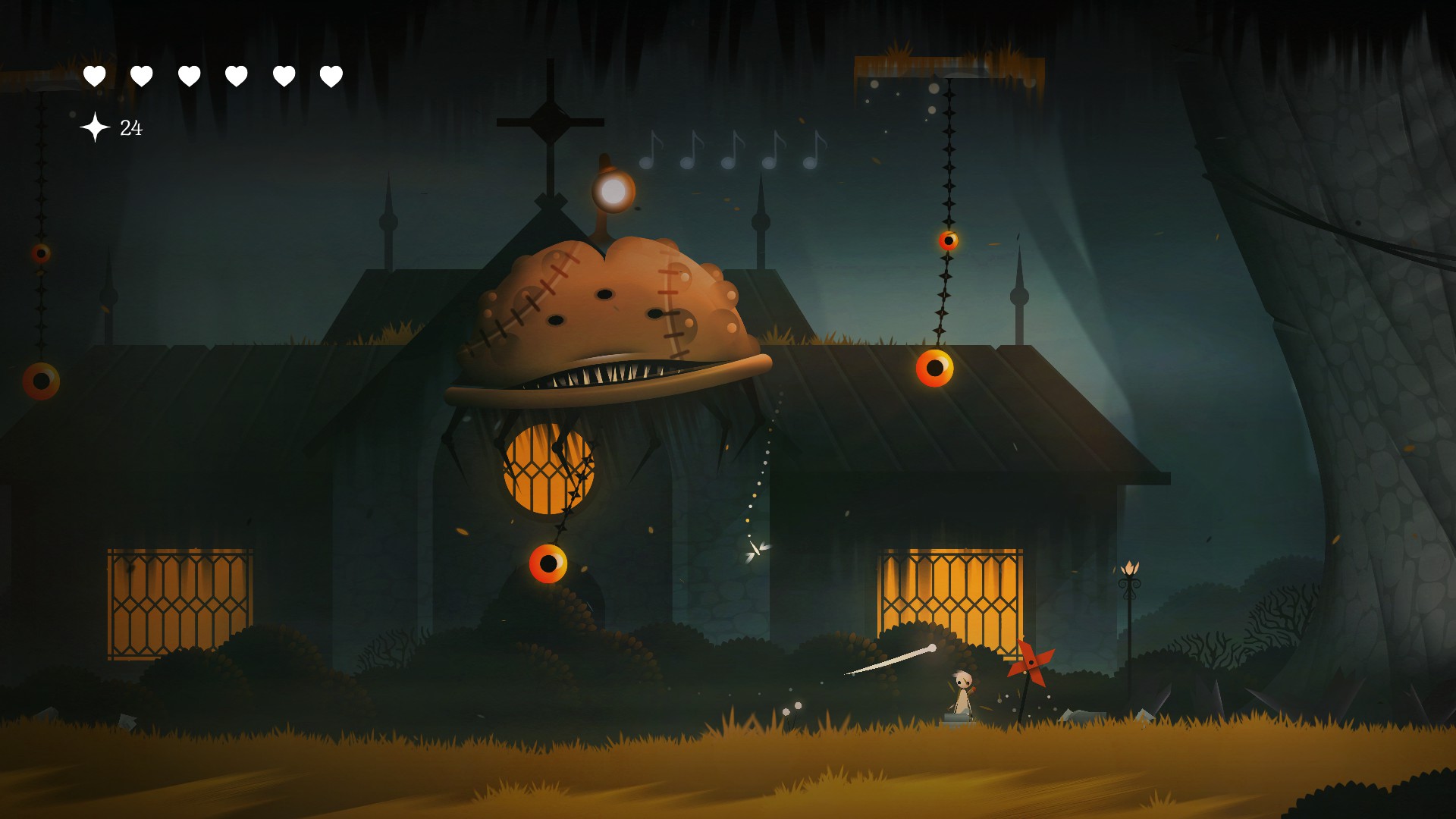
Early on, Peet becomes armed with a baseball bat which does exactly what you think it does.  You walk around the world and whack things with it until they explode into XP or health drops.  The XP system is pretty simple, offering you an extra pip of max health in return for collecting 100 XP shards.  It adds a welcome, albeit shallow form of progression that the game is ultimately better for.

Combat however just sucks.  It’s boring and lifeless, ultimately feeling more like an afterthought than anything.  Now, that might change as I progress further in the game, but after defeating two bosses by doing nothing more than mashing the X button at them, I feel less confident about that change actually happening.

20200522155837_1

Enemies up until now haven’t actually been a challenge, instead feeling more like obstacles that impede you as you move from area to area.  The same thing goes for bosses, who up till now haven’t been difficult at all, but they take forever to defeat because you need to go through that whole song and dance of hitting them then waiting for them to attack, and repeating that process 5 more times until they actually die.

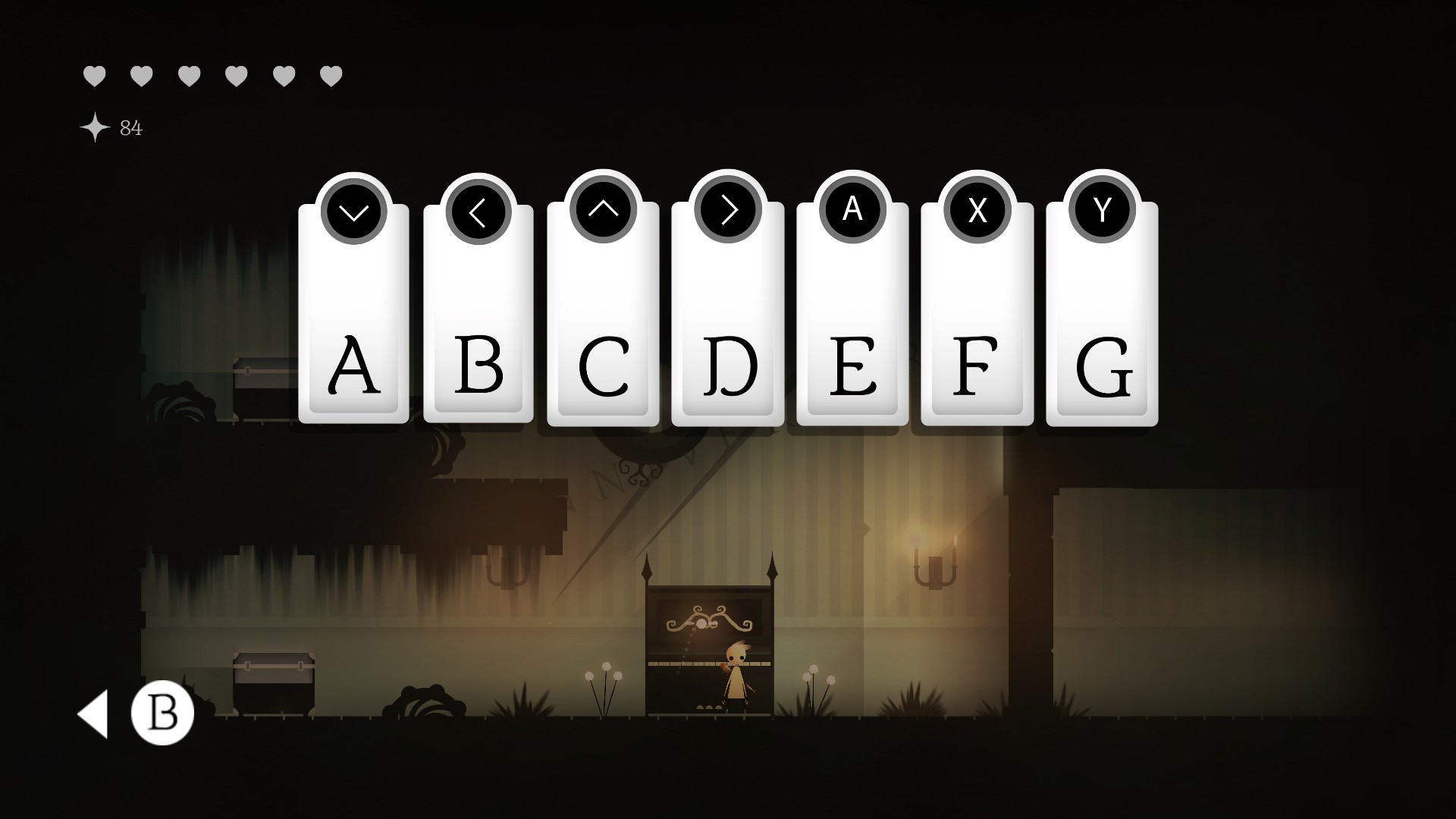
But after you finally defeat one of these time-consuming bosses, you unlock the notes for a song of theirs.  I’m not sure why you get a song from them, but you do.  So you head back from where you fought the boss, wading through the now respawned enemies and excessive amounts of loading screens, and head back to the town and into Wren’s house where a piano is.  At the piano, you play the song you just learned which unlocks a new tool or ability for you to use.  The first is the baseball bat and the second is the ability to latch onto these hanging orbs that you can swing from.  It’s a neat little bit of progression that feels laborious at times because you have to trudge your way back to the town, arguably because some story stuff will happen to you while in transit.  I get why they make you run back home after each level, but it’s still annoying.

20200522160726_1

For all the bellyaching that I’ve done at the expense of Neversong, to its credit, it hasn’t made me do the same thing twice.  The puzzles are all unique to the areas I’ve seen, they keep layering in new kinds of enemies for you to fight, and the only place I’ve had to revisit has been the main town.  Like I said, I’m not saying anything that Neversong is doing is bad, just some of it feels half-baked.

For what it’s worth, I think Neversong is a pretty good package that has its fair share of ups and downs just like any other game.  There is a part of me that’s thankful for the bare-bones combat being included, and another part of me that thinks that Neversong would have been a better game if it was just a puzzle focused experience.  I’m less conflicted about Neversong, and more just underwhelmed by it.  Although, even saying “underwhelmed” is too strong of an emotion for how I feel about the game.  Neversong is a game that I genuinely don’t have strong feelings about, whether they’re positive or negative.

Gut Check: Beautiful Desolation

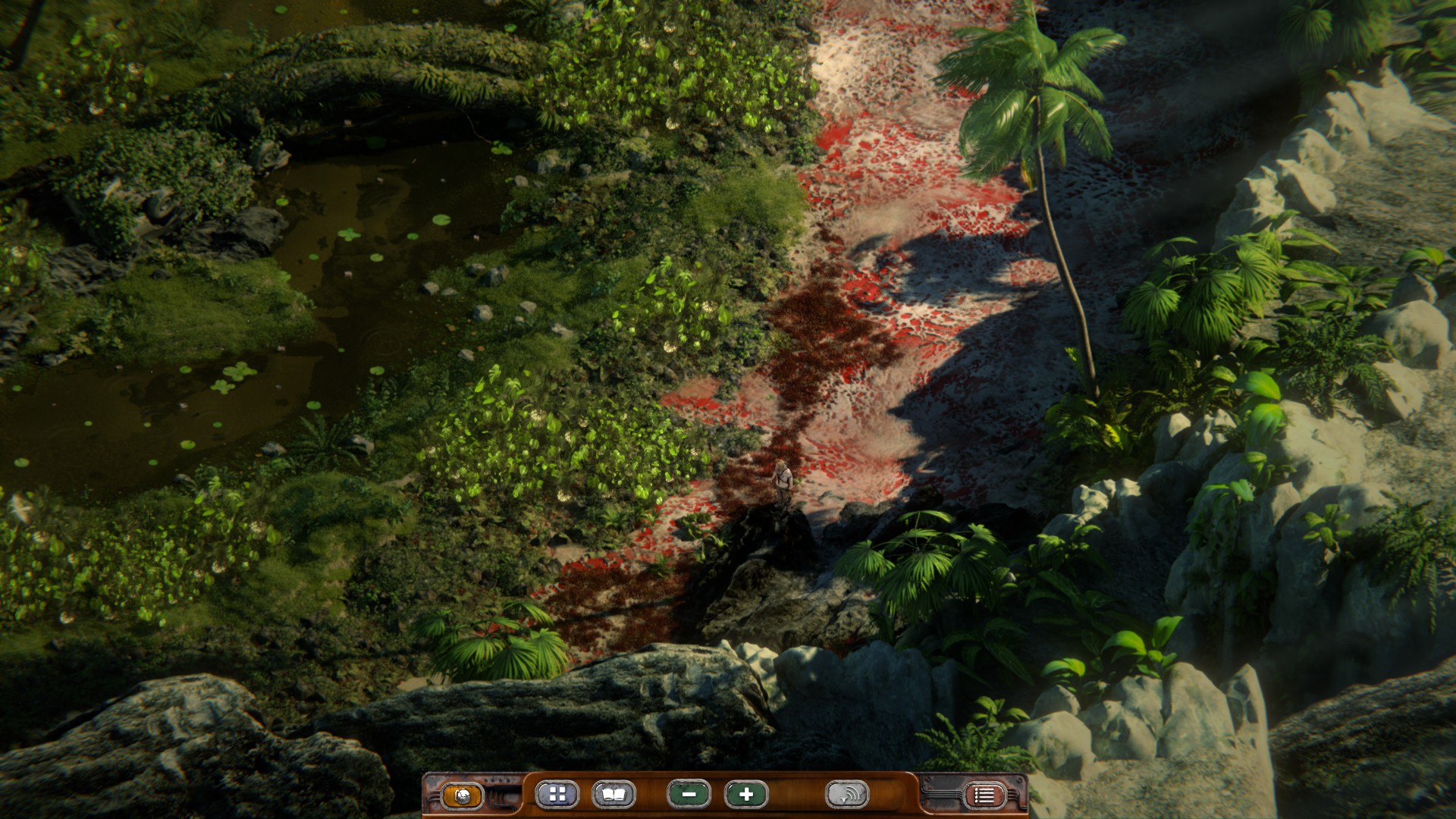
Beautiful Desolation is a point and click adventure game that puts you in the shoes of a gloriously mullet-ed man who is investigating the presence of a mysterious triangular object that’s appeared in the sky.  Through a combination of puzzle solving, dialogue trees and aimlessly wandering around gorgeously rendered landscapes, you start to peel back the cosmic mystery that’s upended your life.

20200518151432_1

Beautiful Desolation starts out very dramatically as you and your wife are driving through a thunderstorm to go pick up your brother from an undisclosed location.  The dialogue reveals that your brother has a reoccurring problem that’s put a lot of stress on your relationship with him, but before you actually arrive anywhere a mysterious shape in the sky called the penrose appears, and some sort of wave of energy flows out of it that ends up flipping your car and killing your wife.

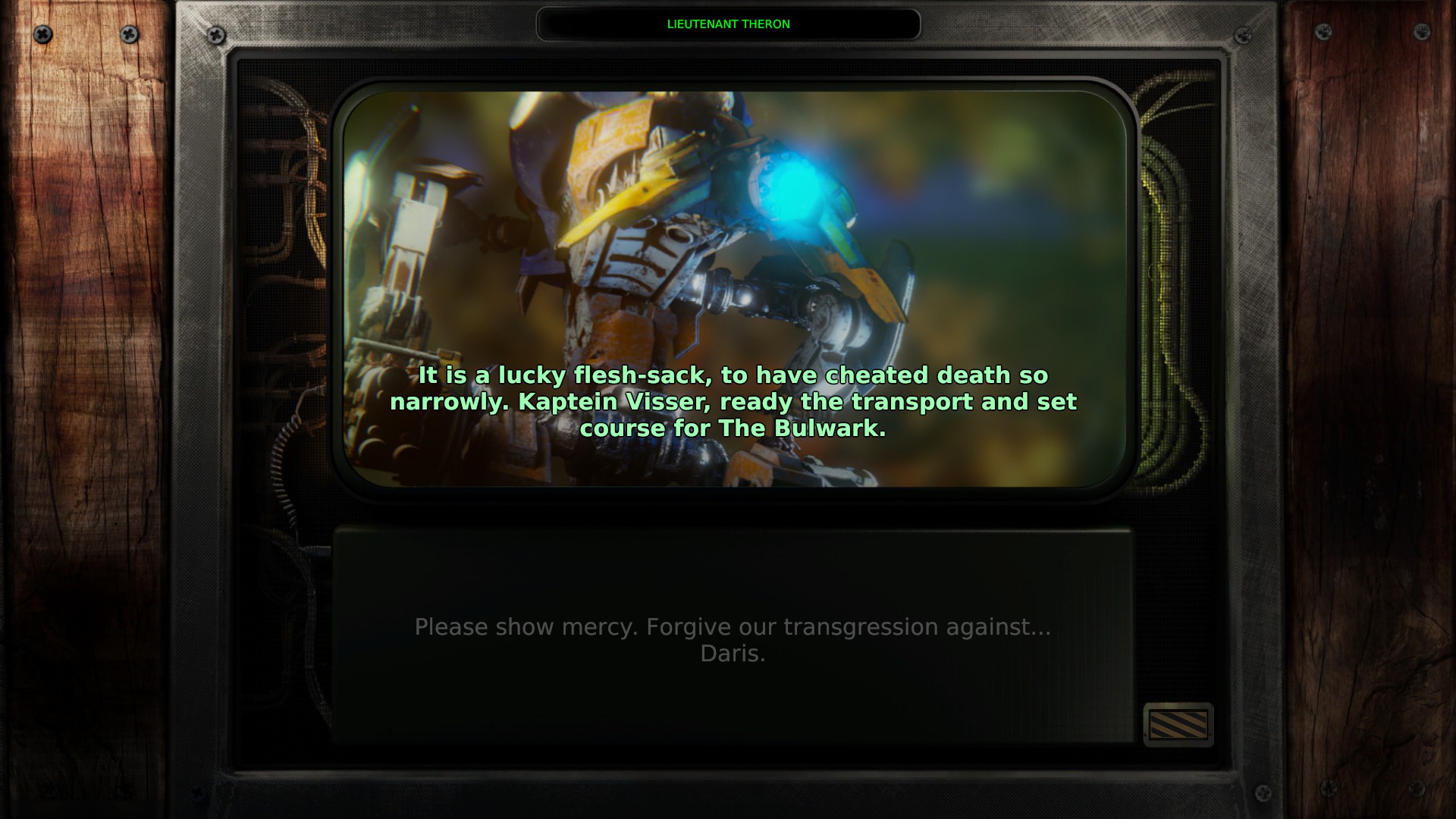
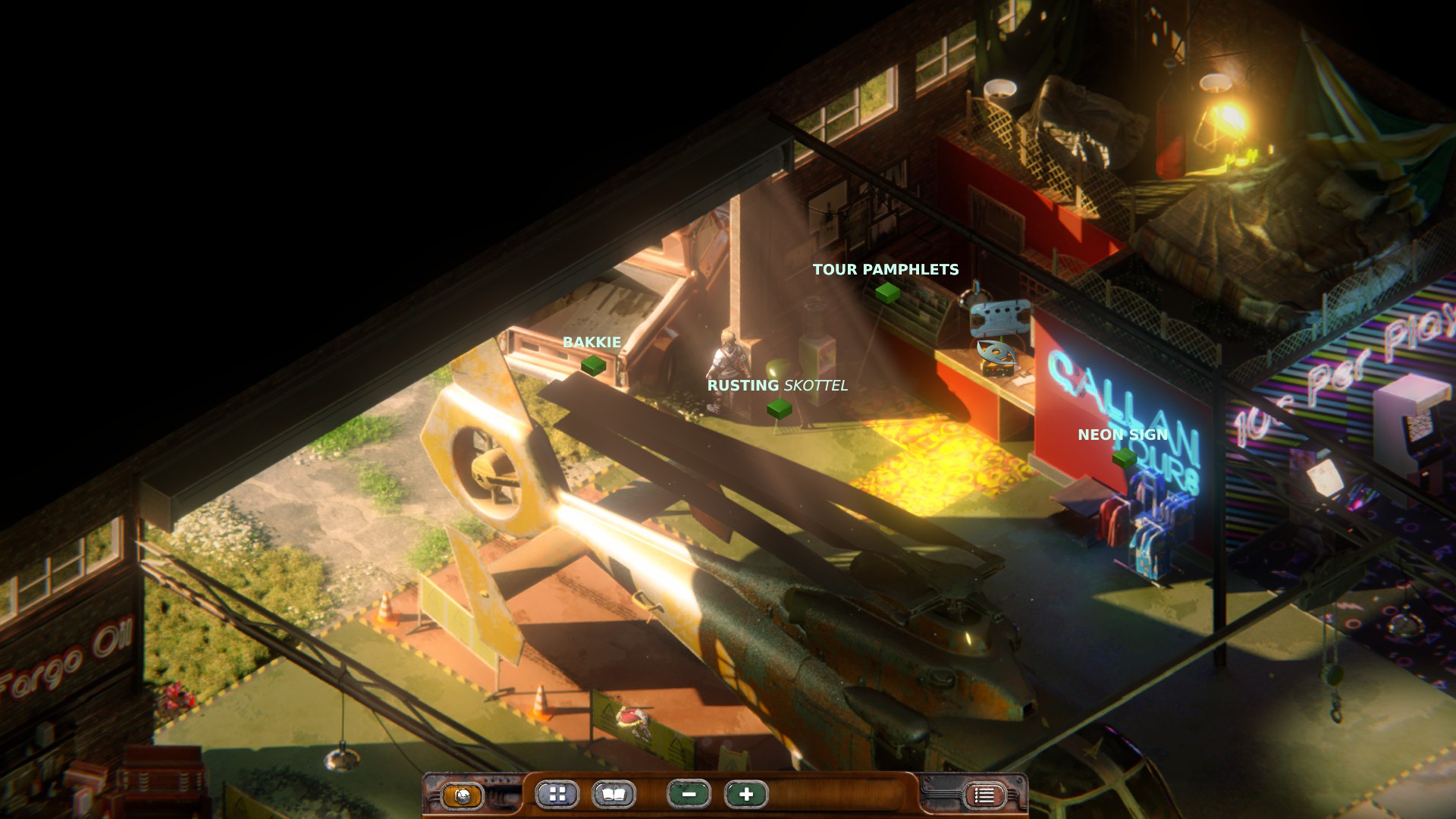
A decade later your character arrives at a hangar owned by your brother in the hopes of getting him to pilot his helicopter up to the penrose that’s still in the sky.  Your character has basically become obsessed with the true nature of this structure, eagerly laying out his intentions of retrieving some sort of data set from the now government (I think?) controlled penrose.  Once up there, you collect the data and things immediately go wrong.  Suddenly, you’re whisked away to another place in another time where you’re arrested by robots, and in transit to the authorities for questioning are shot down.  Thus begins your search for your brother as well as a way home and probably some explanation about what the hell is going on.

20200518150939_1

Typically, this is where I’d discuss the gameplay side of Beautiful Desolation, but the gameplay really doesn’t seem like the main attraction.  You’re basically just clicking on points of interest, interfacing with them using your PDA (which is more or less a handheld PipBoy,) and dragging items around your inventory to combine them.  That is until later on when you get control of a spaceship and can head from point of interest to point of interest.

The real star of the show seems to be the story and characters, rightfully so considering this is an adventure game.  You’ll talk to several other beings on your travels, picking from a few different options of dialogue in an attempt to further your goals and learn what you can.  Since starting the game, I haven’t met a character that wasn’t fun to talk to, although I admit I’m still very early on in the game so that could all change.  I also can’t say how much of an impact on the story your choices have, but I’m hoping that in this dialogue driven experience it’s pretty severe.

20200518144952_1

While I’ve enjoyed what I’ve seen of Beautiful Desolation up until now, one thing that proved to be a nuisance has to do with the beautifully rendered world you traipse around.  While it’s a delight to look at, it also has led to several instances of me not knowing what was walk-able terrain and what wasn’t.  I must of killed fifteen minutes trying to find a way out of the map I was on, only to accidentally click my way onto a ramp that didn’t immediately read as a ramp.  Everything looks so damn good in this game, that I just assumed I couldn’t walk on it.  There’s an indicator that’s supposed to tell me if I can traverse an area or not, but clearly it didn’t register for me.

Beautiful Desolation is a game that intrigues me more than it does interest me, at least that’s how I feel about it a few hours in.  No element of it has either gripped nor repelled me yet, and I’m hoping that changes soon.  Where Beautiful Desolation ends up going is something I can’t answer yet, but I’m definitely going to give it another shot and see if anything changes.

Gut Check: Umurangi Generation

Umurangi Generation is a stylistic and serene game about being a photographer in some weird dystopian, vaguely cyberpunk world where somebody is paying top dollar for your random pictures of birds.  It’s actually a really neat concept that fumbles the execution in certain spots, but still retains a certain meditative quality that I appreciate.

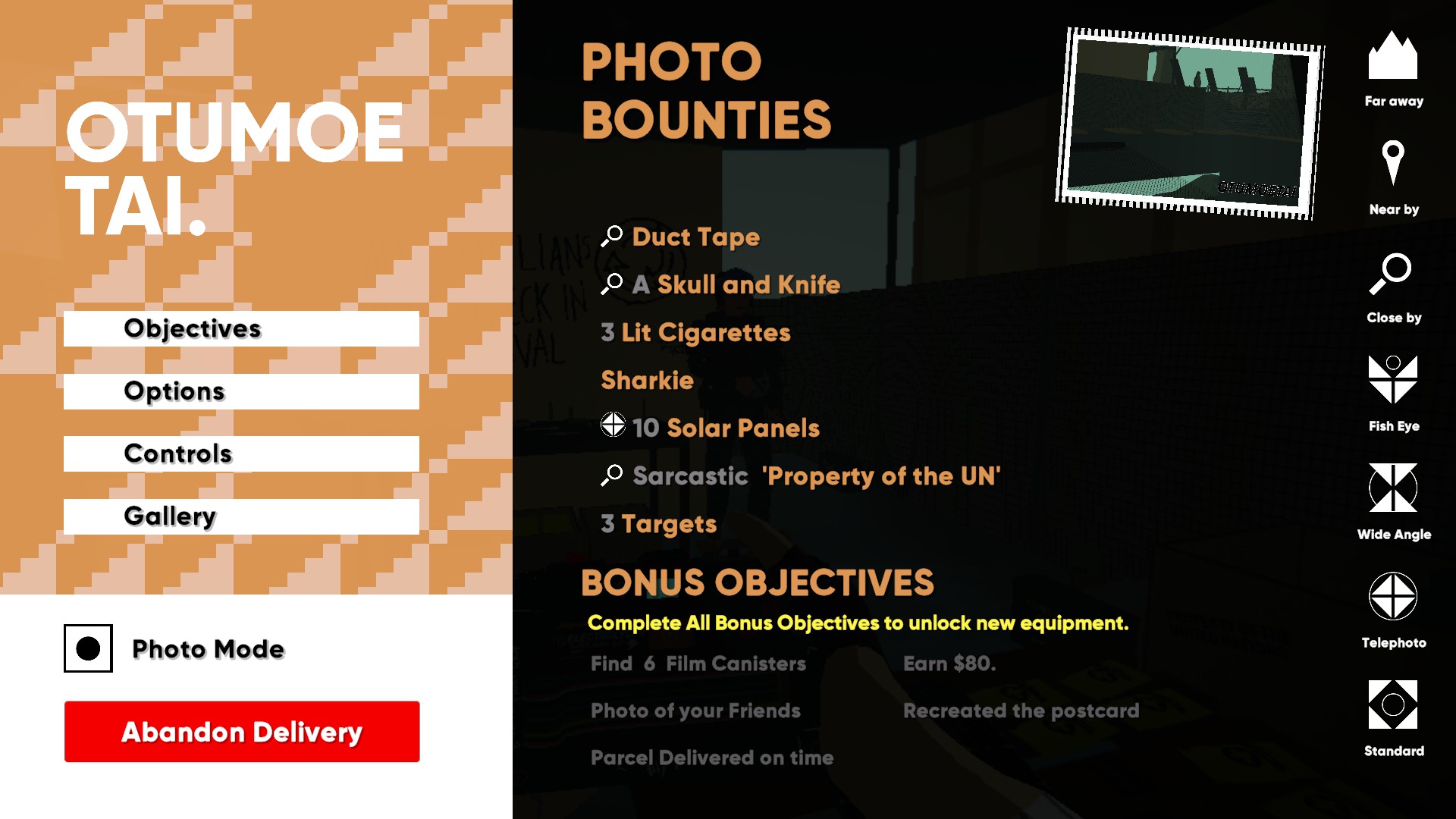
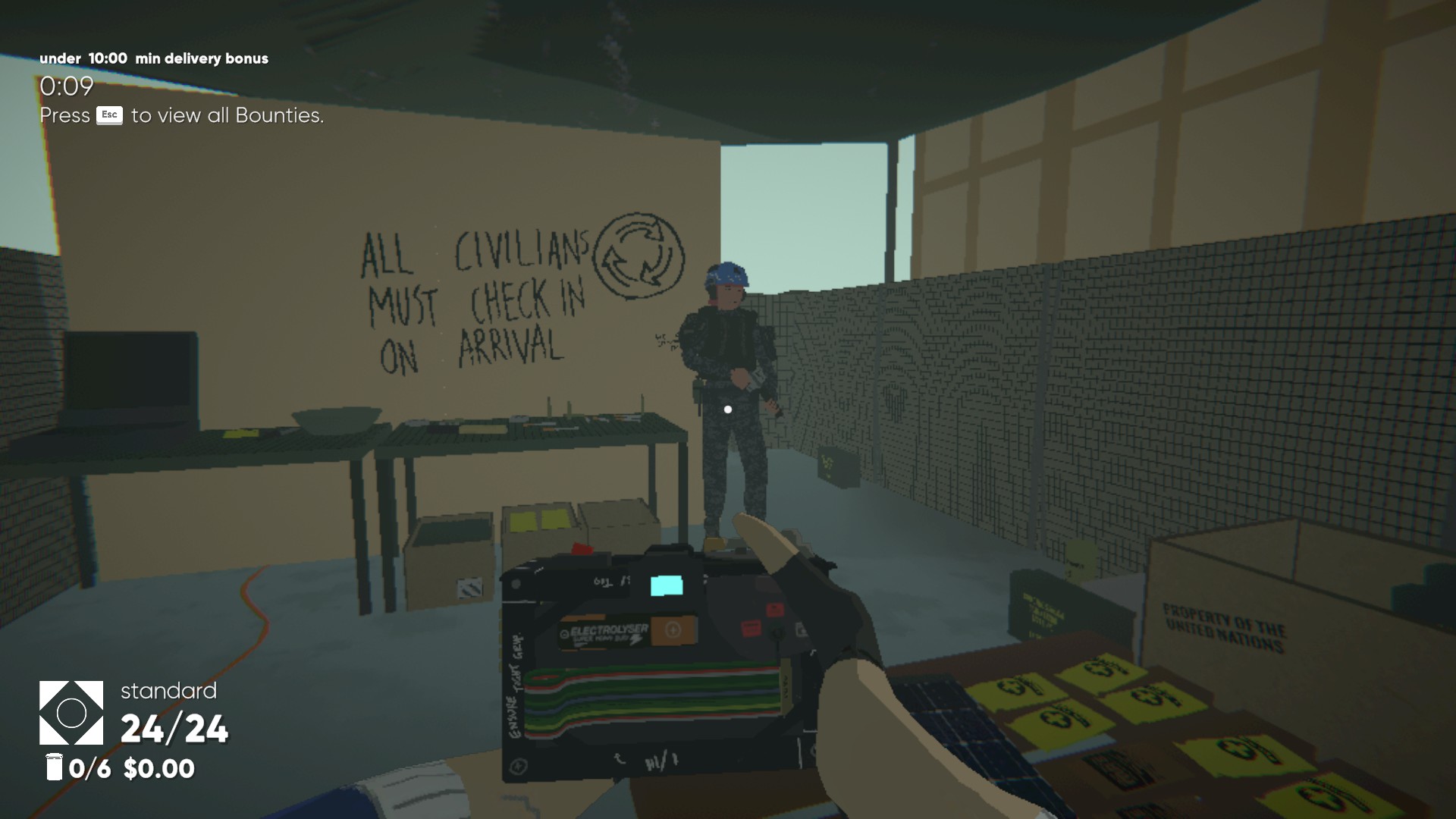
When I jumped into the first level of Umurangi Generation, I honestly felt a little overwhelmed by what I was supposed to do.  You’re given a list of photo objectives, most of which just want something specific in it like a mountain or a flag, but some will have an additional piece of criteria that asks you to use a specific lens or be at a particular distance from the subject. As I played more however, I started to feel more comfortable with the suite of tools I had and when to use them.

20200523131513_1

What doesn’t get easier however, is the unnecessary vagueness of some of these objectives.  Often times the objectives are straightforward, asking you to get a certain amount of an object in one shot or asking you to recreate a postcard.  Then there are objectives that are so purposefully vague that you’ll end up spending several minutes trying to even comprehend what you’re actually supposed to be looking for.

For instance, an early objective was to find a sarcastic version of the phrase, “Property of the United Nations.”  This level looked like some military outpost, so literally everything had the phrase, “Property of the United Nations” on it somewhere.  But not knowing what I was exactly looking for caused me more frustration than satisfaction when I eventually discovered that one of the soldiers was wearing a helmet that said something cheeky on it.  Like, it was a decent joke I suppose, but the punchline didn’t land because I had already wasted twenty minutes trying to find the damn thing.

20200523132647_1

That nebulous goal was only made more infuriating by the slow and imprecise movement of your character.  My main issues are the speed at which you move and how often I found myself getting tangled up on level geometry.  I’d get caught on corners and ledges for the most part, which were less than ideal when you have ten minutes to complete all the objectives in a level.

Technically you can go over that time limit, but you’ll take a penalty for it.  In Umurangi Generation, you pay for every roll of film you use in your camera, and get paid for the content and accuracy of your shots.  I never really felt the financial impact of wasting time or film in the early parts of the game, but I imagine that could change in later levels.  You’re also dinged for having any “blue bottles” or man o’ wars in your shots, something I feel I should mention because they’re literally everywhere.  It’s this extra obstacle that makes you find more creative ways to get the perfect shot.

20200523132643_1

Once you take a picture, you get the opportunity to edit it.  It starts simple at first, only allowing you to change the exposure and color tint, but by the third level I had unlocked a saturation slider as well.  Umurangi Generation has a decent progression system in it too, where you unlock a new tool as you move from level to level.  The first unlock I got was a telephoto lens, followed by the aforementioned saturation slider. I don’t know if Umurangi Generation will keep up the pace of unlocks as I progress, but I sure hope it does.

Umurangi Generation is an extremely cool concept for a game that does a really good job with the photography mechanics, but has some rough edges on almost every other aspect of it.  That being said, I really like Umurangi Generation.  When the weight of the timer or the nebulous goals isn’t pushing down on me, it truly feels like the meditative experience I want from a game.

Gut Check: Maneater

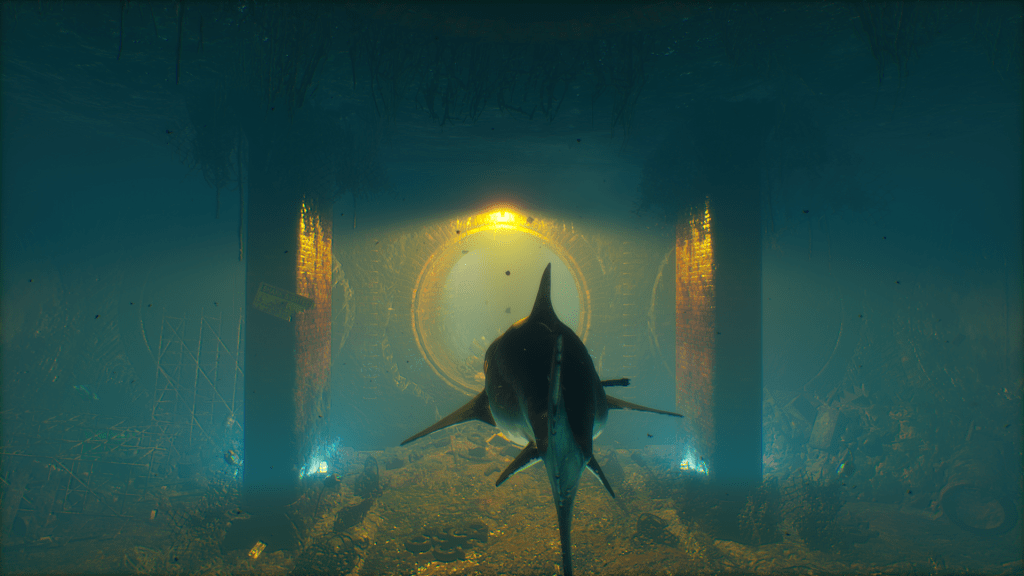
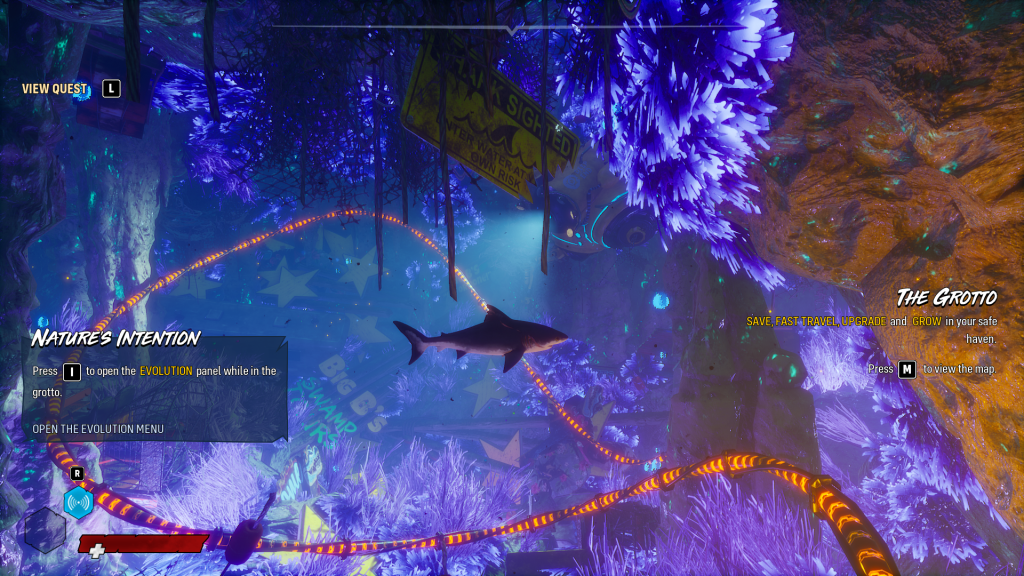
Maneater is a genuinely fun game with an extremely unique concept that ultimately gets bogged down in repetition and monotony far sooner than you’d expect or want. One would think that a game about being a shark that’s hell-bent on consuming and destroying any and everything in its path would be more exciting to play, and while the moment to moment gameplay achieves that desired level of excitement, the objectives and grinding required of you become very tedious, very quickly.

When you begin Maneater, you’re thrust into the far more capable fins of an adult shark that’s fairly hearty and ferocious. You learn the basic controls of locomotion and eating, and shortly afterwards find yourself devouring placid beach-goers just trying to soak up the sun. After a few snacks of the human variety, a shark hunting party is deployed to your location where you summarily dispatch them through a combination of ramming their boats, hurling divers at their boats, leaping atop their boats, or just chomping away at them until there’s nothing left.

In classic “abilitease” fashion, your shark is captured by some big time shark hunter that’s being filmed for the reality TV show, unsurprisingly titled “Maneater.” This jerk kills the shark you were playing as, cuts a baby out of your stomach, and throws it back into the water, but only after this baby shark chomps off this dude’s arm. Thus you start your murder-shark career in earnest as this orphaned shark-child that’s definitely not out for revenge.

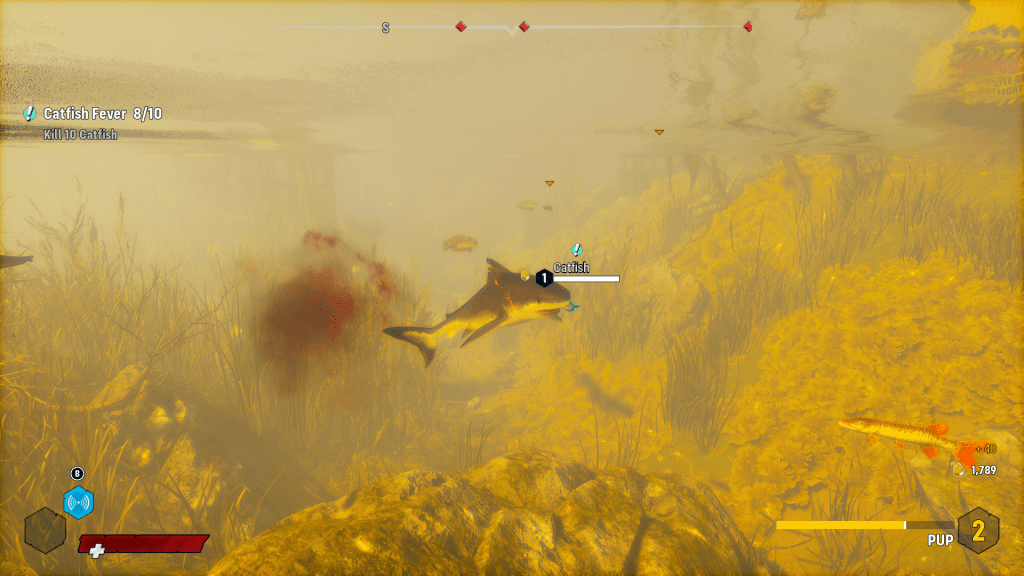
It’s during this first level of Maneater where I cultivated my “Gut Check” opinions, so I’m well aware that things can change as I progress further. The first level is your standard bayou that’s chock full of catfish, cattails, murky brown water and of course, gators. You spend most of this time trying to navigate towards your objective marker while chowing down on turtles and other tiny fish on your way. In this way Maneater feels a lot like a Feeding Frenzy type of game, where you eat enough smaller fish to level up and grow into a bigger shark that’s capable of taking on bigger foes. Except, even at higher levels and larger sizes I was still getting attacked by level one fish who no longer posed any sort of threat to me.

See, in Maneater you don’t just swim over a fish and eat it, you literally have to mash on the right trigger to chew your food. You’ll also need to wiggle the right analog stick if something caught in your maw tries to escape your grasp. If you’re feeling especially froggy, you can even grab some prey in your massive chompers, and then hurl them off into the distance at another target. Maneater clearly is taking its subject matter about as seriously as Sharknado did, and I love it for that. It’s one of the few games in recent memory that have made me laugh, not through a joke or a cut-scene, but through the sheer absurdity of what I was controlling.

Unfortunately, Maneater gets a little repetitive, even so early in the game. I progressed through a few objectives pretty quickly, but ultimately was greeted by a progress gate that required me to be level 4 before I could take on any additional missions. That meant I was just going to swim around and eat more turtles and groupers until I became a bit heartier. This took a while. Now this could just be an isolated incident, but the word on the street is that this repetitive structure only gets worse as you progress.

That’s a damn shame too because I genuinely think that Maneater is such a strong concept for a game. Unfortunately it shows its cards a little too early in the game, revealing that while the core gameplay loop is fun, it isn’t fun enough to outweigh Maneater‘s repetitious nature. That isn’t to say that repetition is the only issue that Maneater has, but it is the most predominant one, with a close second place going to the unwieldy camera.

Maneater does its best in trying to make a game about swimming actually feel good to play, and for the most part it succeeds. But the way the camera works, particularly when you’re in combat with something is infuriating. Combat usually devolves into you and your opponent circling one another, waiting for and then dodging their attack, and then retaliating with your own powerful chomps until they finally die. This would all be fine if the camera actually played along and locked-on to your enemy. Instead, you can click the right stick in to whip the camera around to face your enemy, but it doesn’t lock-on to them. It’s bewildering at best, and I sure hope that there’s either a setting in the menus I missed, or even some woefully misguided later upgrade I can unlock, because as it is fighting anything is a messy endeavor.

Maneater does have its highs though, primarily in how it presents the story to you. The show, “Maneater,” is portrayed to you in the style of a Discovery Channel show about wildlife, interspersed with reality TV show moments that follow the folks trying to hunt you. It’s all narrated by Chris Parnell as well, which is honestly a great choice because he does a fantastic job with the script he’s given, even if all of the jokes don’t land.

I’ve only played a small piece of Maneater, but I’m already starting to feel a little worn down by it. I’m not ready to throw in the towel just yet, but I kind of already know that there’s a very little chance I end up seeing this thing through to the end. I’m just not a big fan of having to grind or complete repeated objectives in games, and it sounds like there’s a lot of that in Maneater.

Gut Check: Wildfire

Disclaimer: It should be noted that the author backed this game on Kickstarter during its initial crowdfunding period back in April of 2015.

There will never be a time that I don’t find complete and utter joy in a game that allows me to mercilessly mess with my enemies by scaring the living hell out of them. Wildfire is a game that allows me to do just that, layering in some awesome elemental powers and great stealth mechanics, while bizarrely asking me to be a pacifist and not burn dudes alive.

In Wildfire you play as a young villager who through some cosmic coincidence develops the ability to harness the power of the flame, just not necessarily in the way you’d think. Hurling an orb of fire at an enemy doesn’t result in their instantaneous combustion, instead it just scares them into running in the opposite direction regardless of if there’s any ground ahead of them or not. Instead of directly attacking your foes, you’ll be burning a lot of vegetation, bridges, vines, barrels and of course, yourself, in the early goings of the game.

Wildfire wants you to control the battlefield more than it wants you to engage in battle, encouraging you to use your powers to help you slip by or terrify your enemies rather than just transforming them into a pile of ash. I know this because every level has several bonus objectives to strive for, including clear times, platforming challenges, detection and of course, body count. Every level encourages you to not kill or be noticed by anyone, and should you comply you’ll be rewarded with an upgrade currency that allows you to power up your character in a few different ways.

I don’t love how the game heavily encourages that you don’t use your magic fire powers for murdering, and while it never outright stops you, Wildfire does make killing someone incredibly difficult. You’re not just going to launch a fireball at someone and watch them go up in flames, Wildfire instead opts for more of a sustained effect kind of damage. For instance, every character has a temperature gauge that once filled up, will start the burning process that will eventually kill them unless they throw themselves in a body of water. Just like your character has a chance to survive a magic incident, so do your enemies.

Despite that little wrinkle though, Wildfire is a blast to play because it’s constantly encouraging you to think outside of the box in almost every scenario it places you in. While Wildfire gives you control over fire, it doesn’t let you manifest flames out of thin air, requiring you to pull it from an existing source like a bonfire. From there you can launch a blast at some brush and watch it ignite, thus allowing you to pull more fire from there. It seems frustrating at first, but it makes sense when you recognize the puzzle-like nature of the level design and the objectives you’re given.

Like I mentioned in the intro, I really enjoy being able to mess with the enemies who are on patrol in the area and mentally torment them until they run screaming off of the nearest cliff. So far I’ve only been able to accomplish this by starting a fire at just the right place and time, but I assume there will be more ways to dispatch your enemies as you progress further in the game and upgrade your abilities. UPDATE: There totally are!

There are altars in every level depicting someone holding a bowl in their hands, and if you launch a fireball or any other element in there, you receive an upgrade point which you can spend to unlock new abilities for whichever element you donated. There is another currency that is tied to level objectives, rewarding you for completing the level in a certain amount of time, not reloading a checkpoint or not killing anyone. This currency allows you to upgrade how you interact with the checkpoints in the world, with the first upgrades being ones that refill your health when you touch it, and another that allows you to pull a flame from the checkpoint itself.

Wildfire is a really cool stealth game that let’s you play around with fire and how it interacts with the environment around you, which is what drew me to it in the first place. In my brief time with it I’ve enjoyed so much of the game, from its art style to its fire-bending mechanics. While I’m not too thrilled about how it really wants you to be a pacifist and not burn your enemies alive, I don’t hold that against the game. If anything, these restrictions have made me plan out my next few moves in order to send one of the guards screaming off a platform and into a pit of spikes.

Gut Check: Streets of Rage 4

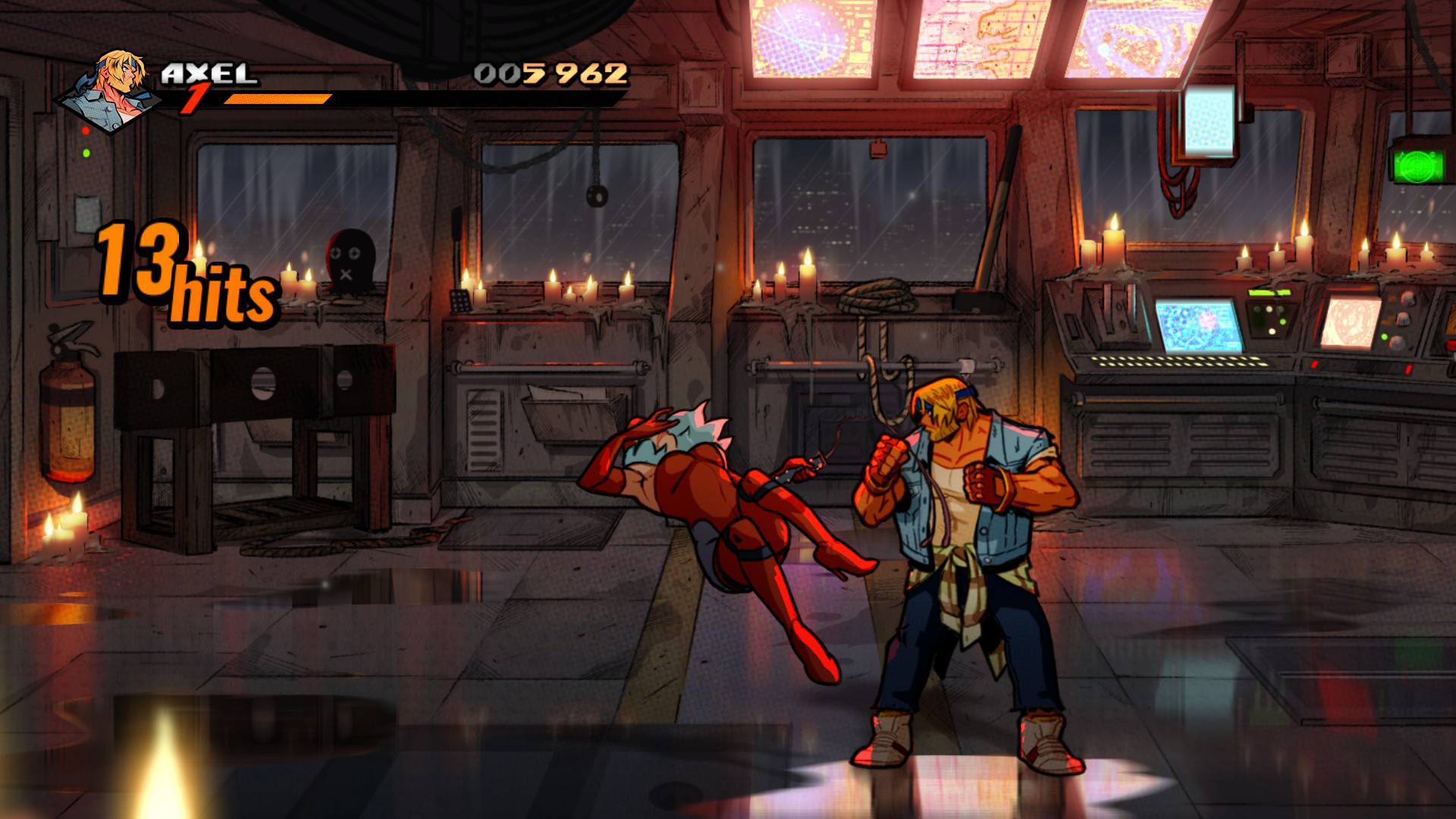
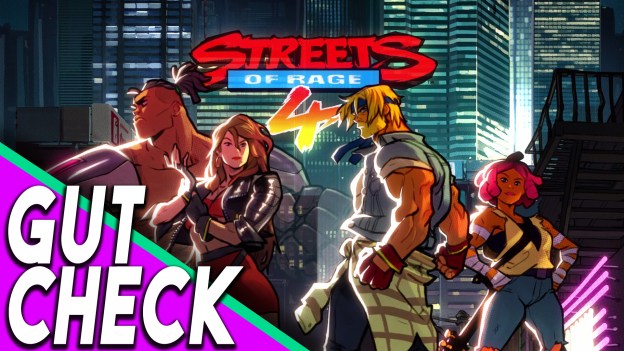
Streets of Rage 4 nails everything you would hope for out of a sequel to one of the greatest brawler franchises in history.  It retains all of the chaotic action of it’s predecessors, while paying tribute and modernizing the unique aesthetics the series was known for.  That dedication to honoring the roots of the franchise is a double-edged sword however, highlighting both the good and bad the genre has to offer.

It’s been 26 years since the last release in the Streets of Rage series, which is long enough that it would’ve been a fair assumption to assume the series dead.  Yet here we are in 2020, face to face with a sequel that was met with heavy skepticism when it was revealed.  Despite all of the side-eyeing and cynicism that I did when I heard about Streets of Rage 4, I’m very happy to report I was wrong.

20200430132725_1.jpg

Streets of Rage 4 follows the grand tradition of “light touch” storytelling, by dropping you into a crime ridden city, with only seconds worth of story to propel you forward.  But if you’re coming to Streets of Rage 4 for the rich lore, maybe it’s time to refocus your efforts on something else.

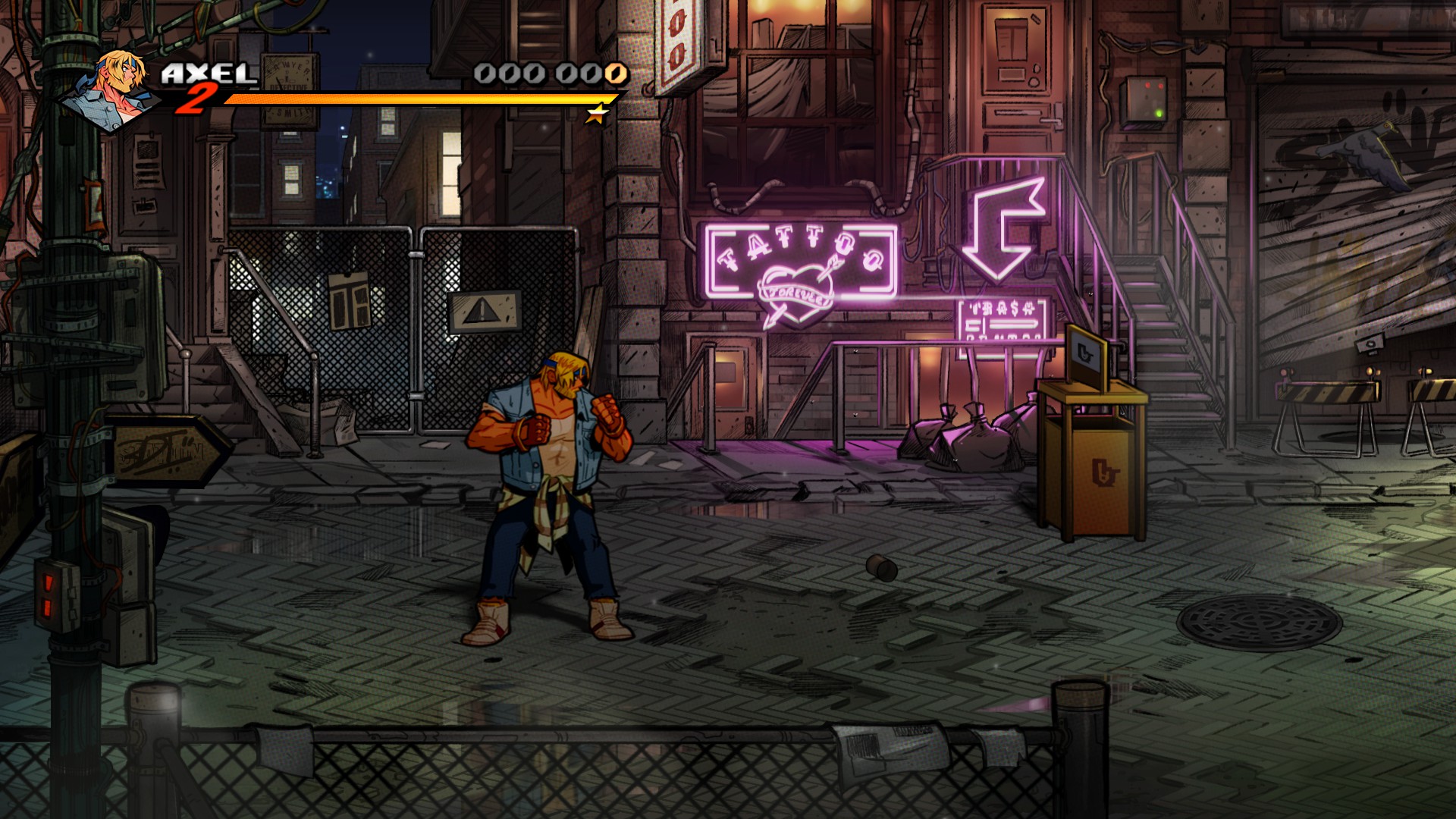
The first thing that jumps out to you is how wonderfully crafted Streets of Rage 4 is.  As you might expect for a series that lived on the Sega Genesis, the original series boasted beautiful pixel art that stood out among it’s competition.  Streets of Rage 4 retains the visual chops the series was known for, by modernizing it in a pseudo-comic book style that really works.  Characters all have thick outlines surrounding them, while the backgrounds are meticulously rendered to give you a sense of place in the world.  What I’m trying to say is that the art is really good.

20200430133553_2.jpg

The other half of that presentation that I really enjoy is the new soundtrack.  By taking old tracks and remixing them, along with creating new music from scratch, Streets of Rage 4 boasts a synth-heavy, aggressive and driving score that keeps the intensity up in the most face-punchingly conducive way possible.

But while aesthetics are an important aspect of any game, the real question has to be about the gameplay itself.  It’s here that I’ve got great news for the people who love brawlers, and less good news for those of you who maybe weren’t wild about their brutal difficulty spikes.  Streets of Rage 4 is a game that were it made in the 90’s, would fit in just fine.

20200430134418_1.jpg

In Streets of Rage 4 you’ve got a standard attack that strings into a combo, you’ve got the ability to grab enemies if you walk into them, and you’ve got your bevy of weapons that you can pick up and use before they break.  There’s also the inclusion of special moves that are fairly rare to come by in any given level, but when used, can release something of a super move that behaves differently based on what character you are.  There is more in terms of combat as well, like back attacks, health draining attacks, and more that you can weave into your arsenal.

The thing that frustrated me when I was a kid and still frustrates me to this day is still present in Streets of Rage 4, and that’s any sort of defensive option.  It’s frustrating to me to have to lumber out of the way on the z-axis to dodge certain attacks when some sort of block, dodge or parry would be so much more satisfying.  I know that this is inherently counter to the DNA of the series, but every time I get hit by an attack I try to maneuver out of the way of, I’m reminded how nice a defensive option would be.

20200430135921_1.jpg

While I truly believe Streets of Rage 4 would have been better for including some sort of defense, my other criticism is a little flimsier in nature.  I think it would’ve been nice if there was some sort of progression or lite RPG mechanics sprinkled over the game.  It isn’t a deal breaker by any stretch, but I wouldn’t have minded being able to learn new moves or upgrade some stats.  Like I said, I can live without this stuff, but I think it could have been a neat inclusion.

Streets of Rage 4 boasts a few other modes and gameplay options like level modifiers that make your experience a little easier if you need it, online cooperative play, and a few others that I’ve yet to dig into.  There’s also a gallery of Streets of Rage art and other extras you can unlock, such as the ability to take the pixelated versions of characters from previous entries, and play as them.

The brawler genre itself may have faded from the forefront of gaming, but Streets of Rage 4 is a fantastic return to form.  While some of the rougher edges of the genre have been sanded down and smoothed out, the core of these games is retained and ever present.  If the brawler genre is something you love, Streets of Rage 4 is the game for you.  If the genre wasn’t your cup of tea, Streets of Rage 4 is a really good game that probably won’t change how you feel about brawlers.