For those of your who aren’t aware, for the past year or two, I’ve been running various Dungeons & Dragons campaigns for my friends. I’ve more or less chronicled this in our Master of Disaster feature on this site which for obvious reasons, I recommend you check out. Yet despite my love of playing Dungeons & Dragons, I’ve never been able to garner any modicum of enthusiasm for video games that try to capture the tabletop feeling.
This disconnect and lack of enthusiasm on my part has been perplexing to my friends to say the very least. How could someone who is literally the DM (Dungeon Master) of our campaigns not enjoy these mechanics in a video game? It’s been difficult for me to articulate over the years, but I think I finally understand it. But for me to explain it properly, you need a little context about me and how I absorb information.

At a young age, it became very evident, very quickly, that I wasn’t a traditional learner, often needing to read something several times over, or do some hands on learning if applicable. To this day I have a difficult time reading something and comprehending it on the first go, often needing to reread it 4 or 5 times before I can fully internalize the actual meaning of the text. As silly as it sounds, I’ve just never been great with reading comprehension making every online course I’ve ever taken in my life a tremendous chore.
I think it’s because of that mental hurdle that I tend to zone out in text-filled, management-heavy, and turn-based games. My experience with these kinds of games usually goes the same way every time, with me eager to hop into the action, only to be buried in menus and skill trees that I can’t comprehend on my first encounter with them. Even though I know that I’m only seeing a fraction of what’s to come, it still feels like I’m being thrown in the deep end.
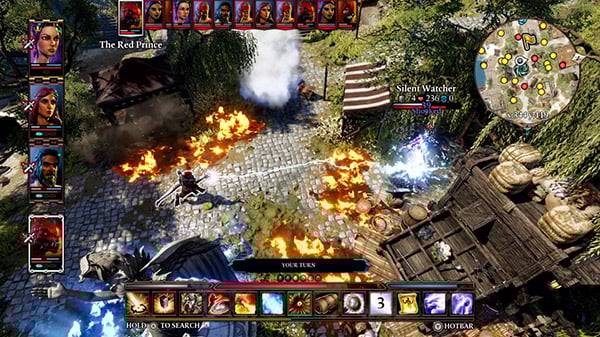
What I like about playing D&D as opposed to something like Divinity: Original Sin II is the fact that someone is shepherding me through it. There’s a DM who isn’t only painting a word picture for me, but is there to answer any mechanical questions I might have. It’s that hands-on approach that works for me from an educational standpoint that’s also present here.
I’ve even run into this while running my own D&D campaign. When I started out, I bought a D&D module that I would run for my players. Yet after being asked enough lore questions that I had no answer to, I decided to blow up the world and start fresh with a campaign and lore of my own. It was a lot more work, but so much more personally engaging and rewarding.

There’s also the matter of my own level of patience and tolerance for a game, but I’ve covered that before.
All of these things are factors in why I bounce off of and usually avoid these types of games. But we haven’t even talked about the gameplay portion of them yet. Even if I manage to find a suitable on ramp for me to get somewhat into the game, I still have to contend with the game itself.
It usually isn’t the turn-based part that turns me off as much as it is the “tactics” portion that bounces me off of a game. I’m just terrible at setting up plans and executing on them, whether it’s positioning, item and spell management, or whatever, I suck at it. Usually I’ll formulate a plan I think is great, try to execute it, and watch it fail miserably. Instead of doing what normal people might do and say, “oh, I should try a different approach,” my stupid-ass jumps over any rational thought and straight into a pit of self-loathing and dejection. It’s the same way I feel about the Dark Souls games, where I don’t feel emboldened to do better, I just feel like I could be playing a game I have a better time with.
:no_upscale()/cdn.vox-cdn.com/uploads/chorus_asset/file/19751188/baldursgate3_highground.jpg)
And if I really wanted to split hairs (which is about to happen), I’d say that I think the tutorial levels of these games are usually the most excruciating parts. Take Divinity: Original Sin II for example. You start on a boat that promptly gets attacked by bugs and a tentacle monster, which sounds way cooler than it actually is. Then you wash up on an island where you eventually find your first village where I assume more of the game takes place. Despite trying to power through it on three separate occasions, I have yet to be able to get through what I found to be an incredibly dull part of the game.
When asked why I don’t like these kinds of games, I usually answer with something dismissive like, “cause they’re boring” or something, but what that really means is everything I’ve written thus far. But I agree with my friends when they say that I should enjoy these kinds of games. I want to enjoy these games.
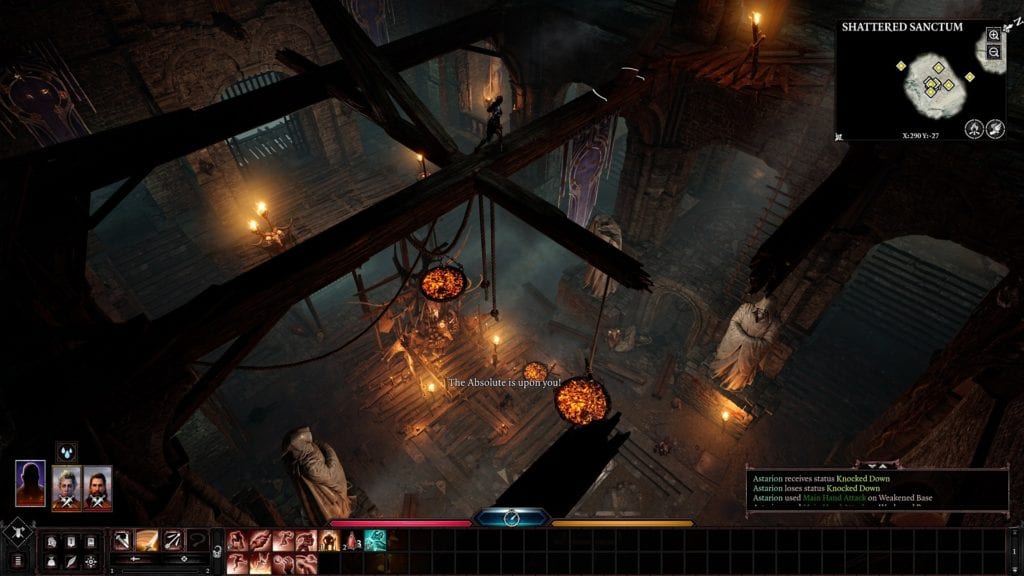
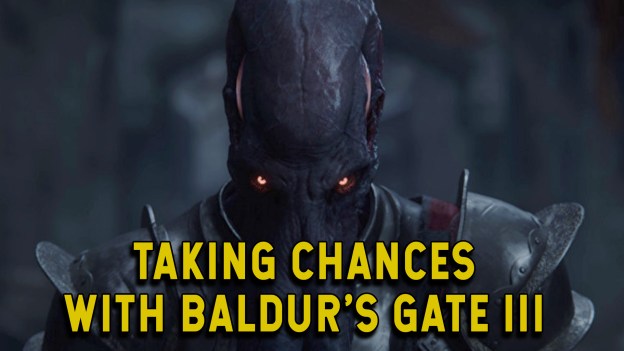
But I’m not ready to write off the genre just yet. A little game called Baldur’s Gate III was recently shown off, and after reading about it more, I think this one might be the last one of these I try. After everything I’ve written up until now, you might be wondering why I would attempt this, ostensibly throwing $60 dollars into a virtual garbage can, but there are a couple of factors that are intriguing me with Baldur’s Gate III already.
First and foremost, it a Dungeons & Dragons based games, meaning I know a lot of these mechanics and have varying degrees of familiarity with them. That alleviates a lot of the mechanical obtuseness that I might have trouble with in other games. Like, I know what plenty of D&D spells, items and attacks are, so that won’t be such a steep learning curve. Having to learn both the mechanics of a game as well as their made up lore makes me feel like I have to learn two games simultaneously, which usually goes about as well as you might imagine.

On top of that, I’m really digging the presentation when it comes to dialogue options, opting for more of a Dragon Age or Mass Effect styled approach instead of a text box that pops up on the screen. It’s a small thing, but it adds a slight cinematic flair that I think goes a long way.
Despite my better judgement and spotty history with these kinds of games, I’m cautiously optimistic and dare I say, excited for Baldur’s Gate III. At the very least, I’m going to keep my eye on it and certainly give it a shot when it enters early access later this year.



 The Bonus World