The year is 2005 and I’m sitting in a darkened basement with my friends, huddled around the television with a PlayStation 2 hooked up to it. A bad cover of Black Sabbath’s Iron Man is playing in concert with the deafeningly loud clacking of plastic guitars with 5 differently colored buttons on them. We’re playing the newly released Guitar Hero, and for the moment things are good. That was a joy that so many people got to experience during the plastic instrument trend that loomed long over the entire gaming industry for so many years but would eventually fade, and those instruments would be tucked away, sold off, or thrown in the garbage. But for those of us who managed to find our old plastic guitars, there’s a reason to dust them off and rekindle that old flame, and that reason is Clone Hero.
Clone Hero is a free game that will rip that clacking sound right out of your memories and into 2021, allowing you to bring in charted songs from across all entries of Guitar Hero and Rock Band (although that’s almost certainly not legal), as well as a myriad of community created and mapped out songs for you to get carpal tunnel while playing. Clone Hero has been a wonderful way for me to rekindle my love of the rhythm game genre without a ton of work or effort. It’s basically dominated my week in terms of what I’m playing, doing or even thinking about.
I wrote about how desperately I wanted to revisit these games last year, but couldn’t because trying to buy a plastic instrument at the time (and currently as well) would involve a several hundred dollar investment which no one should be able to justify. But I recently did some spring cleaning and dug up my old Guitar Hero III wireless Les Paul guitar which still worked much to my surprise. After wiping away the decade old layer of dust on it and popping in some new batteries this thing was good to go, and my dream of playing a plastic guitar once again was closer to becoming a reality than ever before. If the actual guitars in my apartment could talk, I’m sure they’d be mighty pissed off about the fact that I’ve opted to play with a plastic facsimile of an instrument over the real thing, but they can’t so it’s all good.
For anyone who has the itch and a plastic guitar on hand, I can’t recommend Clone Hero enough. It’s still in some beta form, so there are some rough edges, but none of them were enough to dissuade me from spending every free moment I had on playing it. What’s really nice is how customizable everything in Clone Hero seems to be. From the backgrounds to the highways, from note effects to accessibility modifiers, you can tune Clone Hero to be whatever you want. For instance, by default the game is set to “No Fail” mode, which as you might imagine prevents you from ever failing a song. That’s good because like an idiot, I decided that because I used to be able to play a lot of songs on expert level over a decade ago, I could probably still do it now without any practice or warm up. Boy my wrist was not a fan of that decision, but I’m in charge of this flesh-vessel I call a body, not my wrist, so expert it is.
But that stance breaks real bad when you start to peruse community made content, because those people are pretty much only making songs that are playable on expert level, and also they hate you. The Clone Hero community doesn’t seem particularly tuned towards people who aren’t willing to permanently damage the ligaments in their wrists and maybe want to play on medium or even easy. No, instead almost all of the songs I saw were designed and charted in an effort to physically hurt you. Most of the custom content I played was filled with walls of notes that I’m going to deem impossible for any normal human, so that’s something to watch out for.
Community driven malice aside, I’m really enjoying my time with Clone Hero and can’t recommend it enough to anyone who wants to hear those clickity-clacks once more. It’s a low-effort way to experience the plastic instrument craze that dominated the gaming industry for nearly a decade, granted you have the hardware to actually make use of it. If you don’t, you could do the dumb thing and buy a plastic guitar for the price of a real one, or in reality you could probably just find one in the deepest darkest corners of your closet like I did. Either way, Clone Hero will do you up right.
After a few years of getting increasingly obsessed with Dungeons & Dragons along with the entire concept of TTRPGs in general, one thing I’ve always wanted was a comprehensive tool or piece of software that could house my campaign in its entirety. Ideally I wanted a video game styled, easy to use virtual tabletop that could do everything from making maps to just playing a session within it. Most of these programs manage to excel at one thing while fumbling other elements of playing a TTRPG, but that won’t deter me from checking out a new one when it comes along. Enter TaleSpire.
TaleSpire was Kickstarter success that claimed to be “a beautiful way to play pen and paper RPGs online,” according to their campaign page, and from what they showed off it seemed like they weren’t just a bunch of talk. Last week TaleSpire finally entered early access on Steam and I eagerly pounced on it, hoping that this would finally be our new TTRPG platform of choice. However, I was quickly reminded of the fact that TaleSpire is in fact an early access product that still needed a lot of time before it would dethrone the other services we use.
TaleSpire has a ton of potential and I do look forward to seeing it evolve over time, but in its current state, it just feels a little too cumbersome for me to reliably run a game for my friends in. There’s a lot of layers and shortcuts that you kind of need to commit to memory in order to use TaleSpire at anything beyond a snail’s pace, but there’s just so much stuff going on and not a lot of tutorialization to help you navigate it all.
For instance, there are a few different modes you can swap between, from exploration mode, to build mode, cut-scene mode and initiative mode, all of which are pretty self-explanatory, but then there are different GM layers you can toggle on and off along with different triggers that can activate different events or hide certain elements of the map from your players. The tutorials give a broad, single paragraph overview of how these things can work, but they don’t do a great job at explaining how to actually make use of them. For instance, I have no clue how to trigger a cut-scene, but I know that it is possible considering there’s an entire mode literally called “cut-scene mode.”
I think that TaleSpire could really benefit from better tutorials that kind of launch you into scenarios so you can actually see how things work together, or at least give some premade maps for people to disassemble and see what gears are turning to accomplish what. As is, all I can really do is bash my head against it until I figure something out, but that could take a while.
I just feel as if I just don’t have enough information to properly understand how to operate TaleSpire as a whole. I suppose I could go out and look at the inevitable deluge of tutorial videos that people have surely made, but it just seems like a thing that should be explained in the software itself. I’m sure that stuff will be added in during development, so I’m not too worried about it at the moment. I really like what TaleSpire is doing and think it has a solid foundation to build off of, but the usability just isn’t there right now. If I as a DM can’t wrap my head around this software, then I can’t properly teach it to my players which would result in very slow and dragging sessions, which nobody wants.
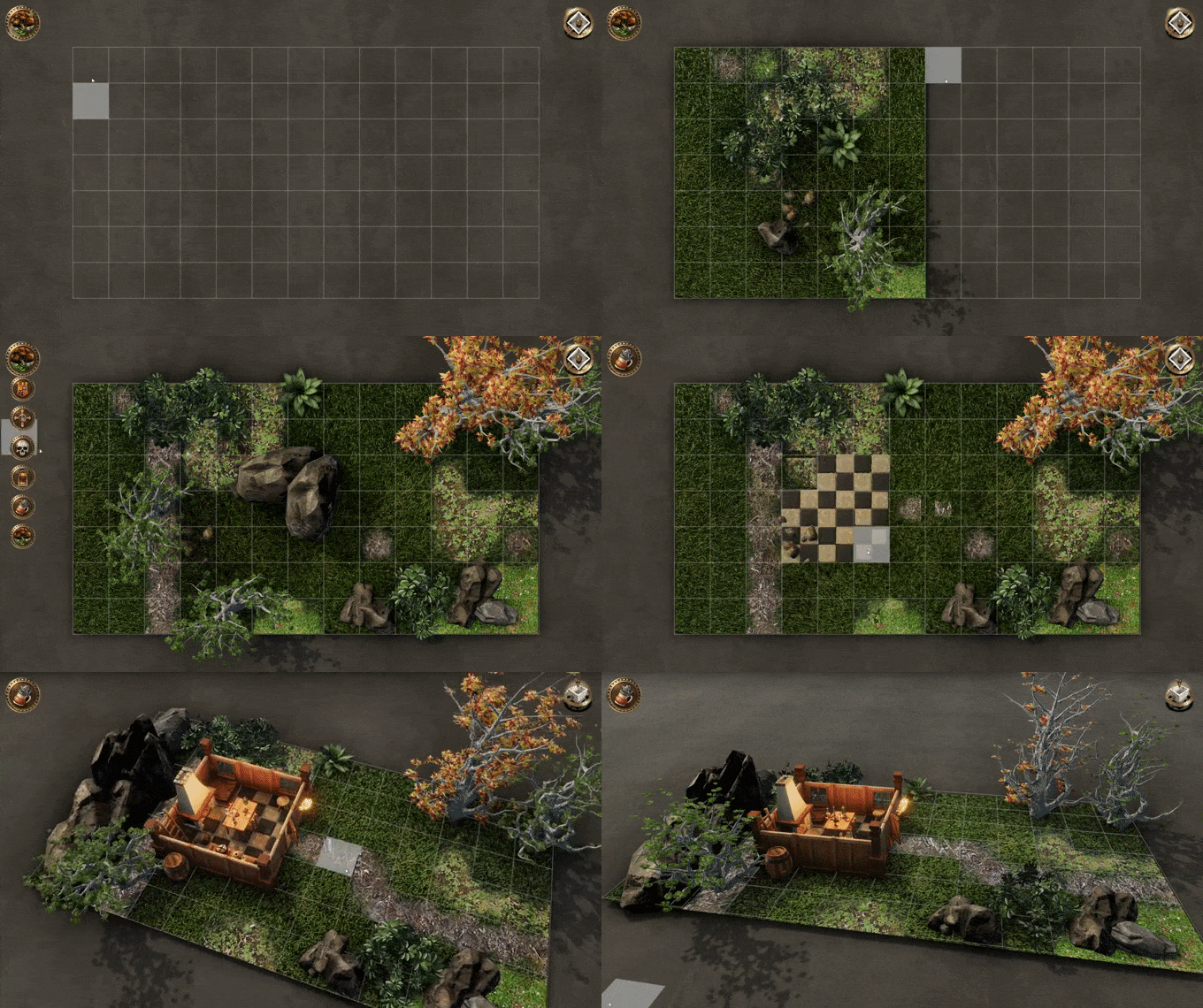
But from just a, “hey this is fucking cool” standpoint, TaleSpire sure is nifty. Building out scenes is rewarding, albeit a bit clunky in places, but even with the modest amount of items currently available, you can make some really striking tableaus. Everything has this tilt-shifted look to it that really delivers on the promise of a true virtual tabletop. One of the stretch goals that was reached during the Kickstarter campaign was the ability to create your own miniatures inside of TaleSpire, which is a feature I’m very much looking forward to getting to tinker with. It’ll also go a long way in getting me to convince my players to migrate over to this new platform that unlike our current solution, isn’t free.
I also have some lingering questions about housing stats and character sheets just in case TaleSpire ever does become our platform of choice. I don’t know if that stuff will be able to be housed within TaleSpire or not, but it really should be because the biggest issue I have with TaleSpire at the moment isn’t actually the lack of information it gives me, but it’s the viability of this as anything more than a map making tool. I have to ask myself what this $25 product is offering my players and I that our current virtual tabletop isn’t providing us at the low price of free? That’s a big hurdle to have to clear, but hopefully as more people touch TaleSpire and give their feedback these things will change.
TaleSpire does have a ton of other cool little bells and whistles in it right now however, like the ability to fully customize the atmosphere of a map by tweaking the position of the sun, pumping up the fog, or even adjusting the exposure on the entire in the entire scene. There’s also a couple of really cool features they’ve promised would be added, such as the previously mentioned miniature customization and cyberpunk themed objects, but first and foremost I think the priority should be getting users educated so they can utilize what’s actually playable now. If I knew what I was doing in TaleSpire, I’d probably more willing to try and pitch other people on it, but until then I don’t think TaleSpire is going to be our new virtual tabletop. But hey, I look forward to changing my tune as it evolves throughout its early access period.
No one is quite sure how video games are actually made, with many scientists believing them to be the result of some sort of dark magic or inter-planar phenomenon, but I’m here to present my latest findings on the matter. All of my evidence suggests that people make video games on their computers, utilizing software like Unity or the Unreal Engine to accomplish the laborious task of crafting a game from nothing but bits and bytes. Then there are the people who are using Core to make bad versions of much better and more popular games, except these versions are loaded with micro-transactions and terrible controls. Sounds fun, right?
If you’ve never heard of Core, rest assured you’re not alone. It popped up in the new releases section on the Epic storefront, billing itself as a game creation and playing platform akin to something like Dreams on the PlayStation 4. So I took the plunge and tried out this new content creation platform, and boy howdy is it rough. Now I will say that Core is technically in early access and is actively being worked on, but within ten seconds of playing it you pretty much get what’s going on here and what kind of games are being made.
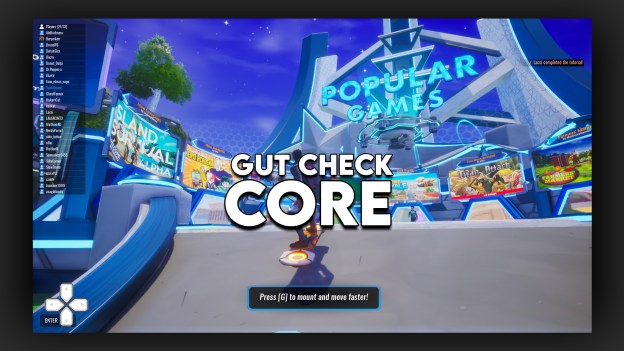
Core is less Dreams and more Roblox in the sense that, as far as I could tell, every game is made with the conceit of being online multiplayer enabled, although further research revealed that single player content can also be generated. You’re dropped into a lobby with other real people running around and riding on hoverboards, moving between platforms that highlight popular games, active games, and another one which seems to be where the developers will highlight the winners of creation contests and stuff. So I perused some of the community’s offerings and boy-howdy, all I can say is that it’s extremely dangerous to give people the ability to infused micro-transactions into their games, because they will go buck-wild.
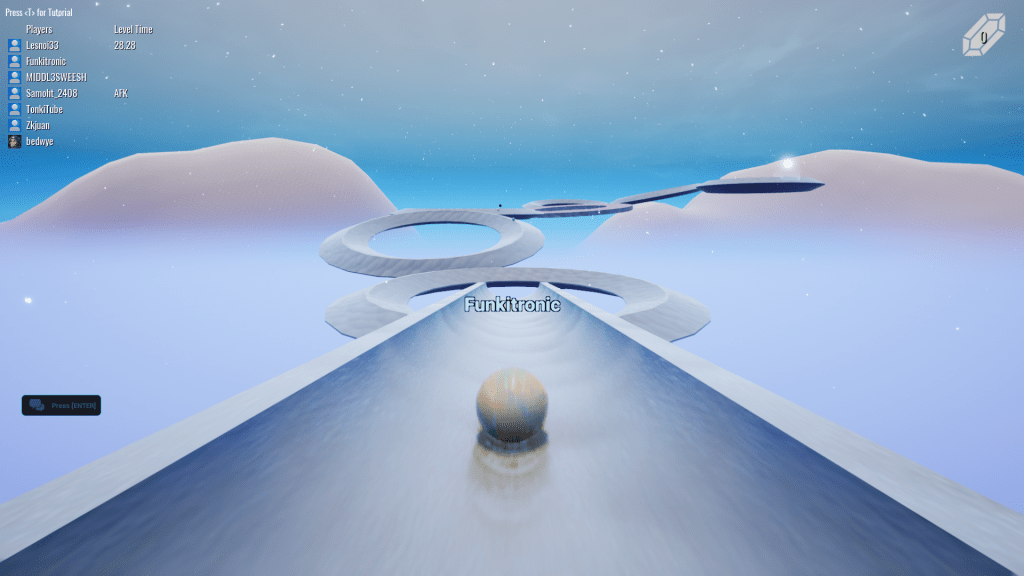
Out of the five games I played, almost all of them had some sort of mobile game, money sucking mechanics in it. The first game I played was a Marble Madness styled experience where you and the other people in the lobby race through an obstacle course towards the finish line. The game itself was fine, but the physics, and this is going to be a running theme, were pretty wonky. Jumps weren’t reliable and you’d hit a piece of geometry in the wrong way and send your marble flying into space. But hey, there was a daily check-in station in case I wanted to come back tomorrow and play this super cool game, earning some extra marble-bucks or whatever.
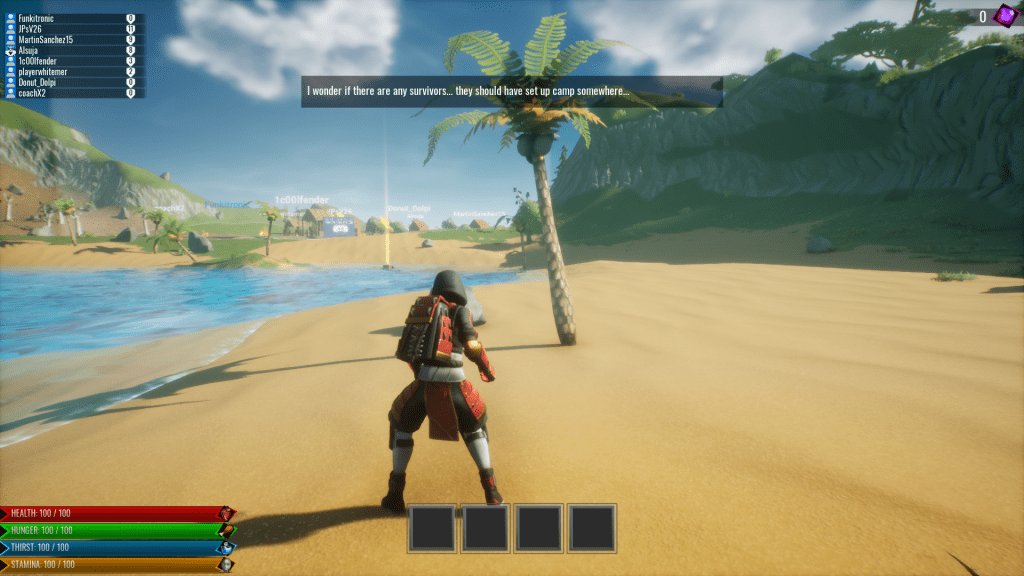
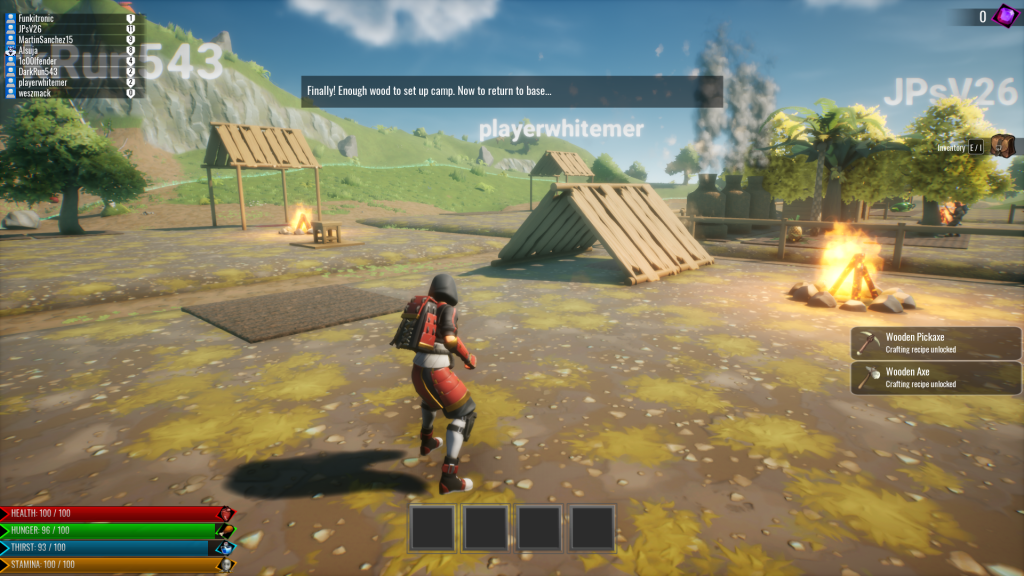
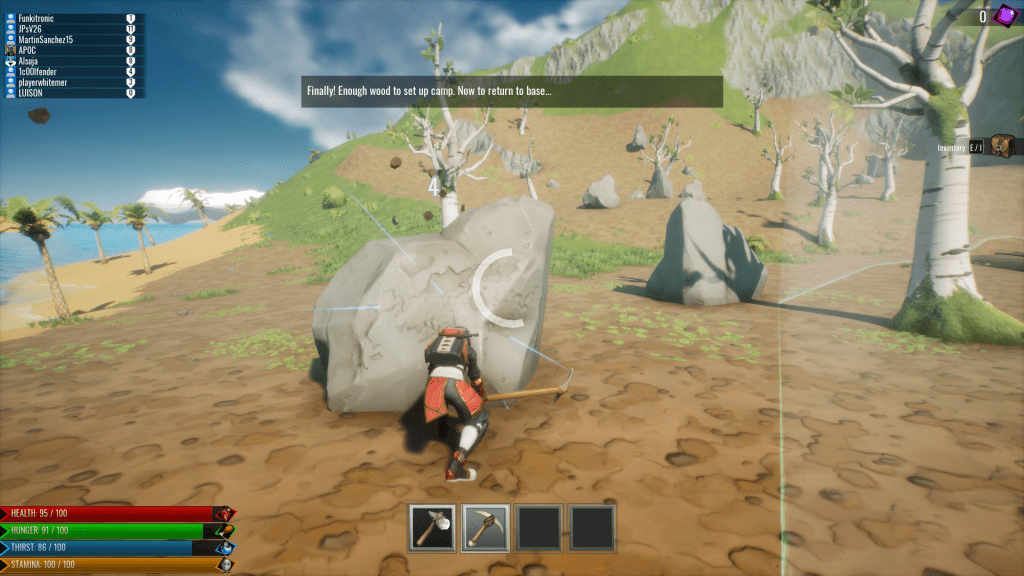
The next thing I tried was a survival game where you and a bunch of players are in a plane, crash on an island, and try to survive. Once again, controlling the game wasn’t my favorite part of the experience, and every game I played was deeply flawed on that level. Everything just felt a little too inaccurate, which is a problem when you’re trying to bash a rock with a pick ax for a full minute, only to realize that half of your hits have been missing. Also, the fact that it was a bunch of people playing on the same server didn’t make for the smoothest or most stable online experience, but that seems like a Core issue more than the game creator’s fault.
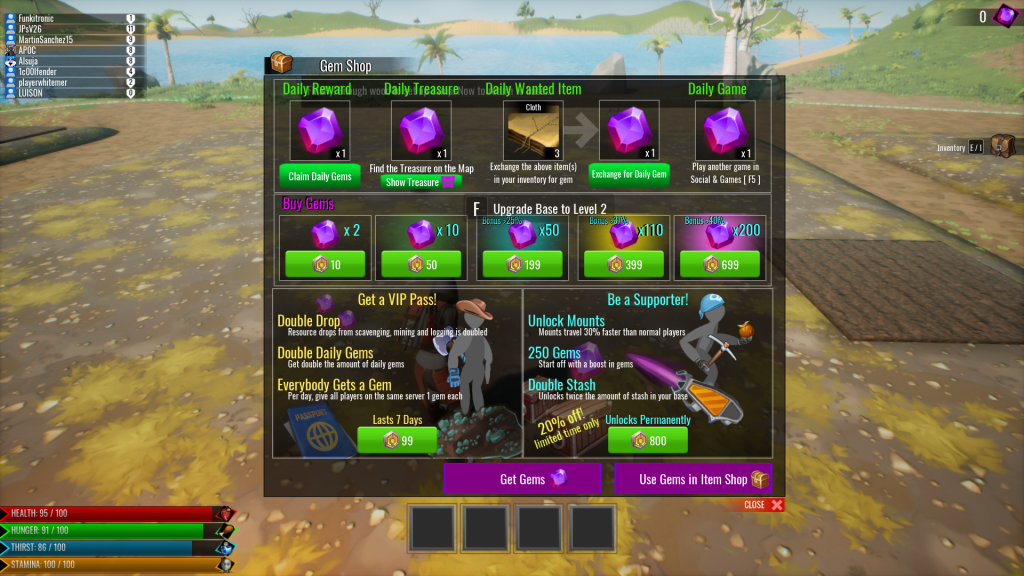
What is a game creator issue is the inclusion of mobile game styled timers. There was no shortage of opportunities for me to spend diamonds to speed up my timers on growing plants, crafting items and researching recipes. Now follow me on this, cause this might get a bit confusing, but the way you obtain diamonds in this game was by trading in the paid currency you can buy in Core for real actual earth dollars. It was pretty gross to see those mechanics implemented in a user generated game, but I guess everyone’s trying to make a buck somehow.
After way too much of that, I moved onto a bad mini-golf game. You wanna talk about whack physics in a game, look no further than whatever this golf game was called. It was basically a worse version of Golf With your Friends, which is a fun game you should play instead of this. It had all sorts of wacky courses to play through, all of which you were playing through with other people who were also having trouble dialing in the strength of shots, just like I did. Or maybe they were also fighting with the atrocious camera that would rather show you the scenery than where your ball was. But hey, if I come back tomorrow, I’ll get like 800 fun coins or whatever.
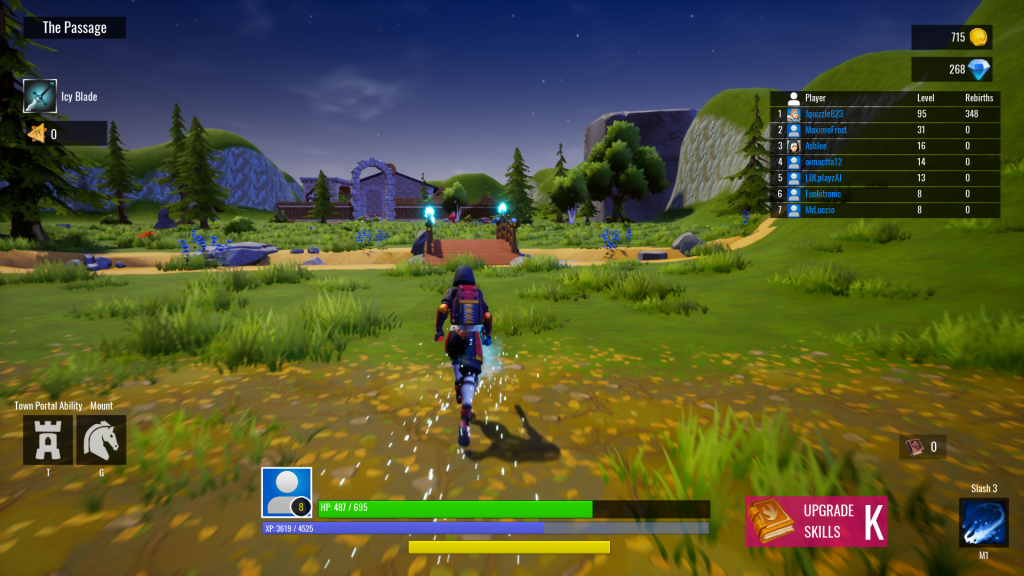
Next, I played a game that billed itself as a “true” action-RPG, a claim that was made by a big fat liar. You start in a town with a sword and can walk outside the gates to kill generic NPC dudes with swords, skeletons with swords, or a big rock monster. That basically involves mashing the left mouse button in the general vicinity of an enemy until they die. You do that a bunch of times until you level up, pick up some gold off of the enemies, and return to town to level up and maybe buy new weapons. You can buy a sword, a sword and shield, a crossbow, a hammer or some magic staff along with a bevy of skins. All of these things have price and level requirements, but it all just seemed in service of getting better weapons to run into a higher level field to run that loop all over again. It’s immediately boring and the maker must have realized that because they literally put in places for your character to idle AFK and gain gold or experience. Maybe that’s a thing in MMOs, I don’t know, but it was incredibly wild to see for myself. I suspect this was in an attempt to boost their active player count by inciting people to literally not play their game, while playing their game.
Finally there was this real fucker of a game that was all about messing with you through misdirection and straight up bullshit. It’s one of those trial and error type platforming games that streamers love to play, like Kaizo Mario or I Wanna Be the Guy. But imagine doing it with a bunch of other people and god awful physics, wouldn’t that be fun? Well actually, it kind of was. Not because of the game, no that was weapons grade bullshit right there, but interacting with the other people on the course was kind of nice. We all hated this stupid game and started helping each other by communicating in the text chat. We’d call out secret platforms or lead each other through invisible mazes. It had been so long since I’d engaged any online play because it usual sucks, but these people were genuinely good to each other. We all helped navigate the deluge of invisible platforming challenges and mazes that made the game such a chore, but through our collective stubbornness and spite for the game, we overcame. At the end of it all it just reset me back to the beginning, but it was a really positive interaction nonetheless.
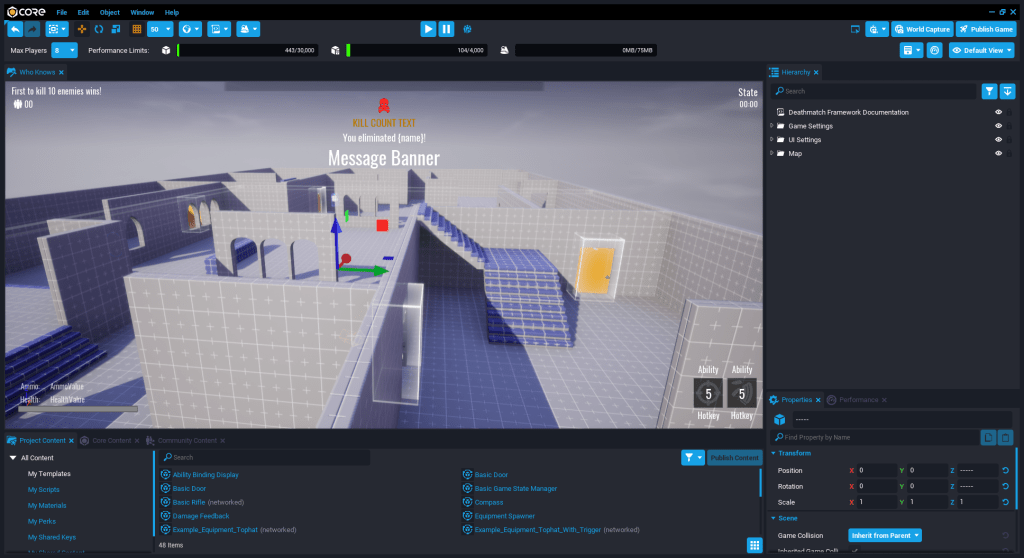
But it’s hard to poke fun at the people who spent time making these games, because they probably put a lot of work into making them and I don’t want to detract from that. Sure a lot of them put in some pretty nasty mobile game mechanics into their games, but they still took the time to make a thing. With that thought, I checked in on the creation stuff and it seemed pretty dense and involved, although Core does let you pick from a list of premade concepts like racing, fighting, king of the hill and more, to give you a better starting point than just a blank screen. So I loaded up a deathmatch prefab and immediately was overwhelmed by the tools available and closed it, which could be interpreted as the tools being fairly robust, or me just not having the patience for that shit.
Everything about Core just screams unfinished which makes sense for a game that’s been in some version of early access for the past few years, but even inside of user created games everything just feels messy. No UI in any game I played actually looked good or was an efficient use of screen real estate, with everything instead looking like a placeholder for a placeholder. Interacting with stuff, moving the characters, all of it just felt muddy and imprecise across every game inside of Core, which speaks to a larger issue with the platform that needs to be resolved. If the platform isn’t giving people the appropriate tools to make a fun game, then every game on that service, regardless of its ambition or craft will feel stunted in some way because the engine behind it is inherently flawed.
I don’t ever want to see a game fail, but I just don’t know if Core will ever catch on in a sustainable way. Maybe if they tighten up the physics and general interaction stuff, integrate some proper controller support and overall just allow people to create more refined and interesting content might make it something worth sticking with, but as it is I just don’t see it lasting. Although it is free, and that does seem like an attractive enough price point for people to engage with for the time being. Maybe it’ll be a quiet success like Roblox is or maybe it’ll fade into obscurity like Project Spark did, but ultimately I bet streamers will enjoy this thing if only to rag on it to their audience, which is basically what I’ve done here in written form, so mission accomplished Core!
Like most folks, I’ve played a lot of really hard games throughout my life that I might even call punishing or unfair, but none of them have challenged me anywhere near as much as Ring Fit Adventures does. While Ring Fit Adventures isn’t going to throw endless hordes of bloodthirsty enemies at me or require pixel perfect platforming and reaction times, it does do something more sinister than any other video game I’ve ever played before: it puts my in physical pain.
I’ve written about Ring Fit Adventures before and even went so far as to include it on my 2019 Game of the Year list for finding a fun way to keep me active. 2019 Ari was way more into what Ring Fit Adventures was dishing out because 2019 Ari was regularly going to the gym and, while not physically fit, was in way better shape than 2021 Ari. But here in the year of our lord, 2021, I decided to give the game a go once more and try to deal with my sedentary lifestyle by playing with this very expensive Pilates ring that came with a video game whose only goal is to hurt you.
My knees are shot. My back is sore. The other parts of my body aren’t doing great either, and it’s all thanks to this stupid fucking ring that I have squeeze and shake and lift around like I was leading the world’s worst parade. I was sweaty and stinky and miserable, which was very reminiscent of the days when I could safely utilize the gym, so that was kind of nice. The best part was that I didn’t have to deal with the guys in the locker room that would take nude selfies, so that’s a huge boon for Ring Fit Adventures.
I still enjoy Ring Fit Adventures in some capacity though, even if it has shed a stark light on how out of shape I currently am. While I hate what it’s done to me only after one session, I’m going to come back to it and try to maintain something of a routine. The past year has been super difficult for all of us, and I don’t blame anyone for falling out of shape and stress eating. I get it. But I need to get back into a groove and work on myself again in an attempt to pick up where 2019 Ari left off. It’s going to suck and I’m going to hate doing it, but that’s something I have to endure in order to fit back into some shirts that I really liked.
But let’s be real here: I’m doing this so I can eat those 3 boxes of Girl Scout Cookies that I so irresponsibly ordered without feeling a tremendous amount of guilt. They’ve got these s’more flavored ones that are pretty dang good, and I’m dying to crack into that box.
At the beginning of March I managed to get myself the first dosage of the two-shot Moderna COVID-19 vaccine, followed up by the second dose I received yesterday. Since the moment I made my first appointment right on through to today, I’ve felt a genuinely high amount of anxiety about the whole situation. I fully believe in the efficacy of vaccines and think everyone should be rushing to get their own COVID vaccination scheduled and administered, but there’s just a gravitas to this whole situation that was and continues to be intimidating to me.
First and foremost, I hate needles. I’ve always had terrible anxiety about getting shots or having my blood drawn, so much so that whenever I have given blood, it’s been immediately followed by dizziness, nauseousness, and there were like two times where I just passed out during or immediately after being punctured. But that was only a small fraction of what was causing the anxiety for me.
The real thing that’s messing with me is how big this moment feels. We just lived through one of the wildest moments in history, where the entire world was hit by the same affliction. I can’t think of too many situations where someone might have just missed the whole “world going into lock-down” thing that spanned most of 2020 and continues into 2021. It’s arguably the most historic event of my lifetime, something that has and will continue to impact the rest of my life in one way or another.
But here I am, with a fresh bandage on my boo-boo that the lovely volunteers did put on me, trying to comprehend the gravity of what I just did. I just got a vaccine for the virus that stopped the world in its tracks. That’s such a big moment in my eyes, and the entire time leading up to it I couldn’t help but feel a little in awe and nervous about it all. But it’s done, and now I just have to wait for that medical cocktail to course through my veins and deal with whatever minor side effects come with it. I don’t want to experience flu-like symptoms, or fatigue, or soreness, but I’ll gladly endure it just to get on the other side of this viral nightmare.
I know this wasn’t about video games or whatever, but this has easily been the biggest thing that I’ve done this week. My tension and anxiety are still lingering, but I already feel better just knowing that I’ve done what I needed to do in order to beat this miserable virus. Maybe tomorrow I’ll be cursing the vaccine for making me feel shitty, but in the end it’ll all be worth it. So please, if you can get the shot you should absolutely do so. There’s no reason to prolong this international nightmare we’ve been enduring for over a year, any longer than we need to. And if you already got the shot, good for you, just please continue to wear a mask and be considerate of others.
Crowdfunding can be a beautiful thing that allows people to directly support the ideas and products they believe in, giving folks the chance to truly vote with their wallets. Aside from the dystopian nightmare of people crowdfunding their medical and legal bills through services like GoFundMe, as well as the vaporware projects that either never make it to market or are just flat out scams, crowdfunding is a great concept. It’s also a really good way to get me to spend even more money on tabletop role-playing game systems and paraphernalia than I already do. So here are some of the money-pits that I’ve recently tossed my cash into that luckily for you and your wallet, are either finished or about to finish up their funding campaigns. You’re welcome.
DUNGEON ALCHEMIST
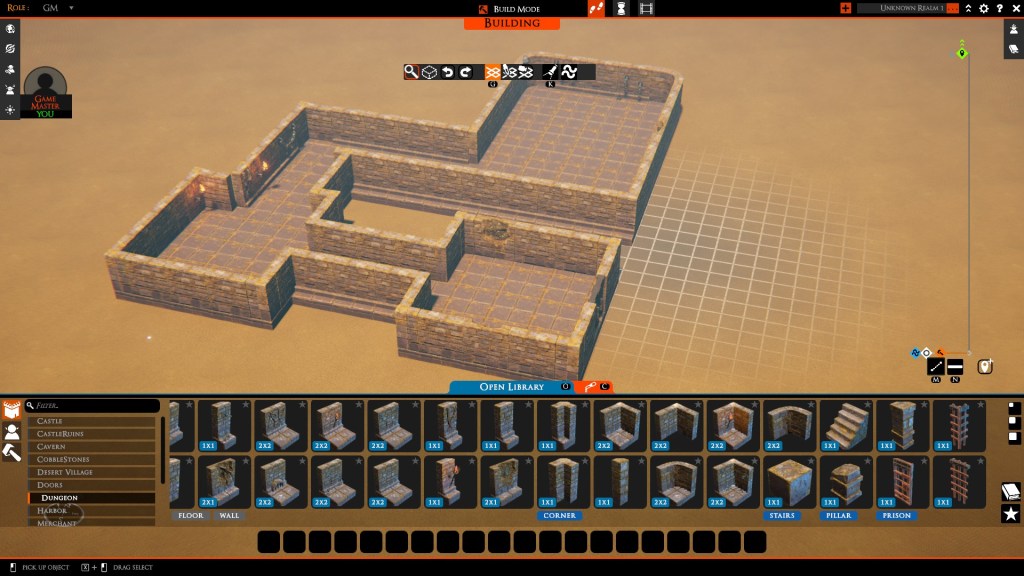
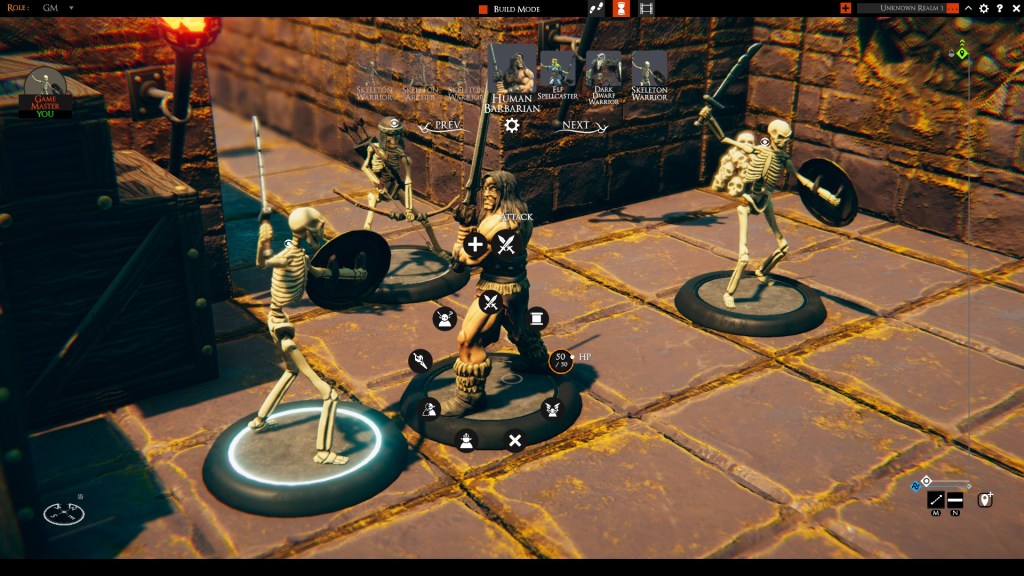
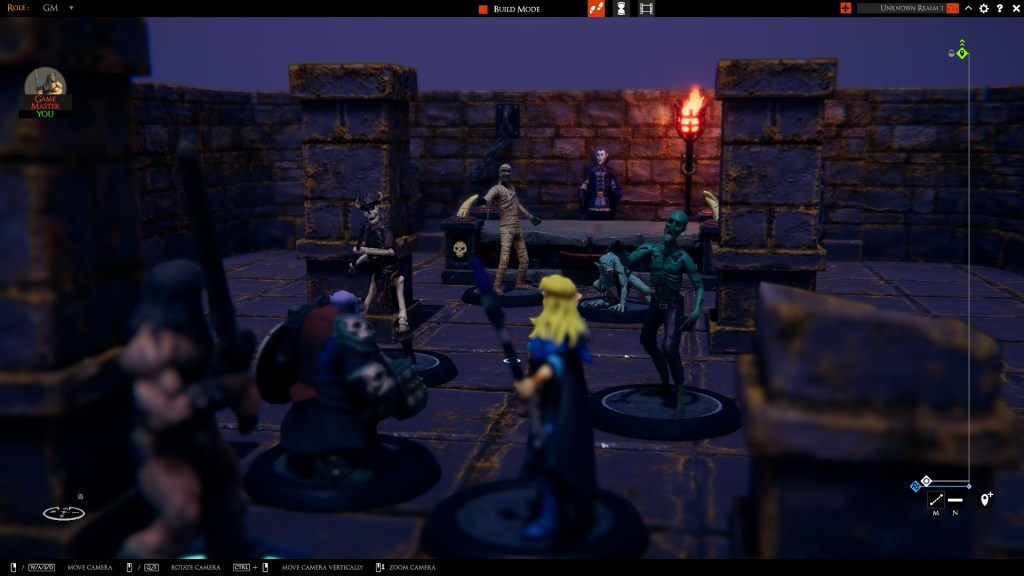
Let’s start with the project that started my descent into crowdfunding hell. Dungeon Alchemist is an AI powered 3D map making tool that sells itself on its ease of use and quick automation. The idea is that you draw the size of a room, select a theme, and the software auto-populates it with various flotsam and jetsam that make sense within said theme. Smartly, the software will absolutely allow you to get a bit more granular and select specific items too place as you please, as well as adjust its size and rotation, allowing for a fairly unique map. Or at least, that’s what the pitch is.
And the pitch is very good, especially when you see how much money this thing has raked in. The original goal was set at €45,000, or about $53,000, but by the campaign’s conclusion it had raised a total of €2,462,821 or about $2,886,020, easily blowing past all stretch goals including the final one set at €1,000,000. That’s an insane amount of money and pressure to suddenly have to grapple with, and I hope the team behind Dungeon Alchemist are able to live up to the expectations of their 57,000+ backers. Luckily, everyone is super understanding and compassionate on the internet.
LET’S ROLE
Despite owning a king’s bounty worth of materials on one of the most popular virtual tabletop (VTT) platforms out there, Roll20, I found myself wanting more than their hit-or-miss approach to basic functionality like a fucking pause button for music tracks and their servers that work only when they feel like it. There are other services I could utilize, but Let’s Rolehas a style to it that really caught my eye. From rolling dice to YouTube integration and even a customizable hot-bar to make it feel more like you’re playing a video game, Let’s Role has some cool functionality that I’m very into. Being in the alpha, I can say that it’s still very janky and needs some more features and bug fixes in order to be something I’d use instead of Roll20, but it’s still very much in active development with a long way to go before its official release.
While I’m very hopeful for Let’s Role to become an actual competitor in the space, the big question for me revolves around external integration. I need a VTT that is simple too use and has the books and modules I use to be fully integrated, and they’ve mentioned that there will be some of that, but to what extent I can’t quite say. If they can provide me with the books and modules that I frequently use in a more accessible and serviceable way than Roll20 offers, then I think it could become my new home for my group’s game nights. Here’s hoping.
DUNGEON MASTER’S LITTLE BLACK BOOK
I’m a big fan of having tactile, physical references when I play any TTRPG. Even throughout the pandemic where playing online was a necessity and not just a preference, I still have my books and notebooks all within arms reach, usually opting to use those instead of online resources if I can. What I like about Dungeon Master’s Little Black Book is how straightforward and useful it appears to be. It is just a handy guide filled with various tables for me to utilize whenever I need to throw something interesting at my players, which is something I could definitely make great use out of. It also helped that the physical books were priced very reasonably, making supporting the project a no-brainer.
STONETOP
Stonetopis a game system that’s been built off of the excellent Powered by the Apocalypse system set in what they call, “an Iron Age that never was.” I really like the PbtA system and have actually had some successful games using a variant of it called Monster of the Week, so I knew what to expect when reading up on Stonetop. If you’re looking for a new game system that isn’t very rules heavy and relies more heavily on role-playing and collaborative storytelling than anything else, I recommend it. But Stonetop posies itself as a bit more of a grounded experience that doesn’t assume that all the players are playing as adventurers, rather, the conceit is that all of the players are from the same village and are protecting it from external threats. Meanwhile, the players will have manage the village itself through fortifying, expanding, collecting resources for it and more. It seems to be solving the classic D&D problem of having just a bunch of homeless, wandering murderers for hire, with no connection to any particular place from the outset.
I’ve always enjoyed the idea of a campaign that was less about adventurers seeking another adventure, and more about normal people stepping up or being thrust into the action. That’s kind of how my current D&D campaign is structured and it’s been a great time for everyone involved, so having a system and setting embracing that from the start is very enticing to me. I like what Stonetop is pitching to me and I like the fact that I already have some familiarity with the system itself, hopefully making it an easy transition for my players and I once we wrap up our seemingly never ending campaign.
So yeah, that’s nearly half of the projects I’ve recently thrown money at because I have no self control whatsoever. But I actually like the things that I’m supporting and really hope they turn out well, but if they don’t, I know what I signed up for. And for those who are curious, yes, all of the other products I didn’t mention here that I’ve supported were also TTRPG related. They were mostly just source books and modules for me to utilize, or in reality, just more books for me to admire the spines of as they collect dust on my shelves.
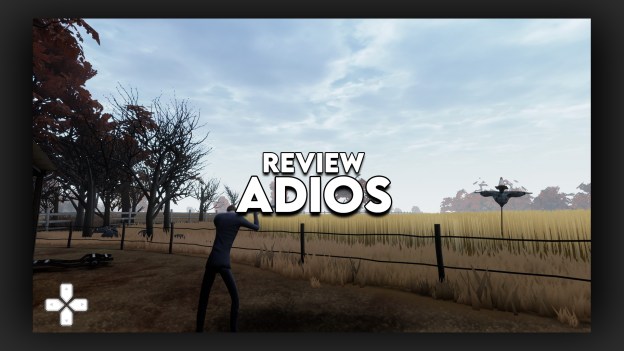
I don’t know if I’ve ever actually experienced anything quite like what I did when I played through Adios. I don’t mean to imply that I was awestruck by it by any means, because I genuinely found it to be an incredibly underwhelming game to play. Yet despite its numerous mechanical shortcomings, this narrative-focused, first-person adventure game delivered a really impactful story that left me feeling pretty raw emotionally.
It’s hard to talk about Adios without wandering directly into spoiler territory because the game is only about an hour or so long, so I’m just going to talk about the first 5 minutes of the game to avoid anything too spoilery. The store page for Adios reads, “A pig farmer decides he no longer wants to dispose of bodies for the mob. What follows is a discussion between him and his would-be killer,” which was a pretty interesting concept that was the catalyst for me playing it at all.
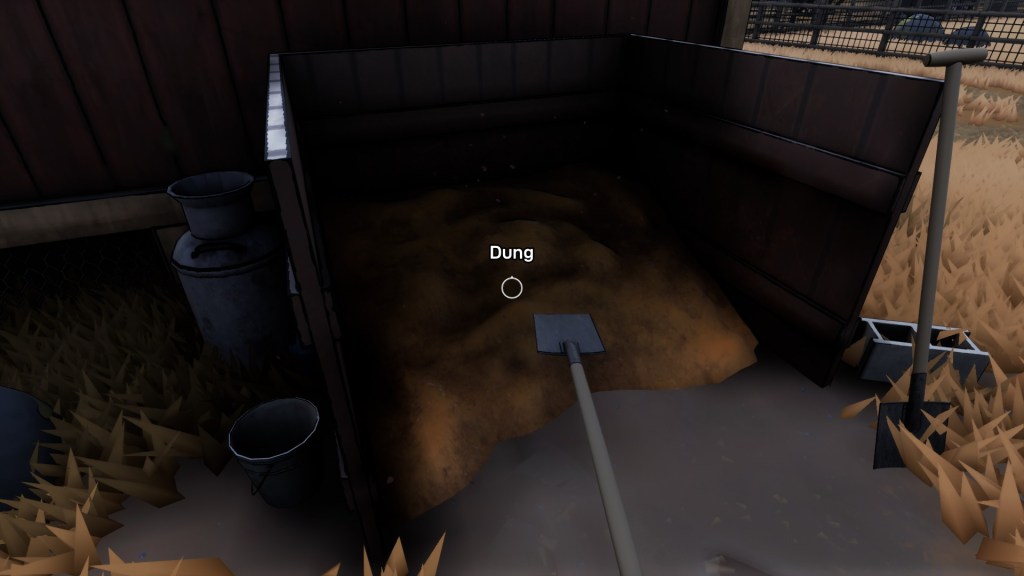
The first thing you do in Adios is check your journal while sitting on your porch. Inside, the lone entry essentially says to “tell him that you’re done.” A white van pulls up and you’re thrust into the next scene where you’re taking wrapped bloody packages out of the back of said van, and chucking them into the pig pen alongside your would-be killer. What follows is a series of conversations and interactive vignettes with you and your would-be killer about their lives and experiences. It turns out that both of these characters have been doing this for so long that they’ve become close friends, a fact that looms over every conversation you have together throughout the day.
Your would-be killer is trying to convince your character to not stop doing what they’ve been doing for so long because the consequences are admittedly pretty bad. He spends the entire day with you trying to remind you of all of these reasons to stay and stick it out without explicitly ever saying that it’s the worst and final decision that you’ll ever make. Throughout the game you’ll learn more about both characters and their personal lives, while they both try to walk a delicate line between work and pleasure. It’s one of the few games that’s really emotionally impacted me, with the last one being The Bonus World’s very first Game of the Year back in 2017, Night in the Woods.
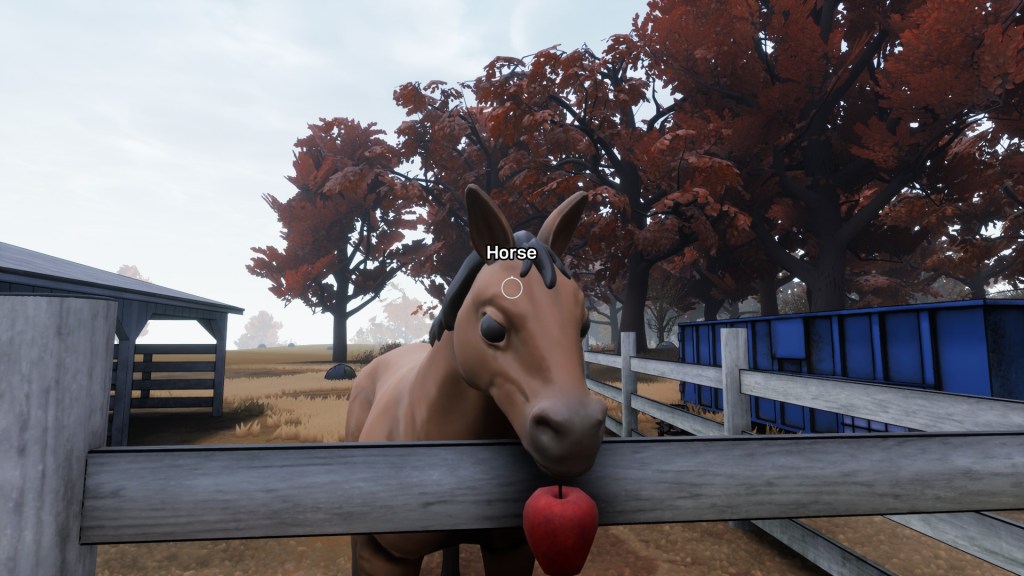
What made Night in the Woods great was a multitude of elements coming together in a well-rounded experience that had an incredible narrative woven throughout it. Adios on the other hand, is done a gigantic disservice by even being a video game. For how good the story, writing and acting can feel at times, they’re all unfortunately wrapped up in something that can barely be called a game, let alone a fun one. The structure of Adios is that you have a few locations of interest on your farm that trigger a scene for you to experience. In that scene you might need to do a mindless and mechanically uninteresting task like give a horse an apple while the two characters reminisce about the past. You finish listening to the conversation and move to the next scene. Most of these conversations are really well done, providing insight into the characters while uncovering their motivations, desires and general outlook on life. These are really the star of the show, so if listening to people talk isn’t your thing, then Adios has very little else to offer.
But these little vignettes you experience might not have anything for you to do in them at all. Sometimes you can just put the controller down as dialogue happens, only to occasionally pick a “dialogue choice,” all of which either don’t change anything about the story, or are grayed out for some reason. My guess is that there isn’t actually a way to pick those dialogue options, because they usually are things you’d rather say but your character can’t bring themselves to actually do. In this case, I thought that was very effective, but it doesn’t change the fact that most of these vignettes have you do a lot of sitting and listening.
When I bought Adios I thought it would be this little life-simulation kind of game with a heavy emphasis on the story. I wasn’t expecting anything revolutionary mechanically, but it cannot be overstated just how bad playing the game itself is at times. The first issue has to do with the presentation of Adios in general. From far away, the sweeping vistas of houses and farms in the distance have this painterly quality to them that I can appreciate. Up close however, things look a lot muddier. Look, I’m not one of those people who needs great graphics for everything especially if you’re very clearly trying to tell a compelling story over having dazzling visuals, but if that’s truly the case, maybe the character models should animate a touch better, or at the very least have any form of lip-syncing going on. Instead you’ve just got these weird caricatures that flap their gums at you while saying some heavy shit.
I don’t know what resources were available to the development team so I don’t want to sound too harsh, but it was truly disheartening to find this really engaging story completely mired by uninteresting game mechanics and iffy visuals. The worst part was that there were moments where I’d start to zone out while the characters were having these really intense conversations. I think Adios would be infinitely better if it were a short film or animated feature, because being a game doesn’t really enhance the story in any way, and in most cases detracts from an otherwise excellent experience.
But all of these issues with the gameplay were never enough to stop me from seeing Adios through to the end, and I’m happy I pushed forward. The ending of the game and the events directly leading into it were particularly gut-wrenching and left me feeling a bit teary-eyed when it was all over. Of course it wont affect everyone the same way it did me, but that should be a result of the story not resonating with them, not the uninspired and boring gameplay they have to endure.
Despite all of my criticisms, I do think Adios is worth experiencing. I don’t know that I’d suggest you run out and pay $20 bucks for an hour long story, but if you have the desire and ability, I say go for it. Otherwise, I’d say you should wait for a sale to play Adios, but either way, you should play Adios at some point.
Over the past month or two, I’ve purchased a handful of video games that I’ve been dying to play for one reason or another. Often these are games that I just never had the time to get around to when they released but decided with this lull in the release calendar (at least in my eyes), I could finally see what all the fuss was about. The problem is, despite how much I enjoyed any single game that I purchased, I eventually bounced off of each of them and returned to doing nothing instead.
It started with me buying the “limited run” of Nintendo’s Super Mario 3D All Stars, a collection of classic 3D Mario games that has two really good 3D Mario games, and Super Mario Sunshine, a bad game included within. I started playing through Super Mario 64 and was having a blast. Aside from the camera control being shitty and some of the movement stuff not being as tight as I remember, Super Mario 64 is still one hell of a game.
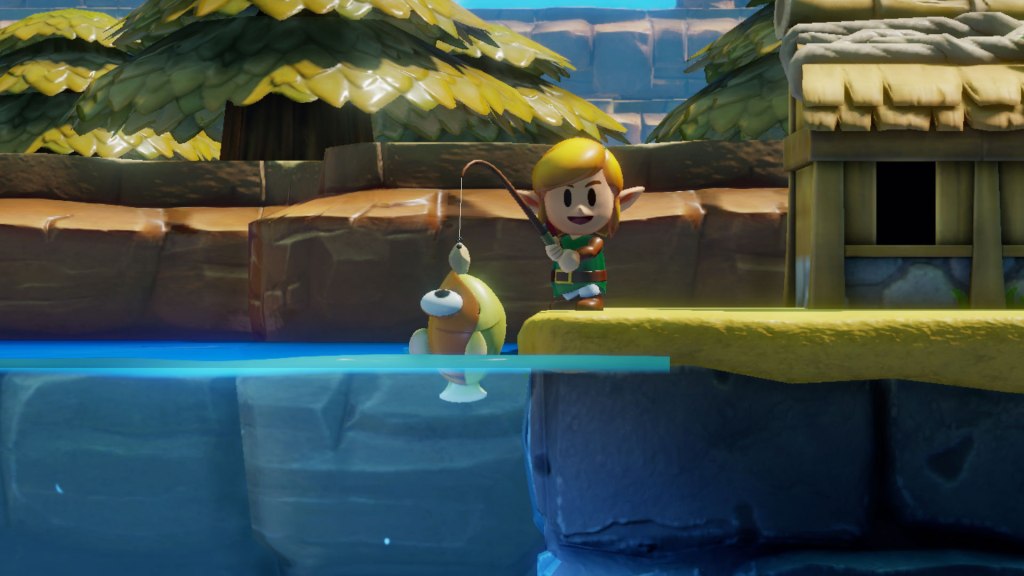
The Legend of Zelda: Link’s Awakening – Nintendo
Then I fell away from it when my copy of Luigi’s Mansion 3 showed up. Sorry “classic” 3D Mario games, but now it’s Luigi’s turn to shine… for a couple of levels before I dropped off of it. I don’t know why I bounced off of it so soon considering I was really enjoying the game itself. There’s way more dialogue and stuff that stops you from actually playing the game in Luigi’s Mansion 3 that I could’ve done without, but I still really had a good time with it and would like to see it through to its conclusion.
But how could I keep playing Luigi’s Mansion 3 when Super Mario 3D World + Bowser’s Fury just got released? Not only do I feel like I have to prioritize it because it came out this calendar year and it might be relevant to write something about it, but it also has one of my favorite 3D Mario games of all time inside of it along with this new open-world Mario game too. Sorry Luigi, but your brother won again. And to be fair, I annihilated the Bowser’s Fury portion of the package. Meanwhile, my partner and I are slowly working our way through 3D World itself, but I was also playing through 3D World on my own. But alas, that save file is just going to build up a thick film of digital dust from now on because I’ve finally decided to pull the trigger on a game I’ve desperately wanted to try for a while now.
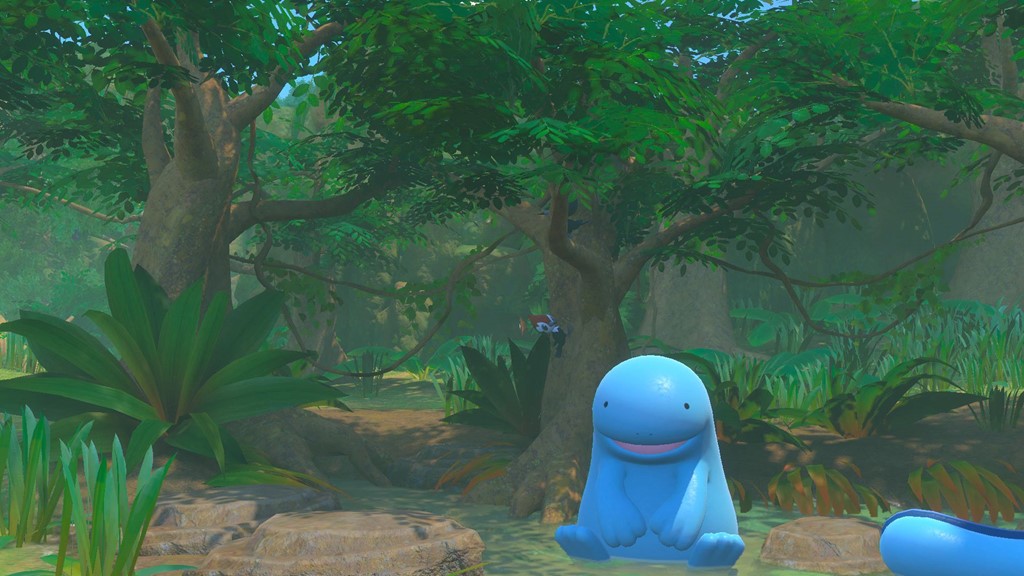
New Pokemon Snap – Nintendo
That’s right, fuck off Mario, because Link is here in The Legend of Zelda: Link’s Awakening remake, and boy does it look pretty. Also, and this is something I’ll probably have to go into at some other point in time, but I’ve never really played many Zelda games, especially a vast majority of the top-down ones. It’s a big hole in my gaming portfolio, something that I looked to fix with trying this adorable looking remake. And hot damn is it good. Well, minus the poor performance on the Switch. But outside of that, I’m having a really good time with it and… it’s been 3 weeks since I’ve touched it.
Well I need to figure something out soon because New Pokemon Snap, yes, it’s really called that, comes out at the end of April and I am very much interested in playing it. But there is a fear that comes along with desire, something you might have picked up on while reading this blog. I don’t know if it’s something about playing on a handheld that just doesn’t provide me with a lot of motivation to play through the entirety of a game or if there’s something else going on, but the idea of dropping another 60 bucks on something I’ll play 4 hours of doesn’t seem like the best choice for me. I think I have to make myself earn the right to buy a new game by forcing myself to play through something I already own. That definitely isn’t going to lead to me just hating video games altogether or anything, so I won’t even worry about it.
Well it’s Saint Patrick’s Day already, which means it’s time to go out to the pub with the lads and knock back a couple of brews and eat your body weight in bar nachos. Oh wait, it’s a pandemic still, don’t do that. I can’t say I’ve ever really celebrated St. Patrick’s day in any real capacity at any point in my life, and this year doesn’t seem like the best time to start. So instead I’ll just sit here and talk about an upcoming game that has nothing to do with Ireland or even the color green at all. We’re talking about the upcoming cooperative action game, Dungeons & Dragons:Dark Alliance.
If you haven’t heard about it yet, Dungeons & Dragons:Dark Alliance looks to be a 4 player cooperative action game in the vein of something like Vermintide2. The way that Vermintide 2 was structured had you and your friends in this hub world where you could craft new items, level up your character, and check on your challenge progress, before you all embarked on a mission to kill a bunch of rat-folks with knives and gather the precious XP inside their bodies. Mind you, this is all me speculating, but it sure seems like Dungeons & Dragons:Dark Alliance is going to handle things in a very similar way.
I’m going off of Polygon.com’s hands on experience with Dungeons & Dragons:Dark Alliance, and they specifically call out how the game itself is geared towards co-op play, with difficulties scaling based on how many players are involved. The article mentions the core loop of the game appears to be about replaying levels on harder difficulties, gathering loot, and leveling up each character class according to whichever skill tree you choose to follow. How much variance there will actually be between different skill trees remains to be seen.
Personally, I would’ve liked the ability to just create a character instead of choosing existing ones, because that’s kind of the whole draw of a Dungeon’s & Dragons product in my eyes. To me that just seems kind of antithetical to what the biggest TTRPG is all about, but even if I can’t create my own character I’m sure it’ll be fine. It also makes sense when you consider that the PS2 era Dark Alliance games also only let you play as pre-made characters, so there is some precedent there.
The only real hangup I have with this early showing of Dungeons & Dragons:Dark Alliance, is that I never really got that into Vermintide 2 or games like it, but I really do enjoy Dungeons & Dragons, so that might be enough to keep me interested. Either way, Dungeons & Dragons:Dark Alliance is coming out for Xbox One, PlayStation 4, PC and the next generation consoles as well on June 22nd for the extremely attractive price of $40.
Almost three years ago to the day I launched this silly little blog, unaware that it would go on for as long as it has. When I launched the blog itself, it was mostly a way to just get some consistent content up on the main page to supplement the glut of videos we made. Oh how hard the pendulum has swung in the other direction however, with several different features and articles existing in stark contrast to the zero amount of videos we make. While having to write something every week for the past 3 years might sound like a burden, it’s actually been exactly what I needed to keep me going creatively.
The blog really has been this cathartic hobby of mine that I sometimes wish I didn’t have to do. You might say, “but you don’t have to do it,” to which I’d reply, “If I don’t do this I’ll die.” Maybe that’s a bit dramatic, but at this point I really can’t imagine not writing a blog post every week. It’s become such a staple of my routine and such an important hobby of mine that even when I’m at my laziest and don’t feel like doing it, I know that I’d hate myself if I skipped a week.
I’ve gone through long stretches of time where my motivation to do anything creative was basically nonexistent, but having the self-imposed dead-line and sense of necessity with the blog has always kept me from just spiraling out of control. Especially during the pandemic it’s been incredibly easy to lose track of the days and time in general, but having that weekly goal where I have to write something has kept me from just losing weeks of my life to nothingness.
The blog is very special to me, but even I can see that I’ve kind of reduced its relevance thanks to other features I’ve introduced on this site. Talking about a game on a blog might seem like a wasted opportunity for a Gut Check, or talking about D&D should probably be confined to a The Master of Disaster feature. It’s become increasingly difficult to delineate what makes for a blog versus one of those features, but that just means the blog gets to be about wider topics that aren’t just about video games and TTRPGs or whatever.
The important thing to remember is that I love doing all of this, not just the blog but The Bonus World in general. The blog has been the most enduring creative thing I’ve ever done, easily outlasting any other written feature and probably and video thing in my past, and I don’t see it ending anytime soon. I truly appreciate your continued support and engagement with the blog and The Bonus World at large, and I hope you continue to enjoy it as time goes on. Thank you.

















 The Bonus World