It’s been a bit since I’ve actually told a story from my D&D games, hasn’t it? Lately I’ve been prattling on about my ethos and how I prep for games, but sometimes all you need is a good story about players being overly confident. So buckle in everyone, cause this one is short but oh so sweet.
For context, our DM had a lot of affinity for the Dragonlance universe, so we ultimately decided to play through a module of their choosing using the D&D rule-set. I don’t know if Dragonlance is its own game or set of modules or something, but I was interested to play it regardless, and so was the rest of my party.
The story was mostly spearheaded through our cleric, a man on a mission to restore the power of the gods who had abandoned the region for some reason. So in a very Wizard of Oz kind of way, the backstory was set up with the cleric meeting each of us on his travels, conscripting us into is mission. Each character had their motivation for finding the gods except mine, who was more loyal to the cleric than his mission. They were buds.
So we wandered around, going village to village in search of anyone who could help point us in the direction of a way to achieve our goal of bringing the gods back. After a few sessions, an NPC we all hated, and a terrible boating incident, we found ourselves deep in a forest where we were on the trail of a derelict temple to the gods. In said forest, we found a village of these dragonborn folks who were praying to an effigy of a big dragon. We had no reason to engage with them outside of the fact that this was the first non-swamp related thing we’d seen in about 3 sessions.
One of the many problems we had was that we’d been fighting these dudes in small packs all throughout the swamp, so they had made it clear they were hostile. We luckily had the drop on them, as they were staring at their effigy in prayer while we approached from behind them. Just to be clear, there were enough of them to fuck us up as efficiently as possible. So we had to devise a clever plan to get by them for reasons I still am not entirely sure about. But unfortunately, overconfidence trumped careful planning which prompted our warlock to flex his charismatic muscles.
He elegantly pranced over to the dragonborn clan, whispering sweet nothings into their ears and caressing their cheeks with the back of his palm. It was like watching a ribbon dancer perform without said ribbon. As he performed his floor routine in front of the dragonborns, who were now facing in the direction of where we were hiding, he played his dumbest card yet. Quick side note here, he was not a dragonborn, he was just a dude. That’s important to know because he literally tried to convince these fools that he was their god in humanoid form as a way to get them to not attack us anymore.
It was sultry, it was sexy, and it was the best plan he could come up with. With a plan this stupid, how could it not work? Well the dice found a way to fuck us, and our warlock couldn’t charm these lads with his puny roll of 13. So suddenly our warlock found himself on the wrong side of a wall of fire that placed him in a closed arena with about 15 angry dragonborn who just witnessed this megalomaniac try to be the focus of their idolatry. Not a great position to be in.
Initiative was rolled, the dragonborn all got into perfect ass-kicking formation around our warlock, and then my turn came around. I was a tiefling monk, which meant I could both move very quickly and resist fire damage. Wall of Fire is a spell that requires you to make a dexteriy saving throw that if you fail, you take 5d8 fire damage, also known as just enough damage to kill a stupid warlock. So I used my mobility spells and natural fire resistance in tandem, couple that with a good saving throw to avoid the brunt of the fire damage, and I was able to leap through the wall of fire, grab a stupid warlock, and drag him back to the other side.
He failed his saving throw to get through the fire, but we were able to heal him quickly enough and bail out on the entire dragon cult thing. We chastised him appropriately and continued our adventure. But for the briefest of moments, there was the possibility that we could have made an army of dragonborn wreck shop in our stead. And honestly, isn’t that what D&D is all about?
Okay, so next week is going to be a wild one for us Americans with the whole election thing going on. I’m not going to lie to you, I’m genuinely terrified for what is going to happen regardless of who wins the thing, but I need to not think about it exclusively for the next few days or I’m sure my head will explode. What I’m trying to do is to look forward to other things that might actually bring me joy instead the giant clusterfuck that is bound to be November 3rd. So here’s a hard pivot into video games.
Did you know that video games were happening this week? Well they are. Personally, I’m pretty jazzed about Teardown entering early access. For those of you who don’t know, Teardown is part destruction sandbox and part heist game. You start a level by looking for these hidden switches hidden throughout the map, then you need to set up an efficient route to get to each of them within a short time window because when you decide to flip that first switch, the cops are alerted and come hunting you.
That part of the game seems okay from what I’ve seen of it, but the real star of the show is the destructibility of everything. See, you can just blast holes in walls and objects all willy nilly if you want, and I definitely do want to do that. I’m just excited for a fun physics-based destruct-a-thon in a pretty voxel-based world. I want to destroy shit and watch it explode into tiny, GPU-burning pieces, and Teardown seems like the perfect way to accomplish that.
Teardown – Tuxedo Labs
There’s also Watch Dogs Legion, a game that I’m fully expecting to both enjoy and recoil at for how either spot on or tone-deaf it comes across. I’ve been yearning for a good action game for a while and based off of my enjoyment of Watch Dogs 2, this sequel seems like the way to go. I also went ahead and signed up for a month of Ubisoft’s Uplay+ service so I could avoid paying full price for yet another video game, especially when you consider that within the next month a new Assassin’s Creed is coming out too. It seemed like the most fiscally responsible way to play these games which is a new look for me.
But to perfectly counteract that small, fleeting glimpse of financial responsibility, I’ve been eyeing a bunch of computer parts that I want… that I need. See, I’ve reached something of a ceiling on how good my computer can be, mostly because I cheaped out when I initially built the thing. My motherboard doesn’t support newer CPU’s, so I need a new one of those to support the new CPU I need because I’m being throttled to hell and back. And also, I’d like a freaking SSD too, so that’s added into the equation. I also would like a new case for my computer that isn’t a third of my height.
Watch Dogs Legion – Ubisoft
“What what about the graphics card?” I hear you ask. Well, even if I got a new 3000 series card, it wouldn’t matter because my CPU is still basically a hamster with a calculator, so he would probably make it difficult to see much of a performance increase. I want to ultimately build a new computer and set my terrible hamster-based CPU free, but money isn’t something I have a ton of right now. And now I’m thinking about why I’m broke, and I’m worried about next week once again.
Fuck.
Well, hopefully by this time next week you’ll be reading a blog with a much happier tone, but like I said up top, regardless of the outcome on the 3rd, it’s gonna be a shit show. Please for the love of god, vote for Joe Biden and free us from this hell we’ve been living in for the past four years.
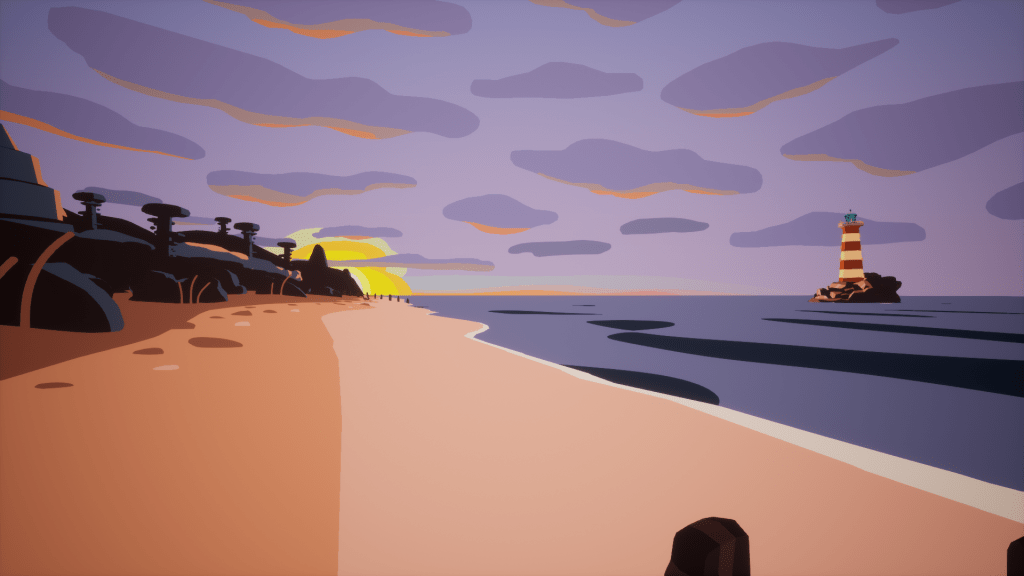
Contrary to what its morose title might suggest, I Am Dead is a genuinely touching and pleasant puzzle game that has you uncovering the history of the small port village of Shelmerston in an effort to secure its future.
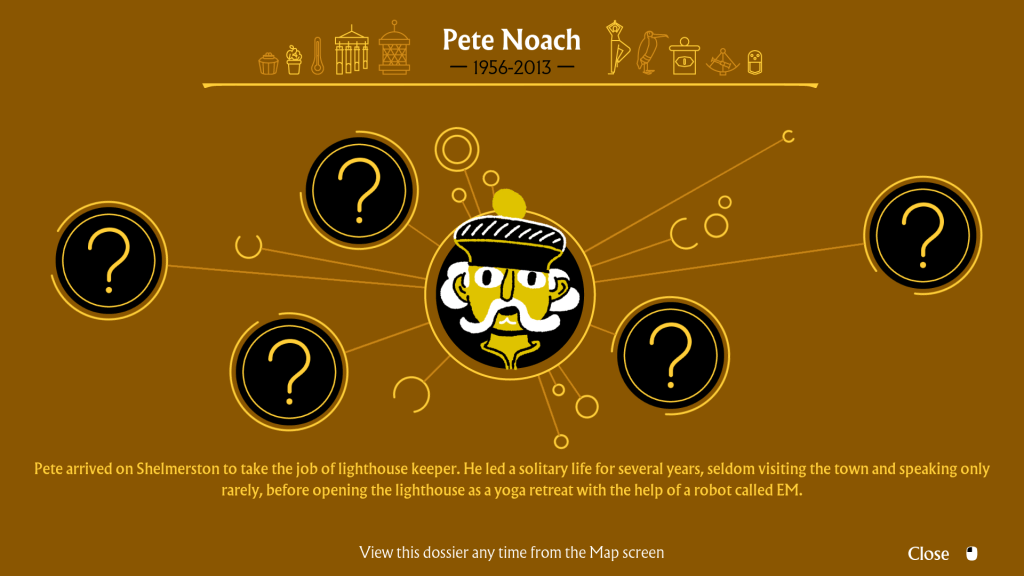
In I Am Dead you take on the role of Morris Lupton, a recently deceased citizen of the village of Shelmerston. In his life, Morris was the curator of the Shelmerston Museum, a role that he took great pride in as a lover of his hometown. In death however, Morris teams up with the ghost of his dog Sparky to uncover the true nature of why the dormant volcano that the village is perched around has begun to rumble for the first time in centuries.
Shelmerston has long been kept safe from a fiery demise thanks to a spirit who sacrificed going to heaven in order to watch over the village, taking on the role of the Custodian of Shelmerston. Aggi, the Custodian in question, had her remains dug up and put in the museum by none other than Morris himself, which is what seems to have caused her power to wain. So Morris and Sparky set out on a journey to find a new spirit to take up the mantle and keep the village safe for years to come.
You do this by diving into the memories of people who came in contact with a potential replacement Custodian, learning about who they were and what their impact was on the town. One of the first spirits that you’ll investigate is the daughter of a prominent artist in the village who had no interest in following in her father’s creative footprints.
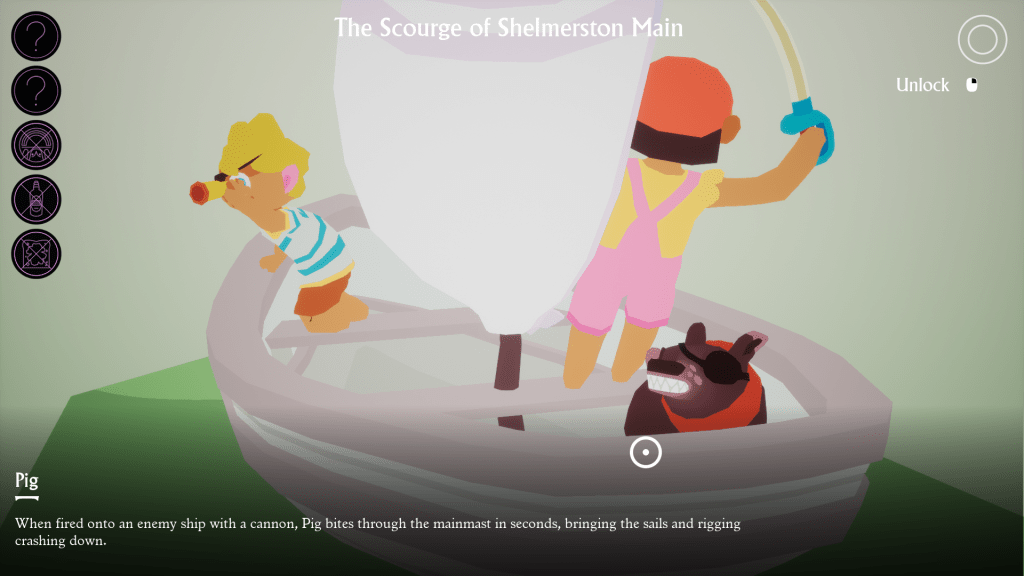
You’re then presented with this tableau of an outdoor art installation filled with various tourists and artists. You’ll eventually come across someone with a thought bubble above their head which signifies that they’ve got a story about this potential new Custodian. Upon entering their mind, they’ll begin to narrate a story about their encounter with whomever you’re investigating at the time. You’ll also play this not-so-great mini-game where you drag your mouse up and down until you make a blurry image that encapsulates their narration into a clear one. The story being told, while very interesting and enjoyable, is in service of revealing an object that held meaning to the potential Custodian.
This is where the “puzzle” aspect of I Am Dead comes into play. You’re never really solving anything when it comes to the main plot-line of the game, instead you’re trying to locate the object that was discussed in the memories you invade. It seems simple at first, but the way you go about finding these objects is pretty fun, but might be better explained through example.
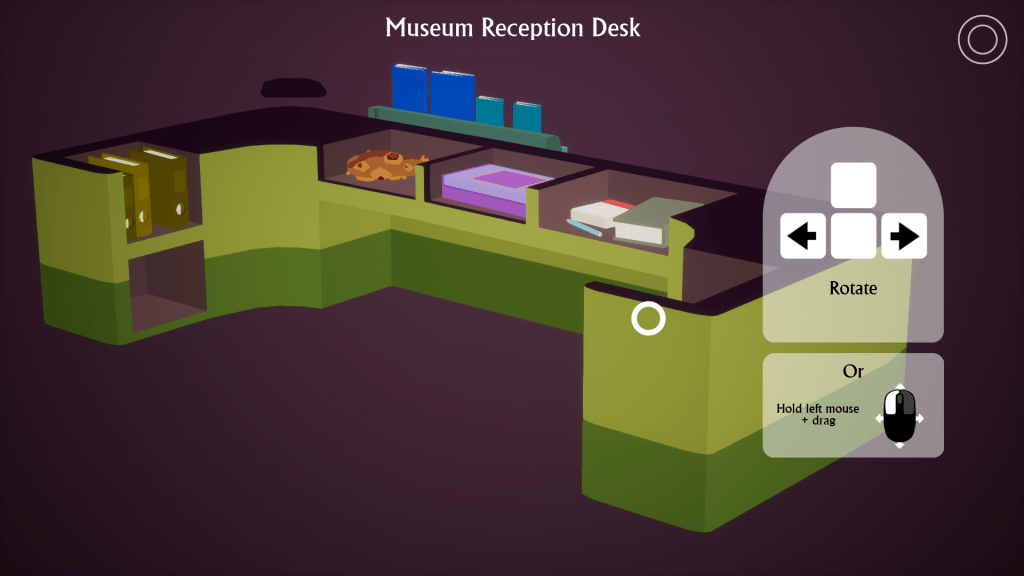
One of the objects on my list was a Frisbee with some stars on it that was confiscated by a real uppity campground manager. In each level, there are these smaller inspection areas where you can focus on individual objects and structures. In this example, the manager’s RV was one of these inspection zones that I could zoom into and peel back the layers of. As you zoom into the RV the walls melt away to uncover a messy interior littered with various flotsam and jetsam to look at. You can click on cupboards, bottles, coolers, toys, plants and much more to see what’s inside of them by zooming in. Eventually I zoomed in on a chair that had a storage space underneath it and found the Frisbee, crossing it off the list of items in the level I needed to discover.
The idea behind finding these objects is to awaken the spirit of said influential person that once inhabited the island in order to ask them to take on the mantle of the new Custodian. And that’s kind of the core loop of I Am Dead. There are other challenges in every level that you can accomplish that fall into two categories.
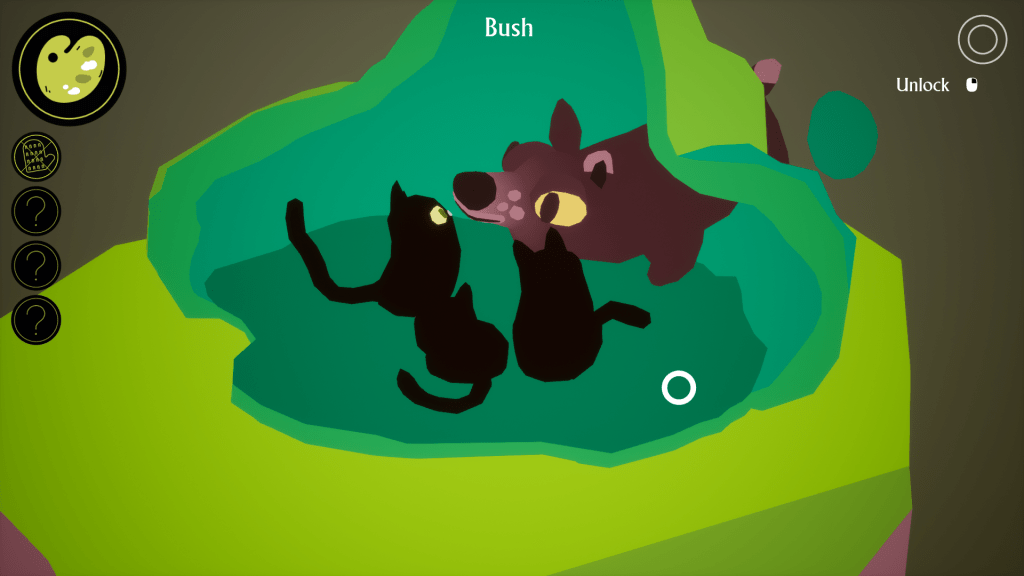
The first comes in the form of these tiny little spirits called Grenkins. Unlike the plot relevant objects you need to find in I Am Dead, the Grenkins are tougher to find and even tougher to collect when you do find them. Whenever you click on a tableau with a Grenkin hidden in it, Sparky will bark a bit and show you an icon that most of time, looks like nothing. In reality, what you’re being shown is the cross-section of an object that is at a particular angle and level of zoom. Luckily the game gives you an indication if the object you’re highlighting has a Grenkin in it, but finding the correct angle can sometimes take longer than any other objective on the island.
The other challenge comes in the form of riddles. Some bizarre spirit will list off some objects that are pretty well hidden and provide you a riddle to their location. I found these to be the hardest challenges in the game, because they’re phrased fairly vaguely and usually point to objects hidden inside of other objects. An example that sticks out to me was a clue that alluded to a steeped art supply, which turned out to be an eraser that was dropped into a cup of tea. You’d never even find it unless you were inspecting this one particular cup of tea very closely for some reason. That, or you’re really good at riddles.
To me, the story of Shelmerston, its history and inhabitants were the real star of the show. Learning about the village and the stalwarts who lived in it very quickly out-shined the hidden-object part of the game. The characters are all pretty interesting and seeing the impact they had on the lives of those around them was delightful and quite frankly, heartwarming. I also thought that I Am Dead ended very strongly, delivering on the emotional weight that had been built up over the five hours or so it took me to complete it.
I Am Dead is a great story wrapped up in a low impact game that touches on so many aspects of coming to grips with mortality in a surprisingly hopeful way. It’s funny that a game that’s quite literally about death and being dead can be such a pleasant experience, but I think that was the point. If you’re looking for something lightweight and cheerful, oddly enough, you should check out I Am Dead.
Not so long ago I wrote a lengthy piece about my issues with the state of the early access release of Baldur’s Gate III. Without rehashing that entire article here, the main crux of it focused on the mechanical liberties Baldur’s Gate III took with the rules of Dungeons & Dragons 5th Edition. My initial thought was that translating the rules of D&D into a video game would naturally require a ton of concessions, however another CPRG named Solasta Crown of the Magister recently entered early access and proved that theory wrong.
Solasta Crown of the Magister is a turn-based, isometrically viewed, party-focused RPG that might not have the best presentation, but impressively implements the rules of D&D in an easy to understand fashion. It’s actually been quite refreshing to be able to jump into a CRPG and know exactly what I’m doing for once, because usually it feels like I’m trying to learn a new language with these types of games. Solasta Crown of the Magister uses the SRD 5.1 rule set to great success, managing to appeal to veteran players of D&D without compromising accessibility to new players, and that’s something that deserves to be praised.
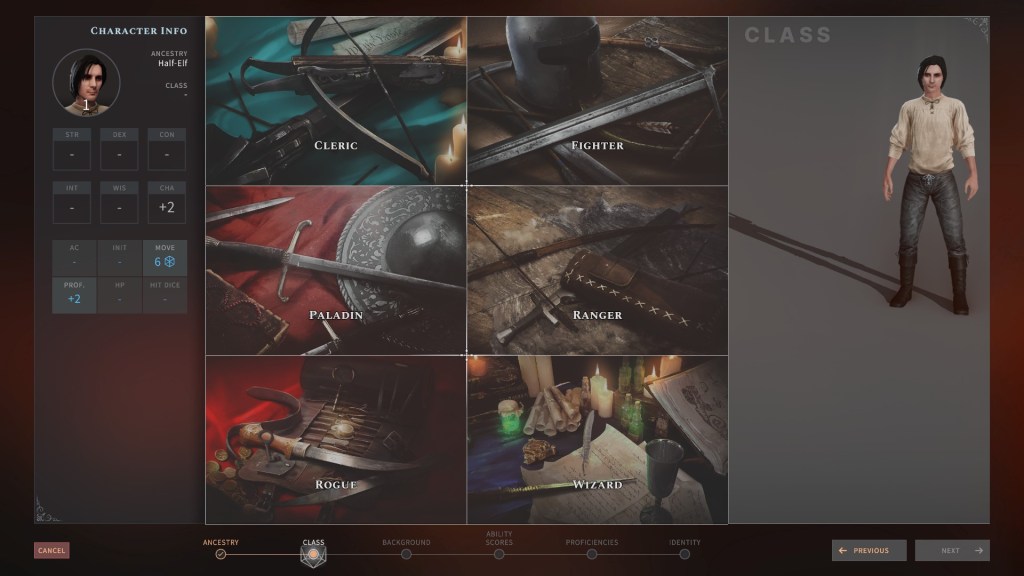
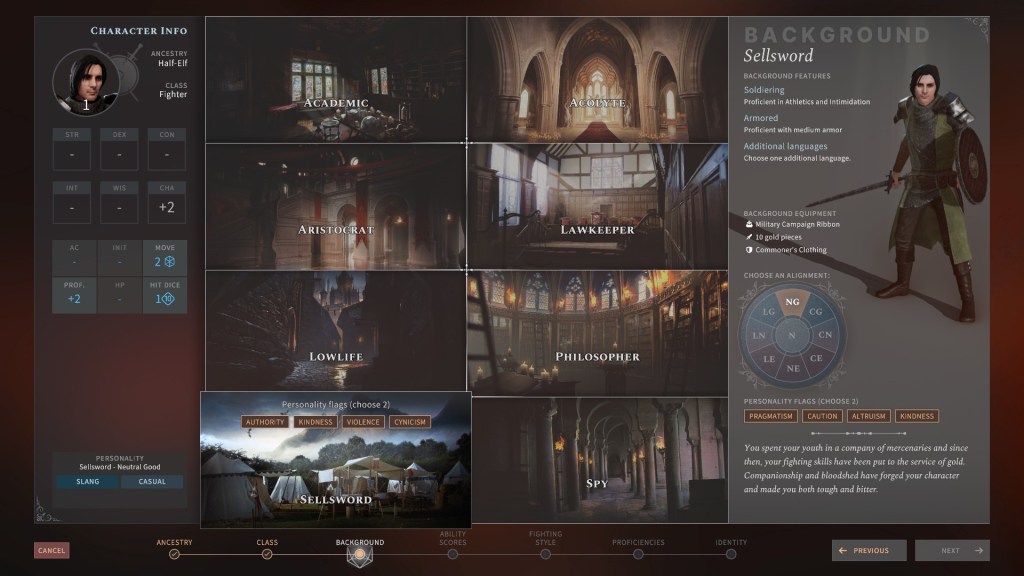
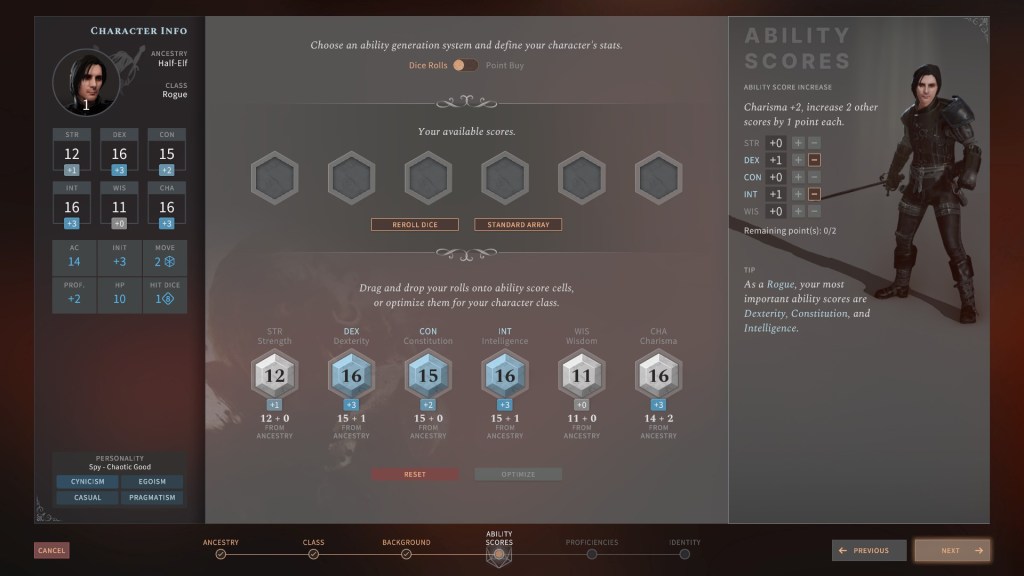
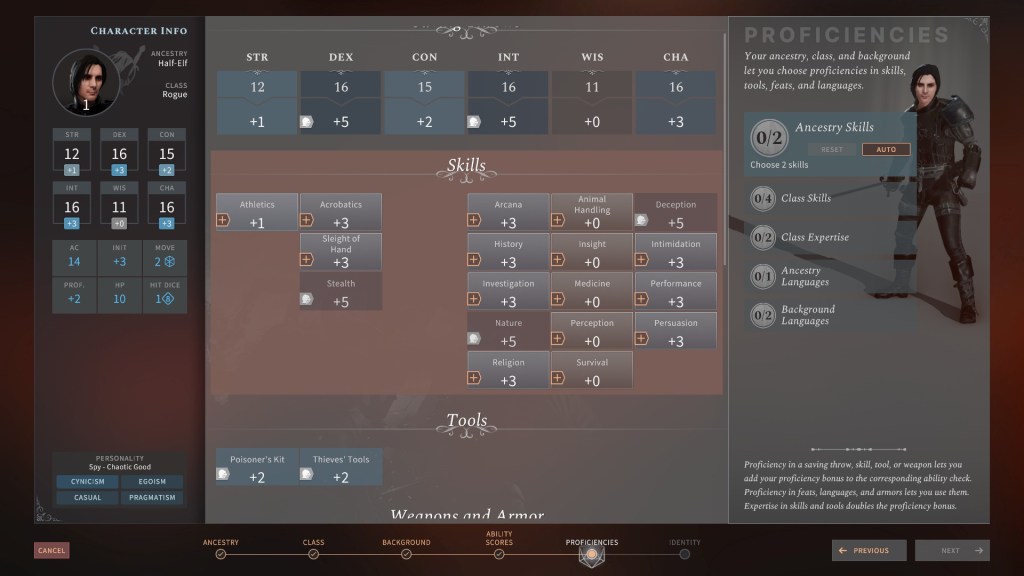
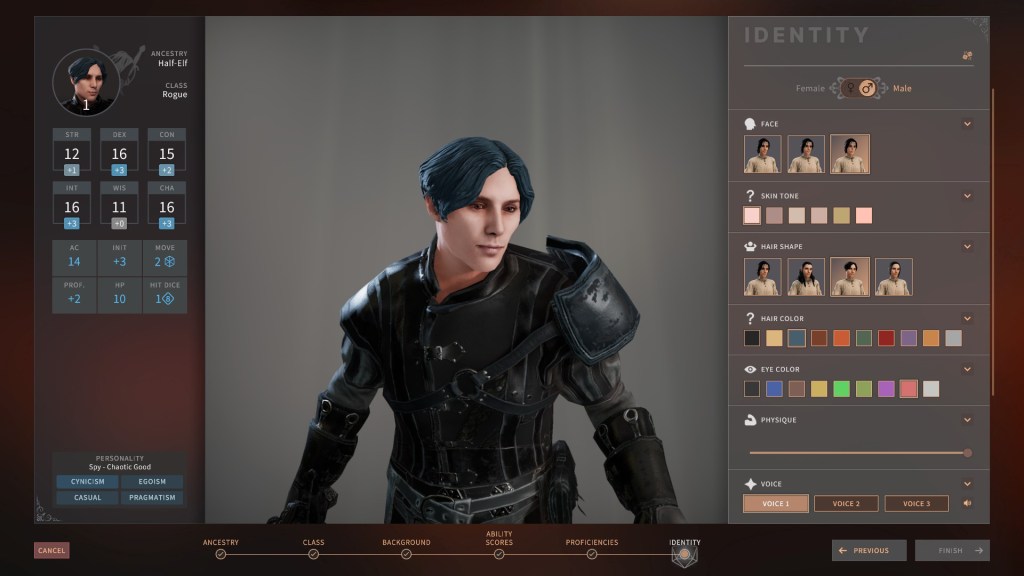
When you start Solasta Crown of the Magister, you can build an entire party from scratch or use some of the pre-generated offerings if you like. When building a character, you can choose from 8 playable races which include specific race variants (i.e. High Elf & Sylvan Elf), 8 backgrounds and 6 character classes. You are walked through character creation step by step, letting you know everything from what a particular god is all about, what benefits a certain background might grant and much more. I genuinely love the process of creating a character and think it’s fantastically well done, with the exception of how the character actually looks.
Therein lies my main hangup with Solasta Crown of the Magister. The actual appearance of your character is pretty rough. There’s only a handful of face and hair options to choose from which is particularly underwhelming for any role-playing game, but it highlights this hilarious imbalance between how mechanically sound the game actually is, versus the customization stuff. That point is only exacerbated by the facts that not only do the character models look very rough, but all of the NPC’s in the game are made from those same options. It led to a lot of moments where I’d see the same “dude with a beard” as both a quest giver, and a random bandit attacking me in the night. There isn’t any real variety for physical appearances, which desperately needs to be addressed.
But hey, it’s early access, and I honestly prefer having a mechanically sound game versus a pretty one. If I could mash up both Solasta Crown of the Magister and Baldur’s Gate III, we’d have ourselves one hell of a CRPG to contend with.
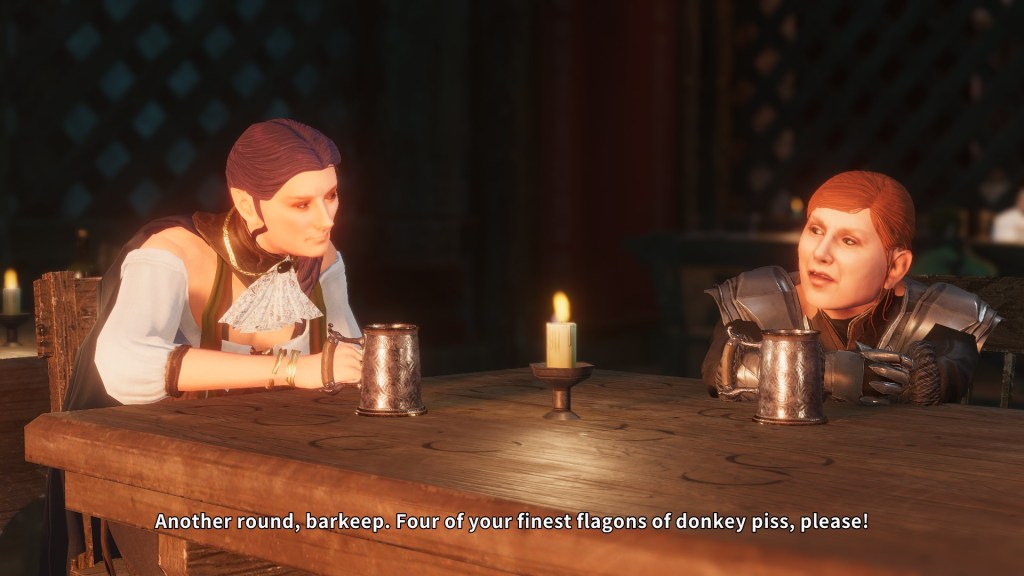
I also really appreciate that this game starts with your adventurers meeting in a tavern and sharing their stories (tutorial missions) about their journey here to each other. It’s a very funny jab at the fact that all good D&D campaigns start in a tavern, although it really tries to force some of your characters into specific tutorial boxes. For instance, my party is comprised of a paladin, a fighter, a cleric and wizard, all of whom shared their “tale of triumph” with one another.
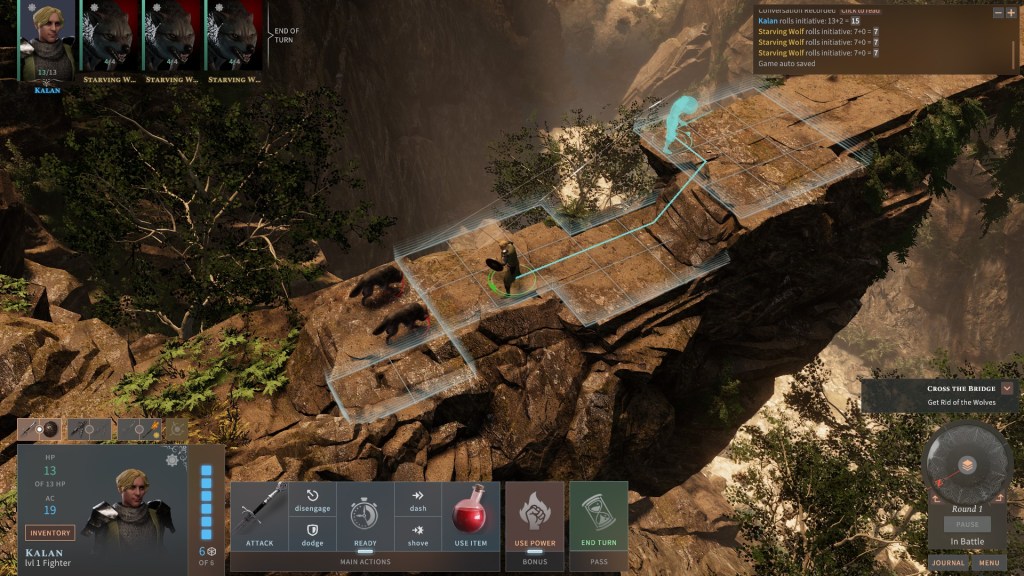
The first tutorial taught me how to just move around the world via escaping a prison, the second taught me how to kill wolves and push them off cliffs, the third taught me how to utilize light, resting, and healing potions, and the final one was a stealth mission. Now, you may have noticed it too, but I don’t have a rogue in the party. However, Solasta Crown of the Magister made a decision and decided that my cleric was the perfect fit for the job. She handled it well enough, but I’m certain the rolls were weighted in my favor for the tutorial. It’s nothing game breaking by any means, but it certainly is immersion shattering when the game just decides on a character trait for the sake of a tutorial.
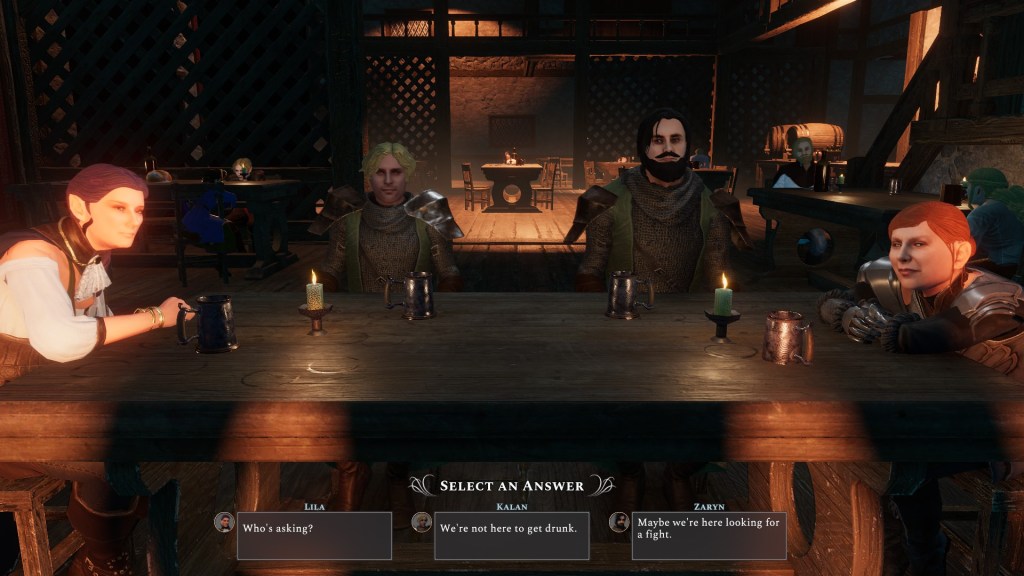
Once through the tutorial, you get your first chance at navigating dialogue situations. Each player was given a set of tags to choose from during character creation based on their alignment and background, which I believe (although I’m not certain) impacted who had a certain dialogue option to use. I didn’t see any dialogue choices in the traditional sense, but a tutorial tooltip made it sound like the game would automatically select the character with the highest stats to perform a particular dialogue skill check. But from what I saw in the first hour or so of playing was that each character just has one dialogue option to interject into the conversation. Hopefully this expands as I play more of Solasta Crown of the Magister, but as is, I do appreciate how every character is at least involved in the conversation.
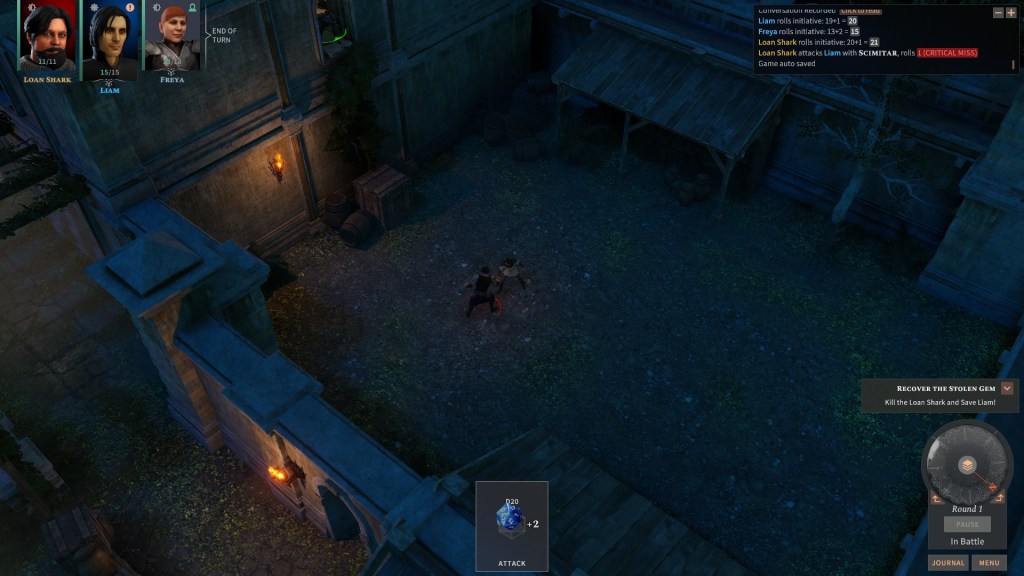
Solasta Crown of the Magister really shines in a lot of different areas despite being pretty rough in the presentation department. The voice acting is hit or miss and the characters all look pretty bad, but it’s mechanically competent for a D&D video game. One of my favorite touches is how you’re placed into a visible grid when you enter combat, leaving no ambiguity about where you are or who you’re vulnerable too. Honestly, the user interface in general is much easier to follow than it is in Baldur’s Gate III.
Another really intriguing aspect about Solasta Crown of the Magister is how it’s structuring campaigns. From the looks of things, there isn’t going to be one overarching campaign that will occupy you for hours upon hours. Instead it looks like they’re going for a more anthology approach, with Crown of the Magister being the first playable campaign. It’s a really interesting approach that comes with its own set of pros and cons. For instance, I can see a really easy post launch support structure that just injects new campaigns into the game, but it also makes you wonder if you’ll get any of the inter-party drama that you would get from other games like romance options and new recruits.
Solasta Crown of the Magister is in early access, so my gripes with the game as it is are bound to change, but without a development roadmap to refer to, all I can do is speculate at this point. Most importantly, it should be noted that this comes from a very small studio that hasn’t shipped a game before and found their funding via Kickstarter, so their resources are a bit more limited. To expect Solasta Crown of the Magister to offer the same amount of features and intricacies that something like Baldur’s Gate III is implementing would be unfair, but in my opinion they’ve already tackled the hardest part by successfully translating the D&D rules into a video game. That alone might be a good enough reason to check it out.
Change is good, isn’t it? Like, exhibiting personal growth and being able to look back and recognize that maybe you were a little too harsh on something just because you didn’t know any better and changing your opinion because of it is something to celebrate, right? That’s where I’m at with Divinity: Original Sin II, and I honestly couldn’t be happier to be wrong.
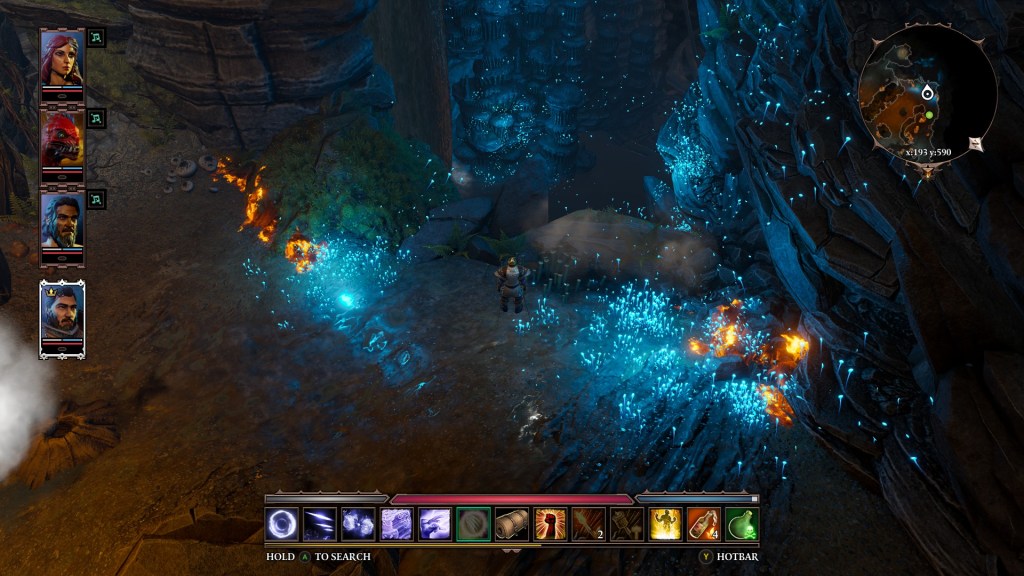
I don’t think I ever really hated Divinity: Original Sin II, rather, I would just write it off as a game that people other than me could actually enjoy. Hearing the rave reviews from critics and friends alike made it painfully obvious to me that the game was excellent, but it just always seemed like an experience that just wouldn’t resonate with me. Then Baldur’s Gate III entered early access, and everything changed.
I’m not going to reexplain everything I’ve mentioned in my previousarticles about Baldur’s Gate III, so you can read those on your own if you’re so inclined. Instead, I’m just going to say that because Baldur’s Gate III managed to sink its claws into me, I was able to easily make the transition to Divinity: Original Sin II. Let’s be clear though, I want to play more of Baldur’s Gate III far more than any other game I own at the moment, but it’s so early and janky that I’d rather wait and play a similar, yet structurally sound game for now.
Divinity: Original Sin II isn’t a perfect game, nor is it scratching the exact itch that Baldur’s Gate III was, but it’s still a good time. I’ve been told numerous times that Divinity: Original Sin II has something of a difficulty spike towards the end of the campaign, but that’s why easy mode was invented.
Not only did I make the decision to not only play on the easiest difficulty, but I also opted to load the game up with mods to make it a more “interesting” experience. I’ve got custom classes and unique weapons falling out of my ass at this point with all the shit I’ve injected into the game, and I’m enjoying this play-through much more than my initial, mod-less one. And I can already hear the cries of, “aren’t you going to play the game normally?” to which I say, “no.”
I’m playing Divinity: Original Sin II in a way that’s enjoyable for me, and I have no interest in looking up optimal builds or guides that will basically tell me how to play the game step by step. I’d rather just wade into the game on my own terms along with the ability to summon any item in the game whenever I damn well please. Sure it isn’t the “intended experience” or whatever, but I’m happy with the version of the game that I’ve created called, “Divinity: Original Sin II: Ari’s Bastardized Edition.
This week has and continues to be surprisingly busy for me, which hasn’t left me a ton of time to play the games I’ve wanted to. Alongside that, I’ve been neck deep in preparing and running my D&D campaign, which requires an alarming amount of time and dedication. I genuinely don’t know how people could balance that workload along with leading a normal, pre-pandemic life. But anyway, let’s recap the week.
First and foremost, Baldur’s Gate III was released into early access which was both exciting and extremely disappointing. While the game shows incredible promise, but in its current state it just isn’t the solo D&D experience I’m looking for. It did make me excited about a CRPG for the first time in my life. I suspected at one point that Baldur’s Gate III might be the game to do that, but I’m glad to see that “prophecy” fulfilled. I have no doubt that with time many, if not all of my issues with the game will be addressed in some way, but right now I’m taking it easy and letting the game marinate.
Aside from that, I tried out some demos from the Steam Game Festival over the weekend, and while some of them were okay, nothing really blew me away. That is with the exception of a game called SuchArt!. SuchArt! puts you in the position of one of the only, if not the only remaining human artist alive, which I think is because the robots that rule this universe are incapable of making good art or something. Robots will send you requests for art pieces that you need to fulfill to the best of your abilities.
What I really enjoy about SuchArt! is how despite its goofy premise, the tools at your disposal to make the art are surprisingly robust. There are several types of brushes, canvases, stencils and other art adjacent tools that may or may not actually be used in art such as hair dryers and Nerf guns that fire paint. It’s extremely goofy, but also very therapeutic and calming to play.
Outside of those two, I’ve played some more NBA 2K21. I enjoy it. It’s fine.
And yeah, it’s just been a lot of D&D prep work on top of all of that. We’re running the latest adventure module, Icewind Dale: Rime of the Frostmaiden, which is okay. I’m not a supremely experienced DM by any means, but there are some things in the book, and specifically more that’s missing from the book, that make the whole story feel disjointed and bolted together. There’s been a lot of tweaking I’ve had to do in order to make the story feel cohesive, which might just be a thing that DM’s have to do with these bigger campaigns, but I’m just uncovering that.
Oh, also, I voted. You should vote too. Oh, and wear a fucking mask.
Before I dive into the bulk of this article, it should be mentioned that no video game could ever truly capture the Dungeons & Dragons experience solely because there are static limitations to any video game. You can account for a lot of things as a game designer and try to cater to dozens of styles of play, but no game could adapt to the wild and imaginative things that players regularly ask of their DM’s quite like a living, breathing person present. Yet in spite of all of that Baldur’s Gate III already shows incredible promise when it comes to representing D&D and is a game I’m genuinely enjoying.
Don’t get me wrong, Baldur’s Gate III is a technical mess at the moment but I know what I signed up for when I decided to buy a game that’s in early access. I’m not going to harp on the performance of the game too much, but if you’re curious about what I mean by a “technical mess,” I can summarize that really quickly.
In its current, fresh into early access condition, Baldur’s Gate III runs inconsistently, usually fluctuating anywhere between running at 20 fps to 144 fps on my machine. Lip syncing for the new “cinematic” conversations is basically non-existent, and graphical glitches from T-posing, duplicating NPC’s you’re actively talking to, and ragdolls going wild are common occurrences. That kind of stuff is all bound to be smoothed over during the course of their early access period, so I’m not worried about that.
With that said, there are some things I would very much like to see fixed, changed and improved that pertain more to how the Dungeons & Dragons rules are translated into a video game. While this article isn’t a comprehensive list by any means, it does represent the things that I have personally noticed. I really love D&D, but I wouldn’t consider myself an expert in its mechanics or lore, so this is truly just representative of how I enjoy playing Dungeons & Dragons.
SHOW ME THE NUMBERS
In D&D you have a core set of skills like strength or wisdom, that as you pour stat points into them you’re granted a higher modifier. A modifier is the number you add to your roll or in some cases subtract from it, representing…well your skill at a particular ability. For instance, a rogue is going to be pretty good at sneaking around, picking pockets and doing cool flips, so their dexterity score and thus, modifier are going to be higher. Without just explaining the rules of D&D anymore than I already have, the rogue would have a couple of numbers they can add to a D20 roll in order to clear the difficulty class (DC) that represents how hard what they’re attempting is.
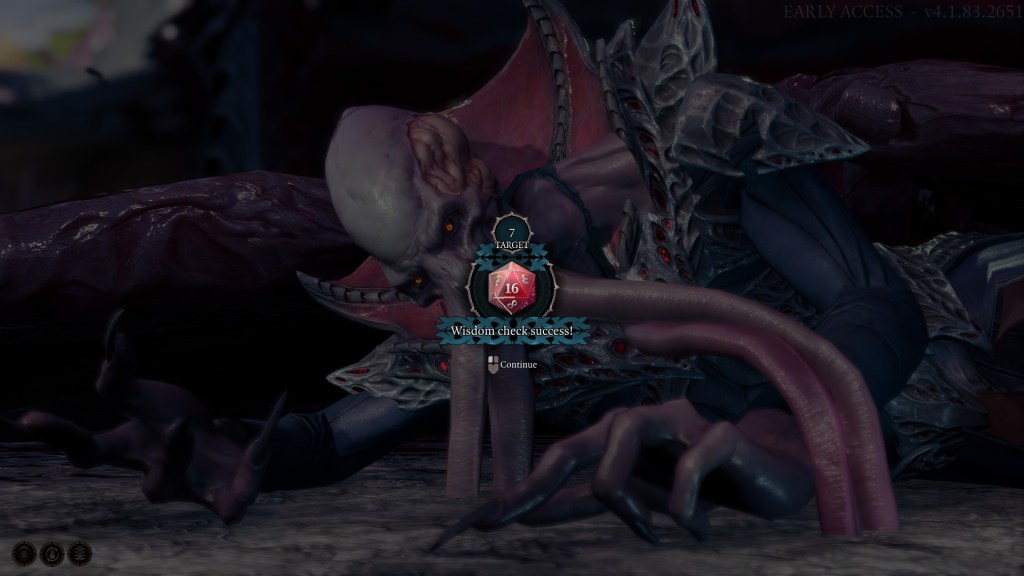
A DC of 7?
Baldur’s Gate III does this as well, but oddly enough reverses it. Instead of you adding numbers to a roll to clear a DC, all of your stats and bonuses subtract from the DC. It may not sound like a big deal, but after years of playing D&D it’s an incredibly jarring change. I suspect that the reason for this change is to make it simpler for new players with little to no experience with D&D to comprehend what’s going on. It’s obfuscating the math as not to confuse people and just have them focus on the dice roll itself, but that should definitely be something I can toggle on and off. As a player and a DM, I want to see those numbers.
Also, it just feels better to roll higher numbers than it is to roll low ones.
CHECKS, PLEASE
Considering that there isn’t really a DM in Baldur’s Gate III outside of a narrator who pops in regularly to make you feel like everything you’re doing is wrong, there isn’t much of a way to just perform random skill checks as far as I can tell. In D&D, if I find myself in an ancient library as a barbarian, I’m going to just sit back and contemplate how flammable these “books” as you call them, actually are. Yet if I’m a big brainy wizard, I’m going to be rolling arcana and history checks like they’re going out of style.
Half of the fun of playing D&D is being able to uncover clues or lore about the world through performing well timed checks. Being able to do a perception check when I enter a room or run a nature check on a potentially poisonous berry are just a sliver of ways that players get to feel powerful and useful as their characters.
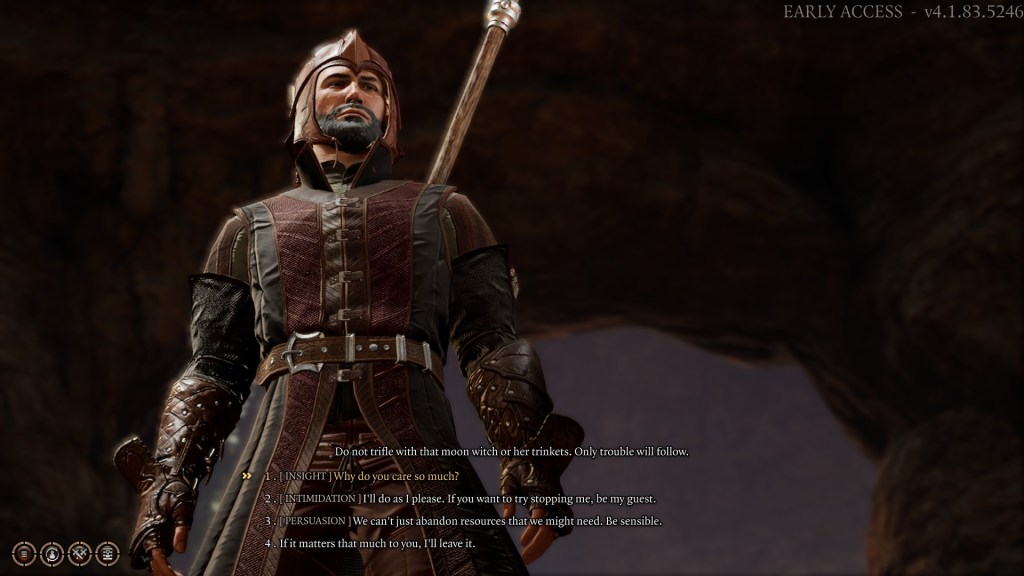
There isn’t really any of that going on in Baldur’s Gate III however. The way that certain skill checks are handled is kind of bizarre and a little too passive for my liking. The only active checks I can perform are in dialogue situations, where I pick the line of dialogue that allows me to roll an insight or deception check. I understand this limitation in conversations because the alternative would be an colossal feat of programming. Allowing me to just roll whatever check I want in any and all conversations seems akin to asking Larian Studios to work on Baldur’s Gate III till the end of time.
But outside of conversations and combat, it’s just weird to me how pushed into the background a lot of these checks are. Almost every skill check that occurs while exploring is transformed into a passive check. I assume the game is rolling a dice in the background, but it’s still incredibly weird that I have no say over what check I’m rolling and when. I wouldn’t mind if there was some sort of “active DM” situation that would prompt me to roll a stealth check when I wander into a bad situation unwittingly. And if I do succeed on a passive perception check it would be nice to know what it is I noticed, because virtual Ari might see it, but flesh Ari does not.
While I’m bellyaching about the checks in Baldur’s Gate III, I wouldn’t mind if the game slowed itself down entirely to act like a DM. If there’s a trap I’ve wandered into, stop the game and bring up a menu that says, “hey, you fucked up and didn’t check for traps cause we don’t let you just do that, and now you’ve gotta roll dexterity saving throws for these party members. Good luck!” That’s the kind of D&D stuff I’m looking for from Baldur’s Gate III.
I think I just want Baldur’s Gate III to capture the feeling of sitting down to play D&D more than I want it to capture the world and lore. Sure those things are important to me, but when I ask for more transparency in dice rolls and checks, it’s because I’m trying to get that rush of playing D&D out of Baldur’s Gate III first and foremost.
PARTY PLAY
This one is genuinely confusing to me, because it’s such an important part of the communal experience of D&D that its absence from the game is beyond odd. In D&D, your character cannot and should not be a skeleton key that can just do everything. Your characters are supposed to be flawed and fallible, which is why adventures travel in parties. The wizard may be a really smart magic-man, but he needs the fighter and her strength to defend him cause he’ll just get squished like a bug.
In its very early access state, Baldur’s Gate III seems to miss that mark by a wide margin. At the moment, my party has a cleric, fighter, rogue and a warlock, all with different skills and proficiencies that should work fairly well together. In combat, different skills and abilities work wonderfully together. Having the rogue shoot an oil barrel causing its contents to create a puddle under my enemies, followed by my warlock igniting said oil was a satisfying example of synergy, but outside of combat that isn’t really the case.
What isn’t in Baldur’s Gate III is an easy way to compare the skills and proficiencies of your characters without having to dig through a menu. So when I’m trying to break down a door or disarm a trap, I have to make an assumption on the fly of who to send to tackle said obstacle. Giving me a prompt or tool tip that just says like, “lock picking check” and then an ordered list of who in my party has the highest relevant skill for it would be nice.
But the most infuriating example of this is in situations where you have to talk to people. Baldur’s Gate III doesn’t do a great job of incorporating the rest of your party into your conversations. Sure, their lifeless husks will loom in the background unblinking while a man tells you the sad story about his brother or whatever, but they won’t help you in any way. For instance, if my character had a super low charisma score, I’d have to live with that every single time I entered into a conversation with someone. I wouldn’t be able to let the smooth talking bard (who isn’t in the game yet) do their thing and schmooze people over, no, instead Gronk the dwarf with a brain injury is going to ruminate on the income disparities that run rampant throughout the city of Waterdeep. That’ll fucking go well.
All I’m saying is, the adventuring party relies on one another for their talents and abilities, and I feel like Baldur’s Gate III doesn’t deliver on that in certain aspects of their game to varying degrees.
WAIT, I WANT TO GO BACK
There are times in D&D where a player might have a plan in their mind that they try to enact, only to find out that mechanically it wouldn’t be possible. That’s the good thing about having a cool DM, they’ll let you know that your harebrained scheme isn’t going to work or they might even work with you to make that nonsense happen. What’s even cooler is when a DM let’s you rewrite your turn upon finding out that said nonsense isn’t going to work.
Baldur’s Gate III is not a cool DM and is a bit of an asshole when it comes to you being able to fix your mistakes. Now I’m not asking for Baldur’s Gate III to allow me to just try out spells on enemies till I get the result I like or anything, but I don’t think it would be a big deal if it let me undo my movement if I haven’t taken an action yet. With the camera and path-finding in Baldur’s Gate III being what it is, which is to say it’s bad, being able to undo your movement in your turn would be extremely helpful.
Too often I’ll find that I’ve wasted my movement, taken an opportunity attack, and ended up in prime position to be blasted by 3 wizards and an archer. All of this could be fixed with a simple “undo” button. To be entirely fair though, that button may exist somewhere, but lord knows I haven’t found it yet.
STOP, NO, WAIT, GO THERE
I never thought an isometrically oriented game could have so many camera and movement control issues, but here we are. It’s borderline maddening how many times I’ll try clicking on something that I can clearly see, only for my character to interpret “go there” as, “climb that mountain behind you.”
Part of this frustration has to do with the camera, which might function exactly like it did in Larian’s previous titles, but I couldn’t say for sure. But in Baldur’s Gate III, the camera does this cut away trick to reveal the area in front of and around you while dissolving any trees or natural coverings that would normally obscure you to account for whatever angle you’re viewing the action from. Think of how The Sims does it, where those things are still there, but you need to rotate the camera to see them again.
What Baldur’s Gate III does which has resulted in my great frustration, is allowing me to click on things that I can’t see. There was an instance where there was a natural stone archway that formed out of the side of mountain that had a road running underneath it. I made the mistake of stopping too close to the archway I suppose, which resulted in me trying to click further up the road to progress forward, but the cursor actually clicked the top of the archway that was dissolved away by the camera. I couldn’t see the thing I just clicked on, but my party tried to climb that archway with gusto.
Luckily for me though, there wasn’t an actively burning fire on the way up the mountain or else my party would have just charged right in there without any sort of self-preservation in mind. For instance, during the tutorial you find yourself in an area where fire is happening all around you and you need to kind of just walk past it. There’s a pretty large path to follow, but your characters only know of the most efficient route to get to where you clicked, which is barreling straight through regardless of what’s in their way.
The amount of accidental fire damage I’ve take in Baldur’s Gate III already is alarming, and I really hope the path-finding gets better cause I’ve already wiped my entire party because instead of running around the combat encounter, they walked right into and stopped in a puddle of grease putting them in prime roasting position. It was a nice present for my enemies I suppose.
WHERE IS IT?
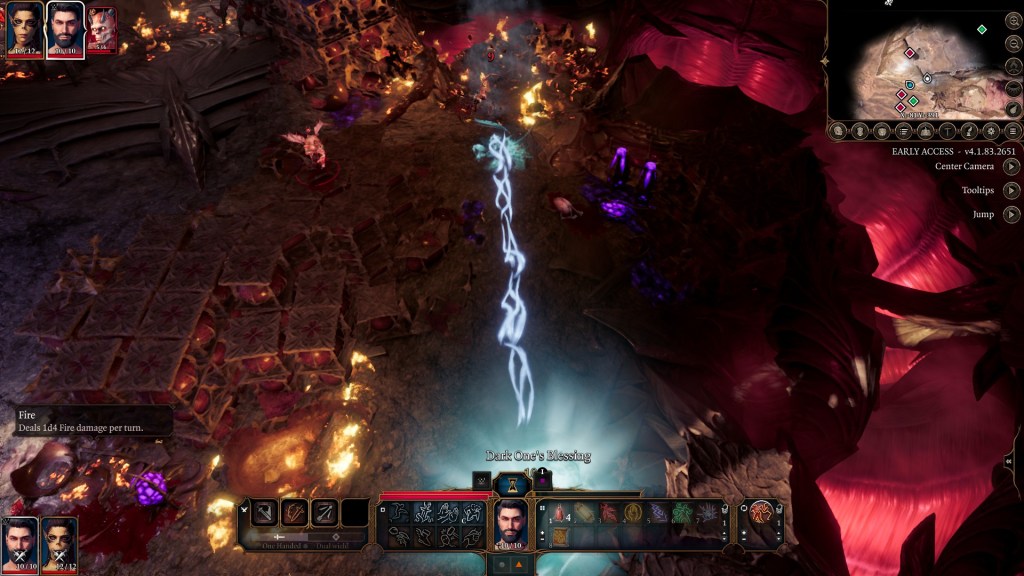
Look, I don’t have a ton of experience with games like Baldur’s Gate III so I’m sure that a cluttered inventory and unorganized hotbar are just expected at this point, but the way in which Baldur’s Gate III “organizes” your spells is truly abysmal. For those who don’t know, casting spells in D&D is a bit of a process that involves making sure you have the spell slots available, picking a level, and then casting the spell and rolling its damage. If that didn’t make any sense to you, that’s fine, just know that Baldur’s Gate III makes finding your spells a chore.
Instead of giving me a list of spells I could cast and then asking me what level spell slot I want to burn on it, they just give you an icon for each spell at each level. Wanna cast magic missile at level 2? Well you gotta scroll through the hotbar to find the magic missile icon with a little roman numeral 2 on it. It’s painfully unintuitive at the moment, but I suspect it’s a remnant of trying to shove the D&D mechanics into Divinity: Original Sin II‘s engine.
Your spells are also just kind shoved into the hotbar all willy-nilly, something I think you can reorganize, but it crams everything your character can do into it with no organization. For instance, I have a fighter in my party who can perform strikes that can cause the fear condition in an enemy. I recently leveled her up in a way where she’s received some spells she can use as well. Instead of separating those skills into folders that are marked as “fighter abilities” or “cantrips,” it’s just all kind tossed in there for you to click through along with the myriad of spell scrolls you pick up, making combat kind of a slog when it’s the turn of a magic user.
In the same vein, the initiative tracker is absolute garbage and needs to be changed entirely. There are times where it’s supposed to be my turn, but then someone else just gets to cut in front of me for some reason. I’ve even had instances where a character I’m controlling will get two turns in one round. It’s bizarre.
AM I THE ONLY ONE PLAYING BY THE RULES?
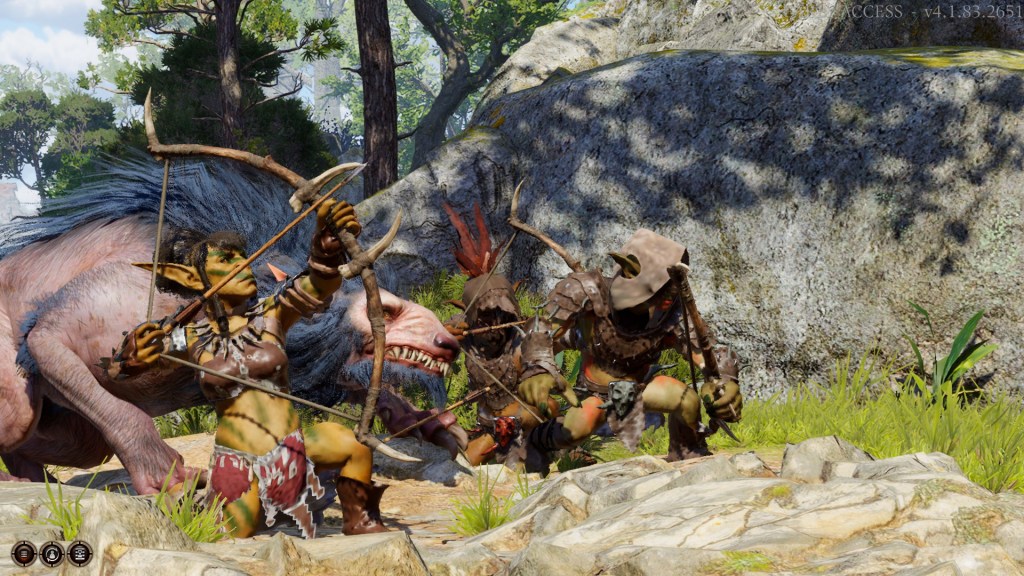
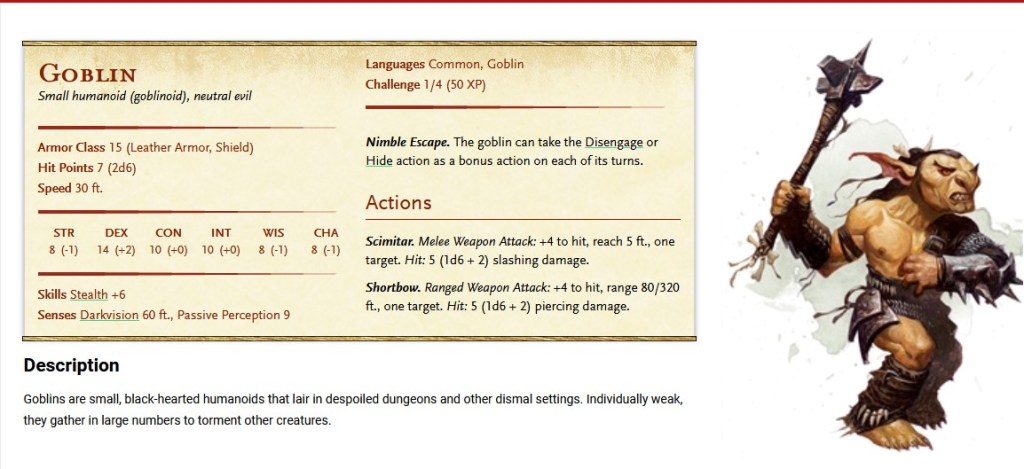
I don’t want to be that guy or anything, but it sure does feel a bit like the enemies in Baldur’s Gate III are just kind of freestyling it when it comes to their abilities. I noticed this very early on when there’s a goblin attack you find yourself in the middle of. I’ve played enough Dungeons & Dragons to know the goblin stats pretty damn well, so I took notice when the goblin took more than 7 HP worth of damage and still lived.
Goblin – D&D Beyond
It’s a really weird an unwelcome choice to tinker around with the stats of enemies when you’ve got literal books worth of reference material to pull from. I understand the need to alter things to make them work in a video game, but this one seemed completely unnecessary. Now I can’t use the Monster Manual as my own personal strategy guide.
I’VE PLAYED THIS GAME BEFORE
If there is one thing to me that is more damming about Baldur’s Gate III than anything else I’ve already mentioned, it’s that this game feels awfully similar to another Larian Studios game, Divinity: Original Sin II. I didn’t play very much Divinity: Original Sin II, but I sure as hell played enough to recognize it when juxtaposed with what’s supposed to be a game recreating the D&D mechanics. Aside from both games having a ton of visual similarity, there are two mechanics that I’ve personally seen that made me feel like I was playing a version of Divinity that was cosplaying as D&D.
First and foremost has to be the movement and map structure. I know it’s way more dynamic and interesting if you can have free access to just about anywhere on the map during a combat encounter, but for a game trying to present the rules of D&D accurately, there should be some sort of grid-based movement. In D&D, each grid block is supposed to represent 5 feet, which is important to know and be aware of considering how many things are tied to your precise position.
I hate this stupid hat, but it gives me +1 to dex saves
For example, I tried to set up this choke-point in a hallway that would effectively be a gauntlet of blades for the enemies trying to escape and alert their buddies. I managed to get 3 of my party members in what I assumed was stabbing range, but these enemies just found this sliver of daylight and plowed throw untouched like they were Barry Sanders or something. It’s things like this that make me yearn for some grid that confined movement or even an arrow I can point that’ll alert me about what I’m getting myself into if I move somewhere.
The other Divinity-esque thing I’ve seen is how much Baldur’s Gate III incorporates environmental effects and hazards into its gameplay. At first, the ability to knock over a bucket of water onto an enemy and light them up with a lighting bolt for extra damage seems awesome, but then you might find a pathway obscured by some fire and have to make the choice of burning a spell slot on it or not. These choices certainly come up in standard D&D play, but the frequency at which these hazards present themselves are a little too much for my tastes.
Like I said, I haven’t played a lot of Divinity: Original Sin II, but from my understanding you have less resource intensive ways of dealing with things like that than you do in D&D.
ROLL THEM BONES
Okay this one is really just me being ridiculous, but I stand by the fact that it should be more fun to roll the dice than it actually is. Clicking a big die and watching the numbers change is fine and all, but what if there was like a physics driven dice I could roll? That would be a lot of fun for me, a simpleton who is easily amused by physics in video games. It would also make it feel more like I was playing D&D proper.
Despite all of my bellyaching about some of the mechanics in Baldur’s Gate III, I’m really enjoying it for what it is. It’s very early and I’m sure I’m not saying anything the developers haven’t already heard, but as someone who plays Dungeons & Dragons regularly these were just some of the things that stood out to me. I haven’t dipped into the multiplayer just yet due to reports of it being busted, but I look forward to giving that a shot once a few patches hit.
I know worrying about certain mechanics that are present in this current version of Baldur’s Gate III is premature at best, and I’m sure Larian Studios will make great strides over the course of their period of early access. It’s going to be a long time before Baldur’s Gate III fully releases, and by then I’m sure I’ll barely be able to recognize it as the same thing I’m playing now.
Ultimately, I might be looking for something that Baldur’s Gate III cannot or isn’t attempting to deliver on. I want that feeling of playing Dungeons & Dragons more than anything else. It’s a big ask for sure, but I feel like this is the closest I’ve come to getting to play a single player D&D game in the rule set that I know. I might take a break from Baldur’s Gate III until some more patches and fixes get implemented, but I can assure I’ll be reading the patch notes that come with every update just to see if it’s the right time to dive back in.
Maybe you’ve heard already, but the latest craze sweeping the internet comes in the form of an indie game that was released almost 2 years ago. It’s called Among Us and it’s a fun little party game about… well it’s about lying. It’s a game about subterfuge and social engineering that forces you and your friends to figure who is the saboteur aboard a spaceship while the others perform menial tasks to maintain the ship. It’s fun and all, but it’s also kind of grim when you realize that to win the game you have to be a good liar.
I’m not trying to rain on anyone’s parade here or anything because I’m almost certain I’m overthinking this whole thing, but I don’t know that I want to prove to my friends that I’m really good at lying to them. Like, nobody wins in that scenario right? I don’t want anyone to come away from a session of playing with me and think, “boy, Ari sure is a great liar.” But hey, like I said I’m certain I’m overthinking the hell out of this thing.
The big thing that really got to me while playing Among Us was just how tense it can get. There were moments where I genuinely felt uncomfortable as the imposter, both because I felt bad for lying and getting away with it, as well as the fact that I literally had no idea what I was doing.
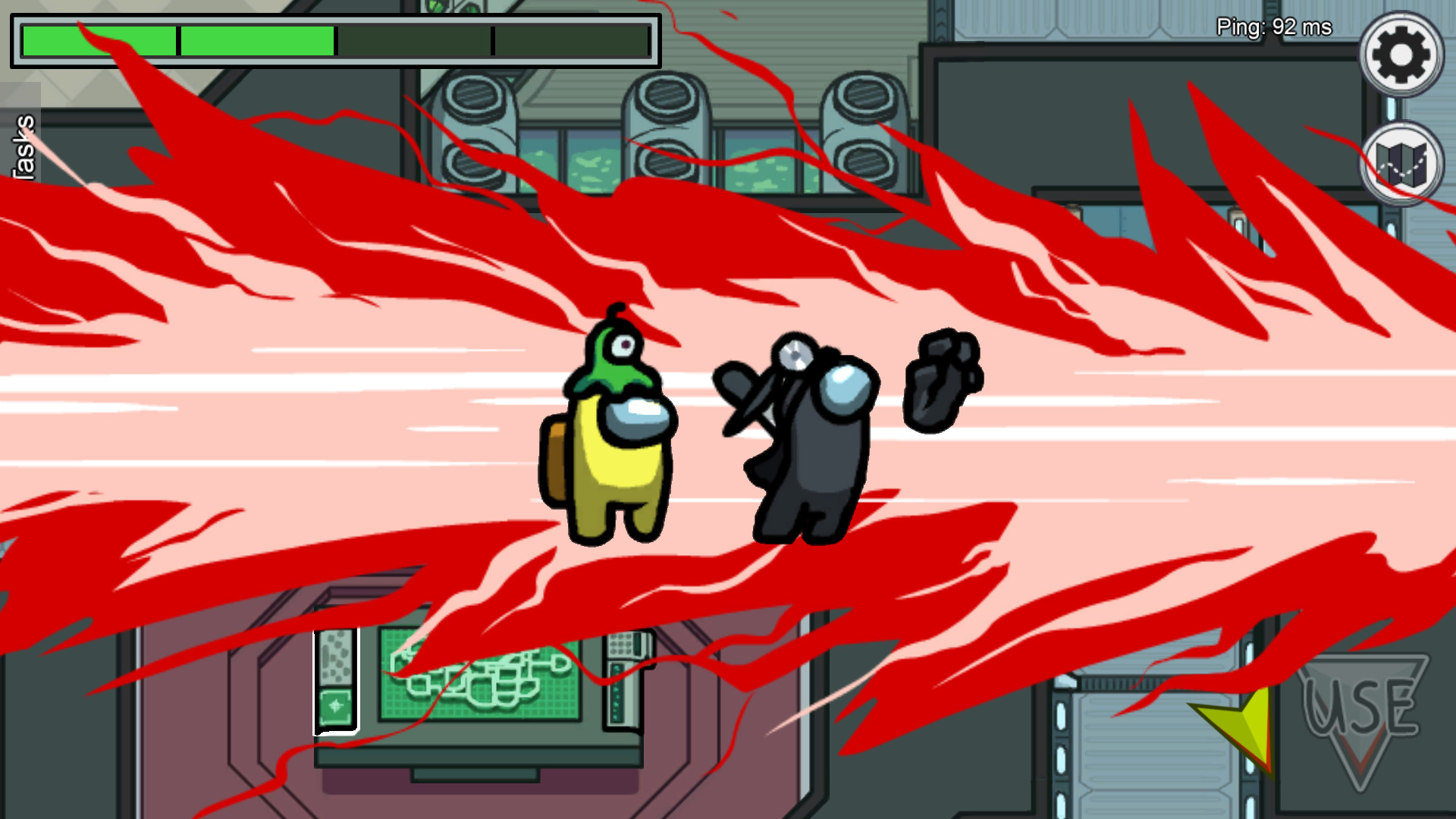
Among Us – InnerSloth
When you die or get “spaced” in Among Us, you get to be a ghost that haunts the ship and can still sabotage some stuff in the process. What you can sabotage and why I don’t know, but I definitely kept draining the oxygen almost immediately as the round began when I was deceased. What happened next was I got to watch a parade of players march to the life support systems, disable it, then call a meeting in which they all accused each other fervently. I had way more fun being this invisible agent of chaos than I did just straight up wandering the map and playing mindless mini-games to restore power or whatever.
I don’t know that I’d ever pick Among Us as my “go-to” multiplayer game, but it’s certainly a fun way to kill an hour or so with friends. Although within my first hour of playing the game I had to bail out of the session thanks to a massive headache that I can only attribute to the tension the game imparted on me. Regardless of my ability to handle said tension, I certainly applaud Among Us for being able to provide an experience capable of physically incapacitating me. So that’s fun.
When I finally gave in to all of the peer pressure I felt from the deluge of praise people were hurling at Hades and begrudgingly bought it, I felt this immediate wave of buyer’s remorse wash over me. After playing a little of it however, I can honestly say that it’s one of the most fun action games I’ve played this year. I can also confidently say that I won’t be seeing it through to the end because I’m bad at it.
Hades is a rogue-like action game and the latest release from Supergiant Games, makers of such classic indie titles like Bastion and Transistor. With previous titles like those, Hades had some big expectations around it and a lot of hype that seemed to dull between its release into early access at the end of 2018 and now. That’s at least how I perceived it considering I never really heard much about the game until its official release a few days ago, so I might be entirely incorrect on that front. I know people have a lot of strong feelings about Supergiant’s past games, but I truly think Hades might be the best game the company has released up to this point.
That might come as a surprise to anyone who frequents the site and knows my disdain towards the rogue-like genre as a whole, but that’s how good this damn game is. I won’t lie and say that my feelings toward the genre have changed in any meaningful way, but I am enjoying Hades in spite of the fact that it’s a rogue-like. Hades does some interesting things in weaving the story around the concept of you dying and returning only for you to perish once more. Characters acknowledge these cycles and play off of it in some pretty neat ways that I won’t spoil for anyone who hasn’t played it.
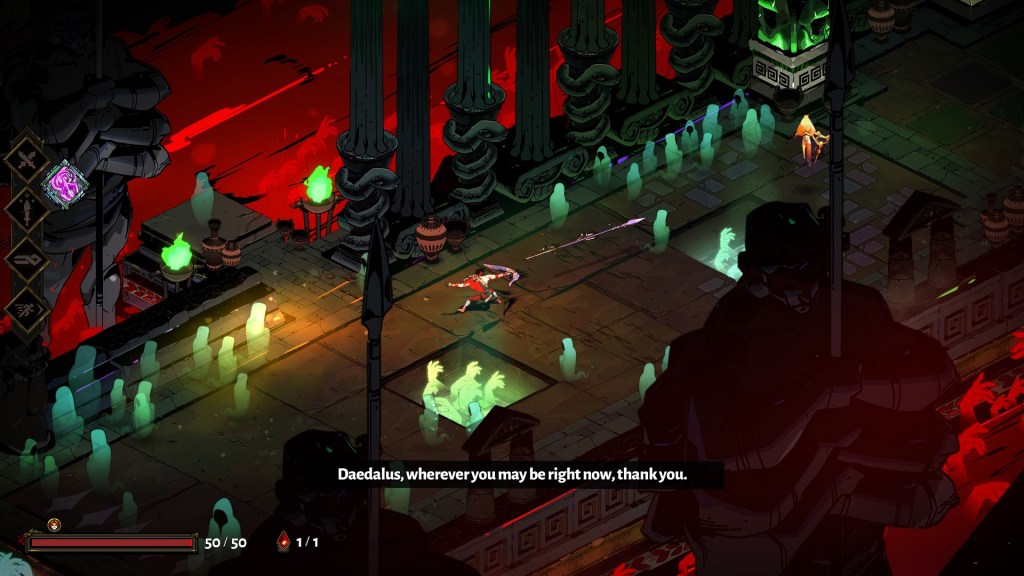
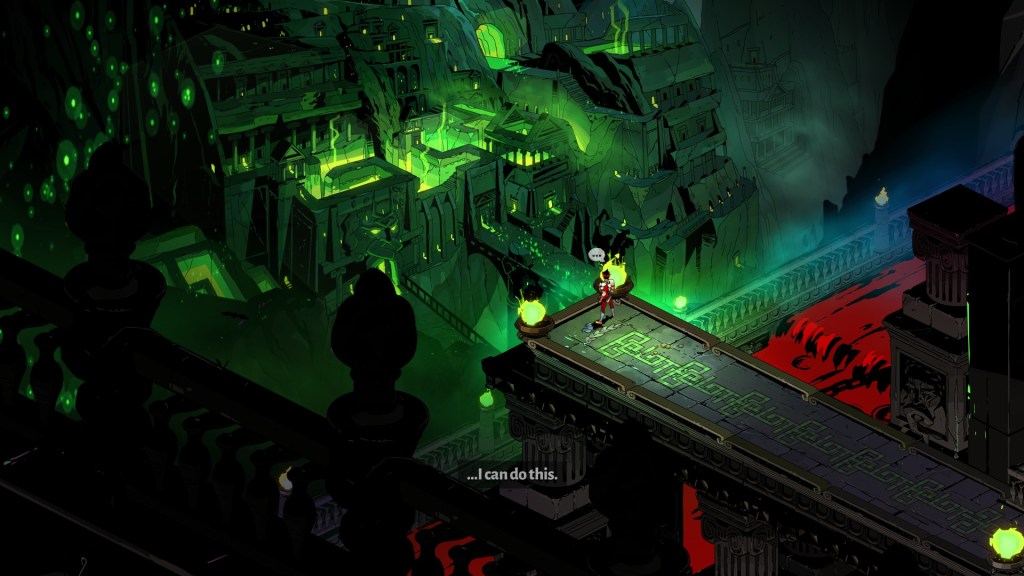
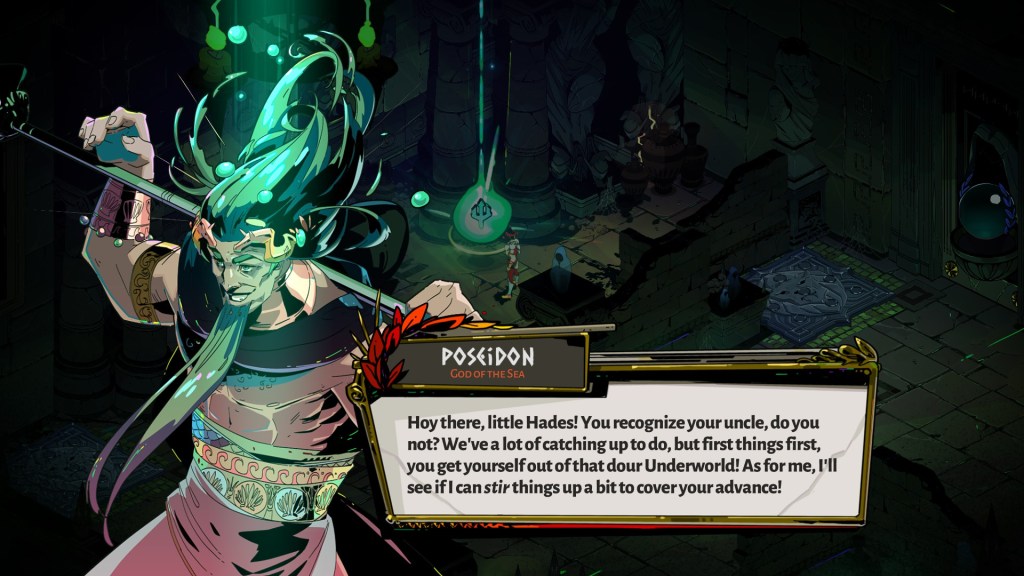
It also helps that the game looks incredible and is just oozing with style on all fronts. The character design is incredible, with NPC’s and enemies alike all rendered in a gorgeous art style that’s even better to watch in motion, Hades has its visual presentation locked in. Even the way menus and title cards explode into frame are exquisitely done, letting it be known that every part of the visuals of Hades were crafted with the highest level of care and attention. Also the soundtrack is rad as hell and you should listen to some of those tracks.
Despite the quality of the writing and the brilliance in presentation, Hades biggest strength is in the quality of its gameplay. It’s honestly been the main factor that’s kept me wanting to keep coming back to Hades. I’ve only gained access to the second weapon thus far, a bow and arrow, but that alone made the game feel completely new and fresh thanks to how it works and the power-ups you can get for it.
Every weapon has a standard and heavy attack that can be augmented by various upgrades you can find throughout the levels, adding higher critical chances, replenishing health, making certain attacks better against armor and a lot of other standard upgrade stuff. But when Hades hits you with an upgrade that allows you to shoot lighting bolts that chain between enemies as you use your dash, that’s when the true fun begins.
From run to run you’re collecting all sorts of different flotsam and jetsam that you can use to trade in for upgrades, items, weapons and some other things that I still don’t fully understand just yet because of early into Hades I am. But unlike a lot of other rogue-like games, Hades doesn’t seem like it’s obscuring information from you. Every power-up and ability increase that I’ve been presented with has very clearly explained what it’s going to do, which I appreciate very much. I’ve always hated when games try to be overly secretive and obfuscate simple item descriptions to seem more mysterious or enigmatic. I don’t have the time or patience to learn about the origins of this health potion, I just need it to keep all of my blood inside of me.
I haven’t seen too much of the game considering I’m still very early on in it, but I’ve heard it only continues to get more and more buck-wild as you progress. I look forward to potentially seeing some of this stuff, but I can’t shake the feeling that no matter how strong every other aspect of the game is, I still won’t be able to shake the fact that it’s still a rogue-like. It sucks because I like just about everything else about Hades except the genre it’s in. Actually, I don’t love when enemies off-screen manage to hurl themselves at you with a speed that’s borderline impossible to dodge, but I’m sure I’ll “crack that nut” soon enough.
I’m genuinely glad that I decided to give in to the heaping helping of praise that people have been dumping on Hades, but I do wish it was more of a standard action game that I could progress through normally. I suppose the way the story is handled in its current form wouldn’t work as well in a genre where constantly dying isn’t a thing, but there is a “god mode” setting I want to try out that allegedly let’s you play it without having to worry as much about dying that seems right up my alley.
I don’t think Hades is going to change your mind about rogue-likes as a genre if you’re like me and just don’t click with them, but it might make you a believer for a little while. But if rogue-likes actually are your thing, then Hades seems like one of the best ones that’s been released in a while.





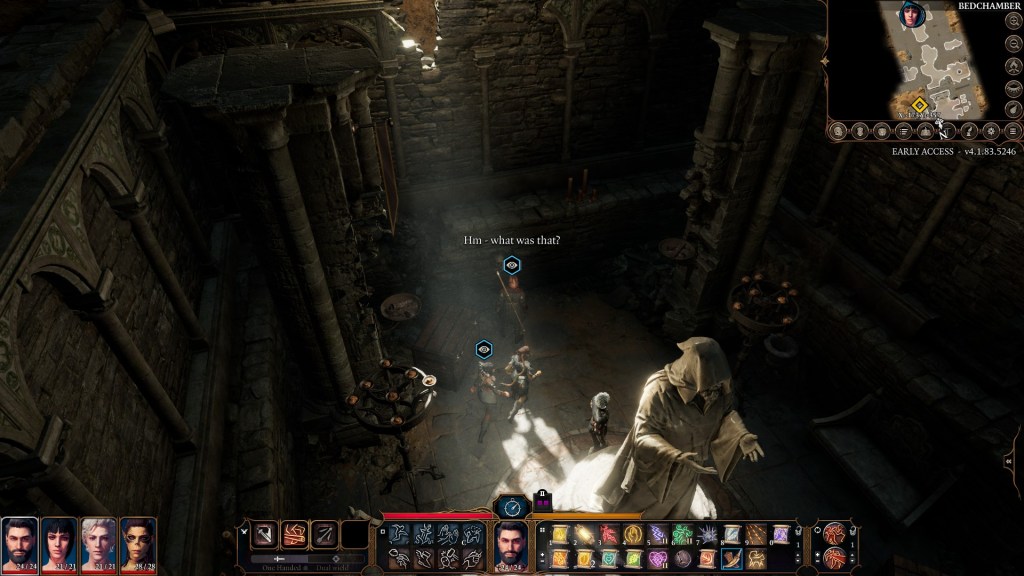
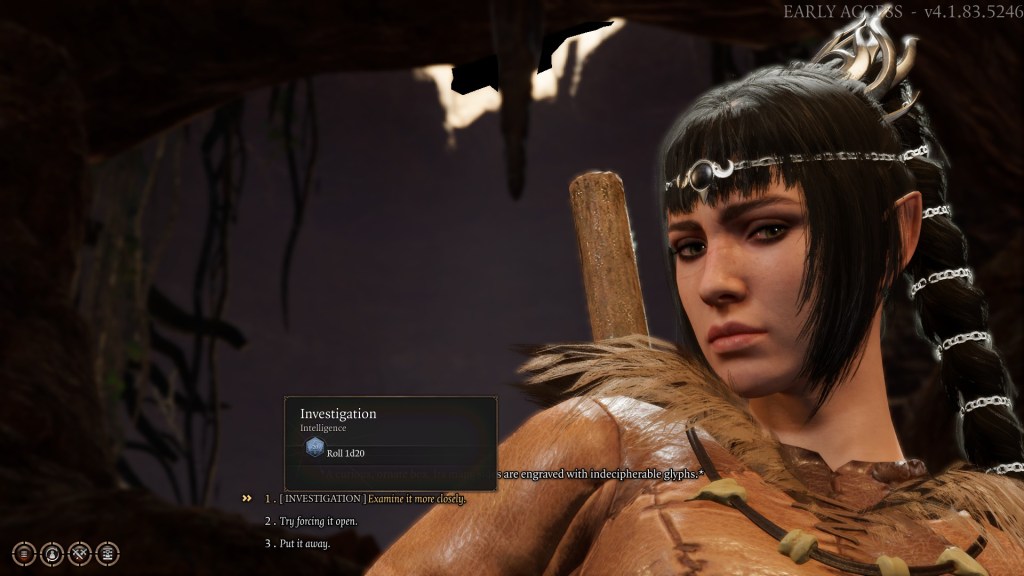

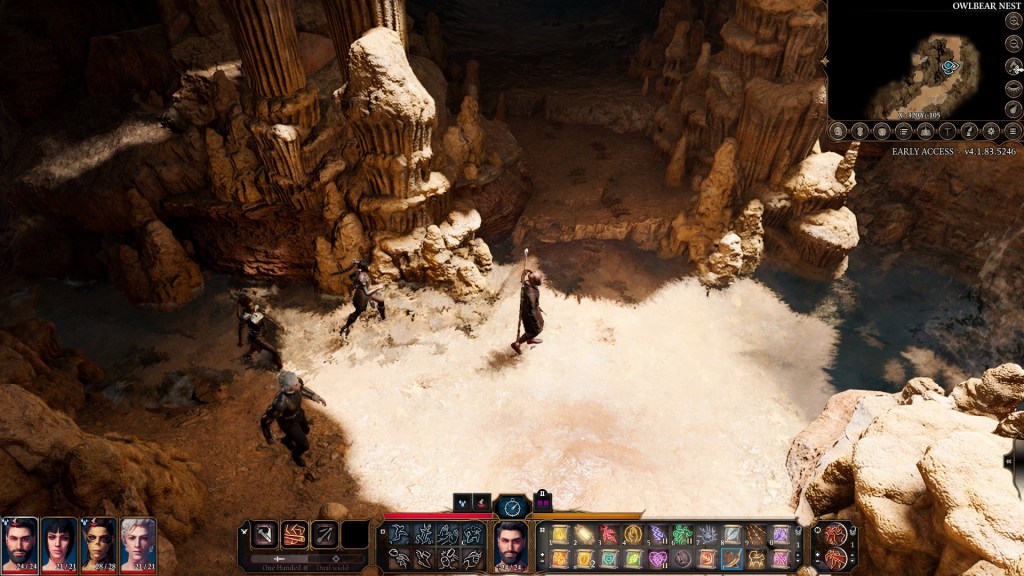
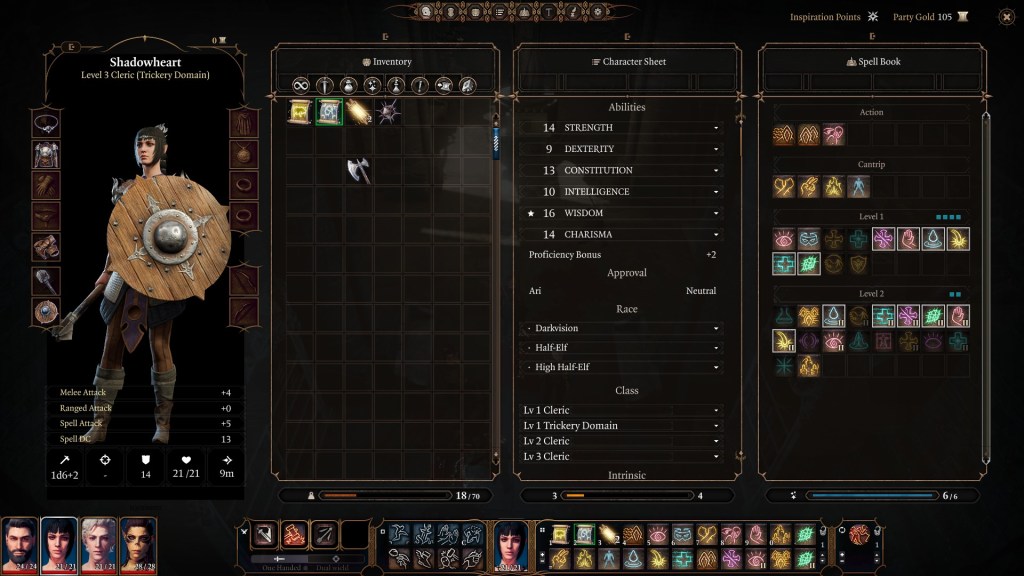

 The Bonus World