Category Archives: archived articles

The Steam Game Festival

If you haven’t heard of The Steam Game Festival before, don’t worry, cause you’re not alone.  This is apparently the second time that Valve has orchestrated the event, but the first time that I’ve been aware of it.

For the uninitiated, The Steam Game Festival is a weekend long event spanning from March 18th to the 23rd in which you are able to download and play around 40 demos for upcoming indie games.  From puzzlers to adventure games, rouge-likes and RPGs, there’s genuinely something for everyone on display.  I went ahead and downloaded a few titles and wanted to highlight them here.

20200318135844_1.jpg

EMBR

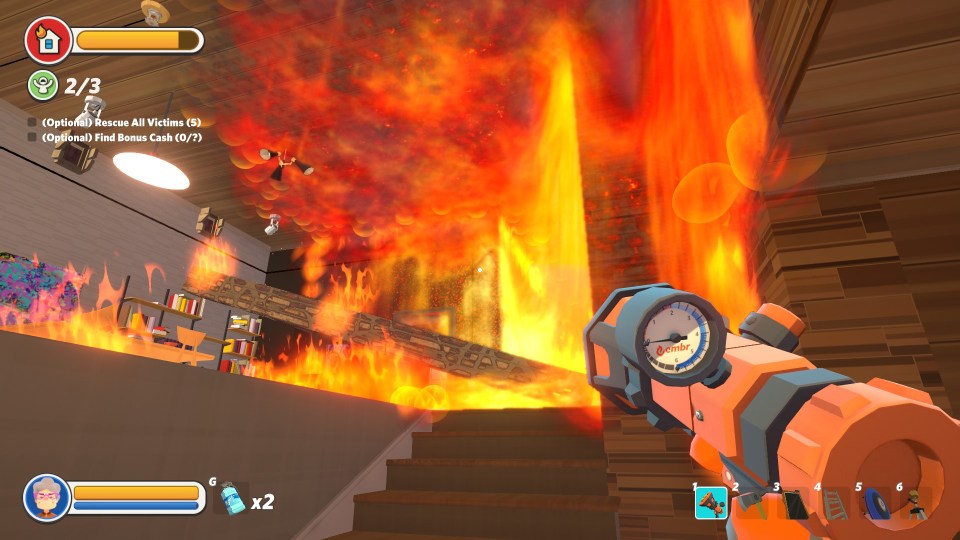
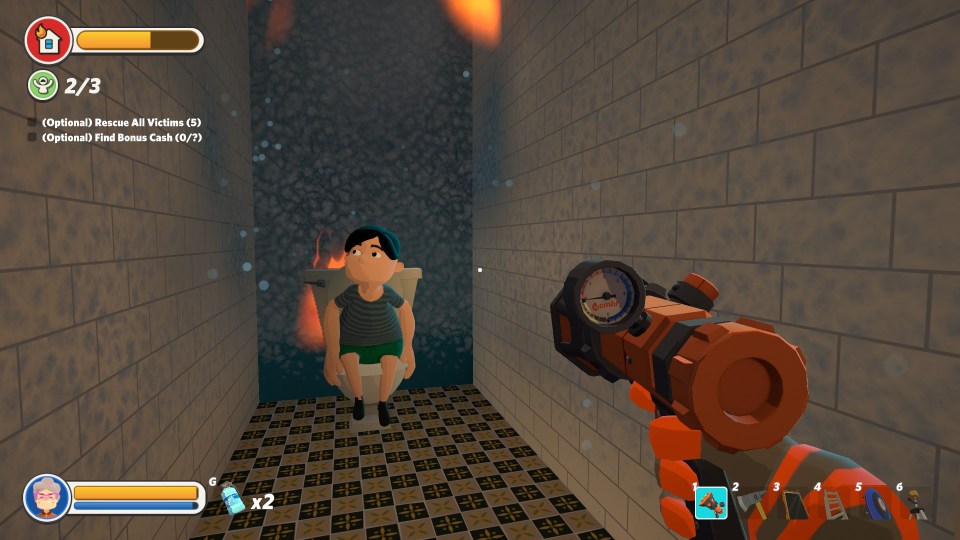
Embr puts you in the shoes of a firefighter who has to do the typical firefighter things.  Spray water, save people, loot their houses, it’s all represented in the game.  You start off by picking a mission from your cellphone.  Each mission in the demo had a threshold of civilians you needed to save, with optional objectives that boiled down to just saving all the people in the level, and stealing wads of cash in the burning house.
20200318141247_1.jpg

It’s all represented in this cartoony style in an attempt to detract from the actual horror that is being in a burning building.  In my short time with the game, I found myself having to deal with not only fire, but live electric wires that don’t play well with water, and the harsh lesson that is what a back-draft is.

To my surprise, I actually had a very good time with Embr and would definitely play it again if I had the opportunity.  It’s got some multiplayer functionality which seems like it’ll be almost necessary at some point considering the levels I played were big and dense enough to become slightly overwhelming as a solo firefighter.

20200318142626_1.jpg

HEAVENLY BODIES

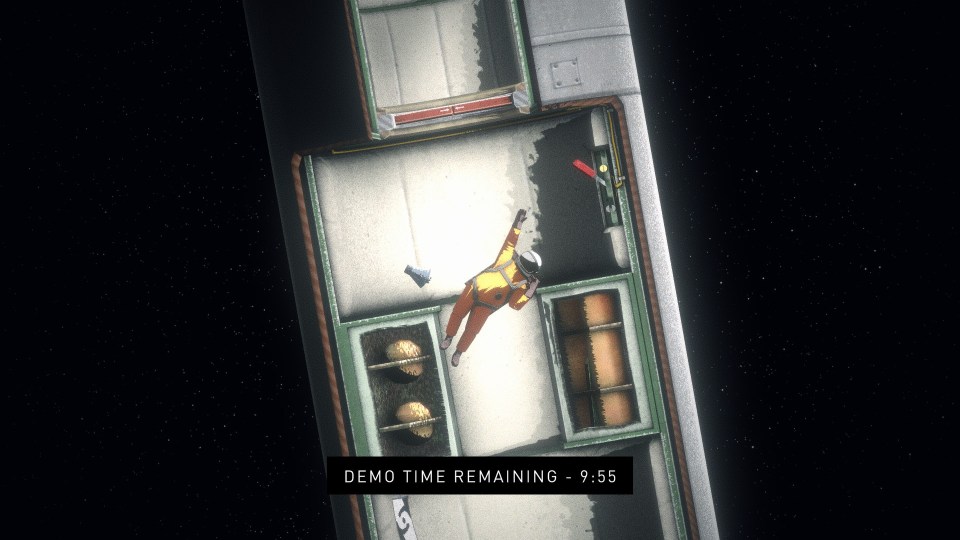
Heavenly Bodies is one of those, “it’s hilarious to watch, frustrating to play,” kind of games that people love to stream.  You are an astronaut floating through this derelict space station or space craft, it wasn’t super clear, and you have to complete objectives in this zero gravity environment.  It sounds simple enough, but the controls and perspective work against you just enough to make it incredibly frustrating.

Each arm is controlled by an analog stick, with each trigger enabling you to grab onto things.  You have to use these in tandem to propel yourself around the vacuum of space in order to get things done.  It’s hectic and unwieldy, but I bet it would be a blast with other people involved.
20200318142825_1.jpg

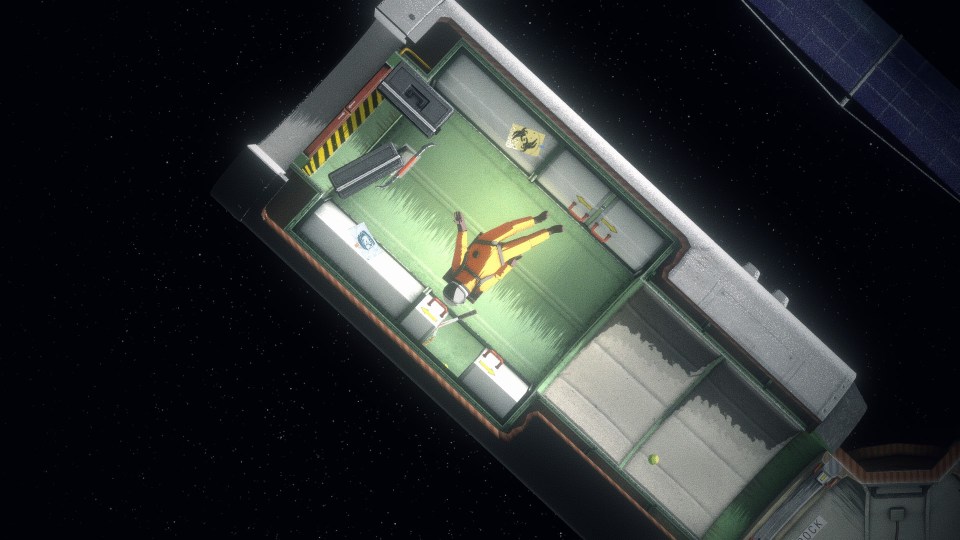
I didn’t manage to get far in the demo considering there’s a ten minute time limit in place.  Ten minutes in which I managed to open a door and definitely give my character a concussion or three from how many things I slammed them into.  Heavenly Bodies seems like it would be fun, but only if you have a high tolerance for failure, and you have some friends with you who aren’t too precious about winning.

20200318144646_1.jpg

RAJI: AN ANCIENT EPIC

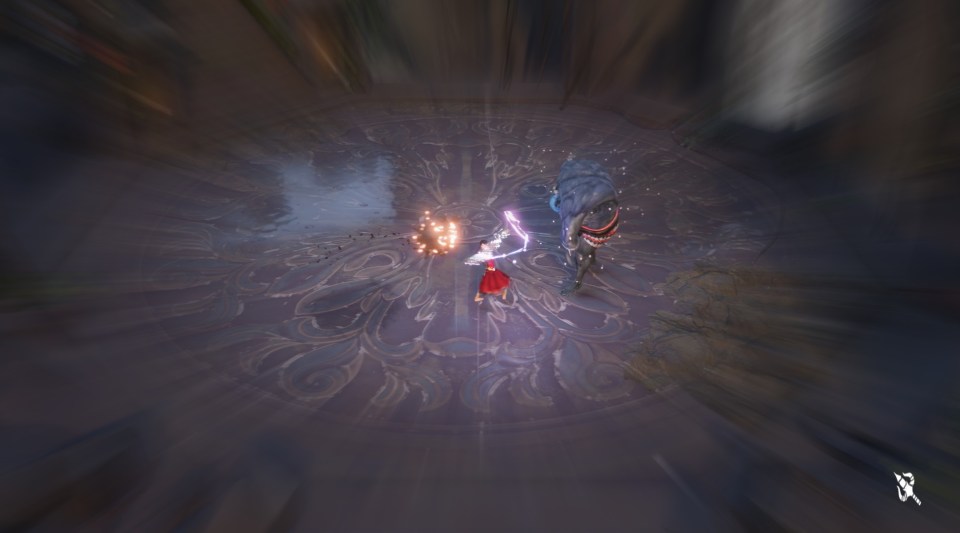
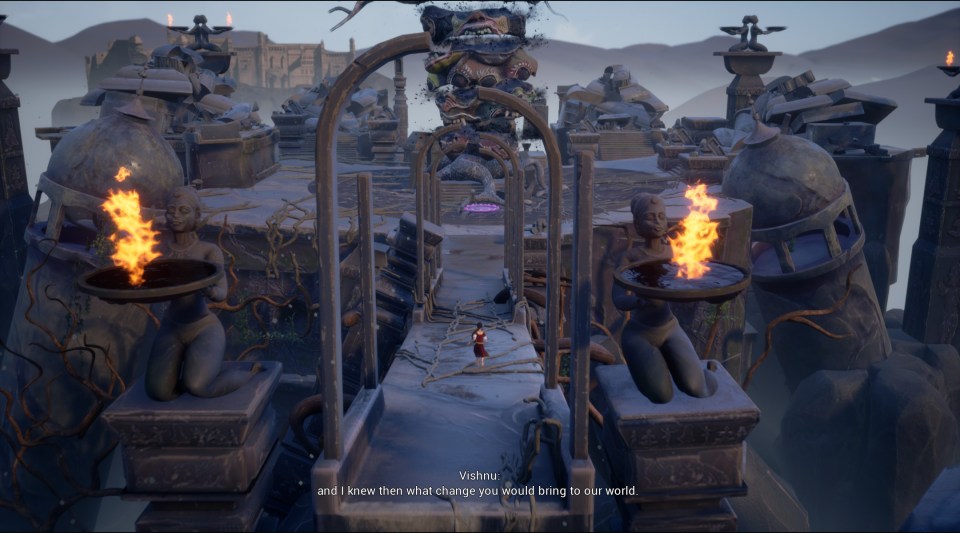
Raji: An Ancient Epic is an isometric action game akin to Lara Croft and The Guardian of Light in that you’ll be doing a lot of platforming, puzzle solving, and enemy killing.  Leaning heavily into Hindu mythology, Raji: An Ancient Epic has you running around as a young girl named Raji who is on a quest to find her brother.  Throughout her journey, she discovers an ancient power in her that makes her really good at killing demons.

In the short demo I played, I found combat to be fun albeit a little muddy in places, with hits not landing with enough impact along with not having much in the way of variety with your moves.  To be fair though, Raji has a ton of contextual combat moves ranging from holding her spear out while she spins around a column to running up a wall, flipping off of it and stabbing into the ground for a nice area of attack effect.  The problem was that the opportunities for these moves were limited in the few combat arenas I saw, as well as don’t reliably work.  There were times when I’d manage to run up the wall, but getting the attack to happen after that was a little hit or miss.
20200318145723_1.jpg

But like all of the games on this list, it’s a demo and I can’t judge it too harshly.  I really enjoyed Raji: An Ancient Epic as a whole, with the glaring exception being that somehow it reset my resolution mid game, and wouldn’t allow me to reset it because I physically could not click the “apply” button in the settings menu.  Aside from that though, I’m kind of sold on Raji: An Ancient Epic.


20200318154559_1.jpg

GOING UNDER

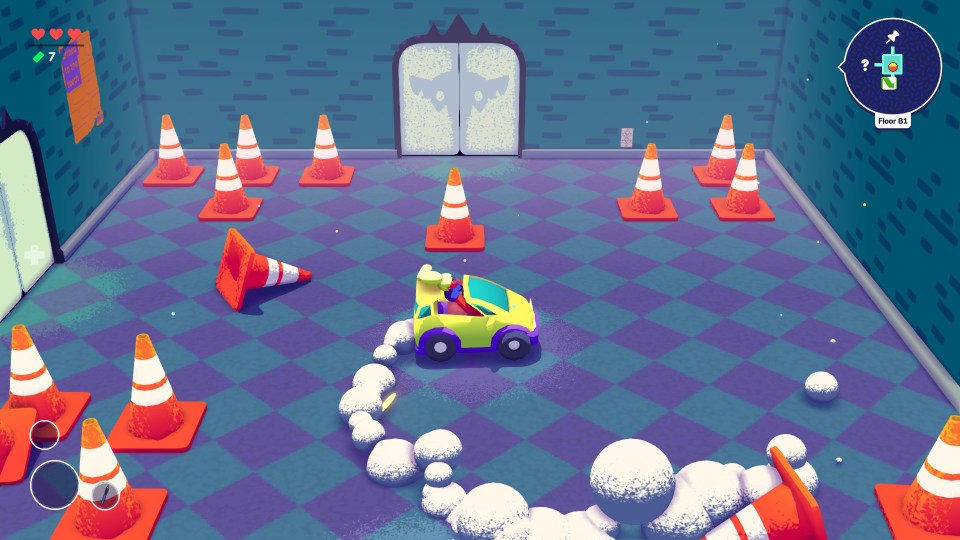
Going Under is a beautifully crafted, fast and frantic rouge-like action game that tasks you with going through room after room of goblins dressed like tech bros.  Using your fists and literally anything that isn’t nailed down, you punch, stab and smash your way to victory… I assume.  I didn’t get very far in it because it’s surprisingly difficult despite its pleasing cartoon aesthetic.

In Going Under I maintained this feeling of being severely under powered in comparison to the many tech goblins I faced.  Even one-on-one, these enemies are dangerous and can easily overwhelm you if you aren’t careful.  At times I felt like the game might have been cheating a bit, specifically when 4 goblins would run up to me and simultaneously beat the shit out of me, but I bet that feeling dissipates with time.
20200318154022_1.jpg

I like just about everything going on in Going Under with the sole exception that I do not enjoy rogue-like games.  If you’re into these kinds of experiences than you should absolutely keep an eye on Going Under, but the very structure of the game doesn’t appeal to me personally.


There’s plenty more to try during The Steam Game Festival, but these were some of the ones that I managed to play that stood out to me.  I think events like these should ultimately replace the need for ordinary people to go to conventions.  At least this way they can actually play games without having to wait 3 hours on a line.
A World Without E3

Industry behemoth and perpetual looming shadow, E3, just received what I consider to be the death bell of the entire show as we know it due to rising concerns over COVID-19.  While first and foremost I’d like to say that the cancellation of this event is small potatoes compared to the reality of this viral situation and how it’s impacting the lives of others.  But with that said, I’d like to talk about why I believe that E3 as we know it is done for.

I don’t think I have to explain what E3 is to this particular audience, so I’m just going to power through under that assumption.  What you may not be aware of is the dire situation E3 was in before this coronavirus became a genuine concern.

What you might have missed were the various blunders that E3 has had over the past few years.  From things like big exhibitors like Sony and EA pulling out, to the awful “reworking” of the show, to their long time show runner quitting because they didn’t like the direction of the conference, and especially the part where they leaked the personal information of a bunch of media personnel, E3 has had some severe missteps to say the least.

This is on top of the growing conversations around the relevance of E3 and if it’s as necessary and essential as it once seemed.  People have long questioned why other companies don’t just go the way of Nintendo and play a prerecorded video that can announce products and generate the same amount of hype without worrying it will get buried under the deluge of other video game news.

But going to E3 isn’t just about announcing new products; It’s also a venue for developers to have pitch meetings with publishers and suppliers.  At its core and beneath the flashiness of the show, it’s still a business driven affair where “behind closed doors” meetings happen that are very important for a lot of smaller developers.

This year however, E3 is officially cancelled which feels like the final nail in the coffin to me and not only because of the waning interest from exhibitors and attendees alike, or the pressure from big companies to revamp the show entirely to maintain relevance.  This is going to be the first year that every company gets to see the exact impact of E3 on their business.  They’ll be able to get concrete numbers on how a game shown on an E3 stage performed versus a game shown off on a stream.  My suspicion is that companies will see their cost–benefit analysis, realize that E3 is a money pit where their announcements get immediately buried, and one by one pull out of the show until all that’s left on the show floor are energy drink manufacturers you’ve never heard of.

For the first time since its inception, this perceived necessary show will not be running, leaving companies to figure out how to move forward.  With the advent of the internet and streaming video being what it is, these companies have the opportunity to reach out directly to consumers without shelling out thousands for booth space, travel and accommodations.

As much as I enjoy watching the various streams that come out of E3, it can be utterly exhausting even as someone on the periphery of the industry.  While I would still love to see an hour long press conference about all the cool Xbox games coming out, I wouldn’t mind not having to worry about what’s coming up immediately after it.

I feel that the absence of E3 this year will be the light bulb that collectively goes off when publishers, media, and attendees realize that there are far easier, less expensive and time consuming ways to engage with all this information.  I don’t want to see E3 go away and I hope that I’m wrong in all of this, but I just don’t see a path forward for this already struggling conference.  Maybe we get a 2021 E3 that reignites the fire, maybe in 2021 we see an even more desperate E3 that’s desperately trying to find a purpose, or maybe we just don’t see one at all.  I would love to be wrong on this, but it’s too early to tell either way.

Animal Crossing Pocket Camp is Still Kinda Lame

Counter to the excitement and positivity surrounding the upcoming Animal Crossing: New Horizons, the latest publicly available game, Animal Crossing: Pocket Camp launched as, and still remains a letdown.  That isn’t to say there aren’t good aspects or fun to be had in Animal Crossing: Pocket Camp, but as a game, it lacks a lot.

Animal Crossing: Pocket Camp launched for mobile devices in late 2017 to a pretty positive reception, albeit with a lot of folks taking umbrage with some of the monetization decisions, a criticism Nintendo apparently heard, but I guess they ultimately ignored.  It’s a shame too considering an Animal Crossing game on your cellphone sounds like an awesome idea.

IMG_3398.PNG

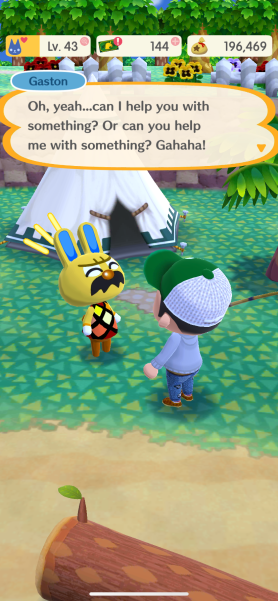
Look at this powerful mustache!

From a conceptual standpoint, I was initially let down by the idea of Animal Crossing: Pocket Camp not being a more faithful Animal Crossing game.  That initial reaction eventually gave way to apathy after I actually was able to play the game itself.  When you look at Animal Crossing as a series, the games were doing things that a lot of early free-to-play mobile games were doing, in a time where smartphones weren’t really a thing.  They basically did everything Farmville did, way before that was even a thing.  It was essentially one of the earliest idle or incremental games that I can think of.

As time wore on and sequels came out, more and more was added to each iteration that allowed for longer play sessions, and reasons to come back multiple times a day.  This all seemed perfect and primed for a smartphone adaptation, something I welcomed.  Then I actually got to play the game.

When Animal Crossing: Pocket Camp was initially released, I devoured it.  From decorating my campsite, to shaking trees and catching fish, I was all about the Animal Crossing life.  But that initial spark of excitement eventually started to fade once I realized that despite Animal Crossing as a series heavily relies on repetition, it felt a lot grosser and less interesting in Pocket Camp.

IMG_3403.PNG

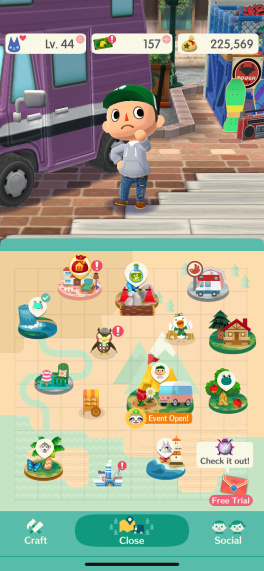
Somehow it’s all both over and underwhelming.

The Animal Crossing games were nice because even after you shook all of your trees, participated in the fishing contest, and stabbed all of the rocks with a shovel, you could still wander around the town and see what your villagers were up to.  To call it dynamic would be generous, but it was infinitely more engaging than the loop of Animal Crossing: Pocket Camp.

Animal Crossing: Pocket Camp quadruples down on the checklist nature of the series by literally making you do the same things over and over again, with almost no variation.  There are a handful of locations you can go to, some have fruit to pick, one has bugs to net, and two have fish to catch.  Each of these locations has one animal, and one random villager that may or not be an actual friend of yours.  You’d have to tap on the region and traipse your way over to these animals and talk to them three times, because they want 3 things.  Every day, you can have about 4 interactions with these animals, 3 by giving them stuff that could literally be right next to them, and one by just spouting nonsense at each other.

IMG_3406.PNG

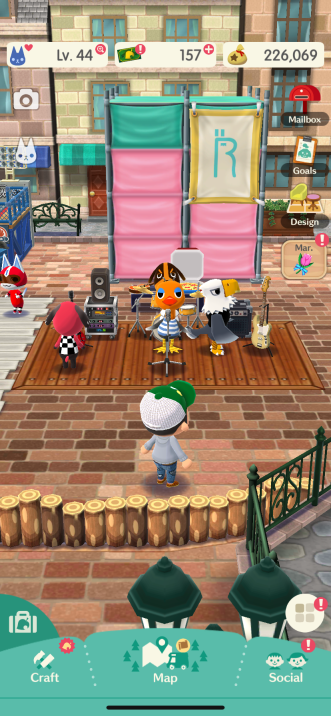
“I’ll use my telekinesis to play this guitar!”

I get that the DNA of Animal Crossing: Pocket Camp is inherently derived from Animal Crossing proper, but Pocket Camp just boils it all down in the most checklist-y way possible.  They even have a pelican who will just deliver all of the crap people want directly to them so you can avoid having to actually go to them.  I use this feature all the time, because I’m at a point where I just want to be finished.

There’s also the abundance of crap and garbage that fills up your inventory that seems to all be crafting materials, but sometimes it’s just a coat that people keep giving you.  Preserves, lumber, ore, cotton and more, are all materials villagers might give you in reward for bringing them a seashell.  It’s nice, because you get to build stuff, but the stuff you build is so lifeless and boring in most cases.

Don’t get me wrong, I like having a bunch of musical instruments, pizza boxes and convertibles strewn about my campsite as if I was having a garage sale, but you can’t do anything with them.  You can poke them, rearrange them, and watch villagers stand near them.  Sometimes, specifically in the case of a halfpipe you can build, you might be lucky enough to see a skateboarding eagle, but that’s kind of it.

IMG_3409.PNG

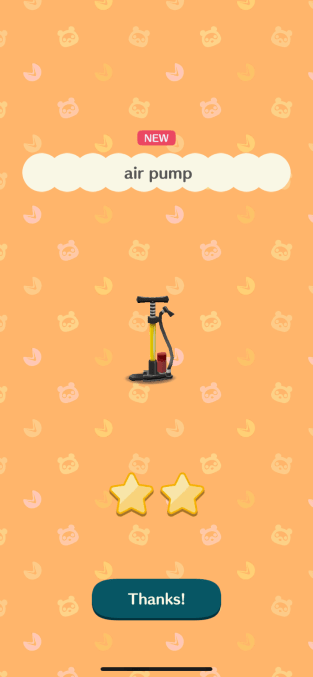
Wow… thanks…

Now, that lack of interaction complaint isn’t exclusive to Animal Crossing: Pocket Camp.  All of the Animal Crossing games have struggled with interactivity, but with something like Animal Crossing: New Leaf, they did flesh that out a bit.  I specifically recall being able to play mini-games on the Nintendo consoles I could build which was shallow, but a nice diversion nonetheless.

Look, it may sound like I’m just frustrated and lashing out at Animal Crossing: Pocket Camp, but the honest truth is that I’m still playing it regardless.  Yes it’s boring and shallow, yes it’s repetitive as hell, and yes the economics of the game are absolutely fucked, but it’s still got that Animal Crossing charm I love.  The artwork is delightful and fun, the characters are (mostly) adorable, and core Animal Crossing loop is still intact, but it just ends up feeling like an imitation of itself in some regards.

I don’t hate Animal Crossing: Pocket Camp at all, but I do think it’s deeply flawed and should have been way better.  I took a long break from the game, but came back very recently thanks to the upcoming sequel.  Pocket Camp scratches that itch, but in that way where you itch your arm, and then another part of your arm starts to itch and so on and so forth.  My only hope is that Animal Crossing: New Horizons doesn’t have some hook into Pocket Camp that makes me have to play both simultaneously… dammit.


The Master of Disaster: Music – 10

Pretty early on in the campaign I decided I wanted to add an auditory element to everything we were doing, without resorting to generic dungeon crawling ambient noises that you can find on YouTube.  How would one go about this then?  Maybe they would search for music that set the appropriate mood, cause that would actually be a smart idea.  But what if we added hours to my session prep and included unique music tracks for encounters and story beats?  That’s the position I’ve put myself in.

There were specific tones and moods I was trying to cultivate throughout our campaign in an effort to add some drama and weight to everything.  It started out with me making little stingers of violins swelling or big drums strikes that would act as the period on the important sentence I was relaying to the party.  It largely went unnoticed and didn’t really add much to the experience.

But instead of bowing out there, I decided to go further.  What if I made these long, loop-able songs that would properly portray the current encounter or location?  I should note, this was all inspired by listening to certain RPG podcasts, where the element of audio can add a lot for both the players and listeners.  On one of the podcasts, The Adventure Zone, they did an episode where they answered a lot of lingering questions by the listeners, where it was revealed that most of the music was made with Apple Loops that were built into Garage Band.

I didn’t have a Mac, but I did have an iPhone with Garage Band installed.  Using the phone version of Garage Band wasn’t the optimal experience, but it got the job done.  I mainly stuck to relying on the included loops and various midi instruments as well as occasionally actually recording a guitar track.  Luckily the loops all worked well with each other for the most part, which made the whole affair a lot more manageable and less laborious.  Once I had managed to make a handful of tracks, it was time to use them in the campaign.

It actually went really well and was received positively by my players.  It made things feel a little weightier and put them in the mental place they needed to be.  Would it have been easier to find a good facsimile of the music I was making on the internet?  Of course it would have been, but I like making things myself.  So not only did I get to make sure the mood was just right, but I got to stretch my creative muscles.

I suppose I never really appreciated how important music could be to a D&D campaign before, but I doubt I could ever go back to not having it.  Aside from making the campaign better, it’s just fun to create things in general.

Honestly, being a DM has been some of the most rewarding creative work I’ve ever had the pleasure of doing.  From writing, to map making, character creation, acting and of course, making music, it’s truly a creatively fulfilling experience.  And considering we’re about to start an entirely new campaign with new themes, you know I’m excited to get in there and make several albums worth of tracks for it.


Gut Check – Goblin Sword

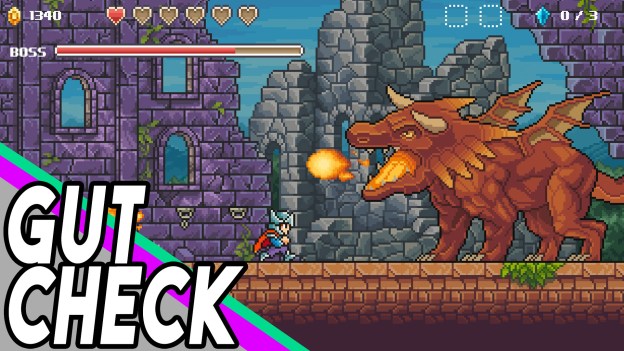
This installment of Gut Check is going to be fairly short because the game we’re talking about is fairly slight.  Despite its initial release on iOS devices back in 2014, Goblin Sword, like many games, has found a new home on the Nintendo Switch.  Aside from having one of the more generic titles for a game ever, it’s just an uninspired albeit competent experience.

You play as this blue haired knight who has to go through these small slices of levels, obliterating all the enemies you can and finding as many collectibles as you can.  A simple enough pitch that never seems to get shaken up in any meaningful way aside from the occasional boss fight.

There isn’t much to say about the moment to moment gameplay, because it’s all just average and serviceable.  None of it is particularly challenging or difficult, usually feeling more tedious than anything.  You jump, slash, and mush your face into every wall you can in hopes of finding a secret chest or something.

The only interesting part about Goblin Sword is how the swords themselves work.  Through either buying them with the in-game currency, or finding them in secret chests, the swords all have 3 stats indicating power, speed, and range, along with a magic spell.  Spells can be anything from fireballs, to floating murder orbs, to just screen clearing nonsense.  These are all activated through finding magic orbs in levels that allow you to cast these spells when you attack.  You can use the spells 3 or 4 times before you need to find another magic orb in a jar or after a vanquished enemy drops them.

But that’s basically the most exciting or interesting part of Goblin Sword.  Everything else is steeped in repetitious tedium that eventually will drive you to stop playing entirely.  Even the “secrets” in the levels are copy-pasted, requiring you to find 3 blue gems, and two treasure chests.  Chests can hide either money, swords, or useless souvenirs that go on display in your house, a place you have literally no reason to visit.

The only other thing worth mentioning is the in-game shop you can visit to spend your hard earned money.  You can either buy new swords with better stats, trinkets that give you an extra effect like more health or magic drops, or armor, which as far as I can tell have no actual protecting qualities, they’re purely cosmetic.  What sucks is the fact that you’re never told what the magic spell is imbued on a sword, leaving you in a position where your sword does great work as a sword, but has a lame and useless spell attached to it.

All things considered though, Goblin Sword isn’t a bad game, it’s just not that interesting or worth your time.  It’s completely average in every way which is fine because the price of entry is low, sitting at 5 bucks.  If you really have 5 dollars burning a hole in your pocket, and you’re looking for a generic platforming video game that isn’t going to challenge you that much, you could do worse than Goblin Sword.

Taking Chances with Baldur’s Gate III

For those of your who aren’t aware, for the past year or two, I’ve been running various Dungeons & Dragons campaigns for my friends.  I’ve more or less chronicled this in our Master of Disaster feature on this site which for obvious reasons, I recommend you check out.  Yet despite my love of playing Dungeons & Dragons, I’ve never been able to garner any modicum of enthusiasm for video games that try to capture the tabletop feeling.

This disconnect and lack of enthusiasm on my part has been perplexing to my friends to say the very least.  How could someone who is literally the DM (Dungeon Master) of our campaigns not enjoy these mechanics in a video game?  It’s been difficult for me to articulate over the years, but I think I finally understand it.  But for me to explain it properly, you need a little context about me and how I absorb information.

At a young age, it became very evident, very quickly, that I wasn’t a traditional learner, often needing to read something several times over, or do some hands on learning if applicable.  To this day I have a difficult time reading something and comprehending it on the first go, often needing to reread it 4 or 5 times before I can fully internalize the actual meaning of the text.  As silly as it sounds, I’ve just never been great with reading comprehension making every online course I’ve ever taken in my life a tremendous chore.

I think it’s because of that mental hurdle that I tend to zone out in text-filled, management-heavy, and turn-based games.  My experience with these kinds of games usually goes the same way every time, with me eager to hop into the action, only to be buried in menus and skill trees that I can’t comprehend on my first encounter with them.  Even though I know that I’m only seeing a fraction of what’s to come, it still feels like I’m being thrown in the deep end.

What I like about playing D&D as opposed to something like Divinity: Original Sin II is the fact that someone is shepherding me through it.  There’s a DM who isn’t only painting a word picture for me, but is there to answer any mechanical questions I might have.  It’s that hands-on approach that works for me from an educational standpoint that’s also present here.

I’ve even run into this while running my own D&D campaign.  When I started out, I bought a D&D module that I would run for my players.  Yet after being asked enough lore questions that I had no answer to, I decided to blow up the world and start fresh with a campaign and lore of my own.  It was a lot more work, but so much more personally engaging and rewarding.

There’s also the matter of my own level of patience and tolerance for a game, but I’ve covered that before.

All of these things are factors in why I bounce off of and usually avoid these types of games.  But we haven’t even talked about the gameplay portion of them yet.  Even if I manage to find a suitable on ramp for me to get somewhat into the game, I still have to contend with the game itself.

It usually isn’t the turn-based part that turns me off as much as it is the “tactics” portion that bounces me off of a game.  I’m just terrible at setting up plans and executing on them, whether it’s positioning, item and spell management, or whatever, I suck at it.  Usually I’ll formulate a plan I think is great, try to execute it, and watch it fail miserably.  Instead of doing what normal people might do and say, “oh, I should try a different approach,” my stupid-ass jumps over any rational thought and straight into a pit of self-loathing and dejection.  It’s the same way I feel about the Dark Souls games, where I don’t feel emboldened to do better, I just feel like I could be playing a game I have a better time with.

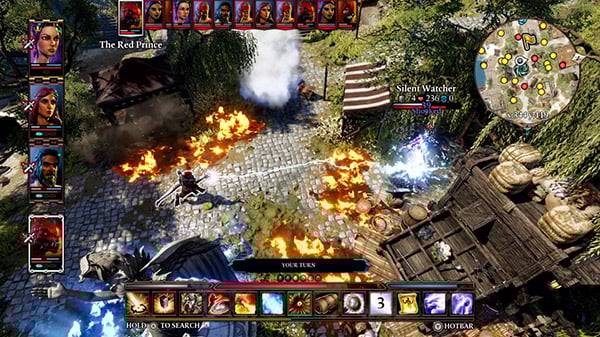
And if I really wanted to split hairs (which is about to happen), I’d say that I think the tutorial levels of these games are usually the most excruciating parts.  Take Divinity: Original Sin II for example.  You start on a boat that promptly gets attacked by bugs and a tentacle monster, which sounds way cooler than it actually is.  Then you wash up on an island where you eventually find your first village where I assume more of the game takes place.  Despite trying to power through it on three separate occasions, I have yet to be able to get through what I found to be an incredibly dull part of the game.

When asked why I don’t like these kinds of games, I usually answer with something dismissive like, “cause they’re boring” or something, but what that really means is everything I’ve written thus far.  But I agree with my friends when they say that I should enjoy these kinds of games.  I want to enjoy these games.

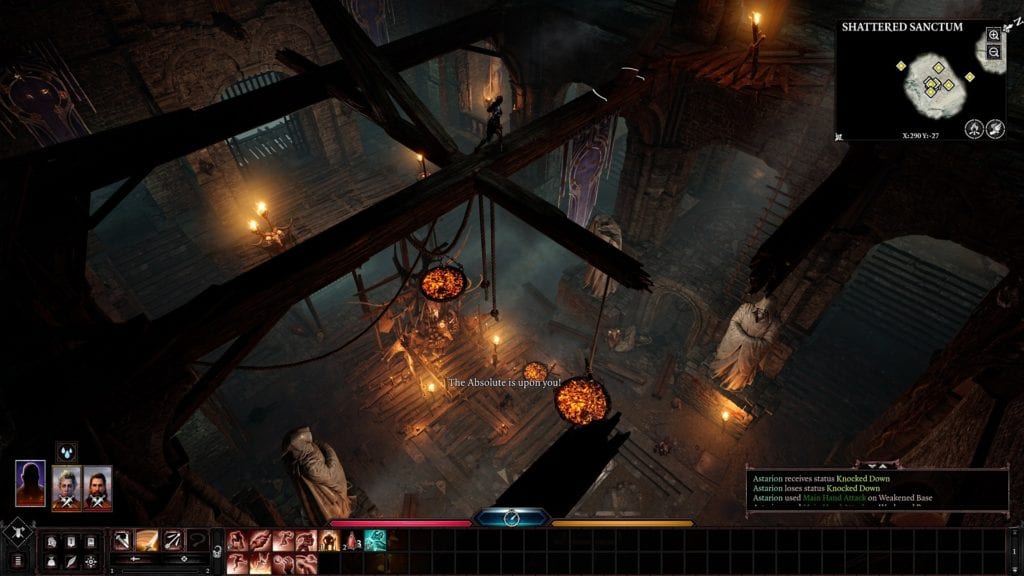
But I’m not ready to write off the genre just yet.  A little game called Baldur’s Gate III was recently shown off, and after reading about it more, I think this one might be the last one of these I try.  After everything I’ve written up until now, you might be wondering why I would attempt this, ostensibly throwing $60 dollars into a virtual garbage can, but there are a couple of factors that are intriguing me with Baldur’s Gate III already.

First and foremost, it a Dungeons & Dragons based games, meaning I know a lot of these mechanics and have varying degrees of familiarity with them.  That alleviates a lot of the mechanical obtuseness that I might have trouble with in other games.  Like, I know what plenty of D&D spells, items and attacks are, so that won’t be such a steep learning curve.  Having to learn both the mechanics of a game as well as their made up lore makes me feel like I have to learn two games simultaneously, which usually goes about as well as you might imagine.

On top of that, I’m really digging the presentation when it comes to dialogue options, opting for more of a Dragon Age or Mass Effect styled approach instead of a text box that pops up on the screen.  It’s a small thing, but it adds a slight cinematic flair that I think goes a long way.

Despite my better judgement and spotty history with these kinds of games, I’m cautiously optimistic and dare I say, excited for Baldur’s Gate III.  At the very least, I’m going to keep my eye on it and certainly give it a shot when it enters early access later this year.

Gut Check – The Coin Game

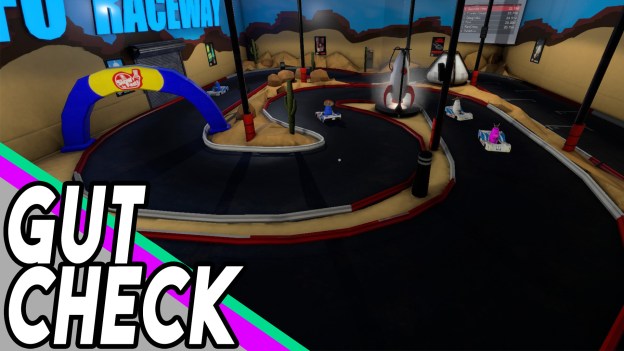
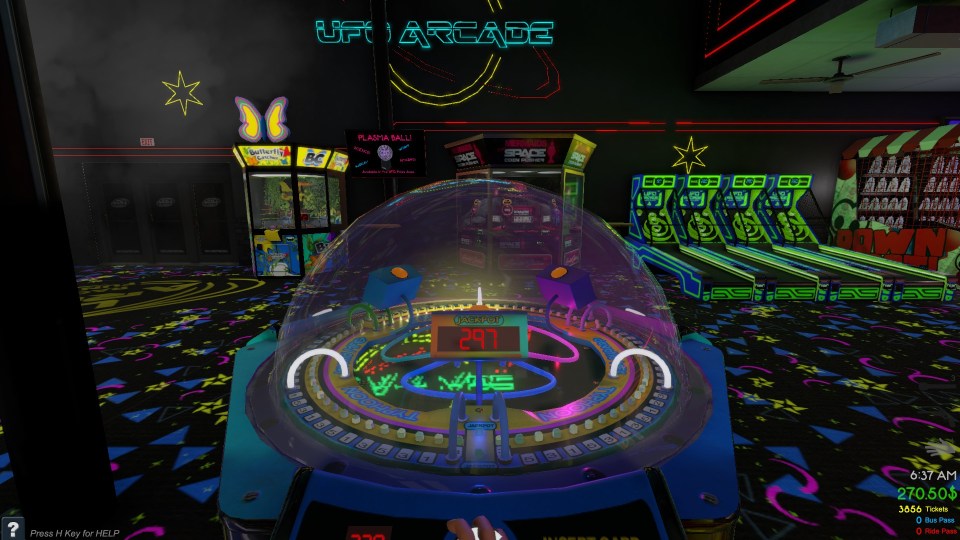
Describing The Coin Game is going to be fairly tricky to be honest, mostly because even after playing over an hour of it, I don’t know what to say.  In the simplest terms, The Coin Game is a virtual arcade experience where you get to play crane games, drive go-karts, play laser tag and more, in one of the strangest worlds I’ve ever seen.

The Coin Game is an early access title, which I mention because the experience itself, while supremely interesting, is a little thin.  You start off by picking either a male or female avatar, both of which are so horrible to look at, I’m thankful the game is entirely in first person.

20200219160330_1.jpg

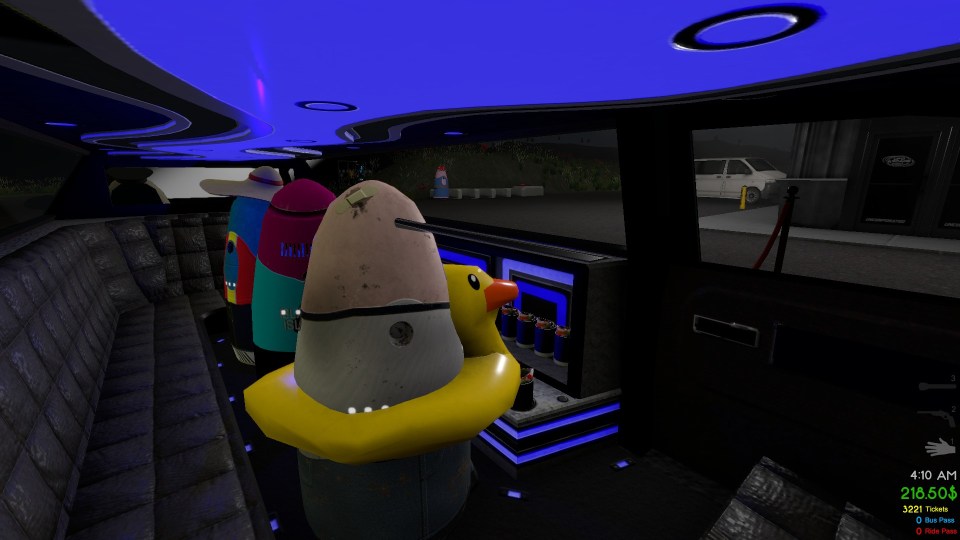
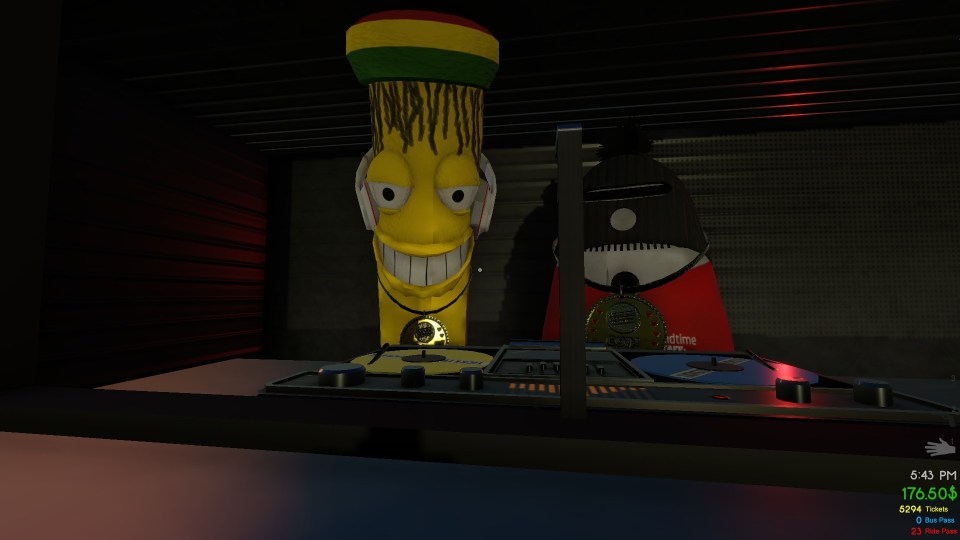
After making your grim decision, you find yourself in front a dingy arcade filled with games.  Games and robots.  From what I can tell, in The Coin Game, you’re the only human around and everyone else is some sort of egg-shaped robot on wheels that spouts random nonsense at you whenever you get close enough to them.

But once you get past these ovate androids, you walk around this arcade and just play some classic arcade games.  Things like claw machines, whack-a-mole, and more are pretty lovingly made, with the physics usually holding up their end of the bargain and providing an, oddly enough, realistic representation of these attractions.  Just like you’d expect, doing well at these games grants you tickets that you trade in for prizes, that you’ll use for some unknown purpose.

20200219161309_1.jpg

Now stick with me here, because if you didn’t think it was before, it’s definitely about to get weird.

The Coin Game is confoundingly an open world game with multiple arcades in it.  You go between them by taking the bus, a limo, or my favorite, your own personal golf cart.  Should you choose the golf cart, you have to stop at gas stations from time to time and refuel.  There’s also an option for a survival mode, which is perhaps the most terrifying prospect.  I did not attempt this mode.

20200219161054_1.jpg

Most of the locations are incomplete, brandishing various forms of “coming soon” signs or “under construction.”  There’s a pawn shop that isn’t currently available, which makes me think that selling your prizes for cash will let you buy food and supplies necessary for human survival, but I’m just speculating.

What’s currently in there however is still pretty weird.  From buying energy drinks, to having a dart gun and flashlight on you at all times, down to being able to just buy scratch off tickets are all weird things, that are for some reason in The Coin Game.

20200219162127_1.jpg

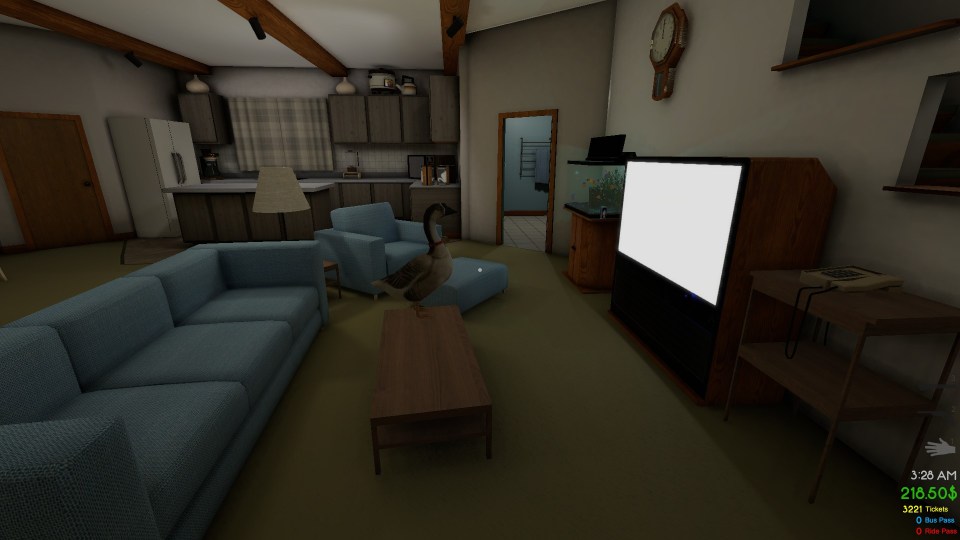
You can also visit your home, which might just be the strangest place of all.  It looks like a normal house, and is decorated like one too, with one major exception.  You have a pet goose.  I don’t know why, but you do.  You can feed the duck if you want, but mostly it spends its time watching TV.  There’s also a room in the house that’s dedicated to the goose.  I won’t go into specifics, but you should check it out.

The Coin Game is so delightfully weird and a little unsettling in a way that I’m totally a fan of.  It revels in its strangeness and wants you to embrace it as well.  The entire time I was playing, I kept thinking that it was going to have some sort of horror element to it because the atmosphere is just so off-putting in places, but luckily for me there was no terror to be found.

20200219165848_1.jpg

Like I said at the top, The Coin Game is a thin experience right now, boasting a few dozen arcade games, some bigger interactive experiences like go-karts and bumper cars, along with some truly lame rides that don’t really do anything but strap you in place and let you look around.  It only took me about an hour or two to touch every attraction in the game to give you an idea of its longevity.

All things considered, I really like what The Coin Game is laying out.  It’s very incomplete at the moment, with missing locations and attractions, any sort of story or motivation, full control support and more, the game earns its early access classification.  I’m extremely curious to see where it goes from here and what delightful weirdness they continue to inject into this thing, but for now, I’ve kind of spent as much time with it as I think I can get out of it in its current state.

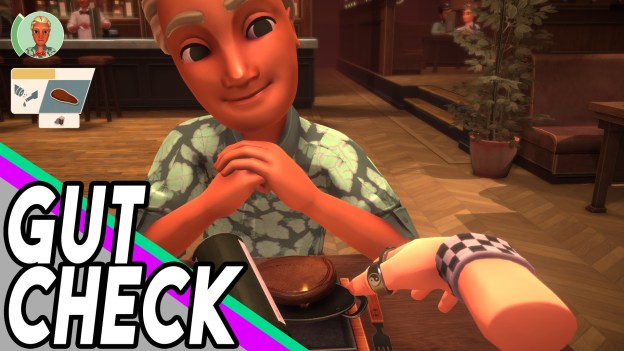
Gut Check – Table Manners

In the grand tradition of taking normal situations and injecting obtuse control schemes and wacky physics into them, Table Manners thrusts you into the miserable world of dating, somehow making it even more unpleasant than it already is.

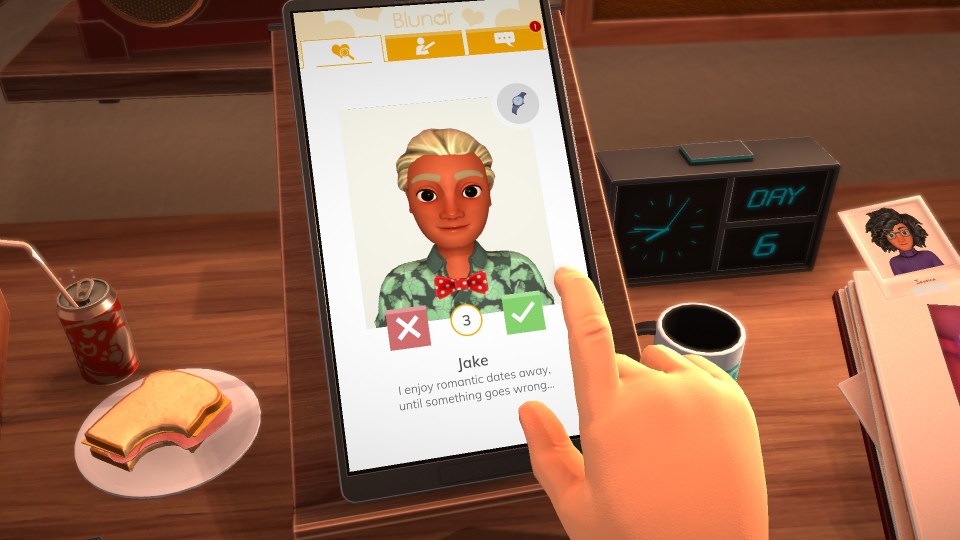
The pitch is simple, swipe through your dating app till you find someone you want to take on a date, then do it.  The only caveat is that you have one hand, and you’ve essentially forgotten how to use it.  Also, the people you’re dating are utterly useless and need you to do literally everything for them.  But let’s back up and start from the top.

20200219204605_1.jpgIf you’ve ever played Surgeon Simulator, the game largely responsible for creating this genre of “wacky hands, considerably less wacky scenario,” Table Manners is more of the same with less of the charm.
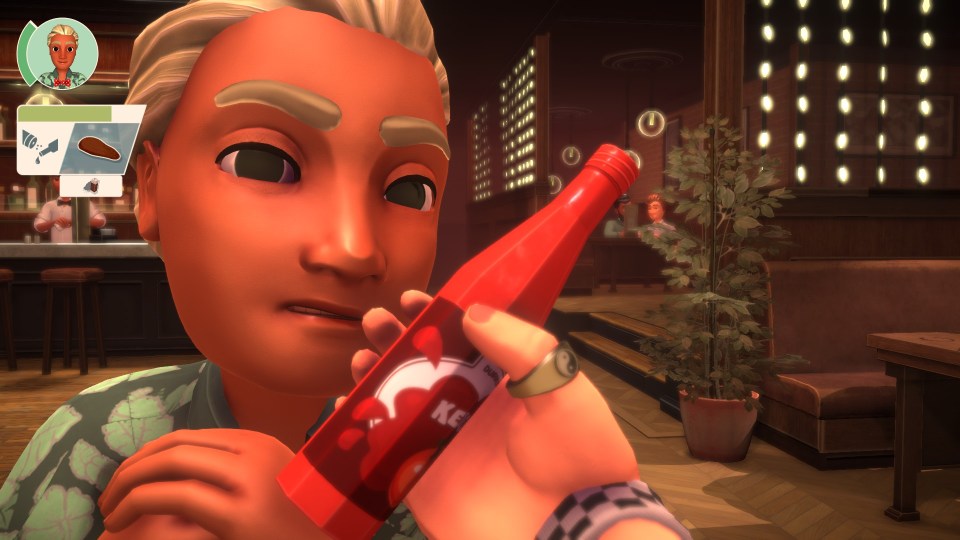
The controls are cumbersome, yet somehow oddly simplified for a game like this.  With your mouse, you control your general movements including going forward, backwards, side to side, rotating your hand and grabbing things.  The only thing that took me a bit to wrap my head around was using the W and S key to control the vertical position of your hand.  Not especially difficult, just cumbersome in the way these games usually are.

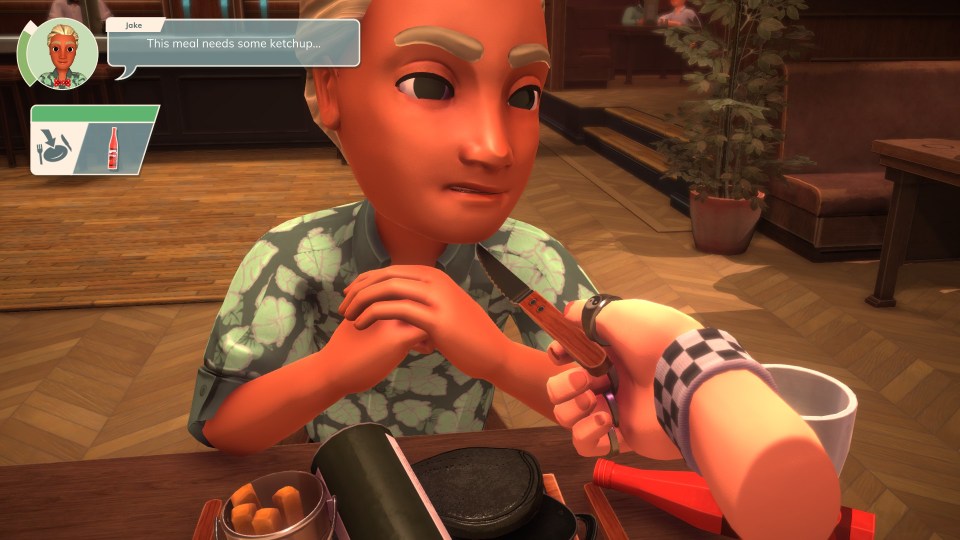
20200219205036_1.jpgTable Manners starts you in a steakhouse with your desired date, tasking you with several mundane date tasks, and then a bunch of really wild stuff for anyone to ask on a first date with a stranger.  Every level in the “steakhouse chapter” involves you doing the same tasks, while adding one or two into the mix in subsequent levels.  Light the candles, pour the wine, let them try your french fries, it all happens every single time in every level in the “steakhouse chapter.”  There are only four levels in a chapter, and somehow I was bored by the third instance because I was just doing the same stuff over and over.

It also doesn’t help that your dates are absolutely nuts, asking you to do things like salt their food, feed them out of your hand, and perhaps the most heinous crime, asking you to put ketchup on their steak!  It’s like they know they’re committing a food crime and want you to be complicit.
After dates, you can choose to “text” your date or any random person on your dating app, but to what end, I don’t know.  All of the dialogue options are these bad non-sequiturs, that are replied to with another non-sequitur, and followed up by one more.  It’s complete gibberish that isn’t really every funny and seems to have minimal impact on anything considering anyone will go on a date with you before you have a conversation with them.

20200219205206_1From top to bottom, Table Manners feels like a game made for people to stream and never think about again.  While it isn’t aggressively bad or anything, it’s just aggressively bland and lifeless, at least in the early goings.
The trailers show off interesting locations including a cruise ship and an airplane, but the game itself makes you trudge through a bland steakhouse and lame objectives before you see anything remotely cool.  It’s a shame too because it’s a neat concept that ends up feeling too rigid in its objectives and controls, ultimately robbing it of a lot of creative freedom you might have in similar titles.

Every moment of what I played felt less like I was doing something fun or being creative with my solutions, and more like I was just battling bad controls to accomplish a specific goal, the specific way they want me to.  Games like this can be such a blast when they allow you to tackle objectives in any zany way you choose, but in the admittedly small slice of what I played of Table Manners, I found it a little too rigid and particular for my tastes.

It doesn’t help that each objective your date gives you is timed and is the only metric by which they judge you.  You could literally hold a knife up to the neck of your date, and all they care about is if you put some salt on their fries in time.  It doesn’t feel dynamic, comedic or fun, it just feels unnecessarily stressful.  So by that metric, it totally nails the dating experience, as a game though, it’s really not worth your time.

Maybe Table Manners takes a turn later on and lets you really do some goofy nonsense and have a little bit of creative freedom, but the first act of this game really lowers the bar from the jump.  Goofy physics based games are usually up my alley, but this one goes to show that there’s always going to be outliers that miss the point of why these kinds of games are fun.


WoW, What am I Still Doing?

You might have noticed a significant uptick in World of Warcraft based content on this website.  Aside from that being a sentence I never thought I’d have to say, here we are with yet another entry in the chronicle of my WoW experience.  Last time I checked in, I was significantly overwhelmed by creating a high level character and was coaxed into starting a new one at first level.  So how did that go?

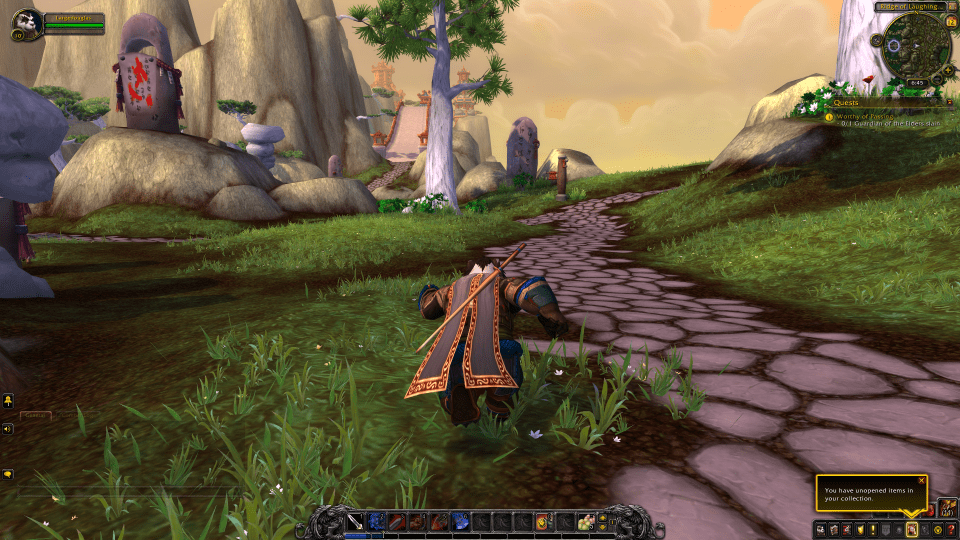
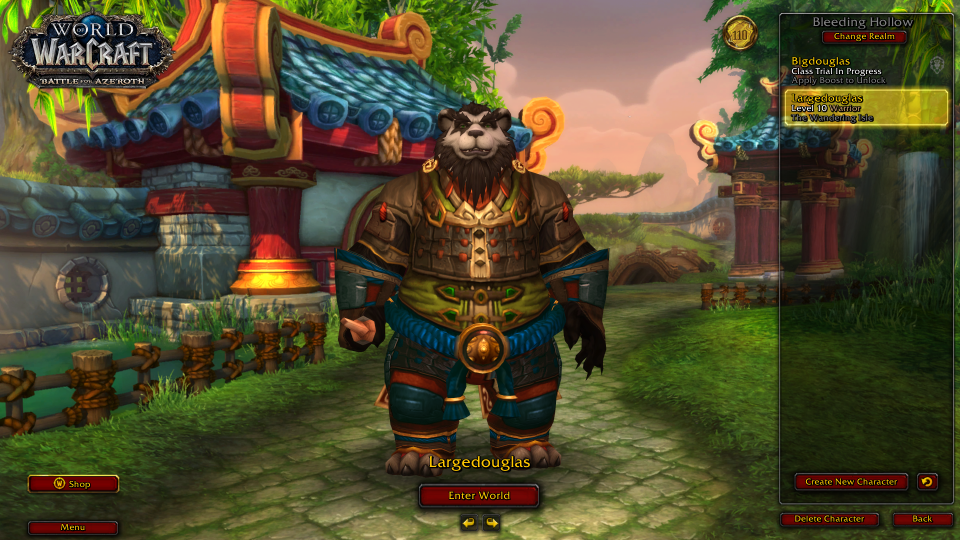
Going in with my extremely limited knowledge about World of Warcraft and its bevy of classes, I wanted to go with something simple and straight forward.  Naturally I gravitated towards making a panda character who also uses a sword and shield primarily.  I think it’s called the warrior class, but I could be wrong.  After a short customization period, LargeDouglas was born.  I initially wanted to go with ‘Bigger Douglas’ or something to that effect, but apparently the cowards at Blizzard weren’t ready for my radical new ways of doing things.

World Of Warcraft - Retail Screenshot 2020.02.12 - 18.45.22.60.png

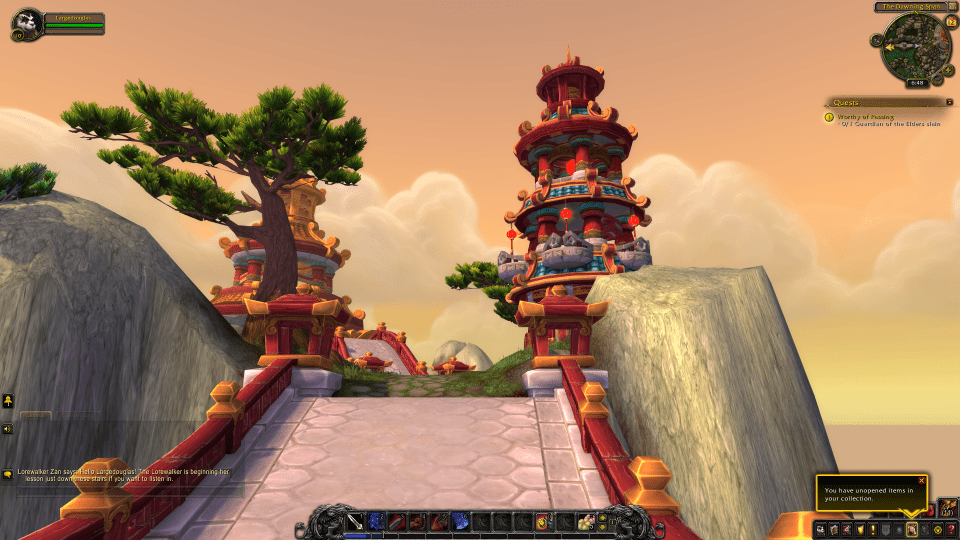
Very quickly, my two friends appeared in my world with their own ludicrously named pandas who I think were a mage and a monk.  We ventured forth through the tutorial world of the panda-folk, an Asian inspired, pagoda-heavy region with a lot of questionable names and accents on display.

Compared to diving in at level 110, level one was significantly more manageable and easier to keep track of.  I had time to get used to abilities and how to navigate some of the menus instead of it went last time, where I was essentially drowning in menus.  I will say though, even at this rate, there was still a lot going on from level to level, which I imagine is a result of accelerating the leveling path over the past 50 years this game has been running.

World Of Warcraft - Retail Screenshot 2020.02.12 - 18.46.52.53.png

I’m proud to say that in this excursion I only died once, and it was because I didn’t pay attention to an NPC who very specifically told me not to go into this windy room until the wind subsided.  My negligence may have led to my demise, but in my defense, my friend who has played this game for years also died this way as well.  Actually I believe he died twice there if memory serves.

By this point you’re probably wondering if I actually enjoyed myself or not.  If I’m being honest, I really wasn’t blown away or won over by this fresh start.  It was a better experience than my last dive into the World of Warcraft pool, but it’s still World of Warcraft when all is said and done.  Meaning that regardless of which way I try to play it, it’s still a game that does nothing for me.

World Of Warcraft - Retail Screenshot 2020.02.12 - 18.48.22.26.png

Sometimes I had to kill 10 monkeys, or kill 10 rats and collect their parts for whatever grim needs the quest giver had.  Sometimes, when things got really exciting, I had to pick up driftwood or fireworks.  It’s even more disappointing considering I had thought for years that the jokes that people made about collecting 20 boar pelts had to have been a relic of the early days of World of Warcraft.  Surely over the years they would have removed as much of that tedium as possible?  Nope, from what I experienced, about half or more of the quests I embarked on involved me killing a bunch of stuff and collecting enough of their parts to progress.

I get that every quest can’t be this life-changing experience that’s going to revolutionize how I perceive quests, but they really front load the game with as much tedious nonsense as possible.  I might be being a little to myopic in my description of World of Warcraft, but it’s just super hard to get enthusiastic about this game.

World Of Warcraft - Retail Screenshot 2020.02.12 - 18.47.02.00.png

But it wasn’t all doom and gloom.  There were a couple of moments where I genuinely sat back and thought something I’d experienced was pretty cool.  It seems utterly useless, but the panda-folk can balance on these vertical beams and bounce around on them and fight other people on them which is an objectively cool, martial arts thing to do.

Also, the world design, especially in the land of the panda-pals, was really pleasant.  From the pagodas, to the rivers and caves, this starting area was a joy to be in and meander around.  Also, I think it’s all on a big turtles back or something?  Which once again, is objectively cool.

Ultimately, I still don’t like World of Warcraft.  It has its moments where it can charm you, but no amount of that can make me ignore the core conceits of its mechanics.  At this point, I’m not playing it because I want to play the game, I’m playing it because I get to talk to my friends.  On that front, World of Warcraft succeeded, but I can’t imagine paying $15 a month for the ability to talk to them.

Difficulty & Patience

As I’ve gotten older, I’ve found myself sinking back into more familiar gaming experiences, opting for what essentially is my comfort food over being adventurous in a sense.  I still like getting my hands on a new release and seeing what there is to offer, but more often than not I find myself bouncing off a game the second I hit the tiniest of obstacles.  I often would attribute that to just not wanting to bash my head against a difficulty wall in games, but these days I think I’m just more impatient than anything.

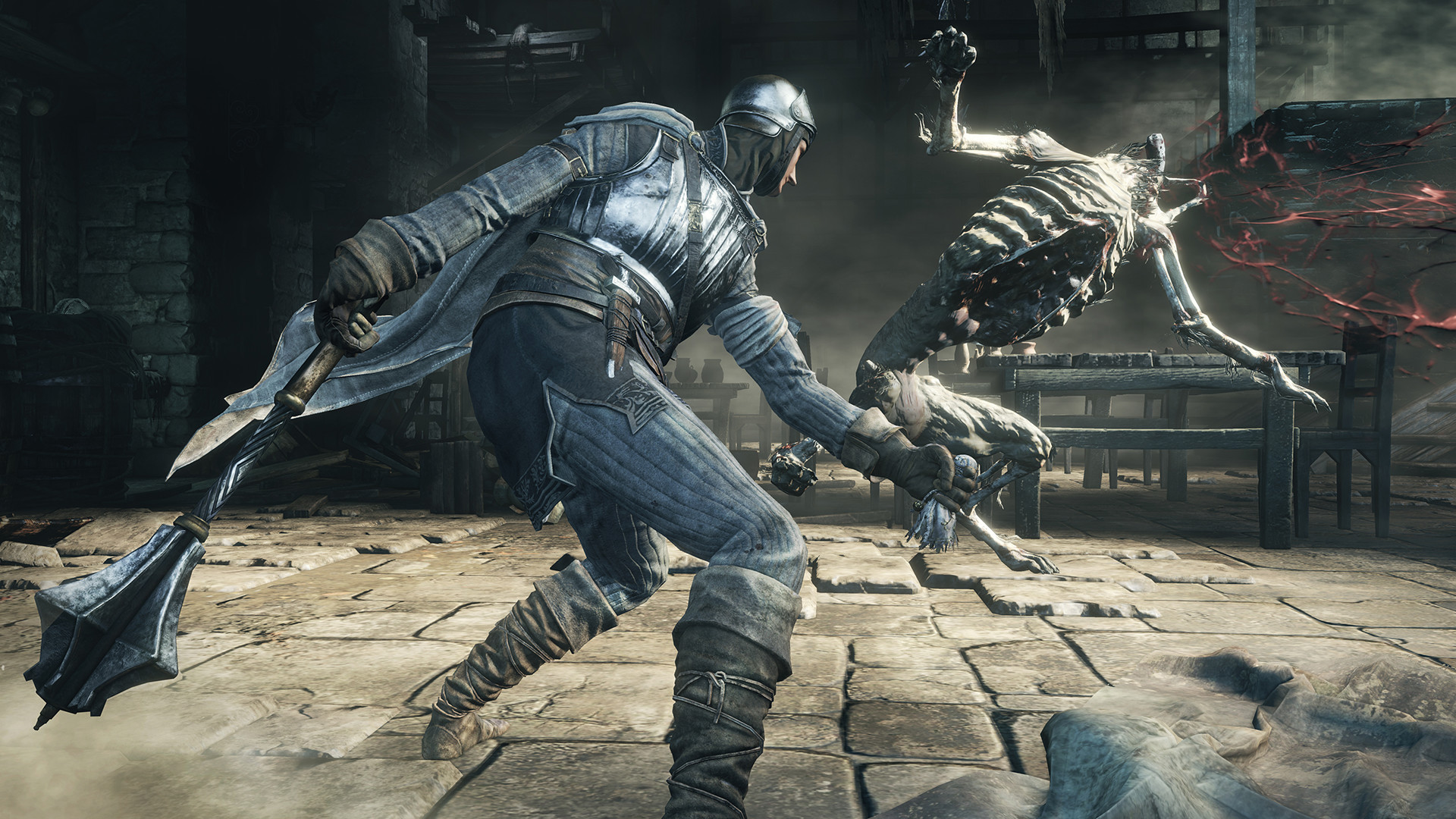
When talking about difficulty in games, a lot of people point directly to the Dark Souls series.  Those games are very much too difficult for me, but they also do this thing where they try to emotionally crush you and mentally exhaust you.  My extremely limited experience with Dark Souls involves me starting out, killing maybe 2 or 3 skeleton men, getting to the boss, dying, then having to do that all again just to make a few more feet of progress.  Now, my lack of skill definitely plays into that, but before the frustration of dying repeatedly can make me quit, the extreme tedium of running through the level again and fighting the same dudes gets me first.

There is something to be said about the joy that comes with memorizing the patterns and placements of enemies, and finally executing that perfect run that gets you to the next checkpoint.  I get that.  But for me, it’s less a feeling of triumph and more a feeling of relief.  Then I’m confronted with the reality that this loop I’m describing, is the entire loop of these games, and that just isn’t enough for me.

It isn’t just games like Dark Souls that revel in their difficulties that repel me, it can be any game that doesn’t manage to hook me that can make me tap out early.  It’s part of why I created the Gut Check feature on this site, because while I try every game I can, there are very few that actually keep me playing.  And that isn’t because they’re too difficult, it’s because I don’t have the time or patience anymore to dedicate to a game that isn’t immediately wowing me.

There are people that will say that certain games get better after a few hours, but why would I waste my time struggling through something I’m not having fun with, in the hopes of eventually having fun.  Games and I have turned a corner in recent years, where I want them to engage and entertain me with a minimal amount of effort or exertion on my part.  It’s selfish, it’s lazy, and I don’t care.  In my free time, when I want to just have fun, I don’t want to have to work for it.

It’s why tactics and in-depth RPGs and I, don’t get along well.  There’s a lot of time to invest and in some cases, it feels like you’re learning a new language.  For instance, I really wanted to try Disco Elysium last year, but seeing it in action reminded me just how much of an investment of time and mental energy that would be.  Time and mental energy I just don’t have.

I like a mechanics deep and story rich game as much as anybody does, but I just feel as if my patience is waning with a lot of games.  It leads to this internal conversation where I have to ask myself if I really have the energy to play this game about mental illness, or coping with loss, or just with a lot of reading, or do I just want to turn my brain off and play more NBA 2K20?  And honestly, I usually just opt to turn my brain off and play hoops instead.