Category Archives: archived articles

WoW, What am I Doing?

Not too long ago I wrote a blog about how I was gifted a subscription along with the latest expansion for World of Warcraft.  To say that it’s been a period of adjustment would be a gross understatement.  I think I can genuinely say that I haven’t played a game as overwhelming as this before.

Before I describe the fugue state I entered upon launching the game, I think it’s fair to briefly explain how we got here.  Out of the sheer desire to talk to my friends, all of which had been consumed by World of Warcraft as of late, I expressed my increased feelings of isolation I had been feeling to one of them.  In their extreme generosity and kindness, they gifted me a subscription along with the latest expansion in an effort to get us playing and talking together again.  I was apprehensive, but desperate to engage with my friends once more.

I was told that I’d get a level boost that I could apply to a character to get me to the latest content, avoiding the 120 levels of what I assume were going to be pure grind.  It sounded good on paper, and although I expressed that I have literally no enthusiasm to play these kinds of games, my friend decided to pull the trigger on the purchase anyway.

So here I was, with a game I never wanted to play, at the ready.  After a much longer than expected download of 60+ gigabytes, I was ready to jump into to the world of Azeroth and see what all the fuss was about.

I didn’t press play for a few days.
World Of Warcraft - Retail Screenshot 2020.02.02 - 19.40.52.72

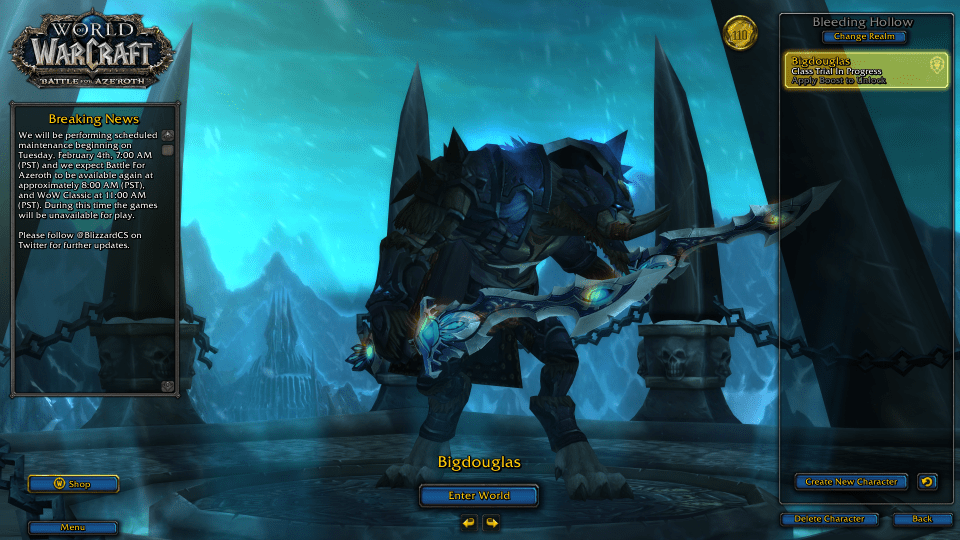
But eventually I did, and I created a wolf-man (I don’t recall the race name) Death Knight, which I was told was a pretty straight forward class that was pretty powerful and dealt a lot of damage.  Sounded great for a first timer like myself.  After picking the wrong server, playing the tutorial, then doing it all again on the right server, BigDouglas was finally ready for prime time… except he actually wasn’t.

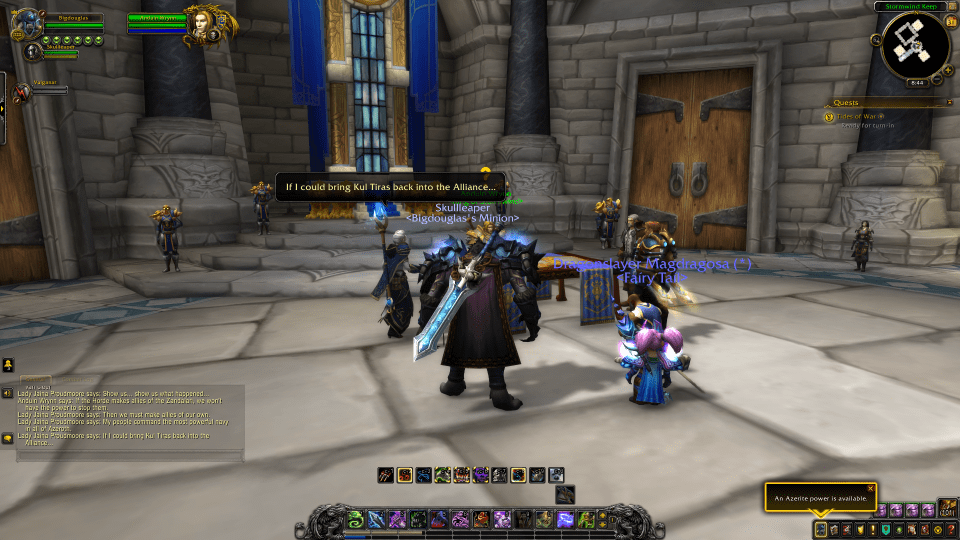
Before I could do anything with my friends, I had to go through a pretty excruciating tutorial with a lot of cut-scenes that honestly, while well made, were very presumptuous in assuming that I knew literally anything about the lore or these characters.  But whatever, it all looked cool.
World Of Warcraft - Retail Screenshot 2020.01.31 - 20.45.35.12

After getting killed in the tutorial a half-dozen times, I finally trudged through and made it to a city where my quests involved walking over there to watch a cut-scene, walking somewhere else to do it again, and eventually getting on a boat to watch another cut-scene before I was thrown in prison to play through another mission where I died several more times.

I don’t mean to come across as dismissive or anything, but it’s incredibly difficult to muster any enthusiasm or excitement for what World of Warcraft did, even though it’s pretty standard in the MMO and RPG space.  The whole time I kept thinking to myself, “man, this would be way more interesting if it wasn’t an MMO and was a game that was more mechanically fun to play.”  I get that people like the gameplay loop in World of Warcraft and MMO games in general, but to me they’re incredibly dull and cumbersome.
World Of Warcraft - Retail Screenshot 2020.02.02 - 19.50.14.40

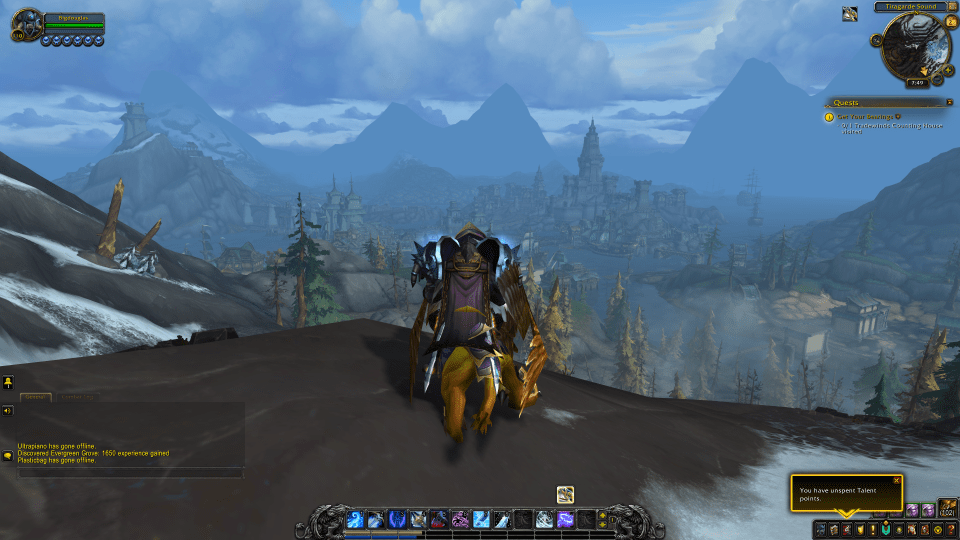
I will say though, the world of Azeroth and the broader aesthetics of World of Warcraft itself are beautiful and made me eager to explore more and see everything I could.  Something I had never really considered but seems painfully obvious now is just how cool everything looks.  It makes sense that the world building in such a long running MMO would be phenomenal, but I guess it never clicked until I got to see it first hand.

But for as cool as everything looks and how well designed it all clearly is, it doesn’t shake the fact that this is still an MMO and I was starting it from what was basically the endgame.

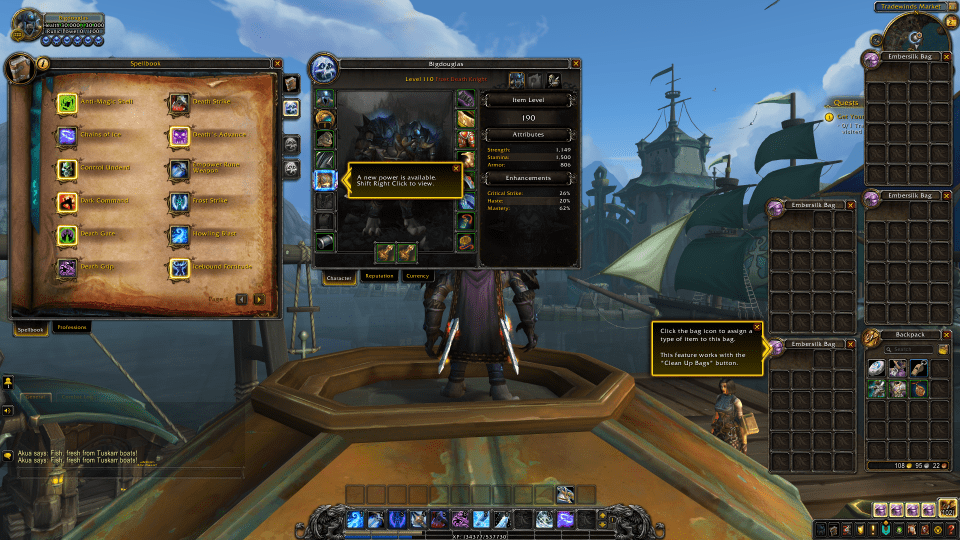
It turns out, there’s a lot of stuff to pay attention to, manage and keep track of in World of Warcraft, and boy howdy is it overwhelming.  Aside from minor gripes like every menu being incredibly small and hard to read, there’s just so much stuff on the screen to look at.  I know this is an MMO thing and not and exclusive World of Warcraft, but holy hell is it a lot deal with.  And it’s all compounded because I’m starting at level 110 where I have way more stuff at my disposal.
World Of Warcraft - Retail Screenshot 2020.02.02 - 19.44.25.11

My eyes were glazing over, my brain couldn’t comprehend anything anymore, and I was getting frustrated because I didn’t know what any of my spells did and kept dying because of it.  I wasn’t having a good time.

I eventually wished my friends a good night and disconnected.  My friend texted me with a new plan of attack.  He and the others I was playing with said they had heard people have more fun while having a root canal than I did playing World of Warcraft.  That’s why they decided it was time to start from scratch.

Level one.  Level one of 120.  I don’t know if I’m going to survive this, but I owe it to them to give it a shot.  I’ve never been more terrified and intimidated by a video game than I am right now, but I guess I’ll have to spin up a new character and hopefully gain a better understanding of World of Warcraft.
 

Gut Check – Journey to the Savage Planet

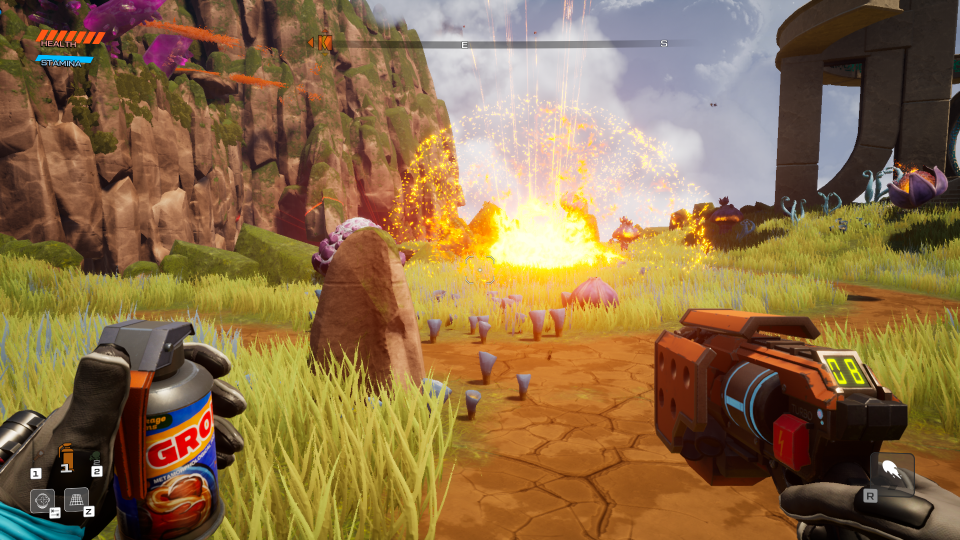
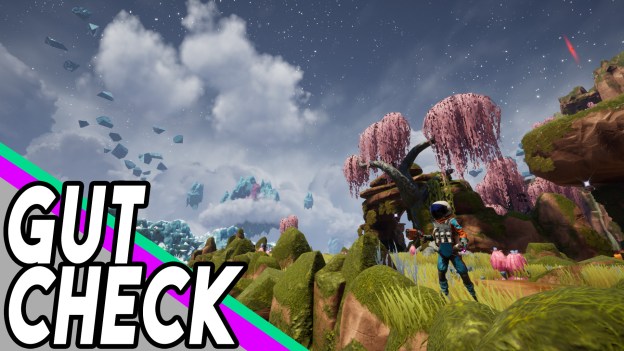
On its surface, Journey to the Savage Planet looks like another survival game, albeit in a beautifully rendered world, but that would be selling the whole game short.  In Journey to the Savage Planet you play as an unnamed and mostly silent protagonist who works for a space exploration and colonization company and is tasked with exploring and cataloguing new worlds.

You do this through a combination of traversal, crafting and using your various tools to scan and document everything you can see.  It can feel a little overwhelming in the opening minutes because everything around you is foreign and new to you, but that quickly subsides and gives way to the joy of exploring this intricately designed world.

Towers Screenshot 2020.01.28 - 15.42.20.25.png

As the title of the game surely implies, a lot of the stuff on this planet is eager to kill you, but not all of it is inherently hostile.  The first beings you come across are these adorable, round little bird cyclops things that are harmless.  Unfortunately for them, they become a puzzle solving mechanic pretty early on.  I came across several blocked passages that would only open if I launched one of these innocent birds into the gaping, toothed maw of the creature blocking the way.  But you can’t stop progress can you?

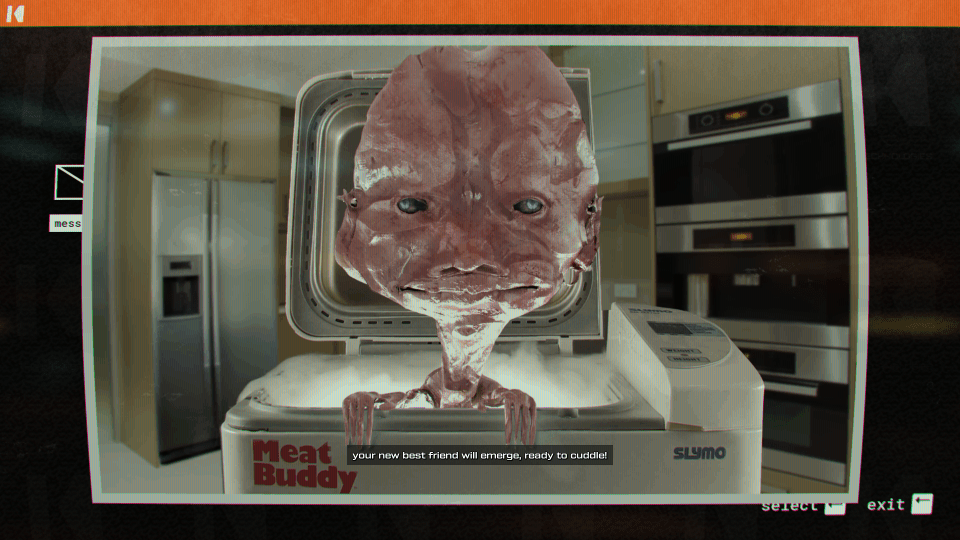
That leads into one of my favorite parts of Journey to the Savage Planet, which is the sense of humor on display.  The first thing you see is a shoddily produced, full motion video orientation video starring the CEO of the company, touting how they are now the 4th best space exploration company around.  You also get sent various ads produced in a similar fashion that are pretty good as well.

Towers Screenshot 2020.01.28 - 15.33.31.07.png

Even the things I don’t normally engage with, like emails in games, are genuinely funny and worth reading.  One of them described how I was in almost $500,000 of debt that would take approximately 50 years to pay off, will now only take 47 years to pay off, thanks to my new job as a spaceman.

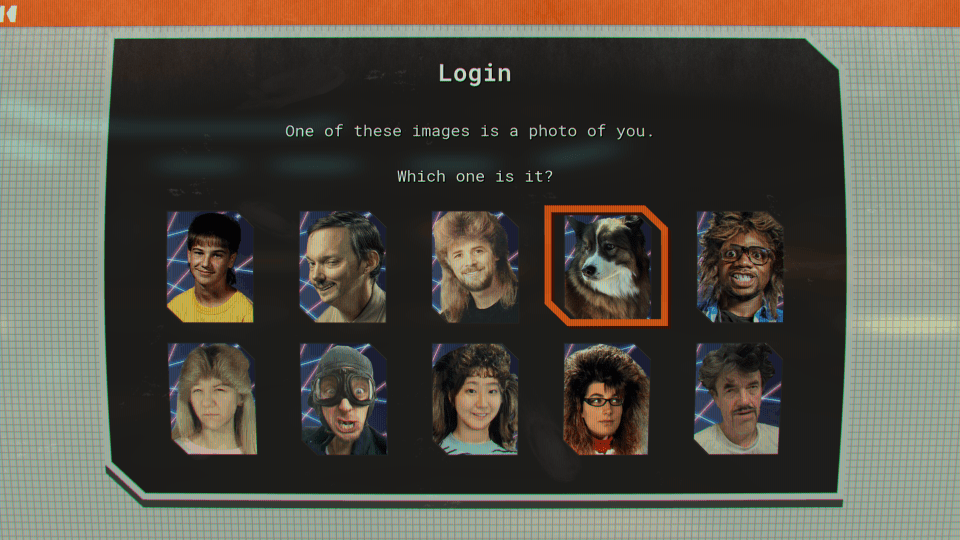
The best, but maybe even the worst thing Journey to the Savage Planet allowed me to do was select my character portrait from a veritable rogues gallery.  I of course chose the dog, which on its surface was hilarious, but the follow through might be a little more than I can take.  You see, picking this dog-stronaut, while hilarious, now means that every time my character makes a grunt from jumping, climbing or getting hit, it’s replaced with the dog version of that sound.  This has become extra incentive for me to not get hit so I don’t have to hear pained dog noises.

Towers Screenshot 2020.01.28 - 14.27.29.69.png

“But what about the actual game,” I hear you ask.  The long and short of it is that while it’s too early for me to definitively say one way or another, I can say that it’s a lot of fun to play and has yet to be overly difficult or punishing in any real way.

Considering that Journey to the Savage Planet isn’t actually a survival game, but just uses some of those mechanics, a lot of it ends up feeling more like an action or adventure game.  Instead of managing hunger, ammo or the usual myriad of resources, the game simplifies it all into a health bar, stamina bar, and a handful of resources.  It’s less focused juggling a bunch of meters, and more about just uncovering the mysteries of the world.

Mechanically, everything works the way you’d hope it would, making traversal pretty easy while the shooting feels tight and responsive.  There has yet to be a moment where I’ve felt outgunned or unequipped to handle a threat.  There was a “boss” fight that involved 3 armored dog creatures that would hurl rocks and charge at you that got a little hairy, but there’s always plenty of health around, and they had massive glowing weak spots on their tails.  Though I don’t think the combat is the main draw for me anyway.

Towers Screenshot 2020.01.28 - 15.36.30.05.png

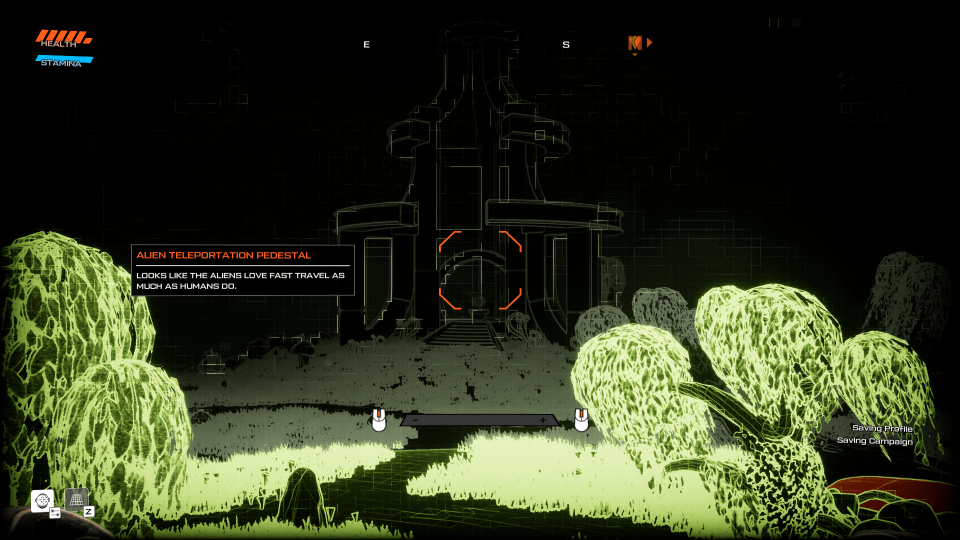
Instead, I think it’s the story that’s really got me hooked.  When you arrive, you’re led to believe that all the planets the space company sends its employees to are devoid of higher beings.  Your planet however, has a massive man made tower in the middle of it, that no one was aware of.  This leads to the CEO urging you to go explore it and unravel the mystery, but that dude is shady as hell, so I think that there’s something else going on.

After my hour or so with Journey to the Savage Planet, I’m left wanting to uncover more of it and see where the story goes.  You can play cooperatively through the whole story with a friend, but I believe you have to start a coop game to do so.  I really like what Journey to the Savage Planet put forward in its opening hour, and I will certainly be playing more of it when I get the opportunity.

The Master of Disaster: Don’t Take it Personally – 09

Like the countless memes on the internet would lead you to believe, scheduling our Dungeons & Dragons sessions can be unnecessarily difficult sometimes.  People have their obligations and responsibilities, and it’s important to recognize and respect that, because at the end of the day these are still your friends.  I recently found myself getting very down due to the scheduling nightmare that is our D&D campaign, and it took some time for me to get over it.

For months now, my group had been on the verge of some pretty big revelations in our campaign that I’ve been eager to drop on them.  The problem was, with the holidays and various personal obligations, we hadn’t been able to meet for a full session in weeks.  Totally understandable stuff.

meem

The problem is that at some point during this period, whenever I would send a text message to the group on game day, it always felt like a roll of the dice as to who would cancel this time and considering we’re a small group of 4, when one person bows out, we all bow out.  It wasn’t their fault that something came up and I understood that.  But after a while of this, it started to feel like I was bothering them and hounding them to play D&D.

I hated this feeling.  I hated it so much that it somehow warped into resenting myself and to a lesser extent, them.  I was angry at my friends and they had no idea.  While I completely had no right to be angry, there I was, dejected and frustrated with the current state of things.

The problem for me was that even though the sessions had stopped for a bit, my brain didn’t.  In my mind I’d been thinking about all the things I want to throw at them from combat encounters to story threads.  Whenever I’d go to write these outlines out or make a map, I’d just get upset because I started getting overly defeatist about the situation.

It was stupid and immature of me to be so upset and filled with resentment, and eventually I realized that.  The reasonable part of me finally chimed in, cooled me down, and made me realize how childish I was being.  Even though we still haven’t played a session yet, I’m okay with it.  I’ve started funneling my creative energy into other projects, and that’s been incredibly helpful.

Even though I know it was immature and shitty to harbor these feelings, it was just so deflating to have sessions get cancelled, the day of.  So one decision I did make was that I wasn’t going to hound them about playing anymore, and instead wanted to let them come to me when they wanted to start up again.  What I’m really trying to avoid with this strategy is having them feel like D&D is work.  It’s a game that we play together, and just like other games, sometimes you can’t sync up.

Gut Check – Super Crush KO

Super Crush KO is the kind of game that’s best played on the couch while something else is playing on the television.  It’s not a bad game by any stretch, but it is a pretty mindless and repetitive one to be sure.  But what it lacks in variety, it makes up for in tight controls, satisfying combat, and a whole lot of style.

The story of Super Crush KO is pretty slight, involving your character having their cat kidnapped by some alien-lady who has a robot army at her disposal.  Naturally, your character decides to take on every last robot that stands between her and her kitty.  The writing is charming and the cut-scenes are done in a comic book style that really works for the whole aesthetic of the game, but the story isn’t why I’m sticking with Super Crush KO.

The main attraction of this 2D brawler is unsurprisingly in the combat.  You’ve got your standard attack that chains into a combo, then you have directional power moves like uppercuts and ground pounds, but you also have this gun that locks on to nearby enemies that’s really good for dispatching flying baddies or keeping your combo going.

I’ve reached the third world of Super Crush KO, almost solely because of how good the combat feels, but it isn’t without its flaws.  As I said earlier, the game is woefully repetitive, from level design, to enemies, it is quite literally you running from combat arena to combat arena, to fight the same horde of robots.  It’s a real shame considering how strong everything else in the game is, because the repetition starts to feel like a real wet blanket on a game with such a strong first impression.

That isn’t to say it doesn’t introduce new mechanics or abilities, it just doesn’t do enough of that at least from what I’ve seen.  I think I’ve seen about 5 or 6 different enemy types which is fine, but the bosses at the end of the first and second level are basically the same, only changing their attack patterns.  In the first set of levels, you get four or five new abilities in rapid succession, but since that there hasn’t really been anything new aside from jump pads in some of the combat arenas that do more harm than they’re worth.

The only other gripe I really have with the game is how it handles difficulty.  Super Crush KO is part 2D brawler and part bullet-hell that seems to just throw more enemies at you to make the whole game seem harder.  Mission accomplished on that front, but it feels really cheap when you clear a screen of enemies only to have more just respawn in their wake.  This might be a me specific issue, but I constantly found myself unsure of which attack would interrupt the attack of an enemy.  Sometimes you can uppercut them out of their wind up, but sometimes, despite hitting them, they still just follow through with their attack and hurt you.  Like I said, this could very well be a failing on my part, but its happened enough times for me to vocalize it here.

But at the end of the day, I’m going to keep playing Super Crush KO, almost solely because of how satisfying it is to play.  It’s repetitive and at times tedious in terms of level design and combat arenas, but the gameplay is strong enough to keep me playing for the time being.


Early Impressions: New Cities

If I had to list my favorite genres of games, strategy and tactics would probably hover somewhere by the bottom.  But there’s always an exception to the rule, and city building games are mine.  Having dumped endless hours of my life into games like Sim City 4 and Cities Skylines, it was a no-brainer backing the New Cities Indiegogo campaign.

The first few days of receiving a key for, and downloading New Cities, I would try to launch the game from Steam only to have it immediately crash.  Considering New Cities is only available to backers of the campaign, I wasn’t surprised to find that there were no answers to my dilemma.  So I reached out to the developers behind the game, Lone Pine, and over the course of a handful of emails and a few days, I finally got the game up and running.

20200122104321_1.jpg

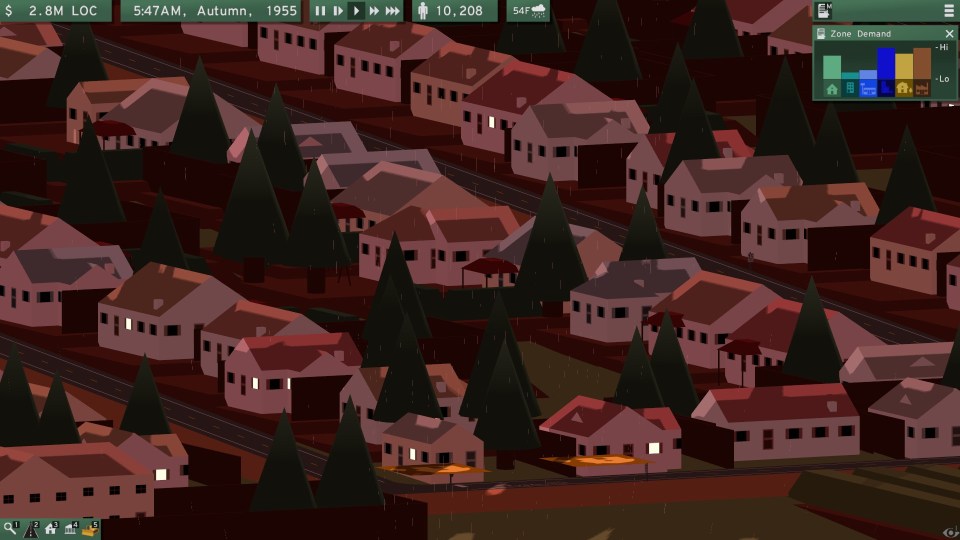
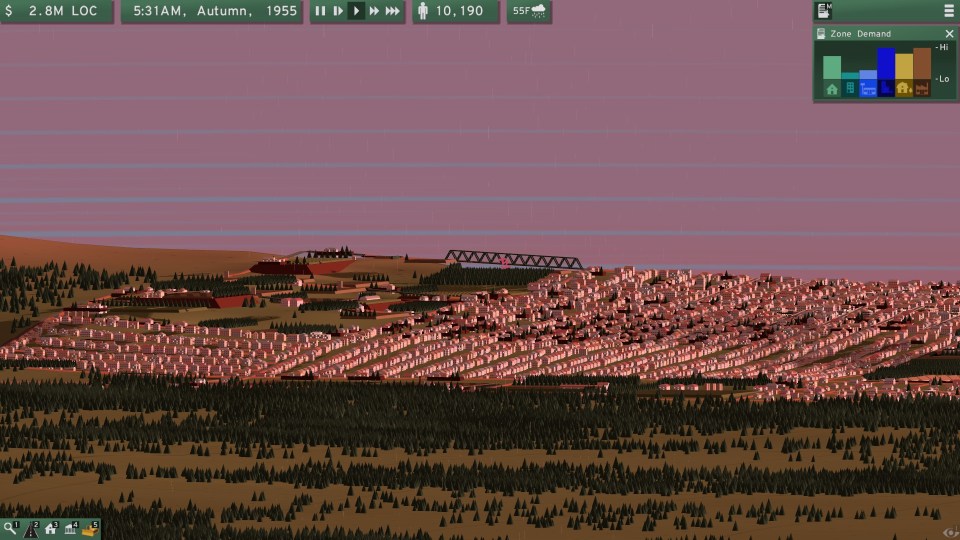
Finally able to actually play New Cities, I loaded up a new world only to be a little intimidated by the sheer scope of the city I could make.  In games like Cities Skylines, you’re given a large map with several plots of land to pick from to start your city in.  New Cities goes hog-wild with this idea, and just allows you to start anywhere on the map.  You can zoom in and out till your heart’s content and just kind of build whatever you want anywhere, which is a little overwhelming.

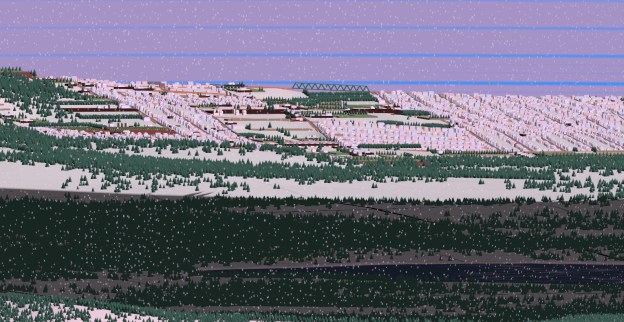
Unlike its modern counterparts, New Cities is going for the Sim City 4 approach of having things be more grid-based, and not allowing for curved roads or anything like that.  Which is fine for now honestly considering I start all of my cities on a grid anyway, but I’m sure people would like that option in the future.  This throwback style not only exists in its mechanics, but in its visual presentation.  Everything has a low-poly look too it, with buildings and scenery drenched in these shifting pastel hues.  Sometimes everything is covered in a cool purple light, and it feels like I’m building a vapor-wave city which is something I’m very into.

20200122103239_1.jpg

Keeping in mind how early of a build of New Cities I’m currently playing, it doesn’t feel right to harp on the things it’s missing or aren’t surfaced well just yet.  I’m sure everything is subject to change, but it’s worth highlighting some areas of improvement.

Navigating the UI is a little more cumbersome than I would like.  The menus aren’t overly complicated or complex, but there aren’t any tool-tips that can explain what I’m clicking on.  Opening up the statistics on your city give you various graphs and numbers that I’m sure would help me if I could understand what I’m looking at.  Like I said, it’s still in development, so I’m not upset these things aren’t super well explained, but these things are definitely issues I’d like to see fixed.

Along with UI issues, just like a lot of city-builders, not a lot is explained to you in terms of progression.  When you start, you do the standard thing of building roads and zoning for residential, retail and agricultural and that’s it.  There’s nothing else you can build in the early goings until you get upwards of 1000 – 5000 residents in your town.  Without things to build, terraforming, or unique infrastructure, it makes your city feel very empty and extremely generic.

20200122103219_1.jpg

There aren’t any power, water, or sewage requirements, which takes away the resource management of traditional city-builders, making the early game even less engaging, making the only thing you need to pay attention to be your cash flow.  There are some icons that’ll pop up over buildings that indicate joblessness, lack of customers and something that just says, “no freight,” but there’s nothing that I’ve found that really instructs you as to how to deal with any of that.

One interesting thing about New Cities is how expensive everything is.  I understand that in the real world, things are expensive and buildings and infrastructure are pricey, but it’s a little weird when a police station costs more than half of your starting budget.  That isn’t a complaint, that’s just me being caught off guard by the sheer price of everything. I kind of screwed myself in one city by starting on an island.  Once I ran out of space, I decided to expand onto the mainland.  Or at least I would have done that if bridges didn’t cost 300 million dollars to build.  So now I just have like 9000 people stranded on an island forever.

But I can’t be too hard on New Cities considering it’s still in active development, with plans of hitting early access later this year.  The experience is thin and in places obtuse, but this feels like a really good proof of concept to, pardon the pun, build off of.  The core of New Cities is solid, but needs an injection of things to build and manage especially in the early game, as well as a general pass at improving the little quality of life stuff like tool-tips.  I think New Cities can be something special with enough time, and I look forward to following it as it progresses.


Gut Check – Pokemon Sword & Shield

Having been out of the Pokemon game for decades, I never found myself yearning to get back into the mix and catch them all like I did when I was a child.  But recently thanks to the kindness of a friend, I was given the opportunity to try the latest Pokemon offering in the form of Pokemon Shield, and I’m not entirely sure how I feel about it.

Pokemon Shield starts pretty similarly to every other Pokemon game, with you setting out as a wayward child in the hopes of becoming the greatest Pokemon trainer of all time.  Sound familiar?

I’m not well versed in the modern Pokemon discourse and don’t really have an opinion on all of the hubbub surrounding this latest release, but from the little I’ve played of Pokemon Shield, it seems fine.  You’ve got all the staples of Pokemon games in the battling, catching and getting ambushed by people in the woods who are bloodthirsty and always ready to throw down.

The variety of new Pokemon seems pretty good from what I’ve seen, but then again I only really know the original 150 and not much else, so these could be older Pokemon from generations I’ve never played.  That being said, they still have that great Pokemon charm with creatures ranging from adorable to utterly confounding.

It’s hard to talk about Pokemon Shield as a game considering that most of what I’ve done so far has been pretty boilerplate for the series.  I did appreciate how I could skip some of the tutorials about how to catch and battle Pokemon, but somehow was still drowning in excessive exposition and redundant conversations.  I don’t need my rival to explain to me three times in one conversation that he wants to be the best trainer and win the championship or whatever.  You’ve mentioned it in basically every conversation we’ve had buddy, do you ever think about anything else?

But that’s Pokemon right?  Just a bunch of wannabes vying for the top slot but never being good enough to overcome you.

The thing is that I don’t really have strong feelings about Pokemon as a concept or a game, so I can’t make a qualitative statement about Pokemon Shield because I’ve been so far from it for so long that it wouldn’t be fair.  But what I can say is that it was a little disappointing to boot up the game and just go through the same motions that I did over 20 years ago.

I don’t know what people want out of a new Pokemon game, nor do I know what I’d want out of a new entry in the series.  But I guess it’s important for me to remember that these games aren’t for me, they’re for kids and fans of the series.  It doesn’t feel right to be overly critical of something that’s so foreign to me, but as it is I don’t think I’m really going to continue playing Pokemon Shield that much because it just feels like I’m playing a prettier version of the same thing I played as a kid.

Gut Check – Ancestors: The Humankind Odyssey

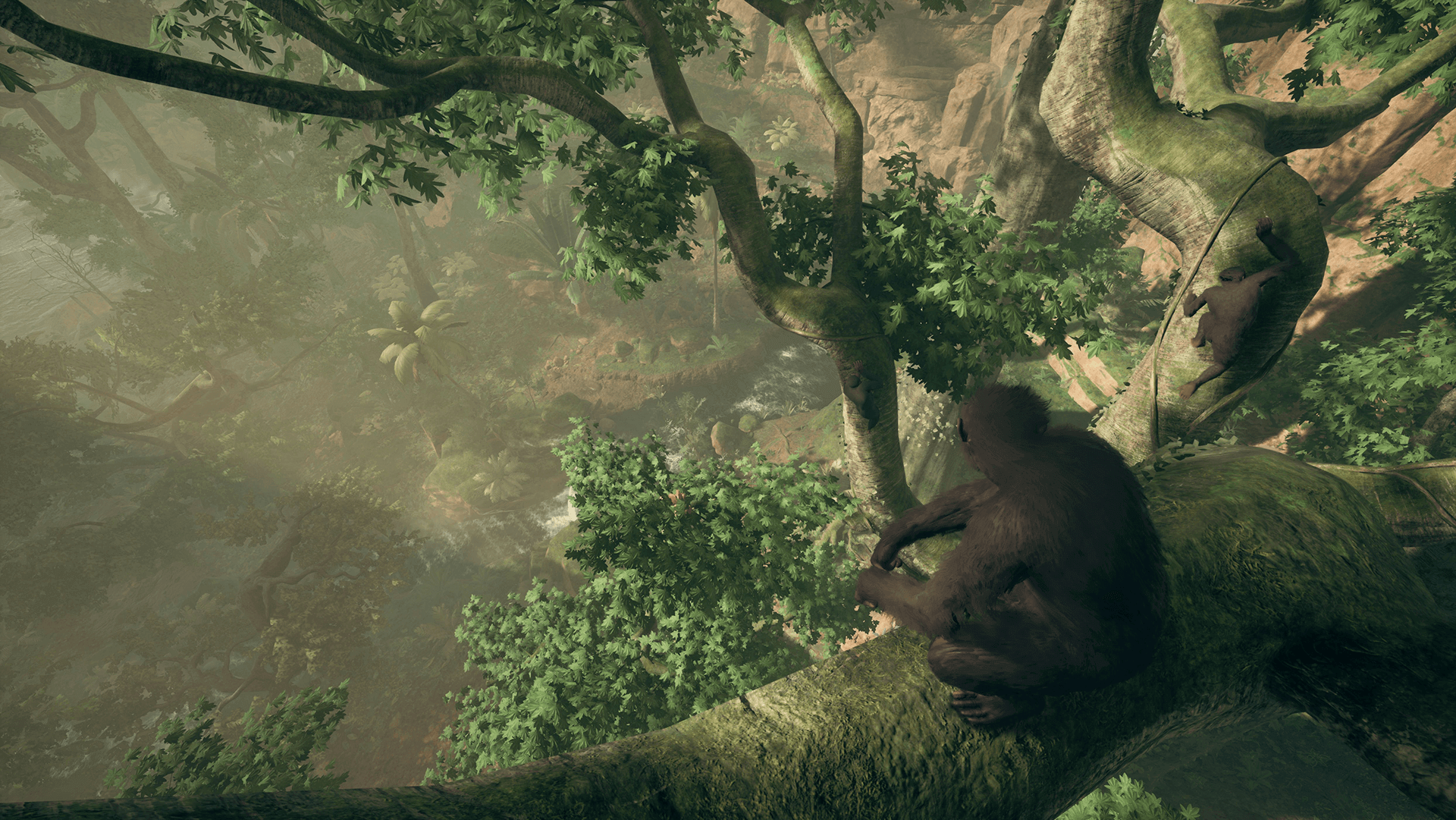
There are games that nail various aspects of their design, from story to gameplay and so on, but rarely do I find a game that is so fascinating that I’m willing to overlook its various shortcomings.  That’s the way i feel about Ancestors: The Humankind Odyssey and its bizarre offerings.

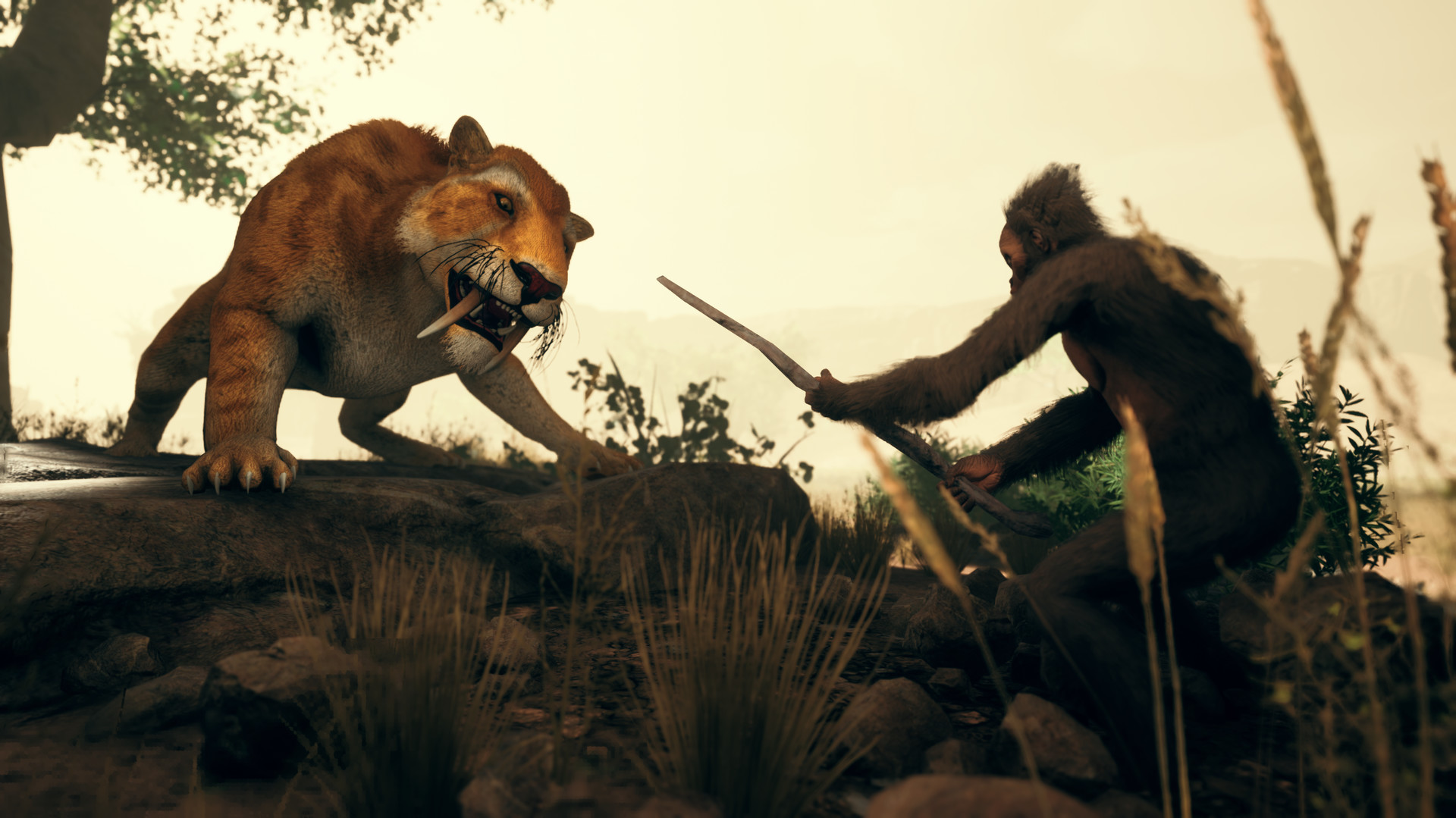
I guess you could call Ancestors: The Humankind Odyssey an action-RPG with survival mechanics if you really wanted to put it in a box, but it’s so much more than a genre descriptor could ever truly describe.

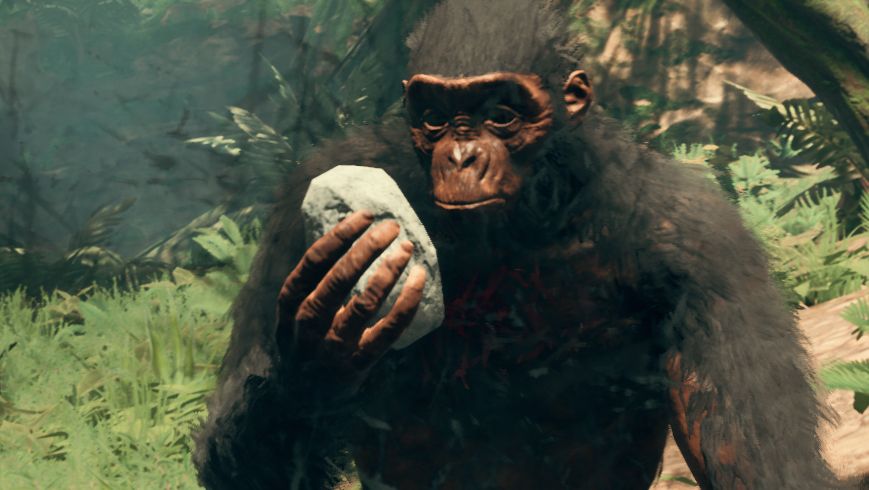
You play as an early hominid about ten million years ago, trying not only to survive, but to learn and pass on as much knowledge as you can to future generations.  The pitch is incredibly interesting, but the execution is questionable at best.

The idea is that you’re learning along with the player character, not necessarily in what skills and concepts you pick up, but in how to do literally anything in the game.  It kind of feels like you’re learning two games at once.

I wouldn’t normally explain control schemes, but I feel like it’s necessary in this case.  You’ve got standard movement and camera controls, but to run or jump you have to hold down the A button to run, and release that hold to jump.  It reminds me a lot of how Tony Hawk’s Pro Skater controlled oddly enough.  You also have different sense mapped to different face buttons.  One activates your smell, your hearing and your intelligence I think?  But rarely have any of these senses been useful because everything is so obtuse in Ancestors: The Humankind Odyssey.

For instance, there are essentially mini-games that you need to succeed at to do everything.  Want to sharpen a stick with a rock?  Well you need to not only have a rock in one hand and a stick in the other, but then you need to play this timing based game where you repeatedly smash the rock into the stick until it’s sharp.  Want to stab a wild boar?  Well you can’t unless you have the sharp stick in hand and dodge into the attacking boar at the right time.  Weird, right?

It gets even more confusing when you are unlocking new abilities.  You have a skill tree for your current character, and you unlock abilities by doing or encountering things.  For example, I ate a mushroom that poisoned me, but not because it was poisonous, but because I was a carnivore and my metabolism wasn’t prepared for an omnivorous diet.  Eating more of these would increase my tolerance, (I think?) and allow me to unlock a better metabolism in the skill tree.

But that skill only applies to this current character.  To lock these in, you need to take a kid along with you on your adventures so they learn it.  Doing that allows you to “reinforce” a skill, making it something that is inherently known for future generations.  But if you die with a baby on your back, you suddenly play as the baby who has to find a hiding spot.  Once you do that, you transport into another living adult, and have to recover the child by finding them, and playing the worst mini-game I’ve ever seen.  You have to essentially calm the kid by howling at it at the right time, but it feels completely arbitrary as to when that timing window is, and doesn’t give you any feedback at all.

And that’s all I came back with in the first hour or so!  Who knows what other craziness is thrown at me later in the game.

Ultimately we have a game that controls oddly, doesn’t give you any real direction, and has obtuse and obfuscated mechanics.  All of that said, I can’t stop thinking about this stupid game.  It’s so weird that despite all of the fundamental issues I have with it as a game, I need to know what happens next.  Is there a point where I eventually become a human?  Do I learn how to make fire?  Can I make weapons and hunt stuff instead of being terrified of literally anything that crosses my path?  Who can say?  All I know is that despite its flaws, I want to see what else is going on in Ancestors: The Humankind Odyssey.

Gut Check – Vacation Simulator

Welcome to the first installment of Gut Check, a feature about first impressions in video games.  To read some backstory on why and how Gut Check came into existence, check out this post.  But without further ado, let’s take a look at the follow up to Job Simulator, the aptly titled, Vacation Simulator.

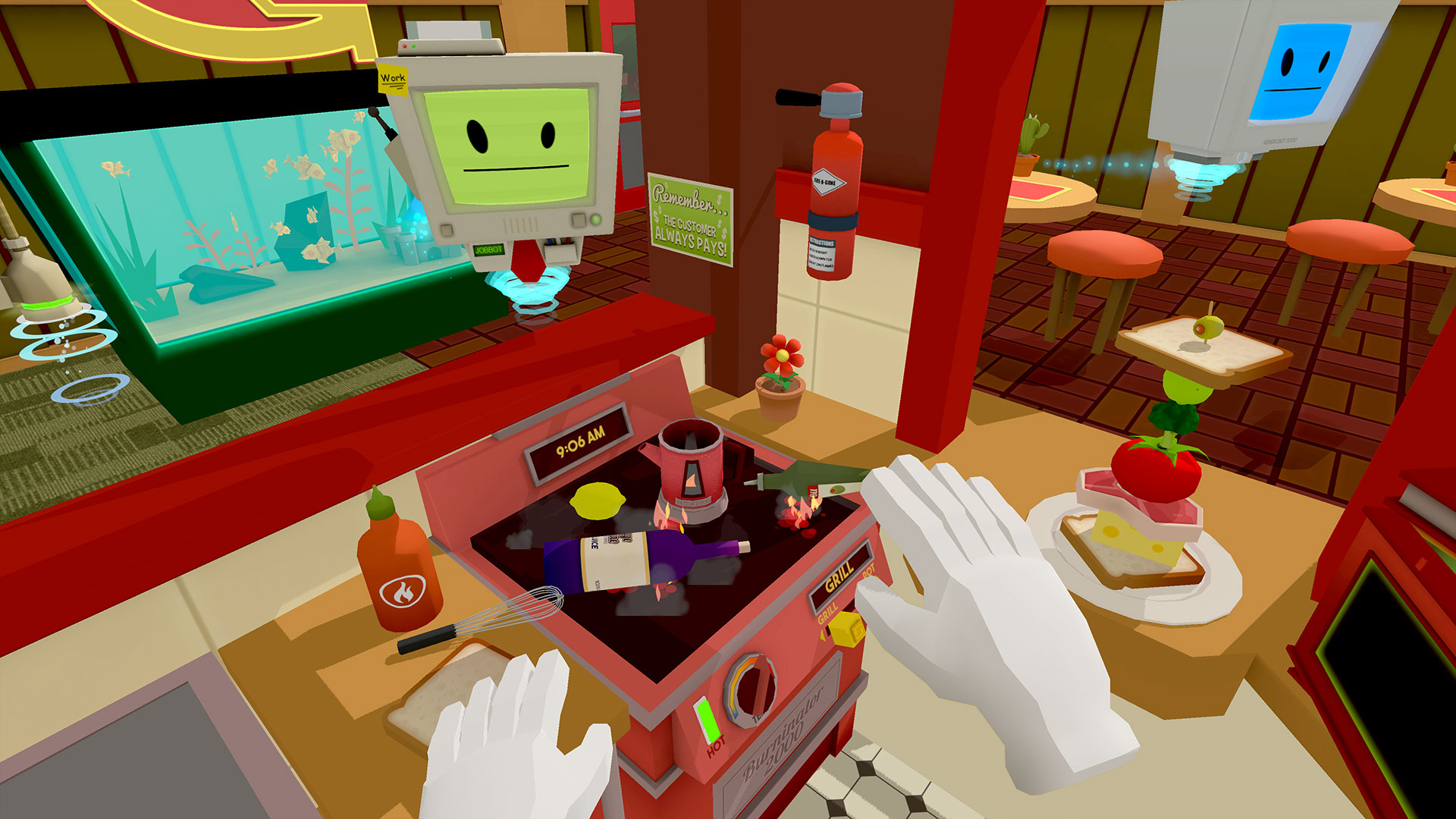
For context, Job Simulator was and still is one of the best virtual reality games around because of how nonsensical, nonlinear, yet focused gameplay.  In Job Simulator you were basically in a museum, hundreds of years into the future, learning about the jobs that humans did before they all died.  Things like office work, car repair and others were all available for you to play with, but never was it an actual simulation of how these careers actually were.

Instead you were hurling around coffee cups, shoving bananas in tailpipes and doing all sorts of goofy things that these robots thought humans did.  It was also a great way to introduce people to VR and get them acquainted with the controls and possibilities.

With all of that said, Vacation Simulator seems to be a more blown out version of its predecessor in just about every way, for better and worse.

The best parts of both Job and Vacation Simulator are the wild interactions that you can have while in a somewhat familiar setting.  Maybe you’ve never worked in a convenience store, but we all have an understanding of what that looks like.  Similarly, Vacation Simulator takes you to a beach, a campsite, and a snowy peak where you can interact with anything that isn’t nailed down and silly interactions with the other vacationers.

Where Vacation Simulator loses me a bit is in the scope of the thing.  What made Job Simulator so fun and approachable was that you didn’t need to worry about what was going on from level to level, or even mission to mission.  It was all self contained in a way that made it accessible.  Vacation Simulator however, opted to go with a more interconnected world where completing tasks involves you going to different places.  It’s not a bad idea, but it leads to a clashing of ideologies that makes the game seem like it’s at odds with itself.

For instance, in the beach level there was a grill where I could cook up orders for people and deliver it to them.  All of the ingredients for a cookout were right there, and the customers who wanted the food were on the beach.  But as the missions got more intricate and introduced more ways for me to mess up an order, I was also tasked with delivering food to different locations as well as gathering ingredients from those locales too.  In this particular instance it bums me out because someone on the beach wanted a s’more, but I had to go collect marshmallows from the forest map and bring them back to cook up the order.  And since you have limited inventory space, you might find yourself screwing up said order and having to trudge back to the other map.

It just feels a little like (ironically) busy work was introduced into the game to make it seem like a more robust experience.  Now, none of this is ever so off-putting that it made me not want to play more.  Vacation Simulator manages to introduce plenty of new and interesting interactions and missions into the world that keep it interesting.  But I feel that the multi-level objectives end up feeling more like work than just goofing around.

That all being said, Vacation Simulator is a great time for anyone who enjoyed its predecessor and its brand of silly humor.  It’s still a charming and fun virtual reality game that ultimately takes two steps forward and one step back.  The biggest disappointment in my eyes is the fact that this game won’t be the first thing I put new VR players in.  Job Simulator is still the game I get people to try out who are curious about VR, because of how straightforward it is.  Vacation Simulator layers on a bit too many elements to make it approachable to first time users for my tastes, but it’s still one hell of a good time.  I’ll continue to play this one for sure.


The Master of Disaster: Adapting – 08

While I always feel immensely satisfied with the work I put into crafting and delivering our various DnD sessions, when I look back on where we started versus where we are now I can’t help but feel like I missed endless opportunities along the way.  My Dungeon Mastering started by following the Waterdeep: Dragon Heist book in an attempt to get my sea legs under me.  I had always intended to stray from the book and its story, but never did I expect it to be such a dramatic departure.

I’ve gone over that transition once or twice already, so I won’t retread that yet another time.  No, the crux of this The Master of Disaster is about adapting on the fly and how important being able to do it effectively is.

One of my players is currently in the midst of crafting a one-shot game for us as a way to get comfortable with being a Dungeon Master for a future campaign they’ll run.  He recently came to me and let me know that he was a little behind and needed more time to hone it.  That’s completely understandable, considering that putting together even a one-shot is a tremendous amount of work.  But I wanted to impart my limited knowledge upon him and maybe help him prepare for the stuff that you can’t script out.

I don’t know if I was effective in portraying that message, but hopefully this can help him along with other first time Dungeon Masters.

The first thing to understand is that you need to give your players a reason to do something.  I’ve struggled with it in the past and it led to a couple of moments with me breaking the fourth wall and just saying, “you’re going there cause that’s where the rest of the game is.”  There was more context to that statement, but it doesn’t matter because that’s just a bad way to handle the situation.  I either needed a better motivator or a better way to express that this was the direction the party should head in.

The second thing is to know your NPCs.  You don’t have to make bespoke character sheets for every NPC you craft, nor do you need to name every citizen in a town or village.  That path leads to nothing but insanity.  What I settled on was making sure I had an understanding of what the named NPCs knew and what that information meant to them.  Maybe the party would have to earn that information, maybe the NPC was easily intimidated, maybe they were a good Samaritan, or maybe they just don’t know something.  You can’t plan for every question or line of dialogue cause you never know what your players are thinking.

Along those lines is the third and arguably the most important thing a Dungeon Master can do, and that’s being able to adapt on the fly.  Improvisation is a required ability when leading a session or campaign, that’s why it’s important to have the previous two skills down because it makes this third one that much easier.

For example, you might have a quest line involving a corrupt king that’s been enjoying the benefits of their royalty while their people live in squalor.  Why should the party care?  Well, the easiest reward is money or treasure, but if you have players who actively role play, you can tap into their characters minds and appeal to their nature.  The lawful good guy isn’t going to be too keen on an neglectful and abusive king.  You can reinforce this by having citizens who voice their disdain and dissatisfaction to the party, or an event that shows the kings brutality.  These can help propel the party in the direction you want them to go.

But you never know if they’ll take the bait or be as invested as you want them to be, and that’s why you need to be able to improvise and think on the fly.  Maybe the party is looking for a diplomatic approach even though you planned for a big battle.  Don’t squash that effort, embrace their decisions.  Even if you had this elaborate fight planned, you need to know when to let it go and let the party succeed.  There will be plenty of opportunities for other fights.

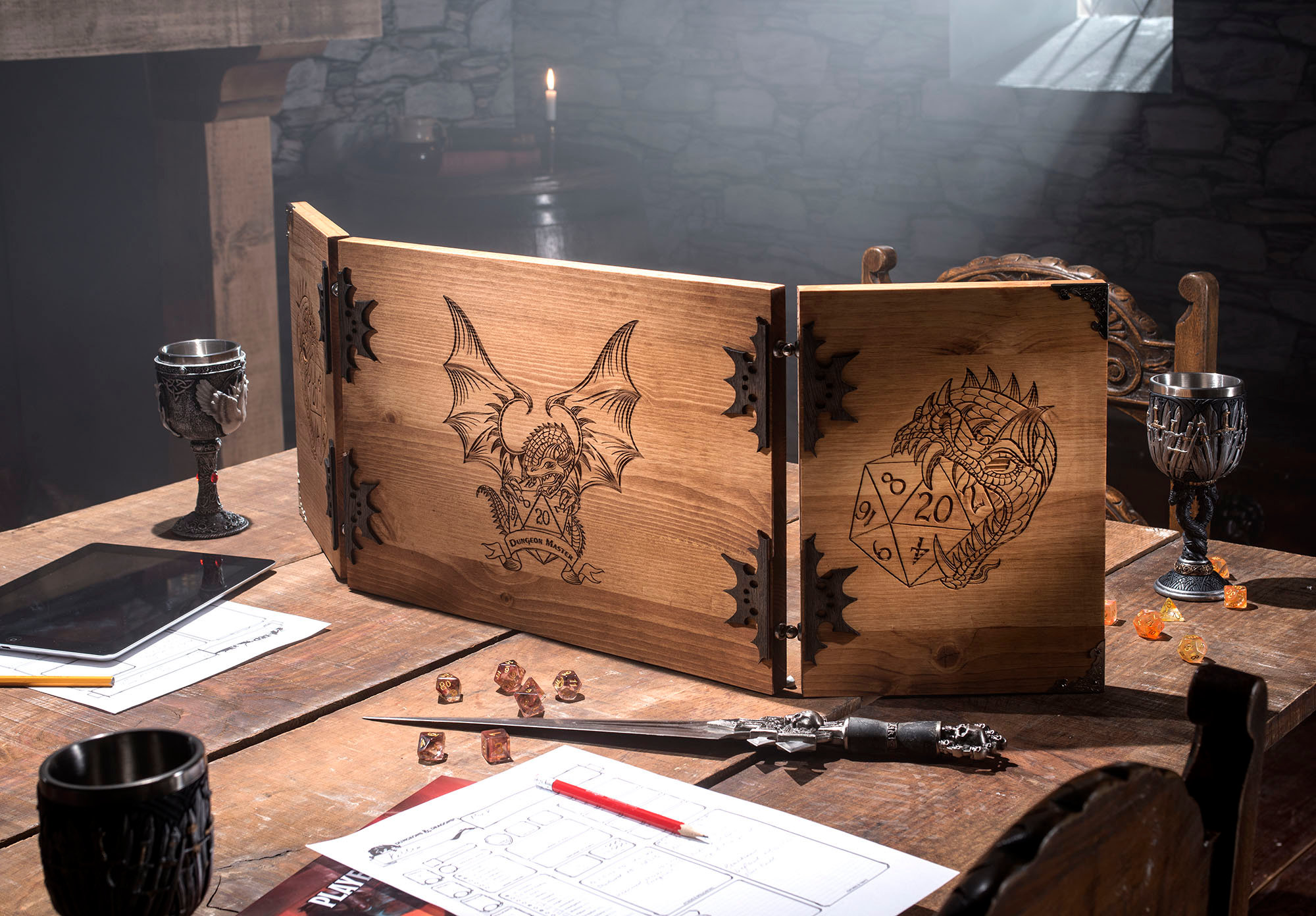
You can apparently buy this screen here

But let’s say you really want them to fight anyway.  Okay, I guess if that’s how you want to play it, you have to justify it.  The king might be okay with the negotiation, but maybe a group of his personal guards aren’t to keen on giving up their power.  Things like that can allow the players to feel like they’ve accomplished something without making it too obvious that you just wanted to fight.

Although one thing I’ve learned is that it’s usually better to just let your players take their victory in circumventing a battle because it makes them happy.  But maybe now you’re in a position where suddenly a battle that could take up half of your session is just gone and you’ve got nothing planned.  Using the previous example of the king, you can have the guards jail the king for betraying them or the throne or something and have it end up as a big brawl between the citizens and the guards that remain.

That actually accomplishes a lot because your players feel like their plan worked, but there were unforeseen consequences of their actions that rippled throughout the town.  Now they’ve got to clean up their own mess, and now they’re invested.

Like I said, I’m not perfect at this Dungeon Mastering thing, but I have figured out a decent way to keep my players engaged and excited most of the time.  Sometimes it’s fun to make a quest that plays their alignments against each other, or that one players character would be really invested in and see how they convince the rest of their group to follow along.

I guess to sum up everything here into one tight sentence, it would be this; Don’t say no to your players, instead offer up alternatives, goals and challenges to their requests and attempts, even if it goes against what you’ve planned for.

The Master of Disaster: Oblivious Players – 07

Sometimes you think that the situation you’re setting up is painfully obvious and impossible to screw up.  I could present my players with an open window to enter through, and they’d end up blowing up the building instead.  It’s a common theme in most DnD games where players will throw endless curve balls at the DM, but I’d like to tell you about a more recent example of their… “creativity.”

One of my players has chosen to be a thief, but more of a Robin Hood figure than some common criminal.  Sure, that sounds great.  Recently he found that some rich folks were throwing a party on the top floor of a manor.  Guards wouldn’t allow him upstairs because they’re good at their jobs.  Denied access, he decided to scout around to see if there was a point of ingress.  “You see a man in a suit, visibly drunk, stumble his way down the stairs from the fancy party, and into a room that says ‘gentlemen’ on it,” I said.  “He is roughly your same build and almost looks identical to you, except he’s got a cool mustache,” I continued on, hoping to see some Hitman styled shenanigans.

Before I go on, I’m not trying to dictate what my players do.  I just like putting these opportunities in front of them in case they found themselves stumped.

“I’m going to head into the bathroom,” he said.  Great, this is gonna happen, I can’t wait to see how this goes.  “I’m going to get into the stall next to him,” he continued on.  Okay, not what I was expecting, but yeah, this could work.  What happened next will bewilder me till my last gasping breath.

He decided to fashion a fishing hook out of string (just the string, no actual hook), and try to fish something out of the man’s pocket.  The dice rolled, and like the pro fisherman he apparently is, he snatched up a pocket watch out of this pooping man’s pants.  “Not sure how that helps you get into the party upstairs, but okay,” I said, remembering that he was supposed to be this altruistic thief.

Then he just left.

He skulked his way into the kitchen where a dumbwaiter was, and used that to get upstairs, where he got into even more nonsense.  Things involving beating up a chef, stealing HIS clothes, and talking to a character who is now apparently a big shot in my world, about plot points I haven’t written.

My player might be the biggest moron in the world, or some mega-genius who is thinking 10 steps ahead of me at all times.  I really don’t know anymore.  The moral of the story is that if you’re going to be a DM, learn how to improvise.