Category Archives: Articles

2023 Seems Cool So Far

While malformed and incomplete, 2023’s release schedule is already looking pretty impressive full. In the first few months alone we’re getting highly anticipated titles like Forspoken, the Dead Space remake, Atomic Heart, Octopath Traveler 2 and Destiny 2: Lightfall. While I don’t necessarily care about those games, other people seem pretty jazzed about it. But hey, let’s take a look at the announced titles that I actually am looking forward to thus far.
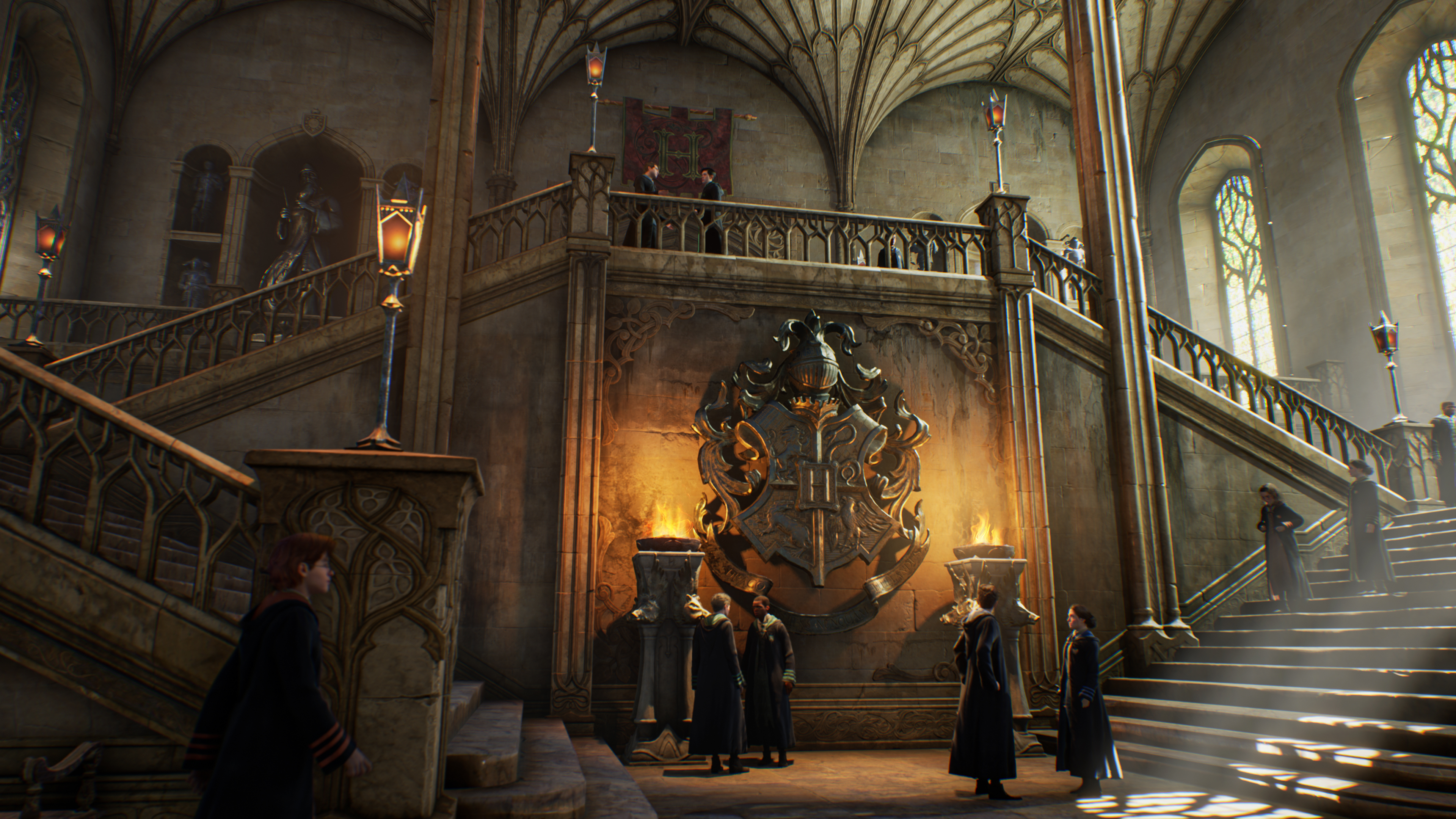
Hogwarts Legacy

I’ll be honest, I’m not the biggest fan of the Harry Potter films or books, but even I can appreciate the atmosphere of the source material enough to want to play a game set in that universe. Considering Hogwarts Legacy is set around 100 years before the events of the film, I feel like I can get away with playing this game and not feel like a sucker for not being a diehard fan.

Based on the trailers, Hogwarts Legacy is visually impressive and certainly nails the feeling of kicking it in that old, wizardly castle that we all know and love. It also looks like its got a speedy and mechanically satisfying combat system coupled with some cool in-world RPG trappings, mostly surrounding making and learning new wizardly abilities by taking their respective classes, which to clarify all sounds pretty rad to me.

Outside of a trailer or two, I haven’t really kept up with much of the marketing blitz or promotional materials which has allowed me to live in blissful ignorance about whether or not Hogwarts Legacy is actually going to be the game for me. The one thing that does worry me and give me pause about actually buying the game surrounds J.K. Rowling being a miserable transphobe who monetarily benefits from my purchase, along with the fact that the lead designer has a history of being a shithead. I’ll wait and see how this one reviews when it eventually launches on February 10th, 2023, but I don’t know if I can justify a purchase.
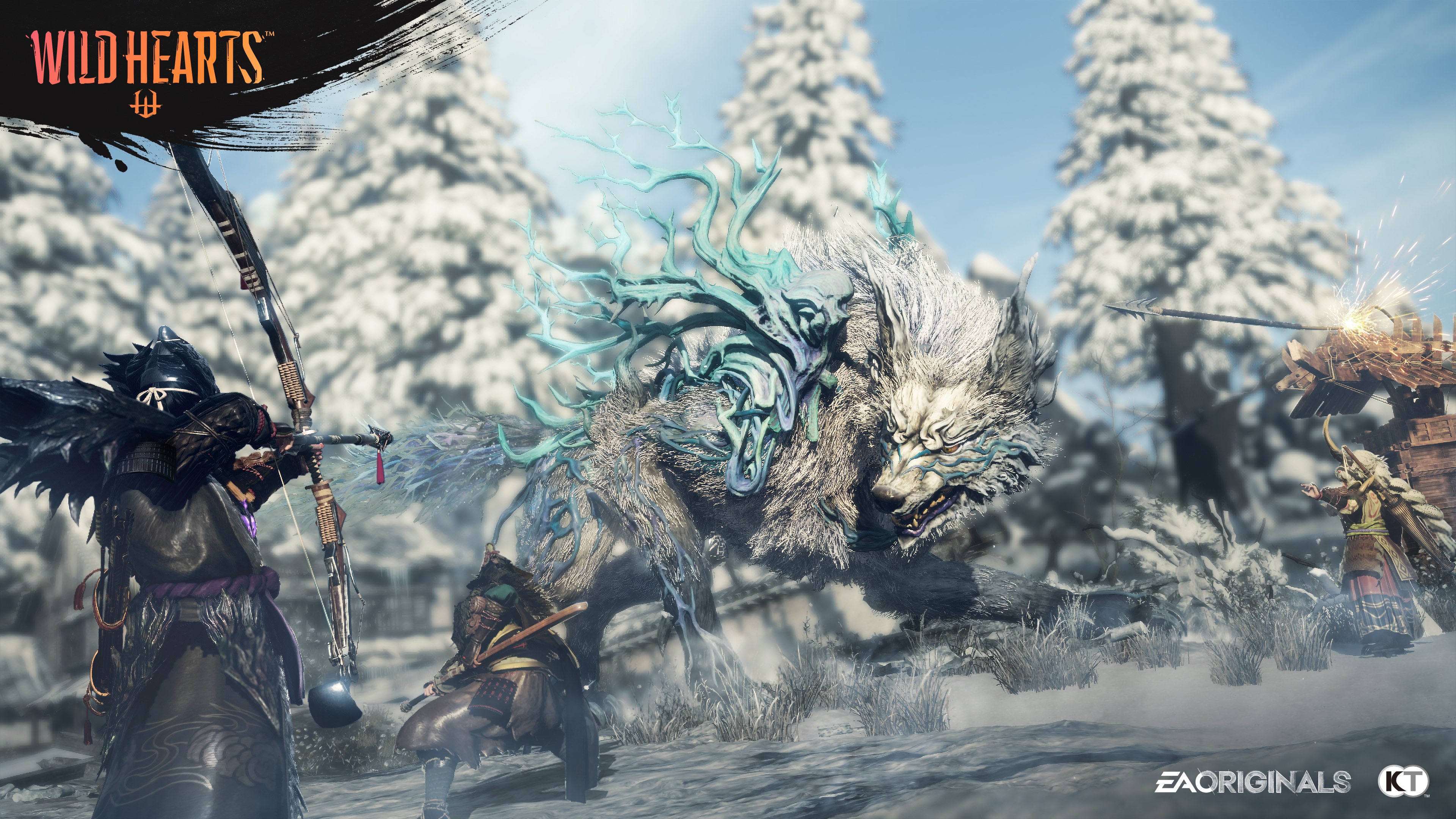
Wild Hearts

On paper I really like the main conceit of the Monster Hunter franchise, but in practice I’ve found them to be clunky and unsatisfying to play. I know that I’m in the minority with those complaints but they’ve always been obstacles that have kept me from enjoying this wildly popular franchise. I’m hoping that the upcoming Wild Hearts can scratch that long unattended monster-hunting itch for me with what looks like much faster and more action-oriented combat.

The idea of teaming up with friends and setting out to hunt down some monstrous prey is extremely tantalizing as is, but Wild Hearts looks to blend in some light tower defense elements into the mix which if done well, could be a real game changer. In my mind I’m imagining a game that isn’t just about tracking creatures down, but also setting up traps and acting on what you’ve learned about said creature to use its natural instincts against it. I assume that’s something that happens in Monster Hunter, but I’ve never played long enough to know for sure. I also am well aware that this being a game about hunting legendary beasts, there might be less natural instinct to work against and more ancient magic or whatever.

If the combat and the tower defense mechanics actually deliver on their promise however, Wild Hearts might be the first monster hunting game I end up enjoy playing. Lastly, and this is a minor quibble, but if the menus in this game could be more straightforward and less of an Eldritch mystery that requires a damn cypher to decode, that would be huge for me. Wild Hearts is slated to release on February 16th, 2023, potentially becoming the second video game I end up buying in a six day period.
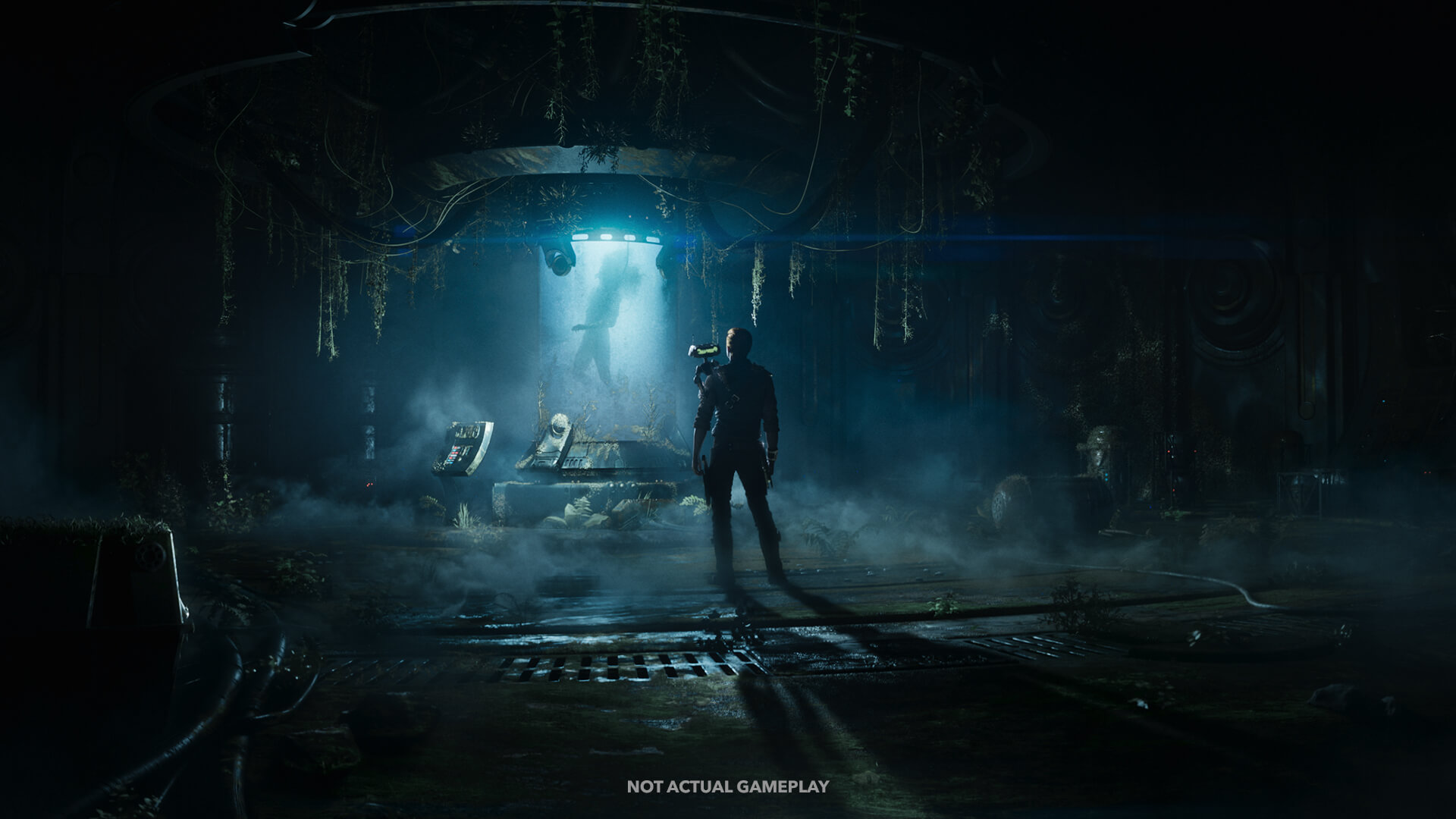
Star Wars Jedi: Survivor

While not perfect, Star Wars Jedi: Fallen Order was one of the best pieces of Star Wars media I’ve consumed in the past few years and a fun game to boot. The characters were likeable, the gameplay was tough but satisfying, and the story, while underdeveloped, was still filled with interesting and surprising moments filled with nods to deeper Star Wars lore for the hardcore fans.

Hopefully Star Wars Jedi: Survivor will build upon its solid foundation, adding in more variety in both lightsaber and force power combat, the latter of which in my opinion should resemble the Stormtrooper flinging simulator that was Star Wars: The Force Unleashed. Judging by preorder bonuses, it also looks to address the pitiful lack of customization options of the previous entry by offering more character skins that aren’t just color swaps of the tunic you’re wearing.

My only real fear here is that Star Wars Jedi: Survivor leans too much into its ‘souls-like’ or ‘masocore’ inspirations, tweaking the difficulty curve to be more inline with other games in the genre. Hopefully with it being a licensed game of one of the most popular franchises ever, the game will boast a wide variety of accessibility and difficulty options that’ll let even a casual like myself enjoy it. Guess I’ll find out when it releases on March 17th of 2023.
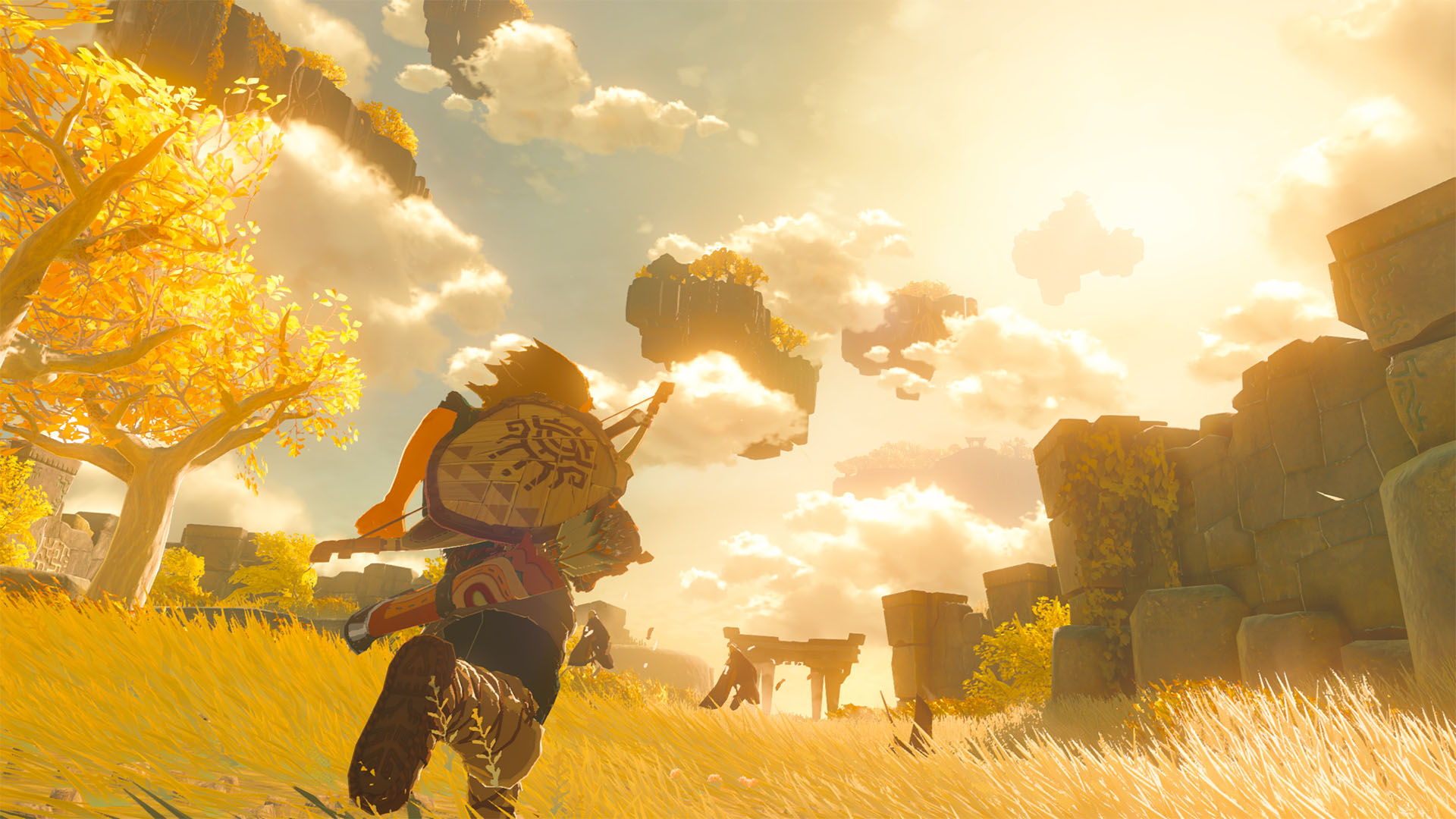
The Legend of Zelda: Tears of the Kingdom

I feel like I really shouldn’t have to explain why I’m excited for The Legend of Zelda: Tears of the Kingdom considering its predecessor is probably one of the greatest games of all time, but I’ll give it the ol’ college try.

I’ve never been a big Zelda guy, but Breath of the Wild was such a phenomenal experience that dropped you into a painterly version of Hyrule with the simple goal of ‘stop Ganon.” You could always look toward the castle to see wisps of his menace swirling around and encompassing it just begging for you to come and square off against the horrors within. But before you’d even attempt to tackle that, you could see seven other interesting places to explore, all of which led to several more.

Breath of the Wild represents the pinnacle of motivating the player to explore their surroundings and all I can hope for from a sequel is more of that. More places to see with more tools at my disposal to explore them. I’d also super love to not have to worry about weapon degradation anymore. I know that’s a common complaint and hot debate topic amongst fans, but for once I’d like to see Nintendo give a shit about their players and offer some accessibility options, specifically one that lets me use the Master Sword as much as I want without having to go through hell to do it. The Legend of Zelda: Tears of the Kingdom allegedly comes out on May 12th of 2023, but I won’t hold my breath.
Suicide Squad: Kill the Justice League

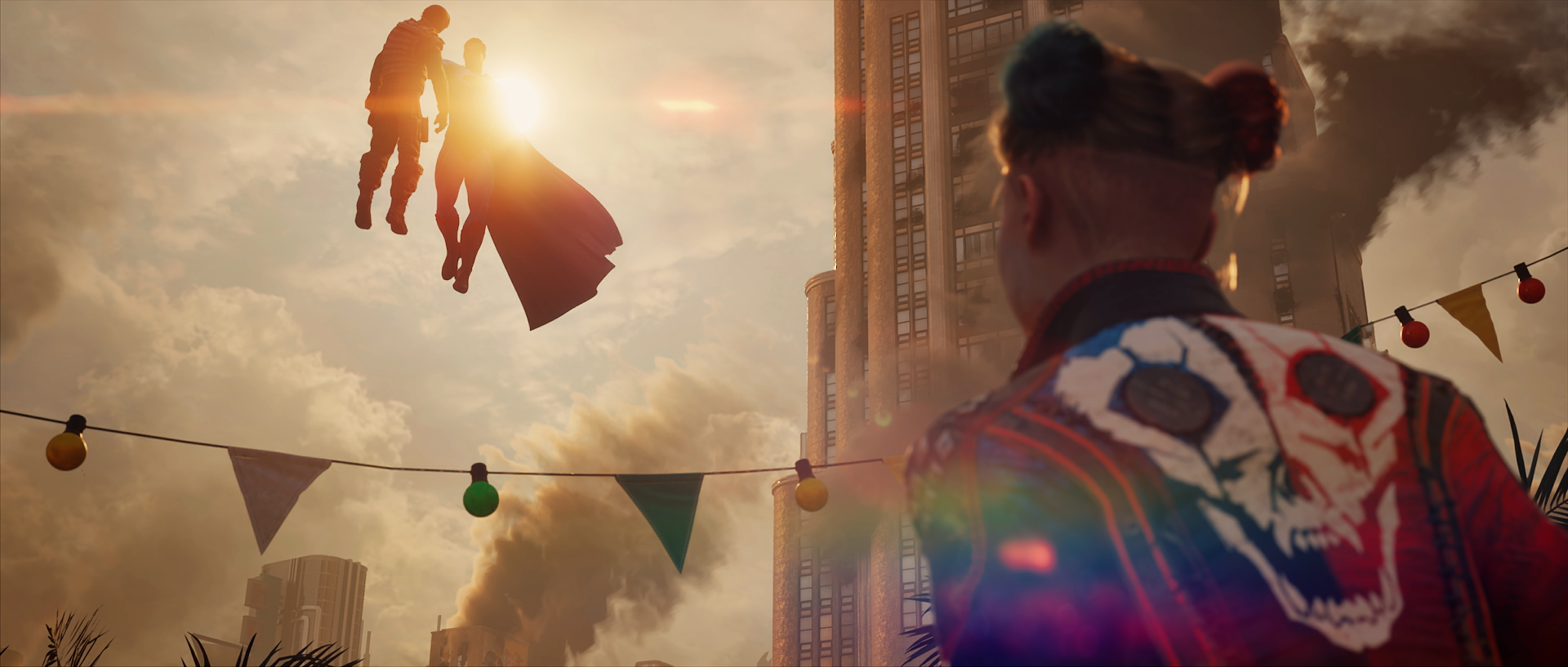
I’m not gonna sit here and pretend that I’m a big fan of the Suicide Squad or anything, but I’ve certainly been won over by what little I’ve seen Suicide Squad: Kill the Justice League. Granted, there hasn’t been a ton of gameplay or anything for me to reference, but I trust Rocksteady Studios’ ability to make compelling gameplay so much that I’d play a game solely about Calendar Man if they made it.

In Suicide Squad: Kill the Justice League, you play as one of 4 members of the Suicide Squad, Harley Quinn, Deadshot, King Shark, or Captain Boomerang, as you square off against a Brainiac controlled Justice League that’s doing some real nasty shit. I don’t know too much more about it other than it’s cooperative, but will fill in computer controlled allies where you need them which will come in handy when you can’t find anyone to play as Captain Boomerang, a character I know nothing about aside from his dumb name.

I’m excited to play this game because I’m a big fan of the Arkham games and trust that Rocksteady is going to make something that’s fun to play. As long as they don’t add some boring but mandatory Batmobile-tank battles to Suicide Squad: Kill the Justice League like some other Batman games, I think it’ll be a great time. They say it’ll be out on May 26th of 2023, but I’ve been lied to before.
Baldur’s Gate 3

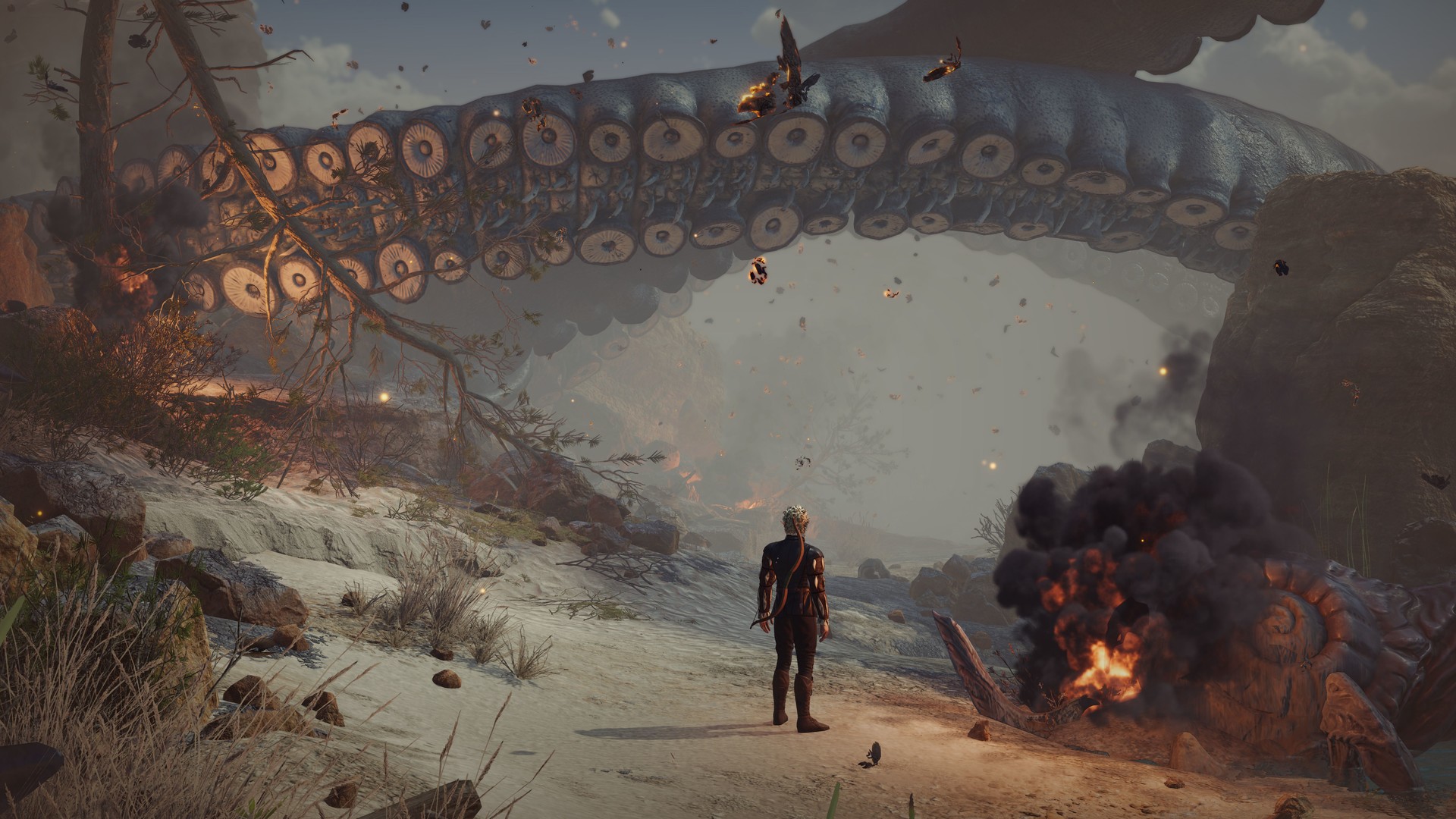
This one’s interesting because I’ve already played Baldur’s Gate 3 back when it released into early access approximately 14 years ago and liked it despite its rough, buggy busted-ness. I made the conscious decision to not play it until its full release because every major update brought with it a wipe of save files and I didn’t want to deal with that, so I just put it back on the digital shelf so it could marinate longer.

But now Baldur’s Gate 3 has a projected release window for August of 2023, and once it does I’m fully anticipating losing a lot of hours of my life to what might become the best Dungeons & Dragons video game of all time, depending on who you ask. I for one have high hopes for Baldur’s Gate 3 because it represents the first real turn-based RPG I’ve ever really enjoyed, which is a colossal feat in itself.

The biggest thing for me about Baldur’s Gate 3 is that it’s using the 5th Edition rules, and since I’m fairly well-versed in those I’ve had a much easier time playing this genre of game without essentially having to learn two games at once. I just want a good way to play D&D without having to be a DM or even finding a group, and Baldur’s Gate 3 seems like it’ll fill that void for me.
Marvel’s Spider-Man 2

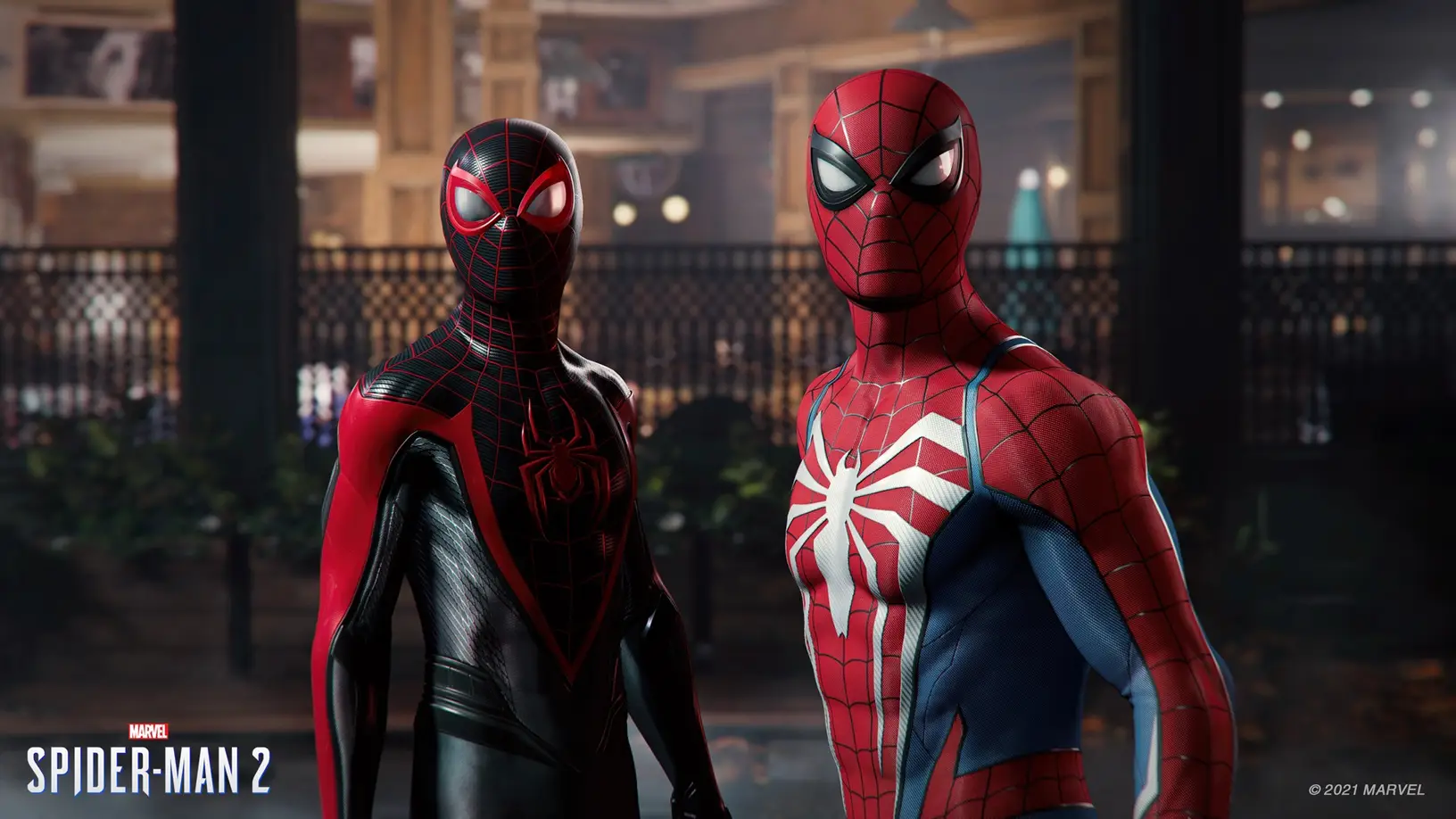
I really enjoyed both Marvel’s Spider-Man and Marvel’s Spider-Man: Miles Morales, so being excited for their inevitable sequel doesn’t seem like that much of a stretch. Insomniac Games already proved that they know how to make a mechanically sound Spider-Man game that can also deliver a compelling narrative, and that’s kind of all I want out of a sequel.

A lot of folks are clamoring for some sort of cooperative play between Miles and Peter, which would be cool for sure, but isn’t something that I need from Marvel’s Spider-Man 2. All I want from the sequel is a little more variety, both in terms of main story missions and side quests. Sprinkle in some new abilities and costumes, and you’ve got yourself a solid follow up to one of my favorite games of 2018.

But therein lies the exciting part, cause I don’t know what Insomniac could do outside of the things I’ve already listed in order to top themselves. I’m sure they’ve got something wonderful cooked up for players, but I’d sound stupid even attempting to predict what that could be. Sure I could theorize payoffs for the last game’s cliffhangers, but I’m more excited about what mechanical changes are implemented. I suppose I’ll find out at some point in 2023.

Mina the Hollower

For those unaware, Mina the Hollower is the next title from Yacht Club Games, makers of the tremendous Shovel Knight series. If Shovel Knight was their Mega-Man, then Mina the Hollower looks to be their Legend of Zelda: Link to the Past, which an incredibly exciting concept to me.

Full transparency: I backed Mina the Hollower on Kickstarter because it not only looks dope as hell, but is being made by a studio I trust. What really sold me in its initial pitch was the core mechanic of digging through the earth as a quick means of transportation, hence the ‘Hollower.’ That coupled with the variety of weapons, enemies and zones in the world made it really easy to throw 20 or 30 dollars at this unfinished product.

As I’ve mentioned, I’m not really a Zelda guy, but as I’ve essentially screamed at the top of my lungs twice already, I think Yacht Club Games could be the ones to finally make that math work out for me. It doesn’t have a concrete release date just yet, but they’re aiming for 2023 at the moment, but something tells me that date wont stick.
Starfield

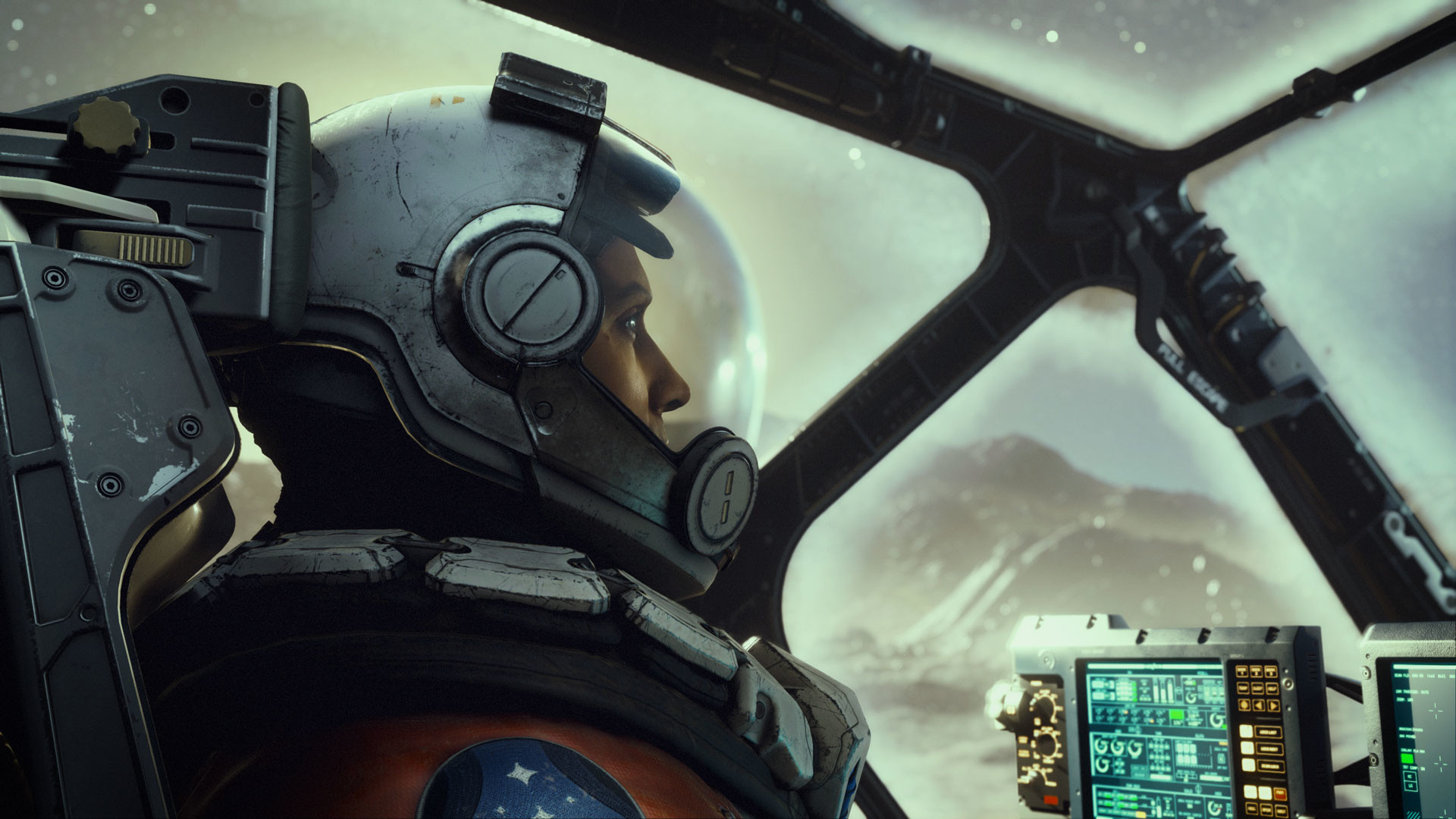
Call it wishful thinking or misplaced optimism, but I really hope that Starfield is good. My feelings about Bethesda as a competent game maker aside, I would love for a good sci-fi RPG cause I haven’t had one of those since Mass Effect was set in the Milky Way. I guess The Outer Worlds was pretty good, but it didn’t really leave a lasting impression despite really enjoying it at the time.

What excites me about Starfield is the fact that it’s a fresh start in terms of lore. Despite enjoying some of the Elder Scrolls V: Skyrim, I could not tell you much of anything about that world because of how dense the lore was. I can’t say for certain, but it definitely felt like I was missing a lot of context for the universe by not following the series since its inception. Starfield represents a chance to get in on the ground floor and have Bethesda introduce not just myself, but everyone to this new setting.

Aside from lore, I just hope that Starfield isn’t as buggy and busted as some of its predecessors, a thing that most fans seem to find endearing for some reason. I also wouldn’t mind if the shooting was good. I get that it’s an RPG first, but there has never been anything less satisfying to me than shooting a character in the head being met with them just losing slightly more health. I mention this because as a sci-fi game, I would expect Starfield to rely more on gunplay than Fallout did, which I would hope would result in weightier combat, but what do I know? Those and other questions are bound to be answered when it releases sometime in 2023.


This list could have been a dozen or so more entries long, but these are kind of the big ones that I could think of from where I’m at in 2022. I’m sure a bevy of things will be announced and released as the year progresses that I’ll be equally excited for. There’s also the possibility that something on this list will slip into 2024 which would be insane considering most of these games already have been delayed. But hey, I’m sure we’ll talk about that stuff as it comes up during the year.
My Top Games of 2022

Between unemployment and being depressed, I had a lot of time to play video games this year, and while I did play a decent amount of titles only a handful of them really left a lasting impression on me. More accurately, these were the games this year I remember playing and thinking, “yeah, I had a good time with that.” So in no particular order, here are my favorite games that I played this year.


Tunic

When I think back on my time with Tunic, also known as the cute fox Zelda game, I tend to remember a lot of the negative things first, like how difficult and incongruous the combat felt in comparison to the rest of the game. I remember feeling frustrated at the lack of direction and general ambiguity of everything that was happening. I remember feeling lost and confused, almost like I wasn’t smart enough for Tunic and should just give up and stop playing.

But then I remember the many “Oh shit!” moments I had with Tunic, where I’d figure out how to navigate a seemingly impassable part of the map and felt like the smartest person in the world. I remember finding pages for and utilizing the in-game manual to complete puzzles and shed some light on what the hell was going on in this world. Every low moment I had with Tunic was eventually followed by some satisfying high that would carry me over and past each of these peaks and valleys.

Tunic was a game that genuinely challenged me even after I adjusted the accessibility settings to nullify the challenge of combat. Tunic is filled to the brim with mysterious secrets that lead to wondrous revelations, most of which I pretty much understood. My only complaint with Tunic is that its combat didn’t need to be as punishing as it was, as it detracted from the real treasure of the experience, which was exploring and uncovering every little secret Tunic had tucked away.

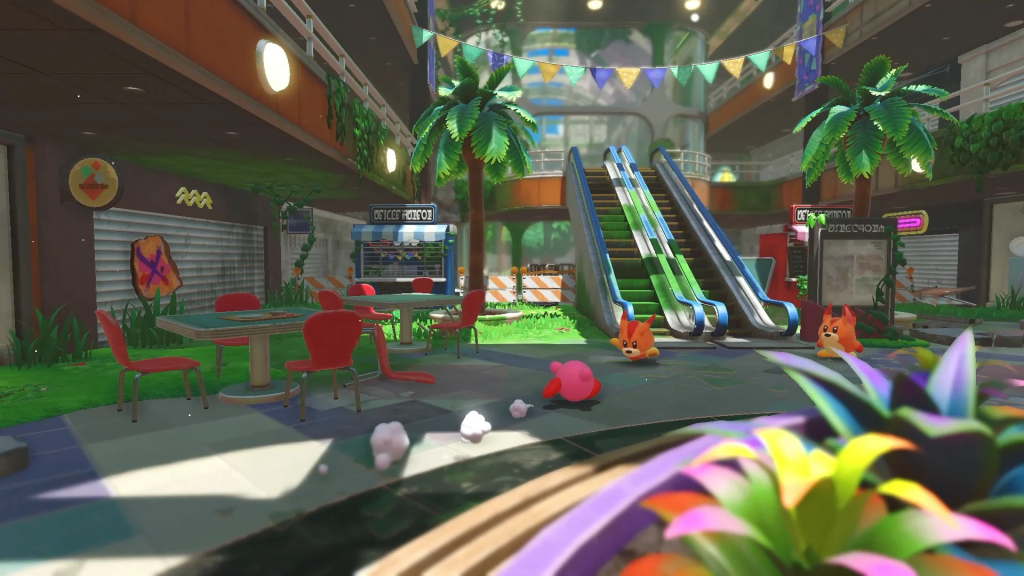
Kirby and the Forgotten Land

Kirby and the Forgotten Land isn’t the most difficult or complex game I’ve played this year, but it didn’t need to be. Kirby games are usually a lightweight and breezy experience, and this entry was no different. Kirby and the Forgotten Land was a cozy little 3D platformer that was oozing with charm which is something I needed this year. It was a fun, low-stakes game that I could mindlessly play, stopping to occasionally appreciate its lovely art direction and endearing character design.

There’s a surprising amount of stuff crammed inside of this Kirby game, from some very light upgrade mechanics that alter and change the effect of the powers you suck up, to these challenge levels that test your abilities to control and utilize said powers effectively within a time limit. In addition, each level has a set of challenges or collectibles for you to tackle and collect, granting you additional upgrade resources and currency for the rest of the game.

Kirby and the Forgotten Land isn’t the Mario 64 of Kirby games, but it is a lot of fun and a fresh take on the Kirby formula that’ll scratch that platformer itch I know you’ve got.

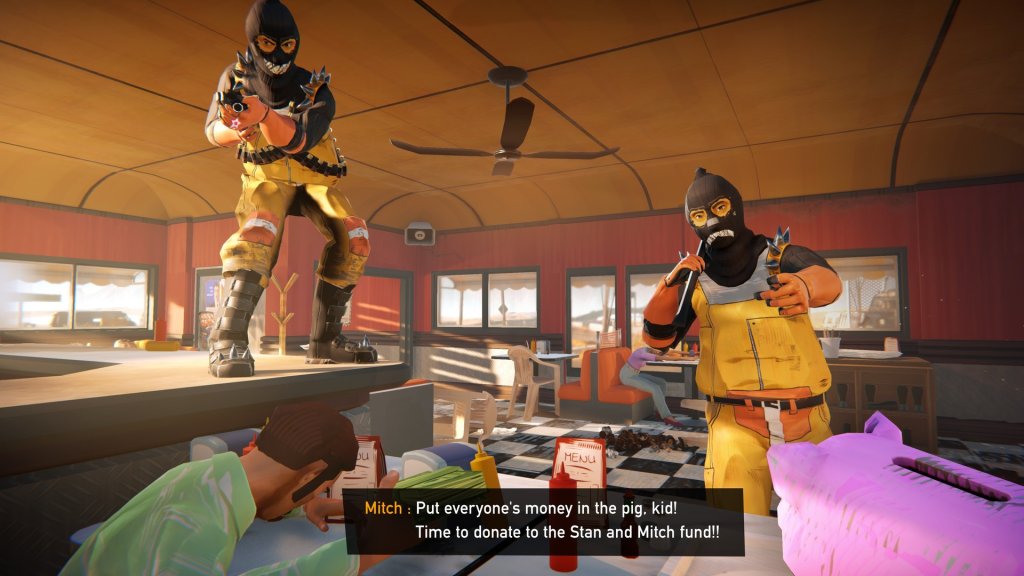
Road 96

A setting where a fascist dictatorship violently tamps down on dissent and propagandizes its populace through an overly complimentary ‘news’ network might seem like an odd backdrop for a teenage coming-of-age adventure game, but it actually works surprisingly well.

In Road 96, you play as a series of unnamed teenagers who are hitchhiking their way through their terrible country in the hopes of crossing the border and fleeing into a less oppressive country. On its surface, the game almost presents itself as a roguelike because you’re essentially making runs on the border as different characters, but there is cumulative story that concludes despite which character you choose for each run.

On your journey you’ll run into a reoccurring cast of weird and fairly complex characters, aiding or avoiding them all in service of gaining cash and inching closer towards freedom all while keeping your morality intact. It’s a game about making choices and living with the consequences, and it was one of the more memorable experiences I had this year.

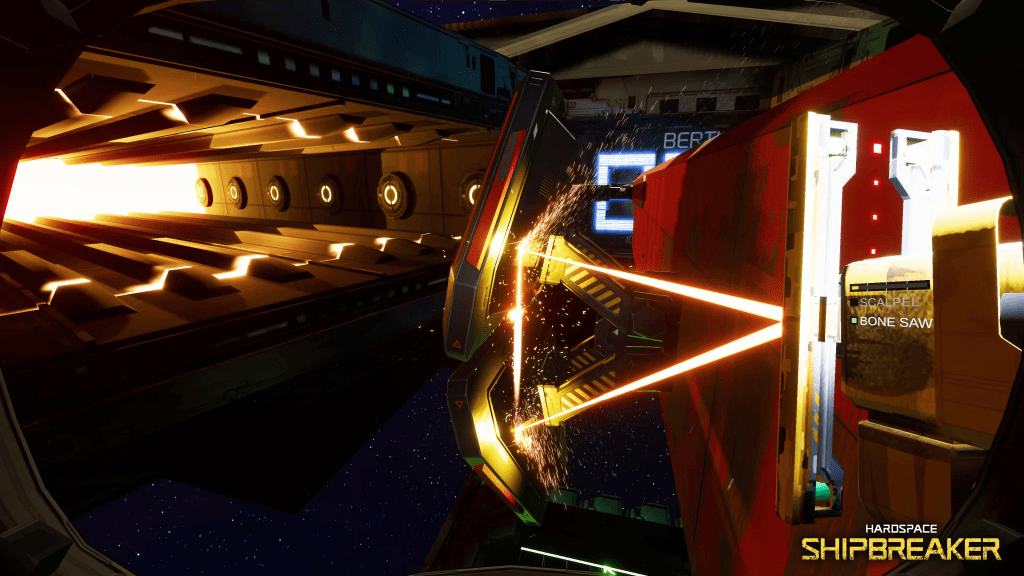
Hardspace: Shipbreaker

Hardspace: Shipbreaker is a game about safely deconstructing and salvaging spaceships with cool laser beams. There’s some other stuff about working in a future capitalism-ravaged hell-scape where you’re paying off a massive debt to the demolition company, but none of that is particularly interesting or necessary to enjoying the simple act of safely demolishing a space ship. It has this zen-like quality where you fall into that zone you get into when you’re doing your job and doing it well, as if it’s second nature to you.

The default mode in Hardspace: Shipbreaker puts some oxygen and fuel restrictions on you that I found to be more restrictive than I wanted, but luckily you can toggle that stuff off or just play in a free-mode with no restrictions, which I’ve found to be the optimal way to play the game. I find that disabling those restrictions lends it a more puzzle game feeling that’s far more satisfying than having to juggle the light survival mechanics.

The pacing in Hardspace: Shipbreaker is a little off, as the first few hours of the campaign don’t really afford you too much variety in ship types or tools to use, but after enough time that eventually starts to change. But aside from that tiny quibble, I’ve got nothing but praise for the slow and methodical gameplay of Hardspace: Shipbreaker.

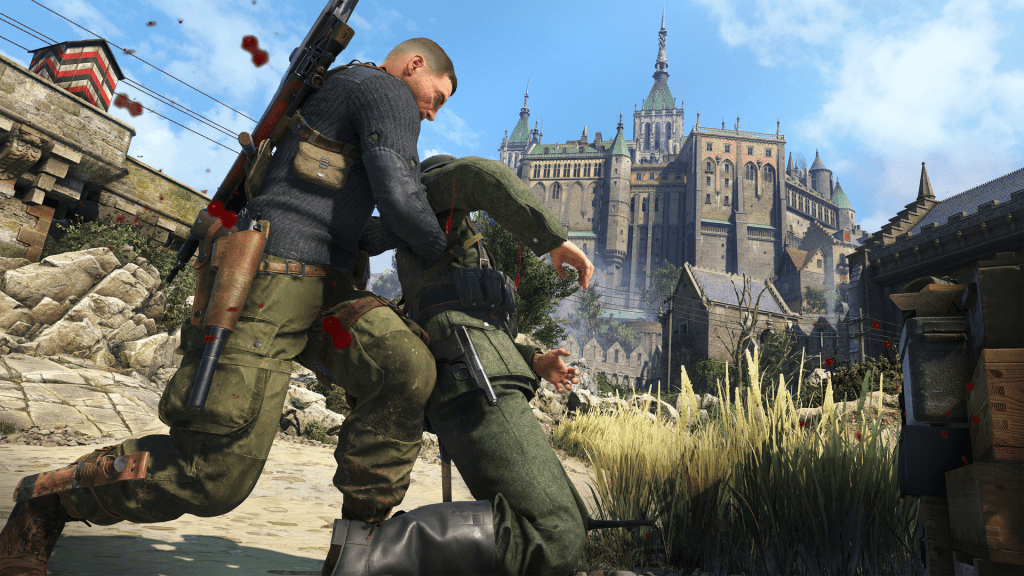
Sniper Elite 5

Sniper Elite 5 doesn’t reinvent the Sniper Elite formula, but it was one of the most fun cooperative gaming experiences I had this year which is mainly why it’s on this list. While the slow motion bullet-cam is still as exciting and gruesome as ever, but what really made this entry come alive was how flexible it was in catering to different play styles. More specifically, it allowed me to watch from a safe distance as my cooperative partner charged into overwhelming odds and chained knife-takedowns on hostile Nazis, thus obliterating any and all sense of stealth that might be implied in a game called Sniper Elite 5. It was frustrating to watch, but hilarious to experience.

The best thing about Sniper Elite 5 is how much of a perfect platform it was for my friend and I to make each other laugh, which we did a lot of. It’s a game that you don’t have to really think about too much because the objective is simple: destroy all Nazis. Knowing that core mission left ample opportunities for us to perform comedy bits with each other as we bumbled our way through the sprawling levels, completing objectives in our own ways and more often than not, screwing over the other player because stealth was never an option.

PowerWash Simulator

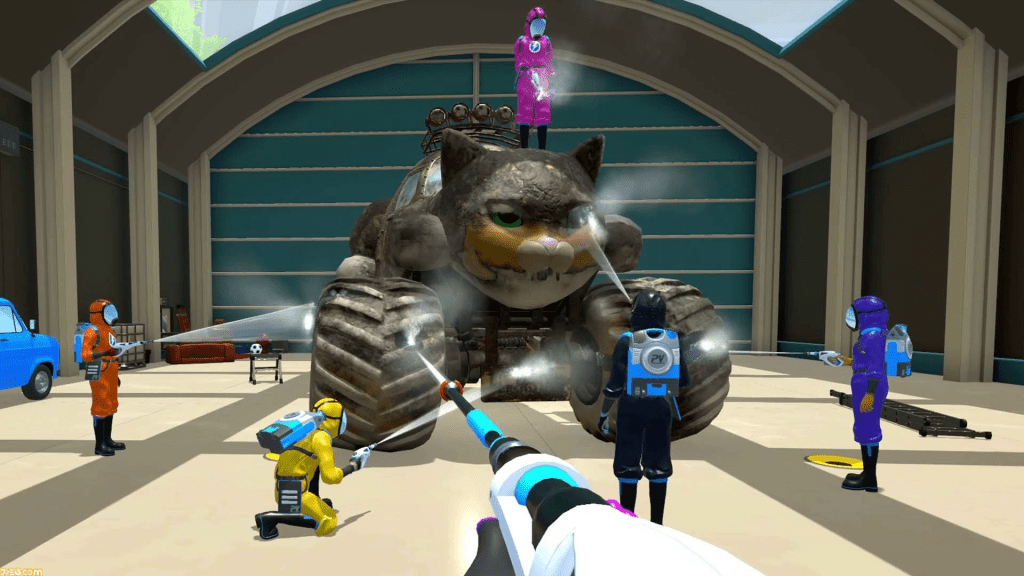
Much like Hardspace: Shipbreaker, PowerWash Simulator is one of those meditative, ‘lose four hours of time’ kind of games that has you doing something mindless yet incredibly satisfying. In this game you blast grime and dirt off of the filthiest structures and vehicles in the world, utilizing stronger power washers, nozzles and soaps. That’s it. That’s the whole game. There’s a story, but who really cares about that? There is something borderline indescribable about PowerWash Simulator that makes it easily one of the best games I played this year.

Aside from its cutting edge dirt-tech, something that I’ve just made up, it doesn’t look especially great nor does it run flawlessly, but it lets you and your friends come together to methodically blast the cruft off of things, and that’s good enough for me.

NBA 2K23

Without question, the games that I end up putting the most time into year after year are in the NBA 2K series, and this year’s entry might be one of my favorites, ever. NBA 2K23 is the latest in a series of basketball simulation games that seems overly eager in siphoning as much cash away from you as it possibly can depending on what modes you play. If you’re like me however and don’t play those modes, opting to stick with the tried and true franchise mode, this is another solid iteration that still has some of the same lingering bugs as it did 3 years ago.

But what really changes everything for me is the ‘MyEras’ mode, which is basically just your standard franchise mode, but you can start it in the ’80s, ’90s or early 2000s. It isn’t a perfect mode, but it is the only thing I’ve been playing in NBA 2K23. The game reskins the courts, jerseys and imports the appropriate draft classes all while implementing historical changes as they happened, such as ripping my precious Nets away from me and taking them to Brooklyn. NBA 2K23 is one of favorites cause it lets me play in the time period I’m most familiar with, which is something I never thought would happen.

Vampire Survivors

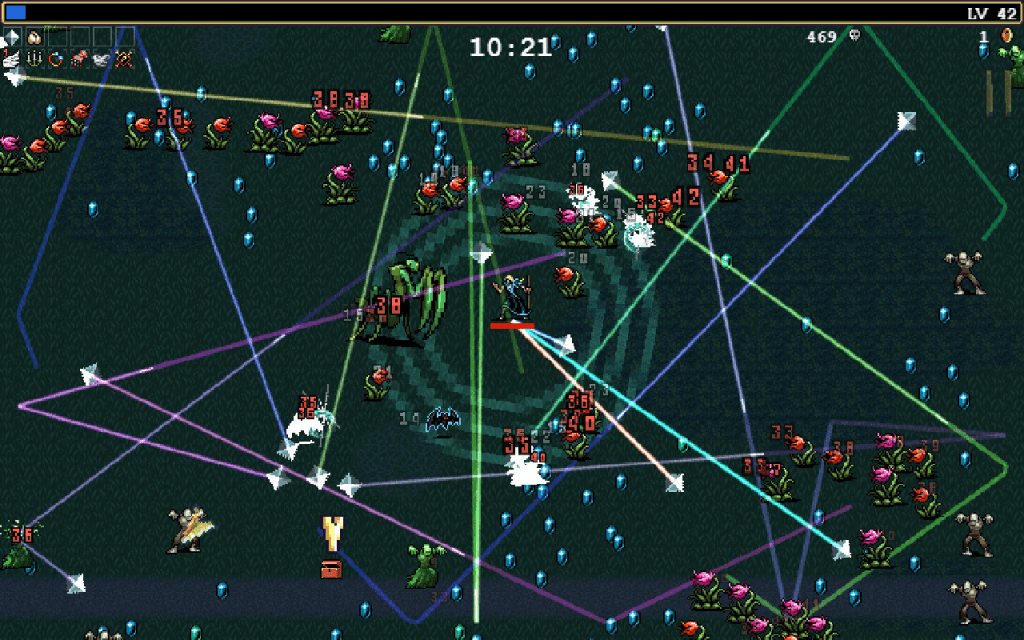
I don’t know that there’s a game that I’ve played this year that so deeply sunk its fangs into me like Vampire Survivors did. Never would I have guessed that a roguelike would ever capture my interest for more than a few runs, but Vampire Survivors is the game I keep wanting to play above anything else. Which is crazy considering the only control you have over anything in the game is moving your character and selecting your upgrades.

As you level up during a run, you are presented with a random array of weapons and buffs to choose from, one per level. Combining the right items and leveling them up can create some devastating effects that let you feel like an all-powerful demigod projecting an impassable zone of death around you that vaporizes any enemy the moment they stupidly enter it.

It also takes a lot of weird turns which is a crazy thing for me to say about a game with no real story or lore, but it still found a way to toy with me when I felt like I ‘got’ the game. Ultimately, what I’m saying is that you should 100% try this silly little arcade game if you haven’t, because it’s way better than it has any right to be.


Vampire Survivors is the Only Roguelike I Like

I remember booting up Vampire Survivors for the first time a few months ago and feeling genuinely confused as to what I was doing, why I was doing it, and why people were raving about it. Here was this pixelated, barely animated game where the only control I had was movement, making for a digital version of ‘keep-away’ that didn’t seem engaging or particularly interesting. Fast forward to 20 hours later, and that silly little game turned into a genuine obsession of mine.

Vampire Survivors is a fairly simple game that as mentioned, only allows you to directly control the movement of any of the characters you select, making your only goal to bob and weave your way through endless hordes of enemies as your weapons and magical effects automatically fire. The key to survival and success lies in gobbling up as much XP as you can so you can unlock and upgrade as many powers as you can, from multiple projectiles, increased health, speed and range augments, and so much more.

Finding the right build is necessary to tackle the endless swarm of enemies that descend upon you, increasing in strength and numbers as you grow and spend more time in a level. From run to run you’re earning money that you can spend on permanent upgrades like health regeneration and speed boosts, along with new characters and mods that augment the general flow of a run. Think of the ‘skulls’ in the Halo games, except they aren’t brutal like Halo‘s were.

The game is fairly simple in terms of minute-to-minute action, but in that simplicity I found a game that perfectly slots into my lifestyle and what I’m looking for. Vampire Survivors can run on basically anything which is good considering I like playing it on the couch, away from my console and desktop, on a laptop from that barely runs Windows. Runs are also pretty short and consumable, lasting 30 minutes unless you beef it sooner. After 30 minutes elapses, a giant Grim Reaper appears, explodes all other enemies on screen and rushes at you, killing you in an instant. I do believe you can defeat the Reaper if you have the right build, but I haven’t achieved that just yet.

I think what really made Vampire Survivors earn a spot in my regular game rotation is how good it is at making you feel incredibly powerful without actually having to do much of anything aside from choosing which upgrade to take when you level up. That feeling is doubled when you unlock an evolved version of a power, which happens if you choose two complimentary weapons or boosts and level them up, eventually leading to an ‘evolved’ version of those weapons, some of which can feel genuinely overpowered in the best way possible. For instance, levelling up the garlic weapon, which projects a damaging shield around you, along with the health restoration buff, turns into a massive black zone around you that saps enemy health and gives it to you.

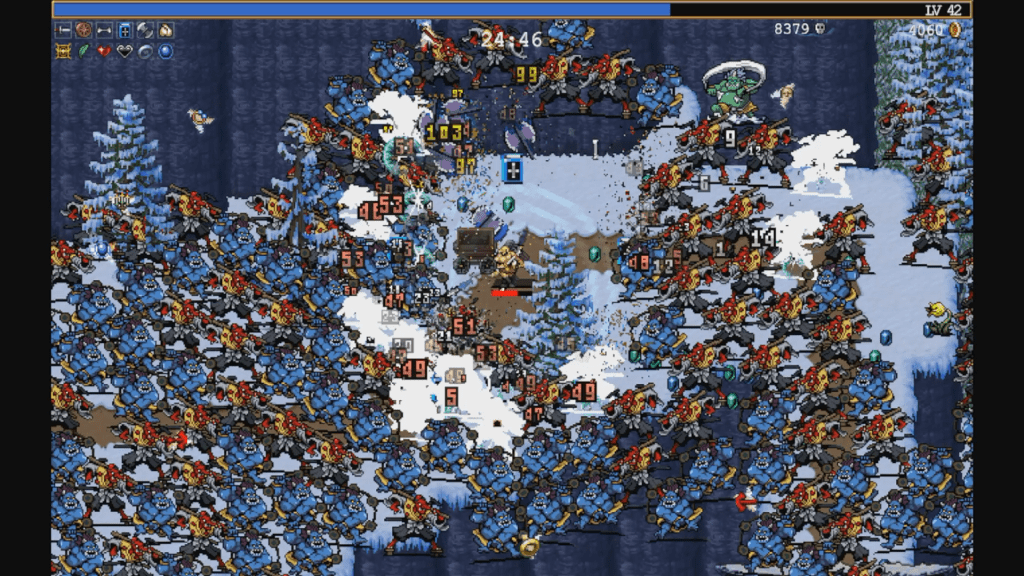
Even better is when you stack up a couple of these evolved abilities and instantly become this whirling dervish of death, clearing out swaths of enemies and projectiles who dare to approach you. And that feeling lasts for a good ten levels or so before you realize that because you’re so efficient at mowing these ding-dongs down, they’re getting stronger and heartier too.

I’ve probably put in about 15-20 hours into Vampire Survivors at this point, and just when it was starting to feel a bit too repetitive, I discovered a new character with completely new weapon that I had never seen before. It doesn’t sound like much, but after spending that much time with the same handful of abilities, seeing a new one completely changes things for me. Like, what does that one evolve into and how do I accomplish that? How many more things are there for me to discover? It turns out there’s a whole lot of stuff hidden away in Vampire Survivors just waiting to be found.

What’s really nice about Vampire Survivors to me is the feeling of progress it gives me from run to run. So far the basic structure of the game has been involved me heading into a level and trying to follow the big green arrow that points towards some objective, usually an item or some boss to fight. Once I clear the handful of objectives from a level, all of which do not have to be completed in a single run, the next level is unlocked and I can move on to tackle that one. All the while you’re drowning in coins that you can use for more buffs and characters, adding slight variations into each subsequent run.

I guess this is how other people feel about roguelikes, but I’ve never had one resonate with me in this kind of way. Usually I get frustrated by the lack of progress or I get caught up in this feeling of futility by constantly failing, but Vampire Survivors allows me to feel like I’m doing so well they have to literally cut me off after 30 minutes before I destroy the universe or uncover the secret of why a game called Vampire Survivors contains no vampires.

Questionable Comedy Undermines High on Life’s Solid Gameplay

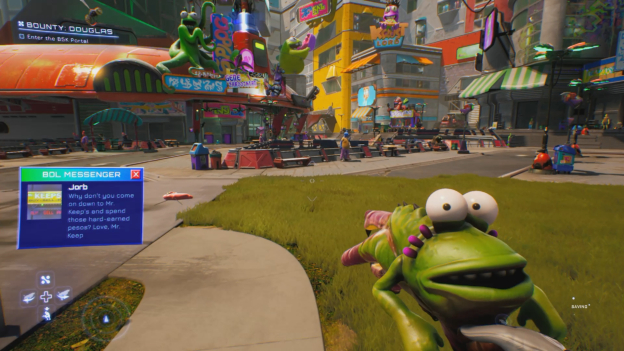
High on Life is the latest game from developer Squanch Games, a studio you might know for titles like Trover Saves the Universe or Accounting, but you’d probably know it better as the game studio that Rick and Morty creator, Justin Roiland created. High on Life is a surprisingly competent puzzle-platforming first-person shooter that just so happens to be mired in some of the most divisive, hit-or-miss comedy I’ve ever seen.

High on Life is a first-person shooter blended with a Metriodvania that places you in the bounty hunting shoes of a human who manages to escape an alien invasion of Earth thanks to the help of constantly chattering alien pistol that you find during the attack. Your whole house becomes your spaceship as you’re transported across the galaxy to the city of Blim, where you set out on your quest to hunt down and kill those who invaded your home.

I’m not a fan of Rick and Morty, which isn’t to say I hate the show or anything, I just don’t like it enough to want to watch it. It’s fine. But with my limited knowledge of the show, it’s already clear that a 22 minute episode is a much better platform for Roiland’s humor than a 15 hour video game. It also doesn’t help that a lot of the chatter coming from the NPC’s quickly devolves into expletive-laden ramblings about jerking off.

To use my favorite idiom, High on Life throws a lot of spaghetti at the wall, except in this case the spaghetti is jokes and you’re the wall. While I’ve found most of it doesn’t stick, some of the jokes land, eliciting a chuckle or chortle here and there. But a lot of it hasn’t really connected with me, because Roiland’s sense of humor involves making a joke at you and then continuing that joke for way longer than it needs to go on for until you feel uncomfortable, almost as if the joke says, “certainly I’m funny now, right?”

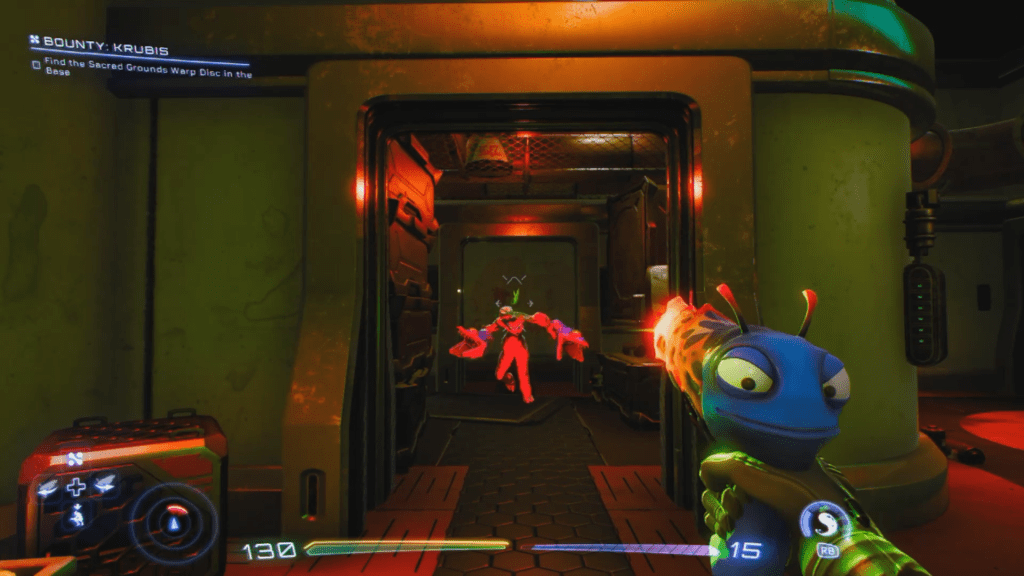
The humor being so divisive really undermines the fact that there’s a pretty decent game being underneath it all. The gun play, while nothing special, is serviceable and satisfying, with more weapons and upgrades being layered in at a steady pace. High on Life offers players a good amount of variety in how they can dispatch enemies by giving them weapons that have multiple functionalities. For instance, the second weapon you unlock, Gus, operates as a standard shotgun, but when you aim down sights it sucks in enemies like some murderous vacuum, making it perfect for dealing with scurrying or flying enemies. It also has another ability to shoot out saw blades that both act as platforms for you to climb to, but as normal saw blades that’ll cut dudes down.

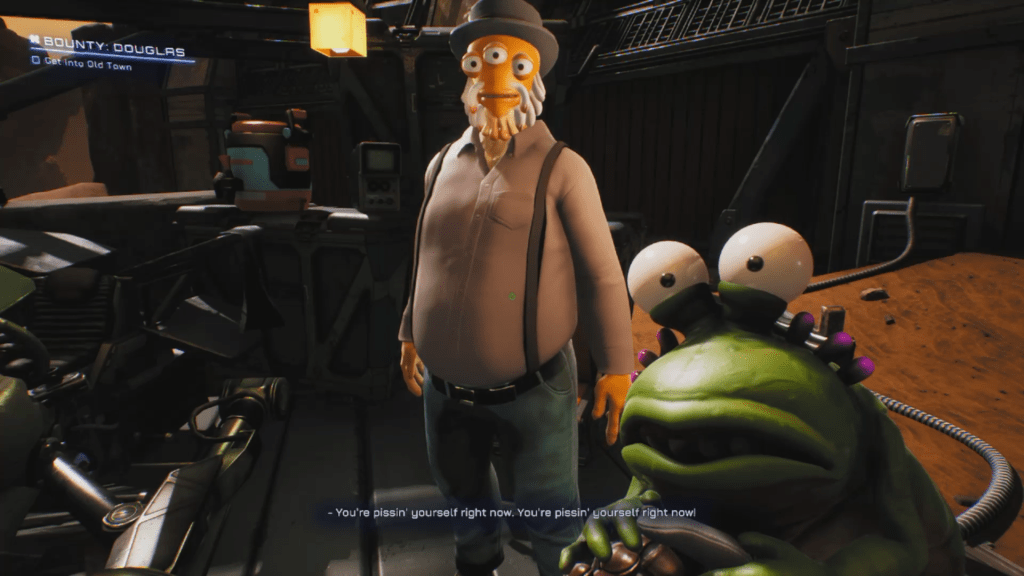
The two main issues with High on Life stem from its rough humor and slow building introductory sequence. It makes a bad first impression from a gameplay perspective because of how limited you are in your abilities. It takes maybe about an hour or so to unlock a melee attack and grappling hook, which doesn’t sound bad until you realize that most of that hour is spent listening to Roiland’s cast of characters do comedy at you, cursing and making dick jokes the whole time. That first hour really tested my patience with this game, but now that I have more options at my disposal, things are getting slightly more tolerable.

One thing I can say for sure is that everything in the game, not just the talking weapons, talk way too much. I get that Roiland’s thing is making very long running gags, but everything in this game is just far too verbose for their own good. Every conversation is infinitely longer than it needs to be, which is a problem when everything has something to say at you.

Game Pass is the best place for a game like High on Life to launch, because your enjoyment of it will hinge on whether you’re either into or can tolerate the humor enough to trudge forward. While decent already, I imagine the gameplay can only improve the further I progress thanks to additional weapon and ability unlocks, but I’m really curious to see how the humor holds up over time. I hope it gets better, but judging by how things are right now, it probably will go the other way. It’s kind of like watching a train wreck that you just can’t look away from, except the train is constantly saying “fuck” and is shaped like a ding dong.

The Master of Disaster – Derelict Worlds

I’m about two years into running my Eberron-themed D&D5e campaign which is finally nearing its conclusion, signifying not only the first long-term campaign I’ve ever run actually ending naturally as opposed to flaming out, but also represents the opportunity to start crafting our next adventure, or in my case the next several adventures.

I like crafting new worlds for every campaign that I run, preferably something that compliments and plays more of an active role in the storytelling rather than just operating as a backdrop. With Eberron, I was able to use the existing setting fairly well by having the players cross through into and explore the untamed arcane landscape known colloquially as The Mournlands. This area of the map is nebulous and not very well defined by design, allowing game masters to plug in whatever they like into that area, which I most definitely have.

I’d like to think I’ve been successful in cramming a somewhat compelling story to into the blanks that the book provides, but I’m still playing in someone else’s world and clashing with the rules therein. So I opt to build worlds of my own with histories and rules that I know because I’m making them up as I go along. If I don’t have an explicit answer for something that might come up while playing, I can confidently make something up without worrying too much if I’m contradicting some already established lore.

The problem is that I never seem to get too far in the construction of a world before getting distracted and moving onto something else. It’s resulted in at least a half-dozen derelict and malformed worlds that lack any real definition outside of one or two cities and some historical events. Sometimes there’s a map involved and sometimes there are even quests and characters, but that’s about as far as I’ve gotten before I try to develop something in a completely different setting.

Most of the time I’m leaping from design to design based on some theme I’d like to play around in or some new mechanics I’ve found. Like when I finally received my copies of Orbital Blues and Death in Space, I was eager to craft a universe filled with planet-hopping adventures and rampant capitalism based oppression but flamed out on that when I realized that making an explorable universe is hard.

There was also the time where I replayed Red Dead Redemption 2 and was deeply inspired to create a wild west themed game, but I couldn’t find a set of mechanics I liked to match it, so that concept died on the vine and gave way to something else that I never finished. I think I also just wanted a game that allowed me to do a bunch of cowboy accents, which was a bigger part of my motivation than you’d think.

Cyber punk, solar punk, Victorian, high and low fantasy, modern day and so on and so forth, I’ve made and abandoned so many worlds and settings in favor of starting fresh with something else, all thanks to my ever wandering eye. I fully intend to finish at least one of these concepts if for no other reason than that I’ll eventually have to when it comes time to start something new, but until then these worlds can stay stagnant in the many, many Google Docs they’re spread across.

Somerville is Bewildering, Buggy and Beautiful

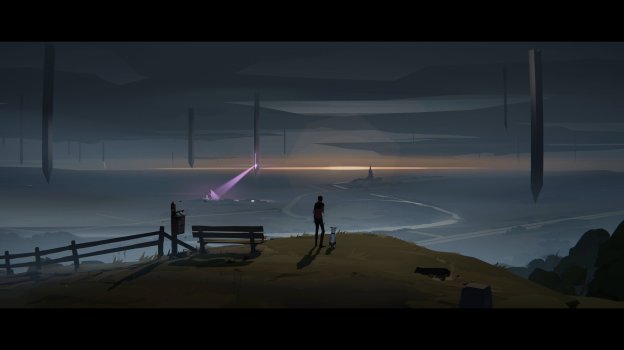
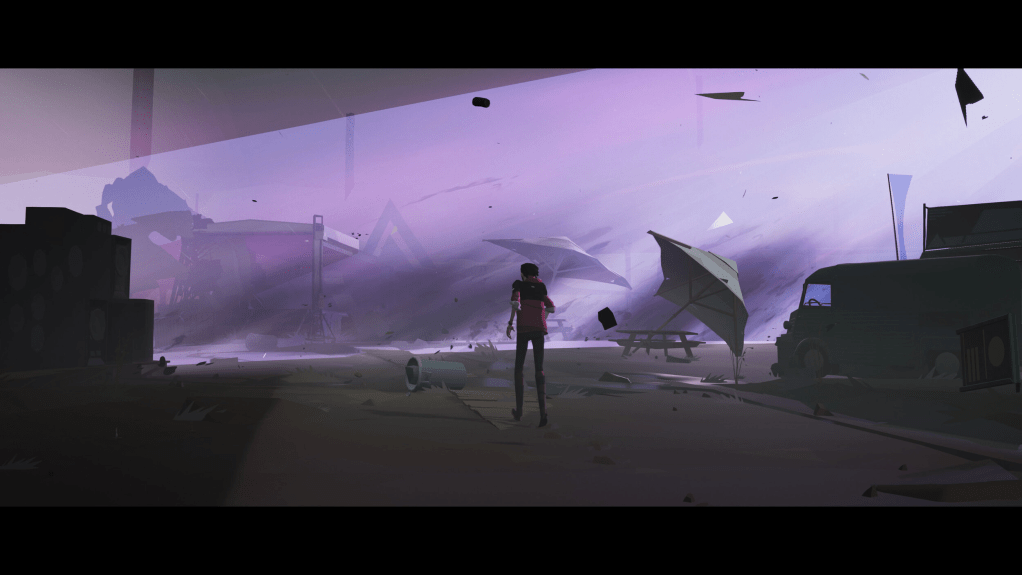
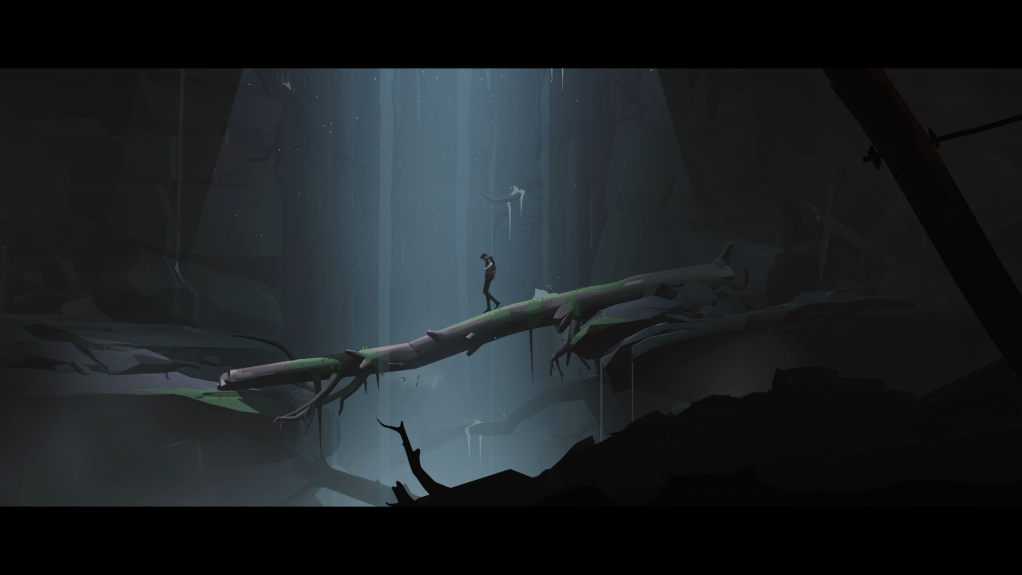
Somerville‘s hauntingly gorgeous atmosphere and visually impressive set-pieces aren’t enough to make up for its nebulous storytelling, uninteresting gameplay and painfully prominent technical issues. It only took me about five hours or so to roll credits on Somerville and see all of its multiple endings, but even after doing so I could not tell you a damn thing about what actually happened in the story, leaving me with more questions than answers.

Somerville is the first game from developer, Jumpship, helmed by some of the former leadership that was responsible for the cult-classics Limbo and Inside. It wouldn’t be completely unfair to compare Somerville to either of those games, but doing so would only serve to highlight how good those previous titles were and how underwhelming Somerville actually is. Just like those games, it’s a strikingly beautiful, dialogue free, puzzle-platformer, but it severely lacks the polish and direction of those titles.

Somerville starts out by upending the lives of a family and I suppose if you want to split hairs, the entire world, by having an alien invasion(?) take place and really muck up everything. The family itself gets separated after the protagonist comes into contact with what I think was an alien that crashed through the roof of his home, but in doing so you’re granted the first of two powers that you’ll use throughout the game. When unlocked, the two powers allow you to interact with alien technology in two different ways: liquifying or solidifying it. In order to actually do either of those things however, you need to interact with a source of light that can project your magic-alien-aura out over a manipulatable surface. On paper this sounds way cooler than it actually is, because in practice you’re mostly just making stairs or making tunnels for you to walk over and through. There were only a few instances towards the end of the game that really did anything cool with the mechanics and even those were short lived.

While lacking in the mechanics department, Somerville is very visually captivating. I may not know much about the lore of Somerville or the circumstances surrounding the events that took place, but the game does a great job of communicating a truly dreary and hopeless world. I remember the desperate beauty of a moment when I crossed a lifeless highway, traversing over, around and through the scores of abandoned cars that littered the pavement, and made my way into what looked to be a refugee camp of some sort where the survivors of this invasion were holed up in tents that filled the landscape. As I made my way through I saw the shadows of survivors moving inside of the tents, desperately trying to avoid being seen by either myself or the giant, human-abducting monolith that hovered in the sky.

Unfortunately that beauty is wasted on the gameplay of Somerville. Most of what you do in the game involves slowly trudging from one screen to another, sometimes solving simplistic light-based puzzles, and sometimes running away from the insta-killing alien robot dogs or giant sky monolith that serve as your only sources of conflict. The lack of polish becomes really apparent when you’re trying to navigate the levels during these escape sequences because you’ll often get hitched on something in the environment that breaks your momentum, sucking the tension out of these moments by having you run through them over and over until you find the correct path forward.

Somerville isn’t outstandingly bad or anything, the gameplay is perfectly serviceable but it suffers from numerous little pain points that pop up every so often. I was intrigued the entire way through Somerville just hoping that at some point the story would make sense and give me that “aha!” moment that I was waiting for, but it never did. Instead Somerville just gets weirder and weirder, leaving me with so many moments where I wondered why I was moving forward or what my character’s motivation even was. The whole game eventually culminates in a final sequence that can result in several different endings, none of which do a great job of explaining anything about what just happened or what state the world is left in.

Somerville feels like one of those games where someone eventually will come up with a really poignant interpretation of the game that will clarify the story, or someone is going to find some obscure detail in it that will recontextualize the whole world. It’s hauntingly beautiful at times, invoking genuine feelings of dread and hopelessness as you trudge from one dystopian landscape to another. But as it stands, Somerville is little more than a visually interesting game that’s underdeveloped both in terms of mechanics and polish.

The Master of Disaster Returns

It’s been quite a while since last we gathered here, so I suppose introductions are in order. For those of you who are new and don’t remember what this was, The Master of Disaster is kind of the tabletop roleplaying game zone of The Bonus World where one could find various stories, recommendations and tips mostly surrounding Dungeons & Dragons 5th Edition, which is probably going to continue to be the case going forward in what I affectionately call, The Master of Disaster.

Since we last spoke I’ve gone a little buck-wild in terms of buying new modules, supplements and games, all of which I have yet to read yet. When it comes to supplemental material, I started reading the new Spelljammer book in the hopes that it would provide for a more transformative D&D campaign, but the more I got into it the more I realized how little outside of a few new races and enemies was actually present. I was hoping for a more official version of SW5e, but Spelljammer turned out to be more flavor than substance, not actually adding any real mechanical differences to the world. It seemed like all the supplement did was add a new mode of transport that barely differentiates itself from sailing a boat.

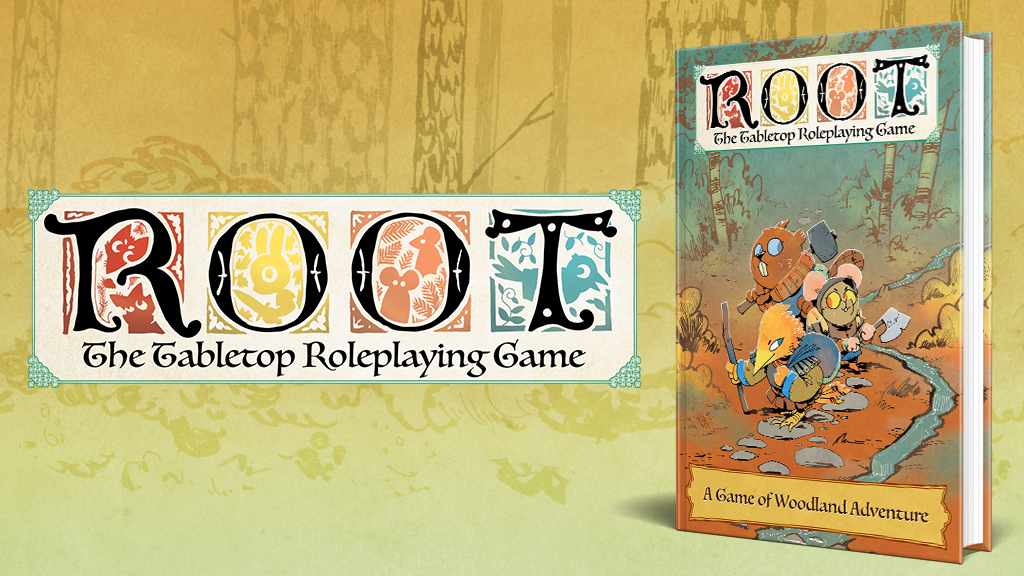
Additionally, I started reading through Root: The Roleplaying Game and found a world and story that seemed wonderfully fleshed out with some adorable and charming artwork, but didn’t excite me from a mechanics standpoint. Root: The Roleplaying Game places a big emphasis on managing faction reputation which seems like it could be fun for certain gameplay groups, but I don’t think mine would be onboard with that, nor would I want to really have to keep track of it. I wish that I could just get a Root: The Roleplaying Game supplement for 5e so I could enjoy that world using mechanics I was more comfortable with.

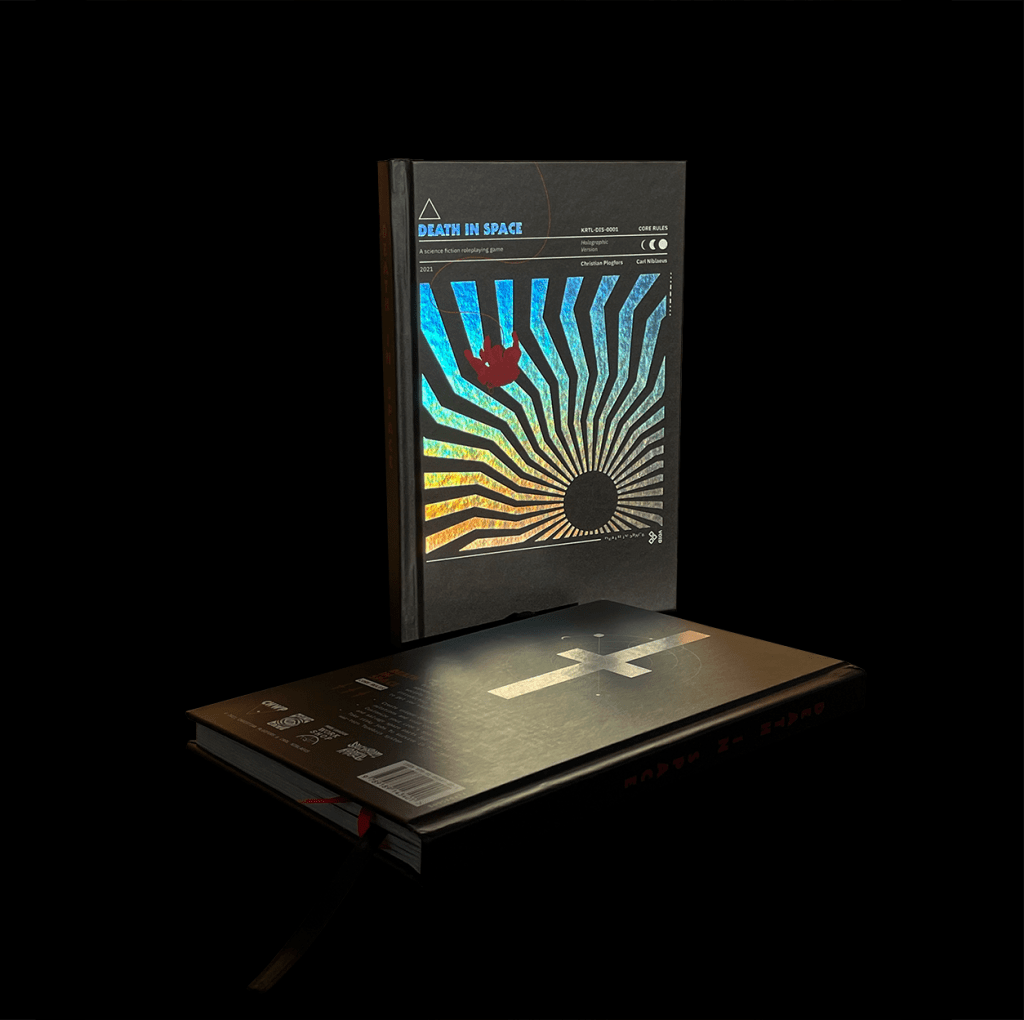
I also backed Orbital Blues, a game that describes itself as a ‘lo-fi space western RPG’ which sounds exciting, but is mechanically underwhelming. The book itself boasts gorgeous design and artwork, making it more likely to be a centerpiece on a coffee table than a game worth playing, which is a damn shame because there aren’t a lot of options for space western themed TTRPGS. I also backed Death in Space which also boasts awesome artwork, but I haven’t gotten around to reading it just yet so I don’t have much to say about it yet except it seems dope as hell.

I feel like good art has really motivated a lot of my purchasing decisions lately, but that hasn’t translated into me actually reading the book and running the game. A perfect example of that is MÖRK BORG, a game whose name is confusing, but has some of the sickest art I’ve ever seen. I’ve heard nothing but praise for the actual game itself, but once again it’s one of those things where I just haven’t had the time to dedicate to learning a new game system, let alone internalizing it well enough to teach other people how to play it.

The biggest slap in the face about this whole situation has been that the TTRPGs that I have taken the time to learn have all been one-page RPGs, mostly about animals doing non-animal things, such as Crash Pandas, a game about street racing racoons that are all operating a vehicle together simultaneously. Or like Honey Heist, a game about actual bears infiltrating ‘Honey-Con’ in an effort to steal a butt-load of honey while maintaining your cover as some people dressed as bears. These games are simple and easy to understand, but heavily rely on a good player dynamics and roleplaying, so they might not be for everyone.

There’s definitely stuff I’ve missed, but these are the bigger and more notable additions to my ever expanding library. Maybe one day I’ll actually use any of this stuff, but that would require me overcoming my intense and borderline crippling fear of actually having to run a game in-person instead of over the internet. So that’ll probably never happen.

Disney Dreamlight Valley has Taken Over my Home

I showed a real lack of willpower recently when I casually Googled and shortly after ordered an Xbox Series X despite having a Series S in my possession. I could give all manner of excuses for why I actually bought the dang thing, but the real answer is that I wanted one and it was available. With a massive new console in my possession I had to figure out what to do with the Series S that served as my primary console for the past two years, so I went ahead and plopped it in our living room, set up an account for my partner, installed some titles off of Game Pass I thought they’d enjoy and went on my merry way. Little did I know that I had just taken the first steps towards allowing a Disney-themed game monopolize all of their free time.

At first they just wanted to continue playing our cooperative game of the month, Battleblock Theater, but eventually curiosity got the better of them when I booted up Disney Dreamlight Valley, a game I promptly decided was not gonna be the next ‘big thing’ for me. But their affinity for Disney characters mixed with the slightly more mechanically rich Animal Crossing-esque gameplay loop must have resonated with them because all they wanna do now is hang out with Goofy, Elsa and a horrifying dead-eyed version of Mickey who never seems to close his mouth.

What first started as a vague curiosity has turned into something that resembles an addiction, but in a good way. When I first asked them about their feelings on the game I was met with a lot of, “it’s okay,” and “I just wanna see where it goes.” Recently however they’ve approached me with a gleeful sense of pride while asking, “do you wanna see what I’ve done with my town in that game?” I’ve even checked the Xbox app while I was on my lunchbreak and caught a certain someone tending to their village while ‘working’ from home.

I tease them about their newfound addiction but it genuinely makes me happy to see that they’re having fun with this console that I basically replaced with a bigger, stronger version. They’re a fairly casual gamer and to see them get hooked on a game the way I can sometimes get sucked into games makes me weirdly happy. I don’t know how to exactly explain it but it’s kind of vindicating in a weird way. It isn’t as if they judge me for spending time playing games or anything, if anything they’re incredibly supportive of my gaming hobby and the time and energy I spend on it.

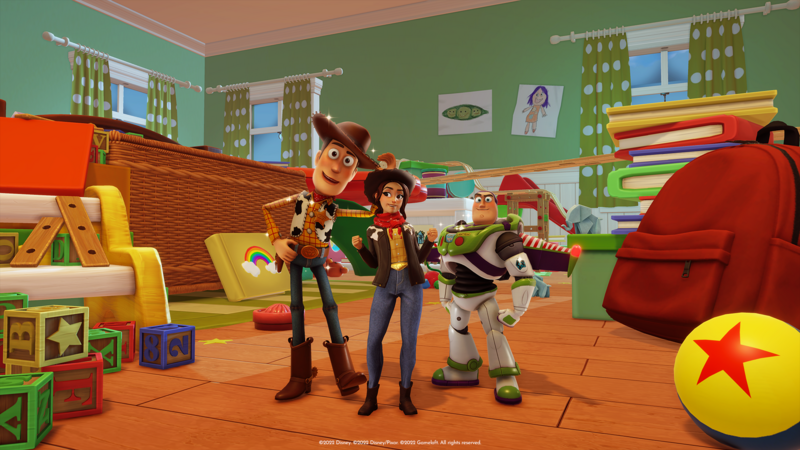
Knowing how bored of the game I would get within a few hours, I’ve already prepped them for the burnout by just installing a bunch of other games I thought they might enjoy on the console, just hoping curiosity will take hold and lead them into something newer and more visually exciting to watch. As of writing this however, that has not been the case as we’re both ‘hotly anticipating’ the Toy Story update for the game, which I think we can all agree is really gonna shake things up.

How I feel about Disney Dreamlight Valley is irrelevant though, because all that matters is that they’re having a good time with it and getting that feeling of satisfaction that a good game can provide. While I wouldn’t mind seeing something different on our TV, or more specifically, hear something other than the same 3 bars of the Mickey Mouse Club theme song, I’m just happy that my partner is happy. What more can you really ask for?

The Master of Disaster: Wanderlust – 21

I’ve often heard from other creative-minded folks that one of their biggest problems is actually following through on an idea or a concept. I know I’ve encountered that a whole lot on this very website what with all the “grand plans” that never come to fruition, but instead of examining every aspect of my life that’s been a letdown, I want to look at this problem through the lens of running campaigns in Dungeons & Dragons. I’m always thinking of the next grand adventure I can take my players on even if it’s at the expense of what we’re actively doing, and that’s not great.

At the moment, my group is one month into what’s looking to be a two month hiatus from our Eberron campaign that we’ve been playing for what feels like an eternity. At first I considered this to be a boon considering I had been feeling pretty worn out from the constant creative output needed to sustain our weekly play schedule. I thought that this time away would allow me to essentially get the creative juices flowing once more, which they did… just in a different way.

I had a lot of grand plans ranging from content to mechanics that for our Eberron campaign that for the most part were included. I wanted to make sure that the story wasn’t exclusively told by me, which ultimately led to player decisions (and consequences) being the catalyst for most of the storytelling. I managed this by making sure that character creation was a more in-depth process, where I’d learn not only about their characters, but the NPCs that are important to said characters. Having all this lore and backstory come from the players themselves allowed me to craft a story that’s uniquely tailored to them. Sure, Dungeon’s & Dragons is all about reactive storytelling, but that usually takes some time to really be a factor in any campaign. Ultimately what I’m trying to say is that most of what I prepared for took place before the campaign actually started, which led to me having players that were engaged with the world and its events from the jump.

But even though I’d prepped and planned and put all this time and effort into our campaign, over the weeks and months that we’ve been playing, I’ve started to see the pieces of the experience that aren’t coalescing as well I’d have liked it to. From the setting to the lore, I’m seeing all of these things that I could have improved upon if only I had known how they’d eventually turn out, or if I could have seen how much of a pain in the ass a particular plot point or magic item would have been. Sure I can consider this a learning experience whose lessons I can utilize in our next campaign, but instead of waiting for that transition to come naturally, all I can think about is what could be next instead of what I can do right now.

Whether it be a D&D module, some home brewed setting or even an entirely different game altogether, the waterfall of ideas just keeps flowing. I’ve had ideas for classic fantasy bullshit themed games, space themed games, alternate history, wild west, modern day and so on and so forth, all of which I daydream about way more than our current campaign.

Eberron: Rising from the Last War – Wizards of the Coast

I’d consider this to be a pattern of behavior, where I get really excited about a thing and throw myself headfirst into it, only to burn out on it before I can finish. The amount of maps, music, and artwork I’ve made and sourced for this specific campaign is kind of staggering when I try to take stock of it all. From tons and tons of adventures I can plug into the game, to NPCs who might never see the light of day, to entire game systems that will never be played, to just pure story and lore I’ve written that’s just never going to be utilized, I have a lot of things I could do with our campaign but just never seem to have the energy to follow through on.

But I recognized this as a problem a few weeks ago when I found myself prioritizing literally anything else above actually working on the campaign. But now we’re in the middle of a hiatus, and all I want to do is just play D&D again, something I won’t be able to do for another few weeks. In that time I’ve looked into plenty of settings, modules and games that we could utilize for whatever is next, but with so many options and the inability to meet with all of my players to consider them, all I can do right now is really just work on our current campaign.

But just because our current campaign is the only D&D thing I can confidently work on right now doesn’t mean that I haven’t regained some excitement for it. Being away from that world has given a lot of time to reflect on what I can do to revitalize the experience for myself. While I’ve generated some cool new ideas I’m excited to implement, I’ve also had time to reconsider parts of the campaign that I had planned. It feels weird to say that I’ve been cutting content from our adventure, but I think removing those things is going to help the adventure feel more cohesive and understandable. It also means I can focus on the ending of our story and how I’m possibly going to put a neat little bow on this whole experience.

The moral of this story is that you shouldn’t be afraid to take a break from any creative endeavor if you need it. I personally was feeling drained for so long, and just needed time away from the entire concept of rolling dice and adding numbers. Now I feel refreshed and energized, eagerly waiting for the next session to finally come along, but there’s still more waiting and planning to be done before that happens. I should also consider writing down some of these ideas and expanding upon them rather than just having a list with meandering phrases on them like “dragon(s?)” or “A mountain with legs.”

The Master of Disaster: Tone – 20

When I first started running games my gut instinct was to try and make my sessions all be well rounded, providing drama, comedy, excitement and so on and so forth, all at once. The idea was that one person would have a funny quest for players while another would have a more dour objective for them. That’s how it kind of works in video games, so why wouldn’t it work here? Well it wasn’t that it couldn’t work here, it was more that it sometimes led to a sense of emotional whiplash. The party would go from joking with a bartender while breaking the fourth wall, to talking to a grieving widow who is desperate to uncover the culprit for her partner’s murder. It was tonally inconsistent in a way that was very noticeable. More to the point, it made keeping my players engaged and role-playing, incredibly difficult.

Going from joking about a funny looking cow or whatever, to talking about the vast political corruption in the city might work in the real world because we’re all emotionally broken, but in game I’ve found that tonal consistency is valued more than it is in our world. Now, that isn’t to say that I’m forbidding jokes when we’re having a serious conversation, but the way you address that kind of thing is important.

Everyone in every adventuring party wants to crack a joke that’s going to make everyone at the table erupt into laughter, which is fine, but if they’re talking to that poor widow from the example earlier, that widow is gonna call them out. It isn’t about whether I, the DM am calling them out or not, it’s about if the NPC they’re practicing their standup routine on is willing to put up with their shit. There’s no use in me as the DM breaking the flow of the game to tell my players to get serious about our game where dragons and goblins are kicking it with raptors and dwarves or whatever, cause that would be a fun new take on ludo-narrative dissonance.

I guess my point ultimately is that while you as the DM have the power to do whatever you want, wielding that power and using it is a bit trickier. Aside from lambasting my players as the NPCs they interact with, I’ve found that splitting my sessions into arcs has been really helpful for establishing tones. For instance, we’ve had sessions that were very mission focused and others that were just nebulous, allowing the players to go off and do what they want and suffer the consequences in classic D&D fashion. I treat the tone in our games like a pendulum, where some of them are gonna be goof-fests, while others are going to have the characters make tough choices. Trying to keep the pendulum stuck in one direction for too long will almost certainly lead to a harsh swing in the other direction, so it’s a good idea to make sure that you’re not sticking with one theme or tone for too long.

Ironically, that very reason was why we all ultimately decided to stop playing through the Rime of the Frostmaiden module that came out late last year. It was so overly drab and depressing, with an insistence on being dour and bleak throughout the vast majority of the adventure. It sucked and was a colossal downer, so we pivoted. Consider that a lesson learned on my end though, because from here on out, I’m making sure that any game I run has both highs and lows without lingering too much on either.

I recognize that this entire concept of a malleable and shifting tone might be something I value more than a lot of other game masters and players, but I’ve found a lot of success in using this mentality. I allow my players to joke and goof till their heart’s content, but I also know that in a few sessions I’m going to hit one of them with a tough choice that’s going to make their character grow. In a long term campaign, I think these situations and encounters are absolutely necessary to keep both the story interesting and your players engaged. While this post is about adjusting the tone to match the content of the session, all of this stuff is, in my opinion, extremely important to another very instrumental part of campaigns, which is allowing the characters to grow.

Every campaign I’ve run starts with at least one person trying to make a joke character, which is fine. But I always tell them that making a joke character and giving them a goofy name is really going to bite them in the ass further down the line. When the king of the land comes to you, hat in hand, and begs your party for help in finding his missing wife, it’s really going to undercut the whole mood of the campaign when he has to say, “I come to seek the aid of the noble knight, Fart Garfunkel. I shall pay a king’s bounty for the retrieval of my missing beloved wife.” Like, that whole scene is going to suck on so many levels. Maybe the first time it happens, it’ll be hilarious. The second, third, hell, maybe even the tenth time it happens it’ll still be a gut-buster. But doing that puts this artificial ceiling on how much your character can grow because they’ll never be taken seriously by anyone in your party, let alone the actual human beings at the table.

Every party, campaign, player, and character are so different, so maybe my advice doesn’t apply to your current situation. But I truly believe through extensive trial and error, that being able to set a tone from session to session is extremely important to allowing the players to experience a great story. While they might not remember the name of the big bad guy or whatever, they’ll remember the ebbs and flow of a campaign that tonally mimics the real life experience. Some days are good, some days are sad, and it’s okay to have your player-characters experience that too. Otherwise, they’re nothing more than a series of stats on a page with a name like Fart Garfunkel.