Author Archives: thebonusworld

Blog: Quarantine – 03/18/20

Who could have imagined things were going to turn out the way they have?  From social distancing to quarantines, curfews and event cancellations, I can safely say I did not see this coming when I celebrated the New Year a little over 3 months ago.  So here I am, doing my part to distance myself from everyone else, bored out of my mind and desperately trying to not succumb to cabin fever.  But let me make it clear that my gripes and boredom are far from actual problems.  I know there are people out there suffering and worse off than I am.

Like most of you out there, COVID-19 has led to the closing of my job with procedures in place to work from home for certain employees.  I unfortunately am not one of those employees and thus, I’m out on my ass without any income for the foreseeable future, because who the fuck is hiring right now?  I’m also technically on an extended spring break, which means I don’t have any homework to worry about for the next two weeks.

Why am I telling you all of this?  Well it’s because I need to illustrate just how empty and devoid of anything my schedule is.  I have nothing to do aside from play video games and write about them.  Although I do get this chance to watch all of the movies and shows I groused about not having time for in the past, so there’s that.

It’s like we all were collectively complaining about not having time to enjoy things, so the universe, being the bro that it is, decided to give us all plenty of time to stay home and enjoy ourselves.  Except I’m only one day into this quarantine and I’m losing my mind and want to go back to work.

Writing this along with some of the other things I’m working on, are helpful distractions to help get me through this nebulous break.  I’m basically having production meetings with myself about what I want to accomplish over the next few weeks.  I’m giving myself deadlines and working hours in an effort to maintain some normalcy.

While trying to cling to normalcy though, it’s important to realize that this situation is anything but.  This isn’t normal.  The entire world has essentially stopped and no one is sure of when it will start going again.  But it will start going again, and we all have to recognize that.  It will be a long and difficult journey for sure, but the way it is now won’t be the way it is forever.  I have to believe that.  But until we return to some modicum of normalcy, please stay indoors, avoid public gatherings, wash your fucking hands, and buy all the toilet paper you can because the good folks at Charmin hid the vaccine in several rolls.  It’s like Willy Wonka and the Chocolate Factory in a sense, except it’s nothing like that and the people doing it are assholes.

A World Without E3

Industry behemoth and perpetual looming shadow, E3, just received what I consider to be the death bell of the entire show as we know it due to rising concerns over COVID-19.  While first and foremost I’d like to say that the cancellation of this event is small potatoes compared to the reality of this viral situation and how it’s impacting the lives of others.  But with that said, I’d like to talk about why I believe that E3 as we know it is done for.

I don’t think I have to explain what E3 is to this particular audience, so I’m just going to power through under that assumption.  What you may not be aware of is the dire situation E3 was in before this coronavirus became a genuine concern.

What you might have missed were the various blunders that E3 has had over the past few years.  From things like big exhibitors like Sony and EA pulling out, to the awful “reworking” of the show, to their long time show runner quitting because they didn’t like the direction of the conference, and especially the part where they leaked the personal information of a bunch of media personnel, E3 has had some severe missteps to say the least.

This is on top of the growing conversations around the relevance of E3 and if it’s as necessary and essential as it once seemed.  People have long questioned why other companies don’t just go the way of Nintendo and play a prerecorded video that can announce products and generate the same amount of hype without worrying it will get buried under the deluge of other video game news.

But going to E3 isn’t just about announcing new products; It’s also a venue for developers to have pitch meetings with publishers and suppliers.  At its core and beneath the flashiness of the show, it’s still a business driven affair where “behind closed doors” meetings happen that are very important for a lot of smaller developers.

This year however, E3 is officially cancelled which feels like the final nail in the coffin to me and not only because of the waning interest from exhibitors and attendees alike, or the pressure from big companies to revamp the show entirely to maintain relevance.  This is going to be the first year that every company gets to see the exact impact of E3 on their business.  They’ll be able to get concrete numbers on how a game shown on an E3 stage performed versus a game shown off on a stream.  My suspicion is that companies will see their cost–benefit analysis, realize that E3 is a money pit where their announcements get immediately buried, and one by one pull out of the show until all that’s left on the show floor are energy drink manufacturers you’ve never heard of.

For the first time since its inception, this perceived necessary show will not be running, leaving companies to figure out how to move forward.  With the advent of the internet and streaming video being what it is, these companies have the opportunity to reach out directly to consumers without shelling out thousands for booth space, travel and accommodations.

As much as I enjoy watching the various streams that come out of E3, it can be utterly exhausting even as someone on the periphery of the industry.  While I would still love to see an hour long press conference about all the cool Xbox games coming out, I wouldn’t mind not having to worry about what’s coming up immediately after it.

I feel that the absence of E3 this year will be the light bulb that collectively goes off when publishers, media, and attendees realize that there are far easier, less expensive and time consuming ways to engage with all this information.  I don’t want to see E3 go away and I hope that I’m wrong in all of this, but I just don’t see a path forward for this already struggling conference.  Maybe we get a 2021 E3 that reignites the fire, maybe in 2021 we see an even more desperate E3 that’s desperately trying to find a purpose, or maybe we just don’t see one at all.  I would love to be wrong on this, but it’s too early to tell either way.

Animal Crossing Pocket Camp is Still Kinda Lame

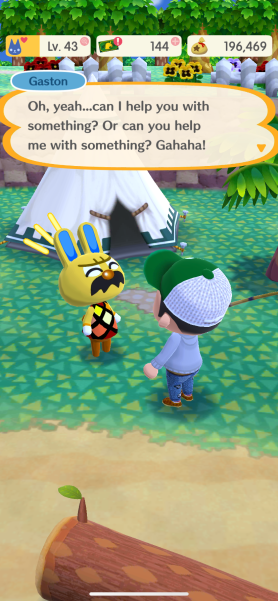
Counter to the excitement and positivity surrounding the upcoming Animal Crossing: New Horizons, the latest publicly available game, Animal Crossing: Pocket Camp launched as, and still remains a letdown.  That isn’t to say there aren’t good aspects or fun to be had in Animal Crossing: Pocket Camp, but as a game, it lacks a lot.

Animal Crossing: Pocket Camp launched for mobile devices in late 2017 to a pretty positive reception, albeit with a lot of folks taking umbrage with some of the monetization decisions, a criticism Nintendo apparently heard, but I guess they ultimately ignored.  It’s a shame too considering an Animal Crossing game on your cellphone sounds like an awesome idea.
IMG_3398.PNG

Look at this powerful mustache!

From a conceptual standpoint, I was initially let down by the idea of Animal Crossing: Pocket Camp not being a more faithful Animal Crossing game.  That initial reaction eventually gave way to apathy after I actually was able to play the game itself.  When you look at Animal Crossing as a series, the games were doing things that a lot of early free-to-play mobile games were doing, in a time where smartphones weren’t really a thing.  They basically did everything Farmville did, way before that was even a thing.  It was essentially one of the earliest idle or incremental games that I can think of.

As time wore on and sequels came out, more and more was added to each iteration that allowed for longer play sessions, and reasons to come back multiple times a day.  This all seemed perfect and primed for a smartphone adaptation, something I welcomed.  Then I actually got to play the game.

When Animal Crossing: Pocket Camp was initially released, I devoured it.  From decorating my campsite, to shaking trees and catching fish, I was all about the Animal Crossing life.  But that initial spark of excitement eventually started to fade once I realized that despite Animal Crossing as a series heavily relies on repetition, it felt a lot grosser and less interesting in Pocket Camp.
IMG_3403.PNG

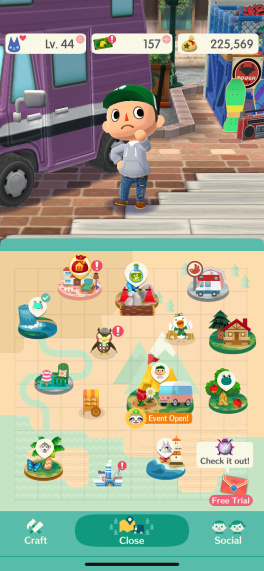
Somehow it’s all both over and underwhelming.

The Animal Crossing games were nice because even after you shook all of your trees, participated in the fishing contest, and stabbed all of the rocks with a shovel, you could still wander around the town and see what your villagers were up to.  To call it dynamic would be generous, but it was infinitely more engaging than the loop of Animal Crossing: Pocket Camp.

Animal Crossing: Pocket Camp quadruples down on the checklist nature of the series by literally making you do the same things over and over again, with almost no variation.  There are a handful of locations you can go to, some have fruit to pick, one has bugs to net, and two have fish to catch.  Each of these locations has one animal, and one random villager that may or not be an actual friend of yours.  You’d have to tap on the region and traipse your way over to these animals and talk to them three times, because they want 3 things.  Every day, you can have about 4 interactions with these animals, 3 by giving them stuff that could literally be right next to them, and one by just spouting nonsense at each other.
IMG_3406.PNG

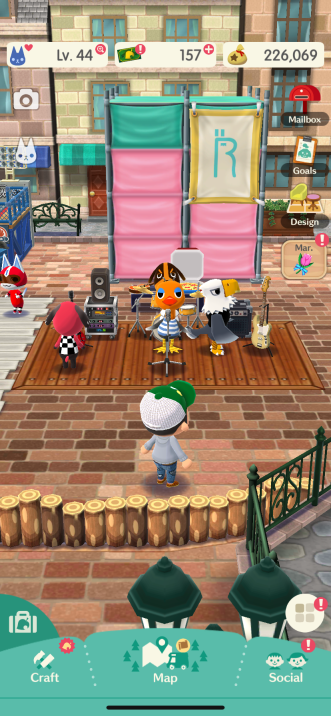
“I’ll use my telekinesis to play this guitar!”

I get that the DNA of Animal Crossing: Pocket Camp is inherently derived from Animal Crossing proper, but Pocket Camp just boils it all down in the most checklist-y way possible.  They even have a pelican who will just deliver all of the crap people want directly to them so you can avoid having to actually go to them.  I use this feature all the time, because I’m at a point where I just want to be finished.

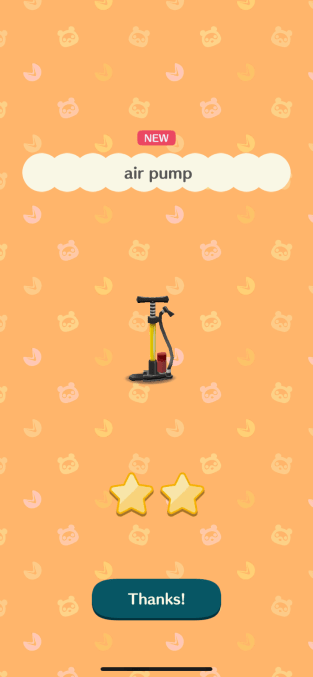
There’s also the abundance of crap and garbage that fills up your inventory that seems to all be crafting materials, but sometimes it’s just a coat that people keep giving you.  Preserves, lumber, ore, cotton and more, are all materials villagers might give you in reward for bringing them a seashell.  It’s nice, because you get to build stuff, but the stuff you build is so lifeless and boring in most cases.

Don’t get me wrong, I like having a bunch of musical instruments, pizza boxes and convertibles strewn about my campsite as if I was having a garage sale, but you can’t do anything with them.  You can poke them, rearrange them, and watch villagers stand near them.  Sometimes, specifically in the case of a halfpipe you can build, you might be lucky enough to see a skateboarding eagle, but that’s kind of it.
IMG_3409.PNG

Wow… thanks…

Now, that lack of interaction complaint isn’t exclusive to Animal Crossing: Pocket Camp.  All of the Animal Crossing games have struggled with interactivity, but with something like Animal Crossing: New Leaf, they did flesh that out a bit.  I specifically recall being able to play mini-games on the Nintendo consoles I could build which was shallow, but a nice diversion nonetheless.

Look, it may sound like I’m just frustrated and lashing out at Animal Crossing: Pocket Camp, but the honest truth is that I’m still playing it regardless.  Yes it’s boring and shallow, yes it’s repetitive as hell, and yes the economics of the game are absolutely fucked, but it’s still got that Animal Crossing charm I love.  The artwork is delightful and fun, the characters are (mostly) adorable, and core Animal Crossing loop is still intact, but it just ends up feeling like an imitation of itself in some regards.

I don’t hate Animal Crossing: Pocket Camp at all, but I do think it’s deeply flawed and should have been way better.  I took a long break from the game, but came back very recently thanks to the upcoming sequel.  Pocket Camp scratches that itch, but in that way where you itch your arm, and then another part of your arm starts to itch and so on and so forth.  My only hope is that Animal Crossing: New Horizons doesn’t have some hook into Pocket Camp that makes me have to play both simultaneously… dammit.

 

Blog: Chase Your Bliss – 03/11/20

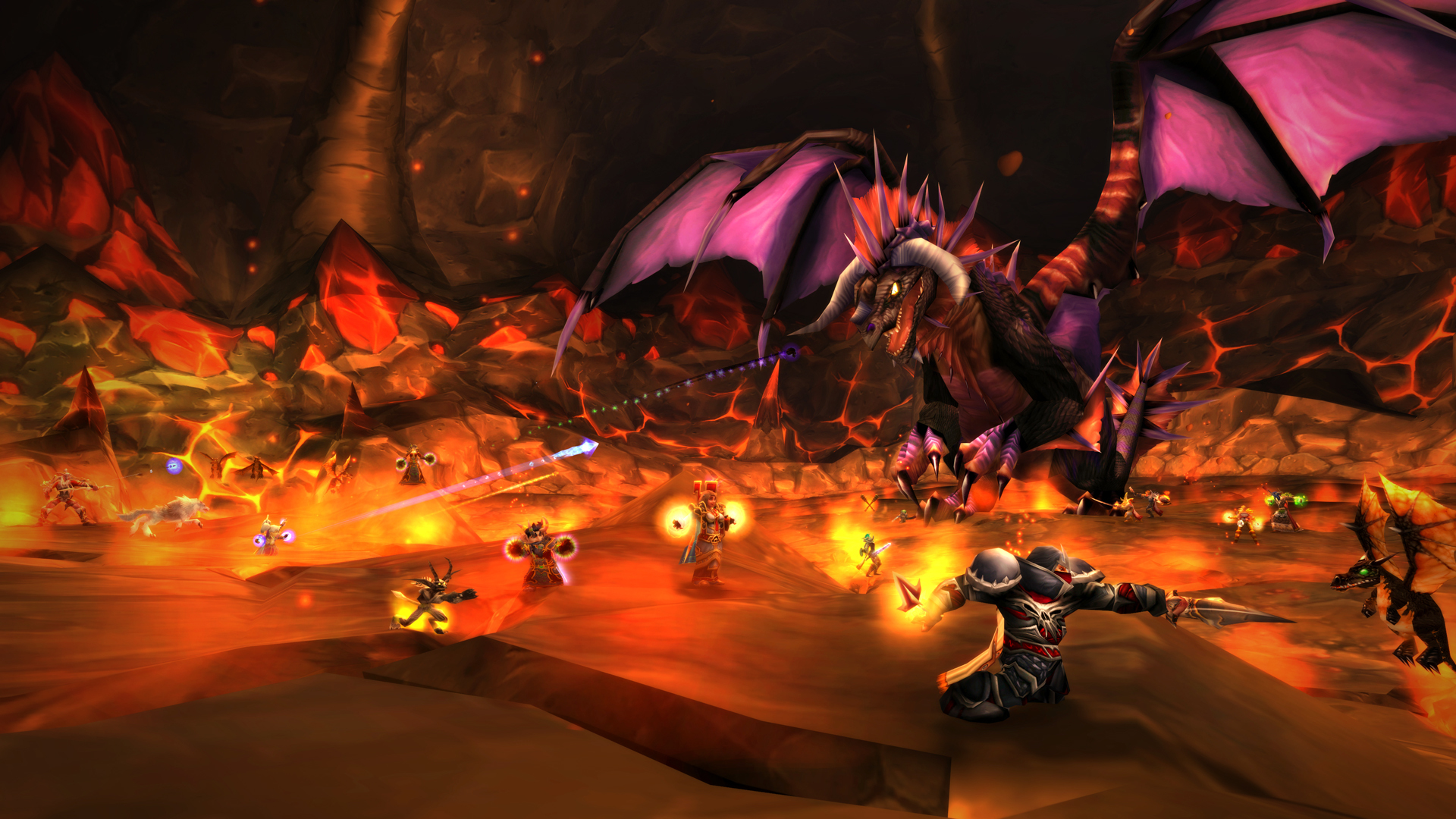
For various reasons, a few weeks back I found myself putting some time into what might be one of the longest running live games, World of Warcraft.  The quick and dirty is that I was looking for a way to engage with my friends who fell down a WoW hole, and I hoped I could brave those depths with them.  It did not work out.

Just to get this out in the open, there is no love lost between us because of this whole situation, it was a long shot and we all knew it.  World of Warcraft has always been the culmination of things I don’t enjoy that much, from its game mechanics down to its fantasy setting, it just was always something I looked at and sneered.  In my eyes, World of Warcraft is just in insanely boring, tedious and cumbersome experience, but my feelings are my own and I realize that.

I’m sure in my youth I would have been phenomenally shittier about playing the game, thus thoroughly ripping it apart for not checking all of my boxes.  But I’m not that idiot anymore, and I know that World of Warcraft brings people a lot of joy and satisfaction and that’s great.

For instance, the friend that I started playing World of Warcraft in a effort to reconnect with and I had a conversation about me bowing out of the game.  I expressed that it just wasn’t my thing and I appreciated him extending the olive branch.  We went on to talk about the guild he had built up and how proud of it he was.  With somewhere in the neighborhood of 200 members that engaged in multiple raid nights per week, he was able to look at this organization he started with pride. He equated it to the satisfaction I felt from leading our Dungeons & Dragons campaign.

I understood exactly how he felt in that moment.  It’s no surprise that people are proud of their creative endeavors especially if they’re successful, but when he equated it to what I do, it clicked in a way that it hadn’t before.

We will never see eye to eye on World of Warcraft or our gaming tastes in general, and that’s okay.  The important part isn’t that we’ve found a game we can actively play, cause while that would be nice, it would probably require us just developing our own game from scratch.  No, the important thing is that we keep trying to reach out to the other.  We want to play games together and we’re going to keep trying to to find that thing that hooks us both, which I can definitively say is not and never will be World of Warcraft.

The Master of Disaster: Music – 10

Pretty early on in the campaign I decided I wanted to add an auditory element to everything we were doing, without resorting to generic dungeon crawling ambient noises that you can find on YouTube.  How would one go about this then?  Maybe they would search for music that set the appropriate mood, cause that would actually be a smart idea.  But what if we added hours to my session prep and included unique music tracks for encounters and story beats?  That’s the position I’ve put myself in.

There were specific tones and moods I was trying to cultivate throughout our campaign in an effort to add some drama and weight to everything.  It started out with me making little stingers of violins swelling or big drums strikes that would act as the period on the important sentence I was relaying to the party.  It largely went unnoticed and didn’t really add much to the experience.

But instead of bowing out there, I decided to go further.  What if I made these long, loop-able songs that would properly portray the current encounter or location?  I should note, this was all inspired by listening to certain RPG podcasts, where the element of audio can add a lot for both the players and listeners.  On one of the podcasts, The Adventure Zone, they did an episode where they answered a lot of lingering questions by the listeners, where it was revealed that most of the music was made with Apple Loops that were built into Garage Band.

I didn’t have a Mac, but I did have an iPhone with Garage Band installed.  Using the phone version of Garage Band wasn’t the optimal experience, but it got the job done.  I mainly stuck to relying on the included loops and various midi instruments as well as occasionally actually recording a guitar track.  Luckily the loops all worked well with each other for the most part, which made the whole affair a lot more manageable and less laborious.  Once I had managed to make a handful of tracks, it was time to use them in the campaign.

It actually went really well and was received positively by my players.  It made things feel a little weightier and put them in the mental place they needed to be.  Would it have been easier to find a good facsimile of the music I was making on the internet?  Of course it would have been, but I like making things myself.  So not only did I get to make sure the mood was just right, but I got to stretch my creative muscles.

I suppose I never really appreciated how important music could be to a D&D campaign before, but I doubt I could ever go back to not having it.  Aside from making the campaign better, it’s just fun to create things in general.

Honestly, being a DM has been some of the most rewarding creative work I’ve ever had the pleasure of doing.  From writing, to map making, character creation, acting and of course, making music, it’s truly a creatively fulfilling experience.  And considering we’re about to start an entirely new campaign with new themes, you know I’m excited to get in there and make several albums worth of tracks for it.


Gut Check – Goblin Sword

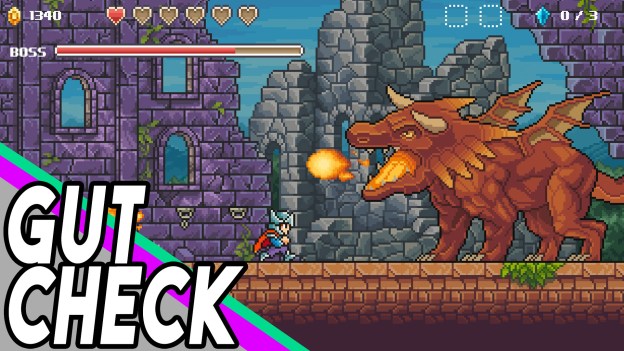
This installment of Gut Check is going to be fairly short because the game we’re talking about is fairly slight.  Despite its initial release on iOS devices back in 2014, Goblin Sword, like many games, has found a new home on the Nintendo Switch.  Aside from having one of the more generic titles for a game ever, it’s just an uninspired albeit competent experience.

You play as this blue haired knight who has to go through these small slices of levels, obliterating all the enemies you can and finding as many collectibles as you can.  A simple enough pitch that never seems to get shaken up in any meaningful way aside from the occasional boss fight.

There isn’t much to say about the moment to moment gameplay, because it’s all just average and serviceable.  None of it is particularly challenging or difficult, usually feeling more tedious than anything.  You jump, slash, and mush your face into every wall you can in hopes of finding a secret chest or something.

The only interesting part about Goblin Sword is how the swords themselves work.  Through either buying them with the in-game currency, or finding them in secret chests, the swords all have 3 stats indicating power, speed, and range, along with a magic spell.  Spells can be anything from fireballs, to floating murder orbs, to just screen clearing nonsense.  These are all activated through finding magic orbs in levels that allow you to cast these spells when you attack.  You can use the spells 3 or 4 times before you need to find another magic orb in a jar or after a vanquished enemy drops them.

But that’s basically the most exciting or interesting part of Goblin Sword.  Everything else is steeped in repetitious tedium that eventually will drive you to stop playing entirely.  Even the “secrets” in the levels are copy-pasted, requiring you to find 3 blue gems, and two treasure chests.  Chests can hide either money, swords, or useless souvenirs that go on display in your house, a place you have literally no reason to visit.

The only other thing worth mentioning is the in-game shop you can visit to spend your hard earned money.  You can either buy new swords with better stats, trinkets that give you an extra effect like more health or magic drops, or armor, which as far as I can tell have no actual protecting qualities, they’re purely cosmetic.  What sucks is the fact that you’re never told what the magic spell is imbued on a sword, leaving you in a position where your sword does great work as a sword, but has a lame and useless spell attached to it.

All things considered though, Goblin Sword isn’t a bad game, it’s just not that interesting or worth your time.  It’s completely average in every way which is fine because the price of entry is low, sitting at 5 bucks.  If you really have 5 dollars burning a hole in your pocket, and you’re looking for a generic platforming video game that isn’t going to challenge you that much, you could do worse than Goblin Sword.

Blog: Exit the Apple Arcade – 03/04/20

Last year I, like many others, took advantage of the free trial of Apple Arcade and played a lot of what was offered and enjoyed my time with it for the most part.  Earlier this year however, I cancelled the service without much deliberation.

For those who aren’t aware, Apple Arcade is a curated list of games you get access to for only five dollars a month.  It’s a really good deal if you manage to find a few games worth sticking with.  That’s what I failed to do and why I ended up ditching the service only a few months later.

While I was really impressed with the service (and still kind of am), I found that there were two major sticking points for me that led to this cancellation.

apple-arcade-characters

The first was the games themselves.  A lot of the games that people liked on the service ended up being either card based games, strategy games, or puzzle games, all of which are perfect fits for a phone game.  But two out three of those genres don’t really do anything for me, and the games I did stick with eventually wore out their welcome.

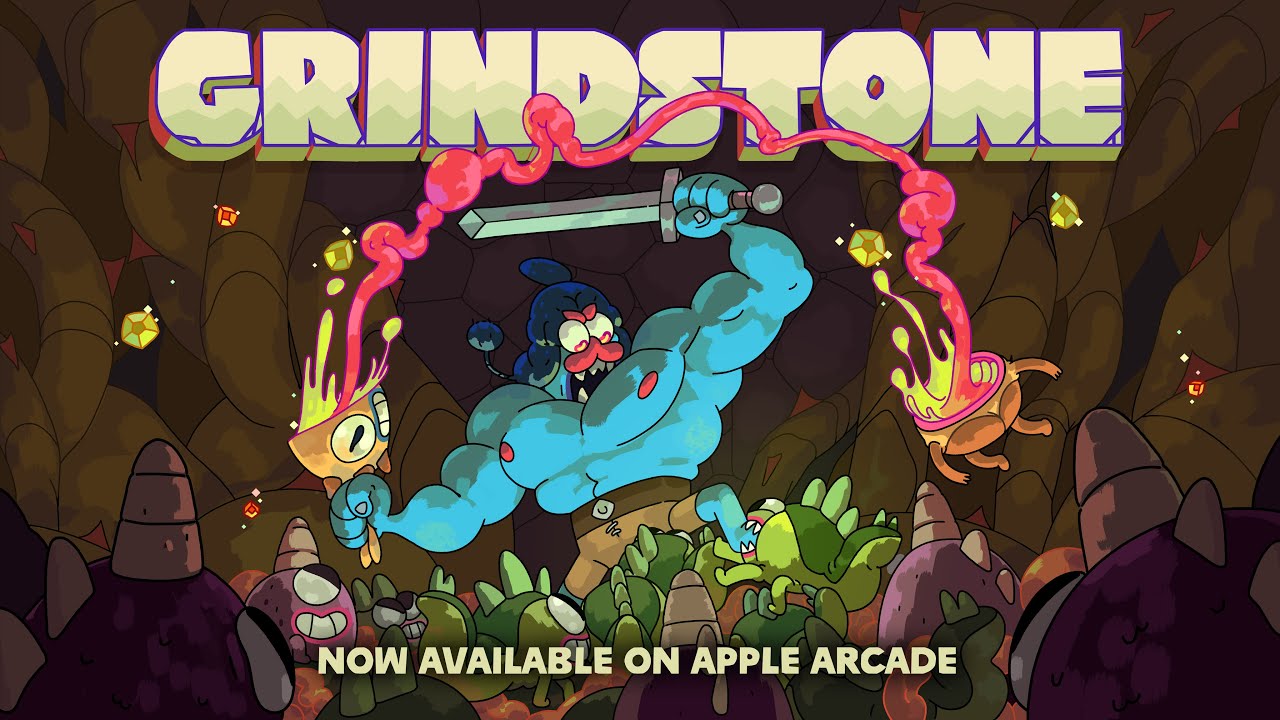
Take Grindstone for instance.  Grindstone is a highly popular and perhaps the standout from the launch lineup of the service, but I don’t think I’ve heard of anyone who actually completed it.  Grindstone got notoriously difficult and required a lot of (ironically) grinding to survive some of the later levels, to the point where I stopped playing it.

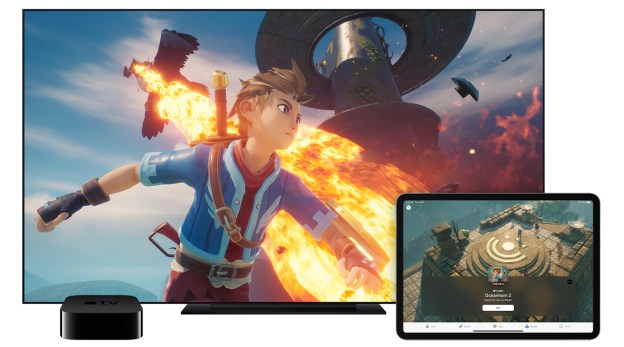
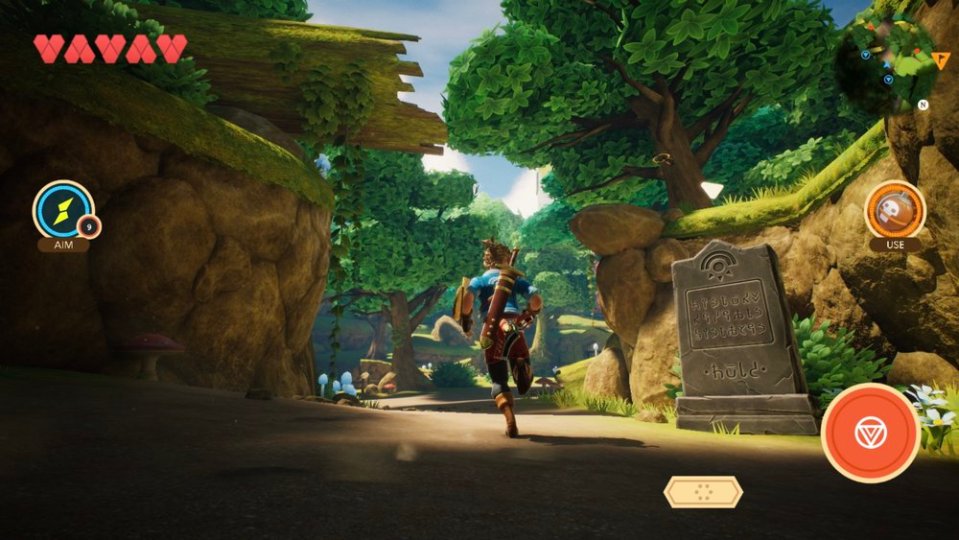
Then there are games like Oceanhorn 2 that are interesting games, but on a platform I don’t want to play them on.  Sure I can tether a controller to my phone, but it still doesn’t change the fact that I have to hunch over my phone to play this massive adventure game.  It’s worth mentioning that I’m sure people using and iPad or an Apple TV are having a different experience with these games, but for someone using exclusively a phone, it isn’t a great way to engage with these games.

The other big issue with the service ended up being the release of new games.  In the weeks after launch, you could get 4 to 5 new games a week on the service.  Not all of them were things I enjoyed, but there were occasionally one or two I stuck with.  As time went on the addition of new games slowed down to the point where you might get one new game a week, and usually it was something that I didn’t want to play on a phone, or just in general.

It’s unreasonable to expect a constant trickle of quality games tailored to my tastes to come out every week, but eventually the offerings just stopped appealing to me enough for me to question why I had the service anymore.  I had stopped playing the games I already had downloaded and didn’t really feel the desire to download more.

I still think Apple Arcade is a great deal if the games on the service are things you’re interested in, but I just don’t think a lot of the games Apple promotes on the service are great fits for a phone.  I also find myself playing less and less phone games these days in general, making the concept of paying five bucks a month for them a big ask.  Maybe one day there will be a game that makes me come back, but till then I’m fine leaving Apple Arcade behind.

Taking Chances with Baldur’s Gate III

For those of your who aren’t aware, for the past year or two, I’ve been running various Dungeons & Dragons campaigns for my friends.  I’ve more or less chronicled this in our Master of Disaster feature on this site which for obvious reasons, I recommend you check out.  Yet despite my love of playing Dungeons & Dragons, I’ve never been able to garner any modicum of enthusiasm for video games that try to capture the tabletop feeling.

This disconnect and lack of enthusiasm on my part has been perplexing to my friends to say the very least.  How could someone who is literally the DM (Dungeon Master) of our campaigns not enjoy these mechanics in a video game?  It’s been difficult for me to articulate over the years, but I think I finally understand it.  But for me to explain it properly, you need a little context about me and how I absorb information.

At a young age, it became very evident, very quickly, that I wasn’t a traditional learner, often needing to read something several times over, or do some hands on learning if applicable.  To this day I have a difficult time reading something and comprehending it on the first go, often needing to reread it 4 or 5 times before I can fully internalize the actual meaning of the text.  As silly as it sounds, I’ve just never been great with reading comprehension making every online course I’ve ever taken in my life a tremendous chore.

I think it’s because of that mental hurdle that I tend to zone out in text-filled, management-heavy, and turn-based games.  My experience with these kinds of games usually goes the same way every time, with me eager to hop into the action, only to be buried in menus and skill trees that I can’t comprehend on my first encounter with them.  Even though I know that I’m only seeing a fraction of what’s to come, it still feels like I’m being thrown in the deep end.

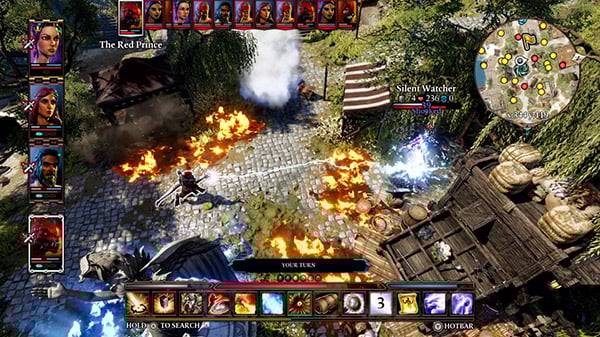
What I like about playing D&D as opposed to something like Divinity: Original Sin II is the fact that someone is shepherding me through it.  There’s a DM who isn’t only painting a word picture for me, but is there to answer any mechanical questions I might have.  It’s that hands-on approach that works for me from an educational standpoint that’s also present here.

I’ve even run into this while running my own D&D campaign.  When I started out, I bought a D&D module that I would run for my players.  Yet after being asked enough lore questions that I had no answer to, I decided to blow up the world and start fresh with a campaign and lore of my own.  It was a lot more work, but so much more personally engaging and rewarding.

There’s also the matter of my own level of patience and tolerance for a game, but I’ve covered that before.

All of these things are factors in why I bounce off of and usually avoid these types of games.  But we haven’t even talked about the gameplay portion of them yet.  Even if I manage to find a suitable on ramp for me to get somewhat into the game, I still have to contend with the game itself.

It usually isn’t the turn-based part that turns me off as much as it is the “tactics” portion that bounces me off of a game.  I’m just terrible at setting up plans and executing on them, whether it’s positioning, item and spell management, or whatever, I suck at it.  Usually I’ll formulate a plan I think is great, try to execute it, and watch it fail miserably.  Instead of doing what normal people might do and say, “oh, I should try a different approach,” my stupid-ass jumps over any rational thought and straight into a pit of self-loathing and dejection.  It’s the same way I feel about the Dark Souls games, where I don’t feel emboldened to do better, I just feel like I could be playing a game I have a better time with.

And if I really wanted to split hairs (which is about to happen), I’d say that I think the tutorial levels of these games are usually the most excruciating parts.  Take Divinity: Original Sin II for example.  You start on a boat that promptly gets attacked by bugs and a tentacle monster, which sounds way cooler than it actually is.  Then you wash up on an island where you eventually find your first village where I assume more of the game takes place.  Despite trying to power through it on three separate occasions, I have yet to be able to get through what I found to be an incredibly dull part of the game.

When asked why I don’t like these kinds of games, I usually answer with something dismissive like, “cause they’re boring” or something, but what that really means is everything I’ve written thus far.  But I agree with my friends when they say that I should enjoy these kinds of games.  I want to enjoy these games.

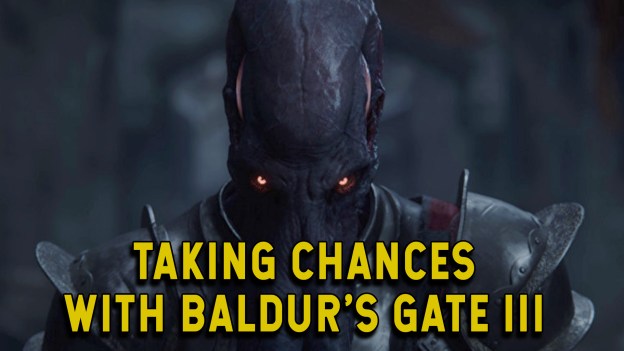
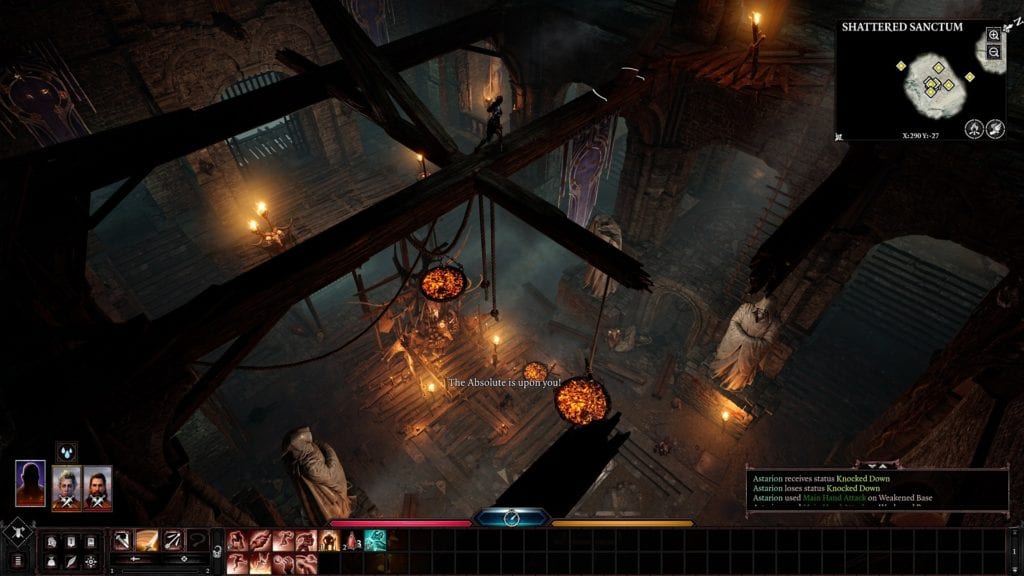
But I’m not ready to write off the genre just yet.  A little game called Baldur’s Gate III was recently shown off, and after reading about it more, I think this one might be the last one of these I try.  After everything I’ve written up until now, you might be wondering why I would attempt this, ostensibly throwing $60 dollars into a virtual garbage can, but there are a couple of factors that are intriguing me with Baldur’s Gate III already.

First and foremost, it a Dungeons & Dragons based games, meaning I know a lot of these mechanics and have varying degrees of familiarity with them.  That alleviates a lot of the mechanical obtuseness that I might have trouble with in other games.  Like, I know what plenty of D&D spells, items and attacks are, so that won’t be such a steep learning curve.  Having to learn both the mechanics of a game as well as their made up lore makes me feel like I have to learn two games simultaneously, which usually goes about as well as you might imagine.

On top of that, I’m really digging the presentation when it comes to dialogue options, opting for more of a Dragon Age or Mass Effect styled approach instead of a text box that pops up on the screen.  It’s a small thing, but it adds a slight cinematic flair that I think goes a long way.

Despite my better judgement and spotty history with these kinds of games, I’m cautiously optimistic and dare I say, excited for Baldur’s Gate III.  At the very least, I’m going to keep my eye on it and certainly give it a shot when it enters early access later this year.

Gut Check – The Coin Game

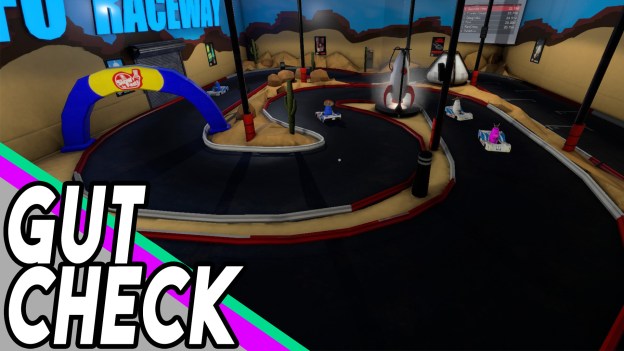
Describing The Coin Game is going to be fairly tricky to be honest, mostly because even after playing over an hour of it, I don’t know what to say.  In the simplest terms, The Coin Game is a virtual arcade experience where you get to play crane games, drive go-karts, play laser tag and more, in one of the strangest worlds I’ve ever seen.

The Coin Game is an early access title, which I mention because the experience itself, while supremely interesting, is a little thin.  You start off by picking either a male or female avatar, both of which are so horrible to look at, I’m thankful the game is entirely in first person.

20200219160330_1.jpg

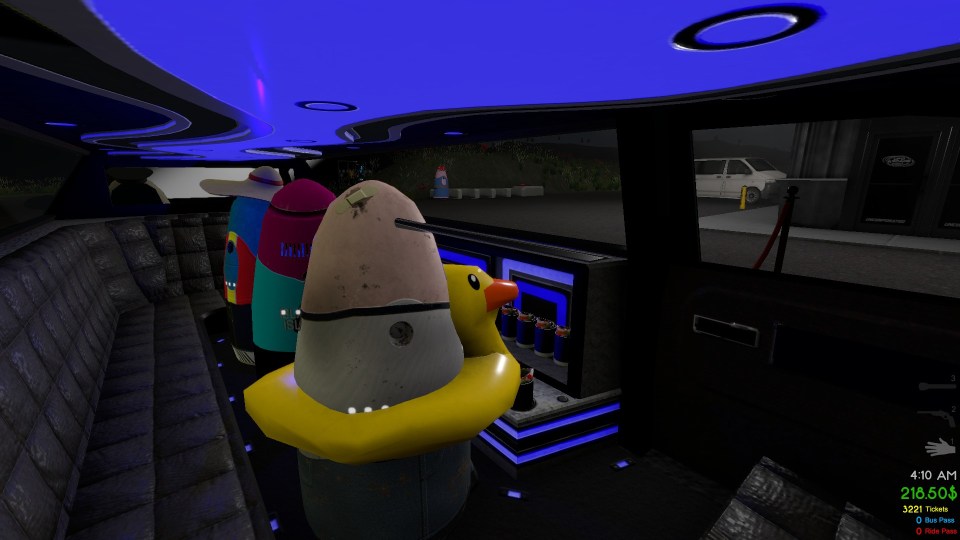
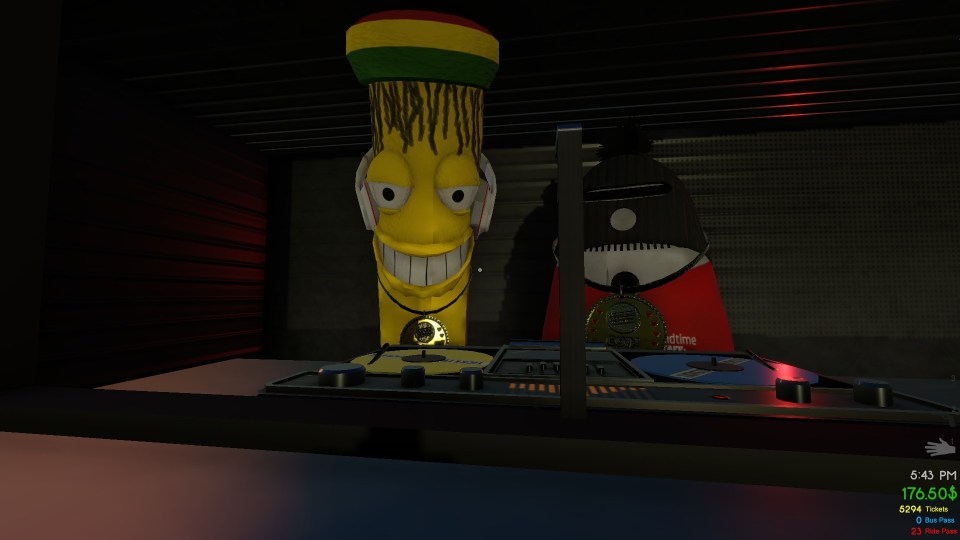
After making your grim decision, you find yourself in front a dingy arcade filled with games.  Games and robots.  From what I can tell, in The Coin Game, you’re the only human around and everyone else is some sort of egg-shaped robot on wheels that spouts random nonsense at you whenever you get close enough to them.

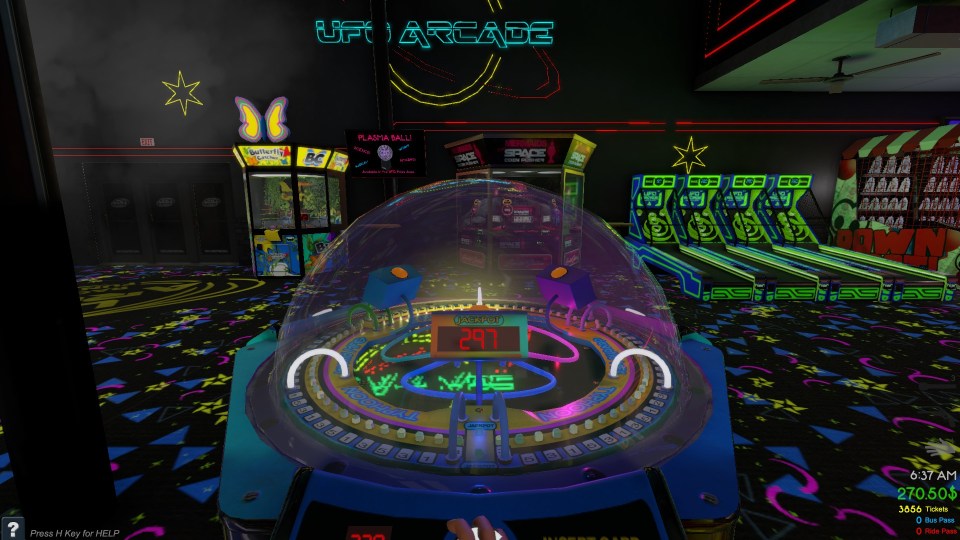
But once you get past these ovate androids, you walk around this arcade and just play some classic arcade games.  Things like claw machines, whack-a-mole, and more are pretty lovingly made, with the physics usually holding up their end of the bargain and providing an, oddly enough, realistic representation of these attractions.  Just like you’d expect, doing well at these games grants you tickets that you trade in for prizes, that you’ll use for some unknown purpose.

20200219161309_1.jpg

Now stick with me here, because if you didn’t think it was before, it’s definitely about to get weird.

The Coin Game is confoundingly an open world game with multiple arcades in it.  You go between them by taking the bus, a limo, or my favorite, your own personal golf cart.  Should you choose the golf cart, you have to stop at gas stations from time to time and refuel.  There’s also an option for a survival mode, which is perhaps the most terrifying prospect.  I did not attempt this mode.

20200219161054_1.jpg

Most of the locations are incomplete, brandishing various forms of “coming soon” signs or “under construction.”  There’s a pawn shop that isn’t currently available, which makes me think that selling your prizes for cash will let you buy food and supplies necessary for human survival, but I’m just speculating.

What’s currently in there however is still pretty weird.  From buying energy drinks, to having a dart gun and flashlight on you at all times, down to being able to just buy scratch off tickets are all weird things, that are for some reason in The Coin Game.

20200219162127_1.jpg

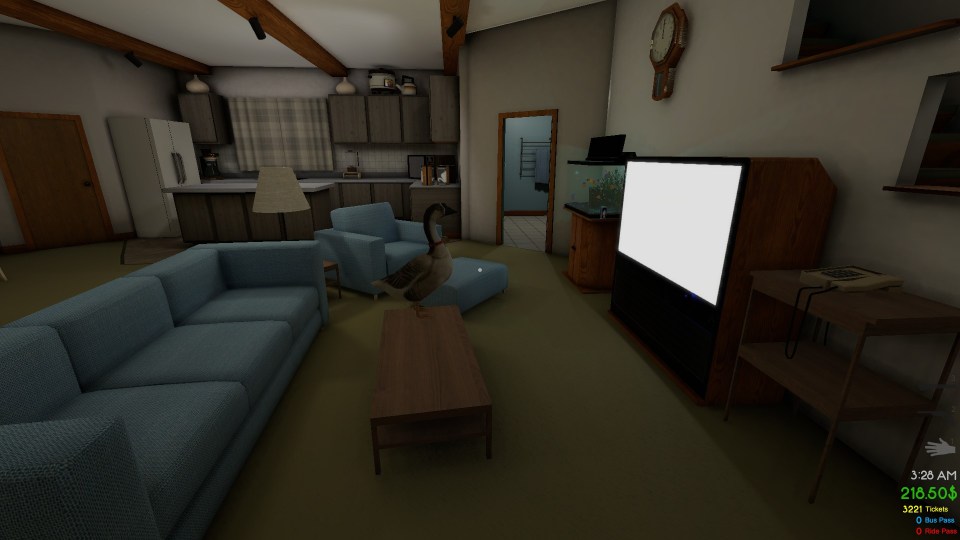
You can also visit your home, which might just be the strangest place of all.  It looks like a normal house, and is decorated like one too, with one major exception.  You have a pet goose.  I don’t know why, but you do.  You can feed the duck if you want, but mostly it spends its time watching TV.  There’s also a room in the house that’s dedicated to the goose.  I won’t go into specifics, but you should check it out.

The Coin Game is so delightfully weird and a little unsettling in a way that I’m totally a fan of.  It revels in its strangeness and wants you to embrace it as well.  The entire time I was playing, I kept thinking that it was going to have some sort of horror element to it because the atmosphere is just so off-putting in places, but luckily for me there was no terror to be found.

20200219165848_1.jpg

Like I said at the top, The Coin Game is a thin experience right now, boasting a few dozen arcade games, some bigger interactive experiences like go-karts and bumper cars, along with some truly lame rides that don’t really do anything but strap you in place and let you look around.  It only took me about an hour or two to touch every attraction in the game to give you an idea of its longevity.

All things considered, I really like what The Coin Game is laying out.  It’s very incomplete at the moment, with missing locations and attractions, any sort of story or motivation, full control support and more, the game earns its early access classification.  I’m extremely curious to see where it goes from here and what delightful weirdness they continue to inject into this thing, but for now, I’ve kind of spent as much time with it as I think I can get out of it in its current state.

Blog: Which Way to the Zero? – 02/26/20

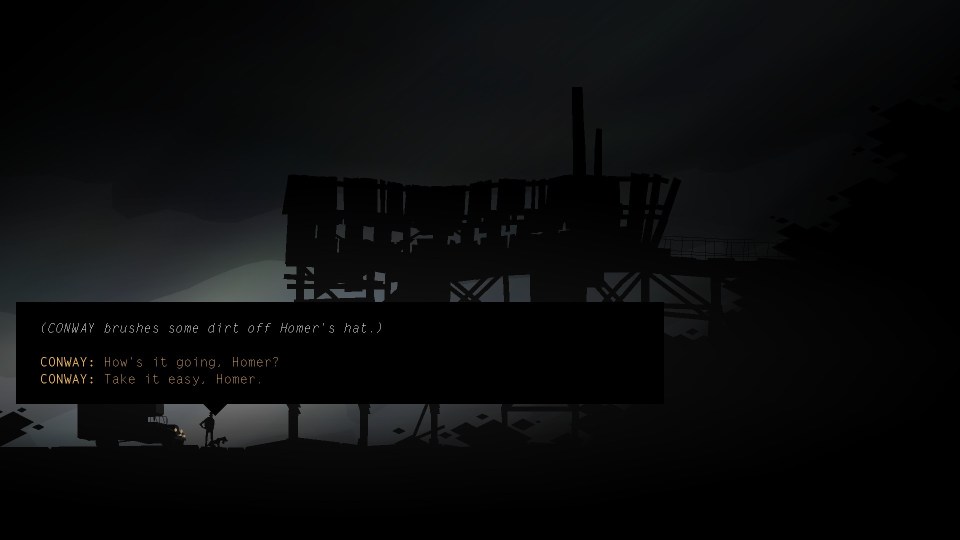
Back in the year 2013, an episodic adventure game by the name of Kentucky Route Zero released its first of five episodes.  A mere seven years later, the final episode of the story is out and available for public consumption.  Was the wait worth it?  I don’t know just yet because the last time I played Kentucky Route Zero was when it initially released and I can’t be expected to remember something from that long ago, so I just replayed the first episode instead.

20200206083530_1.jpg

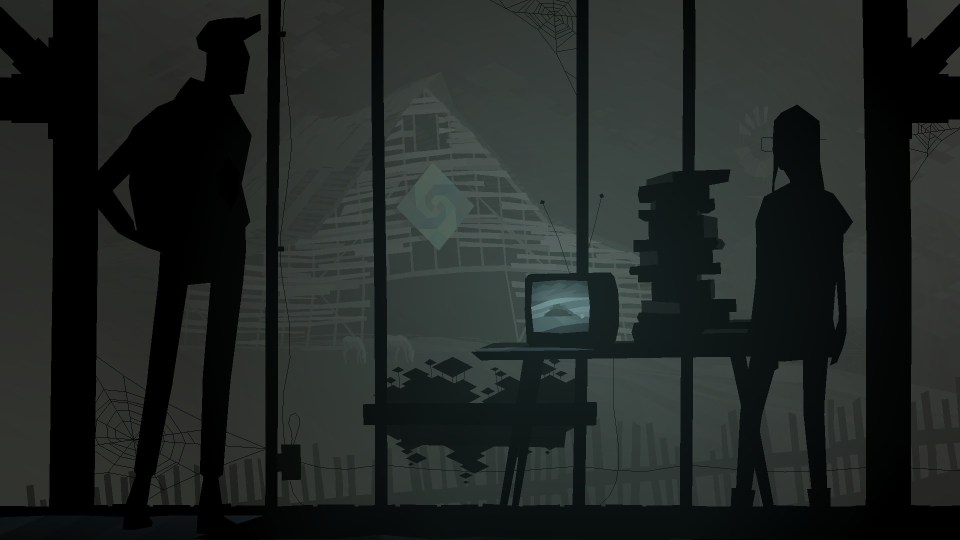
Kentucky Route Zero is a beautiful and mysterious experience that hovers somewhere between a point-and-click adventure game and a visual novel, never veering too far into either of those territories.  Most, if not all of what you do involves you selecting different dialogue choices, some of which are for gathering information while others seem to be more about you changing the story.

20200206084916_1.jpg

For instance, at some point in the first episode your character is caught in a cave-in at a mine.  The dialogue you could choose from was either saying that you were fine, or expressing that your leg was caught under some rubble.  I went with the latter option, which ultimately led to my character walking around with a limp for the rest of the episode.  Now, it’s entirely possible that either choice would’ve resulted in this, but it felt like my choice had immediate gameplay ramifications.  But then again, it could very well just be the illusion of choice.

20200206084249_1.jpg

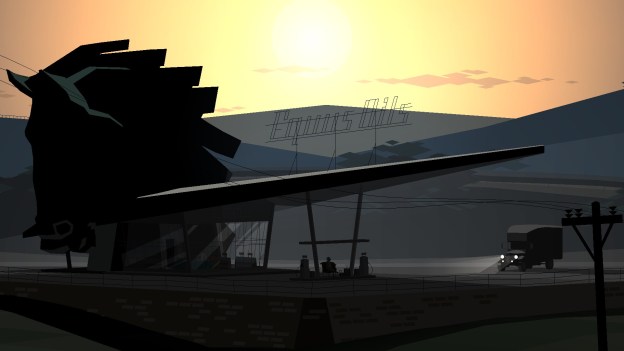
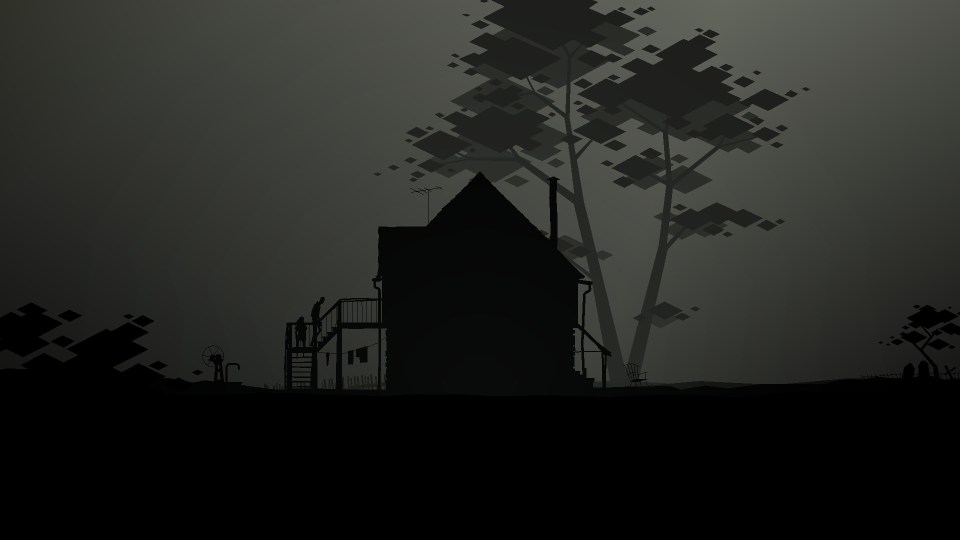
Kentucky Route Zero is phenomenally visually crafted, with everything from locations, character designs and even menus, working in unison to achieve a cohesive atmosphere and tone that’s genuinely enrapturing.  It’s so eerie and oppressive while also being just downright weird in some places.  Even if you just watch a play-through of it on YouTube or something, you can appreciate the cohesive visual style that’s on display.

20200206091547_1

I’ve only played through the first episode thus far, but it’s left me wanting more, and luckily, there’s 4 more episodes along with interstitial episodes as well for me to sink my teeth into.  There’s so much more I could say about the first episode alone, but I don’t want to spoil anything for anyone who hasn’t tried it yet.  But if dissociative, trippy, mysterious nightmares are your thing, I strongly suggest trying Kentucky Route Zero.