Category Archives: archived gut Check

Early Impressions: New Cities

If I had to list my favorite genres of games, strategy and tactics would probably hover somewhere by the bottom.  But there’s always an exception to the rule, and city building games are mine.  Having dumped endless hours of my life into games like Sim City 4 and Cities Skylines, it was a no-brainer backing the New Cities Indiegogo campaign.

The first few days of receiving a key for, and downloading New Cities, I would try to launch the game from Steam only to have it immediately crash.  Considering New Cities is only available to backers of the campaign, I wasn’t surprised to find that there were no answers to my dilemma.  So I reached out to the developers behind the game, Lone Pine, and over the course of a handful of emails and a few days, I finally got the game up and running.

20200122104321_1.jpg

Finally able to actually play New Cities, I loaded up a new world only to be a little intimidated by the sheer scope of the city I could make.  In games like Cities Skylines, you’re given a large map with several plots of land to pick from to start your city in.  New Cities goes hog-wild with this idea, and just allows you to start anywhere on the map.  You can zoom in and out till your heart’s content and just kind of build whatever you want anywhere, which is a little overwhelming.

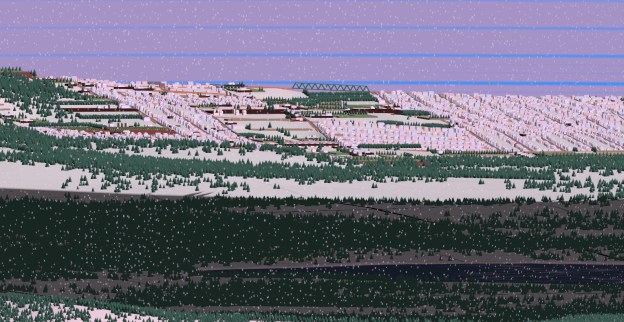
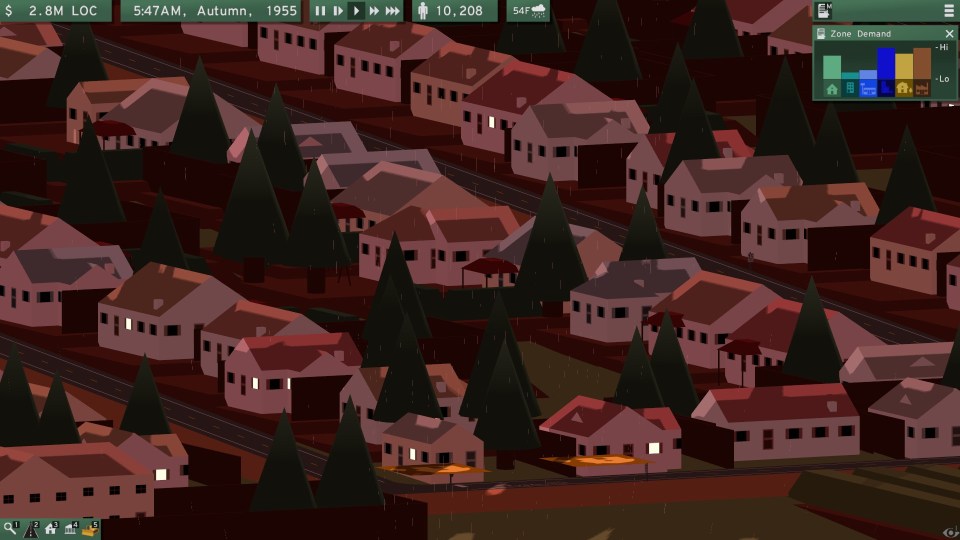
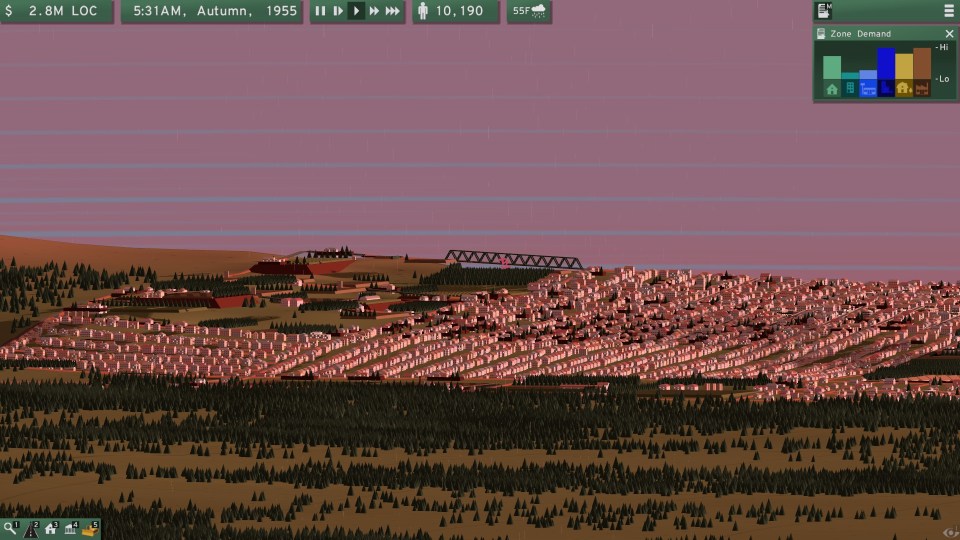
Unlike its modern counterparts, New Cities is going for the Sim City 4 approach of having things be more grid-based, and not allowing for curved roads or anything like that.  Which is fine for now honestly considering I start all of my cities on a grid anyway, but I’m sure people would like that option in the future.  This throwback style not only exists in its mechanics, but in its visual presentation.  Everything has a low-poly look too it, with buildings and scenery drenched in these shifting pastel hues.  Sometimes everything is covered in a cool purple light, and it feels like I’m building a vapor-wave city which is something I’m very into.
20200122103239_1.jpg

Keeping in mind how early of a build of New Cities I’m currently playing, it doesn’t feel right to harp on the things it’s missing or aren’t surfaced well just yet.  I’m sure everything is subject to change, but it’s worth highlighting some areas of improvement.

Navigating the UI is a little more cumbersome than I would like.  The menus aren’t overly complicated or complex, but there aren’t any tool-tips that can explain what I’m clicking on.  Opening up the statistics on your city give you various graphs and numbers that I’m sure would help me if I could understand what I’m looking at.  Like I said, it’s still in development, so I’m not upset these things aren’t super well explained, but these things are definitely issues I’d like to see fixed.

Along with UI issues, just like a lot of city-builders, not a lot is explained to you in terms of progression.  When you start, you do the standard thing of building roads and zoning for residential, retail and agricultural and that’s it.  There’s nothing else you can build in the early goings until you get upwards of 1000 – 5000 residents in your town.  Without things to build, terraforming, or unique infrastructure, it makes your city feel very empty and extremely generic.
20200122103219_1.jpg

There aren’t any power, water, or sewage requirements, which takes away the resource management of traditional city-builders, making the early game even less engaging, making the only thing you need to pay attention to be your cash flow.  There are some icons that’ll pop up over buildings that indicate joblessness, lack of customers and something that just says, “no freight,” but there’s nothing that I’ve found that really instructs you as to how to deal with any of that.

One interesting thing about New Cities is how expensive everything is.  I understand that in the real world, things are expensive and buildings and infrastructure are pricey, but it’s a little weird when a police station costs more than half of your starting budget.  That isn’t a complaint, that’s just me being caught off guard by the sheer price of everything. I kind of screwed myself in one city by starting on an island.  Once I ran out of space, I decided to expand onto the mainland.  Or at least I would have done that if bridges didn’t cost 300 million dollars to build.  So now I just have like 9000 people stranded on an island forever.

But I can’t be too hard on New Cities considering it’s still in active development, with plans of hitting early access later this year.  The experience is thin and in places obtuse, but this feels like a really good proof of concept to, pardon the pun, build off of.  The core of New Cities is solid, but needs an injection of things to build and manage especially in the early game, as well as a general pass at improving the little quality of life stuff like tool-tips.  I think New Cities can be something special with enough time, and I look forward to following it as it progresses.
 

Gut Check – Pokemon Sword & Shield

Having been out of the Pokemon game for decades, I never found myself yearning to get back into the mix and catch them all like I did when I was a child.  But recently thanks to the kindness of a friend, I was given the opportunity to try the latest Pokemon offering in the form of Pokemon Shield, and I’m not entirely sure how I feel about it.

Pokemon Shield starts pretty similarly to every other Pokemon game, with you setting out as a wayward child in the hopes of becoming the greatest Pokemon trainer of all time.  Sound familiar?

I’m not well versed in the modern Pokemon discourse and don’t really have an opinion on all of the hubbub surrounding this latest release, but from the little I’ve played of Pokemon Shield, it seems fine.  You’ve got all the staples of Pokemon games in the battling, catching and getting ambushed by people in the woods who are bloodthirsty and always ready to throw down.

The variety of new Pokemon seems pretty good from what I’ve seen, but then again I only really know the original 150 and not much else, so these could be older Pokemon from generations I’ve never played.  That being said, they still have that great Pokemon charm with creatures ranging from adorable to utterly confounding.

It’s hard to talk about Pokemon Shield as a game considering that most of what I’ve done so far has been pretty boilerplate for the series.  I did appreciate how I could skip some of the tutorials about how to catch and battle Pokemon, but somehow was still drowning in excessive exposition and redundant conversations.  I don’t need my rival to explain to me three times in one conversation that he wants to be the best trainer and win the championship or whatever.  You’ve mentioned it in basically every conversation we’ve had buddy, do you ever think about anything else?
But that’s Pokemon right?  Just a bunch of wannabes vying for the top slot but never being good enough to overcome you.

The thing is that I don’t really have strong feelings about Pokemon as a concept or a game, so I can’t make a qualitative statement about Pokemon Shield because I’ve been so far from it for so long that it wouldn’t be fair.  But what I can say is that it was a little disappointing to boot up the game and just go through the same motions that I did over 20 years ago.

I don’t know what people want out of a new Pokemon game, nor do I know what I’d want out of a new entry in the series.  But I guess it’s important for me to remember that these games aren’t for me, they’re for kids and fans of the series.  It doesn’t feel right to be overly critical of something that’s so foreign to me, but as it is I don’t think I’m really going to continue playing Pokemon Shield that much because it just feels like I’m playing a prettier version of the same thing I played as a kid.

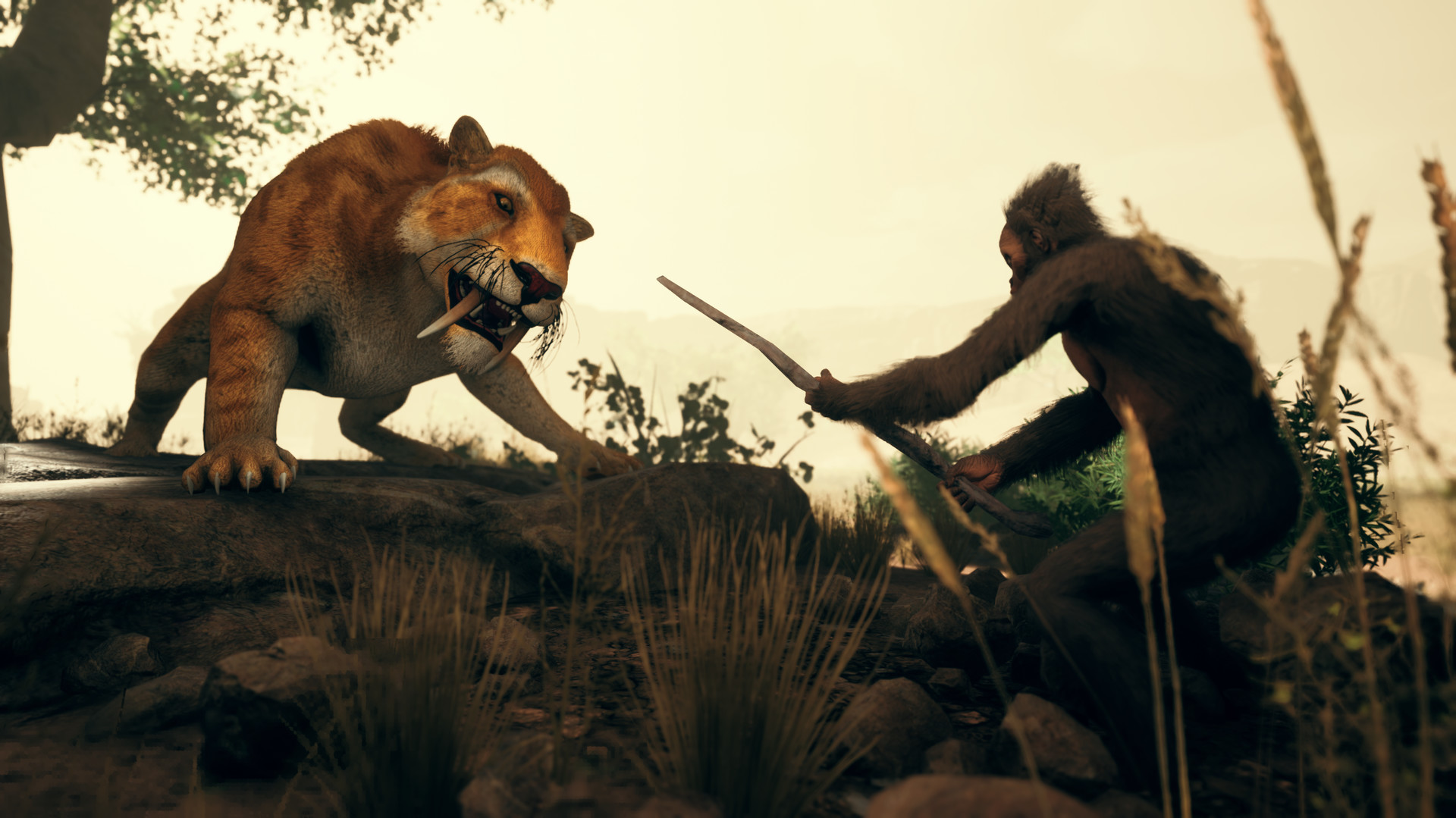
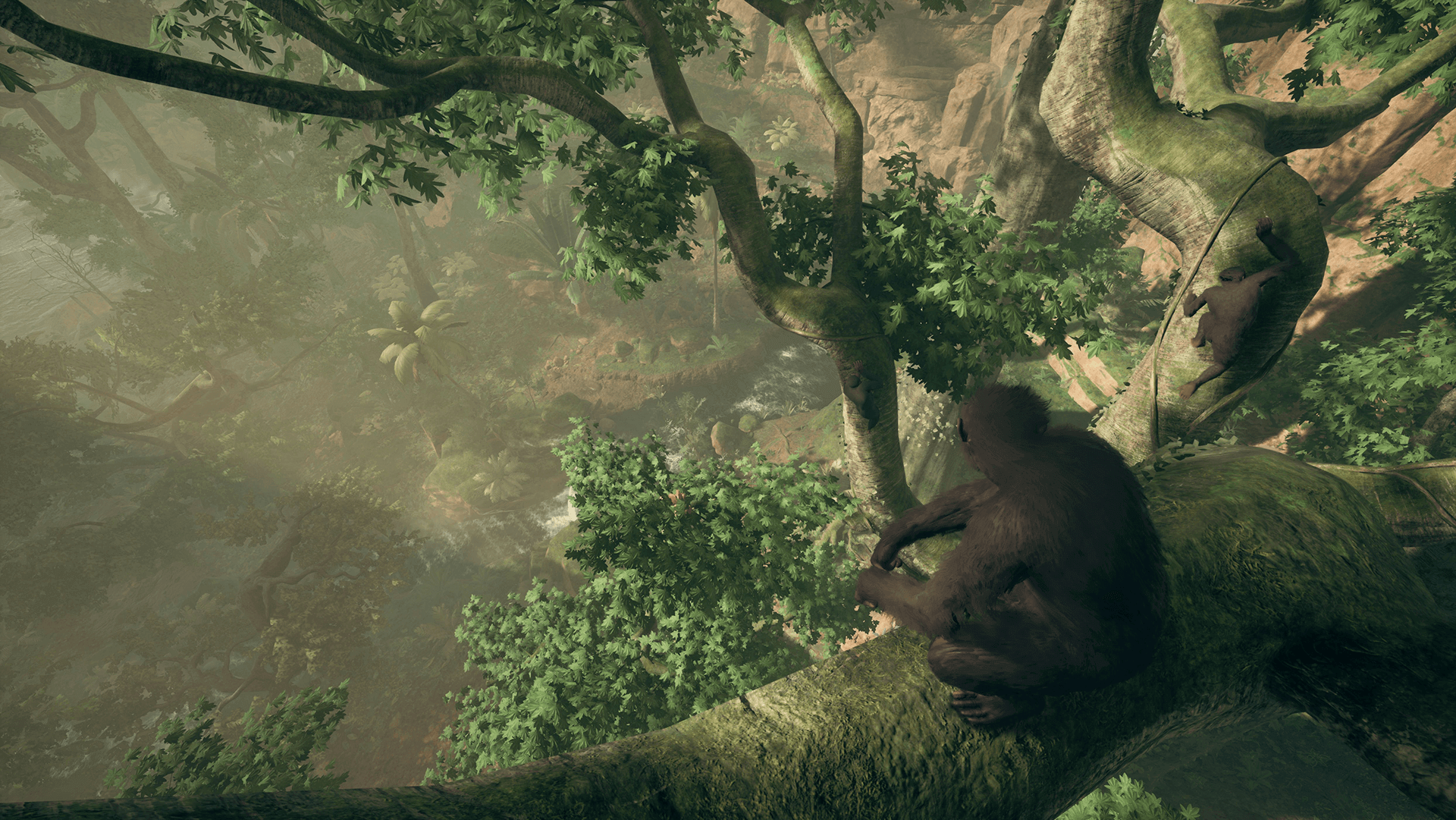
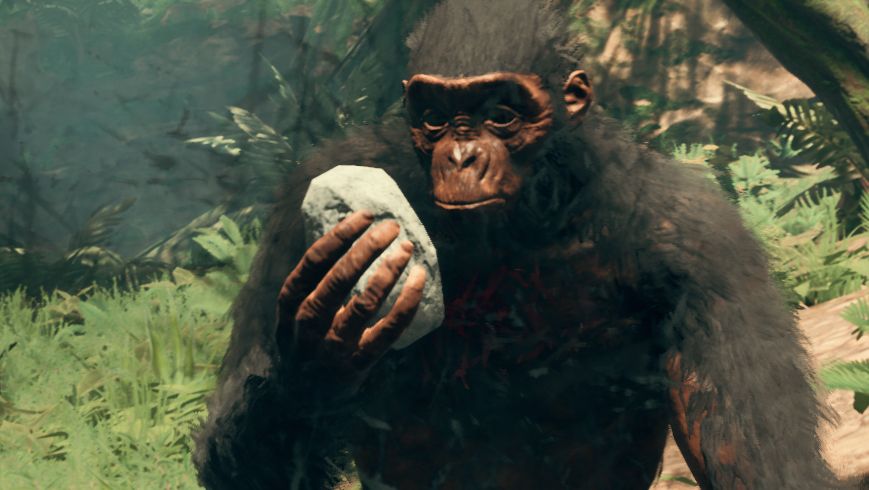
Gut Check – Ancestors: The Humankind Odyssey

There are games that nail various aspects of their design, from story to gameplay and so on, but rarely do I find a game that is so fascinating that I’m willing to overlook its various shortcomings.  That’s the way i feel about Ancestors: The Humankind Odyssey and its bizarre offerings.

I guess you could call Ancestors: The Humankind Odyssey an action-RPG with survival mechanics if you really wanted to put it in a box, but it’s so much more than a genre descriptor could ever truly describe.

You play as an early hominid about ten million years ago, trying not only to survive, but to learn and pass on as much knowledge as you can to future generations.  The pitch is incredibly interesting, but the execution is questionable at best.

The idea is that you’re learning along with the player character, not necessarily in what skills and concepts you pick up, but in how to do literally anything in the game.  It kind of feels like you’re learning two games at once.

I wouldn’t normally explain control schemes, but I feel like it’s necessary in this case.  You’ve got standard movement and camera controls, but to run or jump you have to hold down the A button to run, and release that hold to jump.  It reminds me a lot of how Tony Hawk’s Pro Skater controlled oddly enough.  You also have different sense mapped to different face buttons.  One activates your smell, your hearing and your intelligence I think?  But rarely have any of these senses been useful because everything is so obtuse in Ancestors: The Humankind Odyssey.

For instance, there are essentially mini-games that you need to succeed at to do everything.  Want to sharpen a stick with a rock?  Well you need to not only have a rock in one hand and a stick in the other, but then you need to play this timing based game where you repeatedly smash the rock into the stick until it’s sharp.  Want to stab a wild boar?  Well you can’t unless you have the sharp stick in hand and dodge into the attacking boar at the right time.  Weird, right?

It gets even more confusing when you are unlocking new abilities.  You have a skill tree for your current character, and you unlock abilities by doing or encountering things.  For example, I ate a mushroom that poisoned me, but not because it was poisonous, but because I was a carnivore and my metabolism wasn’t prepared for an omnivorous diet.  Eating more of these would increase my tolerance, (I think?) and allow me to unlock a better metabolism in the skill tree.

But that skill only applies to this current character.  To lock these in, you need to take a kid along with you on your adventures so they learn it.  Doing that allows you to “reinforce” a skill, making it something that is inherently known for future generations.  But if you die with a baby on your back, you suddenly play as the baby who has to find a hiding spot.  Once you do that, you transport into another living adult, and have to recover the child by finding them, and playing the worst mini-game I’ve ever seen.  You have to essentially calm the kid by howling at it at the right time, but it feels completely arbitrary as to when that timing window is, and doesn’t give you any feedback at all.

And that’s all I came back with in the first hour or so!  Who knows what other craziness is thrown at me later in the game.

Ultimately we have a game that controls oddly, doesn’t give you any real direction, and has obtuse and obfuscated mechanics.  All of that said, I can’t stop thinking about this stupid game.  It’s so weird that despite all of the fundamental issues I have with it as a game, I need to know what happens next.  Is there a point where I eventually become a human?  Do I learn how to make fire?  Can I make weapons and hunt stuff instead of being terrified of literally anything that crosses my path?  Who can say?  All I know is that despite its flaws, I want to see what else is going on in Ancestors: The Humankind Odyssey.

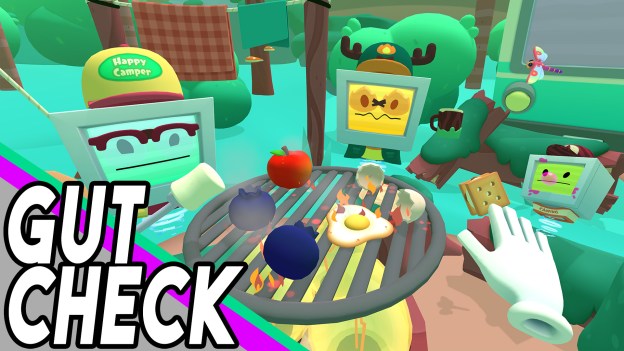
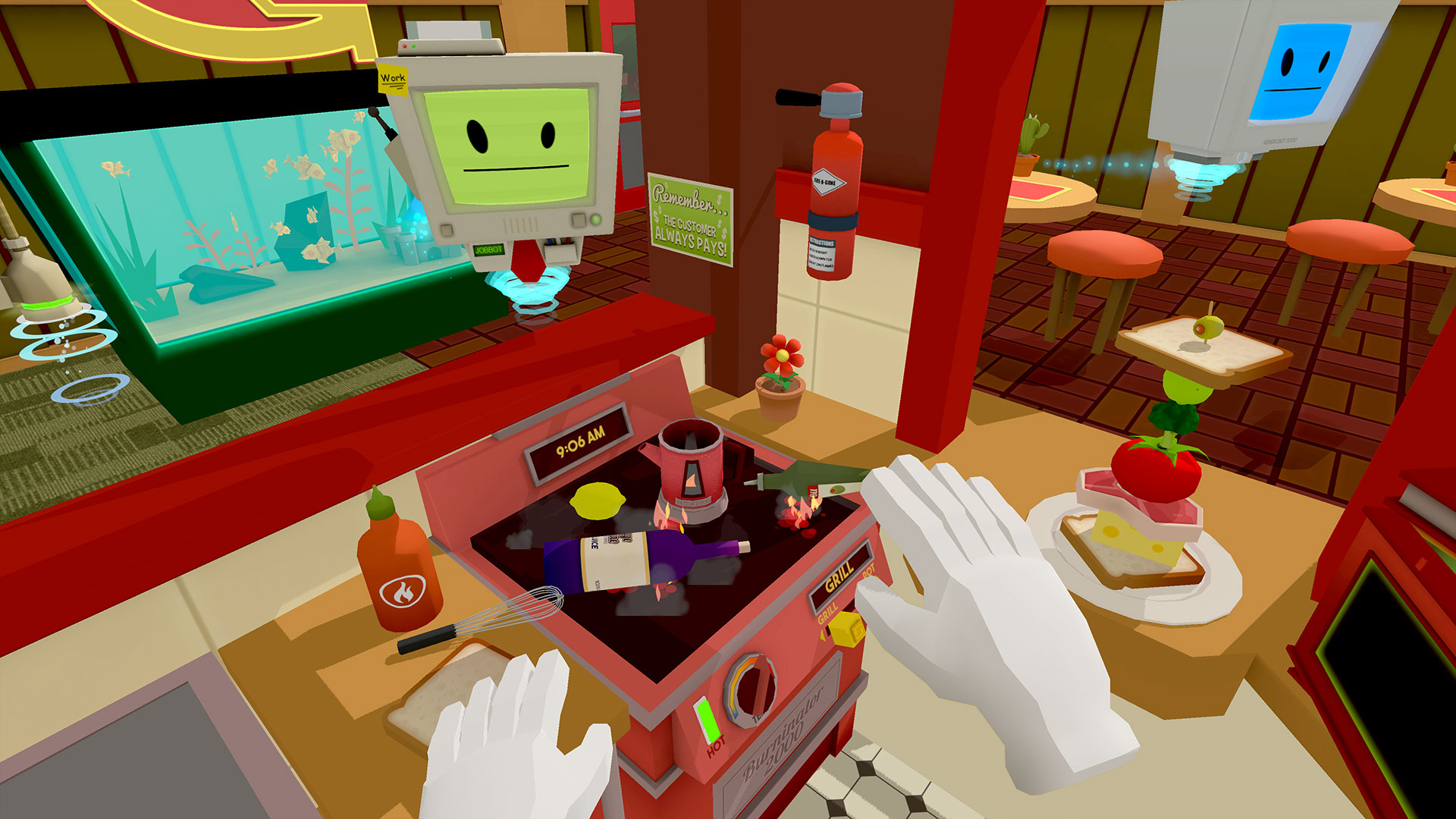
Gut Check – Vacation Simulator

Welcome to the first installment of Gut Check, a feature about first impressions in video games.  To read some backstory on why and how Gut Check came into existence, check out this post.  But without further ado, let’s take a look at the follow up to Job Simulator, the aptly titled, Vacation Simulator.

For context, Job Simulator was and still is one of the best virtual reality games around because of how nonsensical, nonlinear, yet focused gameplay.  In Job Simulator you were basically in a museum, hundreds of years into the future, learning about the jobs that humans did before they all died.  Things like office work, car repair and others were all available for you to play with, but never was it an actual simulation of how these careers actually were.

Instead you were hurling around coffee cups, shoving bananas in tailpipes and doing all sorts of goofy things that these robots thought humans did.  It was also a great way to introduce people to VR and get them acquainted with the controls and possibilities.

With all of that said, Vacation Simulator seems to be a more blown out version of its predecessor in just about every way, for better and worse.

The best parts of both Job and Vacation Simulator are the wild interactions that you can have while in a somewhat familiar setting.  Maybe you’ve never worked in a convenience store, but we all have an understanding of what that looks like.  Similarly, Vacation Simulator takes you to a beach, a campsite, and a snowy peak where you can interact with anything that isn’t nailed down and silly interactions with the other vacationers.

Where Vacation Simulator loses me a bit is in the scope of the thing.  What made Job Simulator so fun and approachable was that you didn’t need to worry about what was going on from level to level, or even mission to mission.  It was all self contained in a way that made it accessible.  Vacation Simulator however, opted to go with a more interconnected world where completing tasks involves you going to different places.  It’s not a bad idea, but it leads to a clashing of ideologies that makes the game seem like it’s at odds with itself.

For instance, in the beach level there was a grill where I could cook up orders for people and deliver it to them.  All of the ingredients for a cookout were right there, and the customers who wanted the food were on the beach.  But as the missions got more intricate and introduced more ways for me to mess up an order, I was also tasked with delivering food to different locations as well as gathering ingredients from those locales too.  In this particular instance it bums me out because someone on the beach wanted a s’more, but I had to go collect marshmallows from the forest map and bring them back to cook up the order.  And since you have limited inventory space, you might find yourself screwing up said order and having to trudge back to the other map.

It just feels a little like (ironically) busy work was introduced into the game to make it seem like a more robust experience.  Now, none of this is ever so off-putting that it made me not want to play more.  Vacation Simulator manages to introduce plenty of new and interesting interactions and missions into the world that keep it interesting.  But I feel that the multi-level objectives end up feeling more like work than just goofing around.

That all being said, Vacation Simulator is a great time for anyone who enjoyed its predecessor and its brand of silly humor.  It’s still a charming and fun virtual reality game that ultimately takes two steps forward and one step back.  The biggest disappointment in my eyes is the fact that this game won’t be the first thing I put new VR players in.  Job Simulator is still the game I get people to try out who are curious about VR, because of how straightforward it is.  Vacation Simulator layers on a bit too many elements to make it approachable to first time users for my tastes, but it’s still one hell of a good time.  I’ll continue to play this one for sure.


Early Impressions: Pine

After only a few hours with Pine, I came to appreciate its ambitious mechanics and intriguing story, but ultimately found it lifeless and repetitive.  It’s unfortunate considering there are a lot of interesting ideas at play in Pine, but I just found that they weren’t fleshed out enough and resulted in a lot of meandering and fetch-quests.

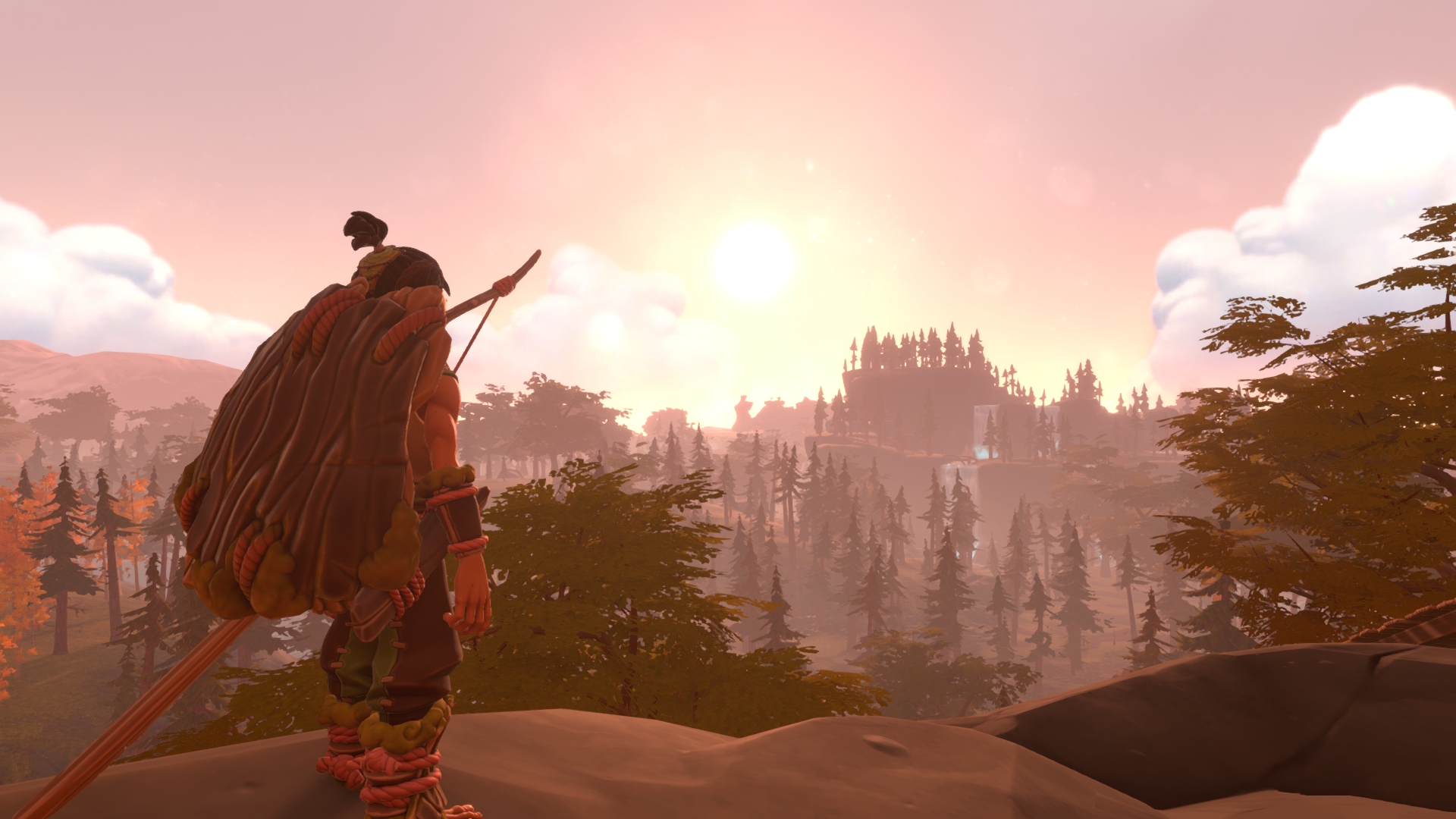
From the outside looking in, Pine is an incredibly charming and colorful, third-person action game that gives off vibes of various Legend of Zelda games.  You play as a boy who grew up in an isolated village atop a mountain, which goes about as well as you might think.  The mountain collapses, and you plummet down into the unknown land below only to discover that it’s inhabited by various groups of anthropomorphic animals with their own societies and villages.

What Pine tries to do is make you play with these various settlements by maintaining your reputation with these factions in order to accomplish your goal of resettling your tribe somewhere else.  Sadly, it sounds more interesting than it actually is.  When you walk into a town, there are two points of interest that basically dictate everything about the faction and their attitudes.  First are these signs that indicate how this settlement feels about every other tribe out there through a simple color scale: Green is good, white is neutral, and red is bad.  It’s said that you could play these tribes against each other and watch them wage war with each other, but I haven’t gotten far enough to see that in action.

The second, and possibly most confusing thing you find by these settlements are things called “donation boxes.”  As the name would imply, you can leave gifts for the settlement that you’re by to increase your standing with them.  Maybe I haven’t gotten far enough to really see these in action, but a donation box seems to be the way you pay for your heinous crimes.  Have you killed too many of a certain tribe or stolen their crops and resources?  Just look at what kind of flowers and rocks they like, and dump enough in there until your bounty is paid. I feel like this box undermines the whole concept of having consequences for aligning with a certain faction, but maybe that changes as you get deeper into the game.

Another bit of strangeness comes from how desolate Pine‘s world feels.  You’ll see a member of a tribe roaming around, picking up acorns and pine cones occasionally, but aside from that, I think I’ve only seen two types of wild animals. One was a predator, and the other was a mix between an elephant and a deer, and that was it.

“Empty” is kind of the one word summary of my time with Pine when I think about it.  I find myself just going from one quest marker to the next, picking up crafting materials along the way, and never really being pushed to check out a distant landmark or curious rock formation.

What also hampers exploration is the stamina mechanic.  In Pine, your stamina is always ticking down; Whether you’re fighting, holding your shield, running, jumping or walking, your stamina is being drained.  This singular mechanic was probably more responsible for my lack of eagerness to explore than anything else.

I really hope some big change is on the horizon because as of right now, everything I’ve done has been some form of fetch quest that has me gathering enough wood or hay to craft something.  Every quest has just been me ticking off a checklist in an effort to unlock a bigger checklist.  For instance, I recently got to a point where I was tasked with stealing tokens from members of each tribe.  That was after I had to collect ingredients for a potion, and after I had to find a watchtower and pick up the materials in it.

Pine isn’t a bad game, and I don’t want to give off that impression.  I think the combat has a good feel to it, the world is stylized in a bright and colorful, almost cartoon-like fashion, and the faction control element is really interesting.  But all of it feels very shallow at the moment.  Maybe I’m on the cusp of the training wheels coming off the whole game, or maybe it never gets there.  The only way I’ll find out is through playing more of it, and quite frankly, that’s the hardest part.


This article is based off of the Steam version of Pine, but it is also available on the Nintendo Switch.

Early Impressions: Marvel Ultimate Alliance 3: The Black Order

In lieu of an introduction that recounts the entirety of the Marvel renaissance over the past decade and how this title properly capitalizes on that zeitgeist, I’m just going to go ahead and say that I’m really enjoying Marvel Ultimate Alliance 3: The Black Order and what it brings to the table.  It’s an imperfect game that doesn’t fully deliver on the power fantasy of playing as your favorite superheroes, but it sure is fun.

For those who don’t know, Marvel Ultimate Alliance 3: The Black Order is a 1 to 4 player cooperative brawler with a lot of RPG elements.  You get to slip into the tights of several iconic heroes and take on just about every big time villain you can think of, in an effort to collect all of the Infinity Stones.  The story is largely forgettable, mostly serving as very loose connecting threads between the different supervillain themed levels, but it has enough fan service to make the cut-scenes worth watching.

But that’s not why I came to Marvel Ultimate Alliance 3: The Black Order.  I wanted to punch, kick, and magic blast my way through every enemy I could see.  In this arena, Ultimate Alliance 3 excels.  Each hero has their own unique light and heavy attacks along with 4 special abilities that can be upgraded to be more effective.  The combat is repetitive yet fun, and adds enough variety by forcing you to block and dodge more than you’d expect from a brawler.

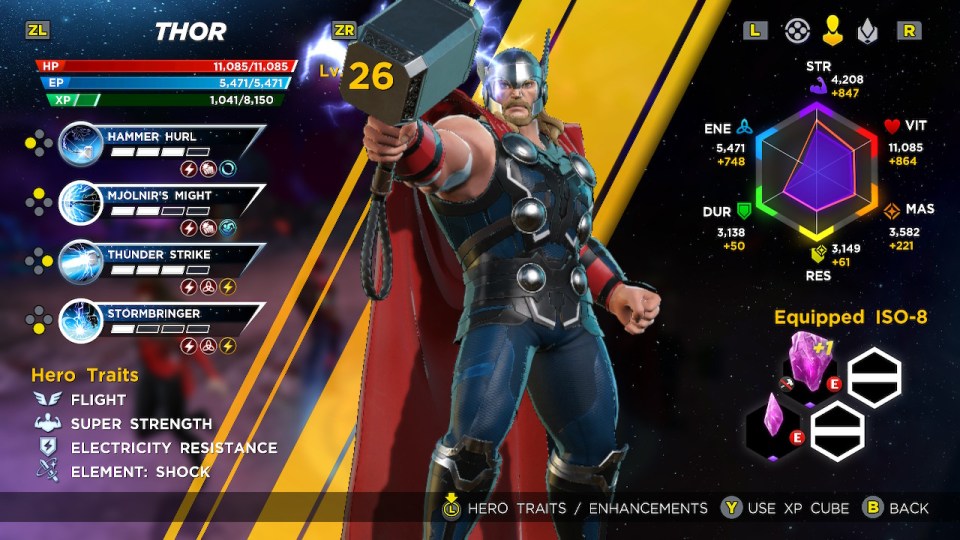
Marvel Ultimate Alliance 3: The Black Order encourages you to really consider your team build by offering buffs based on who and what kind of characters your active 4 is comprised of.  Teams like The Guardians of The Galaxy, the 2012 movie Avengers, 4 of the Spider-Man characters and so on and so forth, get special bonuses when you use them together.  But even when you split the team up and get less married to team composition, Marvel Ultimate Alliance 3: The Black Order still rewards you with a portion of whatever active bonus you might be building towards.

For instance, having The Hulk and Thor on a team grants you half of the movie Avengers team bonuses, as well as a bonus for putting heavy-hitting characters together.  All of the team compositions can be viewed in the menu which is extremely helpful considering you unlock new characters pretty quickly, and there’s something like 30 different team bonuses you can achieve.

The downside to all of this is that Marvel Ultimate Alliance 3: The Black Order only half explains most of its mechanics.  Learning about proper team composition is fairly obvious, but finding out what category of moves your characters have access to and how those play together is kind of a mystery at first glance.  There are just so many icons that each portray different abilities, or unity bonuses, or stat categories, that it’s genuinely overwhelming at first.

2019072113592900-EEF8E9558A0946A299305EE281E121B4.jpg

In addition to that, Marvel Ultimate Alliance 3: The Black Order kind of forces you to try out your newly recruited superheroes by making them significantly higher level than the heroes you’re currently playing as.  Normally I’d say that’s a good thing to encourage people to step out of their comfort zone, but in my experience it’s only led to me ignoring team bonuses in favor of who has the highest level.  So now I have the iconic team of Thor, Deadpool, Dr. Strange and Ghost Rider all hovering around level 28, while Captain America, Spider-Gwen and so many others are so under powered that using them would be me handicapping myself.

2019072114201000-EEF8E9558A0946A299305EE281E121B4

This wouldn’t be as big of a problem if it wasn’t for the fact that the difficulty spikes are fairly brutal, and require you to have a fairly robust knowledge of these 30+ characters and their strengths in battle.  Sometimes you need a lot of area-of-effect and crowd control characters.  Sometimes you need a balance of bruisers and ranged characters.  The problem is that unless you know how these characters play or figured out the myriad of icons and tokens that denote a specific hero’s style, you’re basically brute forcing your way through situations and experimenting via extensive trial and error..

I don’t want to paint the picture that I don’t like this game, because I genuinely am enjoying it despite the issues I’ve run into.  The action is fun and simple without feeling overly repetitive which is a tight rope to walk when making a brawler.  There’s a stun meter that acts like enemy armor, that once depleted will stagger an enemy and allow you to attack their health directly.  It adds a simple extra layer of depth to the combat that manages to keep things interesting long enough for you to get to a boss battle.  And that simple loop is made better by the wide variety of characters and moves you have at your disposal.

I did wish that my attacks felt a little more powerful though.  It felt a little weird to watch The Avengers struggle against a bunch of convicts in a prison and then proceed to go fight Ultron or something.  But it’s a video game, and you have to be able to deal with weird logic loopholes if you want to have fun sometimes.

2019072114181600-EEF8E9558A0946A299305EE281E121B4

Minor grievances aside, the biggest problems with Marvel Ultimate Alliance 3: The Black Order are mostly of the technical variety.  The camera is hilariously bad at times, getting locked up on some geometry, going in walls, or just zooming in and out in odd intervals in an attempt to be helpful.  While the frame-rate has a tough time holding up when the action and particle effects start to kick up.  The loading times are abysmally long and managed to actively keep me from completing more challenge missions considering the load to get into them was just about as long as the mission itself.

Even the AI and how the logic of the game treats them is strange.  Most of the heroes at your disposal will require you to pick up red and blue orbs that represent health and energy respectively.  Reasonably, the game only allows player controlled characters to pick these things up, but even if you’re filled up on health and pick up an orb, it doesn’t heal any of your teammates.  It sounds like a silly thing to complain about, but it ultimately led to me favoring one character and praying that my team AI wouldn’t get themselves killed because I didn’t want to micromanage their health pickups.

I know it sounds like I’m really down on Marvel Ultimate Alliance 3: The Black Order, but honestly, I’m having a really good time with it.  There are plenty of other things I could pick apart, but despite all of them I just want to keep playing it more.  Marvel Ultimate Alliance 3: The Black Order is the perfect example of a game that does one thing so right, that all of the issues surrounding it don’t seem as bad.


Marvel Ultimate Alliance 3: The Black Order is available exclusively on the Nintendo Switch.

Early Impressions: Dauntless

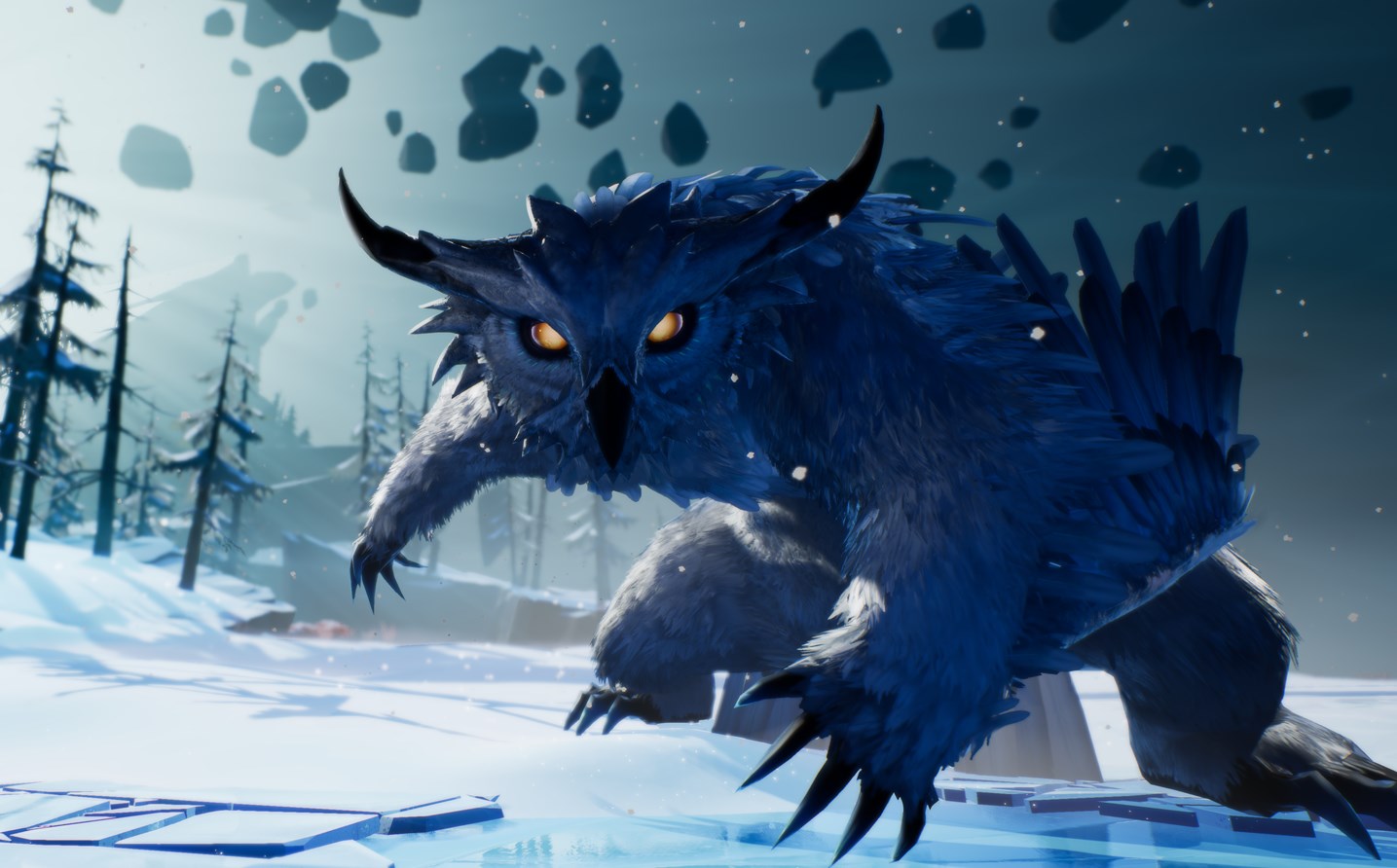
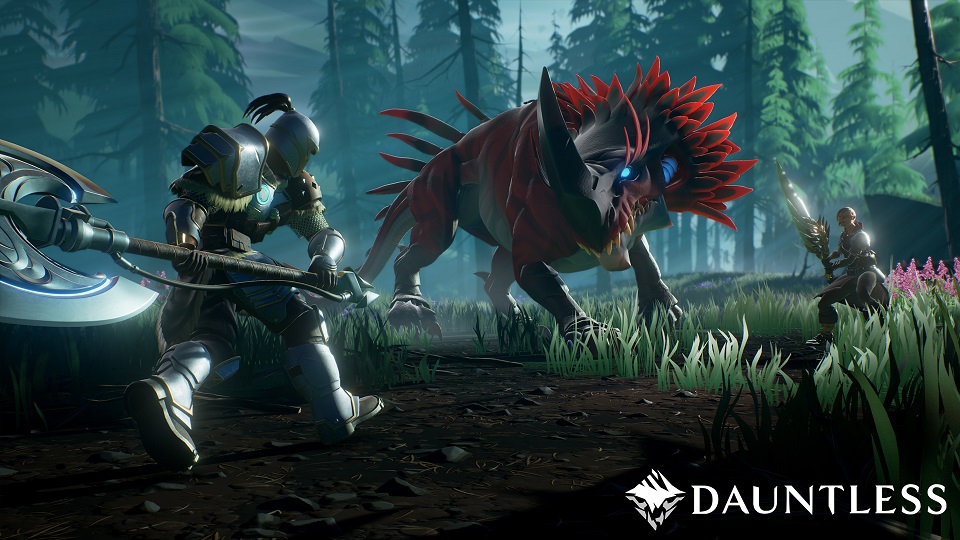
Let’s just get the obvious comparison out of the way from the jump; Dauntless is basically a more streamlined, more accessible, Monster Hunter game that strips out a lot of the complexity.  Because of this more simplistic approach, I’ve found myself gravitating towards Dauntless in a way that I didn’t expect.

For the uninitiated, Dauntless is a cooperative monster hunting game, in which you and your party go out into the world in search of various creatures to slash, smash and blast apart in an effort to collect their parts, and fashion more efficient monster dispatching weapons and armor.

The core loop is pretty straightforward and fun, but it’s the stuff around the edges that really do the heavy lifting in terms of appeal in my eyes.

I hate to keep drudging up this comparison, but it’s something I feel that’s important to highlight.  Dauntless and Monster Hunter and two sides of the same coin, offering up similar experiences for different kinds of players.  Monster Hunter relishes in the details and sweats the details in a way that Dauntless does not.

From the complexity of the world, the abilities you have at your disposal, item management and more, Monster hunter offers a more robust and granular experience.  Which is great for the people who are looking for that.  But for people like myself, with more of a curiosity about Monster Hunter, Dauntless provides an easier ramp for players new to the monster hunting genre.

From the jump, Dauntless gave the impression of being too shallow due to the size of the maps, the limited amount of missions, and lack of weapon variety.  Instead of letting me choose from every available weapon from the start, I was limited to melee based armaments.  After a few missions though, Dauntless revealed that it has ranged combat in the form of guns.  It was a little thing, but the gentle slope of exposing more of the mechanics worked for me in a way that didn’t feel like over tutorialization, but encouragement to step out of the comfort zone it had helped me establish.

I also really appreciate the first few levels of upgrades and craftable items.  Dauntless obscures a lot of the more complex options and doles them out at a pretty good pace.  Early in the game, Dauntless introduces you to the idea of tonics that when consumed on a hunt, can offer different effects.  The first one they show you is one that makes you faster for a period of time.  And for a while, that’s one of the only things you can craft.

Whereas Monster Hunter feels like diving into the deep end of the pool, Dauntless is you gently wading into it.  I’m still early in my time with Dauntless and have found a lot to love thus far, but that isn’t to say it’s without any faults.

So far, I’ve found that there’s less actual hunting, and more walking into the clearing where you can see the only other animated creature in it.  It wasn’t until a little later on that the zones got bigger and more complex, but even then, there isn’t anything else moving in the world aside from you and the monster.  Although I did wander around a zone for a while only to see a monster climb out the ground to attack me.  It was neat, but the game might as well have just shoved us into a closed arena instead of making me wander aimlessly to trigger the beast.

I also found that there isn’t a lot of complexity or variety in your move-set.  Maybe that changes later on, but up front, you have 2 or 3 combos per weapon, and a special ability or two based on how you kit your character out.  I wouldn’t say the combat is boring, but it is repetitive.  I’m sure that changes as the monsters get more varied and have more attacks and phases, but as it stands now, most fights break down into a war of attrition.

All things considered, I really am enjoying Dauntless.  I don’t find it to be overly aggressive with pushing micro-transactions or painfully grind heavy, but I’m still fairly early on in my time with it.  It’s also free to play, which is a pretty attractive price in my mind.


Dauntless is currently in open beta and available for download through their website playdauntless.com and will release exclusively to the Epic Store on May 21st.

Early Impressions: Eastshade

When it comes to talking about Eastshade, I’m conflicted about how to portray it.  Eastshade is an ambitious game that has a lot of interesting ideas that I’d like to see fleshed out, but all the ambition in the world doesn’t cover up its glaring flaws.

You are a nameless, faceless character who is honoring the last wishes of your dying mother.  In the introduction of the game, you recall a memory of her, imploring you to travel to this wonderful land and experience its beauty.  See, in Eastshade, your character is a painter, and what your mother has given you is essentially a checklist of things to paint.  But to say that all you do in Eastshade is go to things and paint them would be a misrepresentation of the experience as a whole.

20190218224409_1.jpg

Eastshade is a first person puzzle and exploration game, that has you exploring a whimsical island and discovering the many secrets it hides.  In lieu of combat or platforming, you only interact with the world in a handful of ways.  You’re mostly talking to the citizens of the world, collecting resources, painting pictures, and using the time of day to solve puzzles and uncover mysteries.  On the surface that all sounded like an enticing offer to me, but after only a few hours, my motivation to continue has started to wain.

Right off the bat I noticed that Eastshade doesn’t run well at all.  No matter what combination of settings I turned off or on, the game wasn’t able to keep a stable frame rate and would often hitch up.  In addition to that, it’s also an incredibly buggy game in general.  From NPCs getting caught in loops, to your character bouncing off of the geometry of the world if you step on the wrong piece of it, Eastshade has an overwhelming level of jank.  Even things like quitting the game are more complicated than they need to be.  Seriously, every single time I quit the game it freezes up, and I have to force quit it from the task manager.

20190218224640_1.jpg

On top of poor performance, the whole game feels disjointed and directionless and often boils down to you doing endless fetch quests for different citizens to unlock more of the map.  Even the “painting” part of the game is just you hitting a button to capture what’s on screen at the moment, then that appears on a small canvas next to you.  It’s really a glorified screenshot button.

Early on in the game you’ll come across a bridge that nobody is guarding, but requires you to pay a toll of 60 fantasy dollars.  You cannot get over it unless you pay, and you can’t go around it because every body of water in Eastshade might as well be a wall.  So now you’re trying to figure out how to get 60 fantasy dollars.  Luckily there’s a man who will buy feathers off of you for one fantasy buck each.  That means you need to scrounge around in the fields looking for feathers, or complete some other fetch quest for someone else in order to pay this ridiculous bridge fee.

20190218224314_1.jpg

But it doesn’t end there, cause once you do that you meet a man who will build you a boat if you bring him some materials.  Then you meet a person who needs sticks to build a fence, and person who needs inky mushrooms to make you map.  It all feels so antithetical to the initial pitch of, “uncover the mysteries of the island.”  I felt like an errand boy more than a mystery solver or a painter.

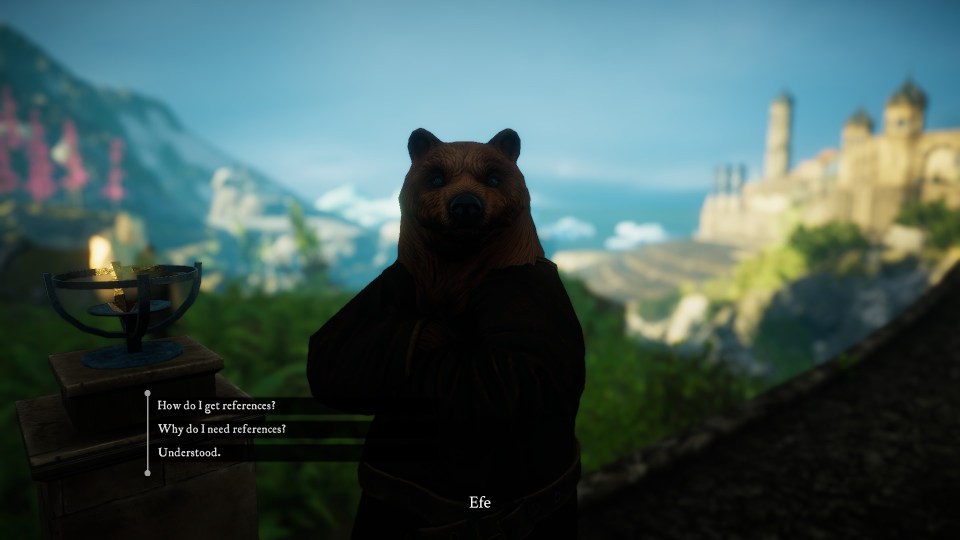
One of the moments that left me particularly frustrated and confused was when I finally made it to the entrance of a city that everyone was telling me I had to visit, only to be turned away at the gate by a guard.  The reason for my denial; I didn’t have any reference letters.  That’s right, I needed reference letters that would vouch for the quality of my character before I would be allowed in.  The guard even said that the city loved new visitors, but they needed to take extra precautions to make sure that all of them were good people.  It was at that moment I had the realization that everything in Eastshade is gated off by some collect-a-thon or MMO side-quest bullshit.

20190218224545_1.jpg

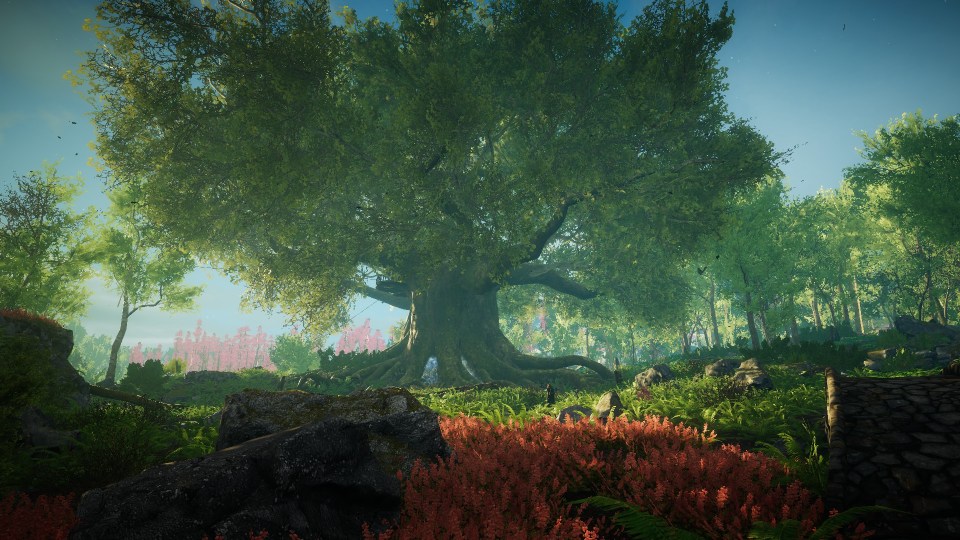
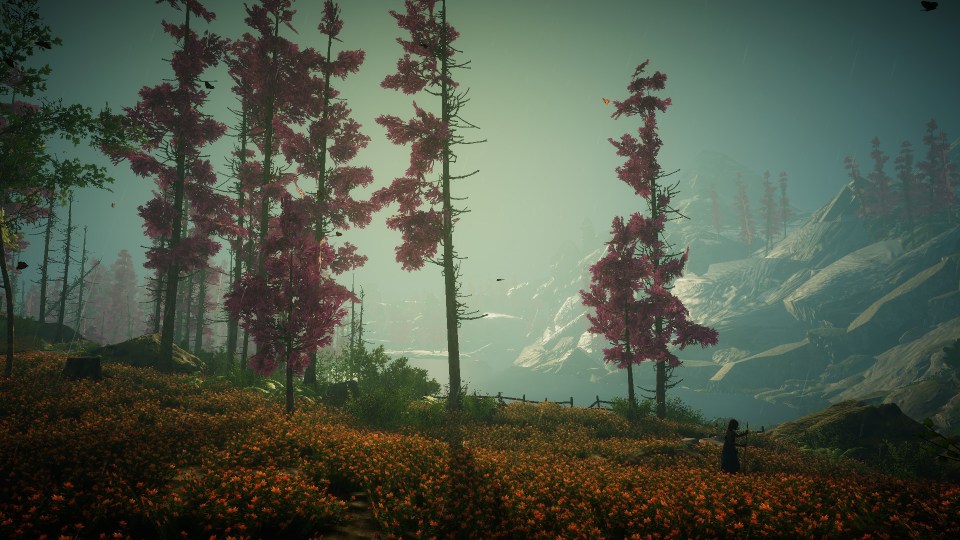
It’s all such a shame considering that Eastshade has some really neat ideas that I wish were executed better.  The world is beautiful and has some really unique and interesting locations to discover.  The concept of exploring a whimsical world as a painter and dealing with problems through dialogue rather than combat was also super intriguing to me, but this all just feels half-baked.  There is a lot of promise in the early hours of Eastshade, and I’m going to try to get a little further in it before I make any definitive statement on it as a complete product, but as it stands right now, Eastshade is a game that pushes me further and further away, every time I play it.


Eastshade is currently available on Steam for $24.99.


Early Impressions: Unruly Heroes

From the moment I started playing Unruly Heroes, I was immediately struck by how awkward and unresponsive it felt.  My initial reaction was to assume that I needed to spend more time with it to really get a handle on things, hoping it would eventually click with me.  Since it was first revealed, I was drawn in by the beautiful art and animation the trailers had boasted, but after spending some time with it I grew more and more frustrated with the game.

Let’s back up though.  Unruly Heroes is a side-scrolling action and puzzle platformer created by Magic Design Studios, which as far as I can tell is their first game.  You’ll be switching between one of four characters on the fly in order to solve puzzles and maneuver around levels.  Each character has different attack patterns, abilities, and either have a double jump or can float in the air.  This all is depicted in a beautiful art style reminiscent of the most recent Rayman games, but ultimately lacks the personality or charm that they had.

The first few levels I played were bland and uninteresting, opting for a snowy field and snowy cave theme which didn’t make for a great first impression.  But despite the uninspired level design, the game looked phenomenal and was enough to keep me pushing through to see what else there was.  Unfortunately, this is where things really broke down for me.

Playing Unruly Heroes isn’t very much fun.  The combat is unsatisfying and at times unresponsive.  You have a basic attack that strings into a three or four hit combo, a long range attack, a grab and an ultimate move.  On the surface it looks like you have a variety of options for dispatching your enemies, but really you’ll only end up using basic attacks.  The problem is that nothing else, save for your ultimate, ever feels fast or strong enough to bother using.

On top of the lack of encouragement to diversify your attacks, some combos end in a flourish that you’re locked into and can’t cancel out of.  One character strikes with his staff a few times before expanding into a large ball and smashing down to complete the combo.  The problem is that they’re completely vulnerable to counterattacks in that time, and enemies recover quick enough to knock you out of it.

That wouldn’t be such an issue if you had some effective defensive options, but you’re really left wide open most of the time, save for an unresponsive dodge roll that you can’t use mid-combo.  If all of that wasn’t disheartening enough, all of your characters are insanely fragile and will die the first chance they get.  On the flip side, your enemies are way more durable than you and can take one hell of a beating, while simultaneously wielding the ability to kill you in a few strikes.

Even outside of combat Unruly Heroes is frustrating and unforgiving, but not because of a well tuned difficulty, rather due to sluggish and unresponsive controls.  Switching characters, dodging, attacking and jumping all feel unwieldy and floaty.  I can’t count the amount of times I’ve fallen into spike traps, or mistimed jumps and fell to my death thanks to the hit-or-miss controls.  Nothing about playing Unruly Heroes ever feels good.

I had mild expectations going into Unruly Heroes, but within the first few minutes of playing it I was already let down.  The control and combat issues are exacerbated when combined with the bland level design and lightweight puzzles.  I’m still early in my time with the game so maybe it will click for me as I make some more progress, but at this moment I barely have any motivation to return to it to see it through.


This Early Impression is based off of the Nintendo Switch version of Unruly Heroes.

Early Impressions: Hot Lava

Hot Lava is what happens when your childhood imagination runs rampant and tries to kill you.  The people at Klei Entertainment are behind this parkour focused, Trials-esque game, and I am holding them directly responsible for my conflicting feelings of joy and anguish.

20180612232211_1

The intro sequence of Hot Lava is effective at establishing the tone of what’s to come.  What began as me just playing with action figures on the couch, instantly escalated to my entire home being overcome with lava.  Luckily all of my furniture and toys seemed to be flame retardant and strewn about in such a way that I could just platform my way out of that nightmare.

After some jumping and swinging across what once was a home, a fire demon revealed itself to be the catalyst for all of this mayhem.  It took a big swing at me and everything went black. Moments later I regained consciousness in a now emptied out classroom that my character must have fallen asleep in.  Once I regained control I found that I was now in the hub world of Hot Lava.  It’s an unassuming grade school that for the moment, was noticeably devoid of any lava.  After getting turned around a bit, I eventually found my way to the gymnasium where I found out that I was not alone.

20180612232403_1

Some other players had spawned into my game, all of them equally as confused and disoriented as I was.  We eventually found our way to the gymnasium, where on top of the bleachers was a large fiery red door with a name and some stars on it.  It was my gateway to some tutorial levels where I learned about jumping, wall running, swinging, air control and more.  Once completed, I was told I had missed some collectibles and the faster time requirements to get all the stars.  Every level from here on out was presented in this way, encouraging you to replay them until you had completed all of their challenges.

Now back in the school, it’s revealed that a new level has opened up… somewhere.  It takes some doing but I eventually found it.  This would be the routine for me every single time a new level unlocked.  The hub world was unnecessarily difficult to navigate once I started unlocking numerous challenges and levels at once, but it wasn’t impossible.

20180612232225_1

Controlling the game itself was an entirely different matter however.  It ranged from supremely frustrating when I was bouncing off of the tops of slanted lockers for discernible no reason, to insanely satisfying when I started stringing together long lines of jumps and swings.  In the few hours I spent with Hot Lava, I never quite felt like I was 100% in control of my movements.  I’m sure that with time and practice that will change and I won’t fall into the orange abyss as much.  Luckily respawning at a previous checkpoint was a button press away and basically instantaneous.

20180612221420_1

That is until I got to, the bane of my existence, the “Chase the Grade” challenge.  In this challenge, I had to keep up with a floating letter that would change from A to F depending on how far away I was from it.  But not only did I need to keep up with that constant reminder of my imminent failure, there were no checkpoints in that level.  Every bit of confidence in my abilities was chipped away piece by piece with every death I suffered.  To make matters worse, the other players that would load into the level with me would clear it in one or two tries.  Not only am I not good at this challenge, but now I feel bad about it too.  Thanks guys.

20180612232135_1

Outside of that nightmare challenge, there was some light character customization that involved new accessories, hats and sprays for use on any of the 4 unlockable characters.  While I did obtain these cosmetics via a loot box system, there didn’t appear to be anyway for me to buy them with real money.  I could only buy a loot box through in-game currency that I collected from completing levels or just finding it in the levels and hub world.

Hot Lava is a good idea that’s well executed for the most part and I’m curious to see what it looks like when it’s further down the road and some of the rough spots have been ironed out.